This is the second in a series of articles on the anatomy of architecture which focuses on construction details. Many of them are details that are now obsolete because of modern building methods or the evolution of designs due to changing tastes.
There is a type of moulding available today called ‘electrical molding’ which is either a formed sheet metal channel or plastic channel that is designed to hide electrical wiring on the inside surface of a wall. This simplifies electrifying a room when new outlets are needed or a new light fixture needs to be installed without cutting into a finished wall surface.
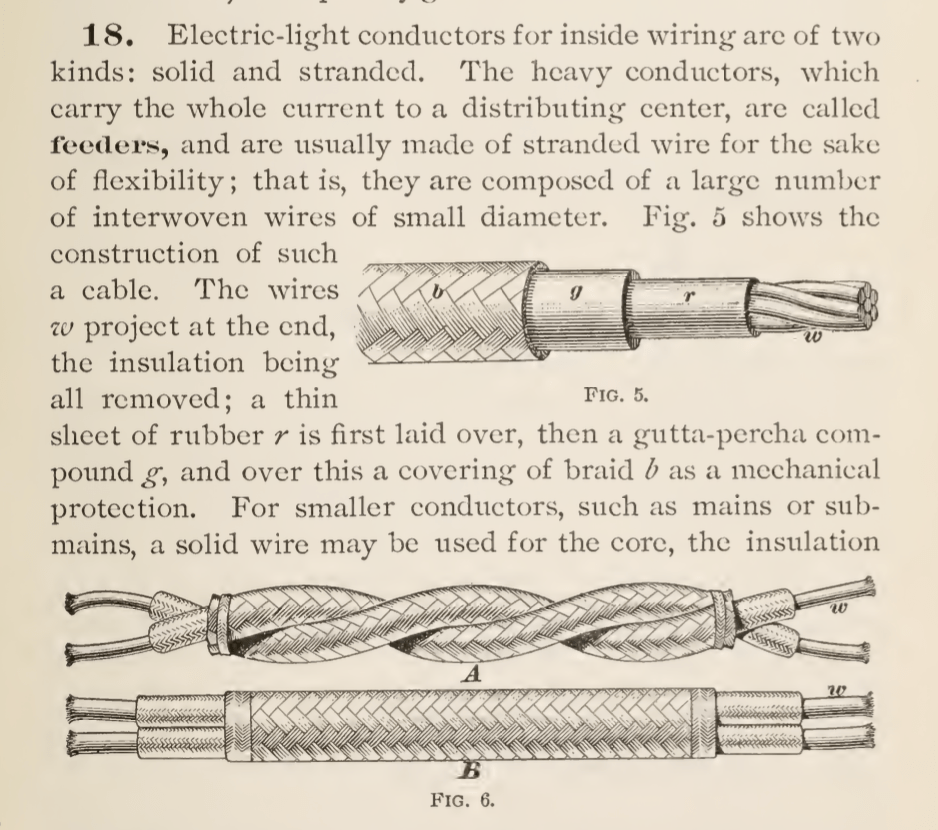
In the late 1800’s the electrification of offices and homes was becoming more popular and the current method of wiring buildings posed a problem. The method at the time was known as ‘knob and tube’. Copper wires which were covered with a rubberized fabric were strung along the unfinished side of walls, underneath floors, or on attic joists and held off the wood surface by attaching them to a line of ceramic knobs which were nailed to the wood studs. When the wiring had to pass through a stud or joist, a hole was drilled and the hole was filled with a ceramic tube for the wires to pass through.
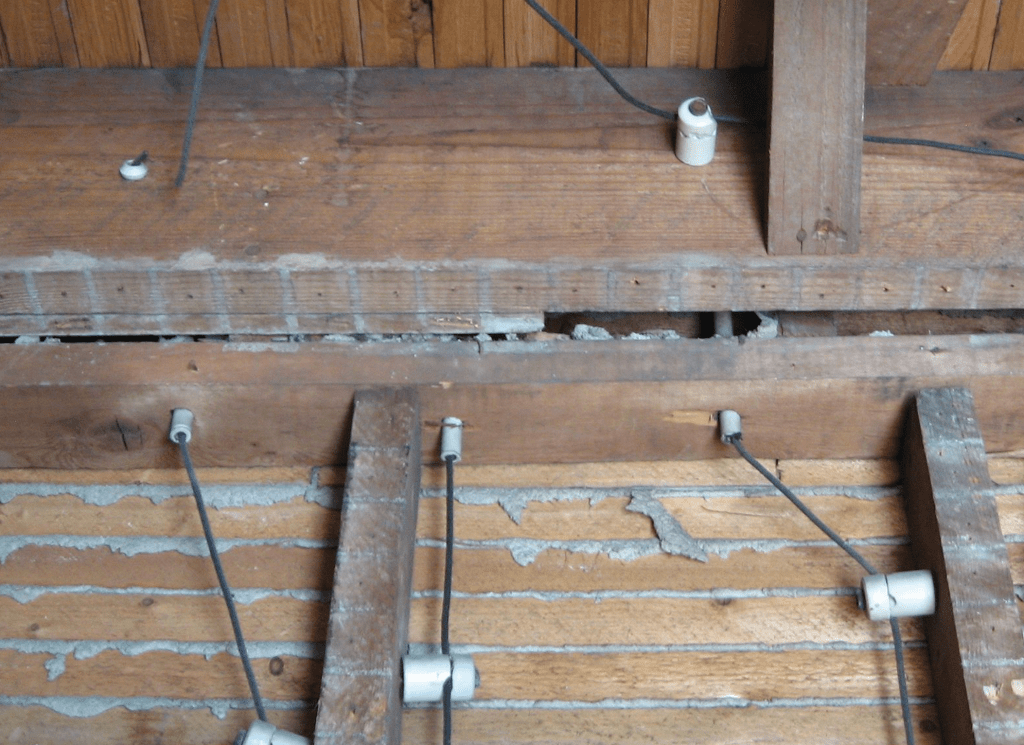
The problem came when the wiring had to run inside a room interior. A cosmetic solution had to be created to hide electrical, telephone, and telegraph lines from view.
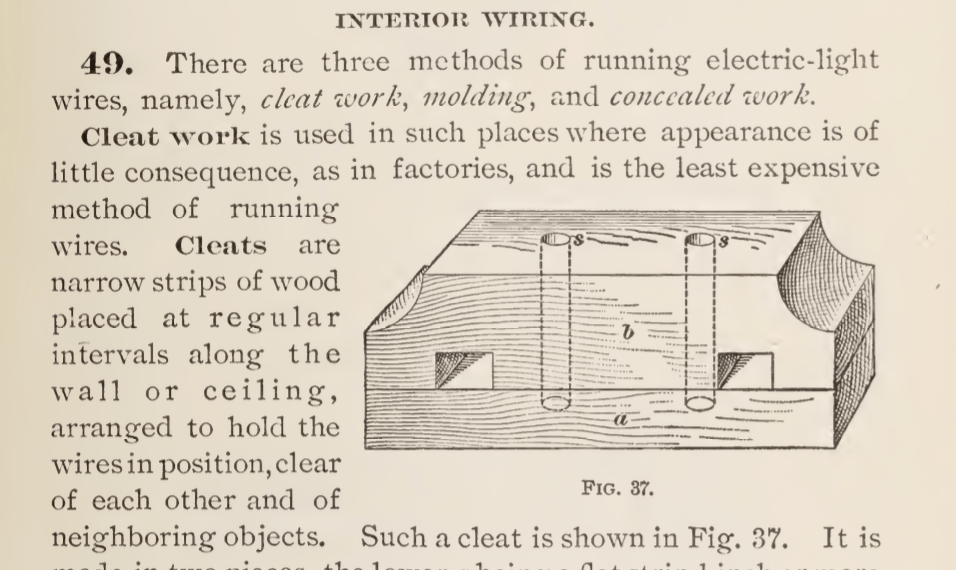
Cutting into the three-coat plaster and wood lath walls of the period to bury wiring inside them wasn’t an easy option when electrifying previously built houses. Early builders manuals suggested designs that hid the wiring inside moulding on the walls. Some suggested creating a moulding which hid the wiring at the top of a tall wainscot paneled wall, or to create a wide picture rail to serve the purpose.
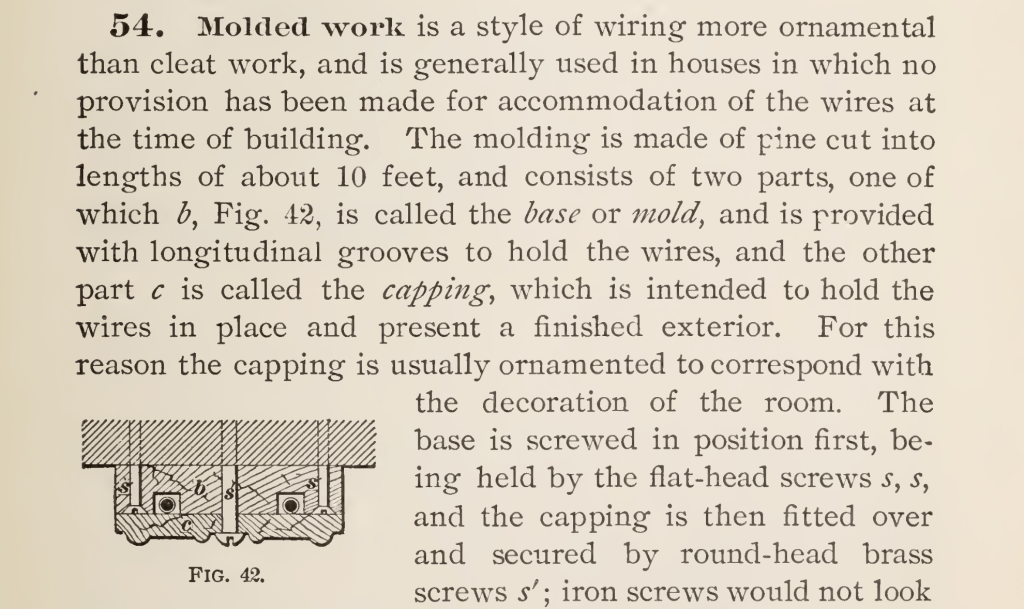
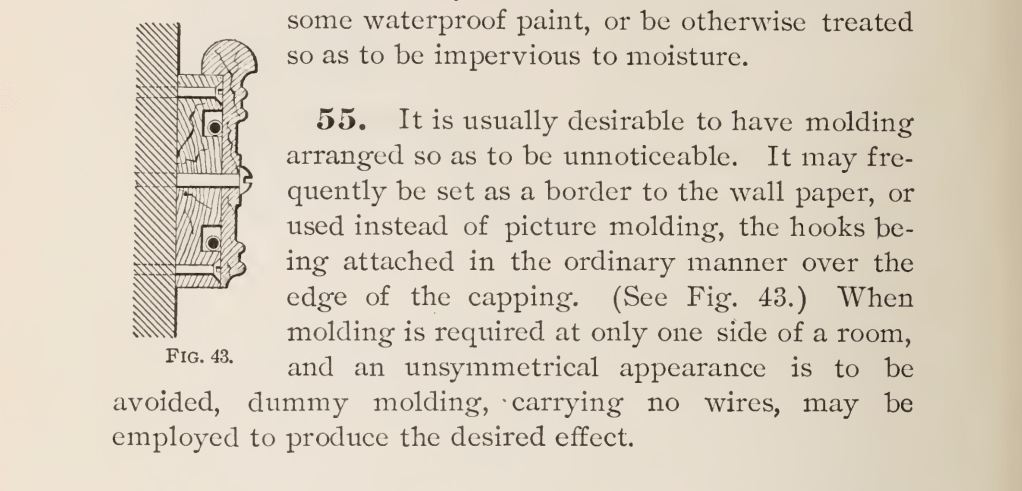
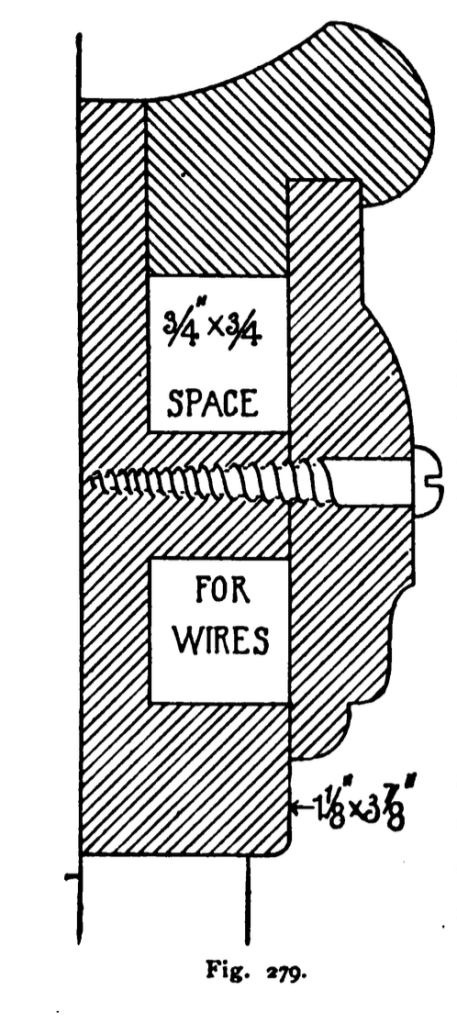
Electrical moulding doesn’t show up in a lot of the moulding catalogues from the period, but a number of them are represented in the Official Moulding Book in their 1907 to 1913 editions.
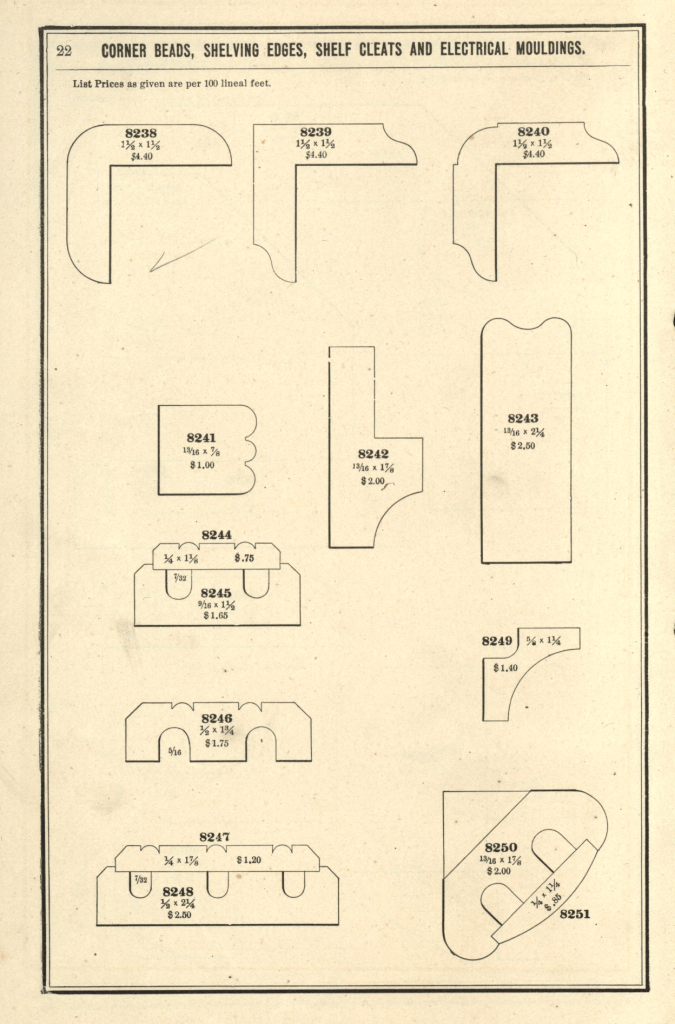
The three photos below are photographs I took inside an 1890 office building before it was renovated. I haven’t been ablr to find this exact mould in any catalogue yet but they are a slightly more decorative version of No. 8244 in the Official Moulding Book.
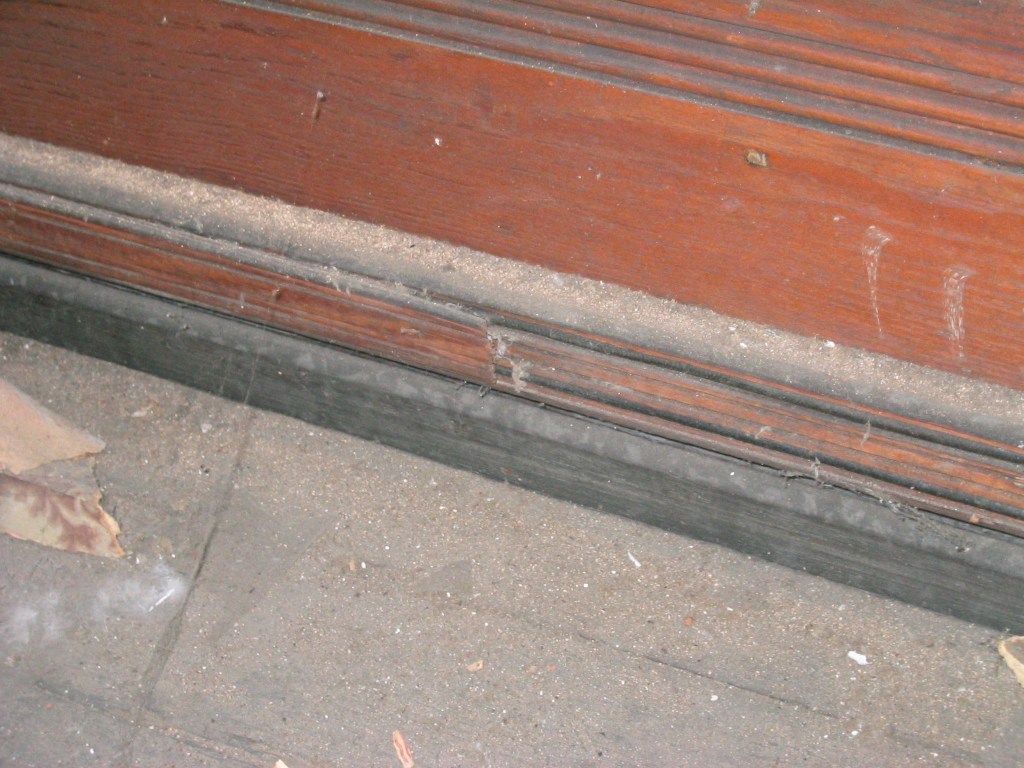
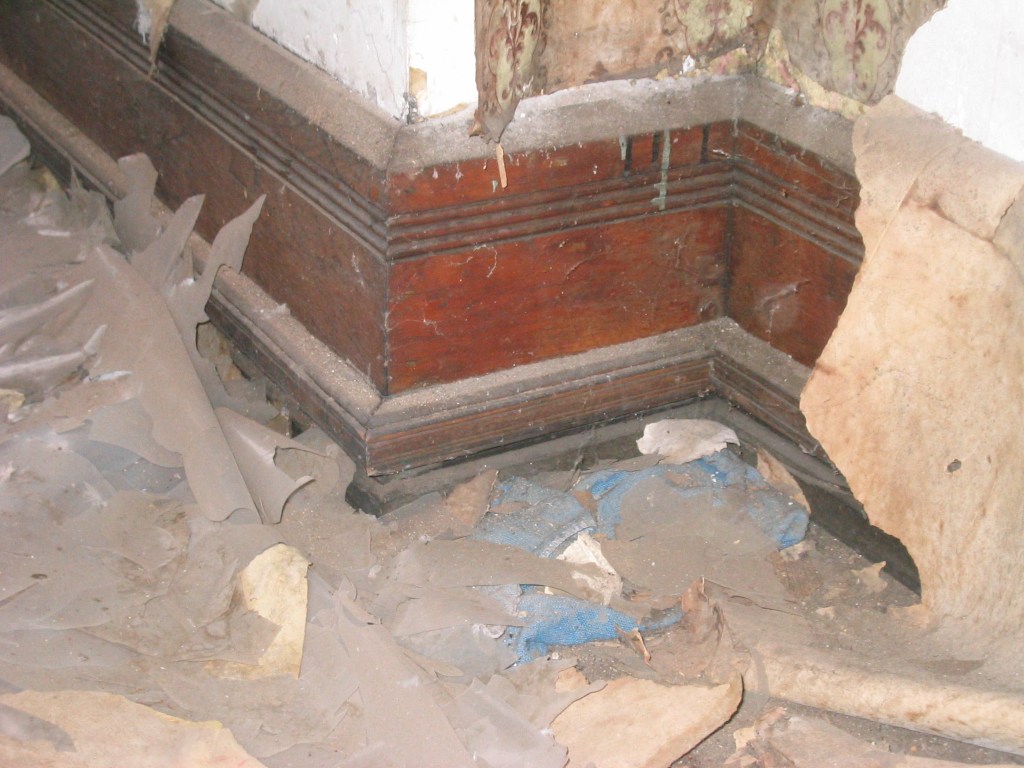
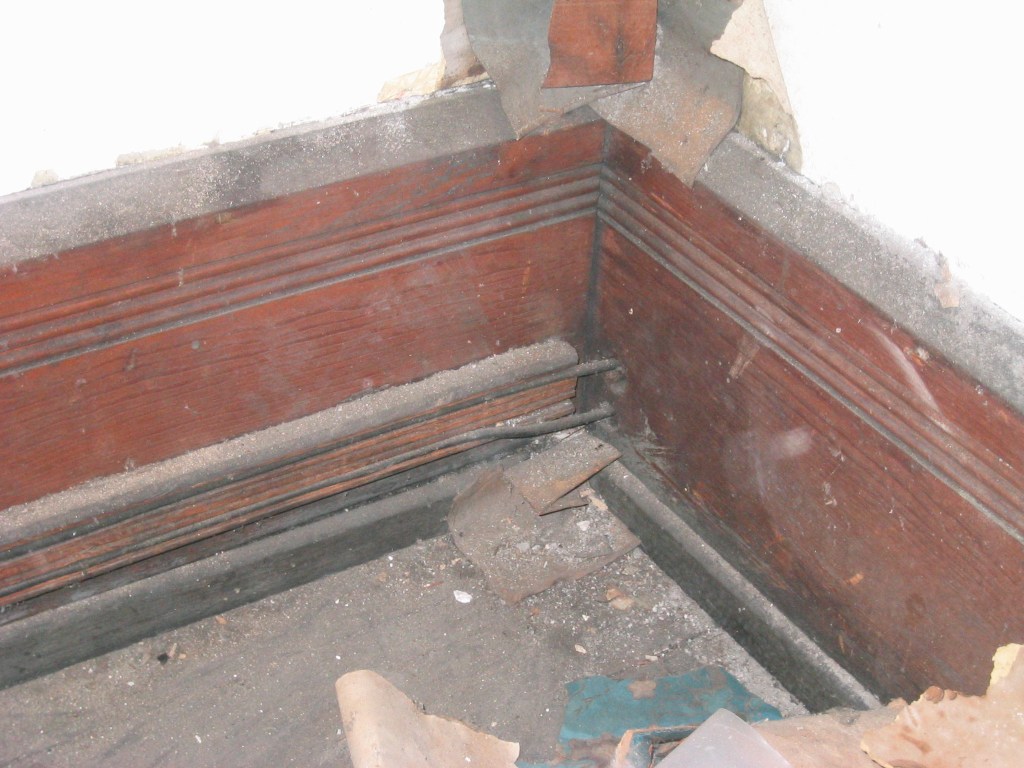
Note that the wiring runs to the next room through holes in the wall which do not have any insulators. This lack of insulators, the fragile nature of the rubberized fabric coating, and the fact that the wiring was not grounded made for serious fire hazards with the early wiring systems.
Sources:
Official Moulding Book – 1907, The Chicago Millwork and Moulding Co, Chicago, IL
Building Construction and Superitendence, F.E. Kidder, Part II, 1911, William Comstock Co. NY
Cassell’s Carpentry And Joinery, Paul Hasluck, 1908, David McKay Publisher, Phila, PA

