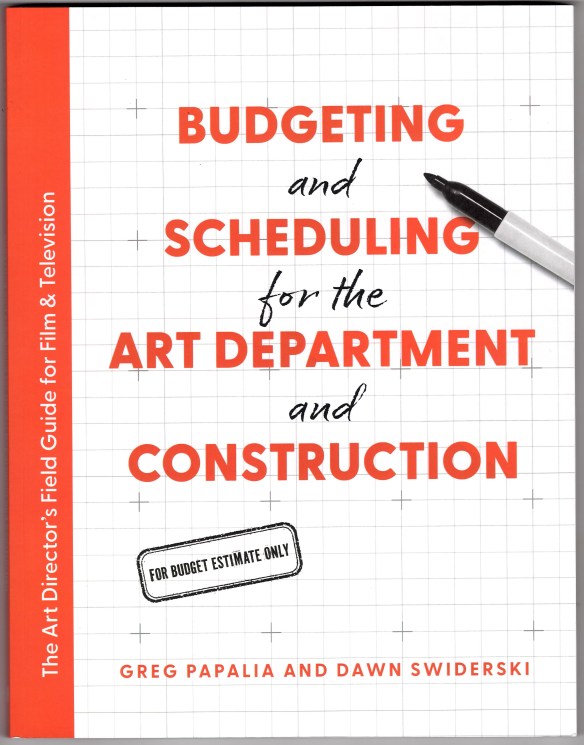
Cover image – Budgeting and Scheduling For The Art Department And Construction
” This book focuses on the challenges faced by Art and Construction Departments to design and deliver the camera-ready sets envisioned in the script. All while staying on schedule and on budget. The biggest challenge is “Money vs Art.” . . . .The accelerated pace of Film and Television production is unforgiving with little opportunity to learn as you go. Early mistakes may be difficult to undo, which is why it is essential to build a strong foundation and to get things right the first time.”
Most books that are published about the entertainment industry fall short of being truly useful to professionals who are looking for key information to actually help them do their job. This is one of those rare books that provides practical help and is based on hard-earned knowledge gained from the writers’ experiences on over 200 feature films and TV productions.
This book covers an area that is one of the biggest mysteries of film production, budgeting scenery. While most Art Directors carefully guard their budgets and their budgeting system, Supervising Art Directors Greg Papalia and Dawn Swiderski have laid out in sequence the system they have developed and use to schedule and budget multi-million dollar productions.
This information doesn’t exist in any other book, video, or college course.
More than a step-by-step manual, the book explains the rationale for each sequence and points out pitfalls that can trip up veterans as well as newbies to the industry. It’s meant to be a manual that you will continue to refer to throughout your career as a designer and Art Director.
They explain the role of each position in the Art Department and how to create a labor schedule for a show and dealing with the intricacies of studio and guild contracts. They also detail how to budget for the typical expenses of the department itself.
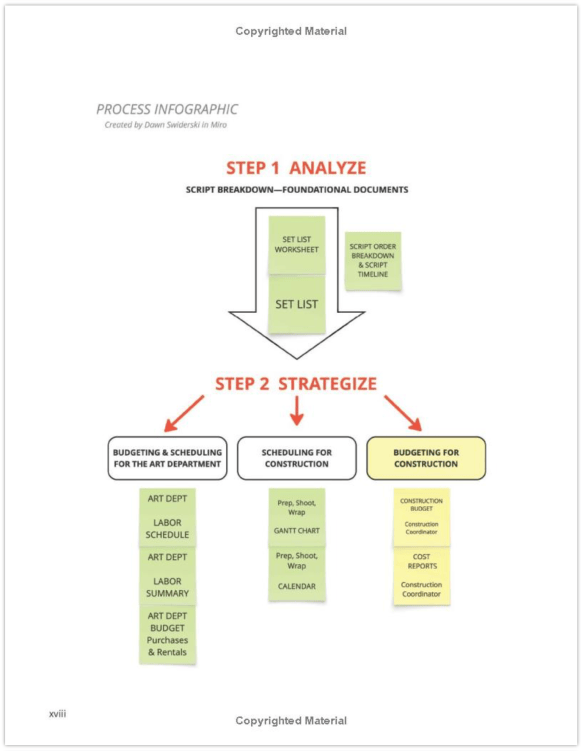
The system is broken down into two main steps – Analyze and Strategy.
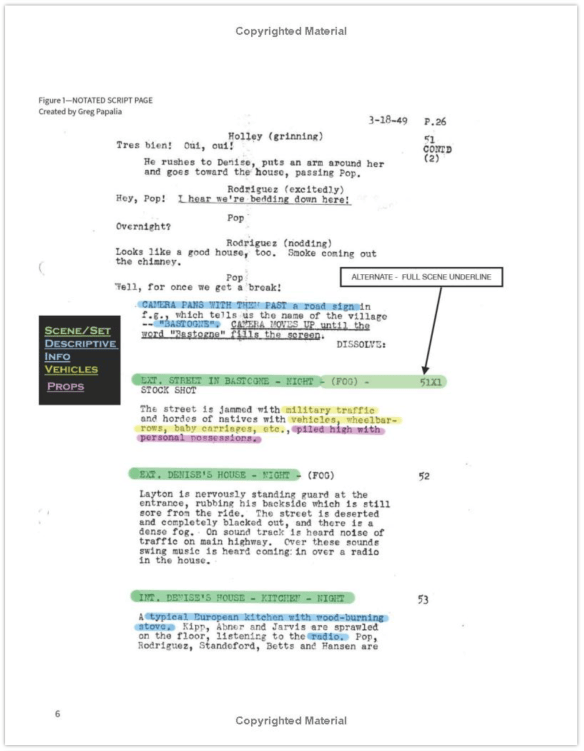
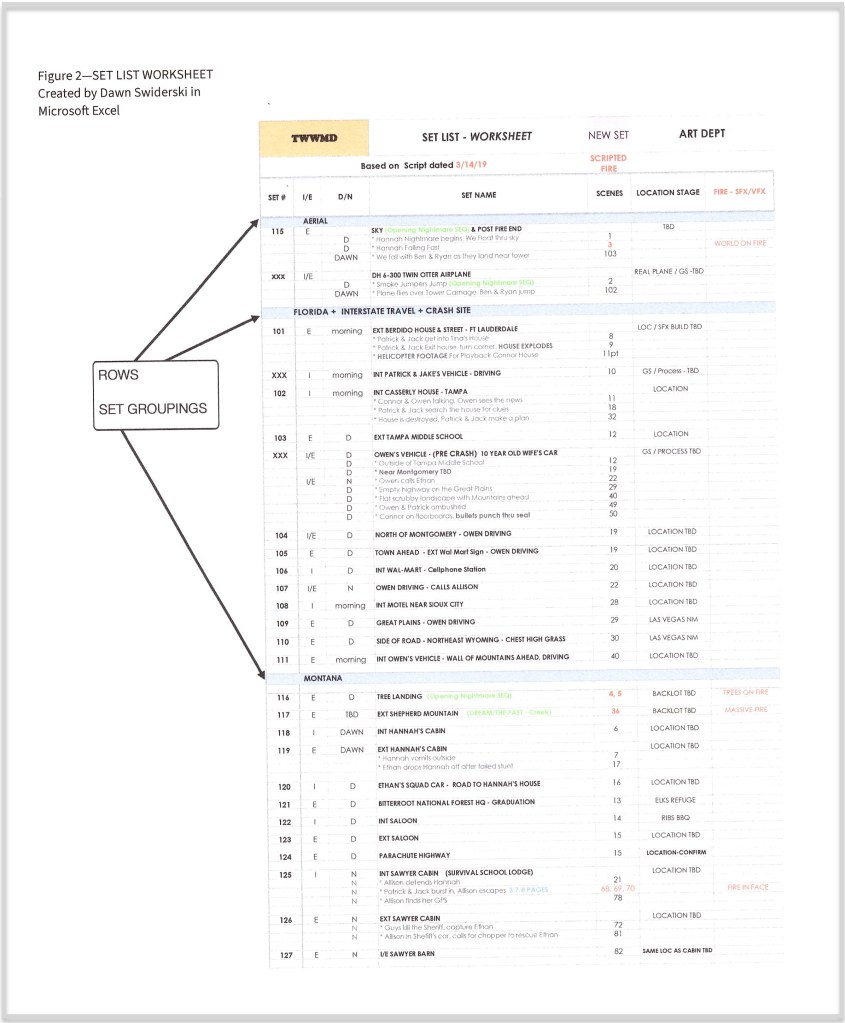
The Analyze section involves doing a Script Breakdown, a Set List Worksheet, a Set List and a Script Order Breakdown.
Set List Worksheet
These will be the basis for everything that you do going forward.
In the Strategy section they cover setting up an Art Department and hiring the crew, creating a labor schedule, budgeting department needs, planning requirements for sound stages, mill space, locations and studio backlot provisions. Then they go into budgeting for construction and dealing with the differences between the needs of feature films and episodic productions.
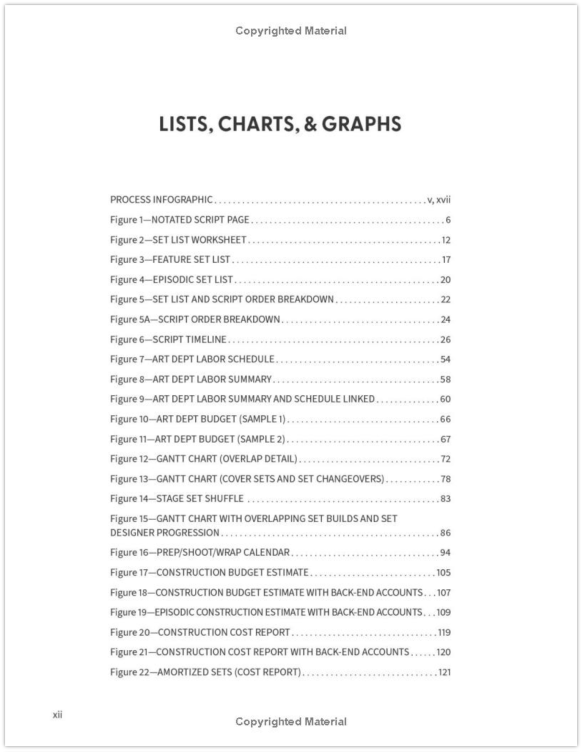
The book contains 22 lists, charts and graphs that outline each of the schedules and budgets that they cover. There are no digital templates provided as the authors assume that each person will have their own preferred methods for creating the documents themselves.
There is also a summary of each of the sections as well as advice on budget submissions and dealing with Producers when locking down a budget, tracking construction cost reports, moving money, and doing a post-mortem at the end of a show.
The book is only available as a physical hard copy. You can purchase it here, here, and here. Several other outlets may be carrying it by this time so it may be available from other sources as well.
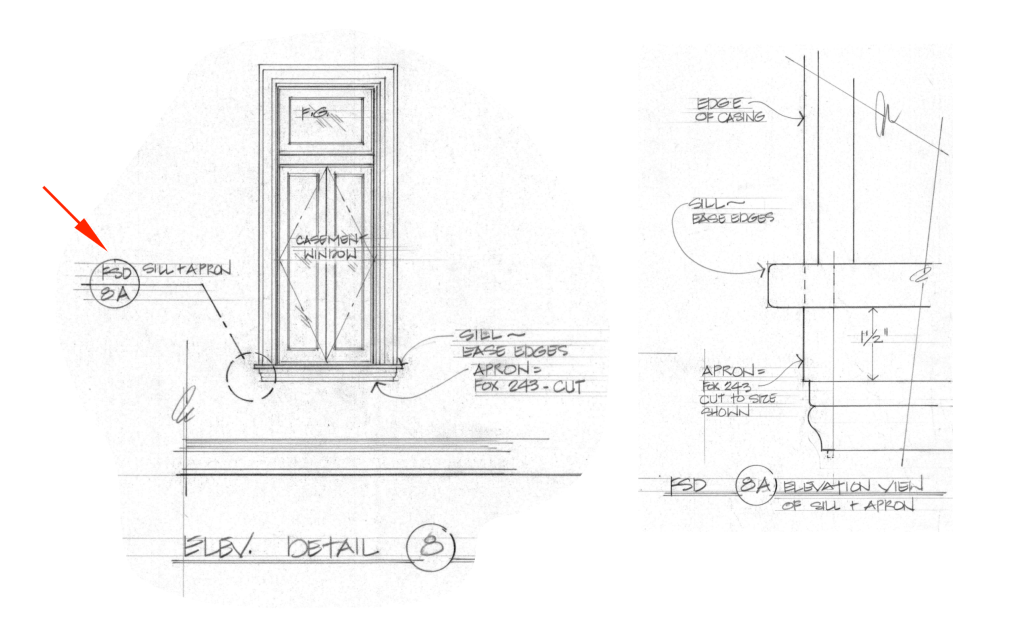
On construction drawings they are noted as an FSD, an abbreviation for Full Size Detail. You need them to visually describe exactly how something is to be built, whether it’s a built-up moulding profile or a complicated mechanical detail.
Here is an example of a typical situation where an FSD is needed. Note the red arrow pointing to a detail bubble that reads, ” FSD – 8A”. This is noting a sub-detail of a window detail labeled as #8.
The detail calls out a window sill apron mould with the moulding profile number and a note that the moulding is “cut”. This means that rather than being used as-is, the moulding needs to be altered in some way. This level of detail is impossible to read on the elevation which is drawn at 3/4″= 1′-0″.
The FSD beside it shows how the moulding is to be placed in relation to the other window parts as well as shows that the plinth of the moulding profile is to be cut down to 1 1/2″. Unless you don’t care how the window ends up looking, you need to include FSD drawings if you have specific details in mind.
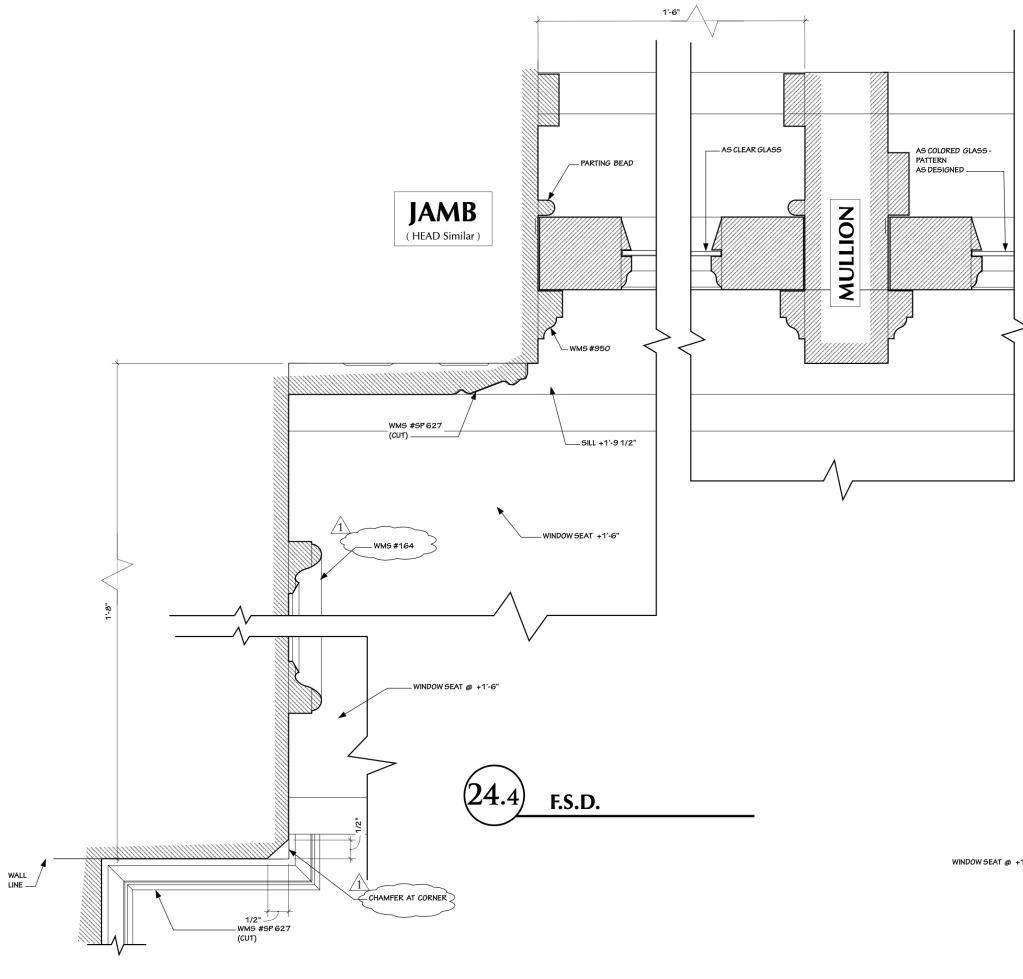
Here is another FSD through a window jamb. This drawing shows the jamb thickness, sash thicknesses and widths, the moulding profiles, architrave, and panel moulds. An FSD is needed for this complicated level of period details.
FSD Window detail – R D Wilkins
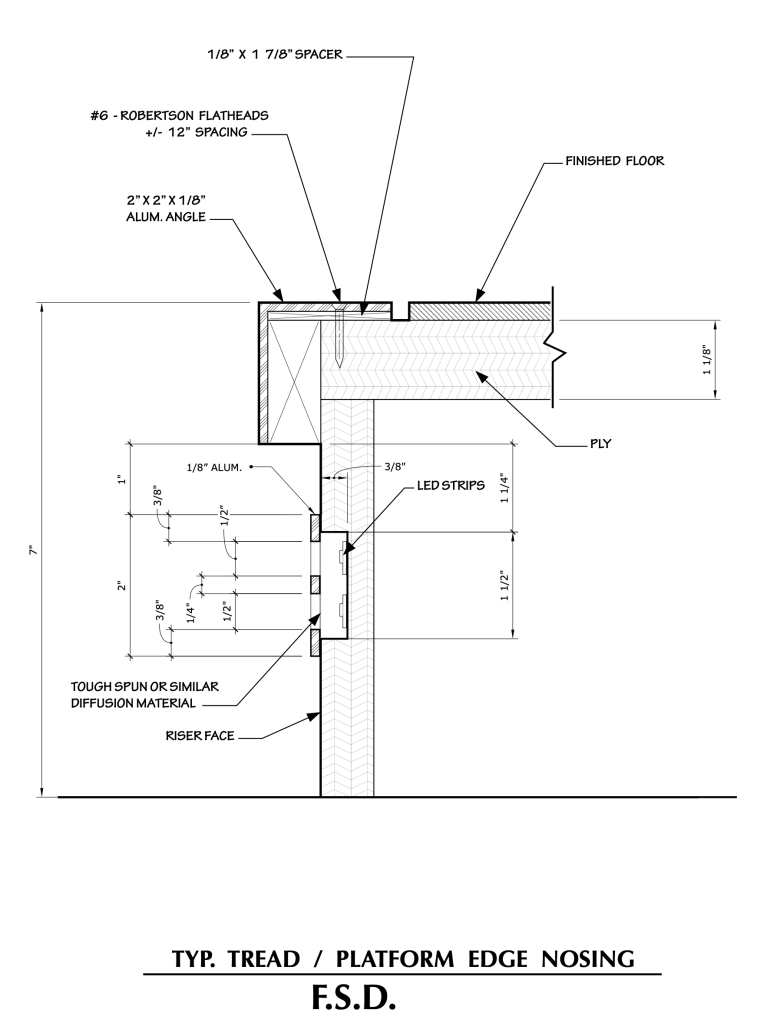
Below is an FSD of a vertical section through a platform riser. Here you can see notes as to materials, fasteners, and electrical lighting effects. Again, it’s impossible to communicate this level of detail in a smaller scale of drawing. You may encounter some situations where you can get by with a half-scale or half full-size drawings, but these aren’t recommended if a full size detail is possible.
FSD platforn detail – R D Wilkins
A note on dimensioning: You’ll notice that in the section through the window jamb that there are few dimensions. Only the distances where the drawing contains a ‘broken’ wall line are dimensioned. This is traditional, as the prints were originally made as a direct contact print and the set designer was sure that the prop makers could scale from the drawing and get correct measurements. This was the point of a full-size, as you’ll see below.
Once CAD became the standard, and you couldn’t be sure that the print was made at 100%, and people began to work from prints that were smaller than intended, there was more assurance in completely dimensioning even an FSD. This is for the Art Director on a show to make a call on.
Shop Drawings & Story Sticks
There’s nothing new about the concept of full size drawings. It’s a technique that’s thousands of years old.
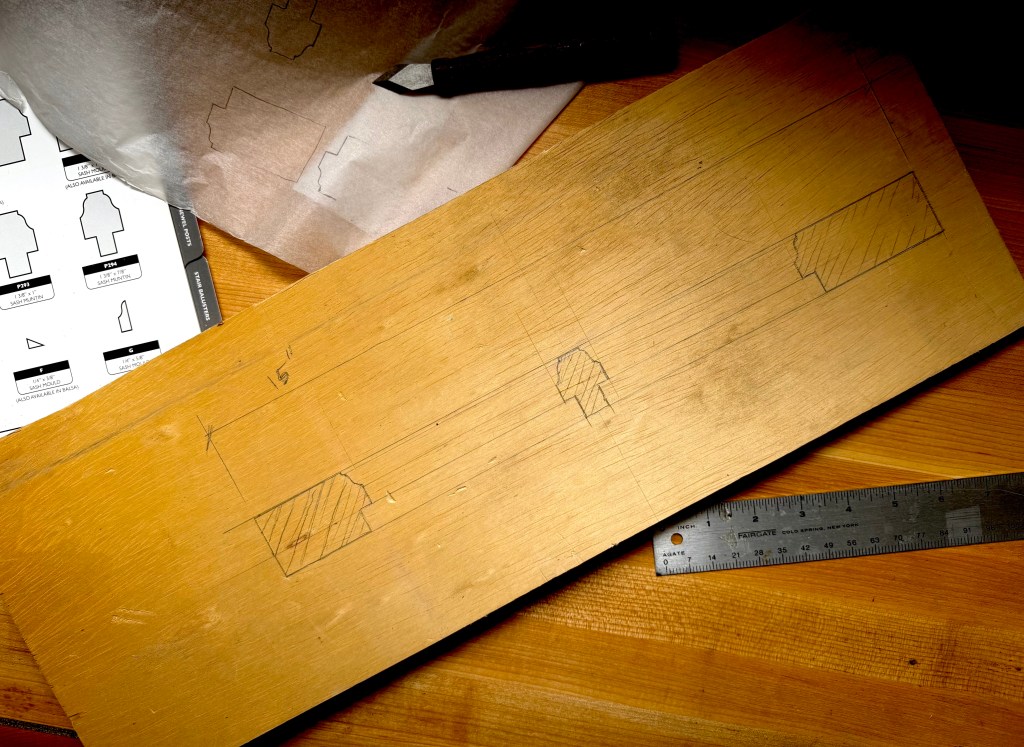
A shop drawing for a small window sash, drawn in pencil on a scrap board.
When I was a prop maker, we were trained to create shop drawings for things like mouldings, windows, and doors. On television shows there is not often time to do full size details of every set element and it often fell to us to create a shop drawing to ensure accuracy when laying out the pieces for a built object, especially a window. Nothing sucks as bad as inserting window sash into a frame and finding out the meeting rails are off by a quarter inch.
In the best case, a full size section has been drawn and you can either pull dimensions off the drawing or glue one to a piece of door skin to cut a template out on a bandsaw.
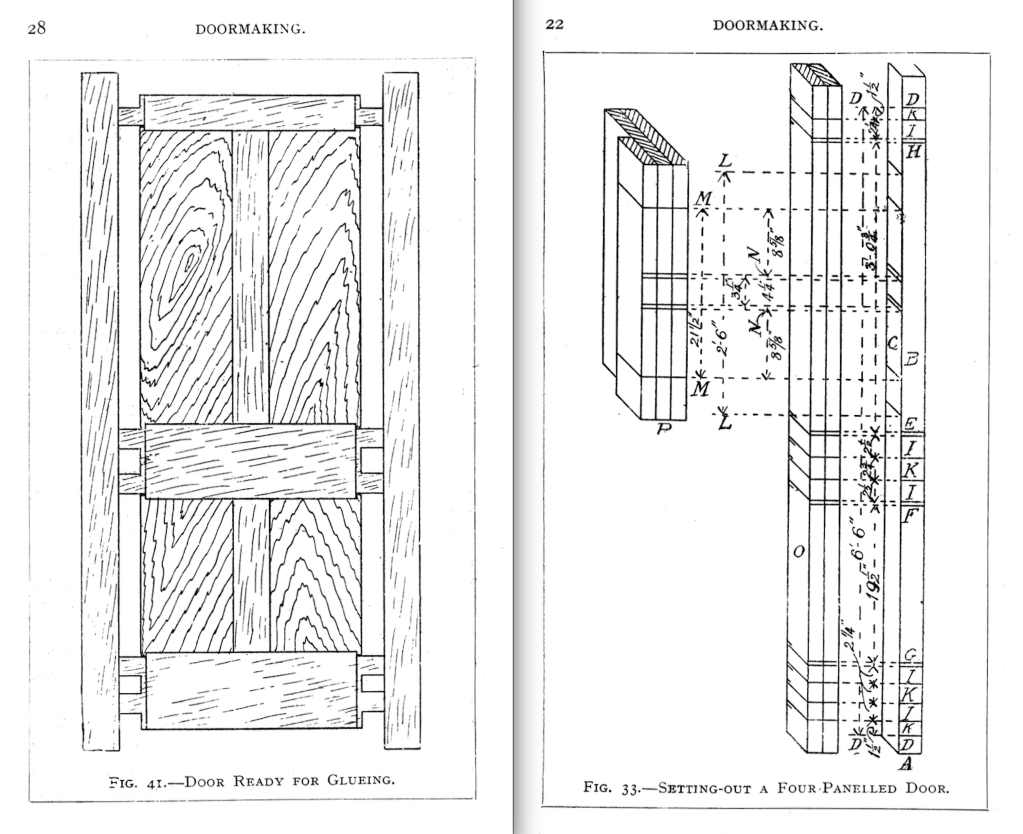
Traditionally jointers, carpenters, and stone carvers created their own story sticks or setting-out rods to be sure that their cuts were accurate, or full size patterns to check the true size of their work piece.
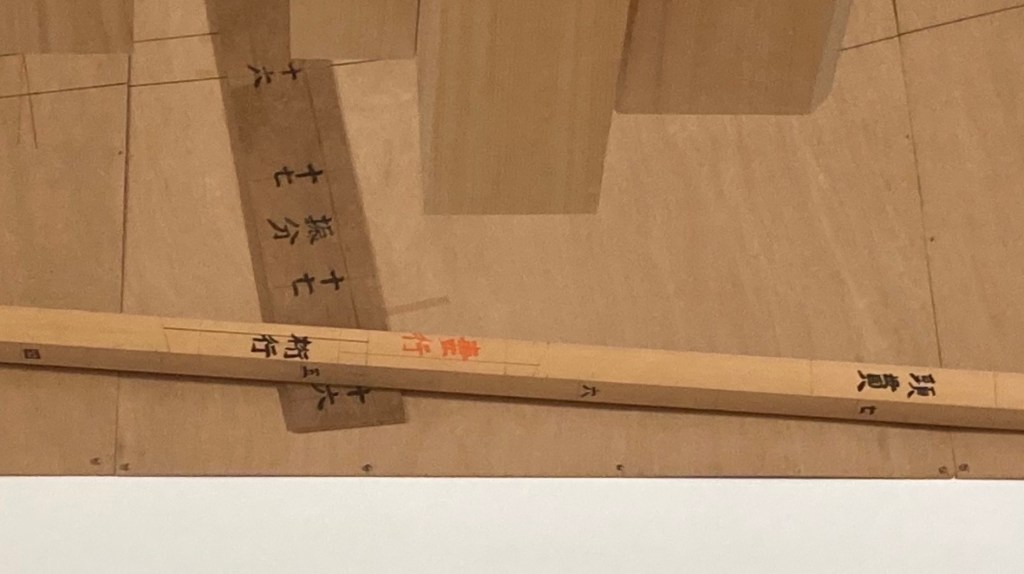
In traditional Japanese house construction, the master carpenter would lay out all the major dimensions for a house on a master story rod called a Kensao. This was like a blueprint on a stick and would be referred to for all questions about construction measurements or additions to the structure. When the house was completed, the rod was kept in the eaves under the roof of the building.
A kensao which was part of the collection of the Masters Of Carpentry exhibit at the Japanese House in Los Angeles.
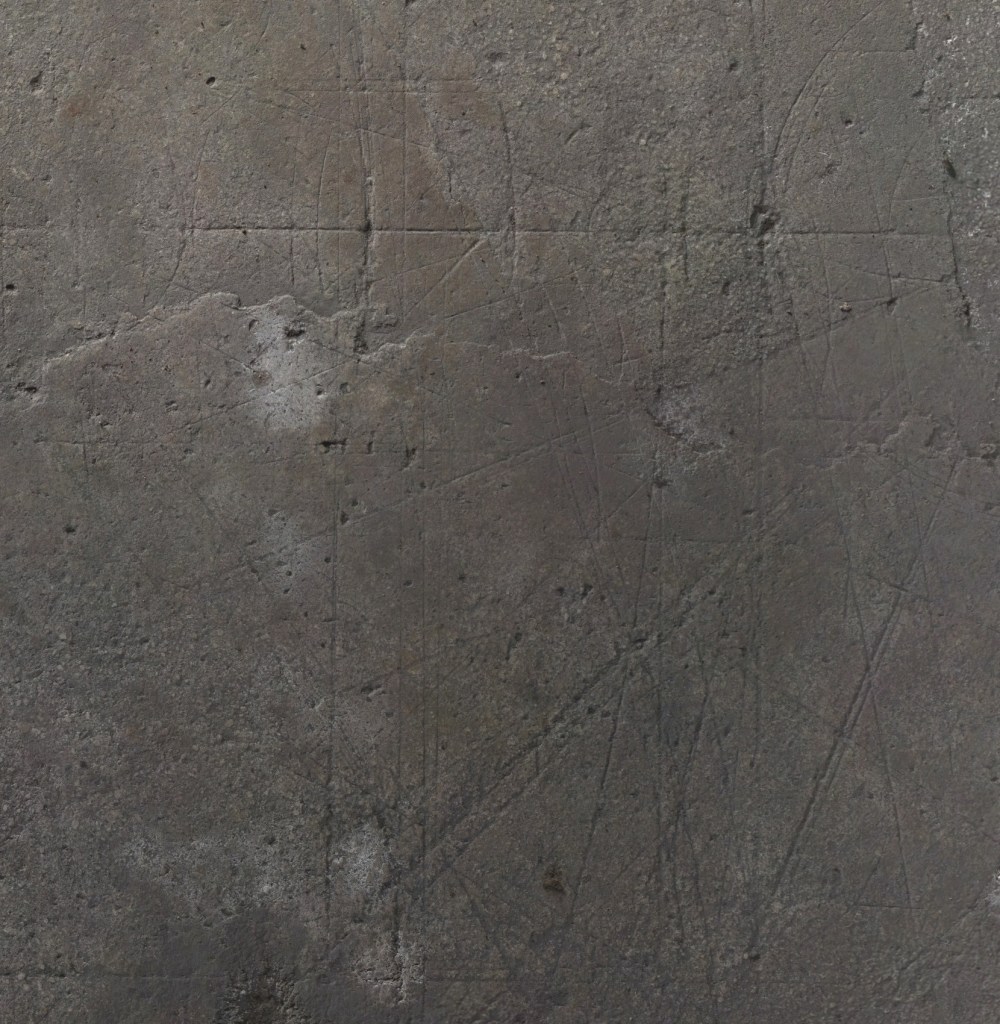
In the Middle Ages and the Gothic period, stone building details were laid out in full size on a tracing floor, a floor that had a smooth layer of plaster applied to it on which the details were laid out with a large compass and straight edges that the stonemasons referred to for each separate element to make sure that they would fit together.
remaining images from a tracing floor
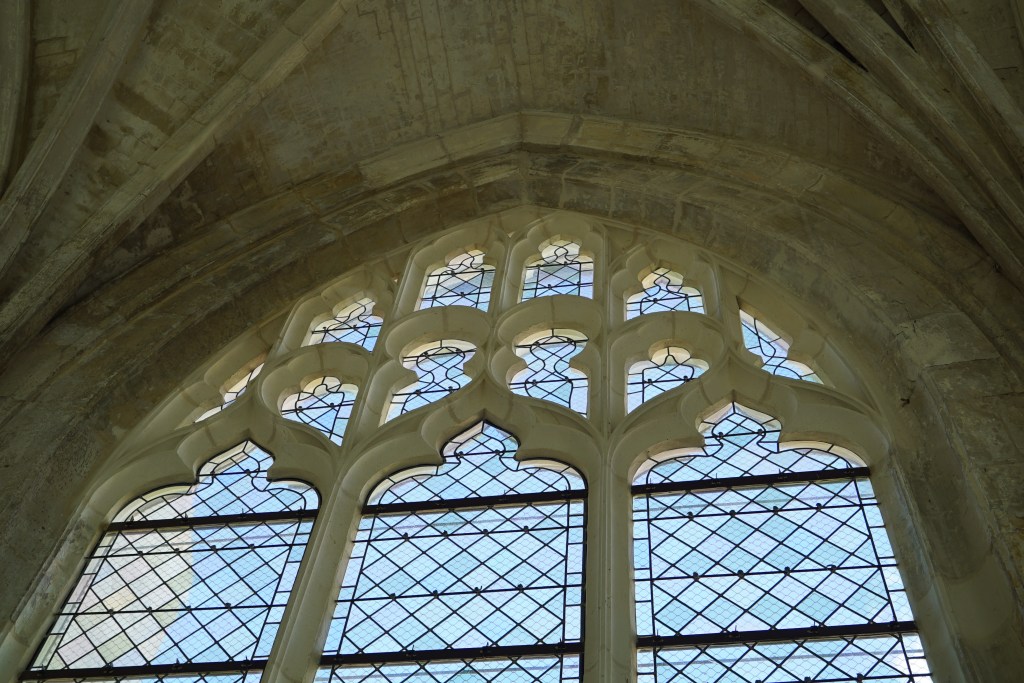
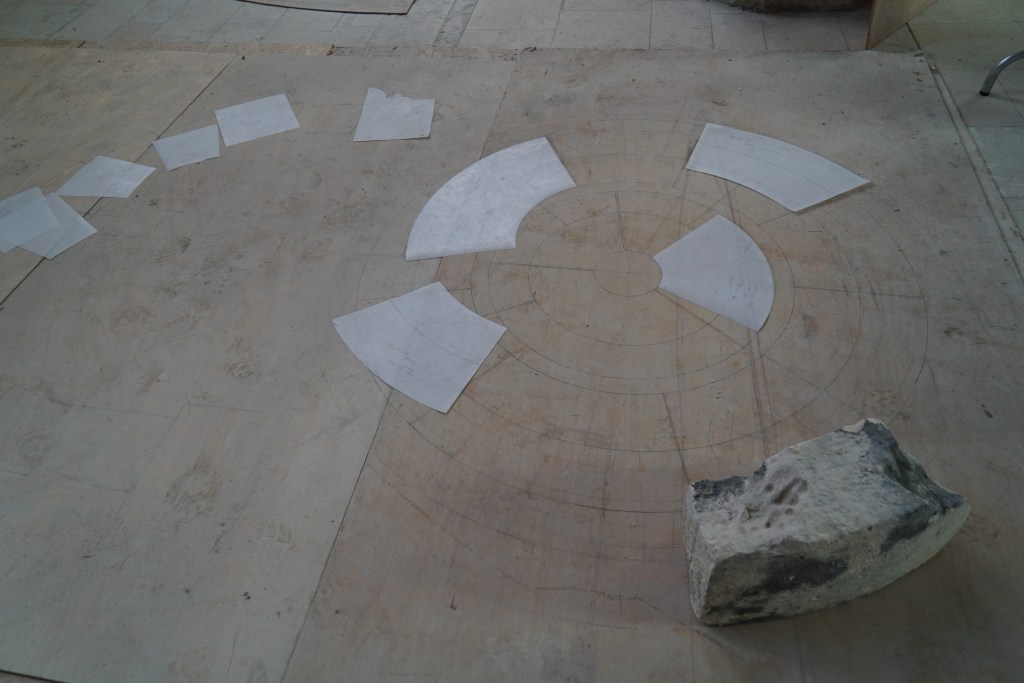
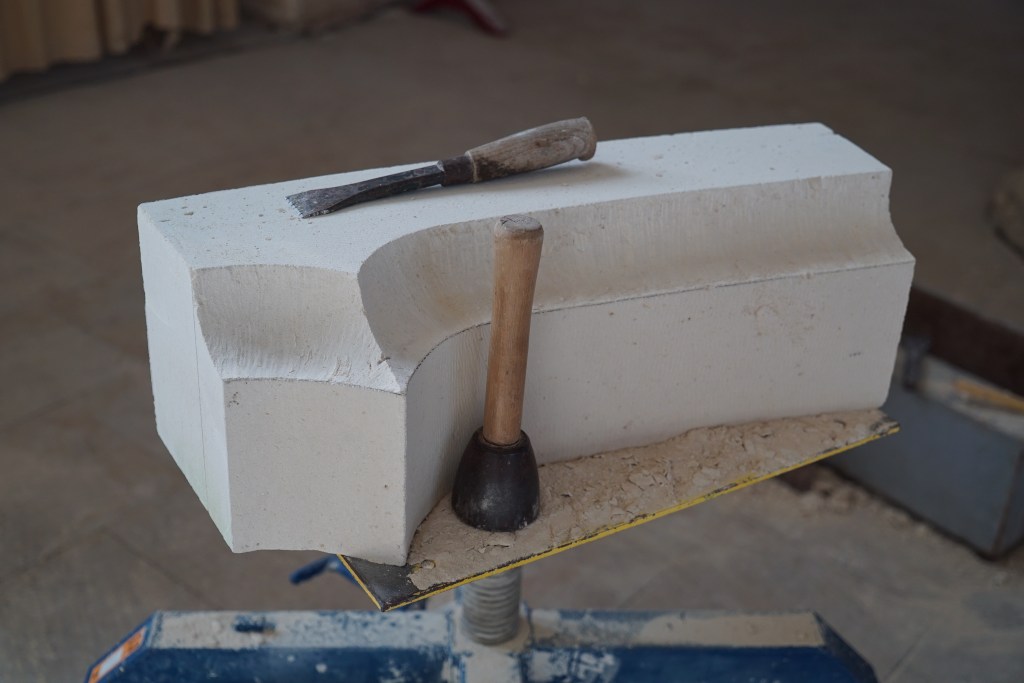
I was able to watch some stonemasons in France repair the windows of a medieval church and saw their modern day version of the original process. The design was drawn out full size on thin plywood sheets. This pattern was transferred to separate patterns on thin plastic which were then used to trace the outline onto the stone itself.
newly replaced traceryfull size detail on plywood with individual stone patterns in plasticIndividual stone tracery section in progress
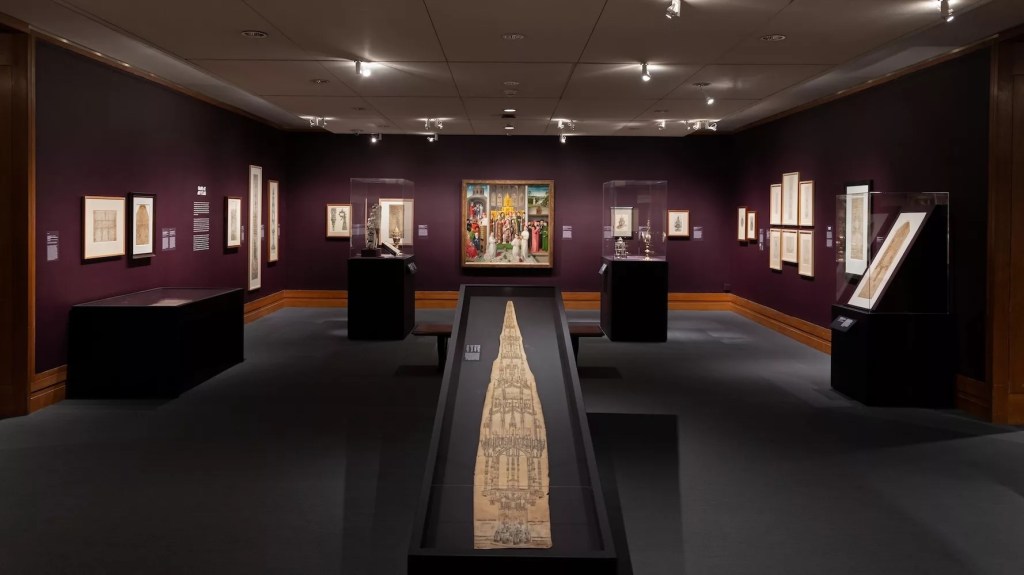
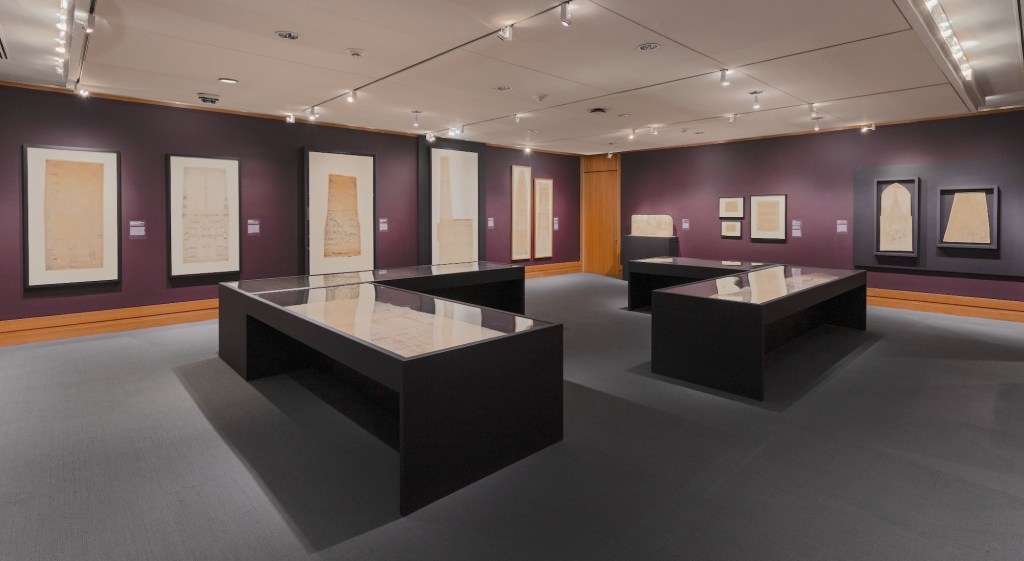
Production Designer Sarah Knowles recently told me about a new exhibition at The Met in New York City. Entitled Gothic by Design: The Dawn of Architectural Draftsmanship, the show includes over 90 original pieces that span from the 13th to the 16th century. On now though July 19.
Many of these pieces were meant to be presentation artwork to show the sponsor what the final building would look like, but there are several construction drawings in the gallery show.
The Met – Gothic By Design Exhibit. Photo: Metropolitan Museum Of Art New York
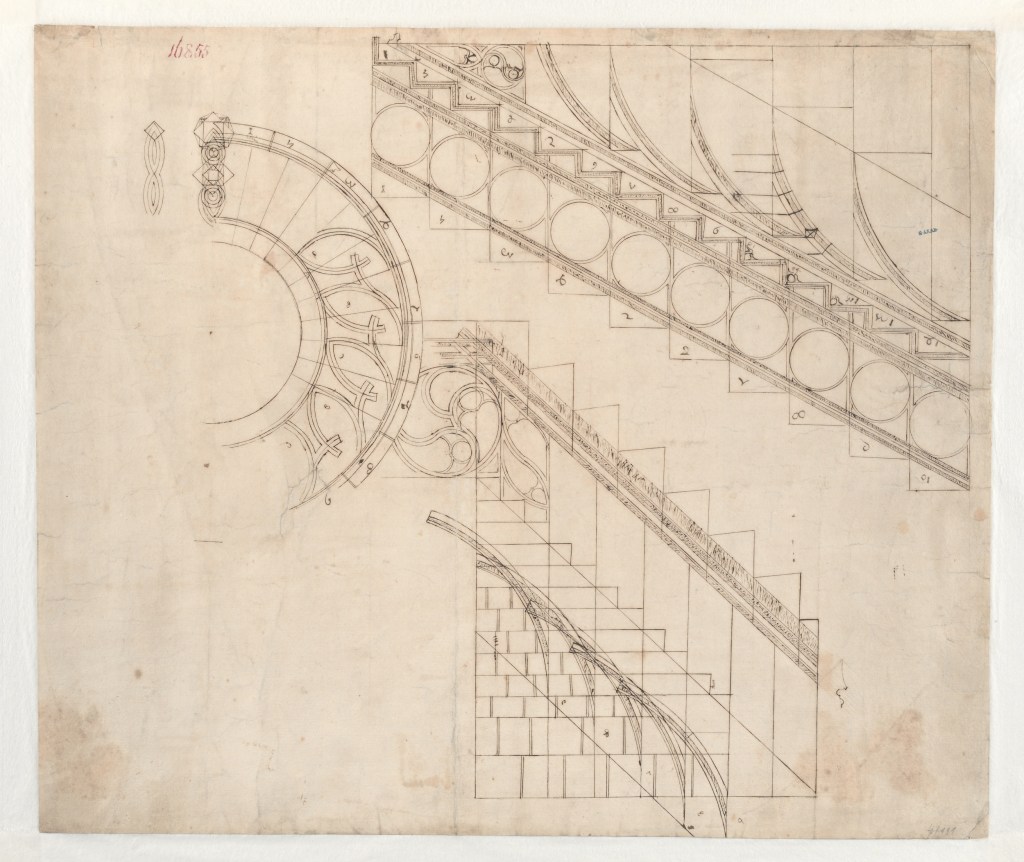
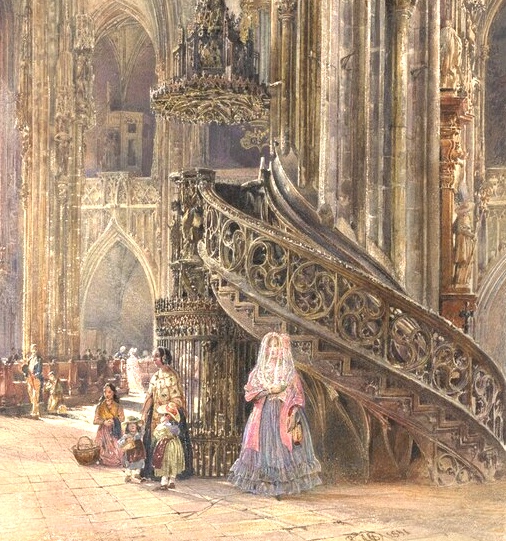
One of the drawings s a plan and developed stair stringer for the Saint Stephens Cathedral in Vienna. The stairs are shown in a painting by artist Rudolf von Alt in 1841.
Drawing by Anton Pilgram, 1515. Photo: Metropolitan Museum Of Art, New York
The staircase is shown in a painting by Anton von Alt from 1841
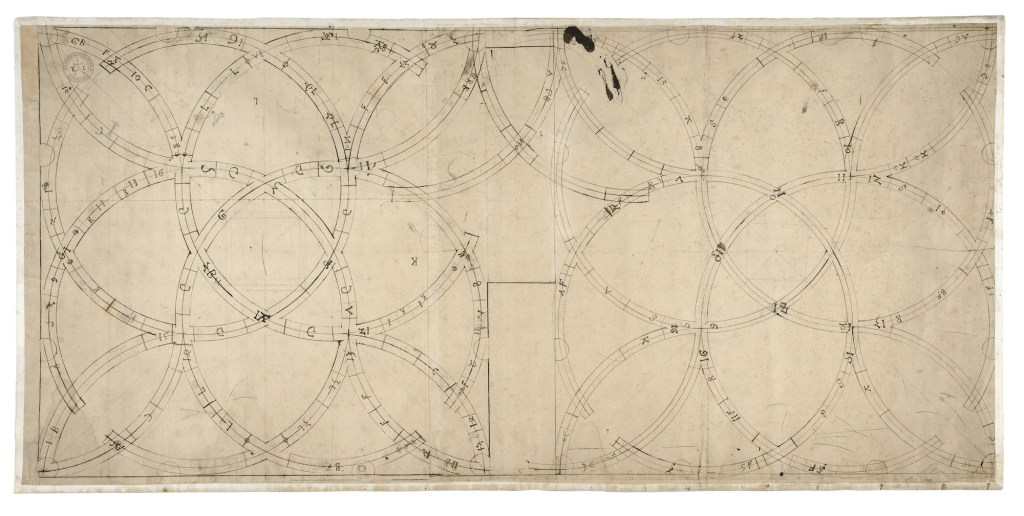
The one full-size detail is of a vaulting detail from the Chapel of Saint Catherine in Vienna.
Similar to the plastic sheet patterns that the French stonemasons use today, the stonemasons of the period would make a pattern on paper for each of the stone sections.
One drawing in the collection is of the entire vault pattern with each of the pieces numbered.
A drawing of a vaulting plan for the Chapel of Saint Catherine in Vienna. Photo Metropolitan Museum Of Art
If you are interested in learning more about set drawings and construction, this class on Set Construction offers detailed information about set construction, videos of basic flat and scenery construction, and 3D models of standard scenery pieces that will work in most 3D modeling programs.
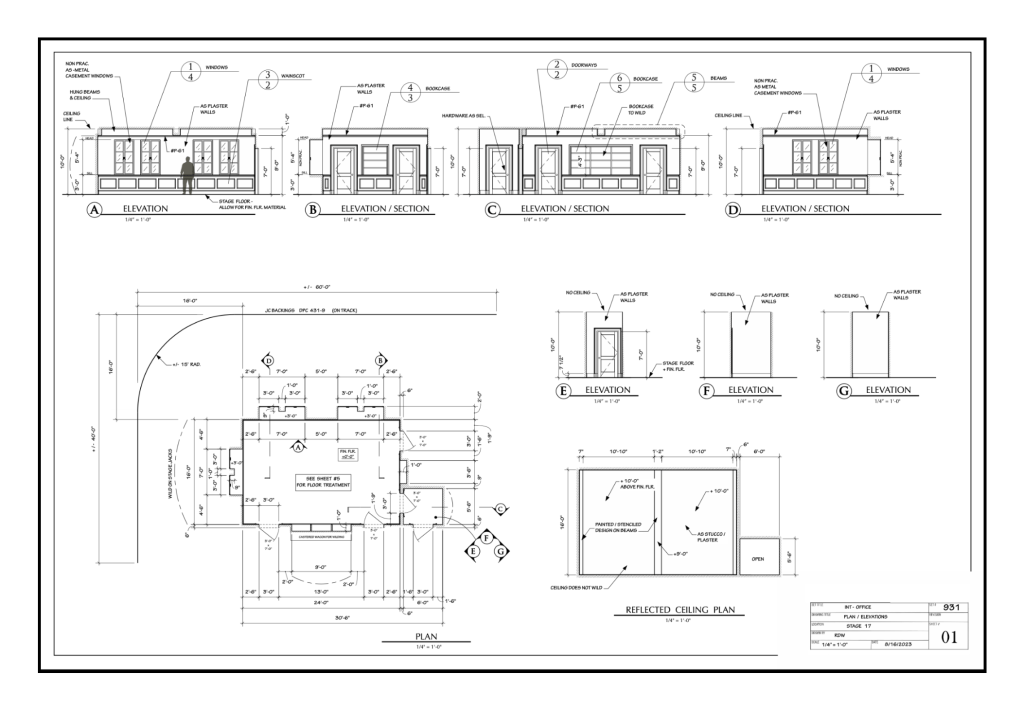
The class includes a full set of drawings for a typical set, including 3/4″ details and FSDs.
A full set of seven sheets of drawings is part of the course.
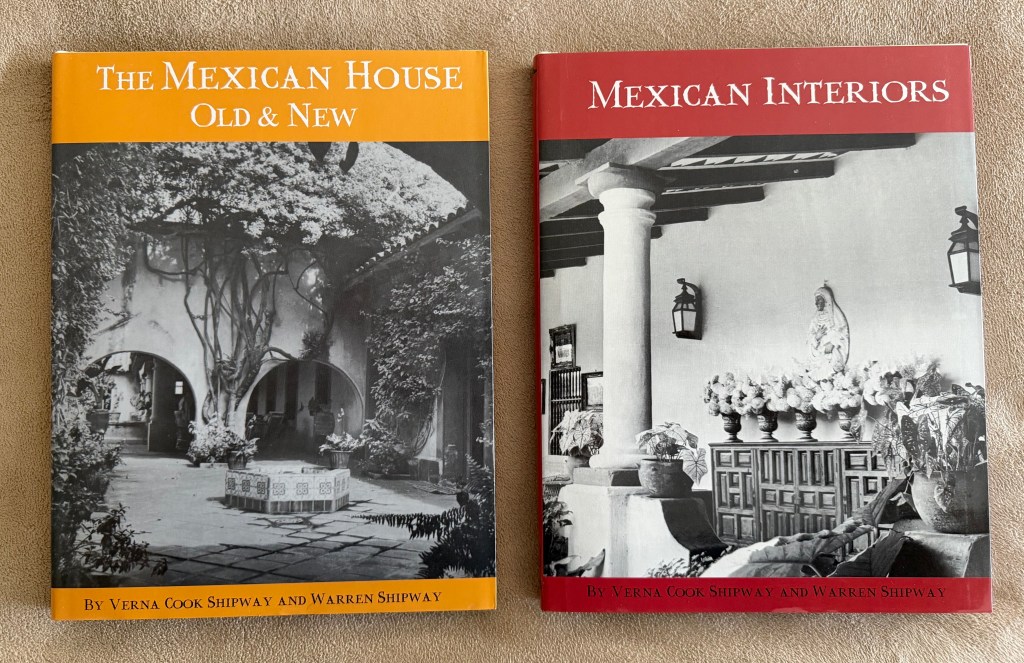
There are several books on domestic Mexican architecture that are well worth having but it is usually hard to find good copies of them because they were published over 60 years ago.
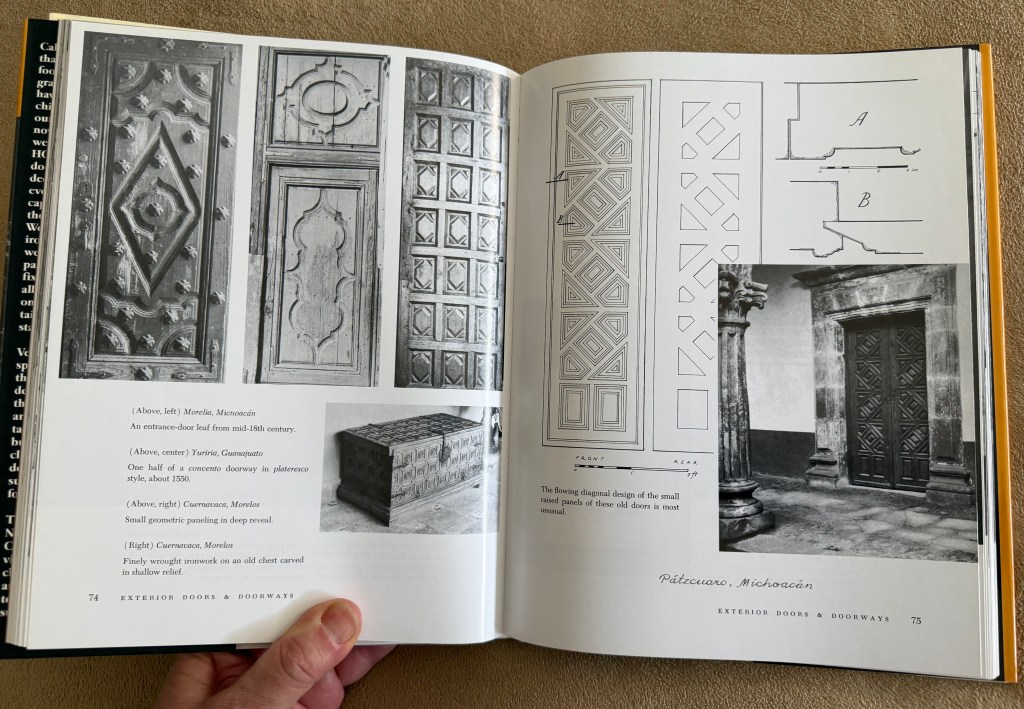
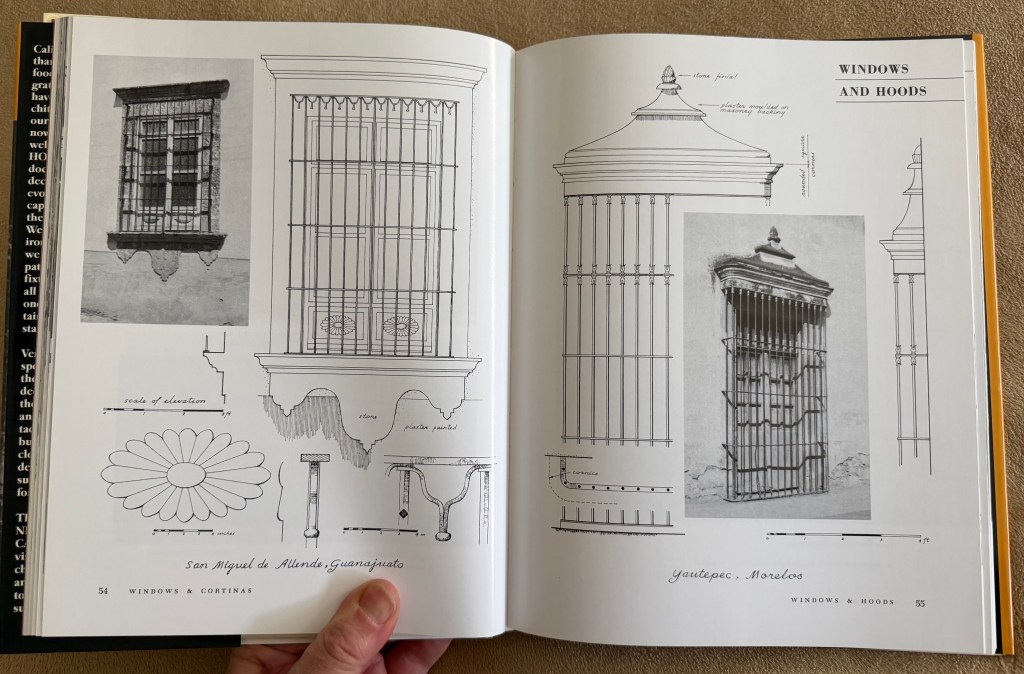
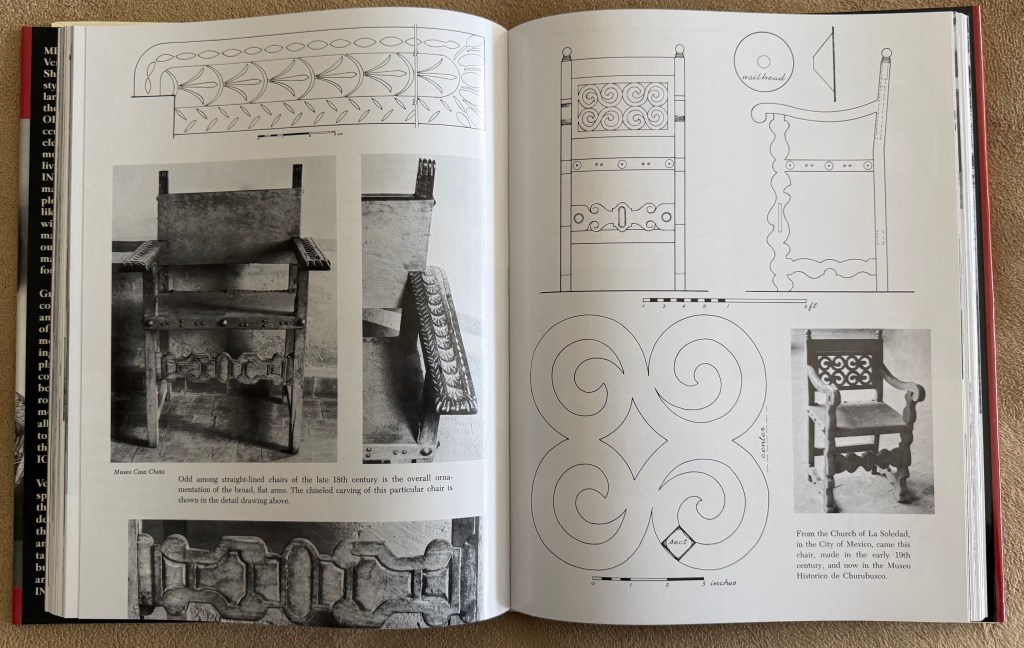
In the early 1960s, Verna and Warren Shipway wrote two books on traditional Mexican domestic architecture which were a series of black & white photographs accompanied by measured drawings of various details of the houses that they documented. The Mexican House – Old and New, was the result of years investigating the various influences on the typical Mexican house.
The follow-up book, Mexican Interiors, dealt more with furniture and other furnishings but includes architectural elements as well and follows the same layout of photos layered with measured drawings.
Both books have been republished by Hennesey & Ingalls, the architectural bookstore in downotown Los Angeles, California, in the same format as the 1960s editions. These are signature bound hardcover books and won’t fall apart like soft cover books do.
Another book done in the same style from 1930 is Early Mexican Houses: A Book Of Photographs And Measured Drawings. This book was created by G. Richard Garrison and George Rusty, two young architects in the late 1920s who spent five years documenting domestic Mexican homes when they found that there was very little available literature on the subject.
This book has also been reprinted, although as far as I know, new copies are only available in a sofcover version.
This is an update to a post I made back in 2012 about standard European architectural manuals; Neufert’s and McKay’s Building Construction.
I’ve recently found digitized copies of both of these online and have posed them at the bottom of each of the descriptions below. Copies of McKay’s have been hard to find here in the States and I like having a digital copy to refer to when I’m on location. Less shipping!
Here in the US, the book we primarily turn to for all questions of an architectural nature is the AIA Architectural Graphic Standards. For our work, the third and fifth editions are the most informative because they were printed at a time when architects had to draw everything rather than order most elements pre-made. If you happen to be drawing up European architecture, though, it won’t do you much good.
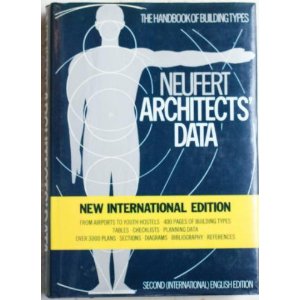
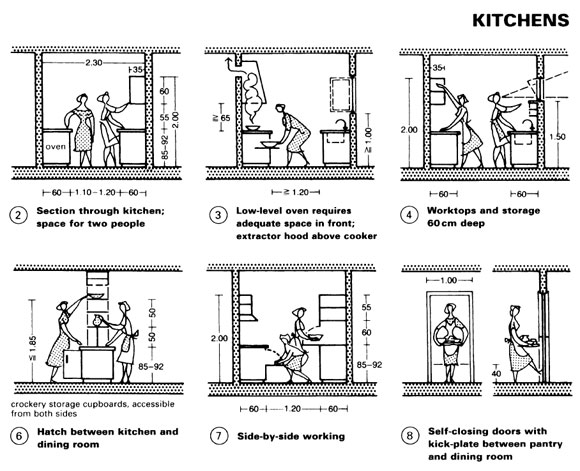
In the rest of the world, the architectural book most people turn to for similar answers is Neufert’s Architectural Data. Soon to be released in it’s 40th edition, the book is printed in 18 languages and is the architectural Bible in the metric world.
Ernst Neufert
Ernst Neufert worked at the Bauhaus as chief architect under Walter Gropius and later taught at the Bauhochschule until the Nazis closed it down in the early 1930’s. Seeing the need for a book that graphically laid out the architectural standards of the time, the book was first printed in 1936 and soon became a big success. Like Graphic Standards, the book is mainly a visual reference of architectural design and space standards for the European continent.
The book has had a number of English language editions, but the 1998 International is the most useful and easiest to use for the metrically-challenged. A large number of each edition are printed so it should be fairly easy to find used copies. You may have better luck throught British booksellers than second-hand businesses here.
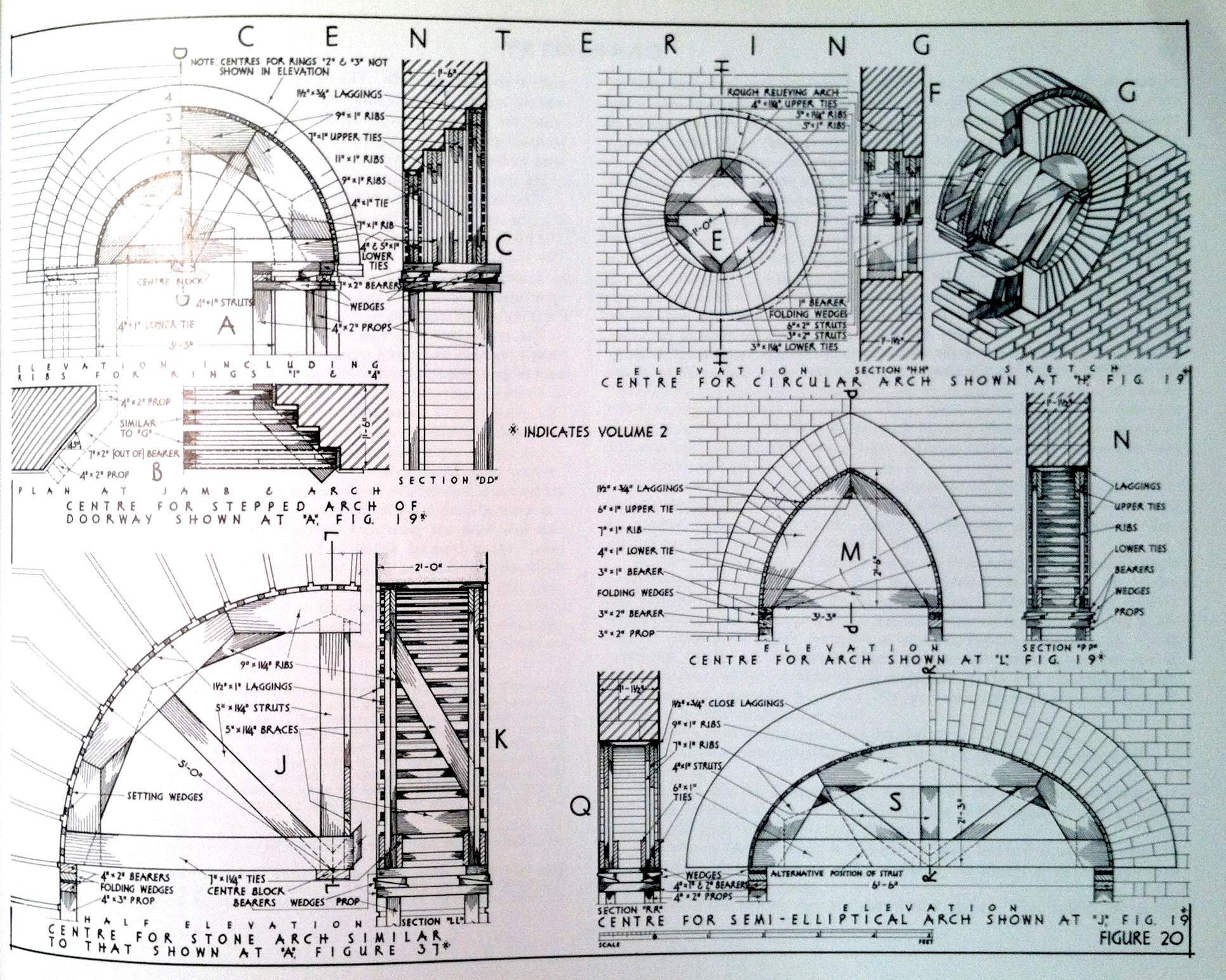
In Britain, The book many people refer to is McKay’s Building Construction. Originally published in three volumes over an eight year period, the recent re-publication has combined them into one book. The books are so popular in England that when they briefly went out of print, students were encourage to beg, borrow or steal to get a set.
page on hand-cut stonework
Written by W.B. McKay, who was Head of the Building Department at both Leeds and Manchester colleges, the book is particularly useful for our business as it shows and describes exactly how the various methods of construction (wood and masonry ) are carried out. Filled with hundreds of beautiful perspective drawings by McKay, the book takes up where Graphic Standards ends.
Like Neufert’s, this can be had in used editions, the most recent from 2004. I found my copy in a bookstore in New Delhi, India, so you may have to search around. This is definitely a book that is worth the search.
The Art Department Master Class is an international training program that has held over 10 training sessions in Lithuania, Italy, and Iceland. The one-week programs are led by film industry professionals from various countries who are leaders in film design in Art Departments around the world.
Production Designer K.K. Barrett giving a lecture on the design for the film Marie Antoinette at an ADM event. Photo: Andrius Paulavičius
Its creators, Ieva Buzinskaite and Domante Urmonaite realized that there was a lack of training available for people who had chosen a career in the Art Department of films and saw it as an opportunity for creating a world-wide community.
“We are committed to fostering an inclusive and supportive environment that encourages dialogue, generosity of knowledge, and long-term creative sustainability within the art department community.
Many of our participants and experts return again and again. They support the project, speak about it with warmth, and help shape what it becomes next. We’ve also been lucky to grow alongside partners who believe in the same values and continue to support us year after year.
At its core, this project is not just a job for us. It’s a long-term commitment to maintaining creativity, curiosity, and motivation in an industry that can easily exhaust all three. We want people to leave the Art Department Masterclass feeling re-energized, connected, and reminded of why they chose this path in the first place.
There is, of course, a lot of work happening behind the scenes – but that’s nothing new for anyone who has ever worked in an art department. And just like on set, we believe the best results come from care, collaboration, and a shared belief in what we’re making together.”
Digital Post-Production – November 5 to 10 in Vilnius, Lithuania
The sessions are limited to 20 participants each and are meant for individuals worldwide who have at least 5 years of experience in art departments in the film industry.
The price of the sessions is €650 per session, which includes tuition, accomodation and lunch. The price is kept low through the generous government co-funding from the European Union Creative Europe program.
For more information on the sessions and to apply, go to this link.
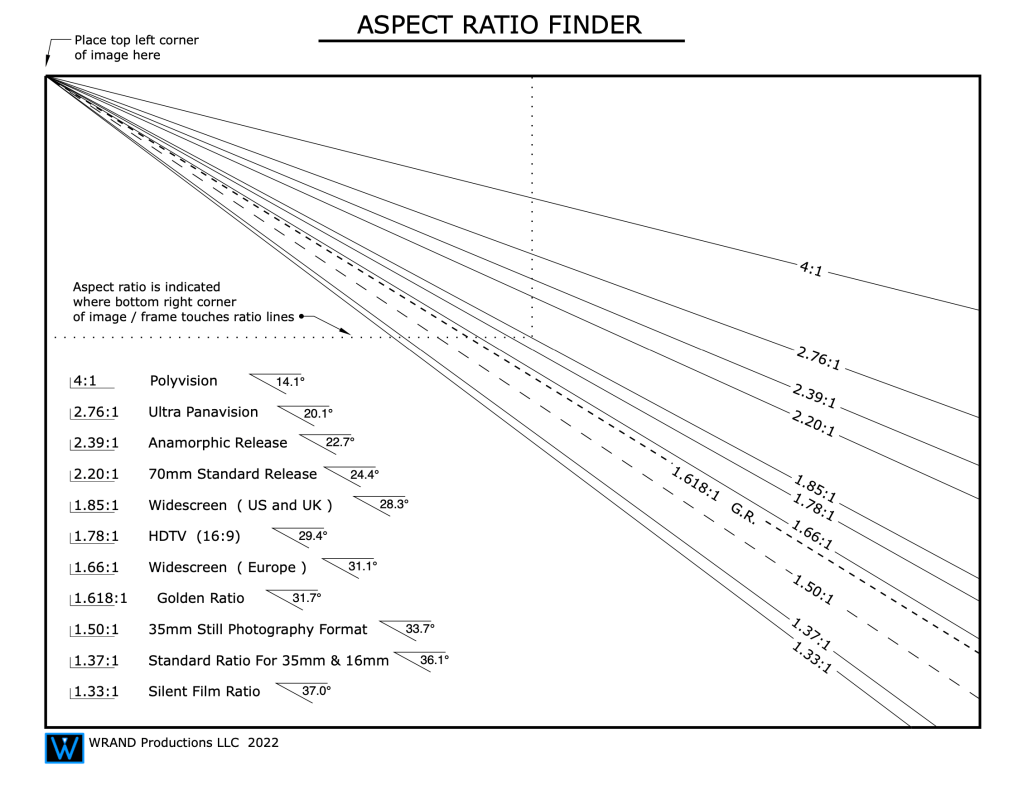
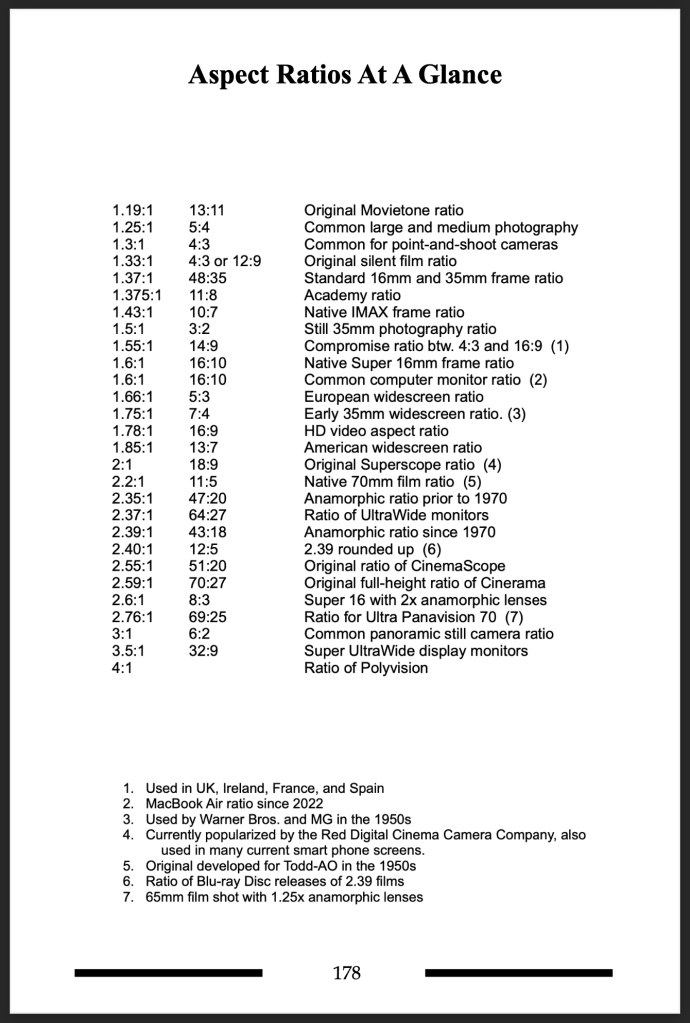
Aspect ratio is one of those topics that can be hard to explain. Part of the confusion starts with the numerical system used to describe the ratio system. It has nothing to do with lens focal lengths, or depth of field or any of the other optical explanations of a film image. (Yes, camera sensors do have a set aspect ratio but you can crop an image to any size in post production so for now I’m concentrating on talking about a display aspect ratio. And, I’m leaving out the confusion over spherical vs. anamorphic lenses for another post.)
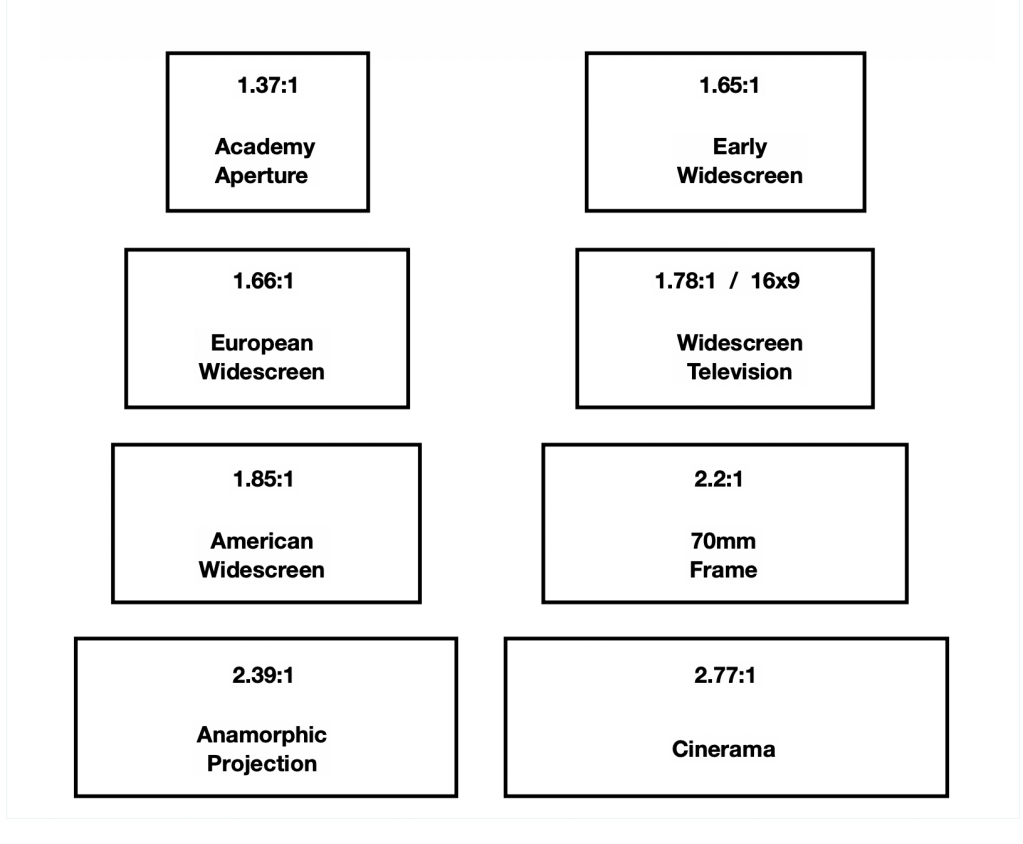
The simplest way to explain an aspect ratio is that it is a comparison of the horizontal length of a frame to the vertical length.
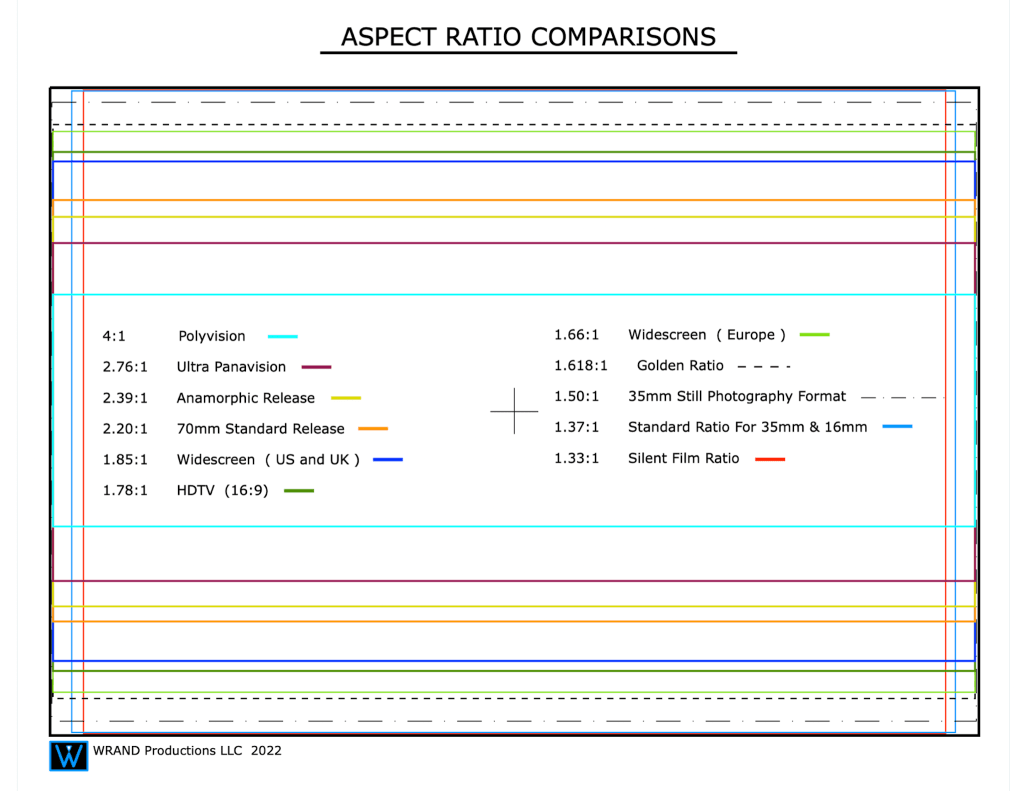
The first films, the silent ones, were shot with an aspect ratio of 1.33:1. The width of each image is 1.33 times the height.
The extreme projection aspect ratio up until now was a 4.1:1 format called Polyvision for the 1927 film, Napoleon, which was done by lining up three projectors and interlocking three 1:33 ratio film prints.
Here is a chart for determining the aspect ratio of an image.
Once television became a competitor to the movie theaters for audience eyeballs, the studios began to experiment with shooting films in wider formats to create a visual experience that TV couldn’t match because of the fixed 1.35:1 television screen size.
As filmmakers became tired of seeing their films shot in widescreen cropped for viewing on TVs, a compromise was made by changing the old 1:37 aspect ratio to 1.78. This opened up the standard screen width and changed the way even television shows were shot from the mid 1980’s.
Notice that some formats are referred to by different style or raio callout. The 1.78 format is also described as 16×9. Thus the typical smart phone screen ratio is known as 9×16 because of it’s being typically viewed as a vertical rather than horizontal image.
The best video explanation of film stock differences and aspect ratios was done by Ryan Coogler for Kodak as he talked about the different aspect ratios he used for shooting his film “Sinners”. He talks about a number of new projection systems that I didn’t know about.
Here is a video of Autumn Durald Arkapaw, the cinematographer and first woman to win the Best Cinematography Oscar, explaining how she shot the film in two different aspect ratios; IMAX and Ultra Panvision 65.
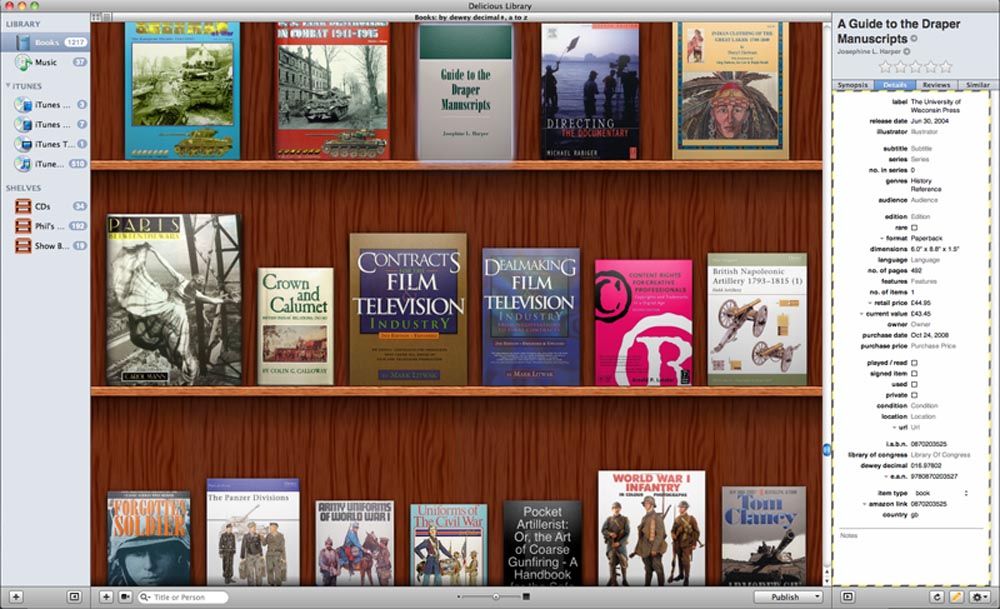
Nearly 14 years ago I posted an article about organizing your books and reference. I had found a new (at the time) app called Delicious Library which was perfect for the task. It would organize your books, DVDs, reference boxes and other assets in categories and pulled in data from Amazon as to book values, prices and print data. Unfortunately it only worked on Macs.
Several years ago the app was cut off from using Google data and it became of limited value when updating assets and books.
The old interface of Delicious Library
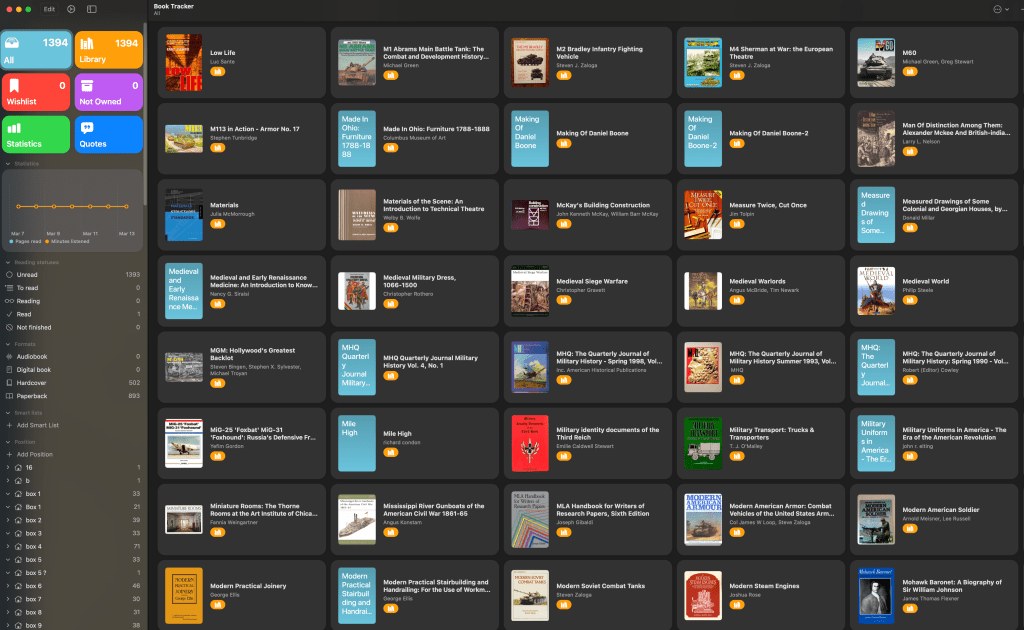
I just recently found a replacement, an app called Book Tracker. It operates similarly to Delicious Library but does not access the same amount of data that Delicious Library had access to.
Fortunately it was easy to import my library data from DL and everything came in perfectly, with the exception of the book values that were listed in DL. Unfortunately the app is also only for Mac. (Keep reading for a PC option)
The interface isn’t quite as graphic as the virtual bookshelf in DL, but Book Tracker does have a nice organization system and make it easy to sort books by a wide range of categories.
The Book Tracker interface
The app also has an iOS version that works on an iPhone that has a barcode scanner which makes it easy to add new books without doing a lot of data entry.
There is a free version but it’s only good for 5 books which isn’t very helpful. Use the free version to try it out. For the full version, there is a one-time purchase price of $20. The app for the iPhone will cost you an additional $5, but the bar scanner feature made it worth it for me.
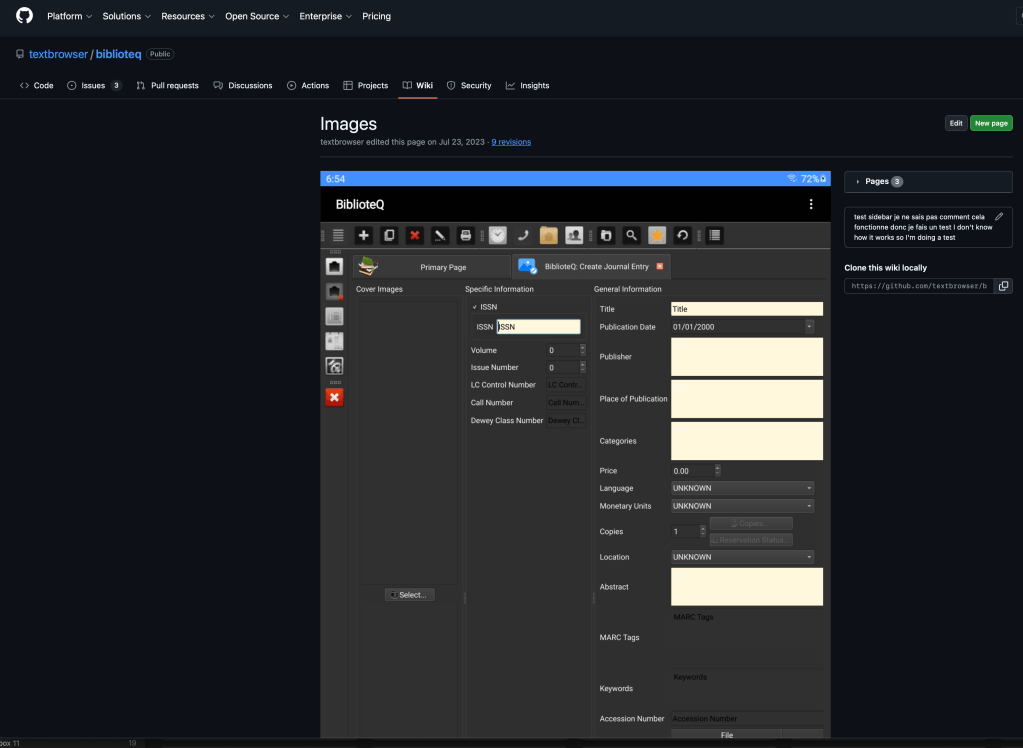
For PC users, a similar option is an app called BiblioteQ. It is a FREE open-source program that you download to your machine rather than existing in a data cloud server.
The program is updated regularly and is supported in 12 different languages. It brings in cover art from Amazon and Open Library, will support third-party bar code readers, works on Mac as well as Windows, and will import libraries from CSV files so it will also ingest a Delicious Library collection. It is also designed to organize and archive collections of music, photographs, journals, and video games.
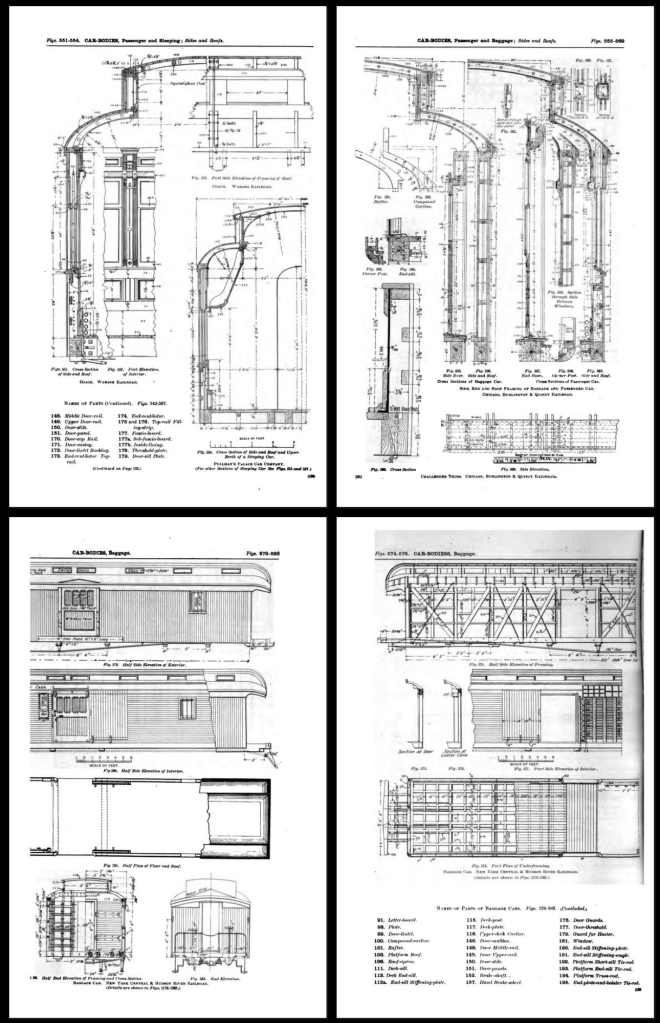
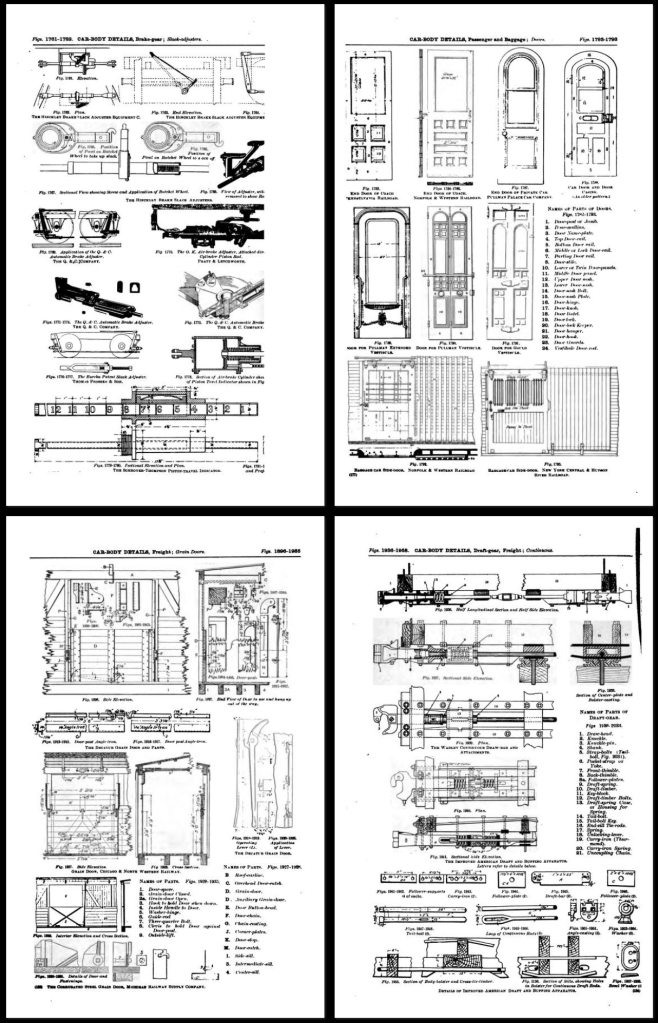
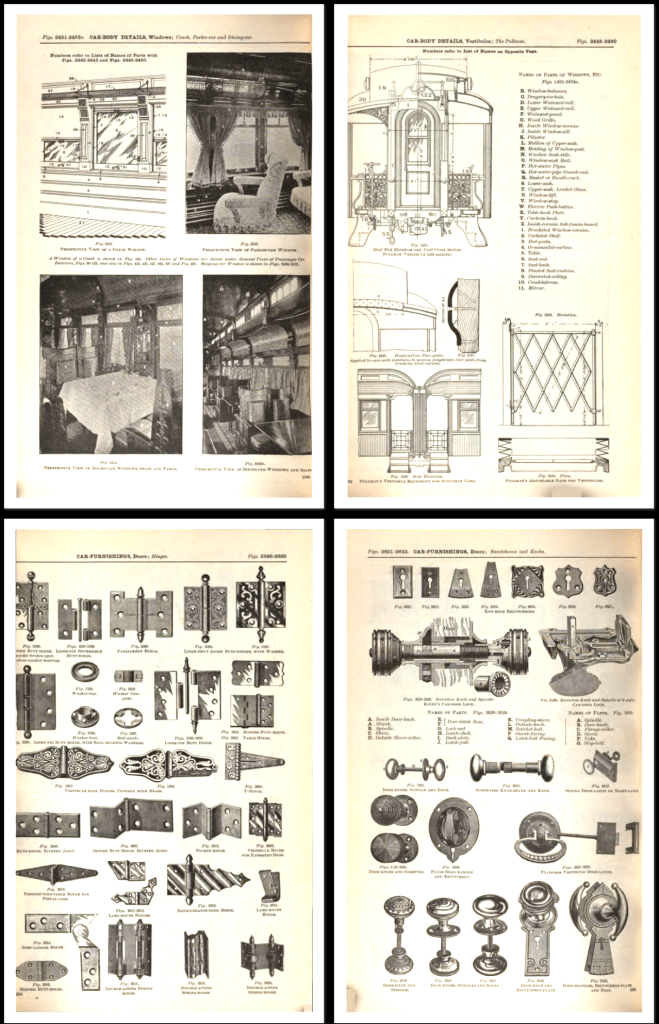
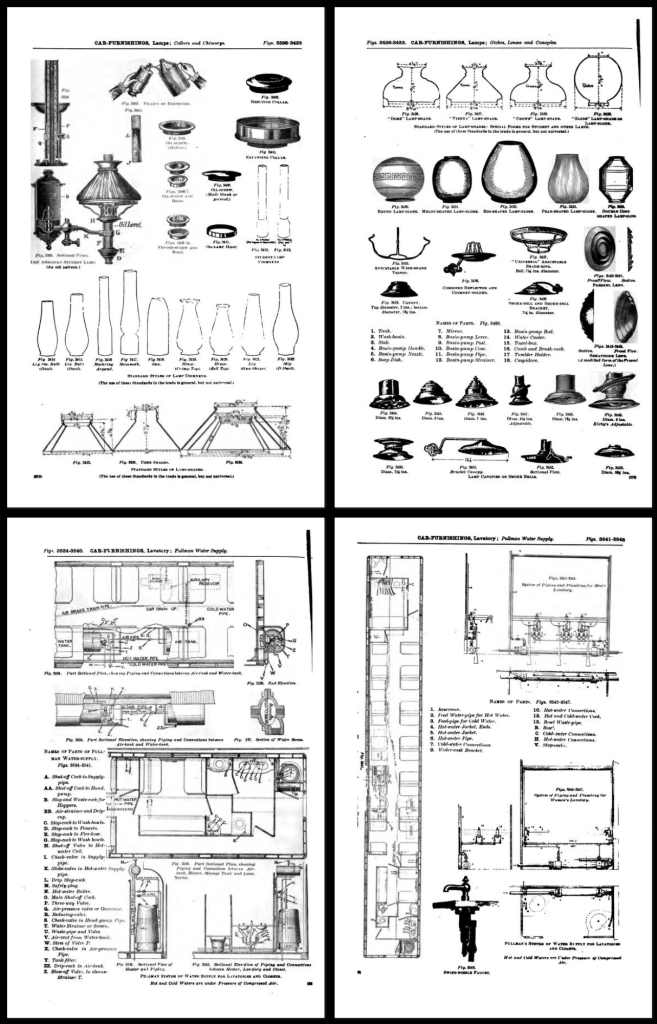
Trains are one of those set pieces that don’t get used often anymore and reference for early period trains isn’t always easy to find. My train reference usually gets buried on a back shelf of my library and I have to unearth it when a design comes along that involves a train car or a scene that requires recreating railroad scenes.
These two books are the most complete that I’ve found when I need to create details for a train car build or most any other information on late 19th to early 20th century railroad systems.
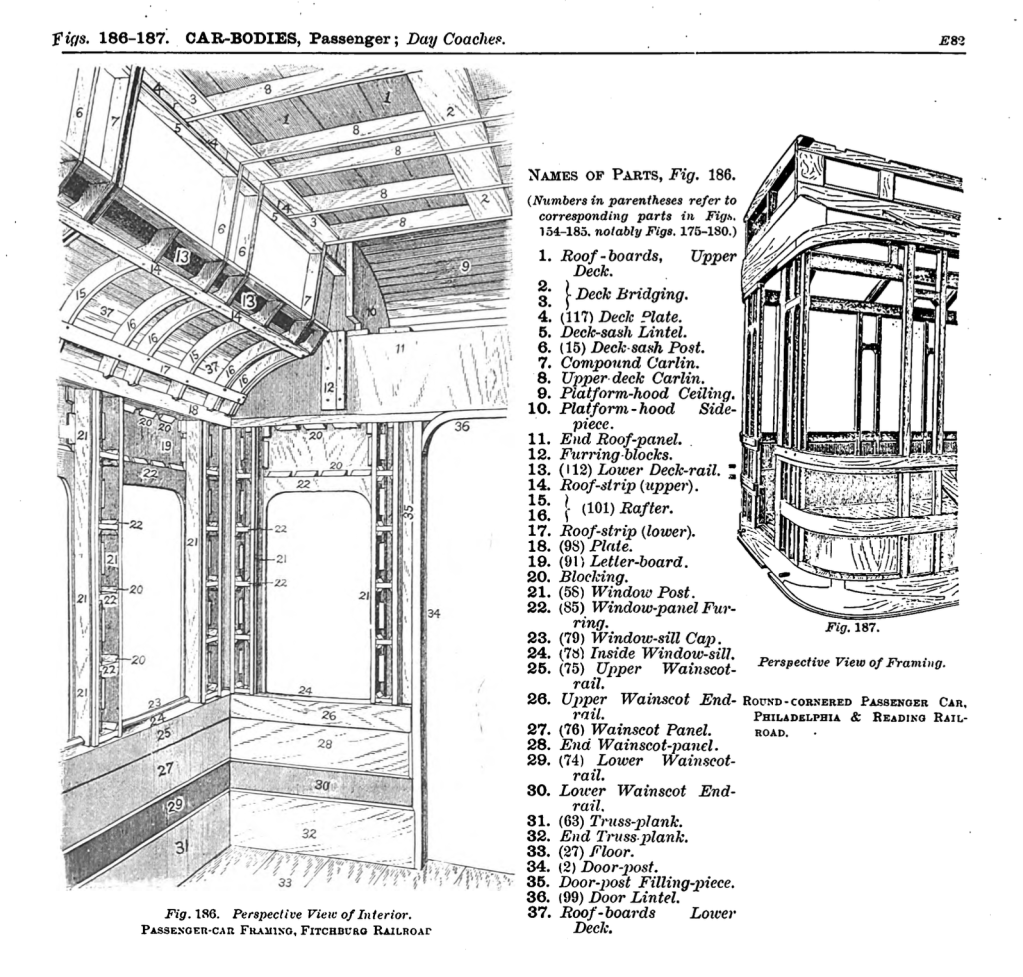
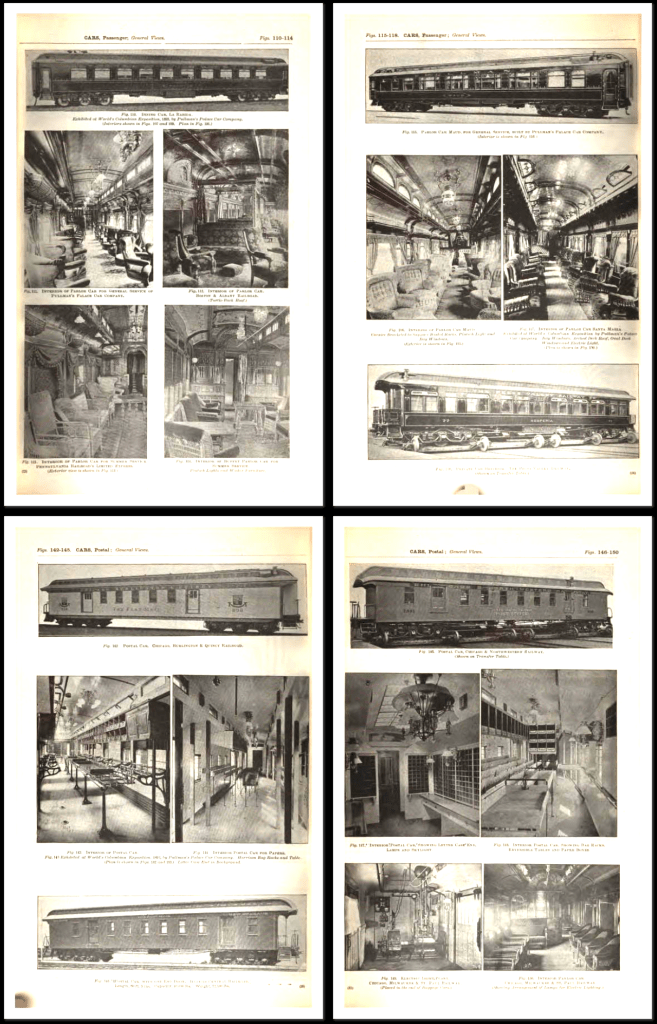
The first is The Car-Builders Dictionary, which is now in a digital format. It’s a 680 page book that includes pretty much anything I have ever needed to know about railroad cars of that period. The book includes a 200 page glossary as well as scale drawings and perspective views of almost all passenger and freight cars, including street cars, both American and English.
There are scale drawings, plans, and sections of cars to show construction and layout. There are also photographs of car interiors, and detailed illustrations of every part on the cars, both functional and cosmetic: seating, hardware, brake diagrams, truck construction, lighting, etc.
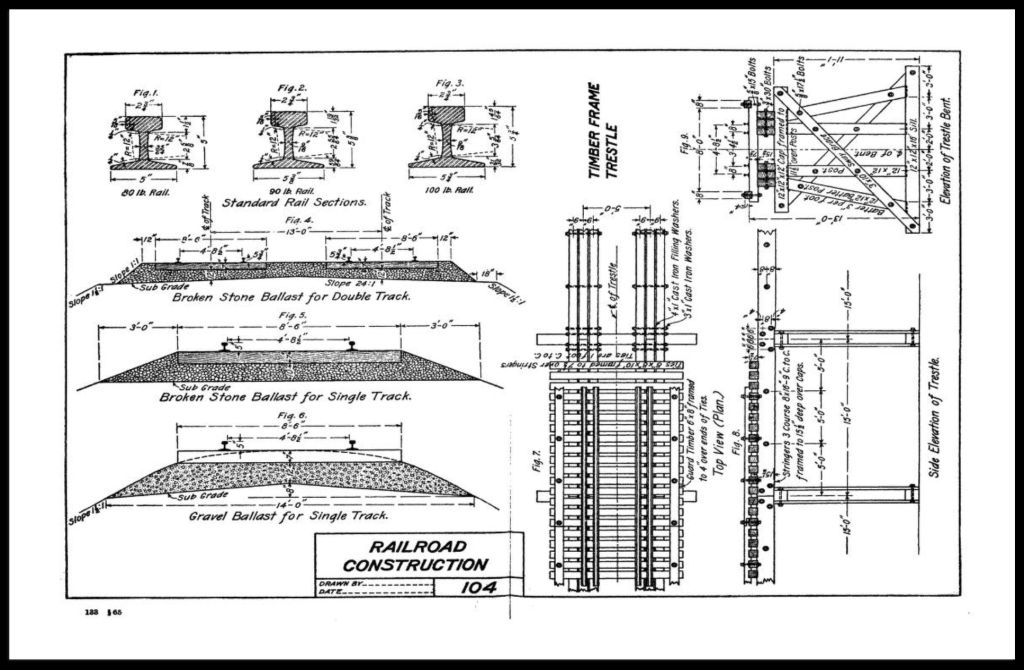
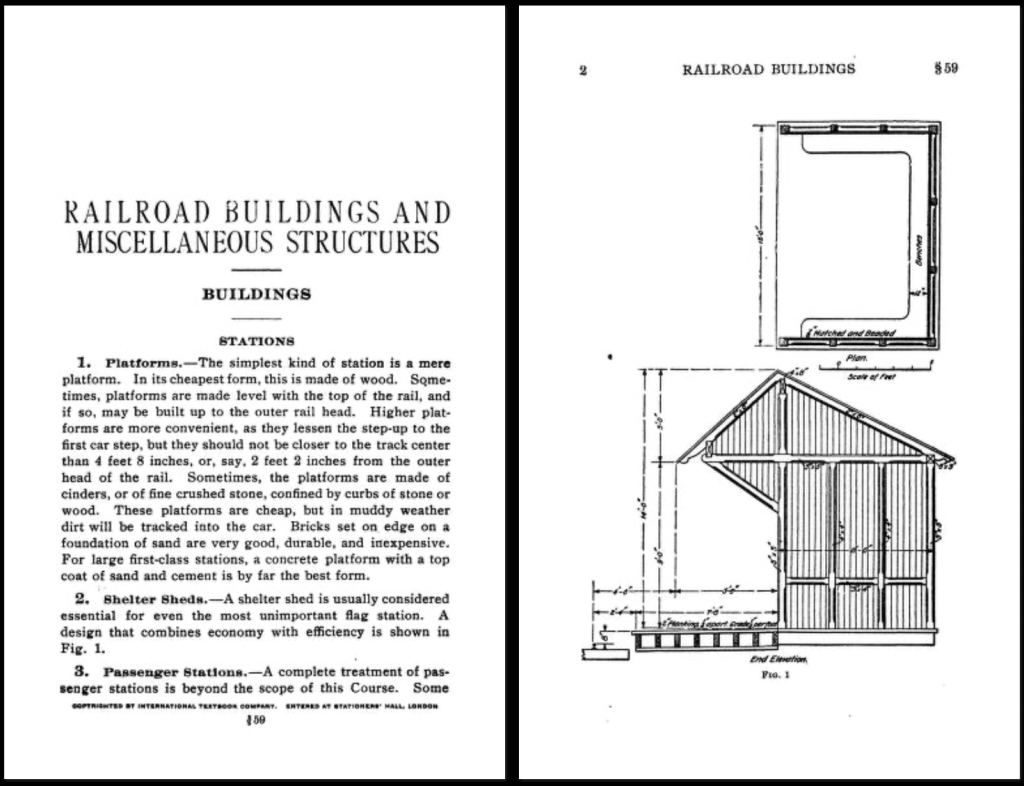
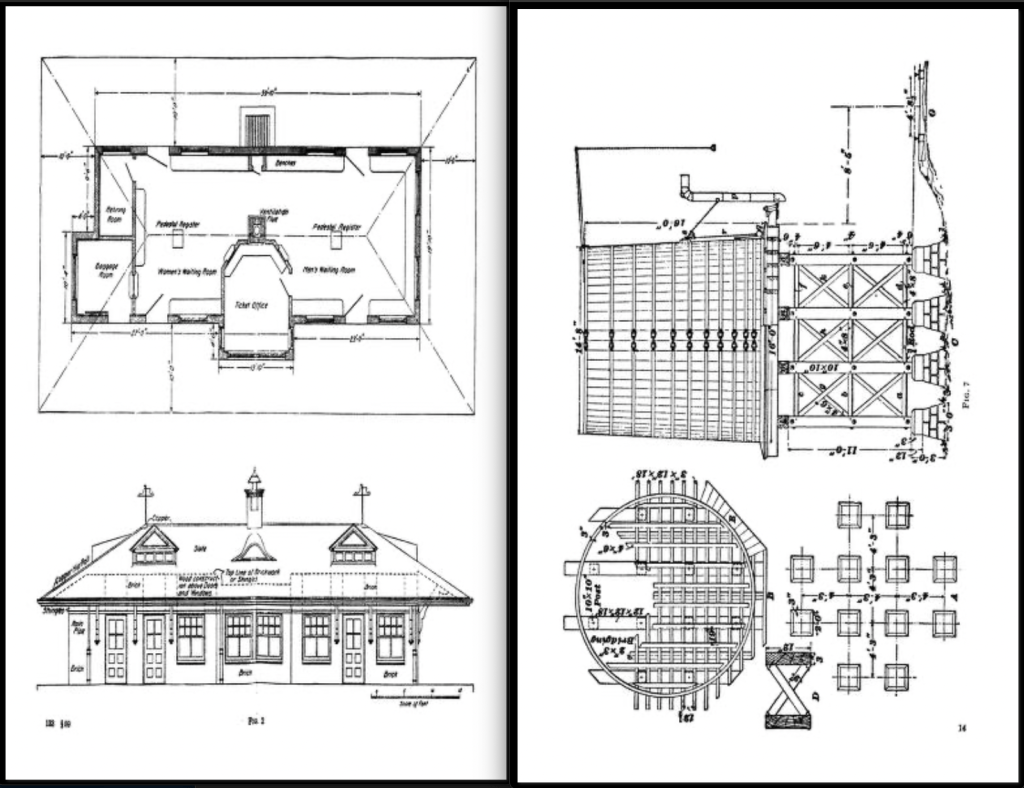
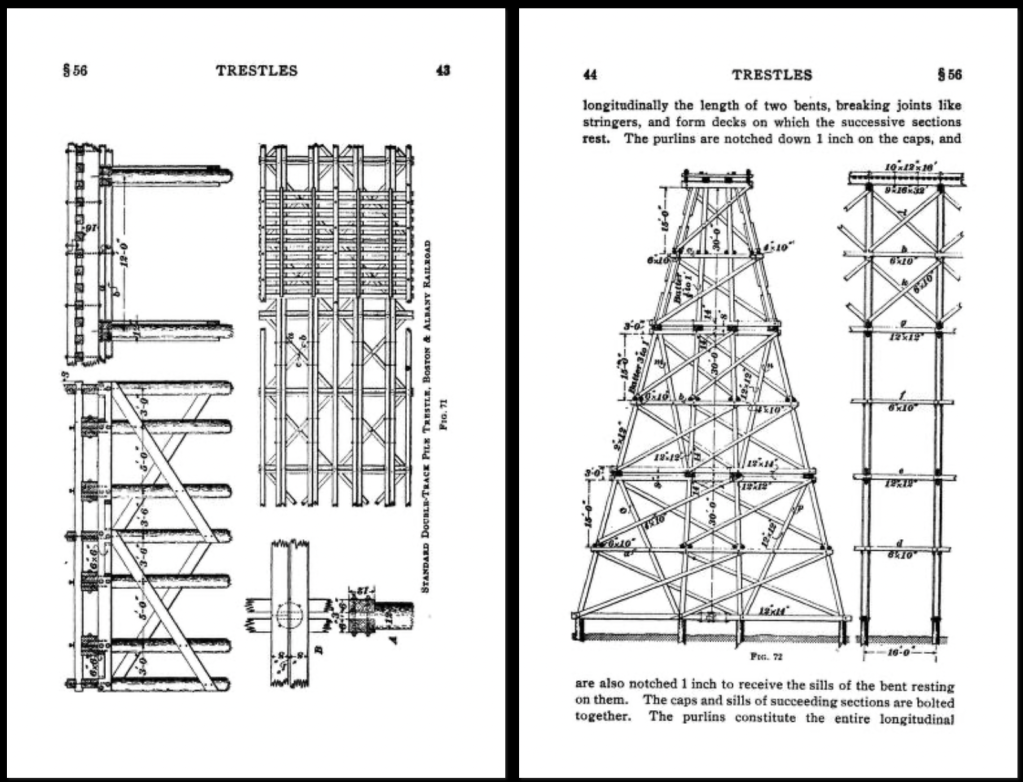
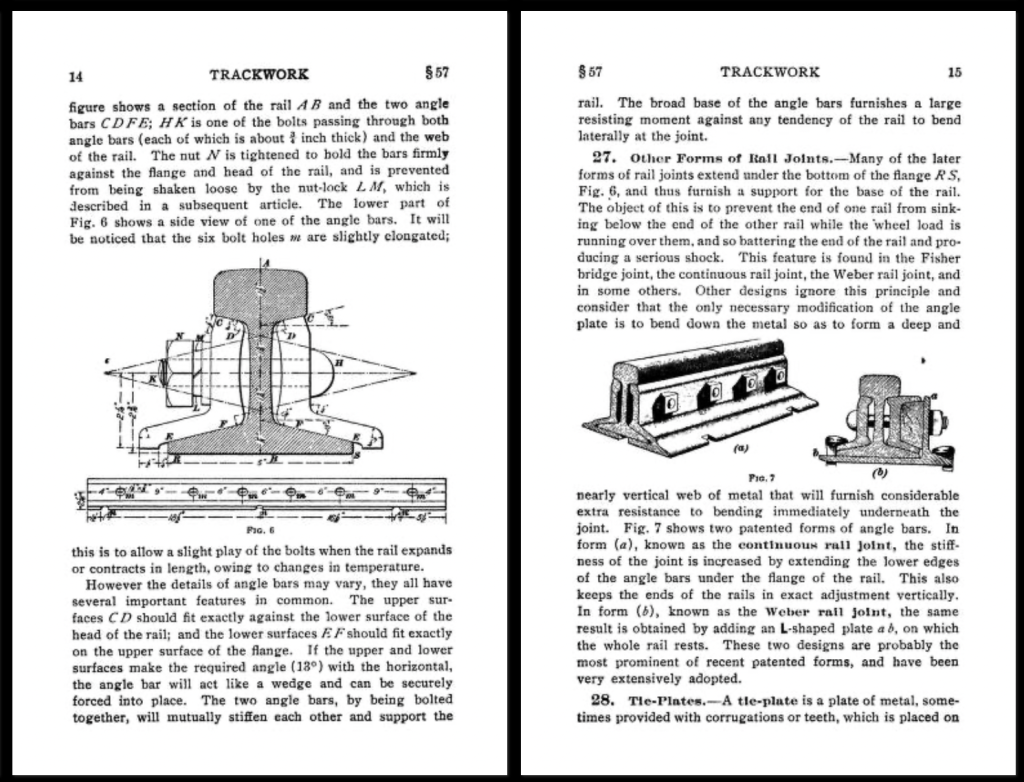
For everything else railroad related, I’d recommend the I.C.S. Reference Library, Vol. 133_Railroads, 1908. This is a 800+ page manual that covers the infrastructure of railroads, including track design and layout, covering standard track schematics, bridges, rail specs, buildings, service facilities, and sections on road and highway construction, and city surveying and survey drawings.
Sometimes what you hear about a famous movie prop doesn’t give you the full story.
This is the real story behind the design of the Vid Phōn, the video phone booth in Ridley Scott’s film Blade Runner, that Harrison Ford’s character Decker, uses to call Rachael (Sean Young).
The Vid Phōn Hero prop. Now in the collection of the Academy Museum of Motion Pictures in Los Angeles. Syd Mead is given sole credit for the design on the signage at the Academy display but the prop was completely redesigned by Tom Southwell during pre-production.
Syd Mead did a lot of concept illustration work for the film that contributed to the futuristic look. But as is true for a lot of concept artwork, the execution of it can become problematic when it comes to translating it into a 3D ‘shootable’ reality.
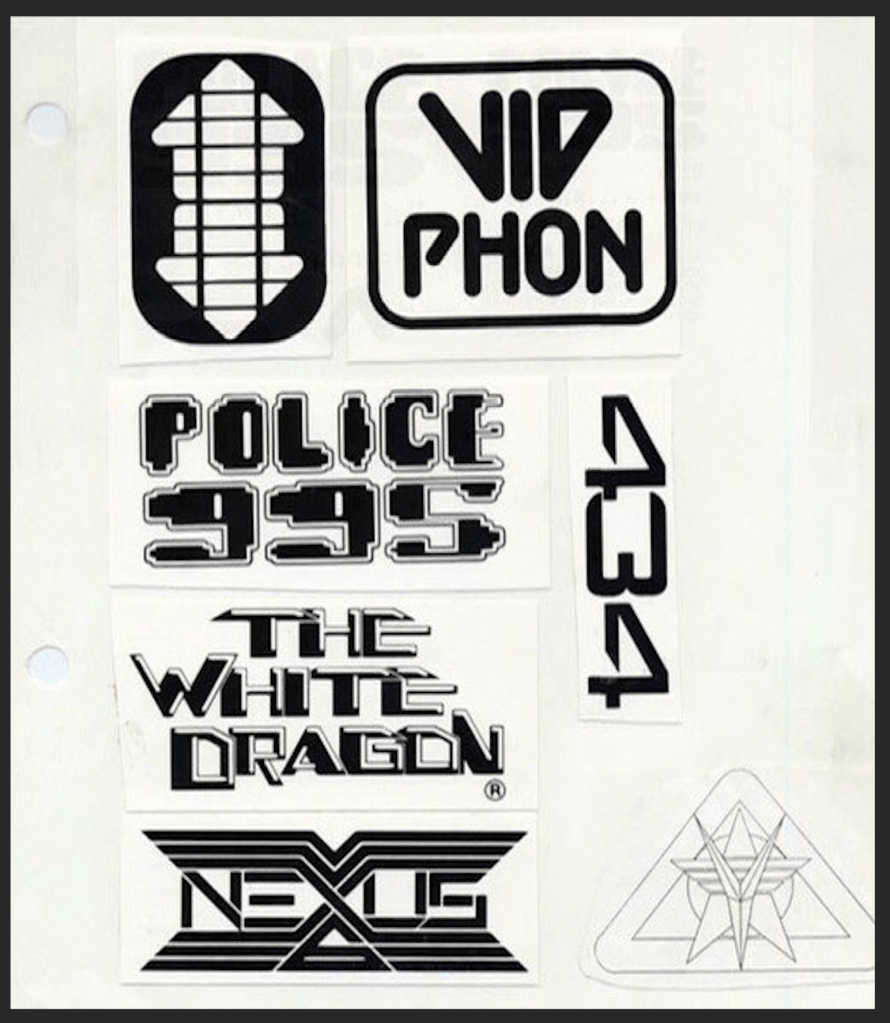
Tom Southwell, who is a Production Designer in his own right, (Disturbia, The Salton Sea) was the production illustrator on Blade Runner, as well as many other films, and designed all of the graphics for the movie. He was also called upon to design hero props for the film that not only had to work but be ‘shootable’ as well.
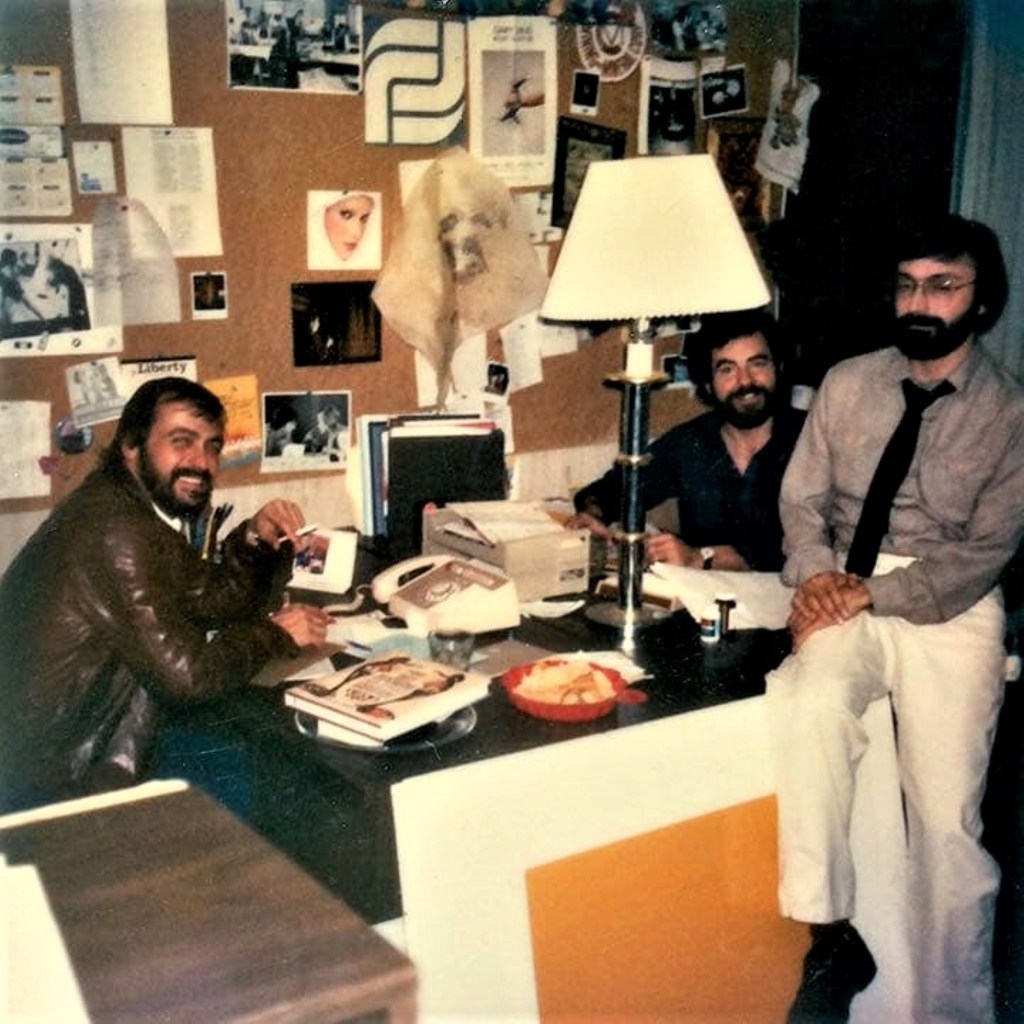
In the Art Department on Blade Runner. L to R – Production designer Larry Paull, Production Illusrator Tom Southwell, Art Director David Snyder.
This weekend, on February 28, Tom will be awarded a Lifetime Achievement Award for his work as an Illustrator and Production Designer at the Art Directors Guild Awards Banquet in Los Angeles.
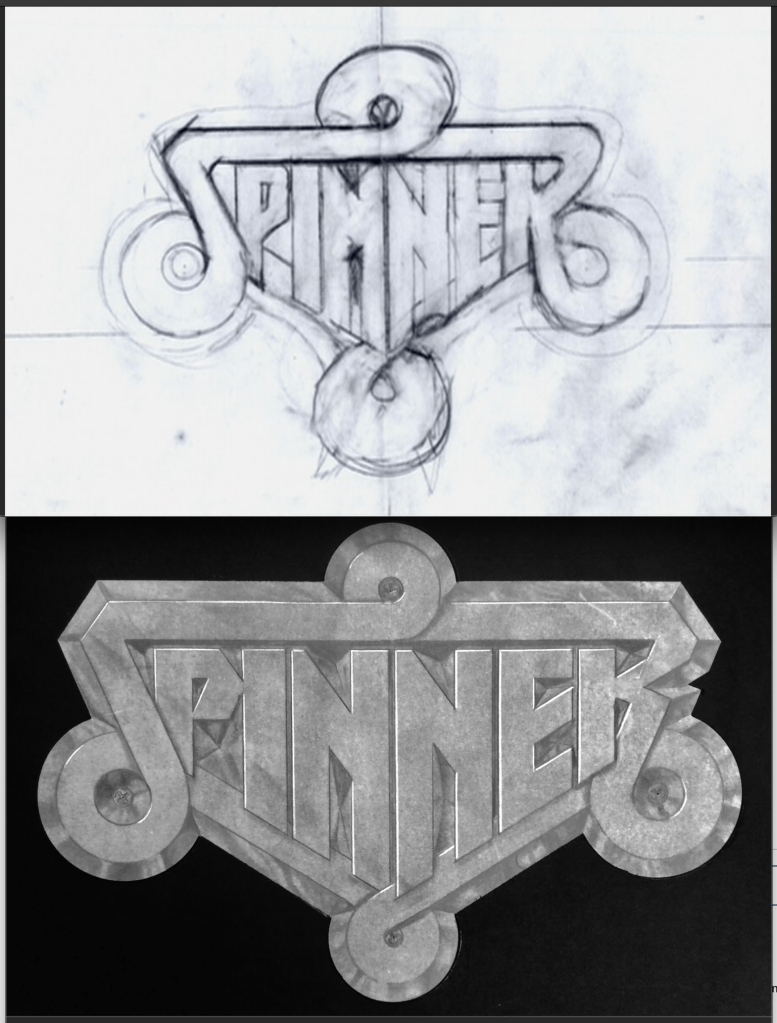
Tom’s original sketch and final logo for the Spinner CarSome of Tom’s other graphics for the film.
When recreating a period set from the 1800’s in particular, it’s difficult to really replicate the designs of the period because current wood moulding and millwork don’t allow for what was a common practice by designers and architects; true proportional design.
A moulding catalogue of today looks very different from the original moulding catalogues of the 1800’s. Not only because they contained a larger variety of profiles, but there was a large selection of different sizes for almost every profile that they offered.
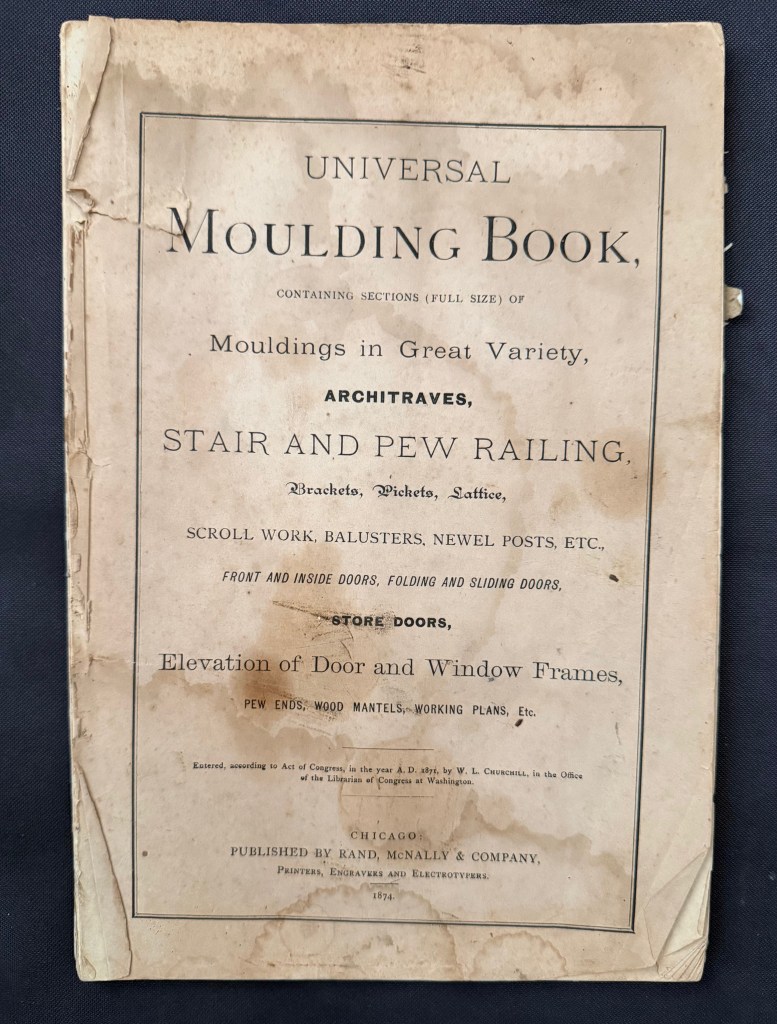
The cover of the 1874 Universal Moulding Book. One of the first millwork catalogues for wood moulding.
The oldest moulding catalogue that I own is the Universal Moulding Book from 1874. This catalogue shows over 650 moulding profiles in full size. It isn’t the first version. I know this because the catalogue states that 46 profiles have been phased out from a previous catalogue.
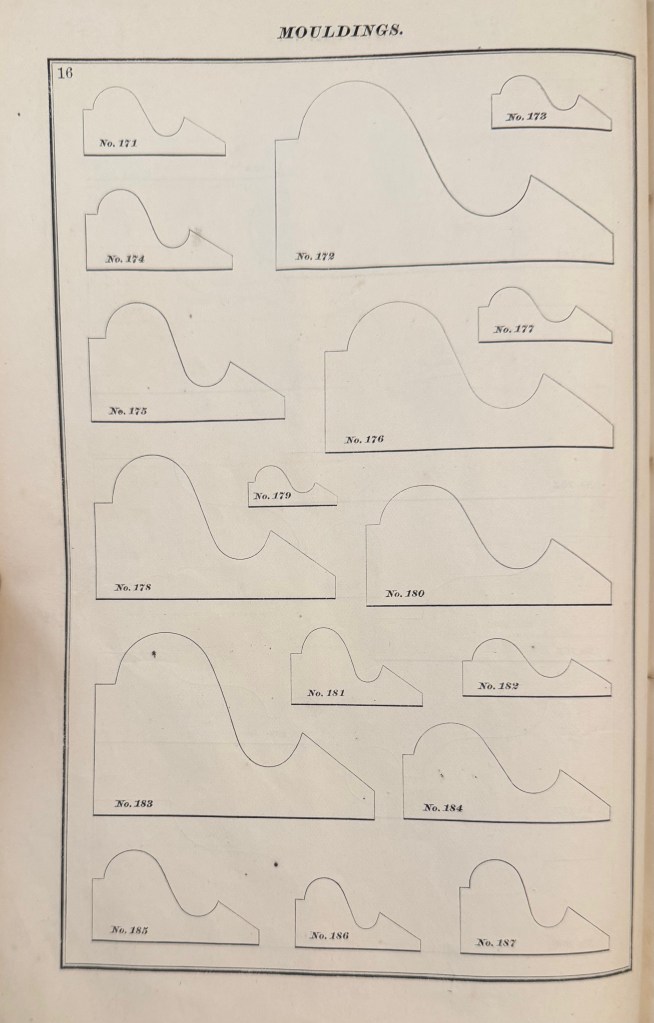
Here is a page of a profile known as a Quirked Greek Ogee and Bevel, a popular profile in the mid 19th century. Notice that there are 17 different sizes.
Why so many sizes?
Originally moulding or architectural enrichment wasn’t an afterthought. The mouldings were designed to be used in proportion to the openings that they surrounded.
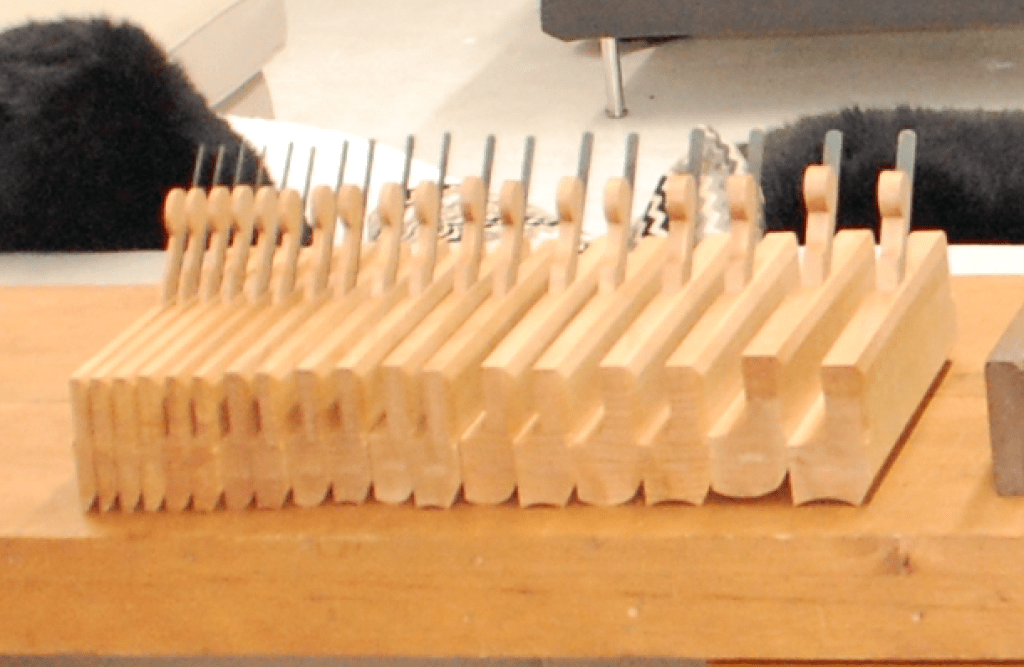
In America, and England, before the Industrial Revolution, wood mouldings were made by hand. (plaster ornament was as well). With a set of planes called Hollows and Rounds, an infinite variety of moulding profiles could be created. A set of planes were designed to created 1/6th diameter arcs in increments of 1/16th inch.
My working set of hollows and rounds
Various pattern books of the period laid out the formulas for creating the mouldings according to the width of the openings. In his 1827 version of Builder’s Companion, Asher Benjamin wrote that for a door or window, the proper proportion would be found by dividing the opening into eight parts and giving one to the width of the moulding, He noted that this formula would provide a different width for different widths of doors and windows, but said that it wasn’t good to have different widths of architraves in the same room.
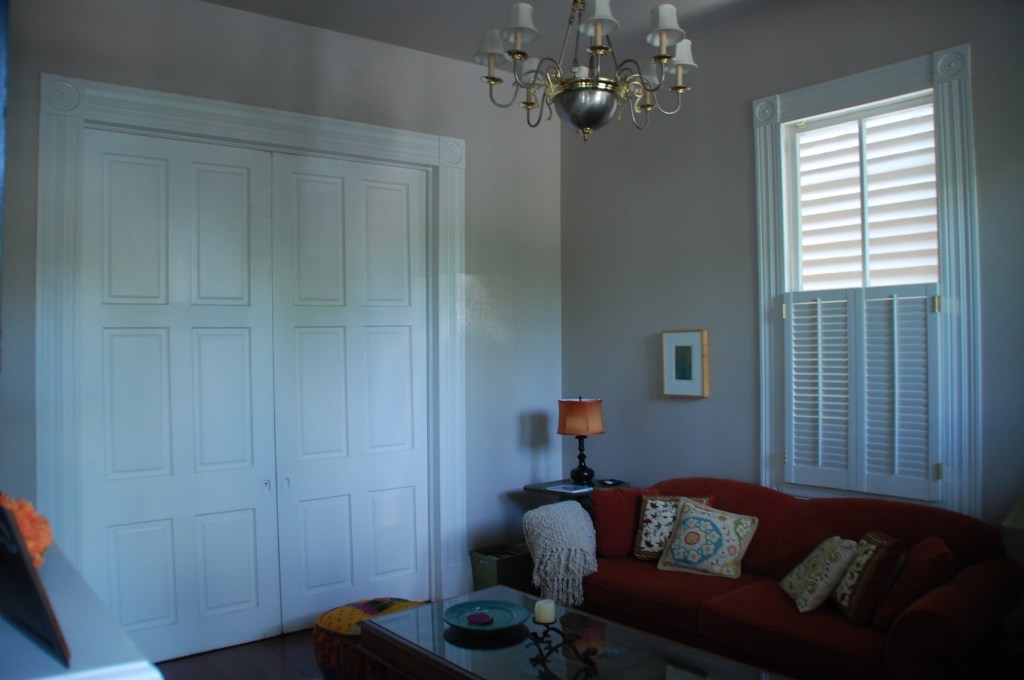
Obviously he wasn’t around to comment on this house interior……….
1839 New Orleans 4-bay townhouse
The pocket door opening in the photo is 6′ wide while the window width is about 3′ wide. You probably don’t notice that the architraves and the corner blocks are different sizes. The casing aound the doos is about 6″ in width while the window casing is less than 5″. The casing that frames the doors would look too large around the windows while the window casing width would be too diminished by the pocket door opening width.
Because the casing widths conform to the opening sizes, they look similar enough in size for their differences to be hard to recognize. The fact that they have proportional details within the overal common profile helps as well.
When the factory-made millworker begain to replace the on-site handmade moulding, they settled on a series of profile sizes that would fit most situations based on common door and window opening sizes.
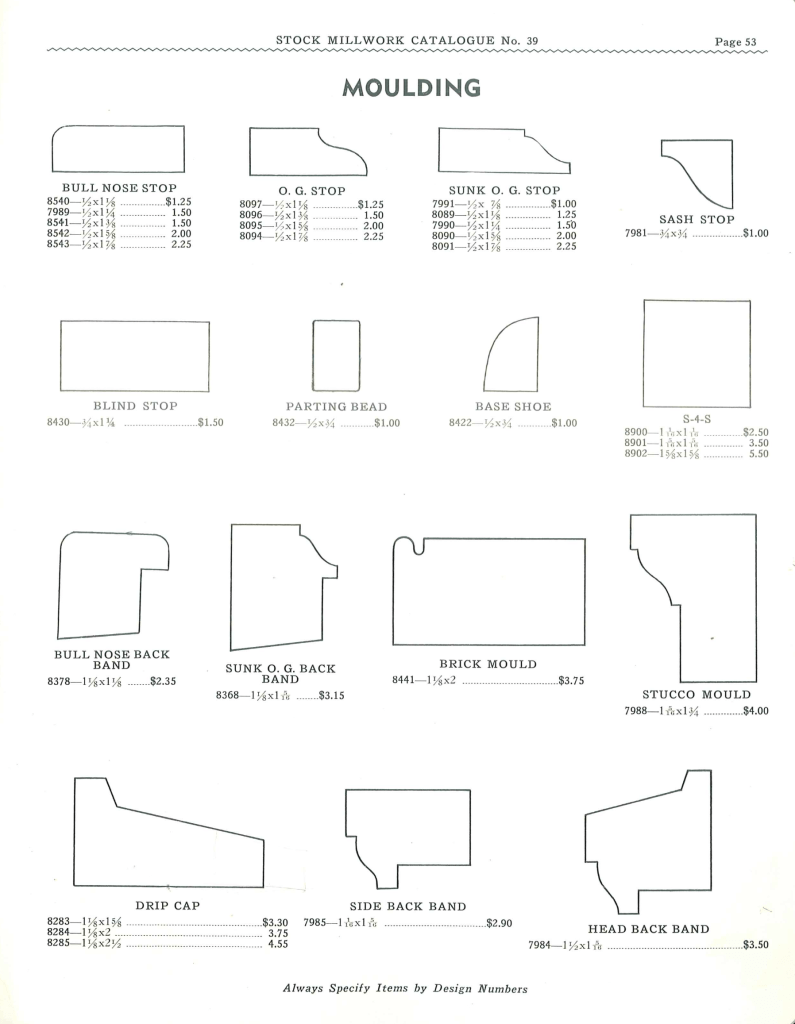
This variety of sizes began to diminish into the 20th century until around 1940, when most catalogues began to offer only a few or even just one size of each profile.
A page from the 1939 Stock Millwork Catalogue
When you have a design that requires moulding profiles that aren’t available, (which is a common problem with 19th century Victorian designs), and you aren’t able to create a built-up moulding from available profiles, you may have to have a set of custom knifes made.
If you order enough linear feet of the mould, some shops will waive the knife fee as it adds to their selection of profiles. Be sure you look into custom knifes before you discount it as being too expensive. The job is also done by CNC now rather than hand-grinding. so the actual operation is not a bid deal.