Arch-Anatomy – Wood Bricks

This is the first of a series of articles on the anatomy of architecture which focuses on construction details. Many of them are details that are now obsolete because of modern building methods or the evolution of designs due to changing tastes.

(An expanded explanation of an obscure but interesting entry in the Wrand Film Design Glossary.)

If you try to search for ‘wood bricks’ on the internet, you’ll probably come up with some strange answers. They were a standard feature of brick construction in the nineteeth century that went out of fashion for a number of reasons.

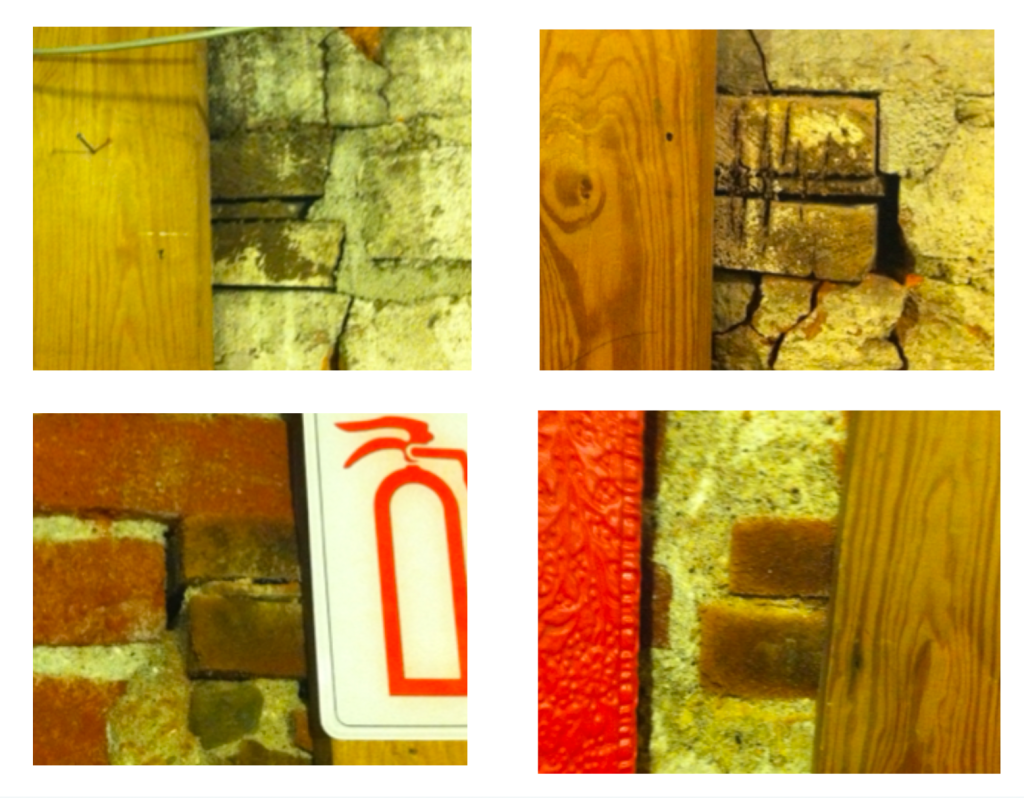
With masonry building construction there has always been the problem of attaching wood elements to stone or brick structures. This was often accomplished by inserting wood plugs into the wall surfaces as an attachment point for nails, or by driving nails into the mortar of joints.

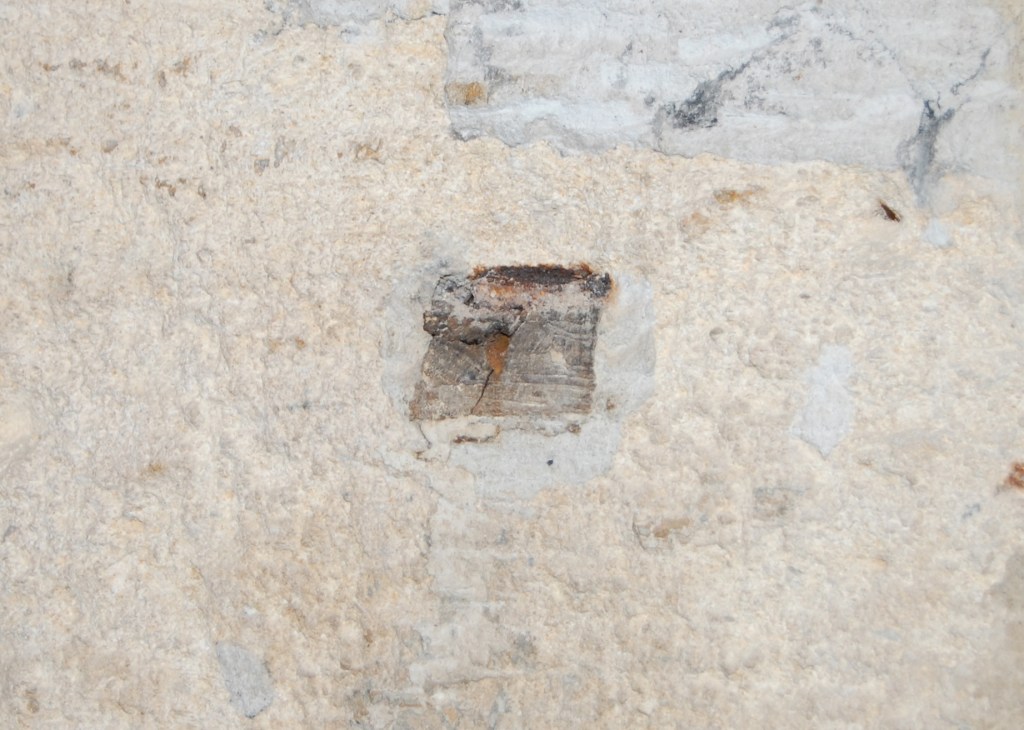
A wood plug in a stone wall of a 17th century Paris hotel.
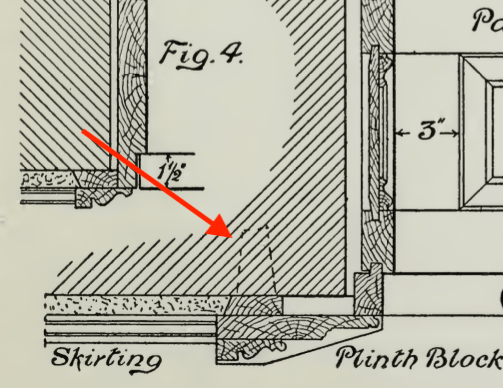
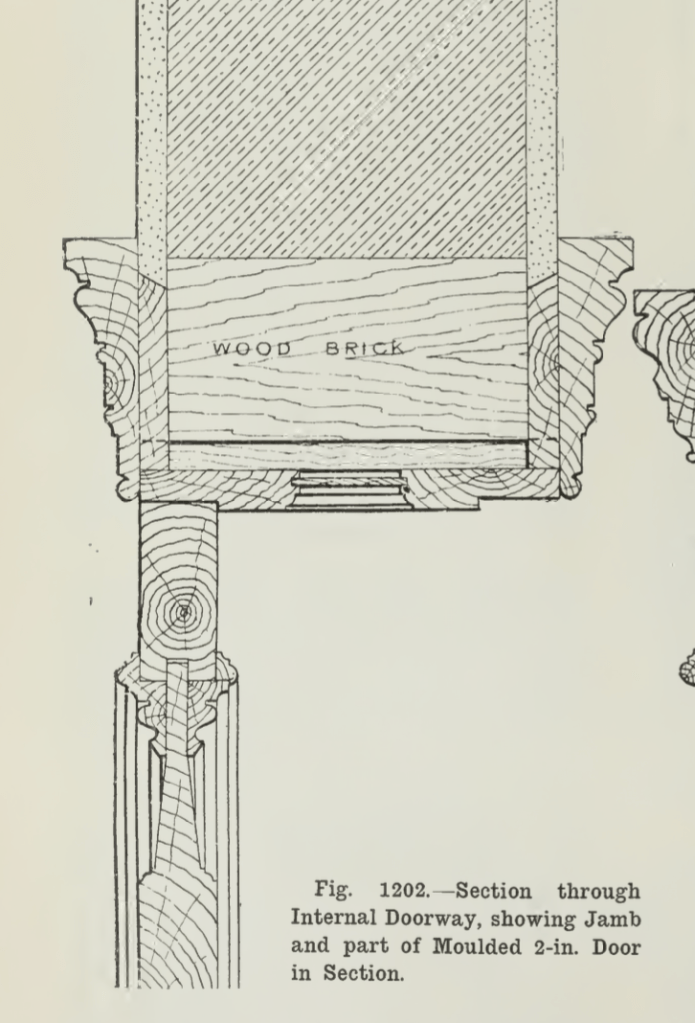
From a 19th century builders manual showing the use of wood plugs for attaching a door frame.
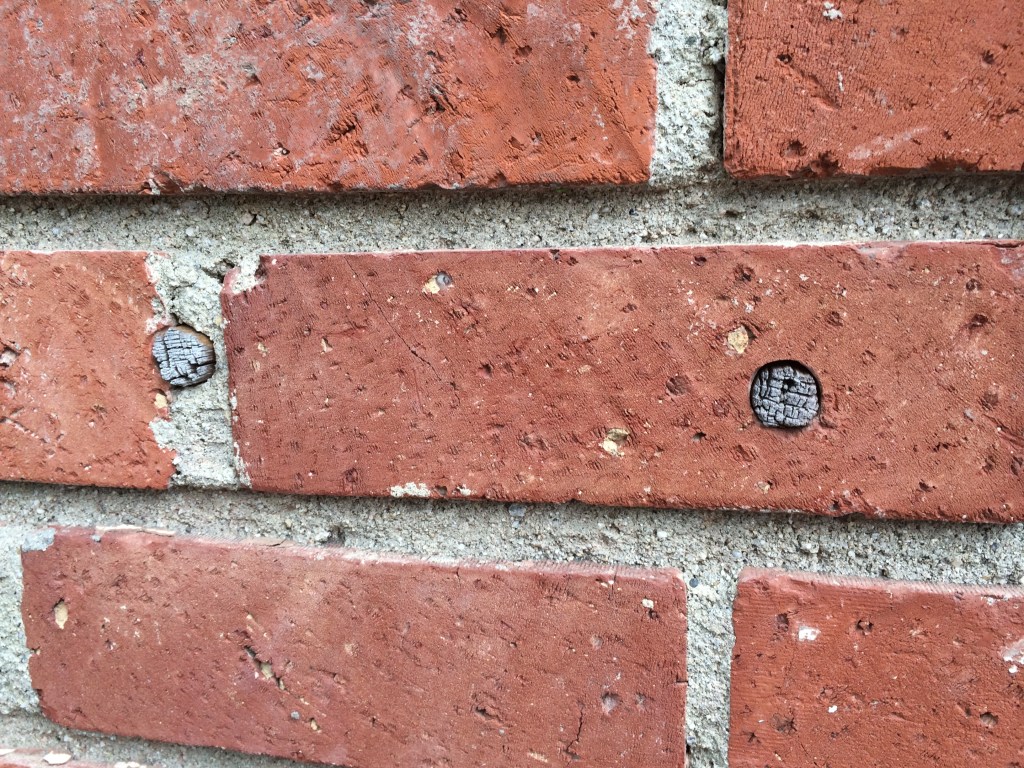
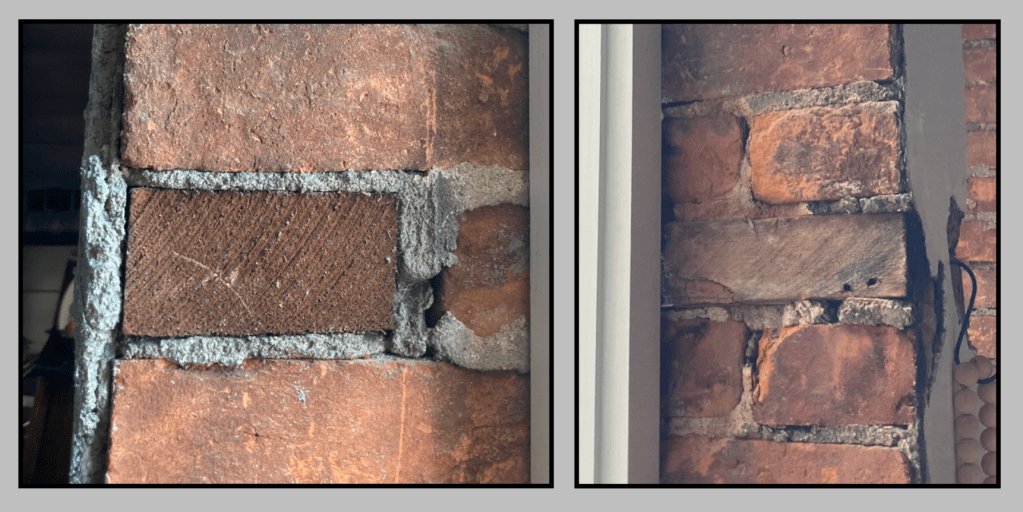
Wooden plugs in early 20th century brick.

The use of ‘wood bricks’ most likely evolved in England before spreading to America. Most building manuals of the period that mention their use suggest using well-seasoned hardwood billets set between the brick courses at intervals for a way of attaching the wood linings for doorways and window framing.

For narrower wall opening, this lining could consist of a single board like in the illustration below.

Use of a single plank as a door frame lining for a brick wall. Note that the wood bricks are also used to attach the grounds at the door frame for plasterwork. The architrave exhibits typical Neo-colonial profiles, while the bolection mould on the doors frame is a mould typical of Greek Revival houses, a quirked Greek ogee and bevel combined with a fillet and cove, topped with an astragal, fillet, and cove.

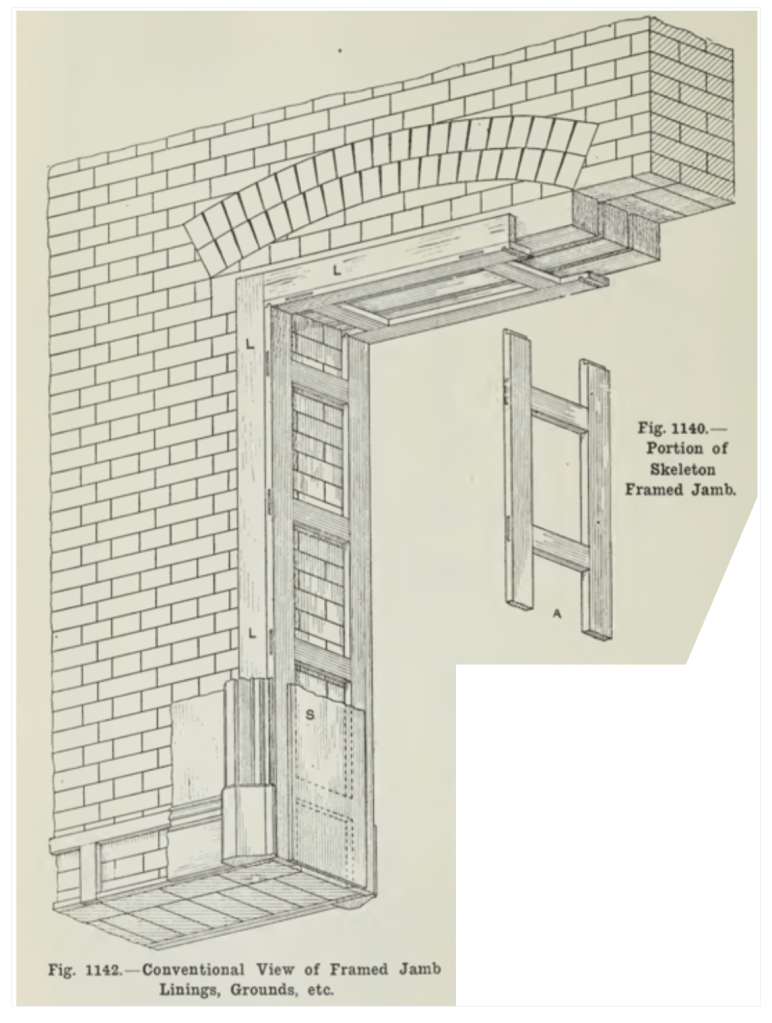
For larger openings in thicker walls, the wood bricks were made longer and the linings were made of several pieces of sawn and planed boards, assembled in what was called a skeleton framed jamb.

The skeleton frame is attached to the wood bricks as well as the wood lintel.

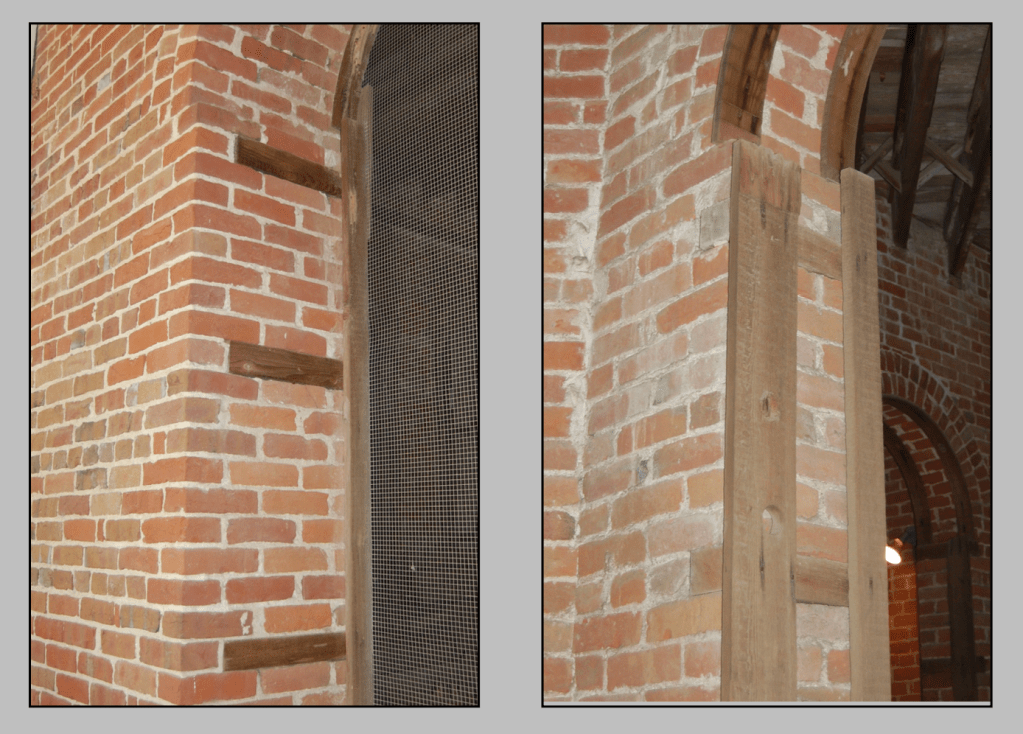
Early manuals show this framework to be mortised and tenoned similar to a frame for furniture, but some mid-ninteeth century examples in America have been observed to be simple vertical boards nailed to the wood bricks rather than a M&T frame. This method would have definitely cut down on the construction time.

The image on the left shows the wood bricks in place while the image on the right shows the vertical boards nailed to them to act as the arch frame lining. Notice the archway lining at the top with boards that have been kerfed at regular intervals to allow the wood to form to the brick archway without having to steam bend them.

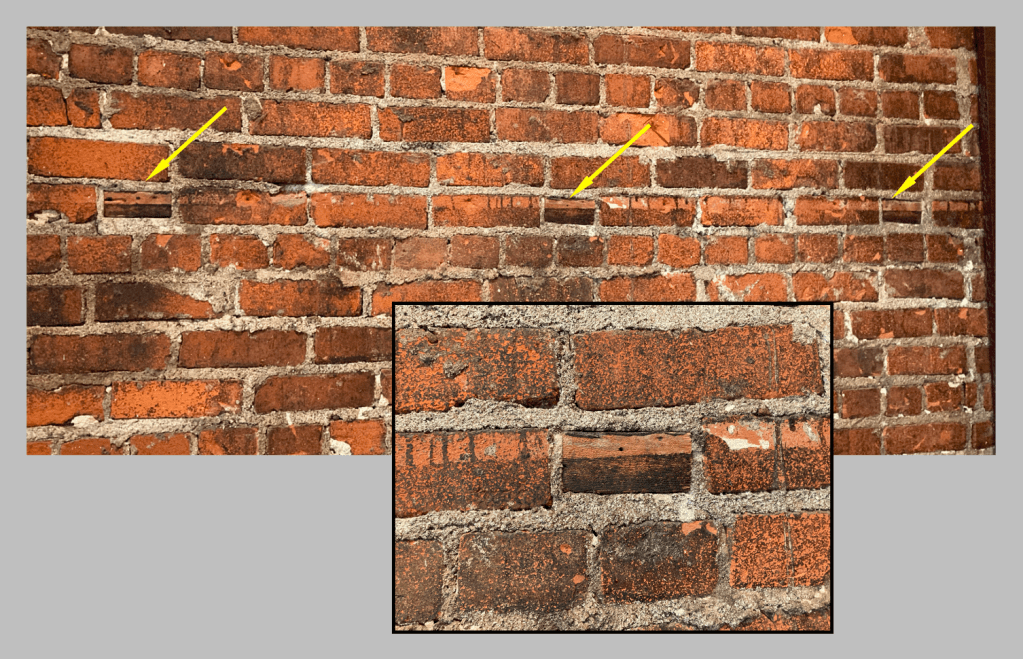
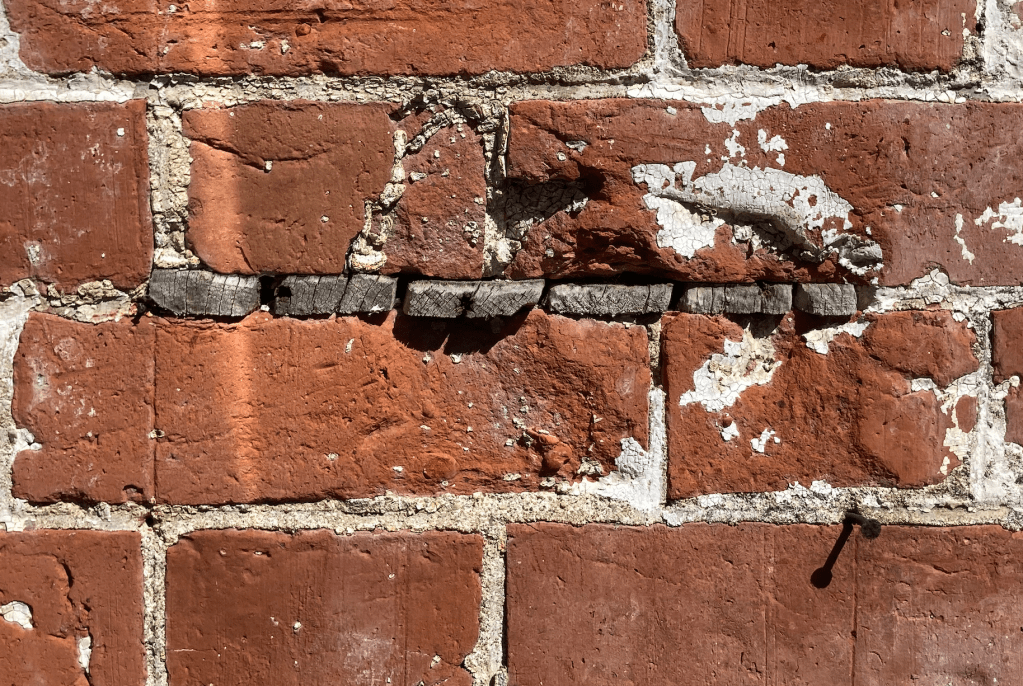
Some turn-of-the-century buildings display a more haphazard approach to wood bricks where framing cut offs of softwood were used instead of hardwood, as in the photos below.

Softwood framing cut-offs used in place of hardwood.
From an early 20th century building in Southern California. Wood bricks are set at 4′ from the floor. Most likely for a wanescot and chair rail.
Long strips of wood inserted in the brick for attaching a paneled wall detail in a 1870’s rural school house.
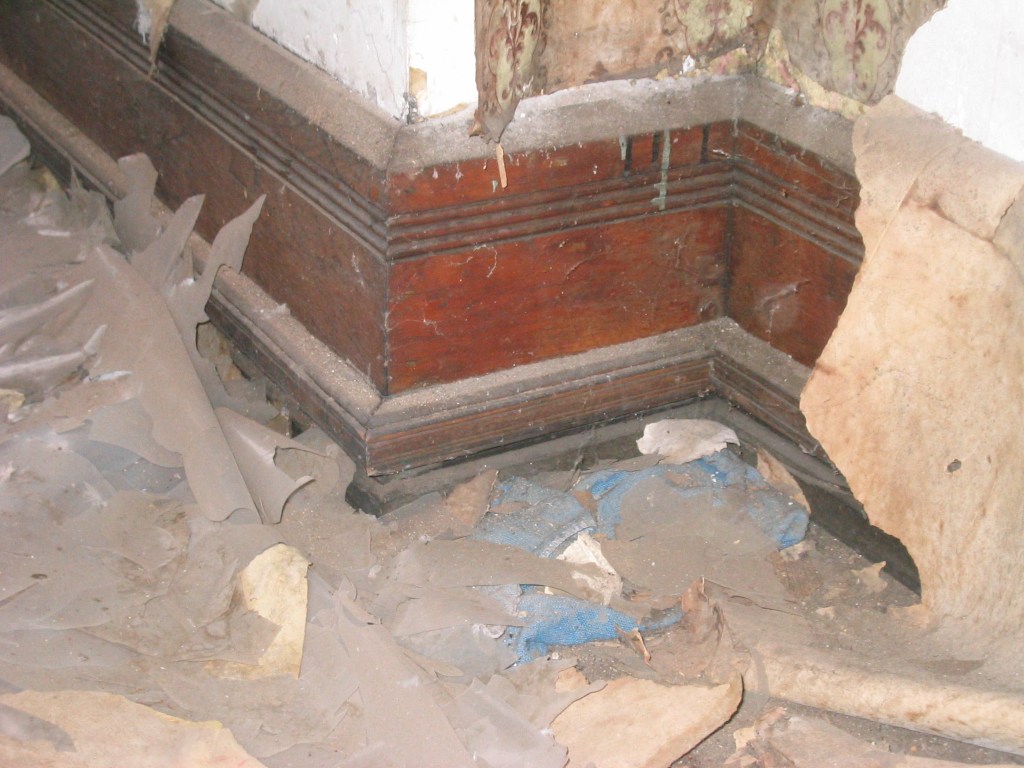
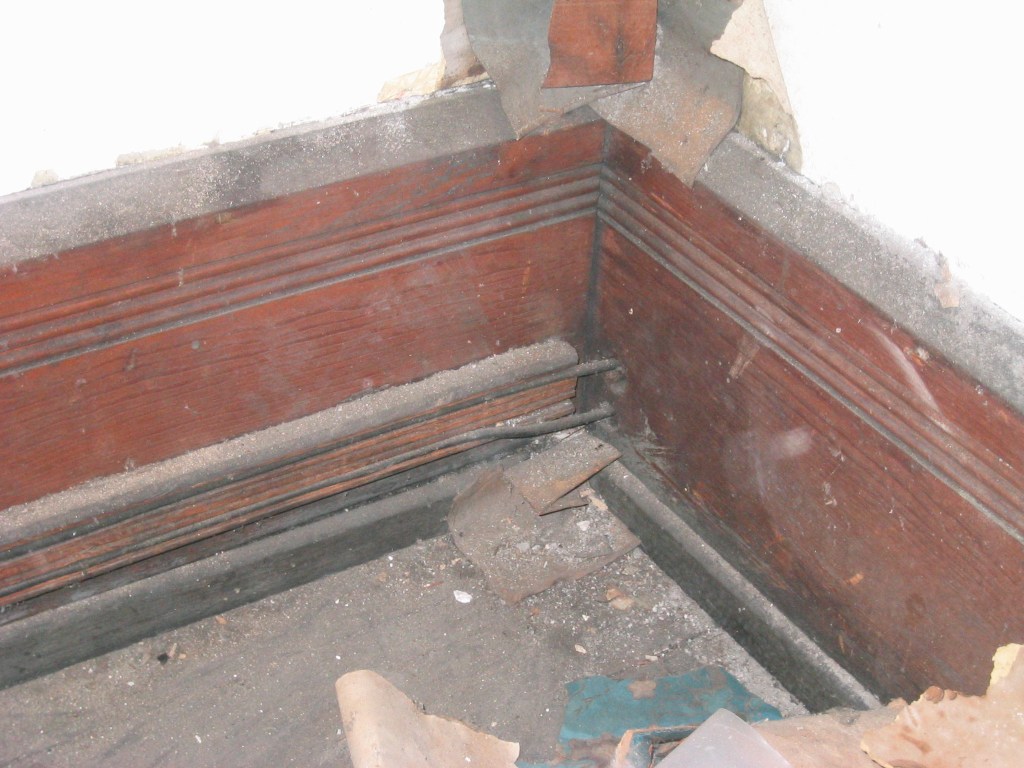
Two more examples of what appears to be framing lumber used as wood bricks.
Pieces of what seems to be lath for plaster inserted into the mortar joints between bricks as an attachment point.
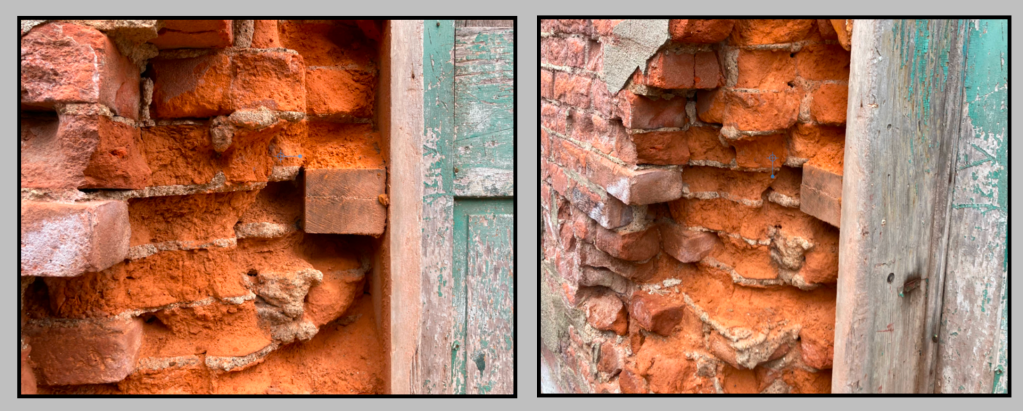
An unusual sight I found on a building in the Mid-west. The exterior brick wall has eroded to the point that the wood bricks of a door frame have been exposed to the outside.

What Is A “Double Dap” Hinge?

One of the reasons that I wrote the Wrand Film Glossary was to record many of the obscure film and entertainment industry terms that get passes down orally but are never recorded.

Art department and set construction lingo is usually not included in the typical film glossary, and “Double dap” is one of those odd terms that you will hear used by Prop Makers* but have probably never had it explained.

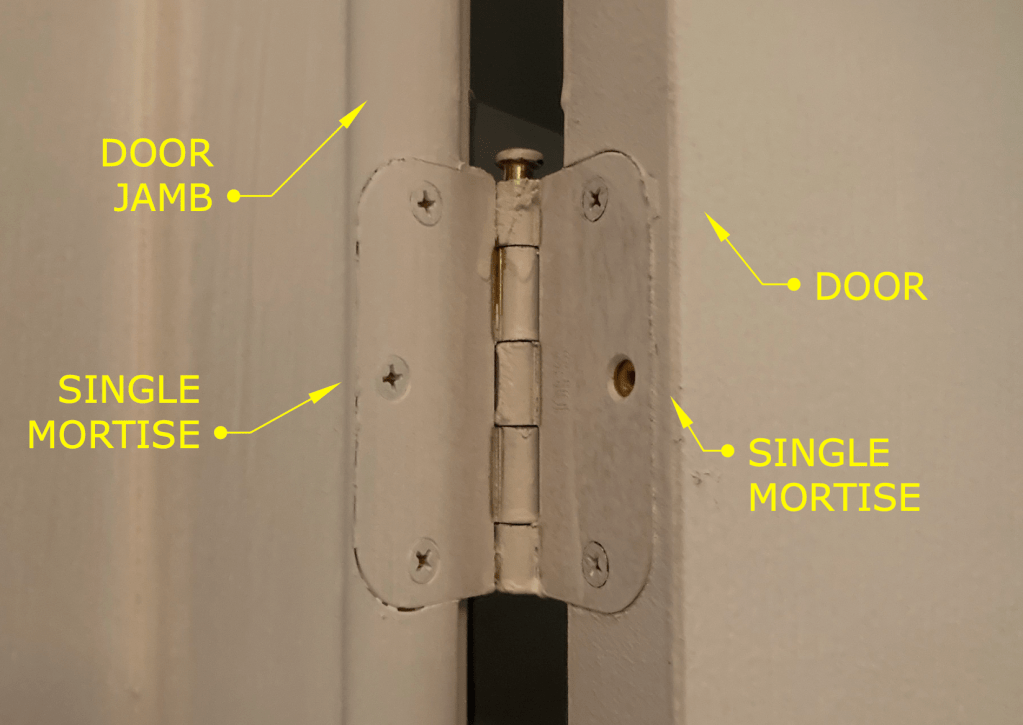
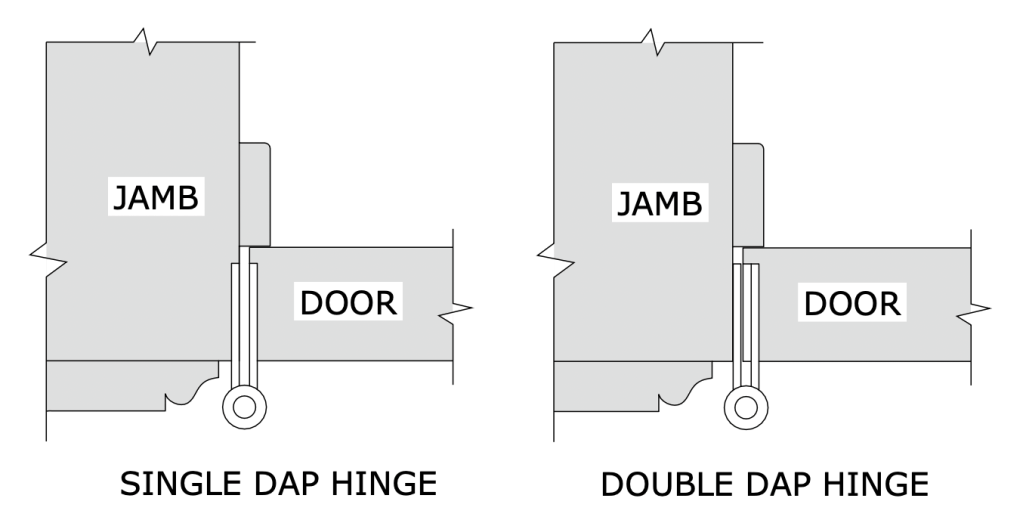
The term refers to how the hinges of a door on a stage set are to be installed. Normally the installation of hinges for a door involves creating mortises in the door stile and the jamb that match the thickness of the hinge leaves. That’s referred to as a “single dap” installation. (Note: this is specifically for doors in North America or the UK. Many Continental European doors are half-overlay and don’t use the type of leaf hinges that are standard here.)

Typical hinge installation – referred to as a Single Dap

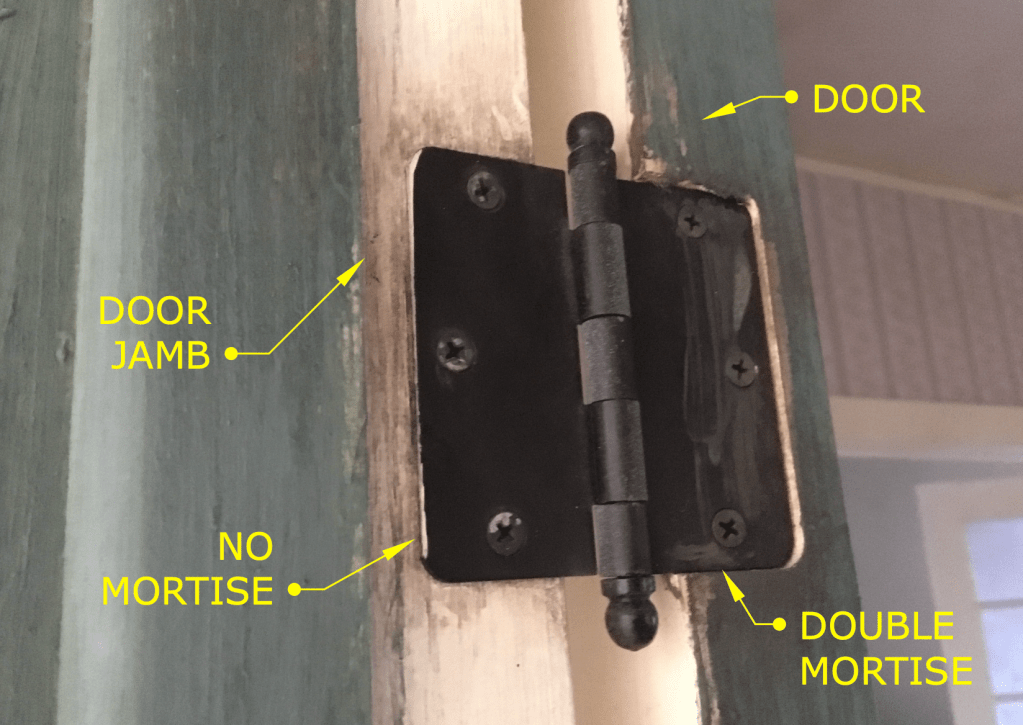
A “double dap” installation involves creating a mortise in the door which is twice as deep as usual and not making a mortise in the jamb, as shown below.

Example of a Double Dapped hinge

The diagram below is a side-by-side plan view showing both types of installation.

So what’s the purpose of this? Well, this is something that is more typical on sets for a broadcast show than on sets for a feature film.

One advantage is speed. We tend to build sets at a pretty brisk pace, sometimes building an entire set over a weekend. For example, if you have a set with six doors, that means you need to install 18 hinges, which means routing 32 mortises. With a double dap installation you cut that number in half.

Another advantage is if you are redressing a set and need to change out the door of an opening for a different door. With a standard installation, you will need to patch and fill and re-rout three mortises. Instead you just need to fill some screw holes.

This is also the case if you need to change the swing direction of a door at the last moment. (Good luck prying off and repositioning that door stop.)

Double dapping has fallen out of favor lately. Production Designers don’t like the look of it for one thing. (Along with Phillips head screws on a period hinge!) They tend to stick out particularly when the hinges are a contrasting color from the jamb or if the wood is painted a light color and the hinges have a dark laquer/black finish. In some instances this condition can either visually hide the extra mortise depth or accentuate it.

Also, notice the round corners on the hinges in the photos. Round corner hinges are a 20th century invention to speed up production. Once machinery, i.e. routers, was being used for mortising, it became a lot faster to create hinges with leaves that didn’t require squaring off the mortise corners as was necessary for period, square hinges. Round corner hinges come in 1/4″ and 5/8″ radius corners, so be aware of what radius size they are if you’re choosing hinges for a door that has already been mortised.

Note: Prop Maker is a designation for a union stage carpenter in Los Angeles to differentiate them from a ‘civilian’ carpenter. They are trained it building theatrical scenery of all types and historical periods and specialize in creating scenery for film productions. They are more similar to cabinet makers than a typical carpenter and are skilled in construction techniques and methods that would baffle most people outside the entertainment industry.

The Art Of Technical Drawings

The look of construction drawings for film and television has changed a lot over the years, particularly now that most drawings are done digitally with computers rather than by hand.

While many current drawing styles now incorporate photo-textures, shadows, and icons to add life to drawings beyond what is typical of architectural drawings, it’s hard for them to match the aesthetics of hand drawings.

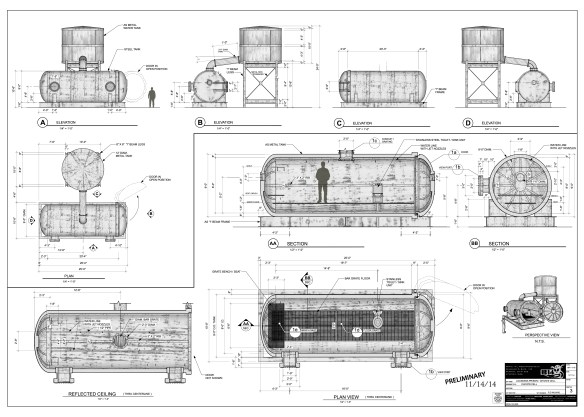
CAD drawing from 3D model – photo textures applied

Having started as a pencil draftsman I guess I do have a bit of a personal bias, but the unique style of each person on a hand-drafted drawing was immediately recognizable to people who knew their work.

Before digital illustrations and renders of 3D models, hand-drafted drawings had to serve as a design sales tool as well as instructions for scenery construction.

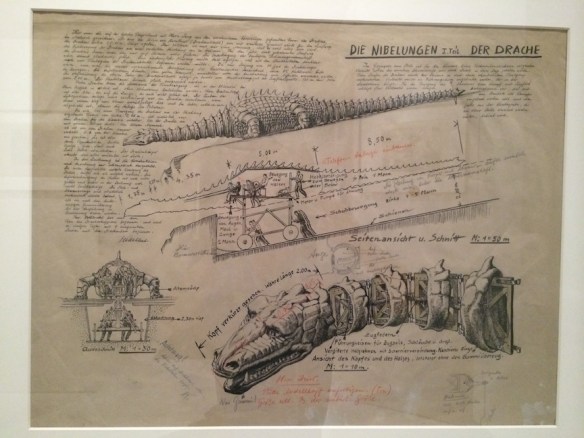
Here are some shots of a set design by Erich Kettlehut in 1923 for the UFA film, Die Nibelungen, for the scene where Siegfried kills the dragon.

The drawing was displayed as part of an exhibition of artwork from the UFA silent film period of the 1920s and 30s at the Los Angeles County Museum of Art in 2014. The drawing is from the collection of La Cinématiquè Française in Paris, France.

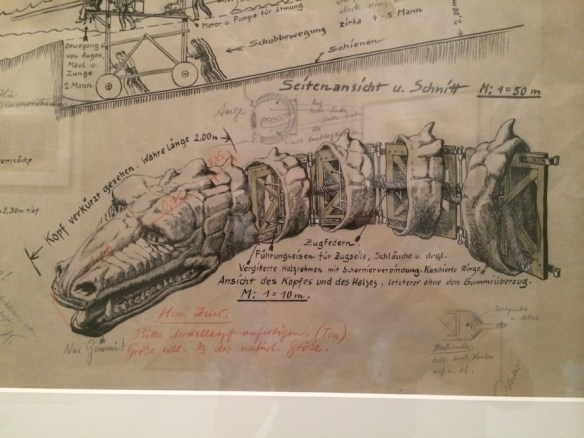
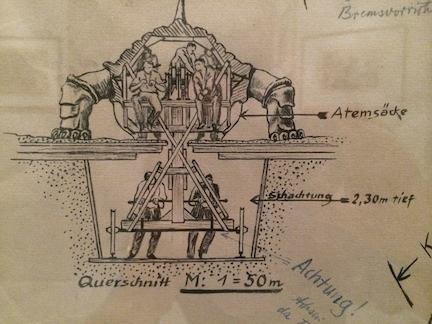
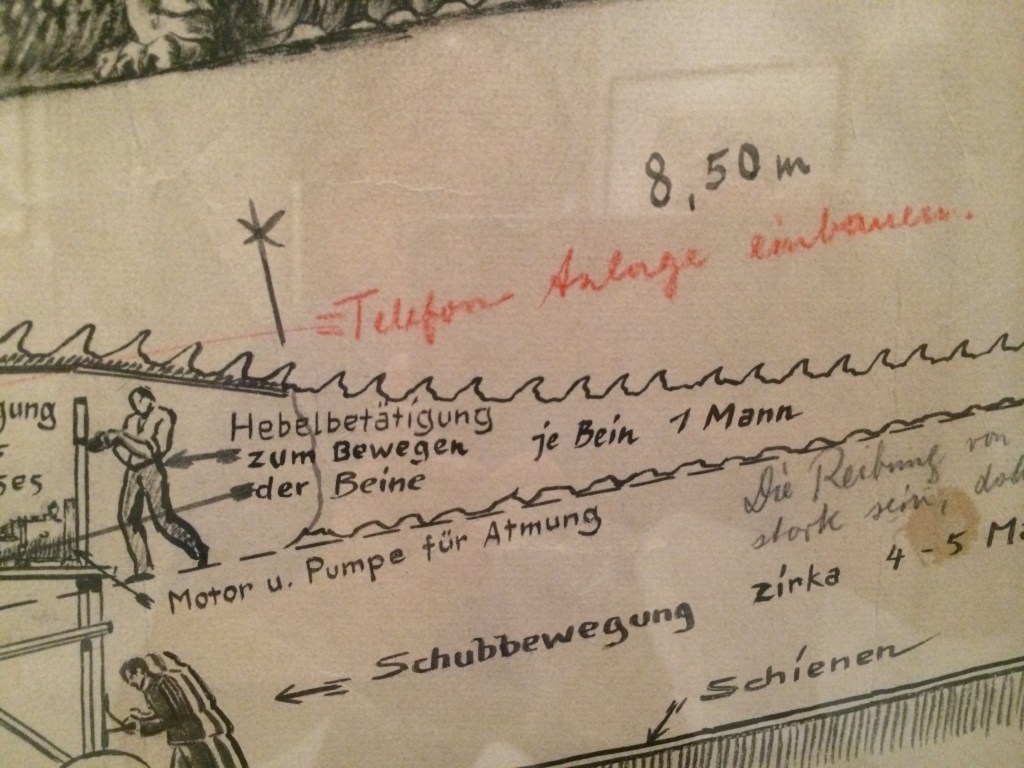
Note that the drawing not only provides a pictorial description of what the dragon should look like, but calls out dimensions, construction materials, how the action prop is to be operated, surrounding scenery requirements, and specific technical details of mechanical movements.

Technical drawing of the Dragon by Art Director Erich Kettelhut – ink and pencil on vellum
Kettelhut called out the length of the neck as well as the tension springs, framework, control cables and hoses required for the creatures fiery breath. He calls out “only rubber!” for the mouth area.
The size and depth of the recessed path required for the props operators.
drawing describing how each part of the dragon was to be operated by stagehands.
Note in red indicates that a telephone/communication system needs to be added to the prop for the crew.

The scene where Siegfried slays the dragon in Die Niebelungen from 1923

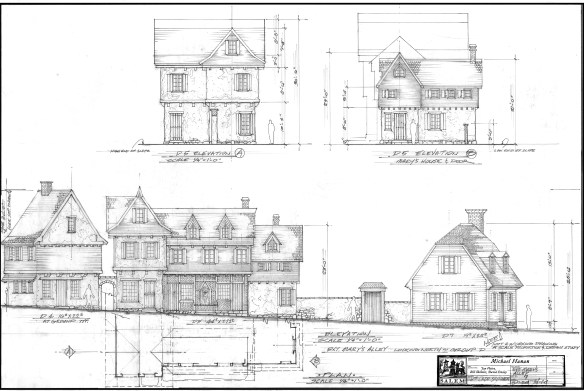
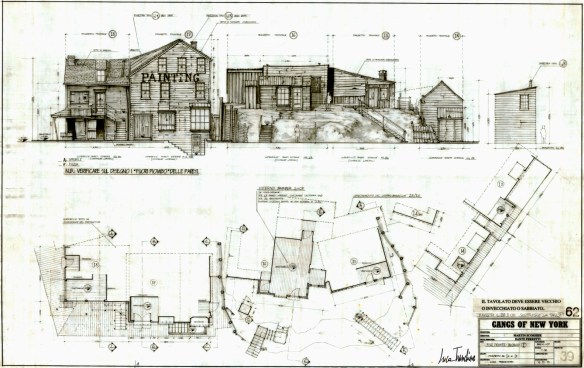
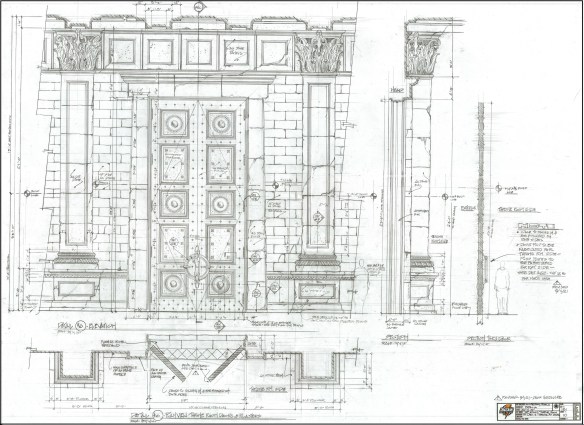
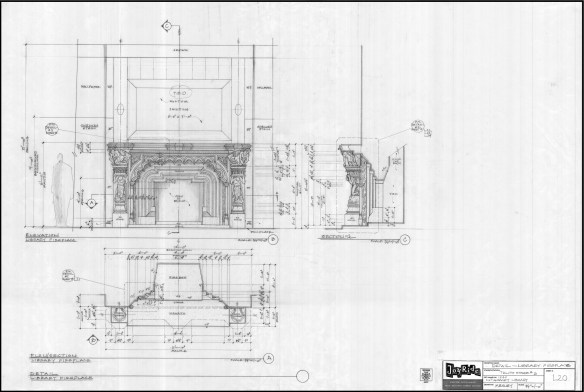
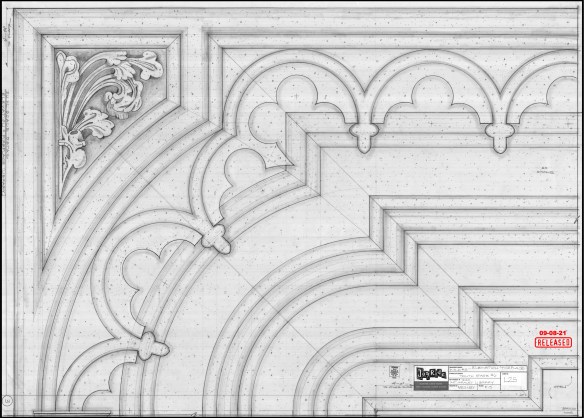
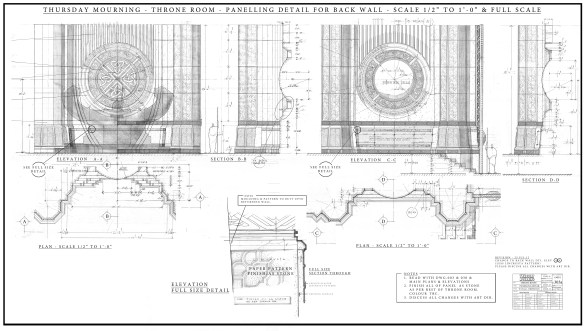
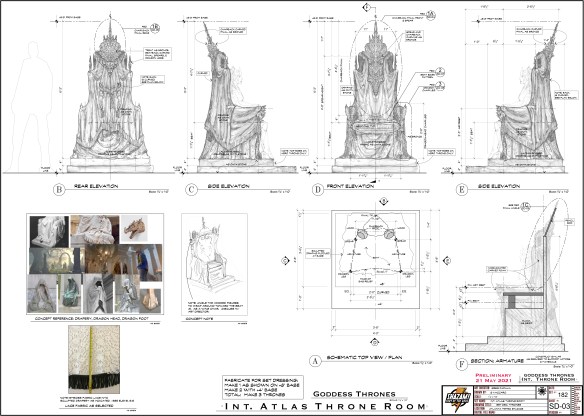
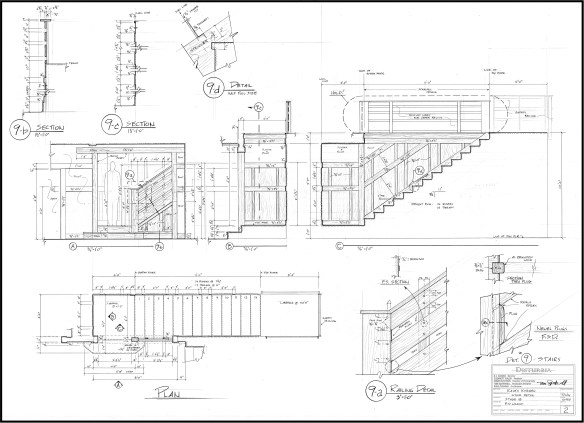
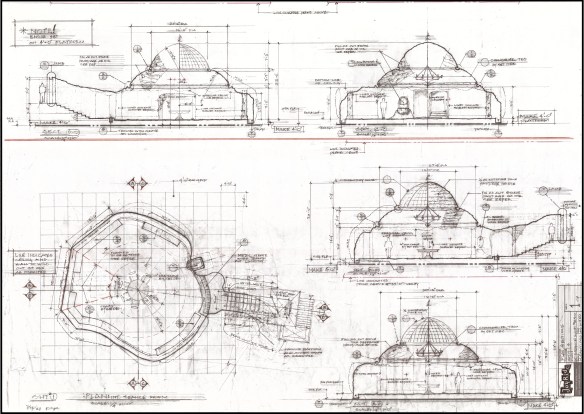
Here are a few more hand-drafted pencil drawings from more recent films:

Salem – drawing by William Ladd Skinner
Gangs Of New York – drawing by Luca Tranchino
Shazam – drawing by Greg Papalia
Haunted Mansion – drawing by Barbara Mesney
Haunted Mansion – full size detail of fireplace for the plasterers
Thor – drawing by Oli Goodier
Shazam – drawing by Stella Vaccaro
Disturbia – drawing by RD Wilkins
Haunted Mansion – drawing by Hugo Santiago
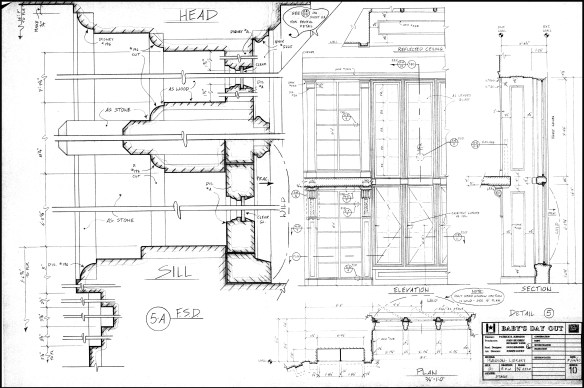
Baby’s Day Out – window detail

R.D. Wilkins

18 Design Reference Books You Should Have On Your Shelf (UPDATE)


design book montage_1

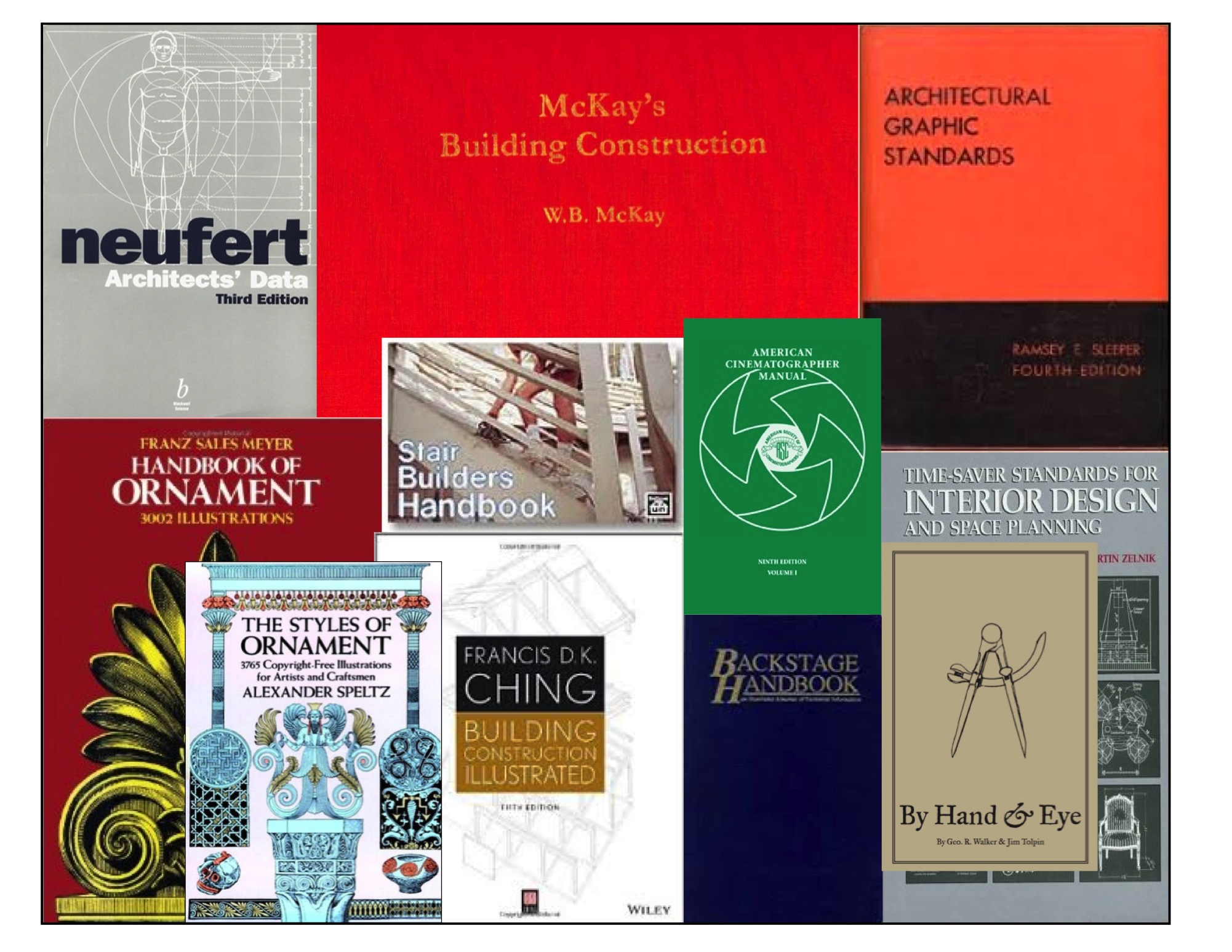
Ten years ago,  I wrote a post on 10 design books that I thought everyone should have. Looking at that list now, I think I need to expand on it by adding a few more to the list.

Here is my must-have list with sources:

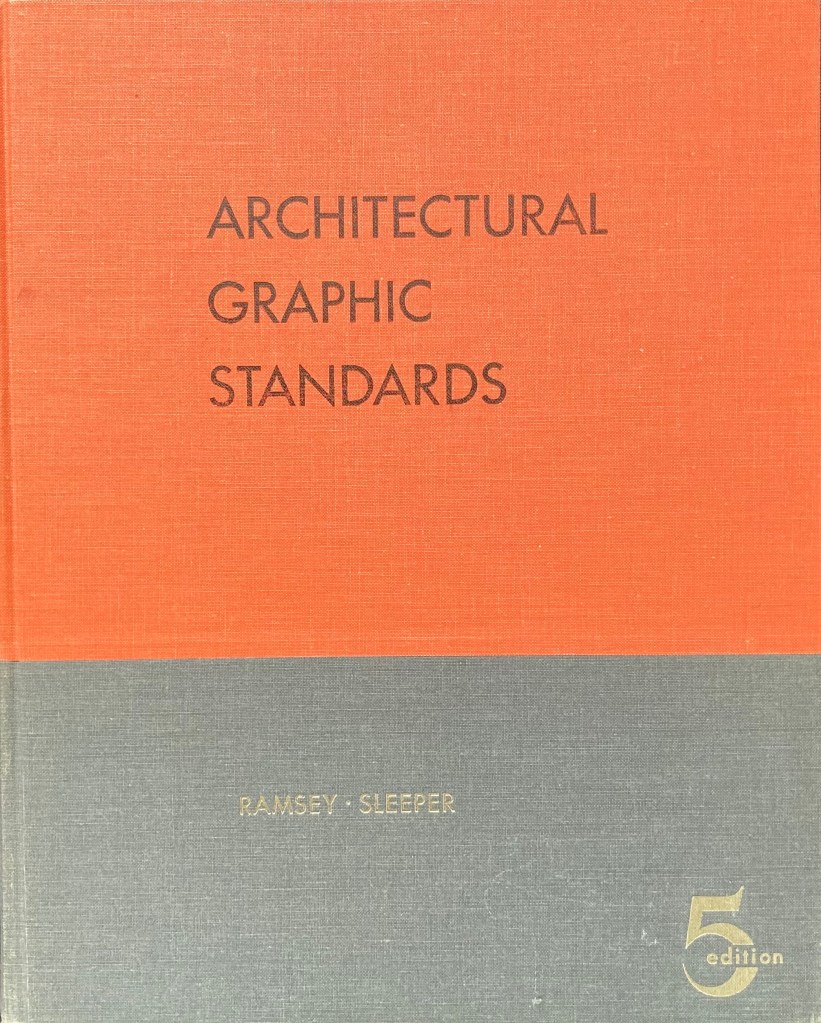
1. Architectural Graphic Standards – 5th Edition –

This was when the books were filled with great hand drawings and actually showed you in detail how things were built. There are lots of period details as well. Out of print for over 50 years, (at least in this edition) you can still find copies for anywhere from $20 to $200. The 3rd edition would be a suitable replacement. the first edition is also good to have and has been reprinted several times. Check Abebooks for copies. Not available digitally.

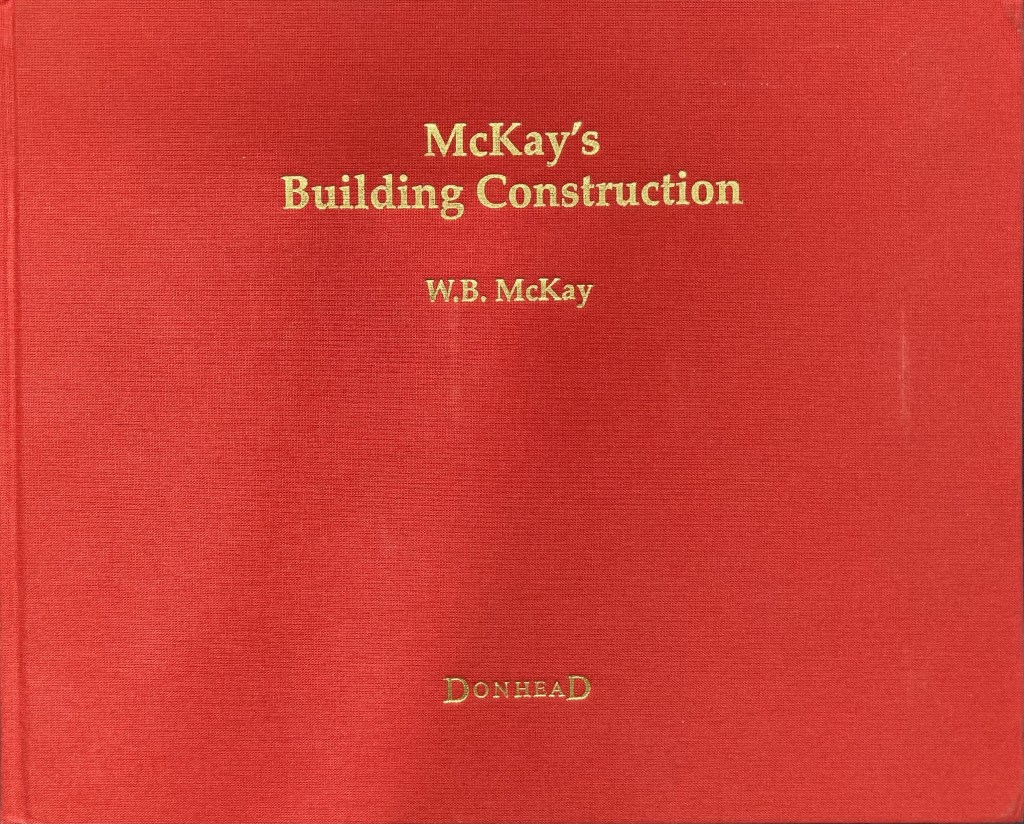
If you are in Great Britain, McKays is the closest equivalent, and is actually superior in a number of ways from our standpoint as set designers. On the Continent, an older copy of Neufert’s is a must. See this earlier post for details. Not available digitally.

___

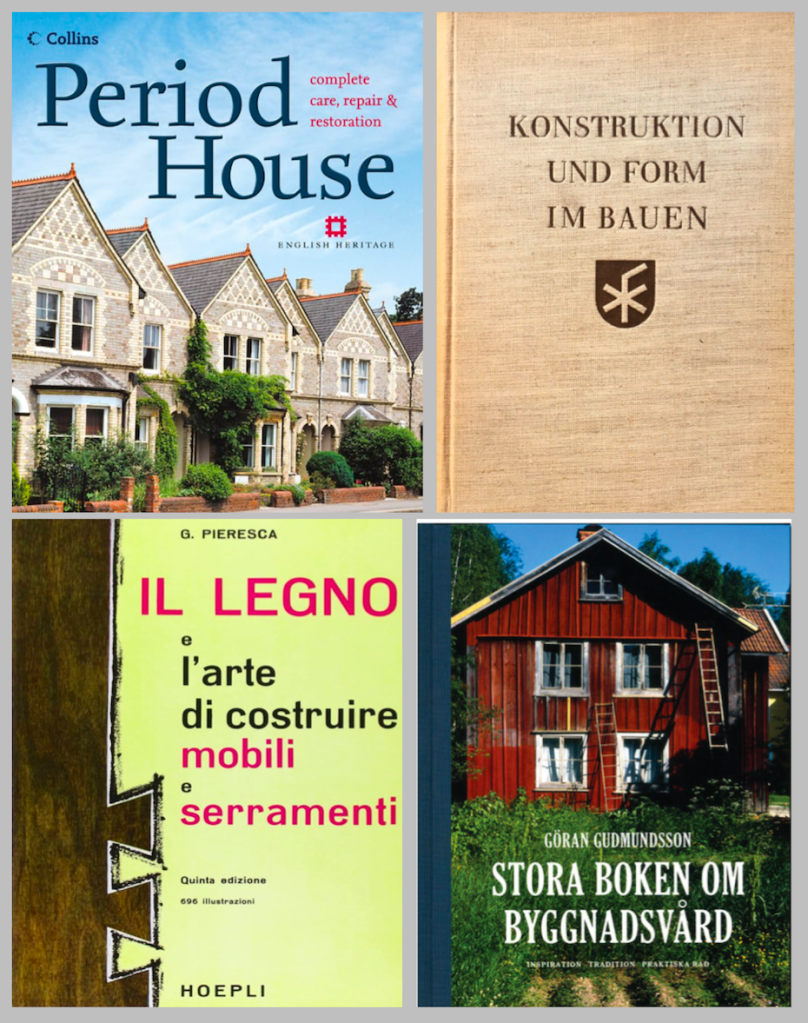
Another option in England is Period House, by Jackson & Day, which goes into extensive detail about common interior architectural elements for restorers. In Germany, the best book on period construction I’ve found is Konstruction Und Form Im Bauen, by Friedrich Hess. There are lots of very nice drawings and measured details. It’s long out of print but you can still find copies second-hand. In Sweden, an excellent book on traditional construction is Stora Boken Om Byggnadsvård, by Göran Gudmundsson. This is a current book and still in print. In Italy, a nice book on traditional construction techniques with detailed drawings is  Il Legno e L’arte Di Contruire Mobili e Serramenti. None are available digitally.

***********************************************************************

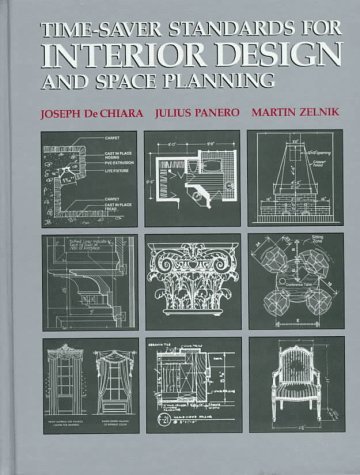
2. Time-Saver Standards for Interior Design and Space Planning, 2nd Edition.

This is the interior design complement to Architectural Graphic Standards and covers nearly every situation regarding building interiors. You can find used copies for around $50. There is a digital version available but it’s not only difficult to navigate because of the size of the book but at the price you’d be better off getting a hardback edition.

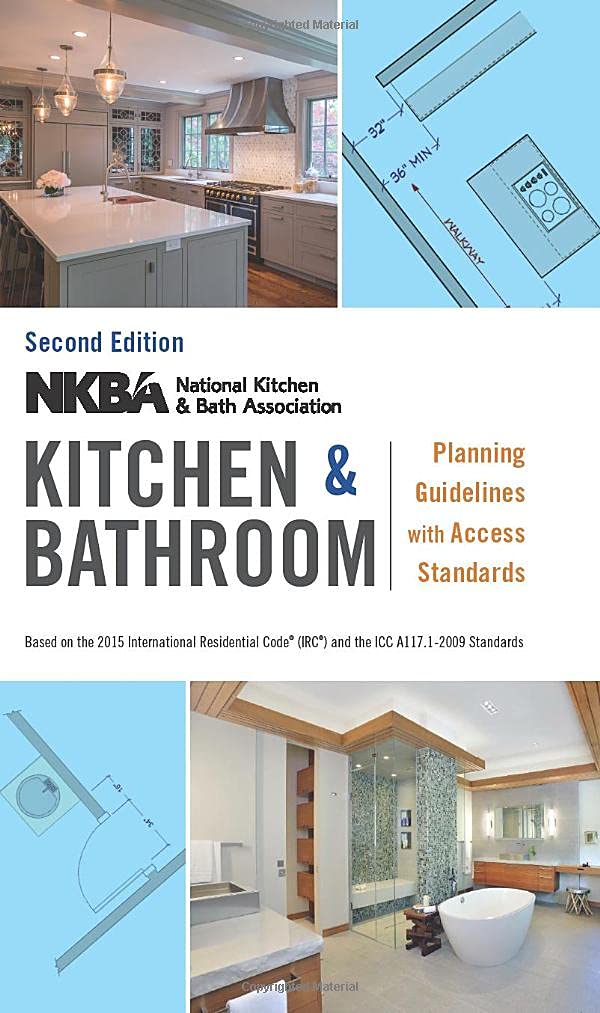
Another companion to this is a nice slim book that is for kitchen and bathroom standards in the U.S. The NKBA Kitchen & Bathroom Planning Guide was created to make common building codes and layouts available to designers in an easy to use format.

*********************************************************************

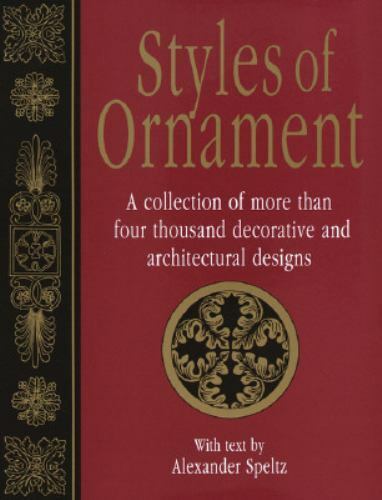
3. Styles Of Ornament – Alexander Speltz.  

Originally published in 1904, this book uses over 4000 drawings to illustrate 6000 years of historical design. As a general design reference I don’t think it has an equal. Architecture, furniture, text, carving, metalwork are all covered. A must-have. About $20 new.

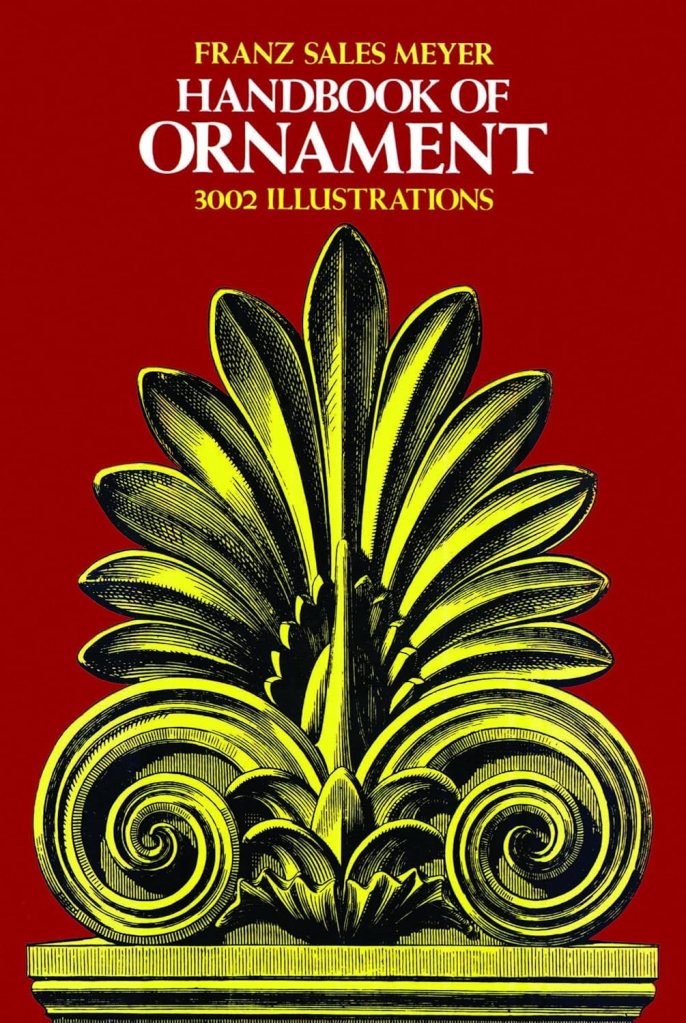
The Handbook Of Ornament by Franz Meyer would be a close second. Available from a number of publishers for as little as $10. A digital version is available.

Low Budget Option- download the online PDF here.

******************************************************************

4. The Stair Builder’s Handbook – T.W. Love –

Not a design book, but a book of rise-and-run tables that make stair layout a breeze. Available from various sources for about $20.

Low Budget Option – download the PDF Common Sense Stairbuilding and Hand-railing. Skip the mind bending section on handrail layout and skip to page 99. Also, Stair building, which has a nice section on ornamental ironwork.

*******************************************************************

5. Backstage Handbook – Paul Carter.

Originally a technical manual for theatrical designers, the book is full of great information for film work as well. There are more details in this earlier post from several years ago. It is one of the most widely used books on stagecraft in the U.S. Available from Broadway Press for about $22. No digital version is available.

********************************************************************

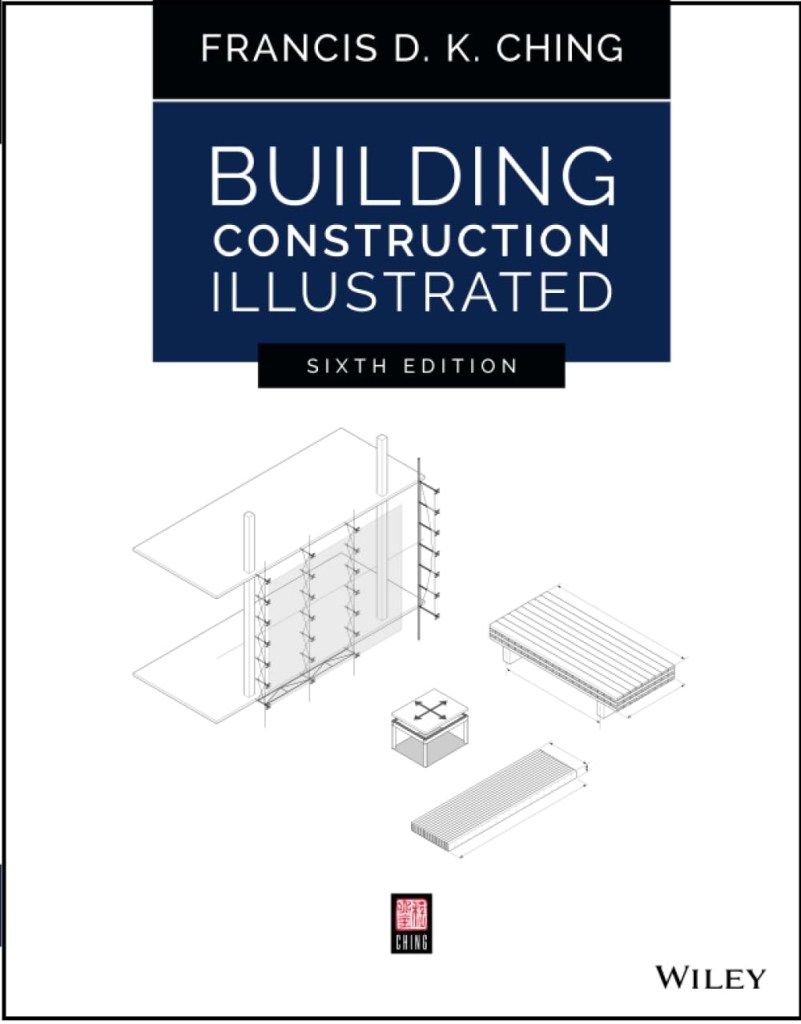
6. Building Construction Illustrated – Francis Ching.

An excellent and thorough book about construction details including wood framing systems and masonry. About $46.

Low Budget Option – access the online PDF here of the 4th edition.

********************************************************************

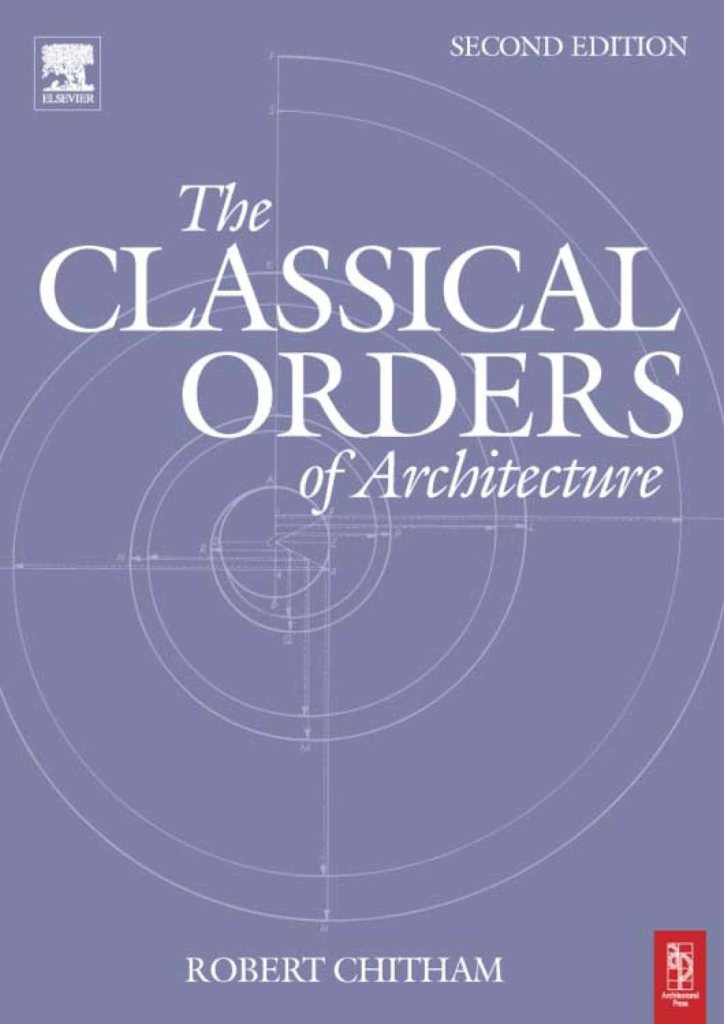
7. The Classical Orders of Architecture – Robert Chitham

I think this is the best modern book around that deals with the classical architecture proportional system. This book was out of print for quite a while and fortunately is back in print. The new edition deals with the proportions for both metric and Imperial systems. Copies can be found for about $55.

Low Budget Option – Get the PDF of American Vignola by William Ware and The Five Orders by Vignola.

*********************************************************

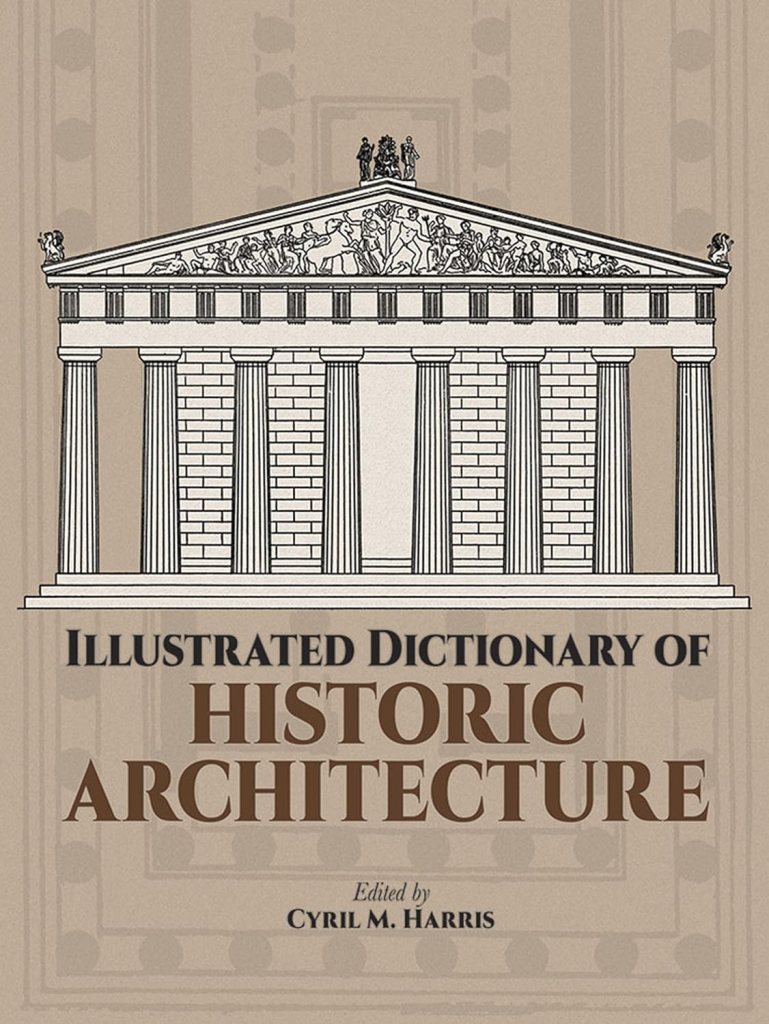
8. Illustrated Dictionary of Historical Architecture – Cyril Harris

With over 5000 terms and 2000 line drawings, this book covers architectural history from the ancient period to 20th century Modernism. Along with the European styles, it covers Japanese, Chinese, Indian, Islamic and Mesoamerican styles. About $35 from various sources.

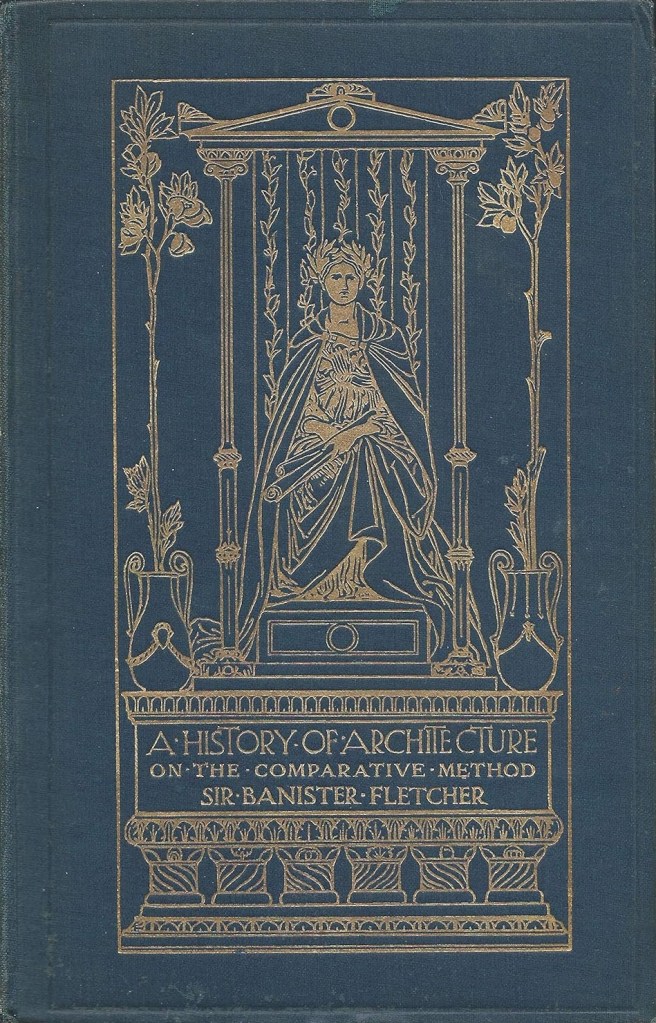
Another classic book in a similar vein is A History of Architecture On The Comparative Method, by Sir Banister Fletcher. This dense, fully-illustrated book covers the time periods from ancient times to the 20th century, focusing on Western culture. It was the most widely used general architecture reference book for decades.

Used copies are easy to find for around $20. A good scanned copy of the 1905 edition can be found in PDF form here for download. Avoid reprints. Most of them are badly scanned from originals and the fine details of the illustrations is lost. A 20th edition has been published in two volumes that comes in at over 1600 pages and includes new sections on cultural architecture from countries not fully represented in the original edition. This runs at around $250.

******************************************************************

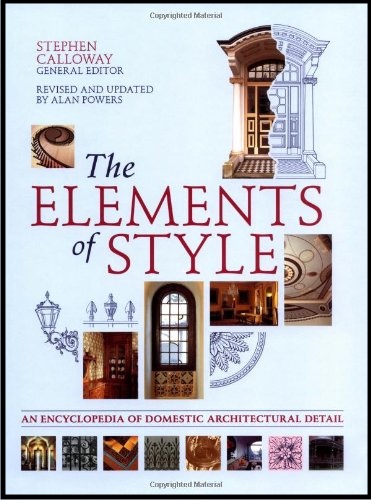
9. Elements Of Style – Edited by Stephen Calloway

This has been a standard Art Department reference manual for quite some time. Subtitles as “a practical encyclopedia of interior architectural details”, the book covers the periods from 1485 to modern day. Each chapter covers a different time period and is separated into thirteen sections which each feature an interior element, making it easy to cross reference similar elements from other time periods. The book includes over 3000 drawings and 1300 photographs to accompany the written analysis. In hardcover for around $75. Used editions can be found for as little as $20.

******************************************************************

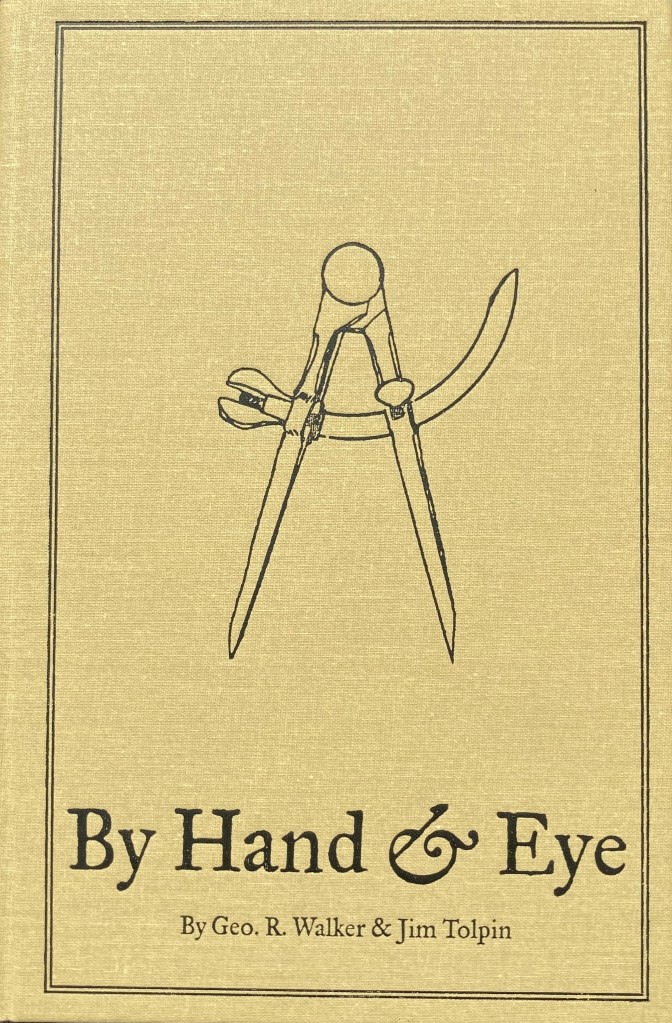
10. By Hand & Eye – George R. Walker & Jim Tolpin.

If you’re just starting out in set design this is one of the first books I’d tell you to buy. Bad proportions can ruin a design. This book will give you a solid understanding of proportion and keep you from making simple mistakes. You can download a sample chapter here. Also, I wrote a longer post on the book earlier. Walker and Tolpin are promising a workbook that will come out later this year based on the book’s concepts so look for that. Available from Lost Art Press for $51, hardbound. A PDF is available for $24.

*******************************************************************

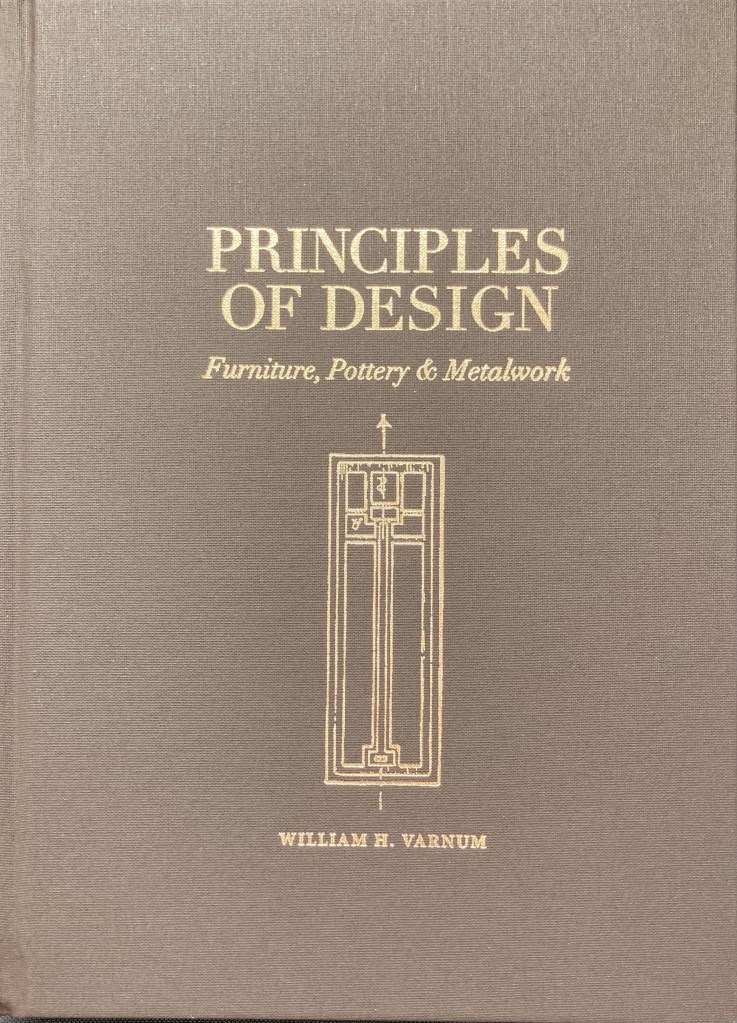
11. Principles Of Design – William Varnum

This is a recent reprint of a book published in 1916 under the title Industrial Arts Design. The book lays out the basics of design, with step-by-step rules for designing not just furniture but pottery and metalwork as well, with sections on enriching a surface with detail or hardware. The rules translate easily to architectural forms and will seem like obvious, common-sense choices once you are exposed to them. This hardback edition is the second run of a limited printing. By Lost Art Press at their website. Hard cover edition is $41.

*****************************************************************

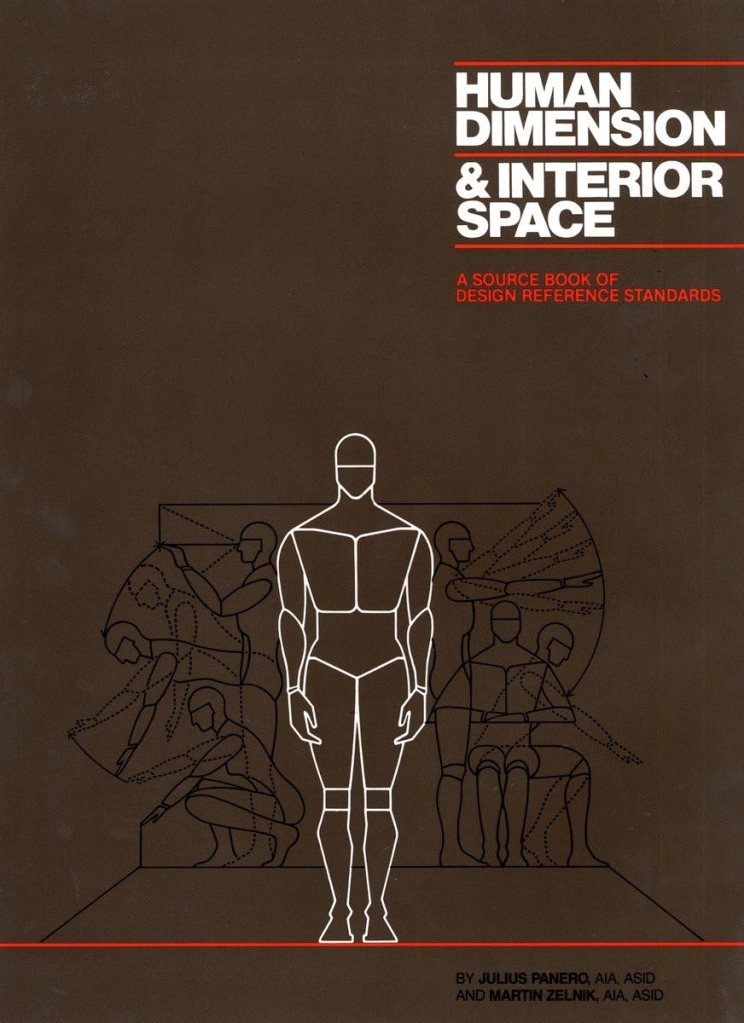
12. Human Dimension & Interior Space – Panero & Zelnik

This book explains the science of anthropometrics, which is the study of human body measurements on a comparative basis. Whether you are designing interior elements, furniture, or vehicles, this book will help you create those spaces with easy to read diagrams and charts that detail the huge disparity in shapes, sizes, and capabilities of the human form. The authors warn against designing for a ‘standard size’ human body which in fact, does not exist. New in hardcover at about $24. Digital versions are also available.

*****************************************************************

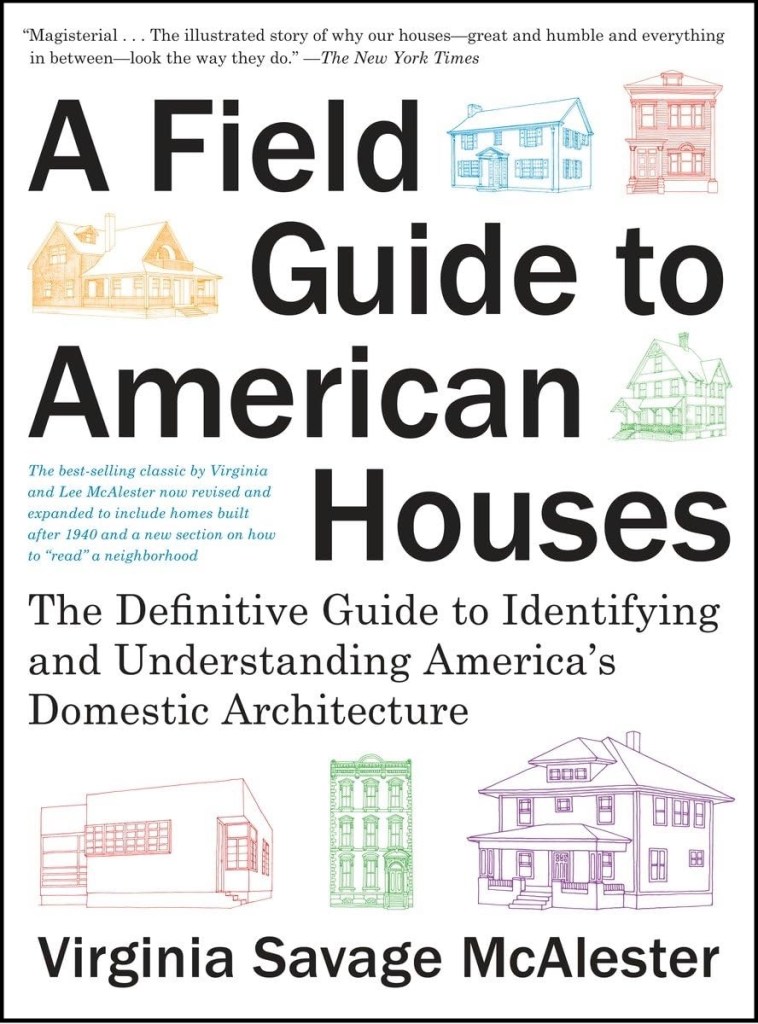
13. Field Guide To American Houses – Virginia Savage McAlester

Described as the “definitive guide to identifying and understanding American domestic architecture”, this book is considered an essential source for understanding the myriad of styles and elements that define American houses. With over 1000 drawings and photographs, the book separates the various styles into chronological categories and explains the details and accents that define each of them with clear, simple sketches. The second edition is about $24 in paperback.

****************************************************************

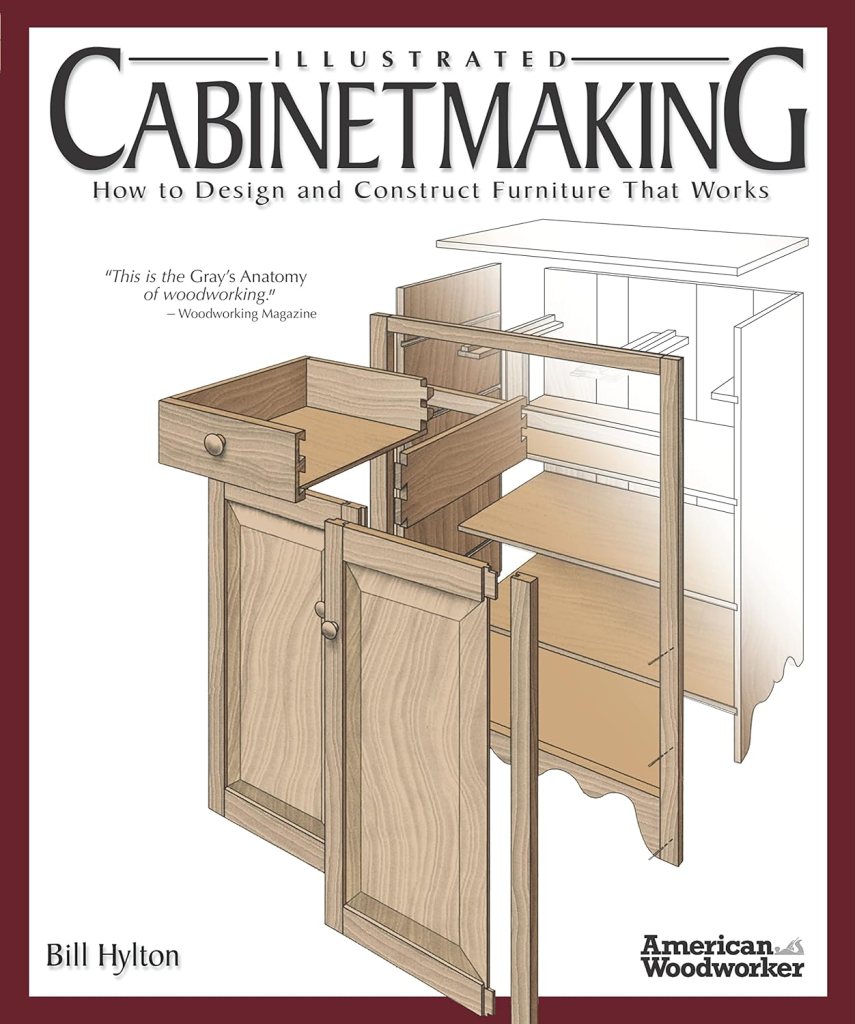
14. Illustrated Cabinetmaking – Bill Hylton

I covered this book in detail in an earlier post. One reviewer referred to this book as the Gray’s Anatomy of woodworking, and that’s a pretty accurate description. If you’re going to design furniture you need to understand how it’s built, and this book explains it with over 1300 color illustrations and exploded views of 90 different pieces of furniture from different time periods. There are sections on joinery, standard dimensions, and sources for construction drawings. Paperback editions are about $24. Digital editions are also available.

***************************************************************

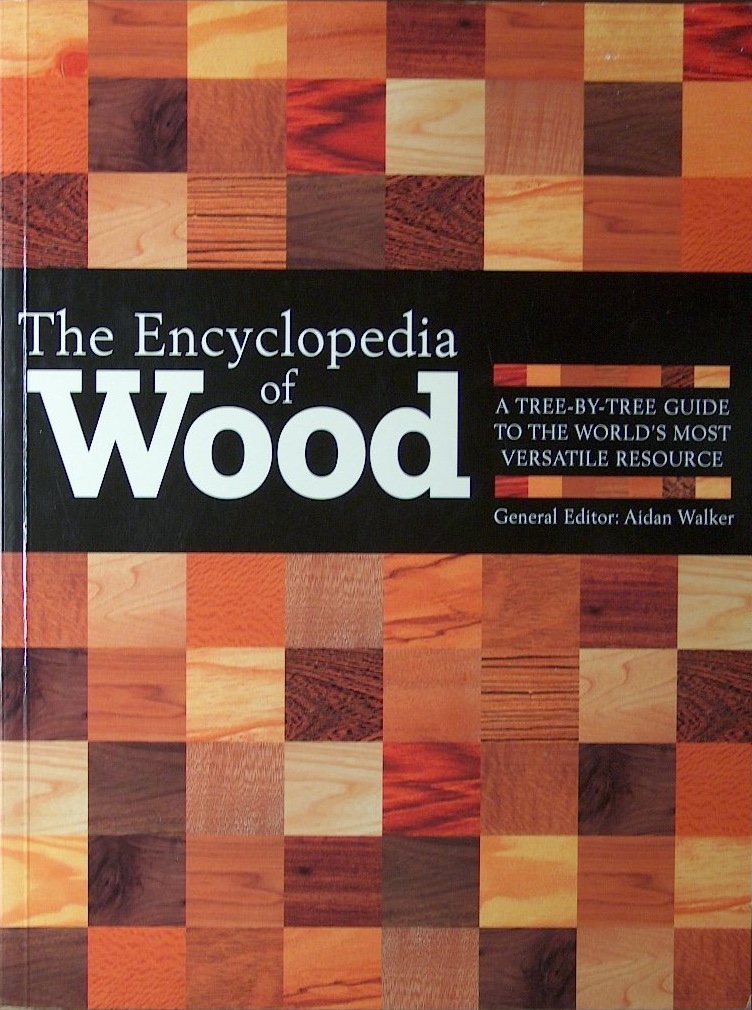
15. The Encyclopedia Of Wood – Aidan Walker, Editor

There are numerous books on tree identification but this one stands out to me because of the variety of wood that it covers and the large, clear color photographs of each of 150 species grain patterns and figure. There are also chapters on how wood is processed, what wood movement is, and how veneers and lumber are milled. In paperback for about $35.

***************************************************************

16. American Cinematographers Manual – American Society of Cinematographers

The new 11th edition will cost you about $120 in hardback and almost the same in it’s digital version through the iTunes and Android sites. Earlier used editions can be purchased for a third of the price of a new edition, but much of the latest technology isn’t in them. This is the go-to book for all things dealing with cameras and image capture. A lot of people will tell you you don’t need this. I’m sure you might also have a great career as a car designer without knowing anything about how cars work. Because when it comes down to it, all we’re really doing is designing big, pretty things to bounce light off of. Just remember, if the department names were based on physics we’d be the Light Reflector Design Department.

 *************************************************************

17. The VES Handbook Of Visual Effects – Okun & Zwerman, Editors

Published by the Visual Effects Society, this +1000 page book covers every type of visual effects shot you will encounter. From in-camera effects like miniatures and mechanical effects to green screen work, motion-tracking, LIDAR, tracking shots, LED wall stages, and everything in between. It’s the most complete book on visual effects that has been produced so far. Consider it to be a complementary reference to the American Cinematographers Manual. In paperback, the new third edition costs about $65.

***************************************************************

18. Chenier’s Practical Math Dictionary – Norman Chenier

This book is an odd duck in many ways but it has been a real time saver on a lot of occasions. There are sections on descriptive geometry, survey and layout techniques, solutions to common math problems, and other information that you’ll struggle to find anywhere else. In paperback, the latest edition is $26.
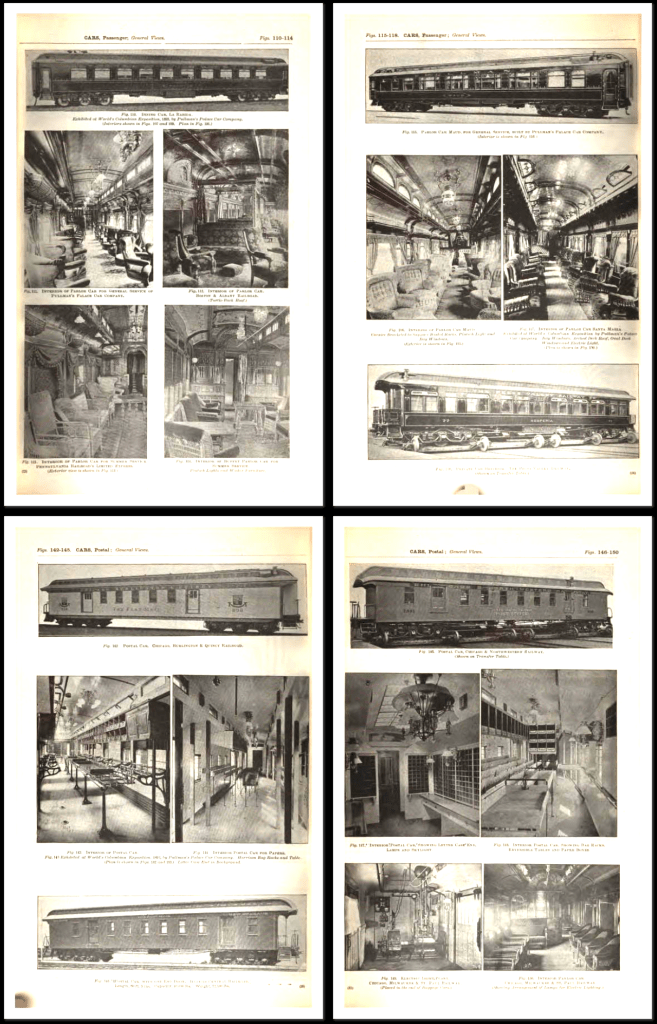
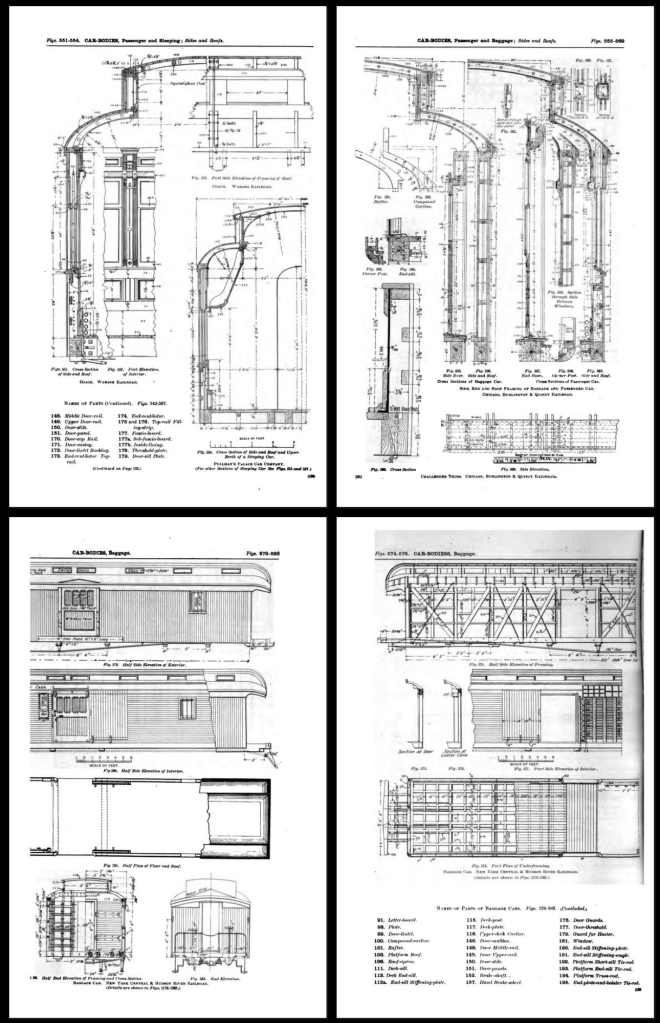
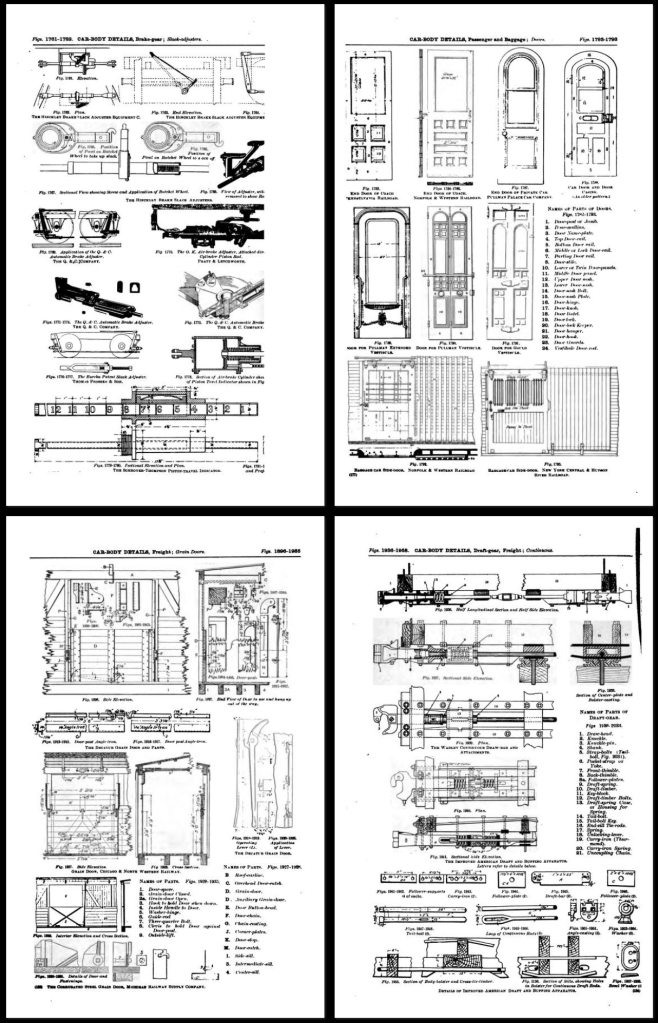
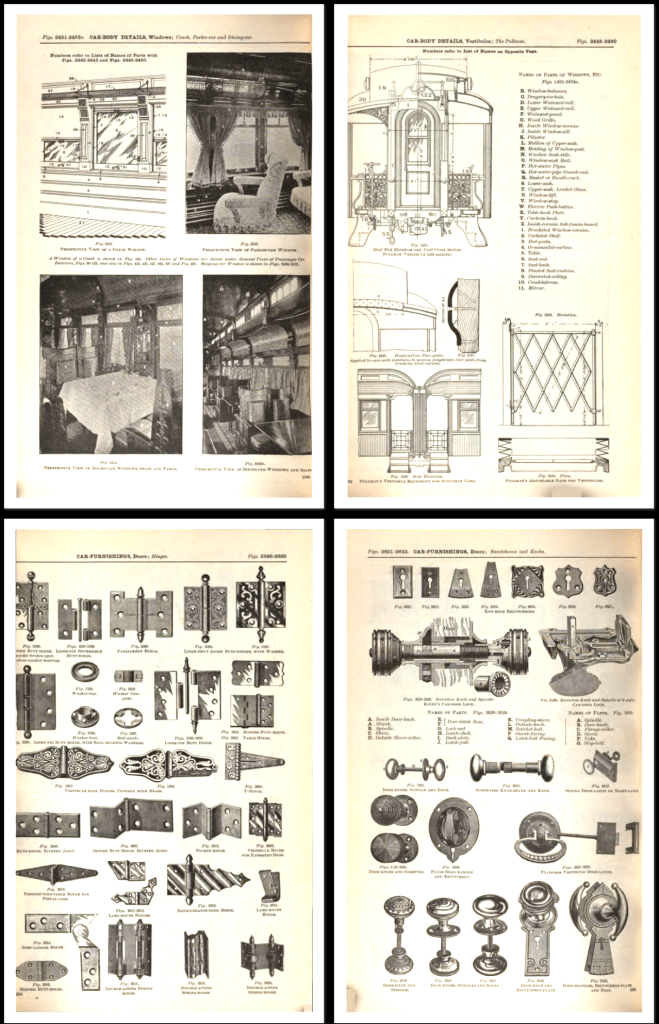
The Digital Bookshelf – “Plastering Plain And Decorative”

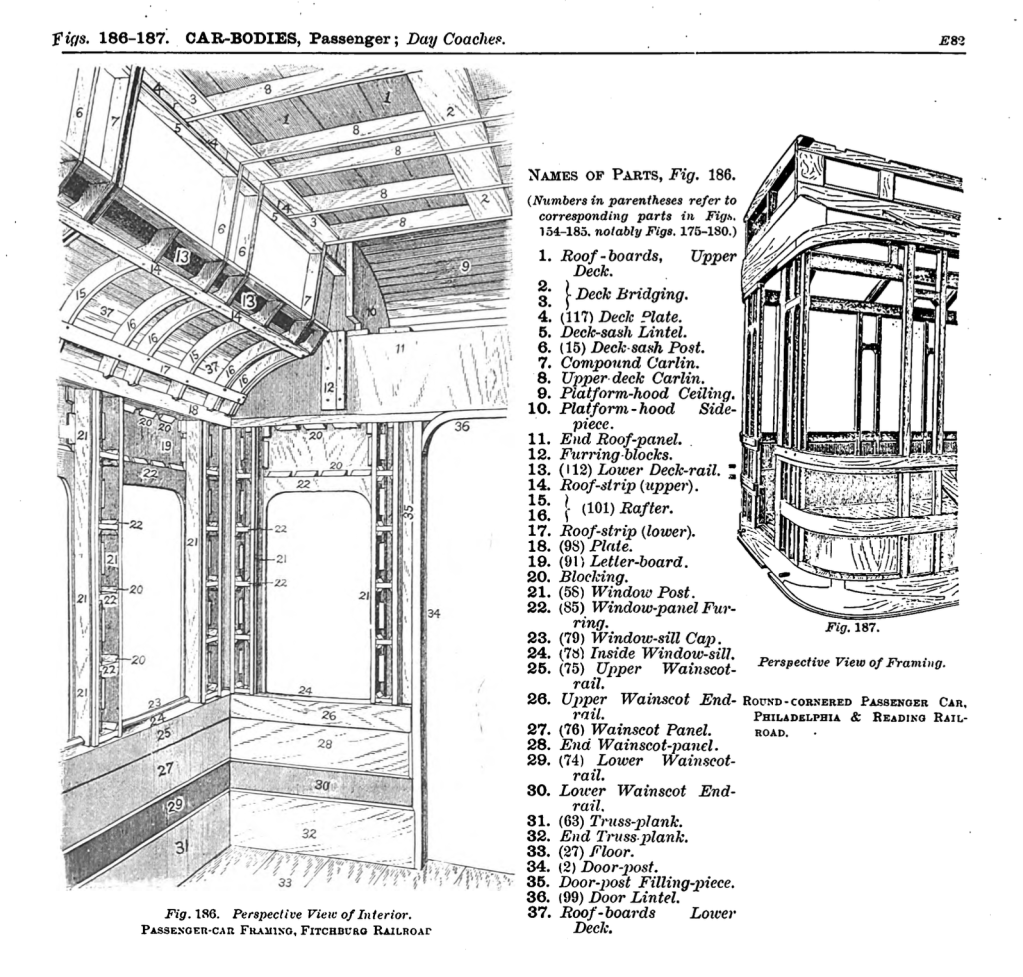
My preference for books is always a hard copy, but sometimes having easy access to the information is more important than having a physical book, especially when copies of the actual book are impossible to find or really expensive.

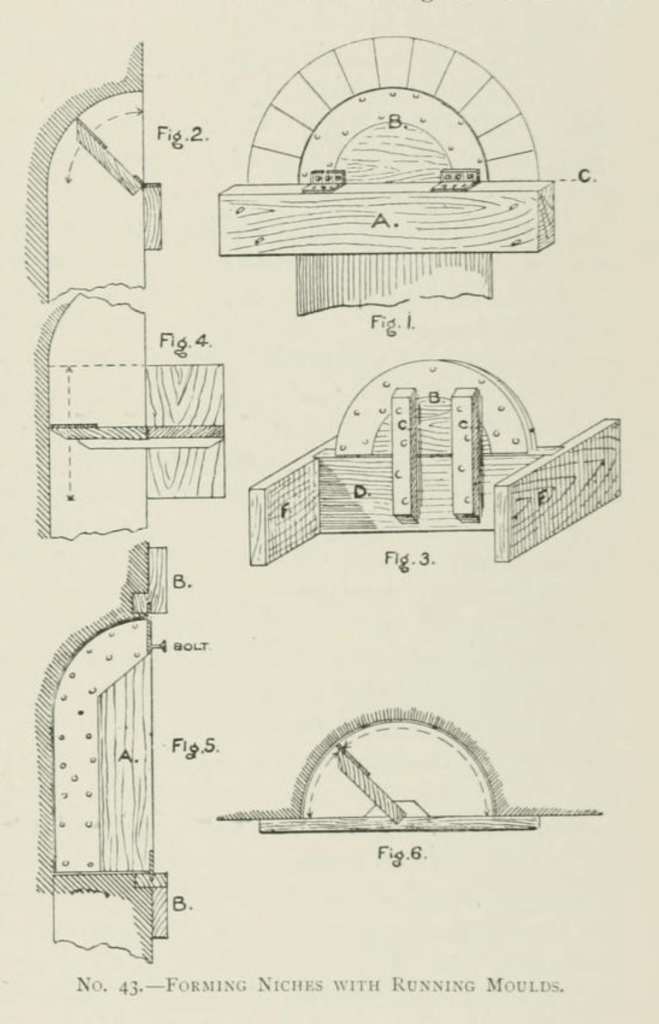
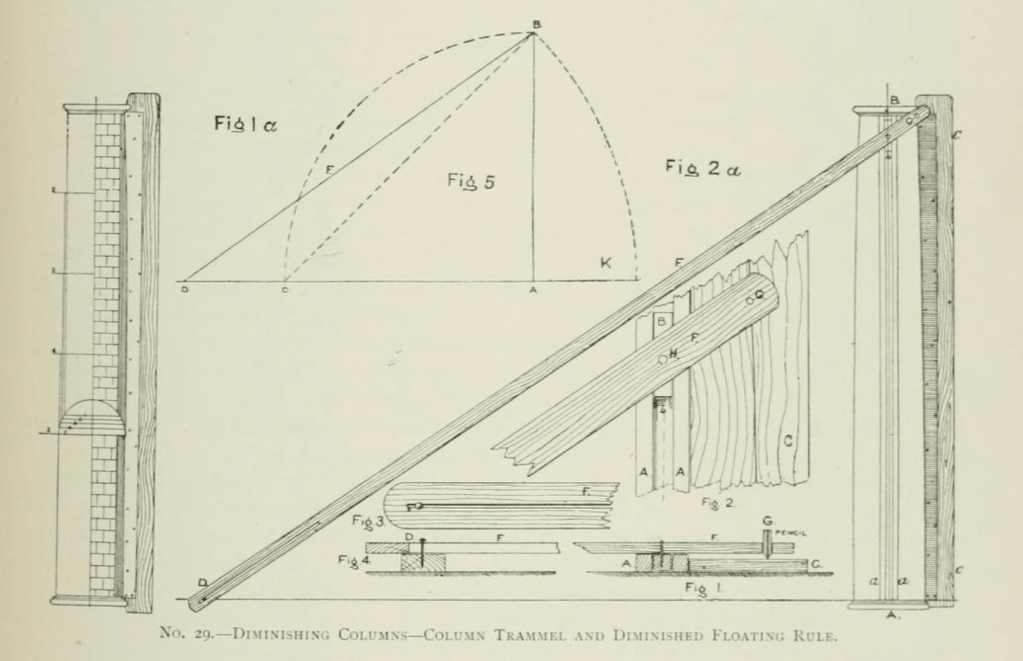
That’s the case with this book, Plastering Plain and Decorative. First published in 1890, the book has become known as “The Plasterer’s Bible”. Now out of print, except for the occasional third-party reprint, it went through four editions. It contains hundreds of black & white photographs and drawings which aren’t always of a very good quality with most of the modern reprints, usually because they are printed in a smaller size than the original quarto size and because the scan quality of the original images is bad.

On top of not being of a very good quality, they are also nearly as expensive as an original copy, which would be a better bet as those are stitched like a traditional book and not perfect-bound (glued edges) like all soft cover books are. I have seen so-so quality reprints go from anywhere from $100 to $300.

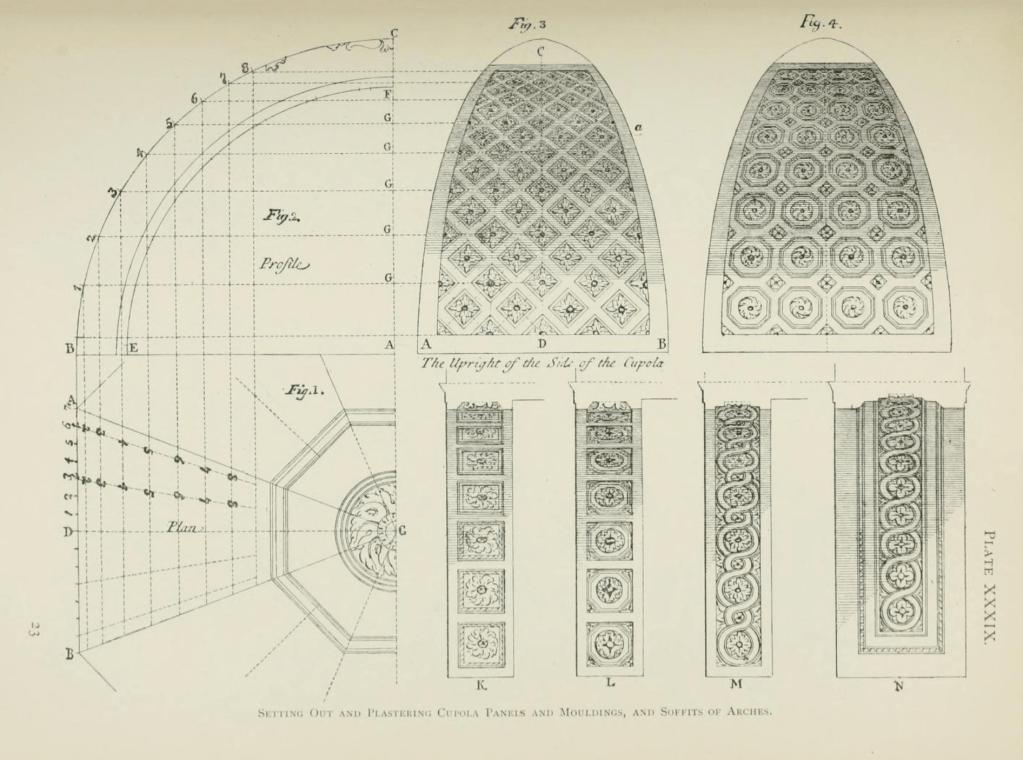
Fortunately there is an inexpensive (free) copy of the book online at the Internet Archive. This isn’t just a book of nice drawings and photos, this is a book written for crafts people. Besides the layout diagrams, there are drawings of the actual tools used to create complicated plaster elements and a huge list of plaster types as well as the ingredients and mixtures used to create them in various time periods, such as instructions on what type of animal hair to use in the staff pieces for strength. It is an early edition of the book and contains over 700 pages which is more than is included in later editions.

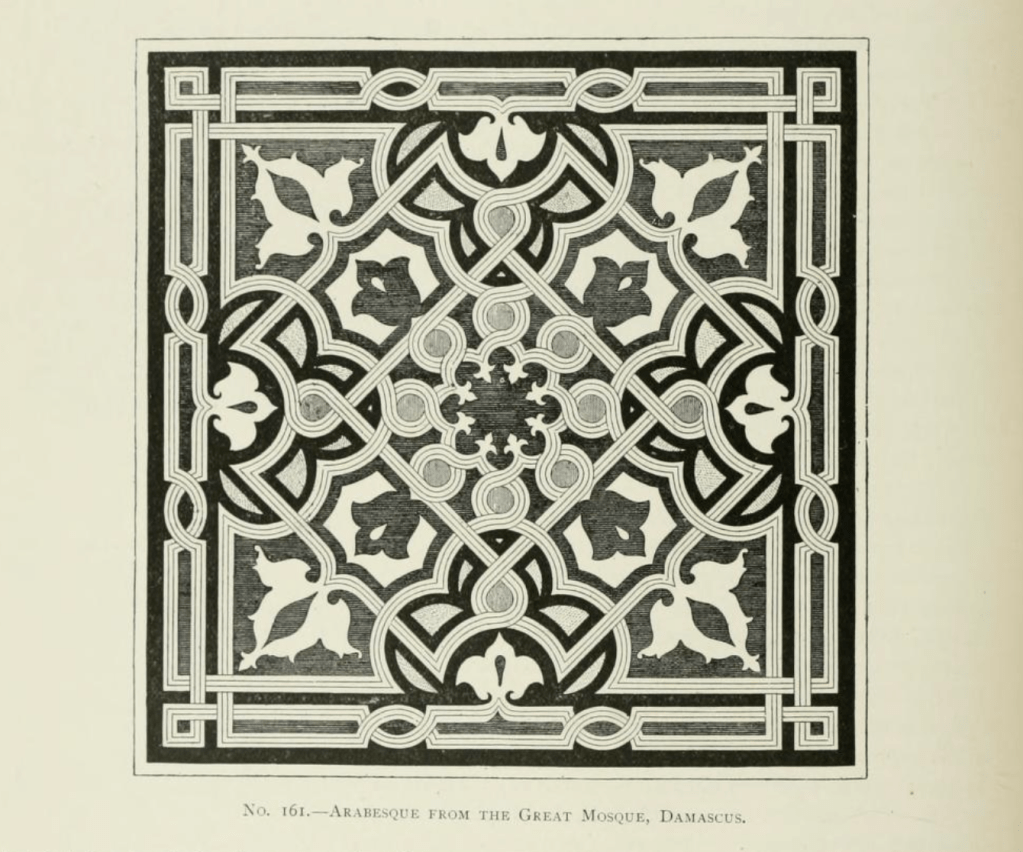
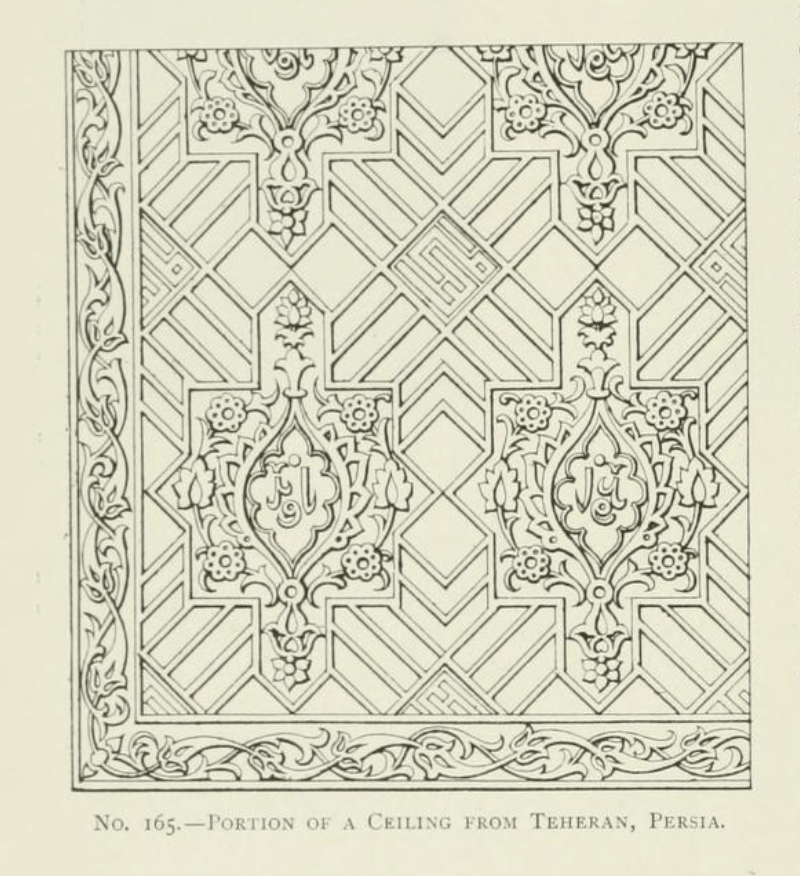
The book covers not just typical plasterwork but, sculpting, mold making, terra cotta work, scagliola, sgraffito, and composite decorations. Besides Western European techniques it examines designs and techniques from Japan, China, India, Persia and the Middle East.

There is also a section on concrete work such as staircases, sidewalks, road, roofs, fountains, and other decorative elements.

You can find the digital book here at The Internet Archive. There are a number of different digital files available for download with varying file sizes depending on the quality of the images you want to have available.

New 10-Week Set Design Fundamentals Course – 50% Off

One-Time Pre-Sale Offer

Wrand Productions announces it’s 10-Week Set Design Fundamentals Course at a Pre-Sale price of 50% off the regular price. This is the only time the series will be offered at this price and it will return to the normal price when the series begins on October 31.

This self-paced online series covers the fundamental skills that a Set Designer in the feature film and television industry here in Los Angeles are expected to have.

This is similar in difficulty to a one-semester graduate-level program at a university, but much of the material presented here is not covered at most colleges and is normally only available at the professional level. I’ve been developing this series for several years, basing it on classes I teach at the Art Directors Guild in Los Angeles.

Here is an outline of the material that will be covered in the series:

Week 1 – The Basics

Standard drafting conventions and symbols for set construction drawings. Set construction: typical flat construction techniques and variations.

Week 2 – Cameras & Optics

Understanding basic camera and lens terms: aspect ratios, focal length, depth of field, sensor sizes, exposure, stage lighting, using camera angle templates.

Scaling from photographs and artwork: calculating dimensions, understanding picture perspective and allowing for lens distortion.

Week 3 – Analyzing the Script / Reference Materials

How to break down a script for set design; using storyboards; techniques for estimating drawing time schedules.

References: using online, printed, and survey photo references; building a reference library on a budget.

Week 4 – Working Drawings

Step-by-step directions on creating proper construction drawings: plans and elevations; details, full-size details, and digital cut files; reflected ceilings and furniture plans; stage spotting plans, and director’s plans.

Week 5 – Door & Window Details

Diagrams and explanations of door and window construction and various adaptations for stage sets; creating accurate-looking period reconstructions; understanding, using, and sourcing hardware.

Week 6 – Stairways

The fundamentals of stair design: types of stairs, stair construction, how the choice of stair type affects design, and designing elliptical stairs.

Week 7 – Mouldings & Staff Elements

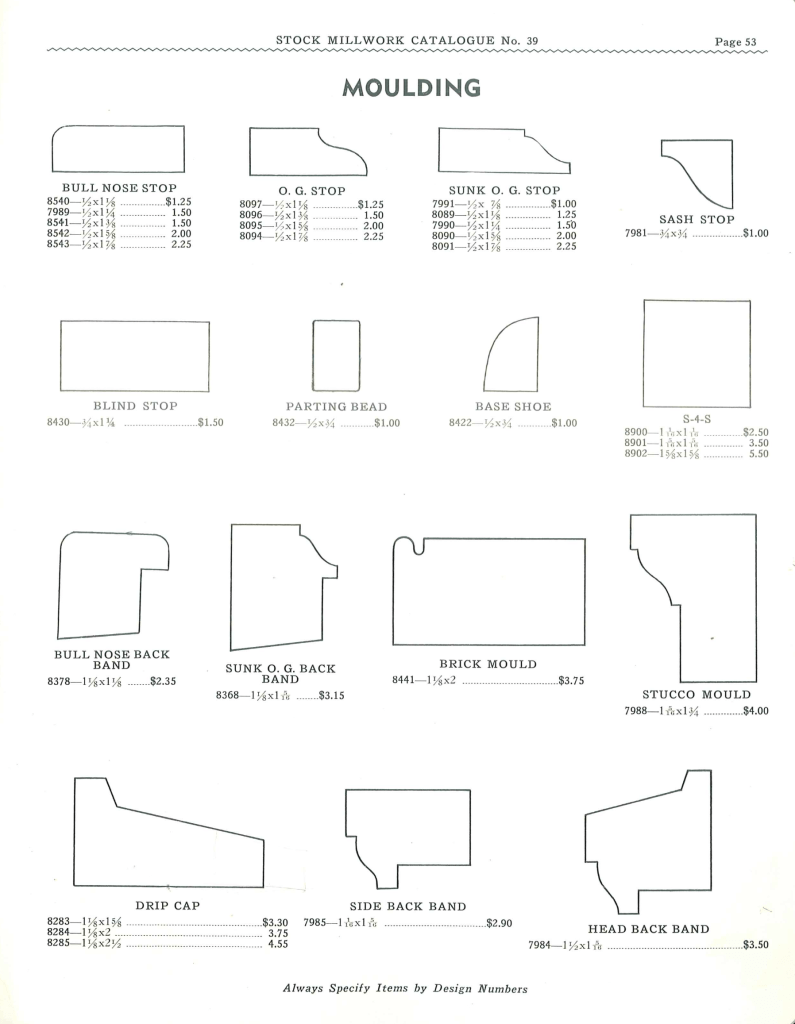
Understanding and using the Classical Orders of architecture; the proportions of mouldings based on style type; using a moulding catalog and creating built-up moulds.

Using plaster staff and compo elements in a set; designing with brick skins and textured surfaces.

Week 8 – Backings, Special Effects, & Visual Effects

Using painted and photo backings: The advantages and drawbacks of various types; creating custom backings; how to calculate correct placement distance from the set.

Special effects considerations: replicating fire, water, and wind effects; understanding legal requirements for special effects work on a sound stage; dealing with practical fireplaces.

Visual effects work: shooting with green or blue screens; using LED walls or volumes.

Week 9 – Backlots & Location Surveys

Shooting on studio backlots; shooting on location; proper surveying techniques; assembling a personal survey tool kit.

Week 10 – Physical Models

The advantages of physical study models; determining model scales; various model types and construction techniques.

Class Materials & Videos

Each week there will be tools, charts, and reference material to download as well as video instruction to help you do the exercises and create your portfolio drawings.

Along with the classes, you’ll have access to a private chat area that is only available to students of the series and alumnae who have taken courses previously. Here you’ll be able to meet other designers, discuss class material, get advice on your career, and exchange ideas and experiences from both the classes and real-world entertainment jobs.

Prerequisites:

– You must know how to draft. Drafting ability is essential to effectively completing the course and ending up with a set of professional quality working drawings. I’ll be offering a course on drafting later in 2022 to fulfill this prerequisite.

– Be familiar with CAD software  –  You are free to use any CAD software you are familiar with. Using software that you are still learning may make the lessons more challenging than you can handle. There is no standard drawing software in the entertainment industry as far as the Art Department is concerned. There are preferences among certain designers but one aspect of the job is a need to create files that can be used by many different other programs. 3D modeling won’t be required for any of the class projects but feel free to work that way if that is part of your usual design process.

There is a 14-day money-back guarantee from the time you begin the series if you change your mind. If you’re unsure about whether the series is right for you, you can schedule a free 15-minute discovery call to talk with me and I’ll be happy to answer any questions you might have.

Sign up for the course and learn more here.

The Swedish Art Department

Sometimes we assume that the way we do things in film art departments here in the United States must be completely different than in other countries, but often when we talk with our compatriots in other countries we find out that there are more similarities than differences.

I spoke recently with Swedish Production Designer Pernilla Olsson and Construction Manager Johan Sjölin who work in the film and TV industry in Stockholm about their work process. I quickly learned that they deal with many of the same problems that we encounter here in the U.S.

Pernilla Olsson and Johan Sjölin on the location build for the feature film Halvdan Viking (2017)

Pernilla related to me that as we often encounter here, budgets in Sweden are often stretched beyond what the production demands and the brunt of those money shortages seem to often fall hard on the Art Department. Tighter budgets not only affect the construction and set decoration budgets but limit the size of the art departments as well.

“We have a much more flexible structure compared to yours and I think this is because a larger art department in Sweden would be; the production designer, one art director, not in all productions but maybe an art director, and then two or three prop buyers who are also set decorators, store managers, and set strikers. We don’t have a standby art director so the standby props person(s) has to have the confidence to arrange things on the set as they see fit. Then we may have an intern or two, and that’s it.” Olsson said.

“The production designer or art director has to do all the drawings, all the budgeting, direct the prop buyers, do mood boards, and coordinate with the construction coordinator and the foremen. So therefore there is usually no time to do detail drawings. We usually only have time to do conceptual drawings. I will give them a drawing with overall dimensions and we will discuss any area that requires more specific dimensions but we couldn’t go into more detail in the drawings. So it’s a continuous dialogue to do the set practically but economically. The graphics are sometimes taken care of within this group or by a consultant.”

A set for Halvdan Viking (2017) under construction.
Photos – P. Olsson

Olsson said she was usually frustrated to not be able to do more detailed drawings but was happy to be able to deliver what drawings she could since the art department is often trying to just keep up with the construction department, a scenario we are all too familiar with here in Los Angeles.

Johan nodded in agreement, echoing the frustration of having to start a show so soon after the designer had begun their design process. “We normally don’t get very detailed drawings from the set designers or art directors but we have a dialogue going all the time and they know what we can do and what we need and we try to find existing windows or elements that will work. No one is going to miss 10 centimeters of width if the look is the same”, he said.

“I appreciate the moments when we get the materials at the location and we can see it on the spot and we just create detail drawings on paper there in the set and it is often the most creative kind of working situation”, Sjölin continued. “The way we work is, I or my guys can always go and ask Pernilla questions. The questions don’t have to go through me or through a layer of other people. The person who needs the information can get it from her and she can talk directly to them, as long as I have a clue as to what is going on.”

Photo – P. Olsson

Sjölin said that in some situations he may have to draw the elevations of the set if the designer doesn’t have time to do them. He said, “sometimes a production designer will hand me a rough sketch on a napkin. Build this, they’ll say, it’s 300 square meters.”

Both of them commented on the advantages and disadvantages of digital media aids, noting that the system is far from streamlined. Many art departments rely on Dropbox as an all-purpose file transfer system and people quickly become inundated with material, often making it hard to find the information that they need at that moment. This is often combined with the problem that there is often a need to look at a drawing or reference on a tiny phone screen. Sometimes, they said, the general access to the data server is often used as an excuse to not distribute print drawings at all.

Photos- P. Olsson

“There is a sometimes a disconnect between the people sitting in front of computers and the people on the stage or on location”, Olsson said. “People often think that as soon as a document is released that the other person will have read it not realizing that the person may not have computer access or they are in a place there they don’t have wifi.”

Olsson, who studied scenography at university in Milan, said that the film industry had recently lost work to other countries because of a lack of tax incentives, notably, The Game Of Thrones. “There are not as many stage shoots as in past years or as much stage construction. Now new people don’t have a way of getting the experience to learn about stage work because there is so much less sound stage work in Sweden.”

Sjölin agreed with her. “There are not that many new people coming into the business these days as craftsmen, who are willing to stay and spend the time to learn the trade. That goes through the whole construction department, from welders, set and standby carpenters, set and standby painters who can do the aging and all the things a shooting company needs during a shoot. All the old knowledge is soon gone with them. That is the same with all the old carpentry tricks. We are losing that”.

Flat Construction

15 years ago, the Swedish film industry used stock flat sizes similar to a system we had here in Los Angeles. Sets were constructed of these stock units and when the set was struck, they were cleaned and returned to a stock shed for storage. The framing was done with the highest quality 21mm x 69mm fir and framed with Finnish birch plywood. Angle irons and T- plates were used at the corners and toggle joints for strength.

Stock Swedish flat sizes – drawing by Pernilla Olsson & Johan Sjölin

The Finnish birch ply are delivered with a yellow film applied to it, normally used for interiors in vehicles or for concrete casting. The surface is very smooth and slightly waxed. Afterwards, water was applied to soften the wallpaper or paint for removal. Sjölin said that sometimes a second skin 6.5mm MDF was stapled to the ply for painting or papering and then it was easily removed for a quick strike.

Illustration- R.D. Wilkins

Johan said that the most noticeable differences between the traditional flats and current types are that they no longer use Lauan because of the cost and because it is made of rainforest-harvested mahogany. Currently they use 28mm x 70mm timber for the frames and chipboard or MDF for the skin. They tend to not glue the skin to the frames as they have trouble getting the flats to be straight and often omit using toggles to safe time and cost.

He prefers to use 25mm Finnish birch ply ripped to 70mm wide instead of the cheaper fir timber for the framing and prefers to use to use 6.5mm Finnish birch ply for the skins as it holds up better for TV programs that may have to last a number of seasons.

Illustration- R.D. Wilkins

Toggles are spaced at 600mm on center and the frames are constructed with screws rather than staples. “I love to use nails like the old way, but no one else does”, he said with a grin.

R.D. Wilkins

Hand Drafting Lovers Rejoice – 100 Posters Still Available

Christopher Schwarz at Lost Art Press announced that they have 100 of the Anarchist tool chest posters still for sale. I thought these had sold out months ago but apparently there was a small batch lurking in the stockroom.atc_poster1_img_2463-1

Detail of nice crisp detail of the poster by Steamwhistle Press. Photo by Chris Schwarz

Detail of nice crisp detail of the poster by Steamwhistle Press. Photo by Chris Schwarz

The drawing is of a traditional English styIe tool chest as outlined in Chris’ now-classic book, The Anarchist Tool Chest. The original artwork for the poster was drawn back in January in pencil, in a late-19th century drafting style on the last remaining bit of well-made 1000H cotton vellum I still had in the studio. The poster, of which only 1000 were made, is beautifully printed on #100 paper stock using a  hand-inked polymer plate on an old offset printing press and each is hand-signed by Chris. This may be one of the last examples of hand drafting you’ll see printed in poster form. My drawing board has fallen into such disuse in the past 6 months that a baby bat has taken up residence under my drafting machine arm.

tool chest perspective cutaway

The Digital Bookshelf – Furniture Mouldings

“There is a tendency among those accustomed to the large-scale of moulding detail on exterior work in wood or stone to make their mouldings on furniture and interior woodwork too large. The full-size furniture moulding so carefully drawn by Mr. Warne should be of the utmost service not only to furniture designers but to students of architecture and interior decoration.”

plate 21_warne


plate 4_warne


“This book covers many different types of English furniture; bedsteads, bookcases, bureaus, cabinets, chests, cupboards, chairs and others. This book illustrates cover this book covers molding details on English furniture from about 1574 to 1820 molding is the method adopted by the cabinetmaker to give definition to the lines of his work and the sections of molded detail very very much as one style has succeeded another through the oak, walnut, mahogany and satinwood periods of English furniture the workings of moldings was then so laborious that the craftsman use them with greater restraint and obtained more pleasing effects by their use than is frequently the case today when profusion often eliminates interest.”

H. P. Shapland, 1923


E.j. Warne’s book, Furniture Mouldings, is still one of the best resources on 16th to 19th century British furniture. Almost never out of print, copies can be had for as little as $1.

Until you get a print copy, you can download a digital scan of the book below. Scanned from an ex library copy, there are a number of damaged pages but you can get a good idea of the scope of the book.

FurnitureMoulding_EJWarne_1923


– R.D. Wilkins


10 Design Reference Books You Should Have On Your Shelf


design book montage_1

I think I’ve already made it clear that you just can’t have too many books, especially ones on design and architecture. But it’s also a real pain dragging a lot of them around with you from job to job and it becomes a bigger job to keep track of them once they’re out of your house. So, I try to only take books to my current workplace that I either don’t have a digital version of or just really need to have close at hand.

If I had to limit myself to just 10 books, these would be the books I’d take to start a job.

Here is my must-have list with sources:

1. Architectural Graphic Standards – 5th Edition – This was when the books were filled with great hand drawings and actually showed you in detail how things were built. Lots of period details as well. Out of print for over 50 years (at least in this edition) you can still find copies for anywhere from $20 to $200. The 3rd edition would be a suitable replacement. the first edition is also good to have and has been reprinted several times. Check Abebooks for copies. Not available digitally.

If you are in Great Britain, McKays is the closest equivalent, and is actually superior in a number of ways from our standpoint as set designers. On the Continent, an older copy of Neufert’s is a must. See this earlier post for details. Not available digitally.

In Germany, the best book on period construction I’ve found is Konstruction Und Form Im Bauen, by Friedrich Hess. There are lots of very nice drawings and measured details. Long out of print but you can still find copies second-hand. In Sweden, an excellent book on traditional construction is Stora Boken Om Byggnadsvård, by Göran Gudmundsson. This is a current book and still in print. Neither are available digitally.

2. Time-Saver Standards for Interior Design and Space Planning, 2nd Edition. This is the design complement to Architectural Graphic Standards and covers nearly every situation regarding building interiors. You can find used copies for around $75. There is a digital version available but it’s not only difficult to navigate because of the size of the book but at the price you’d be better off getting a hardback edition.

3. Styles Of Ornament – Alexander Speltz.  Originally published in 1904, this book uses over 4000 drawings to illustrate 6000 years of historical design. As a general design reference I don’t think it has an equal. Architecture, furniture, text, carving, metalwork are all covered. A must-have. (Handbook Of Ornament by Franz Meyer would be a close second.) Available from a number of publishers for as little as $10. A digital version is available.

Low Budget Option- download the online PDF here.

4. The Stair Builder’s Handbook – T.W. Love – Not a design book per se, but a book of rise and run tables that make stair layout a breeze. Available from Contractor Resource for about $18.

Low Budget Option – download the PDF Common Sense Stairbuilding and Hand-railing. Skip the mind bending section on handrail layout and skip to page 99. Also, Stair building, which has a nice section on ornamental ironwork.

Also, In April a new book will be out called  Simply Stairs – The Definitive Handbook for Stair Builders, by Mark Milner, published by Whittles Publishing in London for £25. Pre-release information on the book makes it look very promising.

5. Backstage Handbook – Paul Carter. Originally a technical manual for theatrical designers, the book is full of great information for film work as well. There are more details in this earlier post from several years ago. Available from Broadway Press for about $22. No digital version is available.

6. American Cinematographers Manual – The new 10th edition will cost you about $80 in hardback and almost the same in it’s digital version through the iTunes and Android sites. There’s a free pdf of the 7th edition here, but much of the latest technology isn’t in it. This is the go-to book for all things dealing with cameras and image capture. A lot of people will tell you you don’t need this. I’m sure you could also have a great career as a car designer without knowing anything about how cars work. Because when it comes down to it, all we’re really doing is designing big, pretty things to bounce light off of. Just remember, if the department names were based on physics we’d be the Light Reflector Design Department.
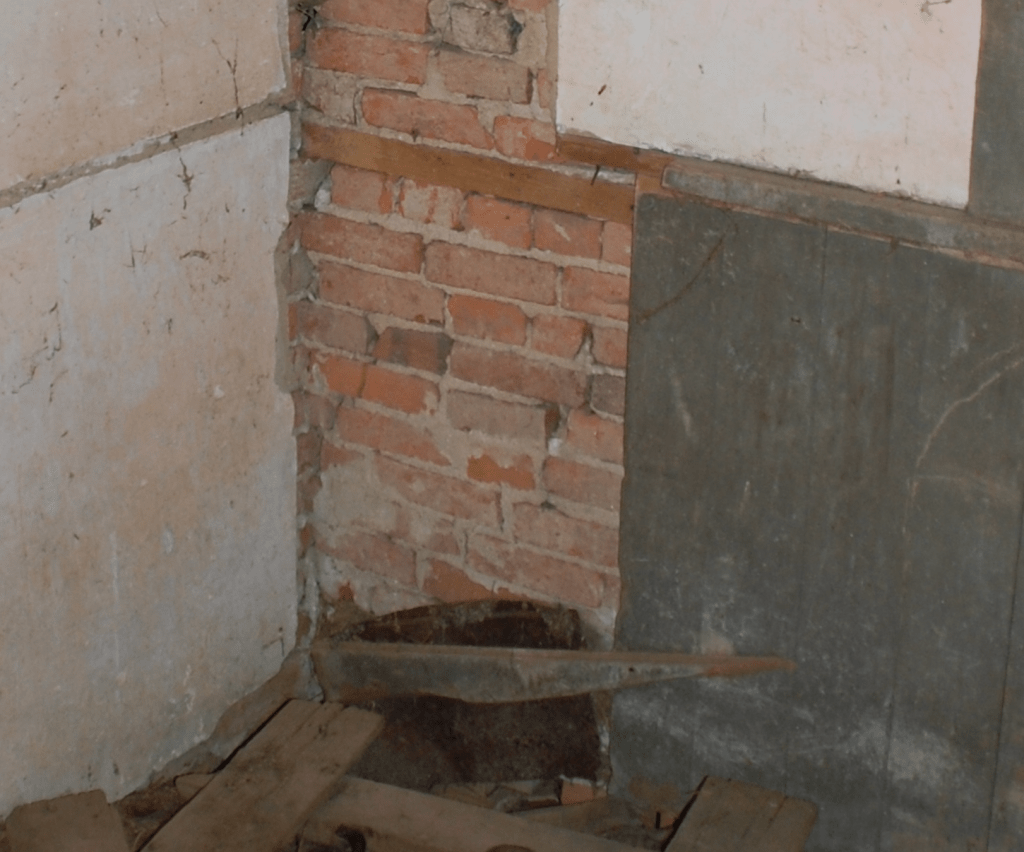
7. Building Construction Illustrated – Francis Ching. An excellent and thorough book about construction details including wood framing systems as well as masonry. About $30. No digital version is available.

Low Budget Option – access the online PDF here.

8. The Classical Orders of Architecture – Robert Chitham. I think this is the best modern book around that deals with the classical architecture proportional system. This book was out of print for quite a while and fortunately is back in print. The new edition deals with the proportions for both metric and Imperial systems. Used copies can be found for about $45.

Low Budget Option – Get the PDF American Vignola by William Ware and The Five Orders by Vignola. Also, download the very nice PDFs on classical architecture from the The Institute of Classical Architecture & Art.

9. Illustrated Cabinetmaking – Bill Hylton. I covered this book in an earlier post. If you want or need to know basic furniture design and how furniture goes together this is the book you’ll want to refer to. It’s been referred to as the Grey’s Anatomy of furniture building. Full of exploded drawings of many kinds of pieces. Available from Fox Chapel Publishing for $24.95.

10. By Hand & Eye – George R. Walker & Jim Tolpin. Just because this is number 10 on the list doesn’t mean it’s the least important. In fact if you’re just starting out in set design this is the first one I’d tell you to buy. Most bad designs are caused by bad proportions. This book will give you a solid understanding of proportion and keep you from making simple mistakes. You can download a sample chapter here. Also, I wrote a longer post on the book earlier. Walker and Tolpin are promising a workbook that will come out later this year based on the book’s concepts so look for that. Available from Lost Art Press for $38, hardbound.

Low Budget Option – Cut back on the Starbucks for a couple days and buy a digital version for $18. The mental stimulation might be just as good as the caffeine and it’ll be a lot healthier too.

So what have I missed? There are other books I could list these are the best. What’s on your shelf? What books would you say are ‘Must Haves’?

Share your titles with the rest of us. Let me know the important titles I’ve missed here, I’m sure there are a lot. As an incentive, everyone who posts book suggestions goes into a drawing at the end of the week for a free digital version of By Hand & Eye.

C’mon, give us your list.