What Is A “Double Dap” Hinge?

One of the reasons that I wrote the Wrand Film Glossary was to record many of the obscure film and entertainment industry terms that get passes down orally but are never recorded.

Art department and set construction lingo is usually not included in the typical film glossary, and “Double dap” is one of those odd terms that you will hear used by Prop Makers* but have probably never had it explained.

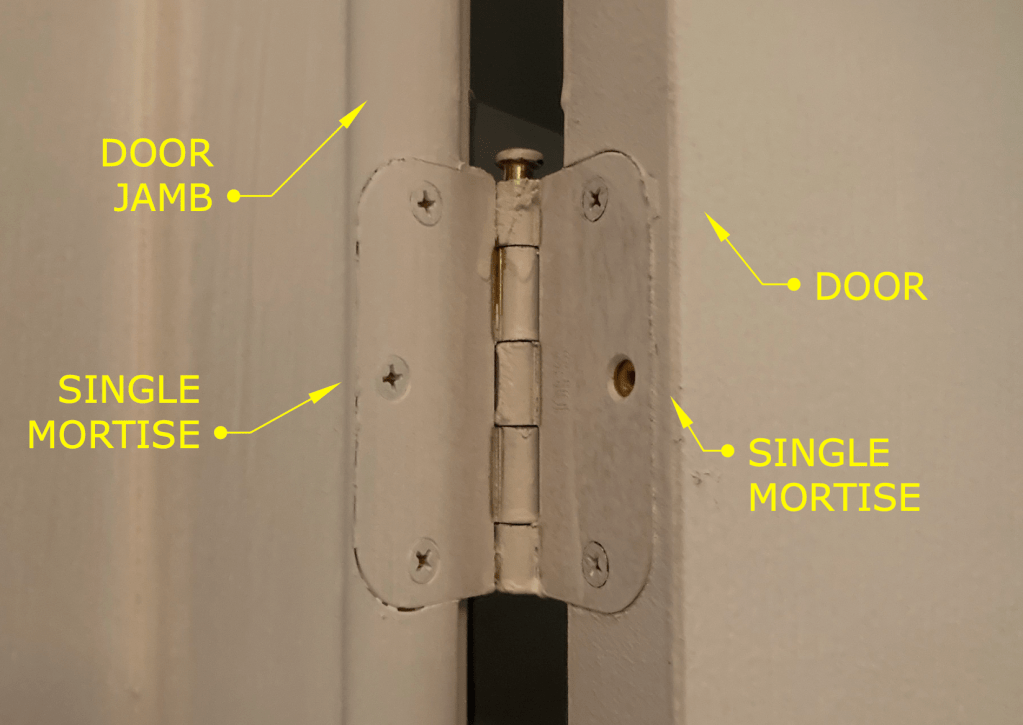
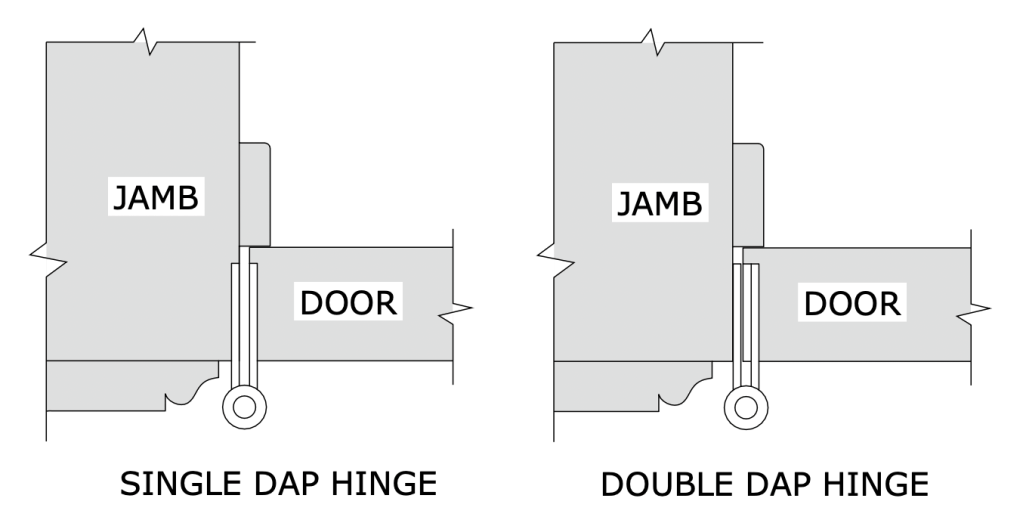
The term refers to how the hinges of a door on a stage set are to be installed. Normally the installation of hinges for a door involves creating mortises in the door stile and the jamb that match the thickness of the hinge leaves. That’s referred to as a “single dap” installation. (Note: this is specifically for doors in North America or the UK. Many Continental European doors are half-overlay and don’t use the type of leaf hinges that are standard here.)

Typical hinge installation – referred to as a Single Dap

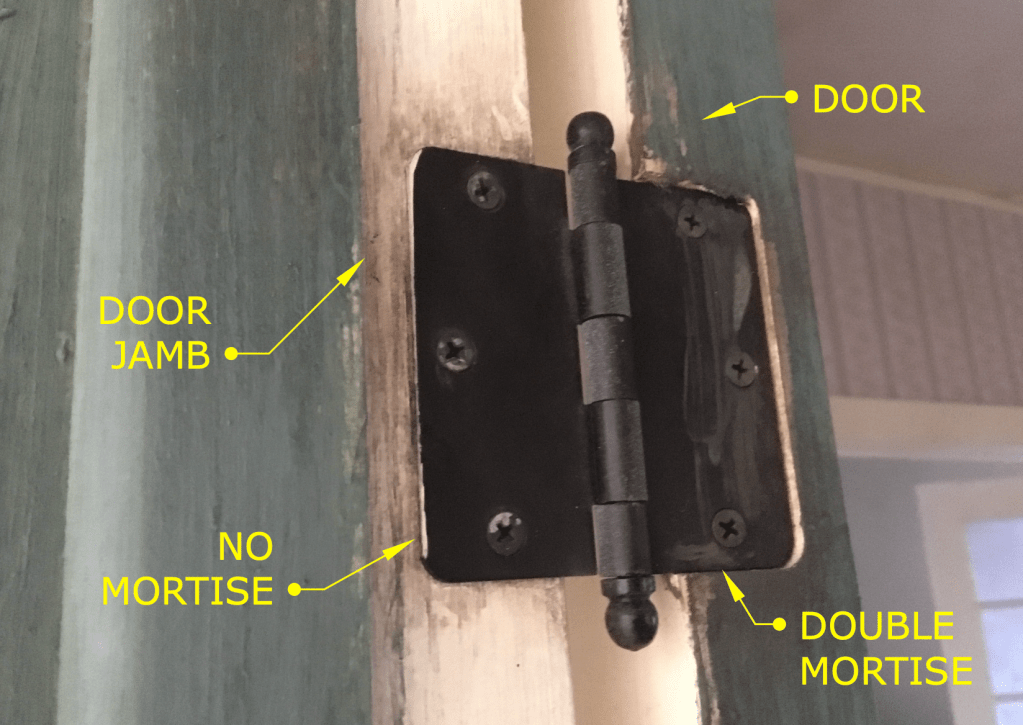
A “double dap” installation involves creating a mortise in the door which is twice as deep as usual and not making a mortise in the jamb, as shown below.

Example of a Double Dapped hinge

The diagram below is a side-by-side plan view showing both types of installation.

So what’s the purpose of this? Well, this is something that is more typical on sets for a broadcast show than on sets for a feature film.

One advantage is speed. We tend to build sets at a pretty brisk pace, sometimes building an entire set over a weekend. For example, if you have a set with six doors, that means you need to install 18 hinges, which means routing 32 mortises. With a double dap installation you cut that number in half.

Another advantage is if you are redressing a set and need to change out the door of an opening for a different door. With a standard installation, you will need to patch and fill and re-rout three mortises. Instead you just need to fill some screw holes.

This is also the case if you need to change the swing direction of a door at the last moment. (Good luck prying off and repositioning that door stop.)

Double dapping has fallen out of favor lately. Production Designers don’t like the look of it for one thing. (Along with Phillips head screws on a period hinge!) They tend to stick out particularly when the hinges are a contrasting color from the jamb or if the wood is painted a light color and the hinges have a dark laquer/black finish. In some instances this condition can either visually hide the extra mortise depth or accentuate it.

Also, notice the round corners on the hinges in the photos. Round corner hinges are a 20th century invention to speed up production. Once machinery, i.e. routers, was being used for mortising, it became a lot faster to create hinges with leaves that didn’t require squaring off the mortise corners as was necessary for period, square hinges. Round corner hinges come in 1/4″ and 5/8″ radius corners, so be aware of what radius size they are if you’re choosing hinges for a door that has already been mortised.

Note: Prop Maker is a designation for a union stage carpenter in Los Angeles to differentiate them from a ‘civilian’ carpenter. They are trained it building theatrical scenery of all types and historical periods and specialize in creating scenery for film productions. They are more similar to cabinet makers than a typical carpenter and are skilled in construction techniques and methods that would baffle most people outside the entertainment industry.

Sometimes Unwanted Holes Aren’t So Bad

You’ve probably never thought about how sound can affect your stage set. Beyond trying to not create an environment that would drive the sound recordist mad, you usually don’t think about odd acoustic anomalies that might pop up that you never intended to happen. Like echoes.

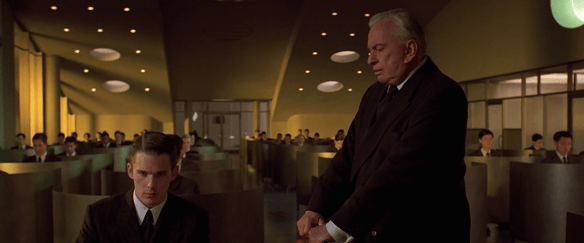
Computer Hall set – Gattaca – Columbia Pictures 1997

Yeah, echoes will bite you in the ass if you’re not careful.

On the main set for the 1997 film Gattaca, just such an anomaly occurred, and it was the cinematographer who ended up saving the day.

And what does the cinematographer have to do with sound problems? Keep reading.

The Computer Hall set was designed by Production Designer Jan Roelfs and was inspired by the real-life location that he and Director Andrew Niccol chose for the film. The actual building chosen for the exterior of the Gattaca Aerospace Corporation was the Marin County Civic Center in California, designed by Frank Lloyd Wright. The art department flew to Marin and surveyed the interior details so that they could be matched for the set on stage, which was in a warehouse in Playa Vista.

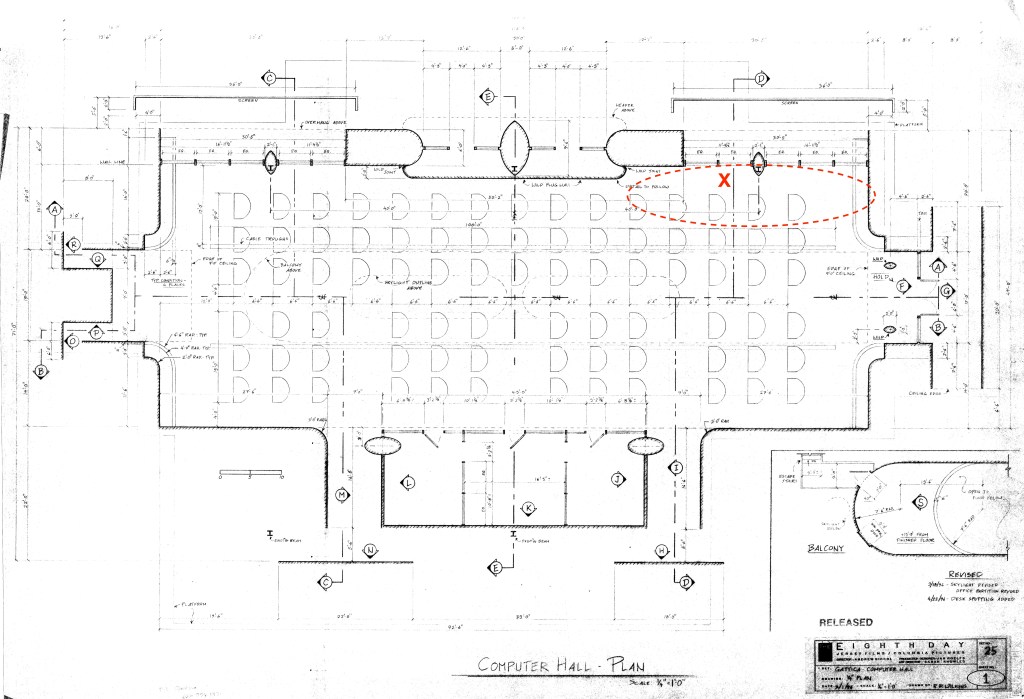
The building they had leased made for an odd sound stage, but its size made it large enough to build the sets for the film in. There were the normal problems you deal with in a structure that was never designed to be a sound stage: support posts at regular intervals, a ceiling that is not nearly as high as those in an actual sound stage. On the plan below, you can see where the oval columns were designed to hide two of the building’s I-beam columns.

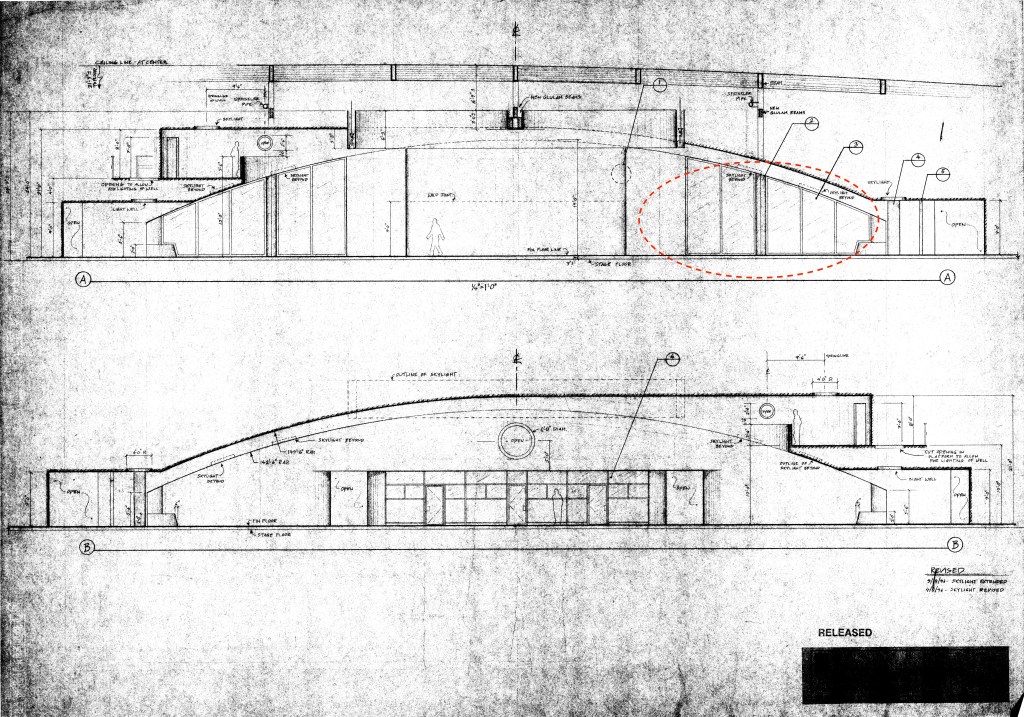
These are my drawings of the plan and elevations of the set with the areas of the sound problems circled.

(One note: on the title block, you’ll notice it reads “Eighth Day”. This was the original title of the film. In pre-production, the producers learned that there was a French movie of the same name that was going to be released, and a name change was required. The writer and director Andrew Niccol decided that he would create a new title using the four letters used to identify the nucleobases of DNA: GATC.)

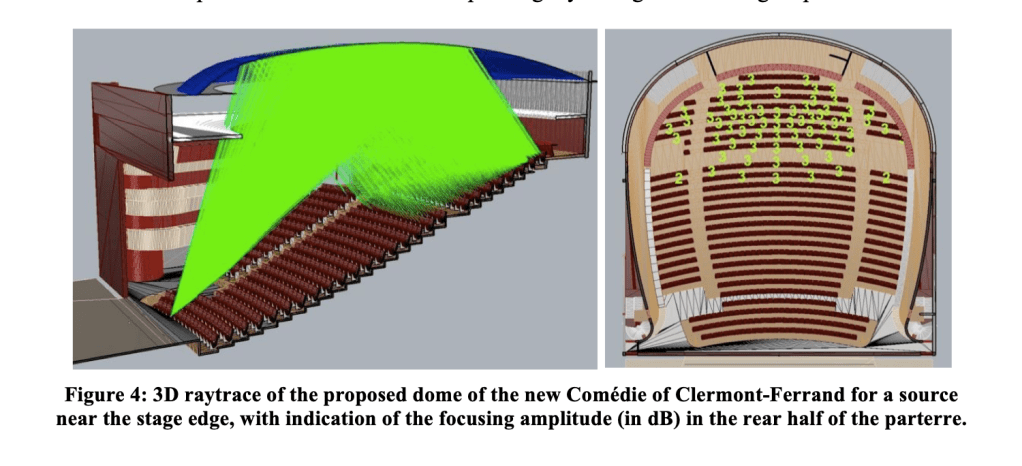
Turns out, theater designers had known about the sound reflective effects of elliptical and parabolic ceilings for years, as most of the western world designed theaters in the mode of the typical Italian horseshoe layout plan.

A presentation at the 2017 International Congress On Sound was focused on this phenomenon.

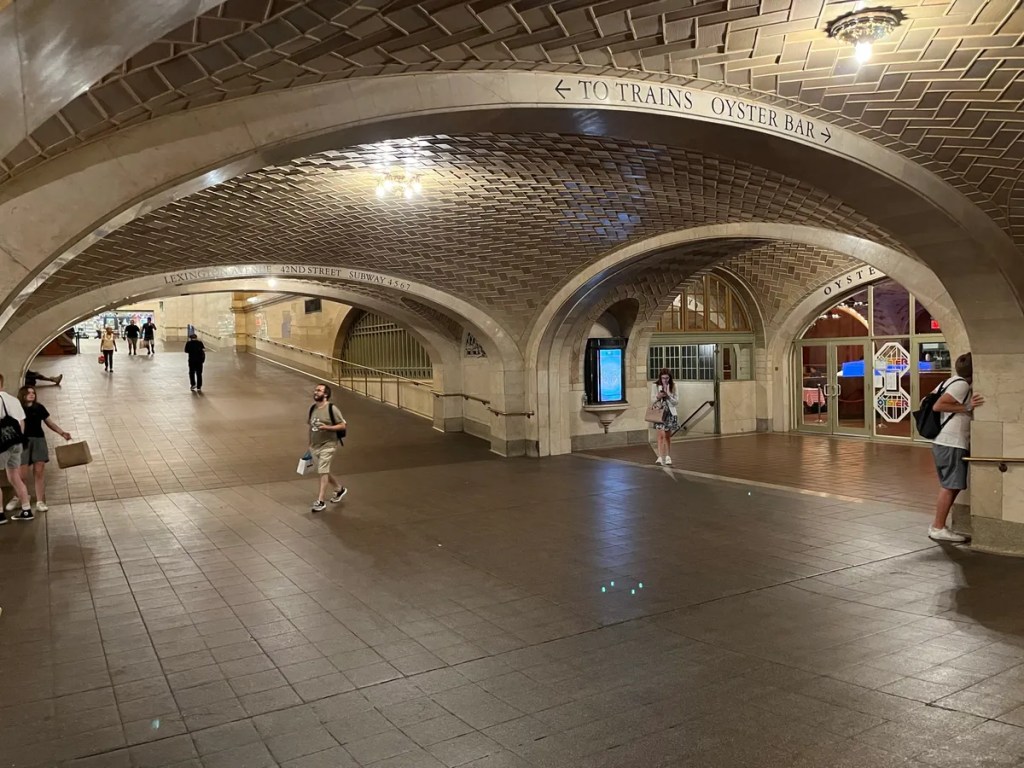
In New York City’s Grand Central Station, there is a ‘whispering gallery’ or acoustic vortex. This is an architectural phenomenon created by a number of configurations, in this case, a vaulted ceiling in the subway entrance under the terminal. A person standing in one corner of the hall intersection can whisper into the corner and the sound travels over the curved surface of the ceiling and can be heard by a person standing in the opposite corner.

New York Grand Central Station

I discovered the echo one day when I was walking the set and stopped at the point in question. I saw a gnat and clapped my hands together to kill it. That’s when I heard the strange echo. Horrified, I clapped again and there was the same echo. I clapped a third time, just as Jan was walking through the set. He stopped and frowned. “Don’t do that!’, he said.

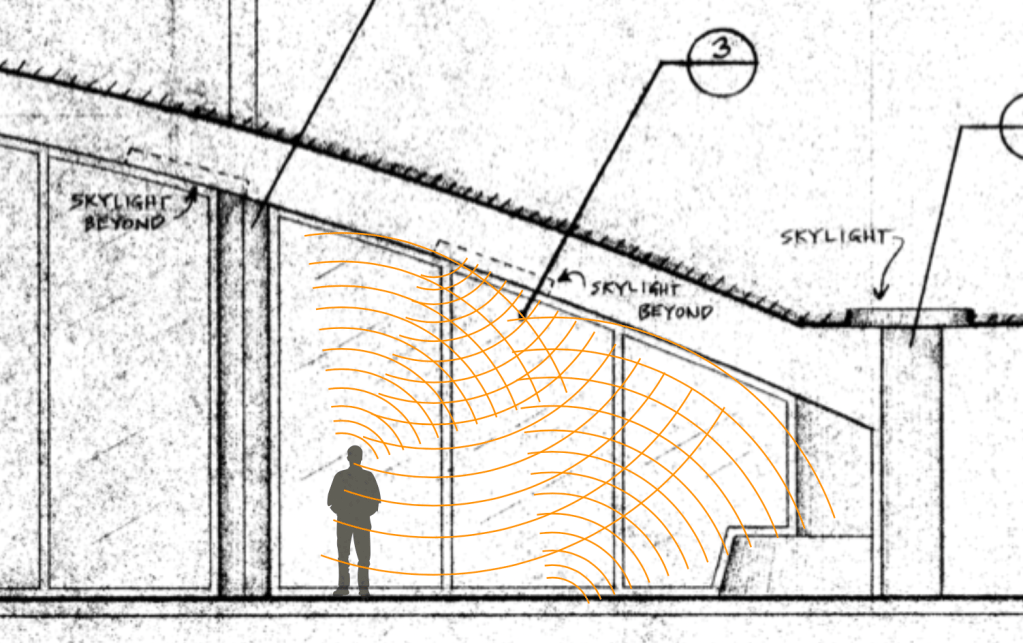
I think what was happening was that the area beneath the lower section of the ceiling of the set created a flutter echo, which was enhanced by the smooth ceiling surface. The two large skylights didn’t seem to affect this echo.

There was no carpeting or fabric to dampen the sound which would have eliminated this effect.

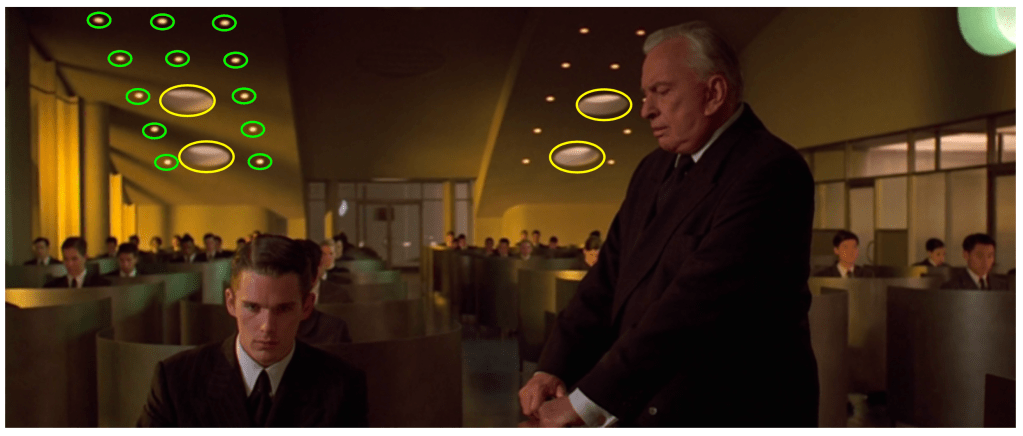
The solution came for the most part when the cinematographer, Slawomir Idziak, told us that he needed more practical lights in the set. This required creating dozens of new openings in the lower sections of the ceiling. These holes interrupted the acoustic waves and the echo disappeared. With the addition of the desks and the background actors, the sound reflection was minimal.

The photo below shows the original skylights in yellow, with the new lights circled in green.

The Art Of Technical Drawings

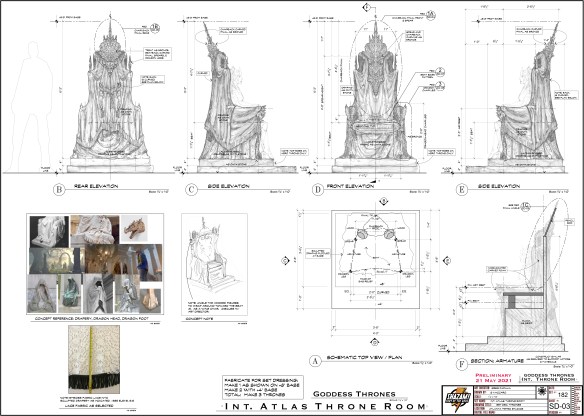
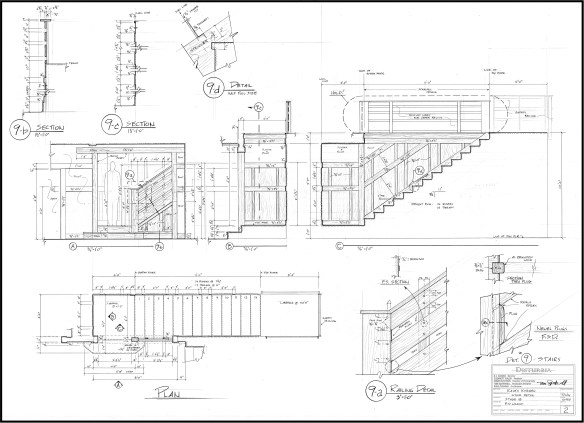
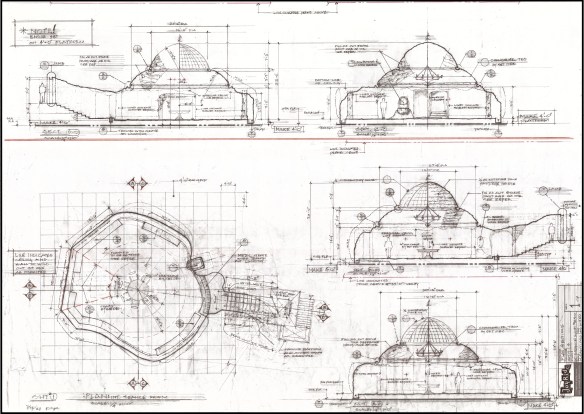
The look of construction drawings for film and television has changed a lot over the years, particularly now that most drawings are done digitally with computers rather than by hand.

While many current drawing styles now incorporate photo-textures, shadows, and icons to add life to drawings beyond what is typical of architectural drawings, it’s hard for them to match the aesthetics of hand drawings.

CAD drawing from 3D model – photo textures applied

Having started as a pencil draftsman I guess I do have a bit of a personal bias, but the unique style of each person on a hand-drafted drawing was immediately recognizable to people who knew their work.

Before digital illustrations and renders of 3D models, hand-drafted drawings had to serve as a design sales tool as well as instructions for scenery construction.

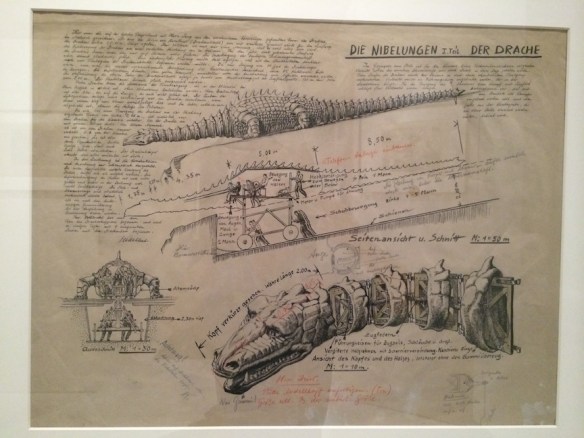
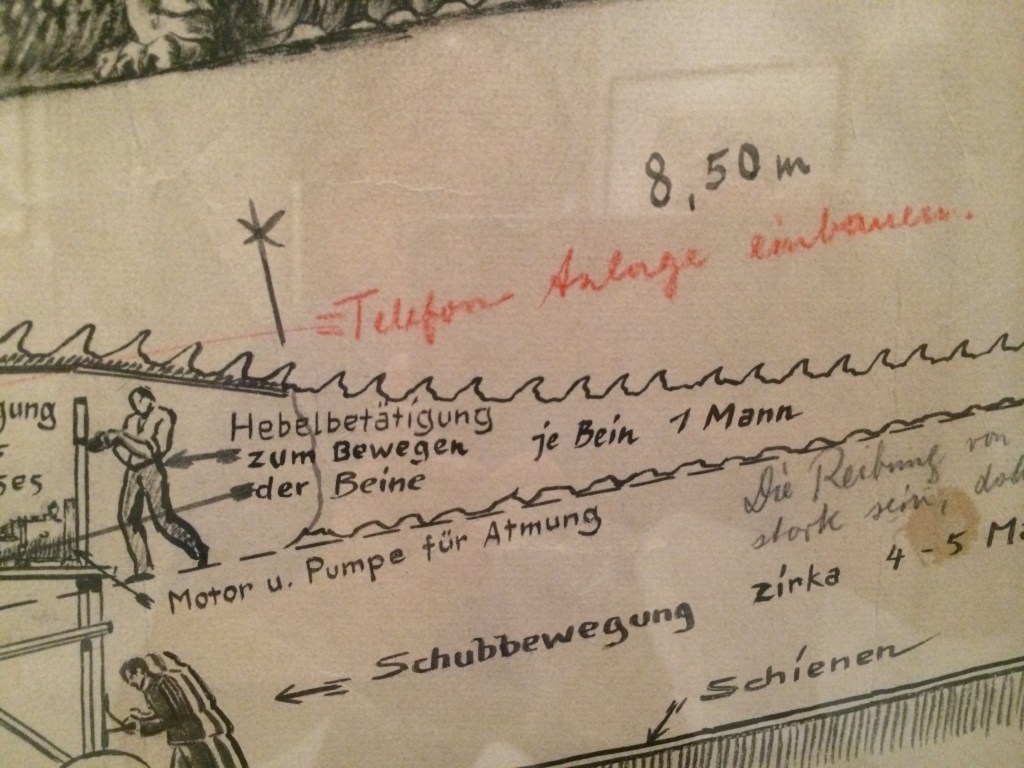
Here are some shots of a set design by Erich Kettlehut in 1923 for the UFA film, Die Nibelungen, for the scene where Siegfried kills the dragon.

The drawing was displayed as part of an exhibition of artwork from the UFA silent film period of the 1920s and 30s at the Los Angeles County Museum of Art in 2014. The drawing is from the collection of La Cinématiquè Française in Paris, France.

Note that the drawing not only provides a pictorial description of what the dragon should look like, but calls out dimensions, construction materials, how the action prop is to be operated, surrounding scenery requirements, and specific technical details of mechanical movements.

Technical drawing of the Dragon by Art Director Erich Kettelhut – ink and pencil on vellum
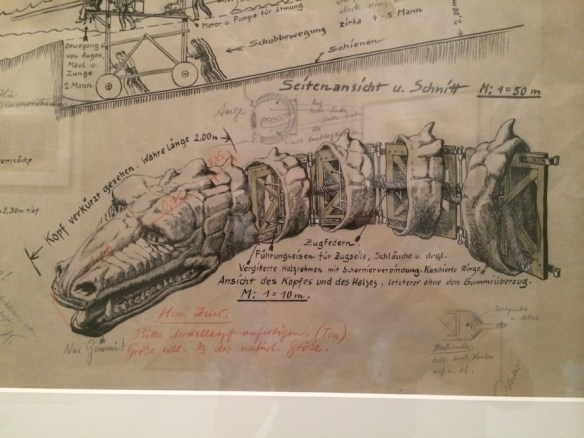
Kettelhut called out the length of the neck as well as the tension springs, framework, control cables and hoses required for the creatures fiery breath. He calls out “only rubber!” for the mouth area.
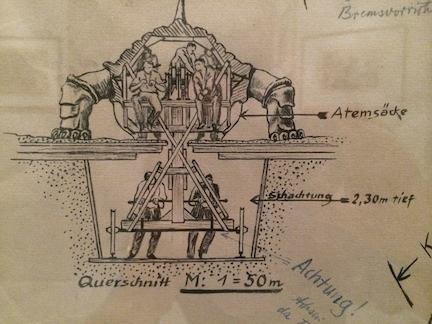
The size and depth of the recessed path required for the props operators.
drawing describing how each part of the dragon was to be operated by stagehands.
Note in red indicates that a telephone/communication system needs to be added to the prop for the crew.

The scene where Siegfried slays the dragon in Die Niebelungen from 1923

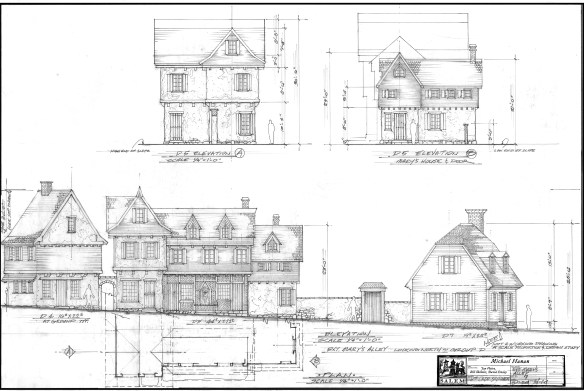
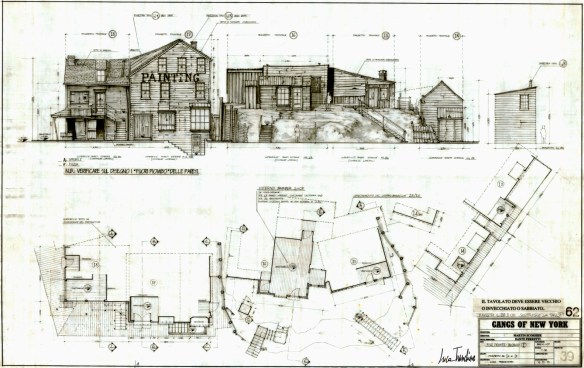
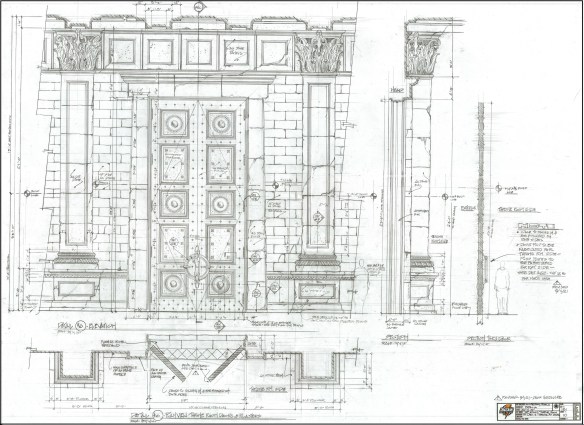
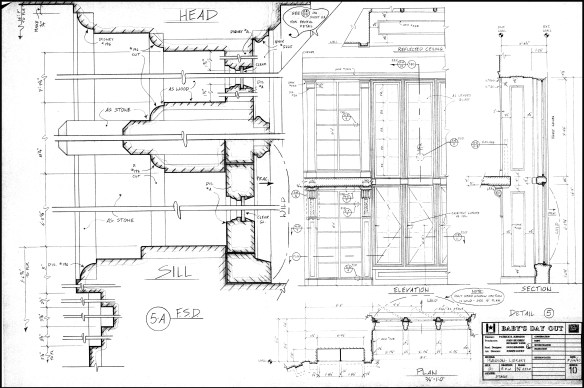
Here are a few more hand-drafted pencil drawings from more recent films:

Salem – drawing by William Ladd Skinner
Gangs Of New York – drawing by Luca Tranchino
Shazam – drawing by Greg Papalia
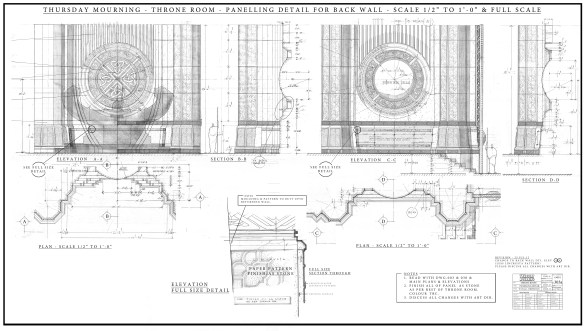
Haunted Mansion – drawing by Barbara Mesney
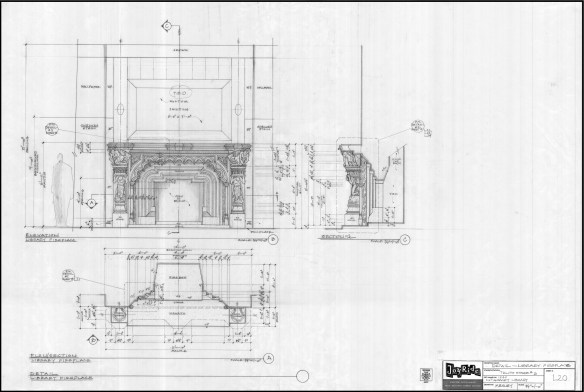
Haunted Mansion – full size detail of fireplace for the plasterers
Thor – drawing by Oli Goodier
Shazam – drawing by Stella Vaccaro
Disturbia – drawing by RD Wilkins
Haunted Mansion – drawing by Hugo Santiago
Baby’s Day Out – window detail

R.D. Wilkins

David Lynch – “Sorry, Closed Set.”

I was listening to the radio, looking out at the clouds and remembering the weather reports that David Lynch used to do each morning on NPR from his house on Mulholland Drive here in Los Angeles. It was at about that moment that I heard the announcement that he had passed away.

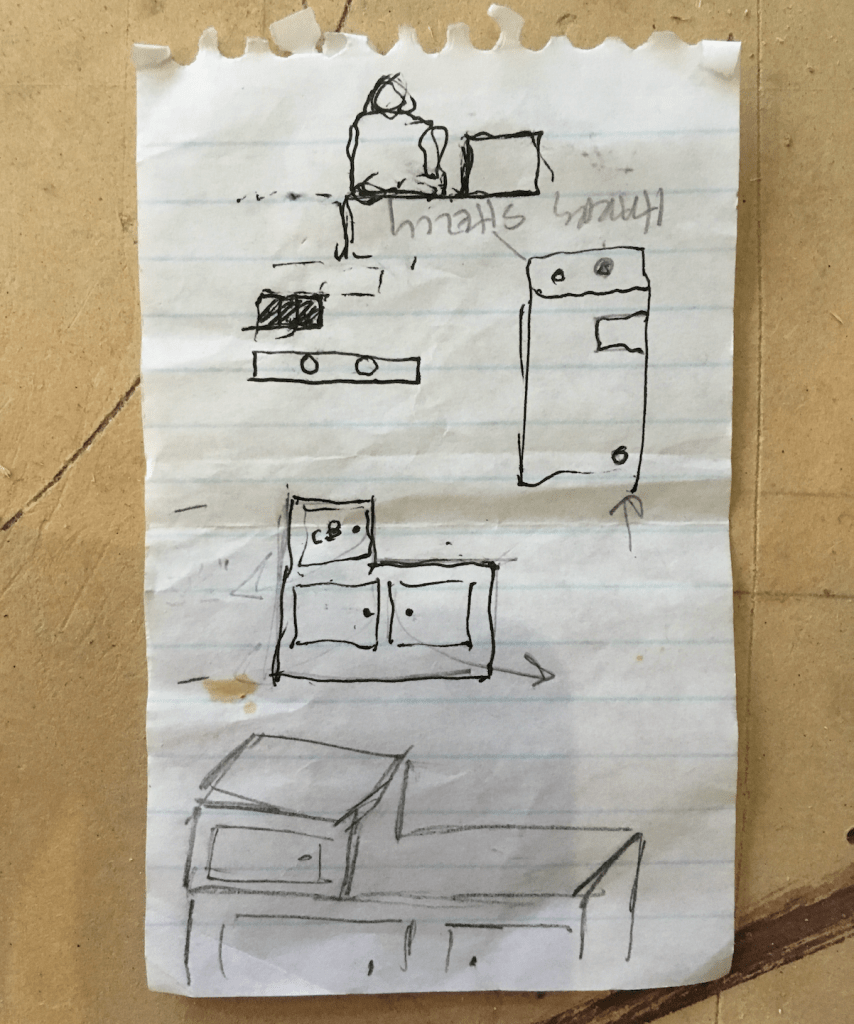
I’d been flipping through photos on my phone the day before when I found a shot of a crumpled piece of notepad paper. On it was a small sketch in black ink and pencil with some cryptic notes.

Years ago when I was working on a show on the Paramount Studios lot, I was walking through the mill when I saw a friend who waved me over to his work bench. He pulled a piece of paper from his tool bag and smoothed it out on the table.

I looked at it and squinted. “What is it?”, I asked him.

Sketch for set dressing by David Lynch

“It’s a sketch from David Lynch, he wants me to build it for a scene.” He described the conversation that had happened just a few minutes before. Lynch had come down from his office and searched him out, and conspiratorially explained to him what he needed for the scene the next day.

The sketch was of a small wooden storage unit that would fit between the front bucket seats of a van. He had explained to him in careful detail exactly what the unit had to do and the practical parts that were required to work in the scene.

“Where’s the construction drawing?”, I asked him, looking around at the plan bench. “This is it”, he said. When the Transportation Department delivered the van to the lot, he would measure the interior to see what size the box needed to be. Lynch trusted that he understood what it was he wanted and would follow through.

Suddenly everything I had heard about David from his early days at The American Film Institute was making sense. A common frustration for directors, particularly ones who are artists, is to have a last-minute idea and know that the normal steps you have to take through a film company hierarchy don’t always produce results as quickly as you want them to.

Instead of going to the Production Designer with his request, which would then get passed to an Art Director, who would then get a Set Designer to measure the vehicle, model the box for approval and then create a construction drawing, Lynch made a quick sketch and went directly to the guy who he knew would end up building it. Voila. Complex process streamlined.

In 1970, Lynch applied to The American Film Institute Conservatory by submitting a short film he had made and was offered the opportunity to attend as well as the money to make a short film he had planned for some time whose cost to produce was beyond his means.

He received a call from Tony Vellani, the director of the school, who offered him a place at the Conservatory and $7,200 to make the film.

At AFI, Lynch started work on a film called Gardenback, but was so frustrated in the process by what he felt were constant interference’s that he left at the beginning of his second year.

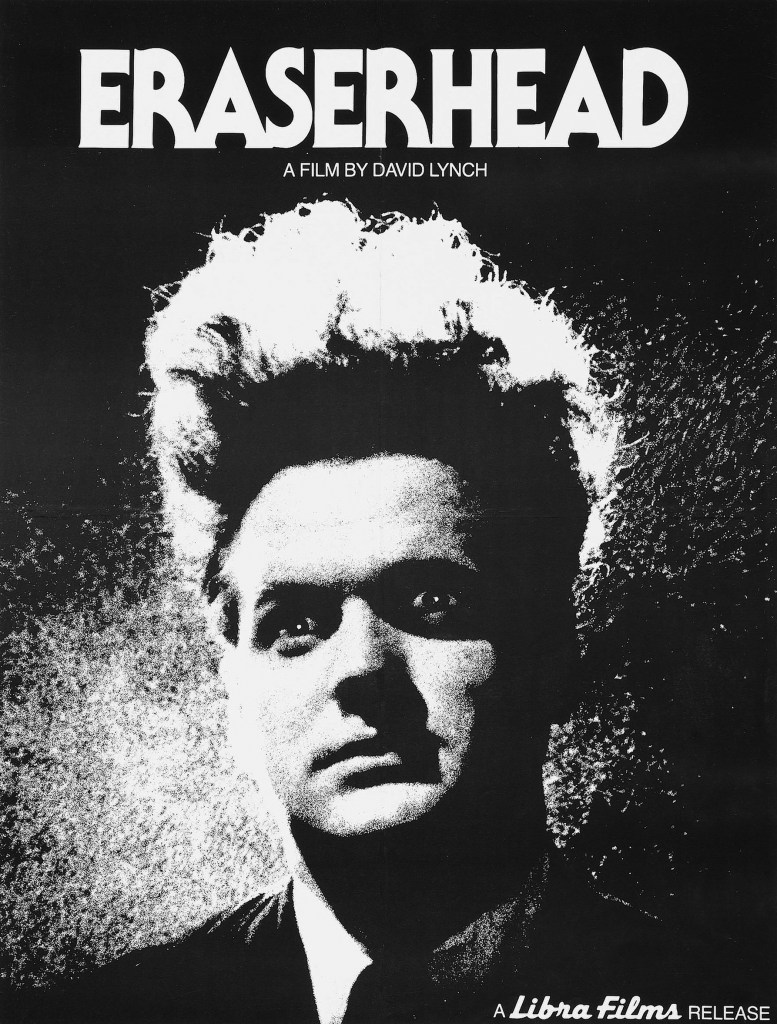
Vellani and others of the school administration felt that he was one of their best students and convinced him to come back by promising that he could finish his film without any more interference. He abandoned Gardenback and started on another film that would become the feature-length film, Eraserhead.

The poster for Eraserhead – Libra Films International 1977

Initially the concept for the film was opposed by several of the AFI administrators who felt that it veered too far from the typical Hollywood narrative film, but they finally relented when the dean, Frank Daniel, threatened to resign if they vetoed it. The story is said to be inspired by Lynches own fear of fatherhood and his experiences living in a crime-ridden neighborhood in Philadelphia while going to college. Shot over a period of nearly four years, the surreal horror film was initially panned by most critics but became a midnight movie cult favorite along with films like The Rocky Horror Picture Show.

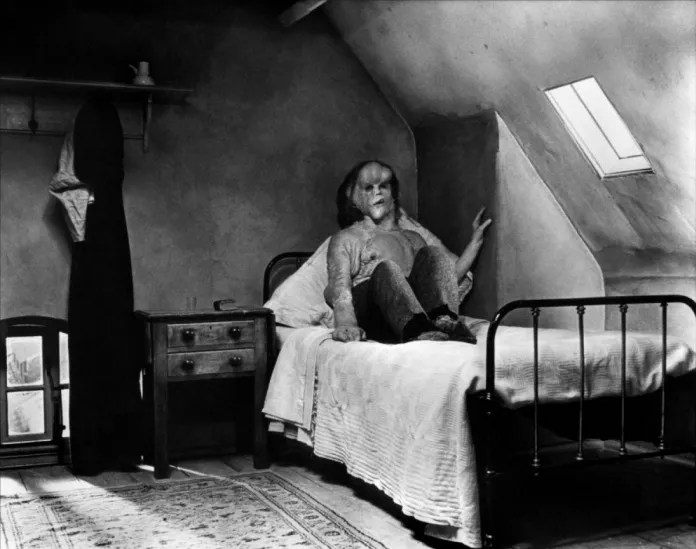
I knew the film led to his being tapped by Mel Brooks to direct The Elephant Man which was one of my favorites but I didn’t see it until years after Elephant Man had been released. At first I was shocked by how different they were in tone from each other but later I started to appreciate the mind that had imagined it and began to see threads of commonality.

Still from The Elephant Man – Paramount Pictures 1980

Vellani would often talk about Lynch when I was a Directing Fellow at AFI in the mid 1980s. He once told me that he considered David to be the most naturally gifted filmmaker he had ever met.

I had always heard that David didn’t like to talk about his films too much and brushed aside questions that required him to explain endings or motivations, which made me wonder how he had dealt with the AFI critique sessions.

The typical sequence of film projects at The American Institute Conservatory was that Directing Fellows made three films the first year. On the completion date the film is screened before the entire school for critique.

At the end of the screening, The director, writer and producer were seated at the front of the room with Tony Vellani who gave the director an intense look and asked, “What is the premise?” Your response was supposed to be a three or four word answer in the pattern of, “Blank leads to blank“, as in “Betrayal leads to tragedy”, condensing the dramatic structure of the story into as few words as possible. The film was judged primarily on how successfully you had fulfilled the goal of matching the final film to its premise.

Knowing of Lynch’s reported distaste for being pinned down on story points, I wondered how he maneuvered through this process when his film was critiqued at the school.

Vellani said that he had gone to Mexico and Davids invitation to visit him at the Churubusco Studios in Mexico City while he was shooting Dune. He described how he was trailed by an army of people. Producers, Art Directors, and ADs. He said he looked uncomfortable and distracted by this entourage and it reminded him of the early 70s at AFI when David was there shooting Eraserhead. They had taken over some stables near the Doheny Mansion in Beverly Hills where the conservatory was originally located and turned them into their stage space.

Tony had brought a group of AFI dignitaries and financial supporters to view the students in the process of making their films and he arrived with these guests, unannounced, to watch David shoot a scene. After a few knocks on the ‘stage’ door, it opened slightly and Lynch stuck his head out, surprised to see the group.

Vellani explained the reason for their visit and introduced the visitors. He said David listened politely and then said simply, “Sorry, it’s a closed set”, and shut the door.

Dangerous Designs

In 1998, I was working for Production Designer Bill Malley on a television show called Seven Days. The premise of the show was that the government had designed a time machine that could go back in time exactly seven days from the present and decided they could use it to “undo” or “back-step” major global political disasters.

The fictional location of the Time Machine was in a site in the Nevada desert called “Never Never Land”, a play on Area 51.

The irony of the shooting location, which no one has ever mentioned, is that we were the first production to shoot on the site of what was once the top secret weapons testing site of Lockheed Skunkworks in Burbank, California. But this site, the former Rye Canyon Weapons Testing site, was far from Burbank. Situated out in Santa Clarita, it was just across the road from the Six Flags Magic Mountain Amusement Park.

Before the park was there, and before Santa Clarita began to expand, the area was a remote location nestled in the hills where the Lockheed employees could work in relative obscurity. The site was, according to the remaining employees, so heavily populated with deer that one was bagged each 4th of July for the company barbecue.

There were still remnants of the original facility, including a building with an anechoic chamber where sound tests were done. One day they wheeled an old refrigerator into the room and with the flick of a switch, emitted a sound wave that blew the enamel completely off the metal of the appliance.

Rye Canyon Facility – Google Maps

At the south end of the lot was a strange circular concrete pad that I would only later learn the purpose for.

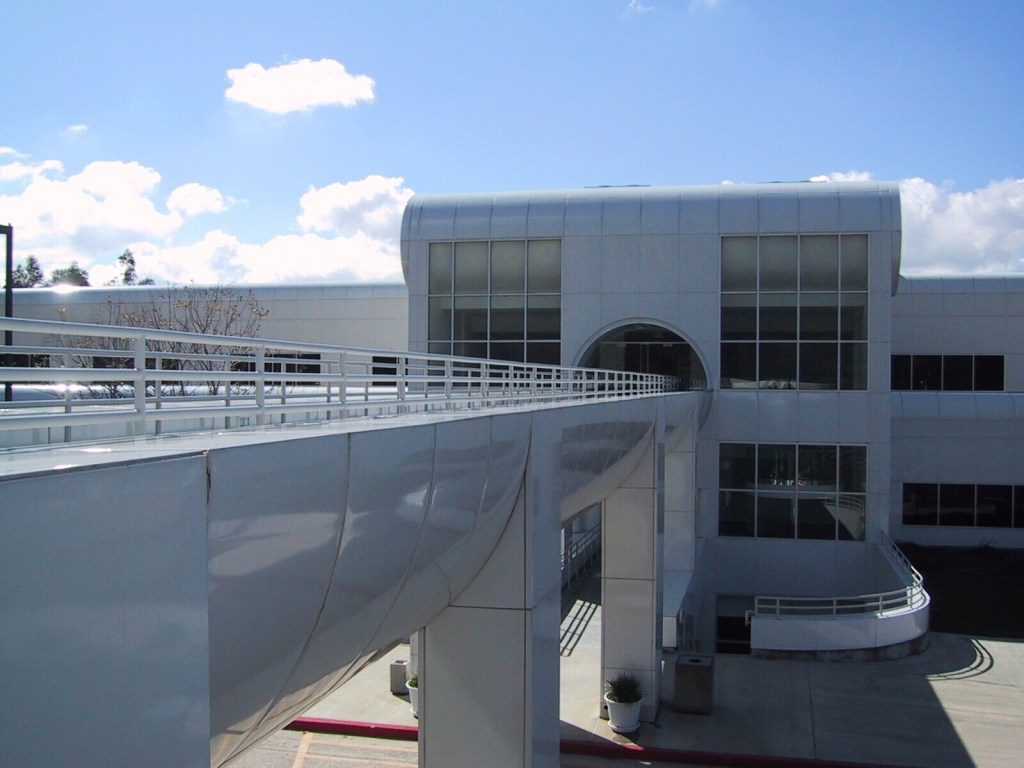
The Art Department and production office were set up in a modern building to the north end of the facility. It was a “quiet building”, especially built for Lockheed. The only windows were on the exterior walls. The inner chamber was accessed through a single electronic keypad-locked door. There were no windows and the walls were so thick that electronic signals couldn’t penetrate them to eliminate the possibility of outside surveillance.

The “Quiet building” – 4 CC Commons License

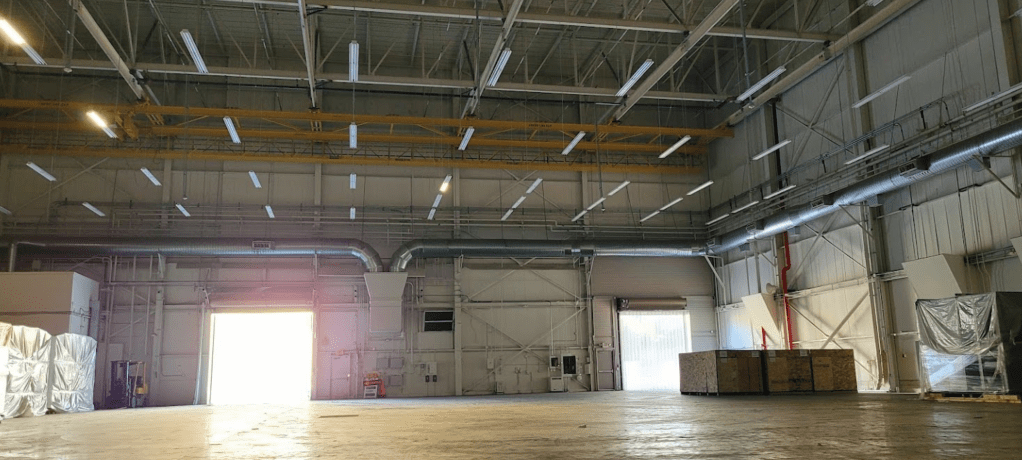
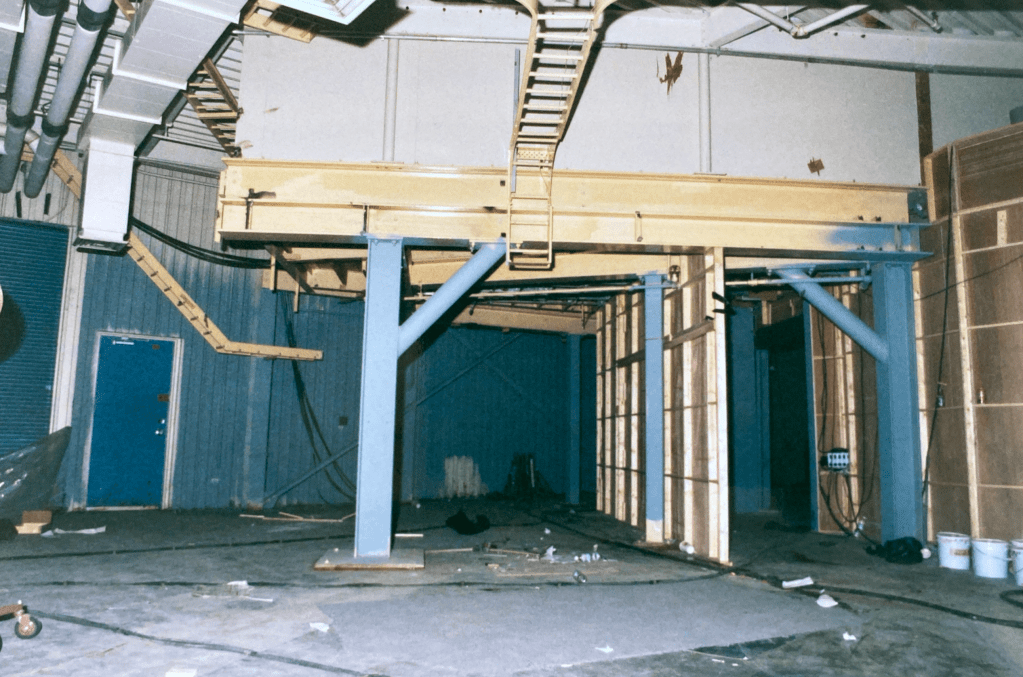
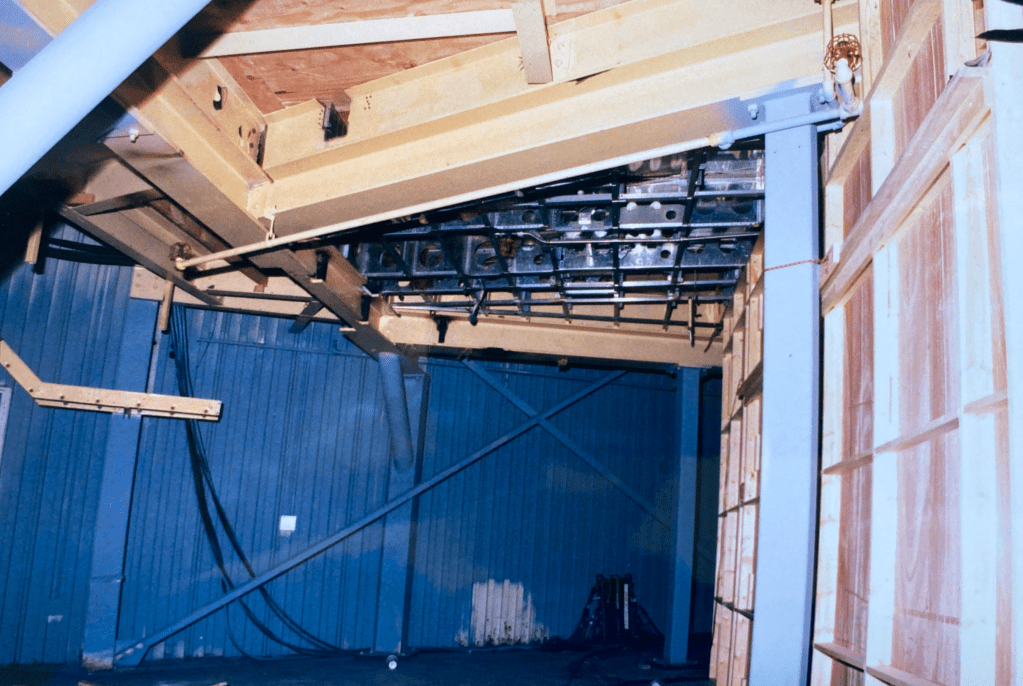
The stage was just south of the production offices. It was huge warehouse structure with high perms that were perfect for a soundstage. At the west end was a lower platform with a strange understructure that I looked at for a long time, trying to figure out the purpose of.

Stage 9 – Rye Canyon Studios

One of the facilities guards finally told me its purpose. I was staring at the underside of the remnants of the simulator for the F-117 fighter plane, the first stealth fighter. He told me that this was where the selected test pilots were brought for their initial trial period.

If they passed the tests in the simulator, they were shipped out to Groom Lake (Area 51) to test fly the actual plane.

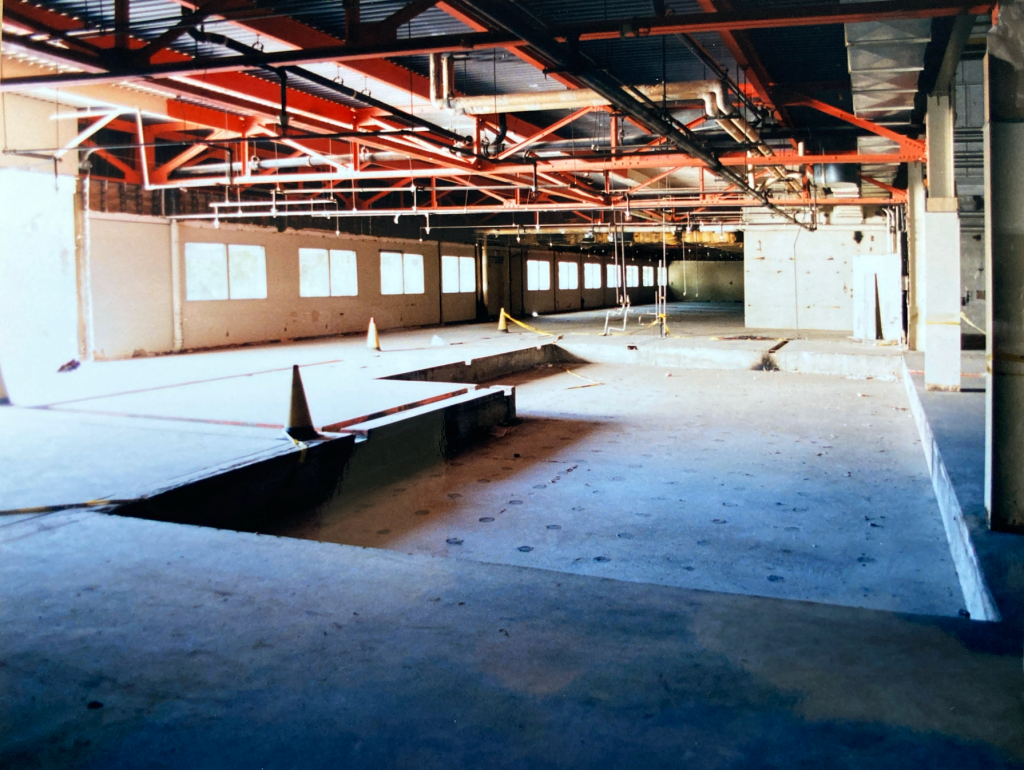
There was a large empty room to the west which once held a huge number of computer cabinets that were the ‘brains’ of the simulator.

Site of the simulator computer

It was then that I realized that our drawing boards were probably set up in the same area that the Lockheed engineers had been when they designed the first stealth fighters.

Bill told me that shooting a television show there was ironic for him. Years ago he had been suspected of revealing government secrets when he was designing a comedy for William Friedkin. Bill had designed a number of other features for Friedkin including The Exorcist for which he was nominated for an Oscar.

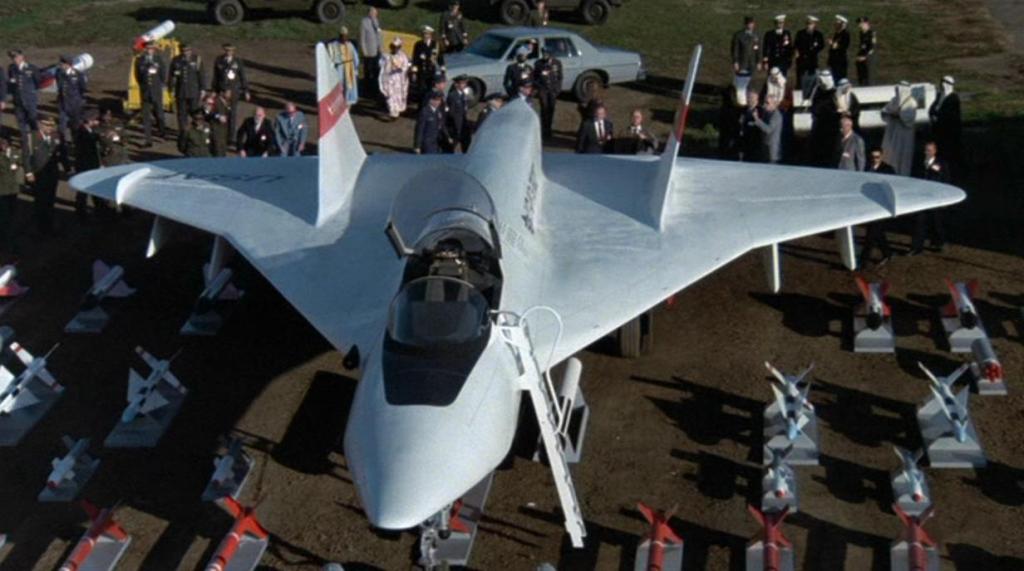
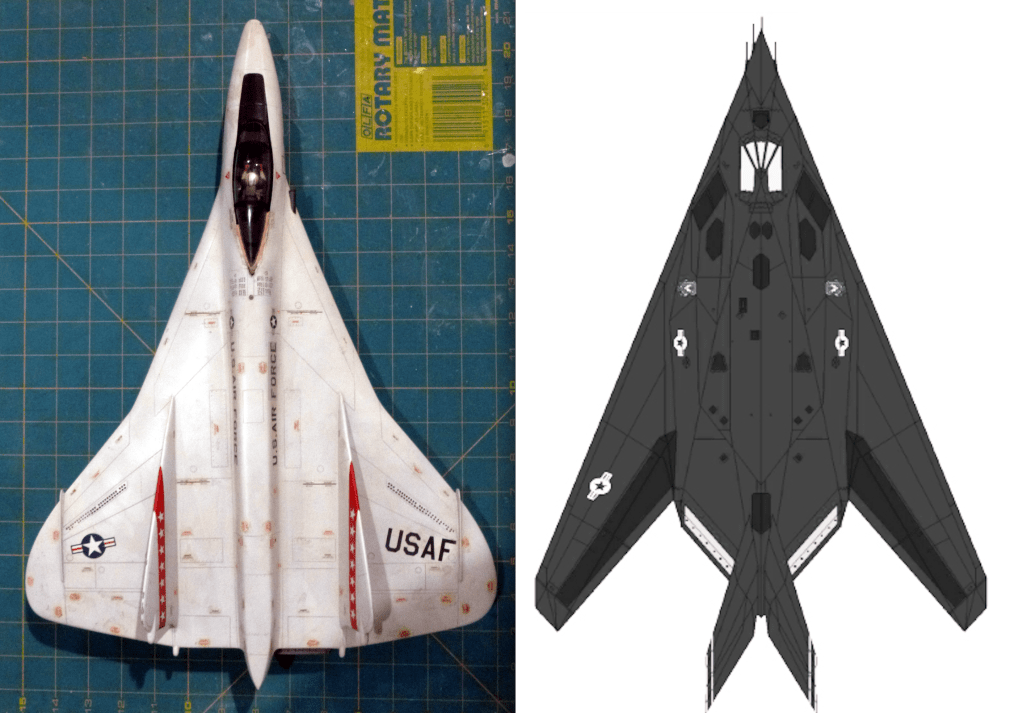
The picture, The Deal Of The Century, was a comedy starring Chevy Chase, about an arms dealer who steals a state-of-the-art fighter plane, the F-19X, from an international air show.

Someone with the government saw the production models of the mockup that they created for the film and told Bill they wanted to talk to him. An Air Force colonel showed up and began to grill him about the planes design. Where did he get the idea for it?

Bill explained that despite the famous cast of characters in the film, the budget largess didn’t extent to the film’s design. As is usual with large productions that feature a lot of well-known actors, the above-the-line talent eats up most of the budget. And what you are left with is the below-the-line limits of a medium budget film.

The colonel insinuated that Bill must have gotten the idea from somewhere, not believing that he had just made it up himself. Bill explained that the budget didn’t allow him do design a completely new kind of plane, so they had taken the basic design from the Russian plane used in the Clint Eastwood film Firefox, and just simplified it. Bill had told the crew to just make it boxier and use flat surfaces rather than the curved surfaces and dihedral of a typical jet.

Full size mockup of the F-19X – Warner Bros Studios

This would make it easier to create the full-size version that they would most likely have to create for some of the live scenes with actors, as they’d be able to use wood sheet goods rather than other materials to create curved wing surfaces.

The colonel eventually left, convince that what Bill was telling him was the truth.

Bill was baffled until about 1988, when the military introduced the F-177 stealth fighter. The similarities didn’t seem that close to him, but someone who saw his fake plane was concerned that someone had leaked the F-117 design.

Side by side comparison of the plan views of the fictional F19X (left) and the F-117 stealth fighter (right) – F19X model photo by Joseph C. Brown

Bill didn’t know that those flat surfaces and the twin tails were what had set off warning bells in some government officials mind. The F-117 had been in design since the 1970’s. In the 1960’s a Russian scientist released a paper stating that an objects radar signature was more a matter of its surface structure than its size.

The government started a program called Have Blue, which was a proof-of-concept program to develop a stealth fighter. They discovered that flat surfaces were key to fooling radar waves into producing a small signature. The cement platform at the south side of the property was a test area for measuring the radar signature of different models until a final design was reached that was tested with a full-size mock-up at Groom Lake.

The program would result in the development of the F-117 stealth fighter.

Did anyone know about the fighter program, or the location of the Rye Canyon test site outside of the employees? It seems hard to imagined that someone didn’t at least have an idea that something unusual was going on there. The entire area was patrolled by armed guards 24 hours a day. Even a kid would have known that something must be happening there that was important.

Several months before our company moved in, a fleet of trucks reportedly arrived in the middle of the night. Apparently they were there to recover the remaining files that were stored in the vaults at the main building.

During the production, I found a site where declassified government satellite photos were posted. Among them was a large file of Soviet satellite pictures that the government had recovered from who knows where.

I checked them on the chance I’d find something. And yes, there they were, Soviet satellite photos of the Rye Canyon site. They may not have known exactly what was going on there, but they were sure enough that something important was happening there to allocate satellite attention to the area.

For more photos of the F19X model which was build by legendary model maker Greg Jein see: https://www.therpf.com/forums/threads/f-19x-from-deal-of-the-century-greg-jein-auction-lot.354634

Beginnings – A Conversation With Production Designer Nigel Phelps

(Ed. note – This is the first in a series of interviews with Production Designers, discussing their first job experiences and earlier films in the entertainment industry.)
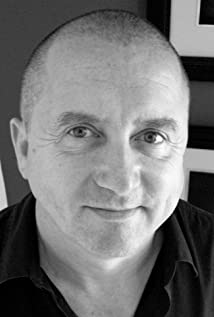
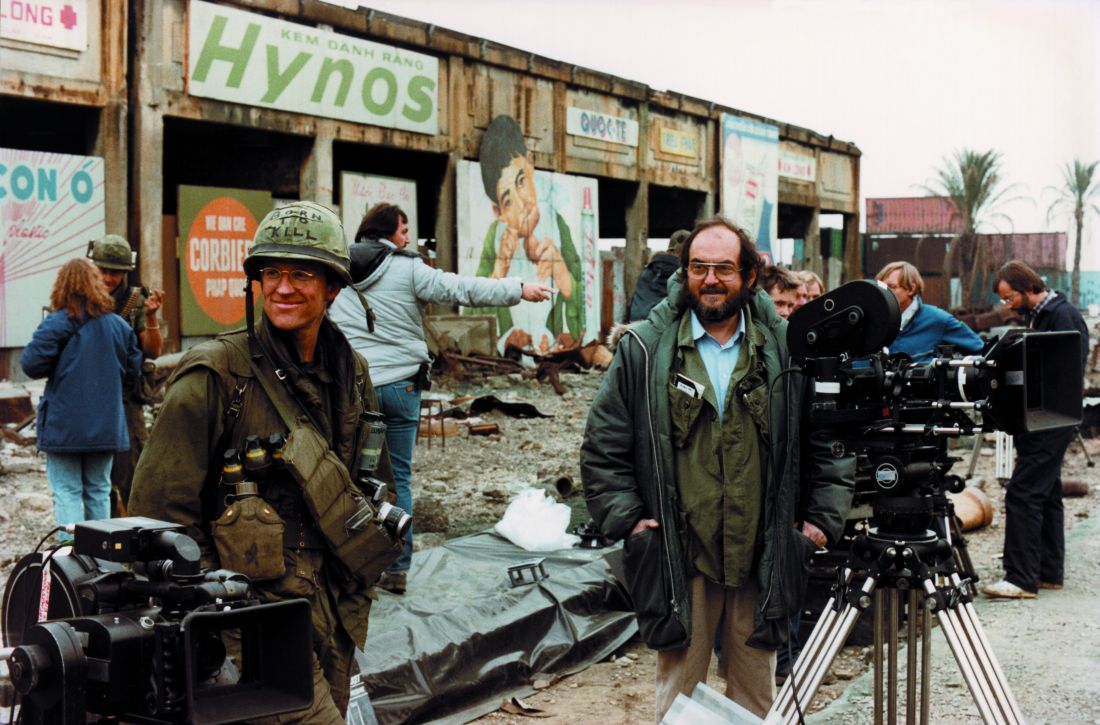
NigelPhelpsNigel Phelp’s career began in London where he was studying to be a fine artist. When his school grant ran out, he took a job as a storyboard artist.  Not long after, he was introduced to Production Designer Anton Furst who hired him as a set illustrator for the film, Company Of Wolves. That film led to Furst hiring him to work on Stanley Kubrick’s Vietnam epic, Full Metal Jacket.

Commenting on the production years ago, Anton Furst related that Kubrick was happiest when he was shooting with a very small crew. Phelps revealed the reality of that preference.
2a48f2b206c74efc540fb3b888cade47afd3cb85_1100

Stanley Kubrick with Matthew Modine on the set of Full Metal Jacket outside London. (Warner Bros.)

“Stanley was very fiscally responsible about the expenditures. He knew where every dollar was spent, so that meant that the Art Department was a very tiny group. There were only four people in the entire department which included a single draftsperson. We didn’t even have any PA’s.  There were only a half dozen people in Production as well. We went three months without a construction manager because Stanley had heard that TV shows were able to build scenery much cheaper, so he wanted us to go around to scene shops in London that built sets for TV programs and commercials.”

“For the first three months our Art Department were two Land Rovers, each one towing a little Porta Cabin behind it that was about big enough to get two drawing boards in it. Since it was my first big feature I just figured that was what was typical for an Art Department.”

Hired initially as the Assistant Art Director, Phelps said Kubrick was very good to him and later gave him a bump to Art Director.

__________________________________________________________

Question – Where was the production located in London?

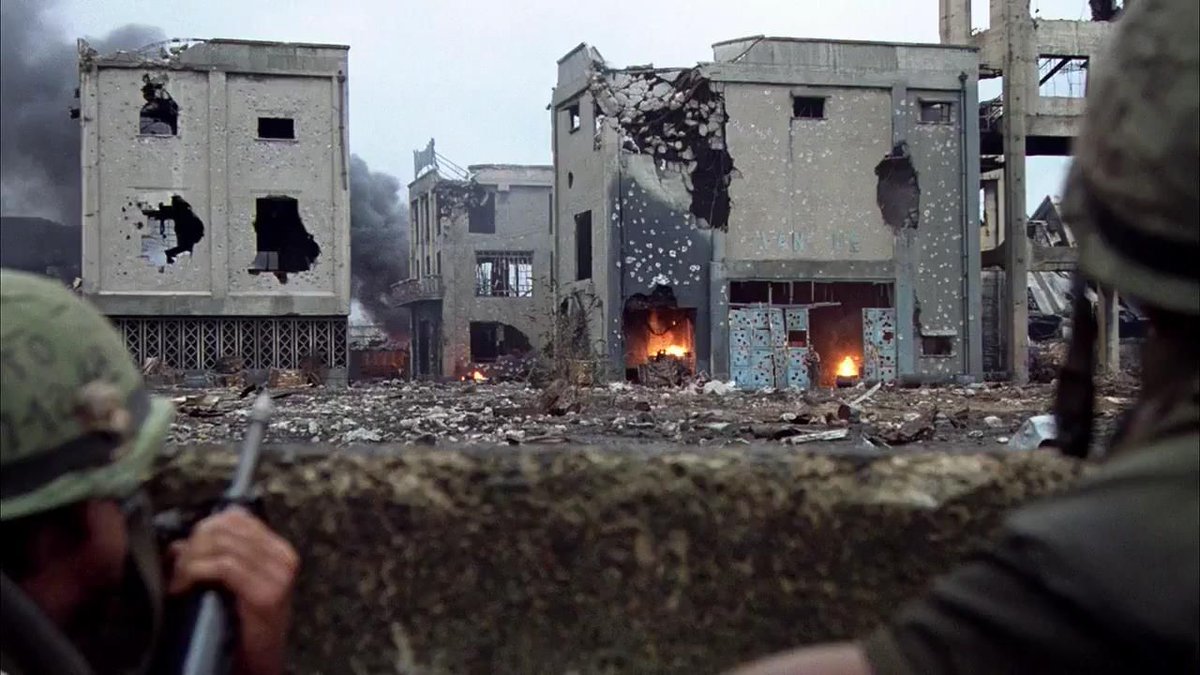
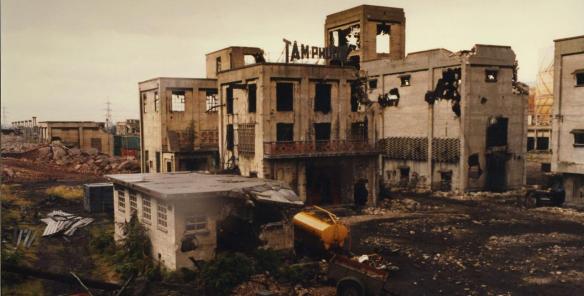
Nigel Phelps – “The center of production was Stanley’s house in north London, so our shooting radius was within 40 miles from that point. Most of the film was shot at the Beckton gasworks, except for the ending. For the ending scene, they built a set back at the studio, at Pinewood.”
EA7jDm3XsAAtxEW

The main set, the shelled city of Hue, was recreated at the defunct Beckton Gas Works outside London, England where the company was free to dress and add to the existing ruins. (Warner Bros.)
Beckton Gas Works

Q. – Who was the Set Decorator on the film?

N.P. – “Stanley wouldn’t let us have a Set Decorator. We had to do the buying ourselves over the weekends in our free time. When it became obvious that we weren’t going to be able to shop the entire movie from London markets, he let us send a buyer, Barbara Drake, out to Thailand for a few weeks, and she filled two shipping containers and sent them back to England. So that’s how low-tech the decorating process was.”

Q. –So there was never a Set Decorator on the picture?
fullmetaljacket-1024x576

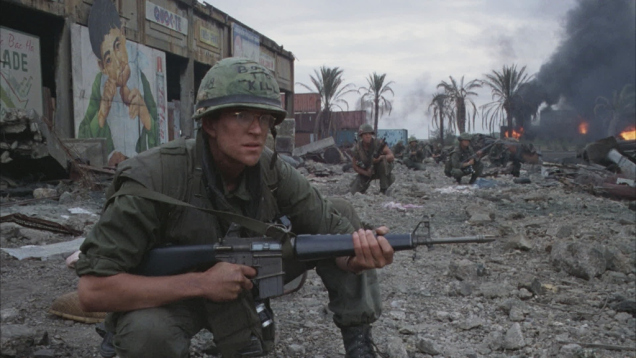
The gas works “Hue” set displaying the palm trees imported from Morocco. (Warner Bros.)

“No, just set dressers and a prop master.  Stanley made a deal with the Belgian Army to get the tanks we used. And Stanley did this personally, as he was the producer on the film. We got a load of palm trees from Morocco and they drove them up through Spain and France.”

Q. – Did you have a researcher on the film?

N.P. – “For research, we only had about three or four books and they were on old China. That’s all we could find in England. But Stanley had a couple hundred black and white 8 x 10’s from the U.S. State Department and that was the bulk of our research. I was the only person in the art department who had actually been to Southeast Asia. We did have some good technical advisors because there were quite a few Vietnamese refugees in London at the time.”

Q.- When you were working with Stanley, did he have very specific ideas about what he wanted to shoot or did he look to you to feed him images or ideas?
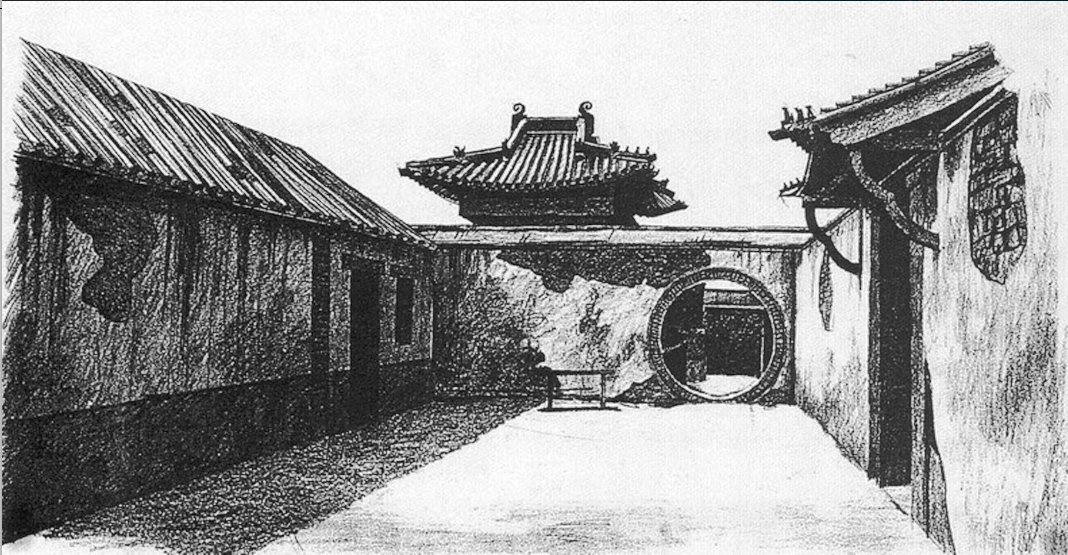
Courtyard

Sketch of the courtyard set for Kubrick by Nigel Phelps
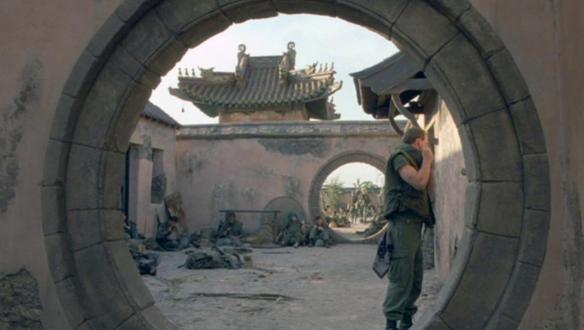
Lusthog Squad / Pagoda Courtyard set    (Warner Bros)

N.P.-  “It was a bit of both. Stanley did have a few photos, like the one of the courtyard, and he just wanted them duplicated as accurately as possible. When you did any sketches or concept drawings he would look at them and want to know how far away things were in the picture, how tall walls were, he was absolutely thinking about things as if he were seeing them through a lens. So not knowing how to do lens projection at the time I had to figure out a way to do that for myself, so that when I drew a perspective sketch I could work backward and draw a little plan and elevations to show him what the actual sizes that it would be.
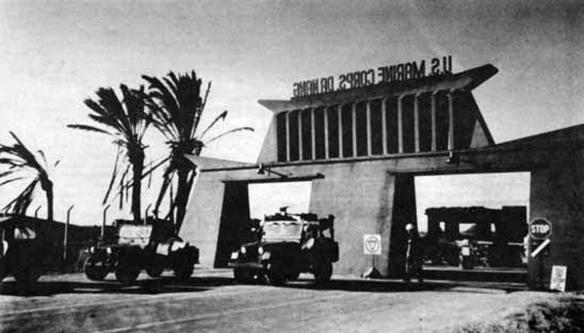
Photo of U.S. Marine Corps base gate set in London.
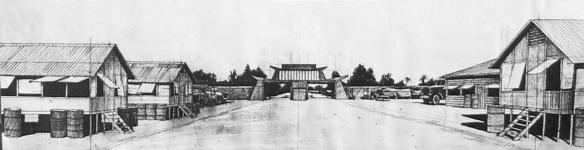
Phelp’s illustration of army base gate for film set.

And then after you made the sketches, we’d make a model and then that would be photographed and you’d make 20-inch black and white prints of the photos and that’s what Stanley would really look at. He wasn’t very trusting of sketches.

Q. –What scale would you build the models in?

N.P. – “There were a lot of models. Mainly they were 1/4” or 1/2” scale.
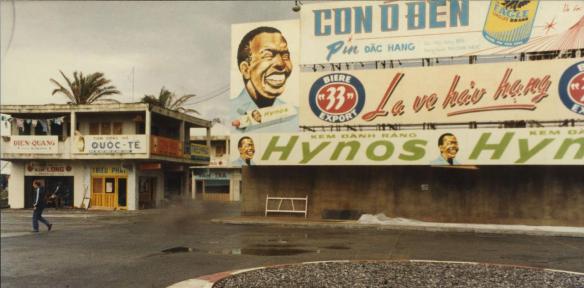
Hue street scene set
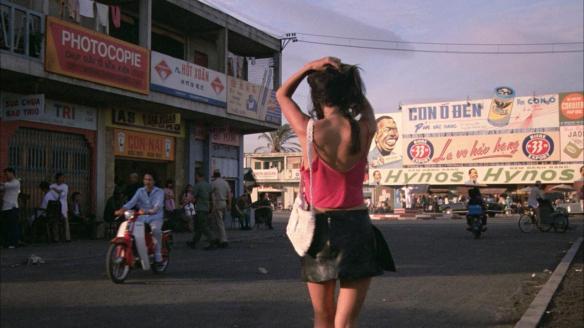
Notes on building on a budget:                                                                                                  “What you’re seeing here is the entire build for the Hue scene.
There were just four shops in the foreground. There was no reverse scenery at all.
The background scenery ended to the left and there was nothing beyond the Billboards to the right.”        Nigel Phelps                    (Warner Bros)

Q. – How did you manage to work with such a small crew?

N.P. – “If I remember correctly, we worked six-day weeks. But on Sunday we were also expected to go to London markets to look for any set dressing.”

Q. –I’m still amazed you did that picture with such a small Art Department, even working a seven-day week.

N.P. -“The demands weren’t the same then.  You weren’t expected to produce nearly as much artwork as you are now.  It was a completely different level. Now you’re expected to do artwork and models of everything, with jam on it.   But back then you didn’t. You didn’t do endless options and you didn’t do concepts of all the sets either. There were just a lot fewer people involved in the process than there are now.  I wish I’d known then what a unique experience it was. I took it all for granted. It was an amazing process.”

Q.- Now, the Gotham set for that first Batman movie was huge. How many people did you have in that art department?

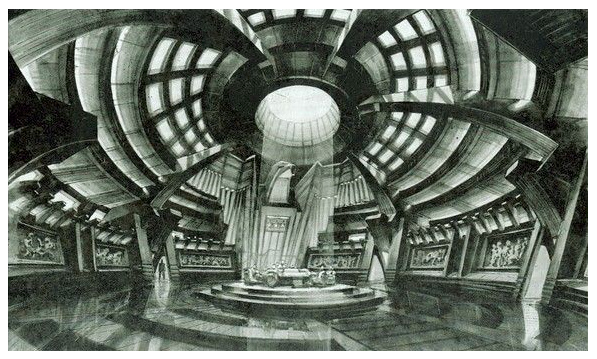
Phelp’s initial concept drawing for Flugelheim Museum

N.P. –  “I think there were about a dozen of us. Three or four full-time draftsmen, and another few for part of the film and a P.A. (production assistant). We didn’t have Art Department Coordinators at that time (in the business). I worked for the same Production Designer, Anton Furst, on Batman, and we didn’t do illustrations for all the sets on that film either. I was the concept artist for all of the sets and I did the sketches for all of the matte paintings as well. Julian Caldow did the vehicles. There were only two versions of the Batmobile ever drawn. And they were the same except one had a roof and one didn’t, sort of emulating the original TV show vehicle.”
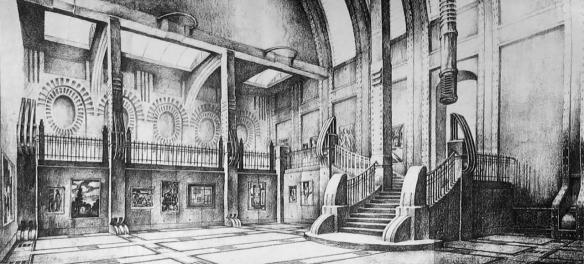
Drawing of Flugelheim Museum interior
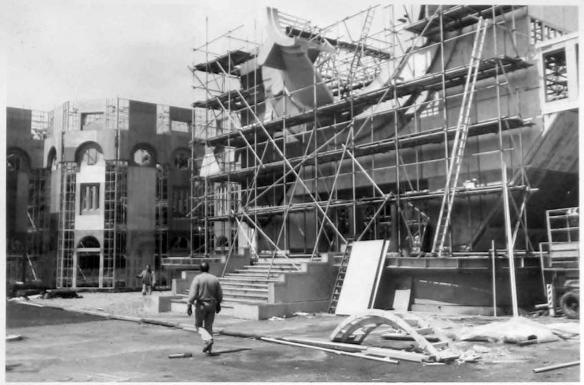
Flugelheim Museum set under construction

Panorama of finished backlot set. Gotham City Hall and Flugelheim Museum. Cathedral steps in the background.
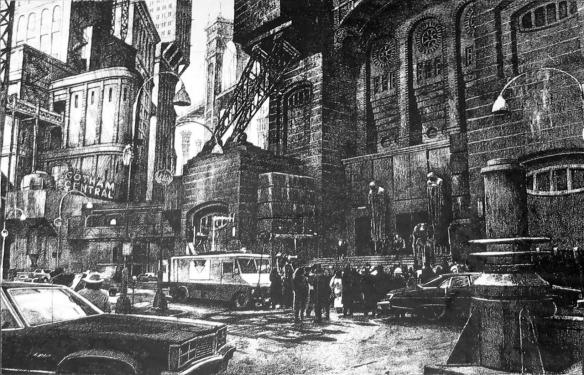
Gotham City Hall plate and matte painting design


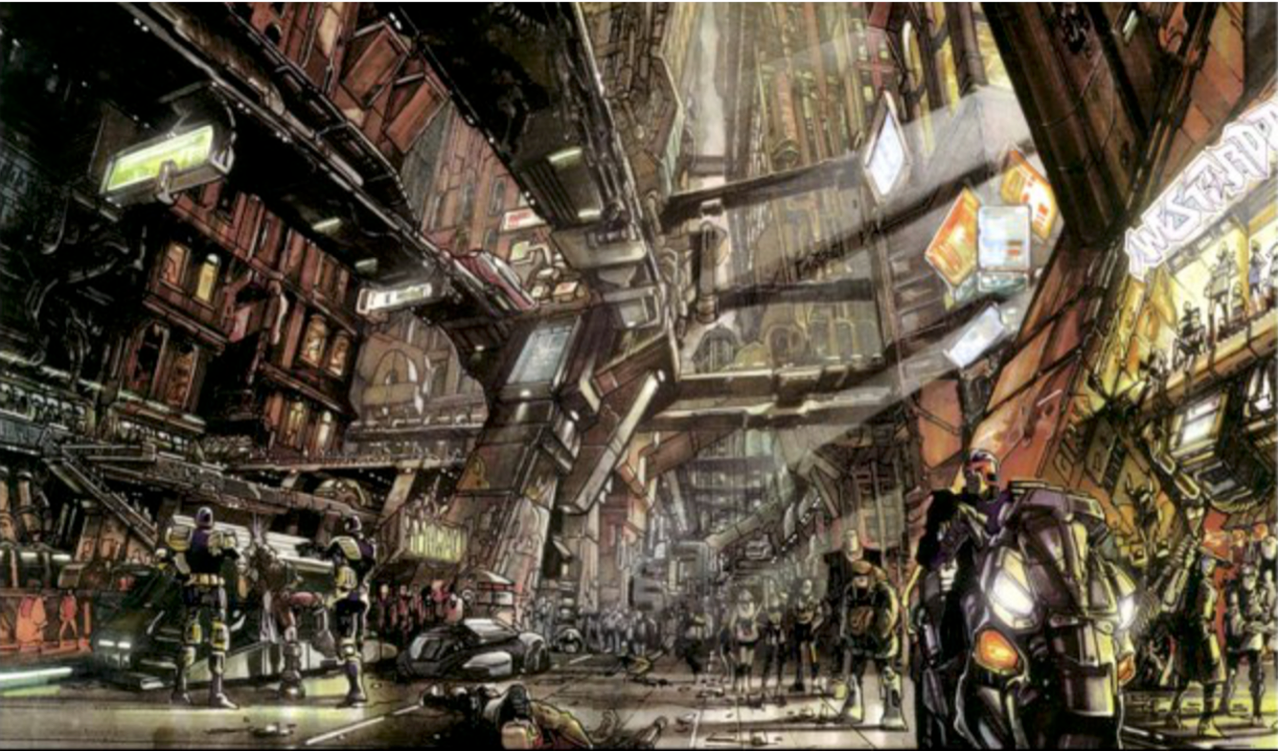
”But I have to tell you that Judge Dredd (1995) was even a bigger than the one we did on Batman. It was massive. It was also the first time that I had worked with concept artists, and amazingly, this group are still some of my closest friends; Matt Codd, Simon Murton, Julian Caldow, Chris Cunningham, and storyboard artist Robbie Consing.
Judge Dred

Illustration by Simon Murton

Lower Megacity One

Judge Dredd / Lower Megacity One (Matt Codd)
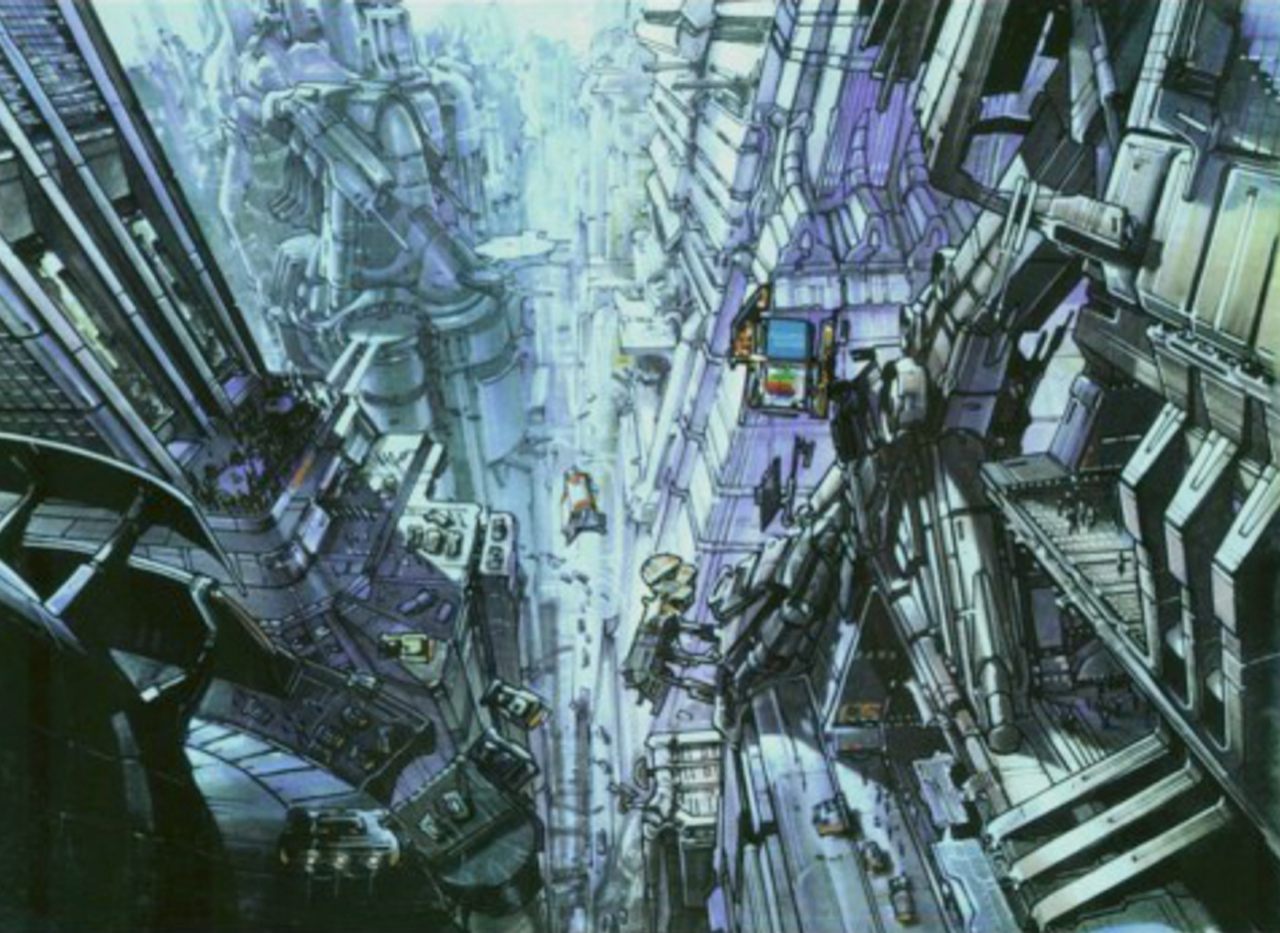
Mid Megacity One

Judge Dredd / Mid Megacity One (Matt Codd)

[Ed. note – Sylvester Stallone had insisted on constant script changes to make it more comedic. He was not thrilled with the end result but he and story creator John Wagner regularly praised the production design and the sets. Judge Dredd was Phelps’ first feature as Production Designer].

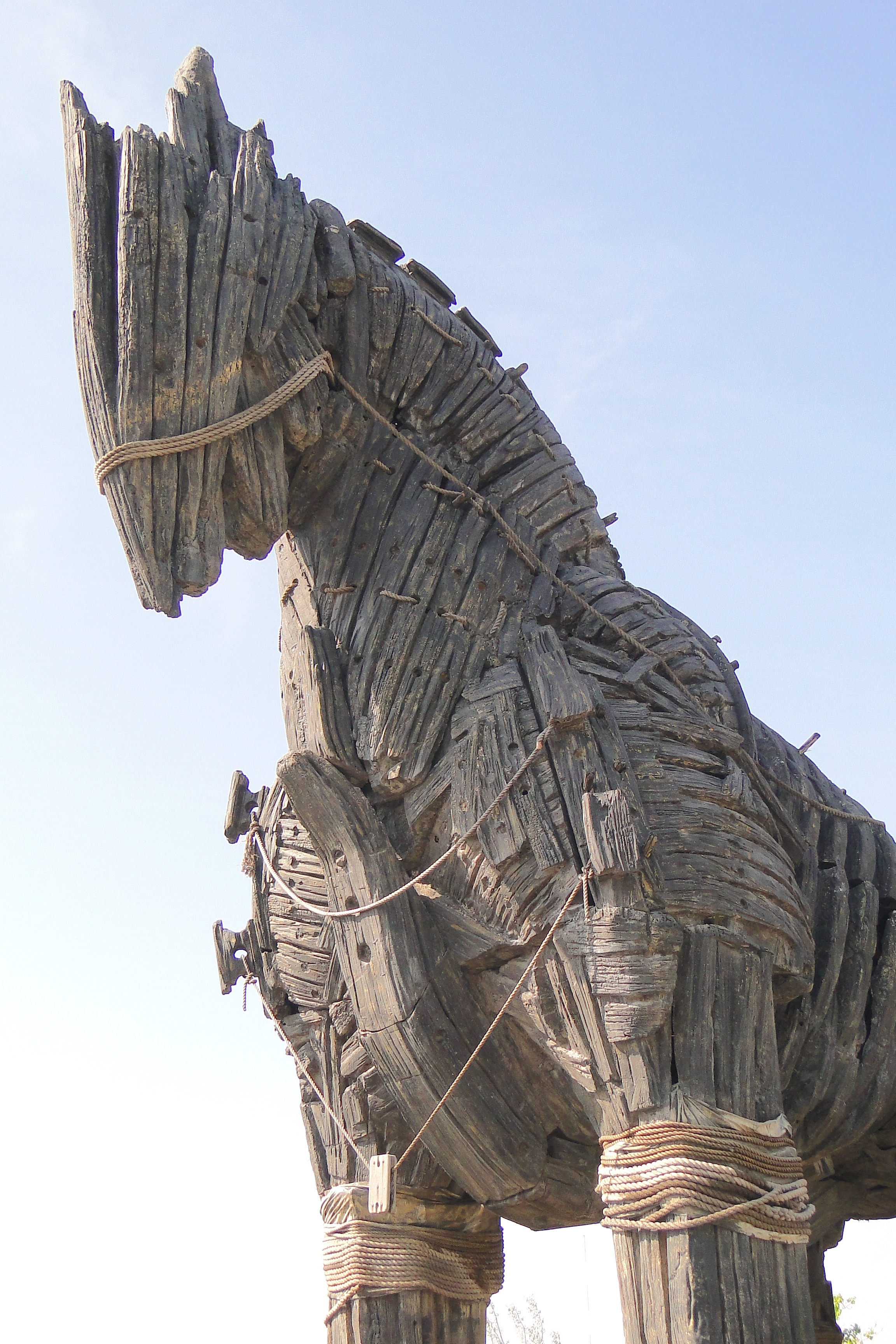
Q. –I wanted to ask you about the Trojan Horse on Troy (2004), I thought that design was brilliant, because you usually see it created as this finely crafted giant piece of sculptural furniture that would have taken years to build, and your version was this massive, somber effigy made from destroyed ships ribs, and it actually looked as if it had been hastily built from battlefield debris. It was so evocative of the whole story.
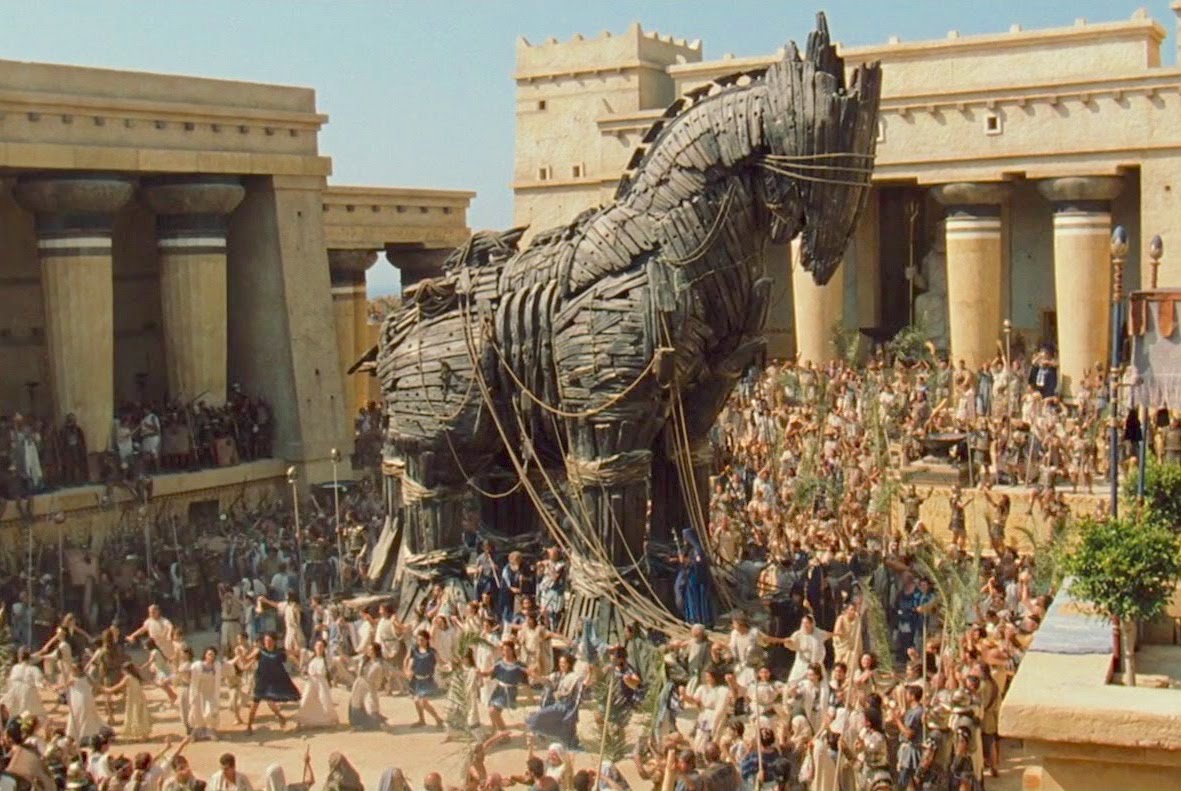
maxresdefault-4 2

Replica_of_Trojan_Horse_-_Canakkale_Waterfront_-_Dardanelles_-_Turkey_(5747677790) 2N.P. – That was really the result of a collective design,  The inspiration for that was a picture someone had given me a sculpture of a gorilla. that had been made out of rubber tires, and it was beautiful and expressive, and it occurred to me that that would be the right direction to take for the design of the horse, to take abstract shapes and fashion it from discarded ship parts. It ended up being about 40 feet tall.

Q. –That (Troy) was a massive set too. Were the buildings and temples on the far hills forced perspective miniatures? Surely those weren’t full size.

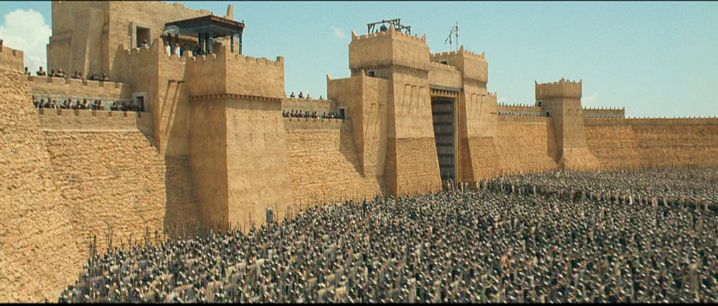
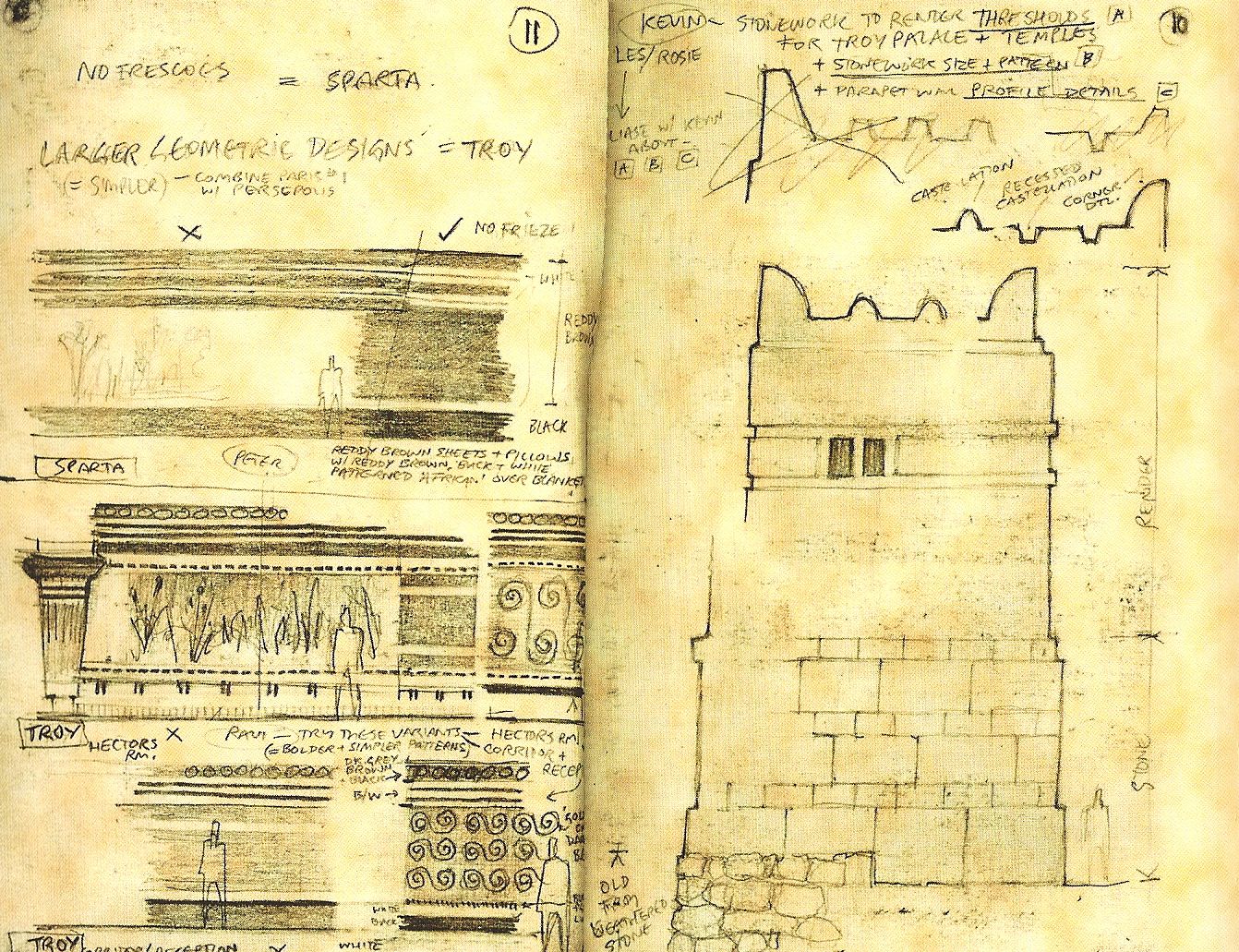
N.P. -Oh yeah, those were full size. That was a huge set. The studio wanted us to shoot as much as we could in Malta. We had found a great location in Morocco but it was dangerous to go there. So, we found a location in Mexico, at Cabo San Lucas which was amazing because it had these huge sand dunes that came right down to the ocean, and so we built a couple of massive sets there. So the streets of Troy behind the gates was done in Malta, but the actual gates and the walls of the city were built in Cabo San Lucas.”
Troy Design 02

Some of Phelp’s sketches of Troy

TroyVFX-25

The Troy set that was built in Malta

troy_mauer

The company built over 400 feet of gates and adjoining walls at the Cabo San Lucas location. A hurricane destroyed a large part of the set which had to be rebuilt to complete shooting. (Warner Bros)

“We had greensmen working for six months to dress the battlefield and clear it of scrubby undergrowth.”

R. D. Wilkins
Allen Daviau – An Artist And A Gentleman

hqdefault  Allen Daviau, the five-time Academy Award-nominated cinematographer of films such as E.T. The Extra-Terrestrial, Empire Of The Sun, Avalon, Bugsy, and The Color Purple, passed away on Wednesday from complications of COVID-19.  In 2007 he was given a Lifetime Achievement award by the American Society Of Cinematographers.

His professional film career began in the 1960s where he started out shooting documentaries, music videos and working as a still photographer. He met a young Steven Spielberg in 1967 and helped him shoot his short film, Amblin’. Years later Spielberg was in pre-production for ET when he saw a reel of a TV movie Allen had shot and hired him immediately.

Whenever I saw him, Allen was always personable and kind but it would be a mistake to take him for a pushover. He and a number of others were frustrated when they were denied membership to the cinematographer’ union. Universal had tried to sign him to a contract but the union was a closed-shop in all but name at that time and refused to allow it. Daviau and a number of other cinematographers including Caleb Deschanel filed suit to join the union and were finally admitted.

Daviau-Empire

I only got to work on one picture with Allen, A feature called The Astronaut’s Wife, production designed by Jan Roelfs. He was outgoing and approachable, always eager to talk shop. There are times when you work with individuals that you hold in such professional esteem that the initial interactions are awkward but that was never the case with Allen. I didn’t get to ask him all of the questions I had buzzing in my head about his other films. I refrained from ‘interrogating’ him the way I had once done to Werner Herzog when I ran into him on the backlot at Warner Bros Studios in an embarrassing ‘fan-boy’ moment.

I never got to ask him about some of the shots in Empire Of The Sun that I had analyzed but I did learn two things: he didn’t like multi-camera shoots and he didn’t particularly like translites. “They’re too sharp”, he told me. Unlike the traditional handpainted backings, they had a crisp photo-quality that defied being able to create a realistic depth-of-field. Even the painted backings often had black or white bobbinet stretched in front of them to create an atmospheric softening effect. It’s ironic that now, years later, a number of companies will custom print backings to create different degrees of softness to simulate an out-of-focus image due to depth-of-field.

allen

The multi-camera shoots were something he accepted as necessary at times but he felt that they diluted the quality of the lighting. He felt that being able to concentrate on just one composition at a time resulted in a superior product. There were lighting effects that became impossible to do effectively if you had to take other camera positions into account.  He was as technically adept as he was artistic and relied on both his eye and his light meter. He knew that the audience will only see what you let them see. And being able to shoot with a single camera allows you to get away with tricks that are harder to pull off when you have to light for multiple angles at once.

A camera-lover, he told me as part of his endowment to UCLA, each year he would buy a top-of-the-line Leica and leave it unopened in its original packaging.

When he was in Shanghai on Empire, they were unable to get dailies until a week later and playback technology was a long way off.  He had to rely on his light meter and his experience with the film stock to know if he had a proper exposure.

Daviau-Empire-light-reading_248ed78b6649d6cda0fcadc1ac9bc23e

One thing I learned from him is, there are times when you have to let the details go. We were doing pick-up shots and only had a few days to recreate several parts of the sets from the main shoot. Recreating a portion of the main characters’ apartment was complicated by the fact that the backing we had used outside the huge glass window wall was unavailable.

We found a cityscape backing that was close, but overall the values and details didn’t come close enough to really match the original. I hoped that the shot would be tight enough that the DOF would hide the mismatch, but was dismayed when the director asked for a wider shot. With so many elements to consider, the backing issue was the last thing on most people’s mind . Allan was behind the camera, lining up the shot and I finally called out to him, “But Allen, the backing.” He just looked over at me and raised his hands. He could have just ignored me, or been dismissive or irritated. He just gave a little smile and said, “It’s OK, it’ll be fine.” And it was.

There is an excellent interview with Allen in the 1992 documentary film, Visions Of Light, about the art of cinematography.

R.D. Wilkins


You Know Your Set Is Big . . . When You Can See It From A Satellite

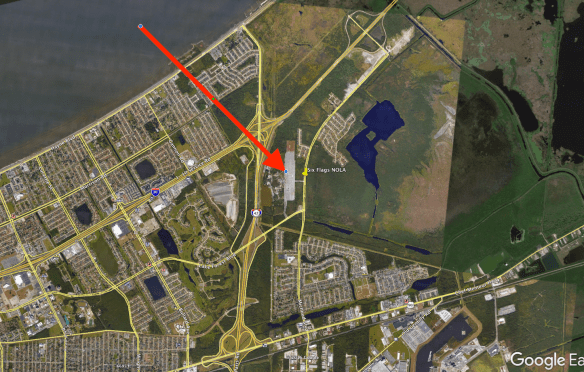
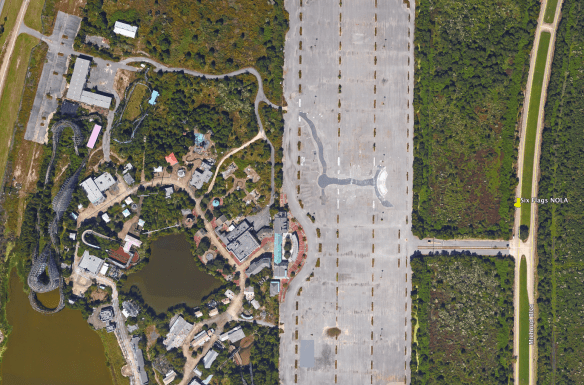
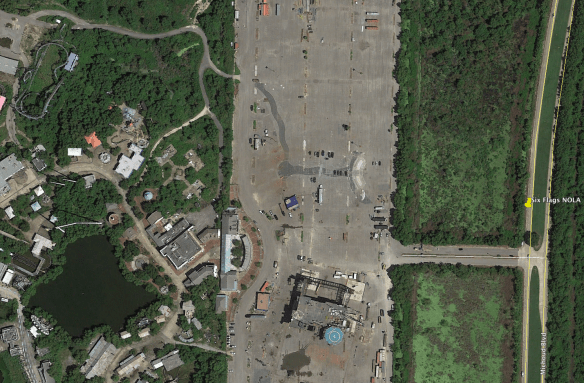
It’s there on Google Earth, at least the footprint of it is. You can make it out from an image at 30,000 feet high, there in the giant parking lot of what was once an amusement park.

Set location in Google Earth shot from 30,000 feet

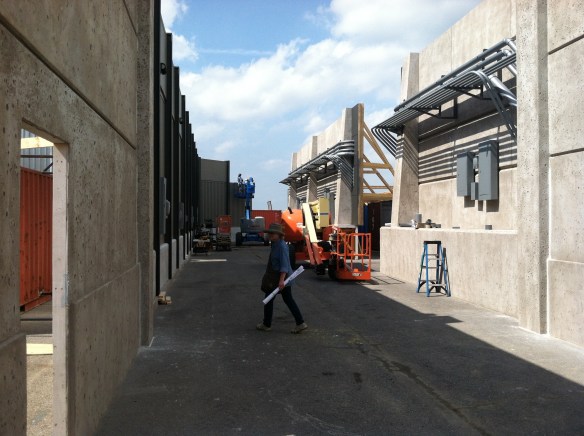
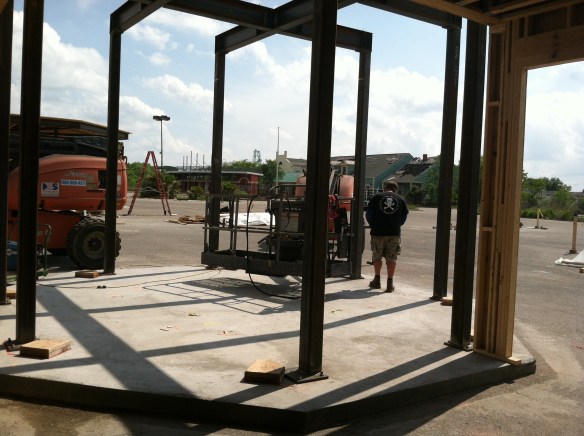
In 2013, pre-production began on the feature film Jurassic World. The picture would require the creation of a fictional amusement park, a resurrection of the island world destroyed by dinosaurs in the first film, Jurassic Park in 1993. Production Designer Edward Verreaux was tasked with bringing the dinosaur park back to life in Louisiana, outside New Orleans. The option that looked the most promising in the area was Six Flags New Orleans which had sat derelict since it was closed as a result of Hurricane Katrina in 2005.

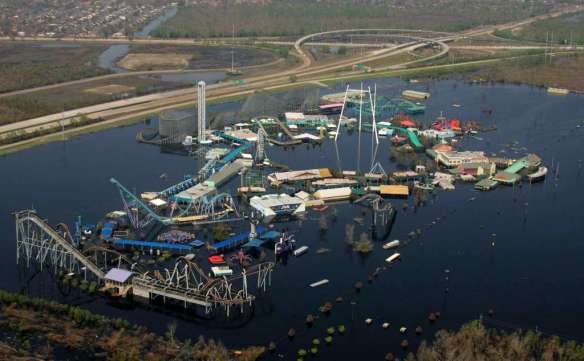
When the levee broke as a result of the water surge in Lake Pontchartrain, the park was soon under seven feet of water and would remain submerged for over a year. After it was drained, the plan to revive the park was abandoned and it sat empty until snakes, birds and alligators made it home.

Six Flags New Orleans _ Bob McMillan/FEMA 2005


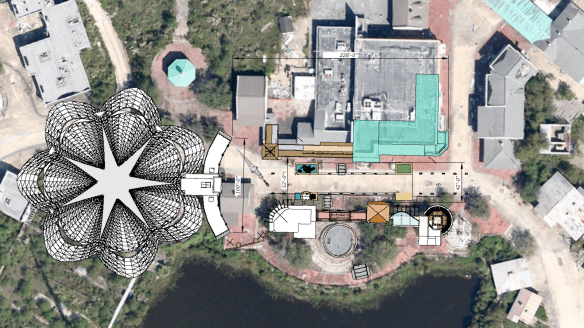
The original plan was to build the set within the confines of the original park, using the existing structures as a base, covering up or adding onto buildings as needed and covering up those that needed to be hidden. The sad state of the park was not only worse that expected but it was soon apparent that using the actual park was more trouble than it was worth.

Proposed plan for Jurassic World park set which utilized existing buildings.

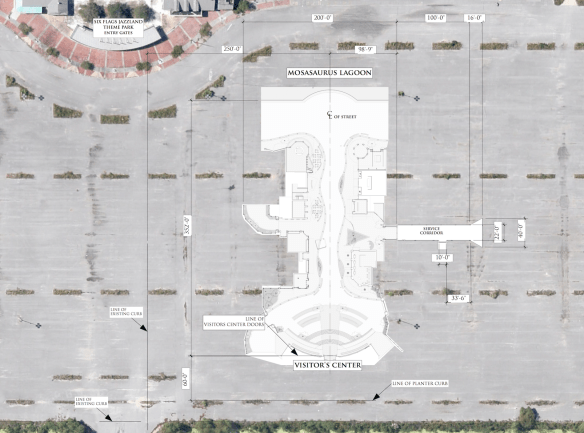
Verreaux came up with the solution: the company would create the set in the huge parking lot adjacent to the park, avoiding the problems associated with hiding the structures that didn’t work and not be penned in by the claustrophobic original layout. This not only gave him the ability to expand the width of the streets as needed but allowed the company to have  much easier and safer access to the set.

You can still see the layout of the street and sidewalks as the paint has not faded even three years later.

The footprint of the set can be made out from the satellite photo in the middle of the parking lot


The set would be built there in the middle of the huge parking lot. The area between the set and the original park would be separated by a huge green screen, suspended from a framework constructed by the grip department.

Layout of set


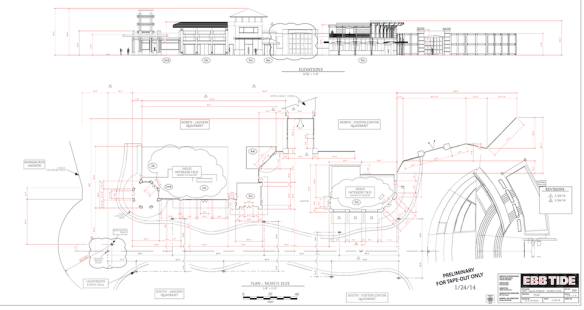
Plan and elevations of the north side of the street-RD Wilkins 2014
 

panorama of Jurassic World street set – RD Wilkins 2014


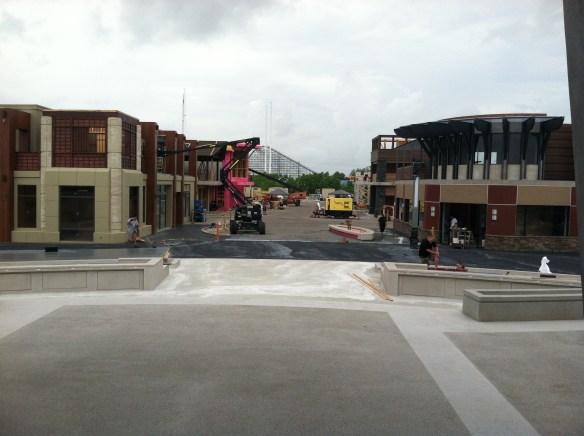
View of street from visitors center_RD Wilkins 2014
The Maintenance Alley under construction_RD Wilkins 2014
The street with the original Six Flags entrance in the background_RD Wilkins 2014
Here is a photo from 2015, one year later after the set has been struck and another company is at work constructing the monster oil platform set for the film, Deepwater Horizon.

In Google Earth you can set the Historic Imagery slider bar and see the area transform from its pre-park days in 1998 to today.

Now In Print – The Art Of The Hollywood Backdrop

The Art Director’s Guild sponsored a book signing event at their gallery space in North Hollywood yesterday, with co-author Karen Maness on-hand to sign copies of the new book, The Art Of The Hollywood Backdrop.

img_0828


img_0815

The book is a cooperative project between the authors, Karen Maness and Richard Isackes and the Art Director’s Guild. With a focus on hand-painted rather than photographic backings, the book traces not only the history and development of backdrops through Hollywood films but the artists who have developed the techniques used and who have passed along that knowledge to successive generations of scenic artists.

dsc_0027

The event was well attended by not only Guild members but by members of the Strang family and the Coakley family of J.C. Backings, the two families which have not only dominated the field in Hollywood but have been the biggest promoters and curators of the art form.

The Coakley family and fellow artists of J.C.Backings

The Coakley family and fellow artists of J.C.Backings


Co-author Karen Maness graciously signed books all afternoon.

Co-author Karen Maness graciously signed books all afternoon.

This is a big book, and I say that in every sense of the word. Larger than a quarto format at 11 x 14 inches, the hard-cover and cased edition is 352 pages long and weighs in at 13 pounds. Filled with crisp images of both black and white and full-color backings, the photos show the backings not only in a straight-on form but in the environment that they were meant for.  It’s filled with stills from the original films as well as set stills showing them in relationship to the sound stages and the companion scenery.

dsc_0033


dsc_0032This book will definitely appeal to film lovers who have very little understanding of film scenery and stagecraft as well as film professionals who have many films to their credit.

It is available for order through the publisher’s website and will soon make it’s way into bookstores. If you are still making that holiday gift list, this is definitely a book that will have huge appeal to anyone who loves movies. Read an excerpt here, and you can order the book here from Regan Arts.


Se Vi Piacciono I Film Epici, Ringraziate Gli Italiani. ( If You Like Epic Films, Thank The Italians. )

Per E.M.A. Un’artista di talento e amica.

Traduzioni:  Sara Trofa


L’Inferno  (1911)

Original Poster for the film

Locandina originale del film. Original Poster for the film


The American director D.W. Griffith is often credited as being the creator of the feature-length film. It was actually the Australians who made the first feature film in 1906 which was called The Story Of The Kelly Gang.

La creazione del lungometraggio viene spesso attribuita al regista americano D.W. Griffith ma di fatto furono gli australiani a realizzare il primo lungometraggio nel 1906 dal titolo The Story Of The Kelly Gang.

But in 1911 with the release of L’Inferno, the Italian industry created not only the first epic film but the first international blockbuster as well.

Nel 1911, con l’uscita de L’inferno, l’industria italiana creò non solo il primo film epico ma anche il primo film di successo internazionale.

Taking over three years to make, the film took in over 2 million dollars in the United States alone. As its extended length meant there could be less screenings per day, it gave the theater owners an excuse to raise the normal prices of admission. It remains the oldest feature film to still exist.
Esso richiese più di tre anni per la sua realizzazione ed incassò, solo negli Stati Uniti, più di due milioni di dollari. La lunghezza del film implicava meno proiezioni al giorno e i proprietari dei cinema ne approfittarono per aumentare il prezzo del normale biglietto. L’inferno resta il più vecchio lungometraggio esistente.

the-inferno-canto-15

L'Inferno - 1911 - Blasphemers - Balls of Fire


Credited to three different directors, the film is a live action adaptation of Dante’s Divine Comedy. The sets and visuals were closely based on Gustave Dorè’s engravings from his 1857 edition of the poets work which was, and still is, the most iconic representation of the title. Using fantastical, extravagant sets and special effects, the film must have been as terrifying to audiences in 1911 as any horror film of present day. Winged devils, brimstone hail, choking fires, it’s likely there were at least a few trips to the hospital by cast members who spent much time on the production. L’Inferno  remains the oldest feature film to still exist.
Attribuito a tre registi, il film è un adattamento animato della Divina Commedia di Dante. Gli elementi scenici furono basati principalmente sulle incisioni di Gustave Doré dell’edizione del 1857, le quali ancora oggi sono la rappresentazione più iconica della Commedia. Considerati i fantastici e stravaganti set ed effetti speciali impiegati, il film dev’essere stato per il pubblico del 1911 tanto terrificante quanto lo è per noi oggi un qualunque film dell’orrore. Con diavoli alati, grandine di zolfo e fuochi soffocanti sul set, è probabile che i membri del cast impegnati nella produzione siano finiti all’ospedale almeno un paio di volte. L’Inferno resta il più vecchio lungometraggio esistente.     

the-inferno-canto-22winged devils


Left, one of Dorè's illustrations, on the right, Lucifer's depiction in the film.

A sinistra, una illustrazione di Doré. A destra, il ritratto di Lucifero nel film. Left, one of Dorè’s illustrations, on the right, Lucifer’s depiction in the film.


Cabiria  (1916)

800px-Cabiria_1914_poster_restored

It would be the feature Cabiria five years later that would be the most influential silent Italian film of the period. Directed by Giovanne Pastrone, the film was shot in Torino (Turin) and featured massive period sets as well as elaborate and imaginative miniatures which recreated the eruptions of Mt Etna in Sicily. It follows the story of a young girl, Cabiria, who is saved from the disaster caused by the eruption only to be captured by Phoenicians and  sold into slavery in Carthage.

Cinque anni dopo, il film Cabiria fu il più influente film muto del periodo. Diretto da Giovanni Pastrone, il film fu girato a Torino con imponenti scenografie d’epoca ed elaborate e immaginifiche miniature che ricreavano l’eruzione dell’Etna in Sicilia. Ne derivò la storia di una ragazza, Cabiria, che viene salvata dal disastro dell’eruzione solo dopo essere stata catturata dai Fenici e venduta come schiava a Cartagine.

Foreground miniature of the eruption of Mt. Etna

Primo piano della miniatura dell’eruzione dell’Etna. Foreground miniature of the eruption of Mt. Etna

The sets include a massive exterior and interior of the Temple of Moloch which includes a huge bronze statue of the god. During the sacrifice scene, the chest of the statue opens and dozens of children are thrown into its fiery belly one at a time, it’s mouth belching fire as the door swings shut on each sacrifice.


Il set includeva una riproduzione esterna ed interna del Tempio di Moloch con una enorme statua di bronzo raffigurante la divinità. Durante la scena del sacrificio, il petto della statua si apre, dozzine di bambini vengono gettati nella sua pancia infuocata tutti in una volta e un fuoco scoppia al richiudersi della porta dopo ogni sacrificio.


The exterior set of the Temple of Moloch

Set esterno del Tempio di Moloch. The exterior set of the Temple of Moloch


In one scene, the Roman navy assaults the city of Syracuse, a massive set and staged battle that would presage the scenes of the siege of Babylon years later in D.W. Griffiths’ Intolerance. While Pastrone’s film doesn’t have the same intercutting as Griffith’s, many of the lighting effects are much more dramatic than Grifffith’s.

In una scena, la flotta romana assalta la città di Siracusa, un imponente set con una battaglia di scena che presagisce le scene dell’assedio di Babilonia anni dopo in Intolerance di D.W. Griffith. Il film di Pastrone non ha lo stesso montaggio incrociato del film di Griffith, ma parecchi dei suoi effetti di luce sono molto più drammatici rispetto a quest’ultimo.

Syracuse set walls


scene from Cabiria


Pastrone would be the first to put a camera on a dolly and execute the long, slow tracking shots throughout the film that would be so influential to every feature afterwards. In fact for many years any dolly shot or one involving movement was known as a ‘Cabiria shot’. The film was also the first to incorporate flashbacks as a story device.

Pastrone fu il primo a mettere una videocamera su un dolly ed eseguire nel film quelle lunghe e lente carrellate che sarebbero poi state così rilevanti per ogni film successivo ed è per questo che per molti anni qualunque ripresa con un dolly o in movimento veniva chiamata ‘ripresa Cabiria’ (‘Cabiria shot’). Cabiria fu anche il primo film ad incorporare il flashback come espediente narrativo.

cabiria set

The film’s elephants made a huge visual impact on Griffith, and he would insist there be plaster elephant sculptures in the Babylon sets for Intolerance, despite the art department’s insistence that elephants did not exist in ancient Babylonia.

Gli elefanti nel film furono di così grande impatto visivo su Griffith che egli volle avere a tutti i costi degli elefanti di gesso sul set di Babilonia per Intolerance, nonostante l’insistenza del dipartimento artistico sul fatto che non esistessero elefanti nell’antica Babilonia.


French poster for the film

Locandina francese per il film. French poster for the film

Cabiria would be the first film to be screened at the White House by then President Woodrow Wilson in 1914.

Cabiria fu il primo film ad essere proiettato alla Casa Bianca dall’allora presidente Wilson Woodrow nel 1914.


While the films may be be very dated to our 21st century eyes, you can’t help but be impressed with the scale of the sets of these pre-computer age features.

Il film potrà essere datato ai nostri occhi del XXI secolo ma è ancora impossibile non restare impressionati dalla portata dei set di questo film precedente all’era dei computer.