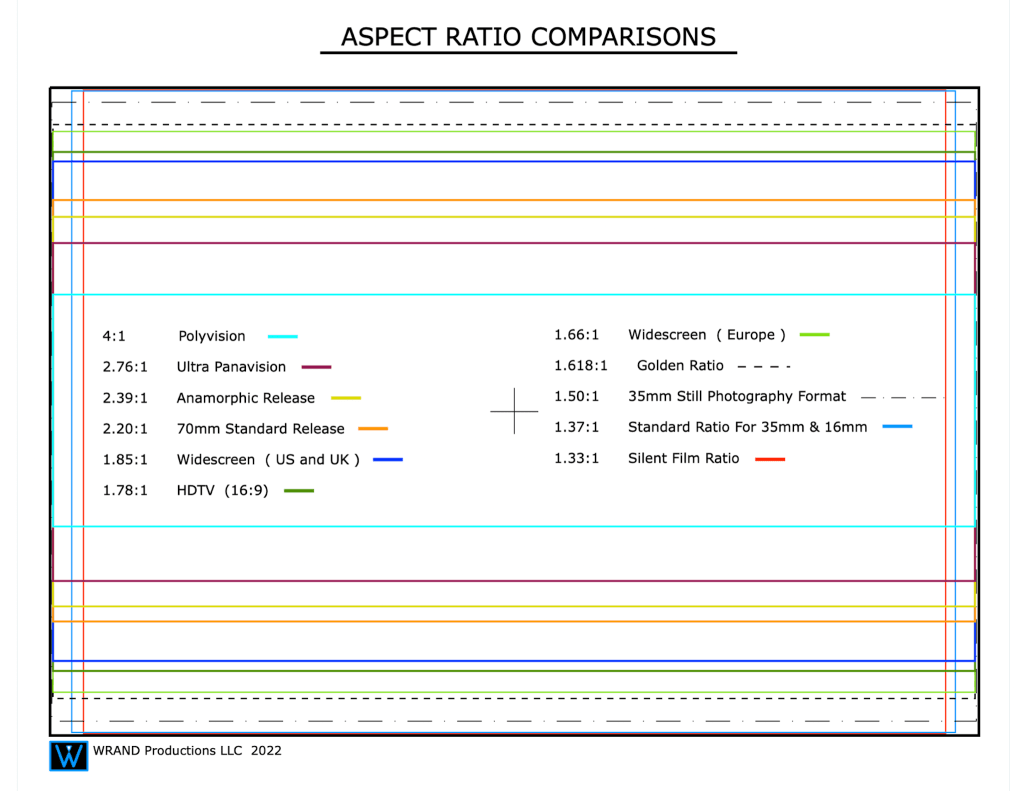
Aspect ratio is one of those topics that can be hard to explain. Part of the confusion starts with the numerical system used to describe the ratio system. It has nothing to do with lens focal lengths, or depth of field or any of the other optical explanations of a film image. (Yes, camera sensors do have a set aspect ratio but you can crop an image to any size in post production so for now I’m concentrating on talking about a display aspect ratio. And, I’m leaving out the confusion over spherical vs. anamorphic lenses for another post.)
The simplest way to explain an aspect ratio is that it is a comparison of the horizontal length of a frame to the vertical length.
The first films, the silent ones, were shot with an aspect ratio of 1.33:1. The width of each image is 1.33 times the height.
The extreme projection aspect ratio up until now was a 4.1:1 format called Polyvision for the 1927 film, Napoleon, which was done by lining up three projectors and interlocking three 1:33 ratio film prints.
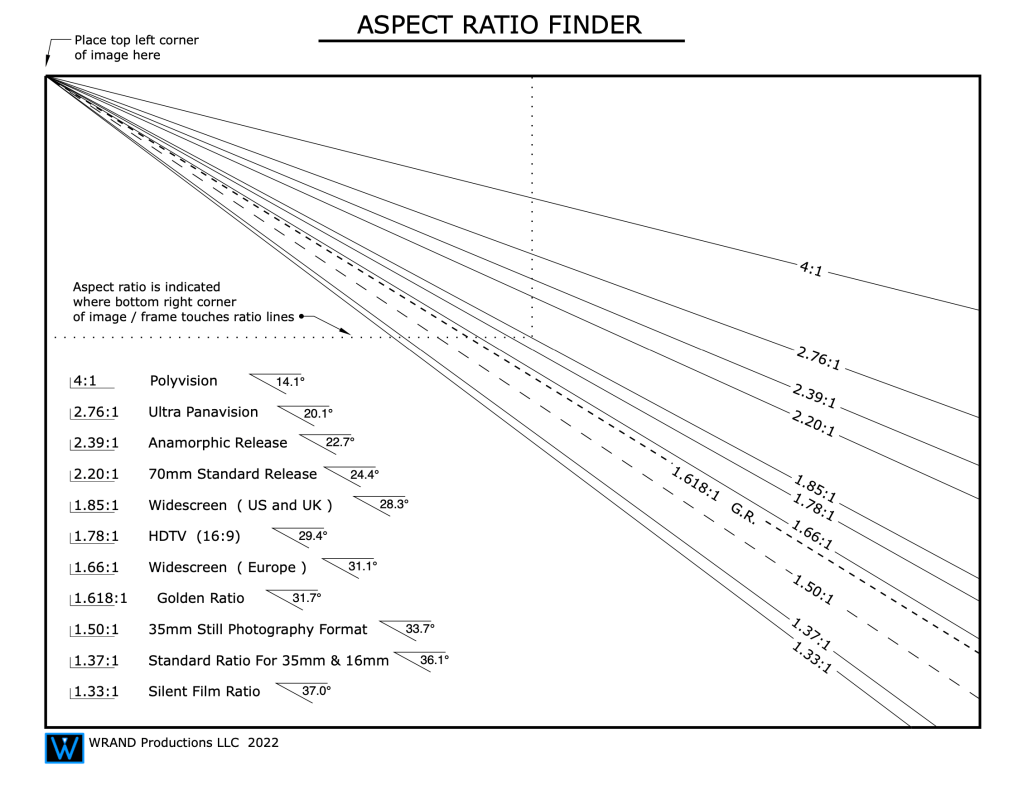
Here is a chart for determining the aspect ratio of an image.
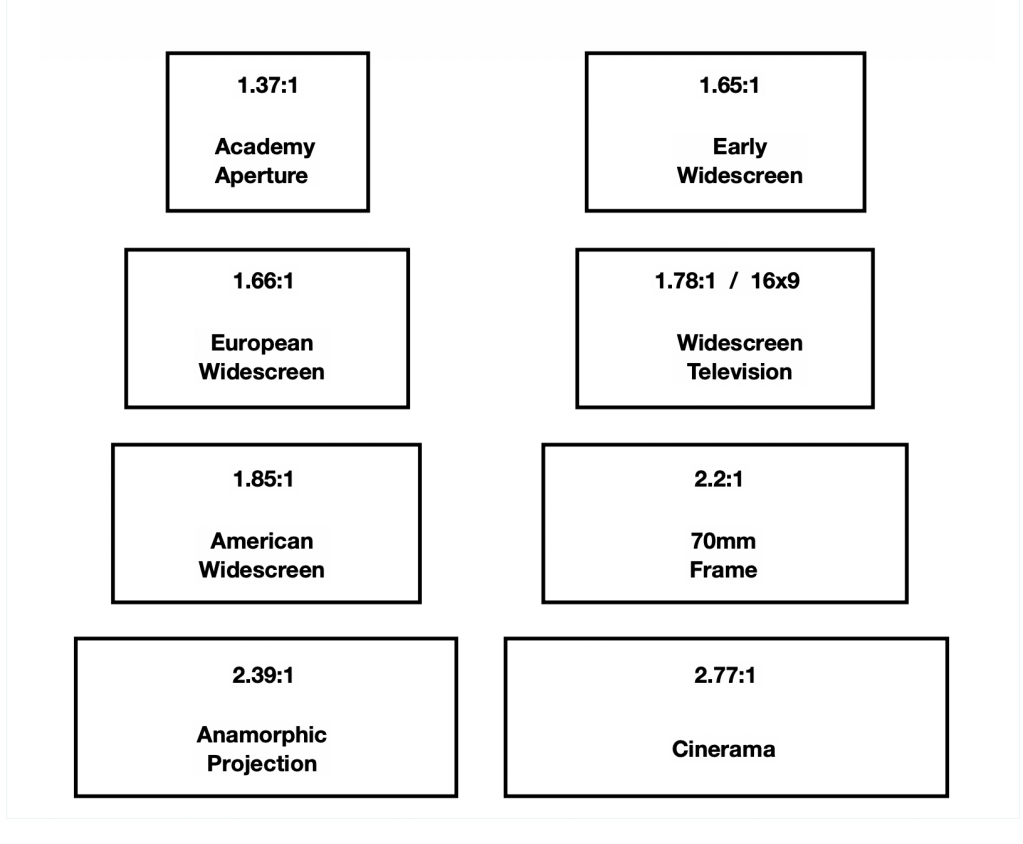
Once television became a competitor to the movie theaters for audience eyeballs, the studios began to experiment with shooting films in wider formats to create a visual experience that TV couldn’t match because of the fixed 1.35:1 television screen size.
As filmmakers became tired of seeing their films shot in widescreen cropped for viewing on TVs, a compromise was made by changing the old 1:37 aspect ratio to 1.78. This opened up the standard screen width and changed the way even television shows were shot from the mid 1980’s.
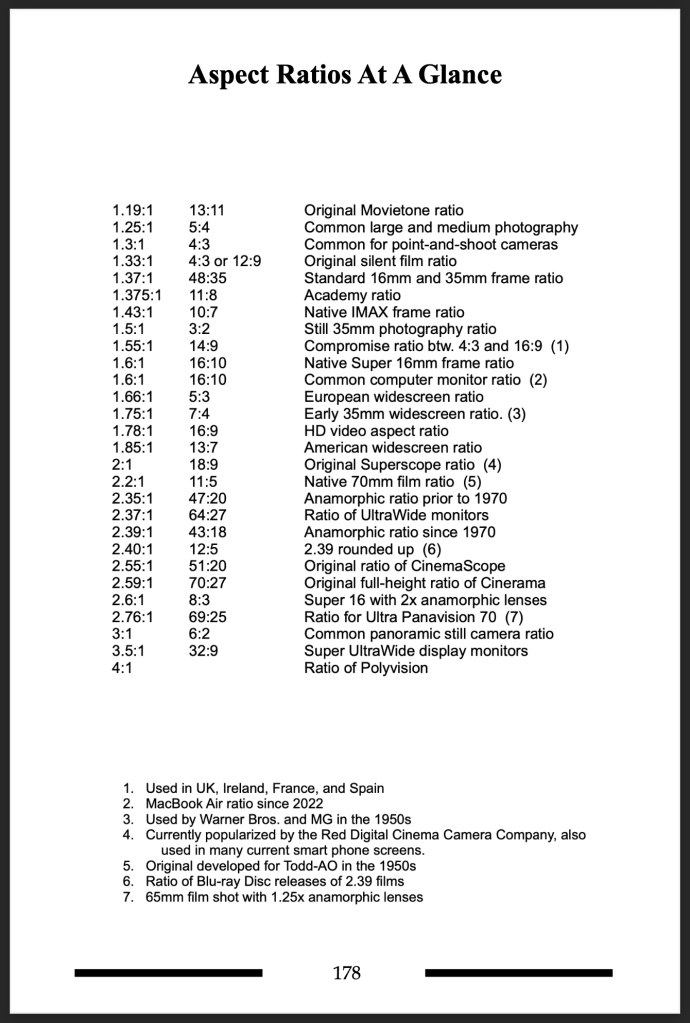
Notice that some formats are referred to by different style or raio callout. The 1.78 format is also described as 16×9. Thus the typical smart phone screen ratio is known as 9×16 because of it’s being typically viewed as a vertical rather than horizontal image.
The best video explanation of film stock differences and aspect ratios was done by Ryan Coogler for Kodak as he talked about the different aspect ratios he used for shooting his film “Sinners”. He talks about a number of new projection systems that I didn’t know about.
Here is a video of Autumn Durald Arkapaw, the cinematographer and first woman to win the Best Cinematography Oscar, explaining how she shot the film in two different aspect ratios; IMAX and Ultra Panvision 65.

 The Designer's Assistant