Design Gifts For The 2024 Holidays

Jeesh, it’s been ten years since my last gift guide and I’m getting it out a little late this year, but some of the same items are still here on the list, mainly the classic tools and books that never become obsolete, (like a lot of software programs do).

I don’t receive any money from these recommendations. These are books and tools that I own and use often.

My Must-Have Tools For Film Designers

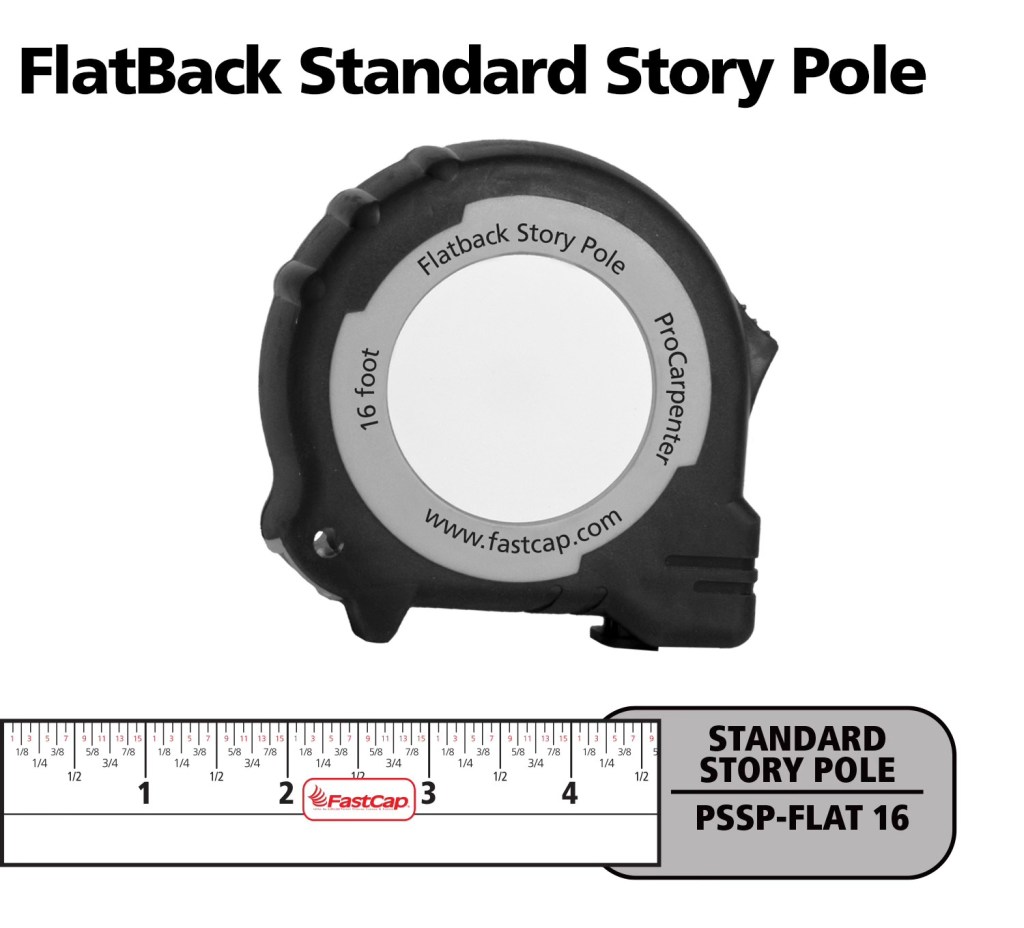
FastCap Flat Back Tape – You can not only measure round or curved surfaces but it has a blank area to write on for use as a story pole. – $10.00
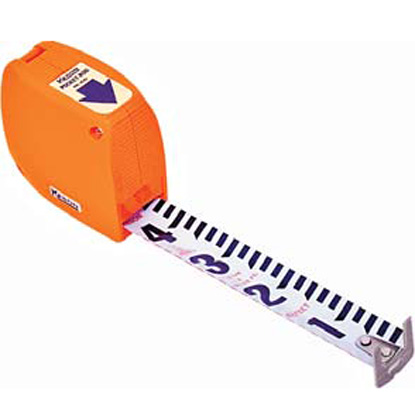
Keson Pocket Rod – These are so essential for site surveys that I have four of them. They come in Architect and Engineer models. – $20.00
6″ Digital CalipersLike these, there are many manufactures. (Avoid any priced under $20.00.) – Must-have tool for doing photo scaling (see article) – about $24.00

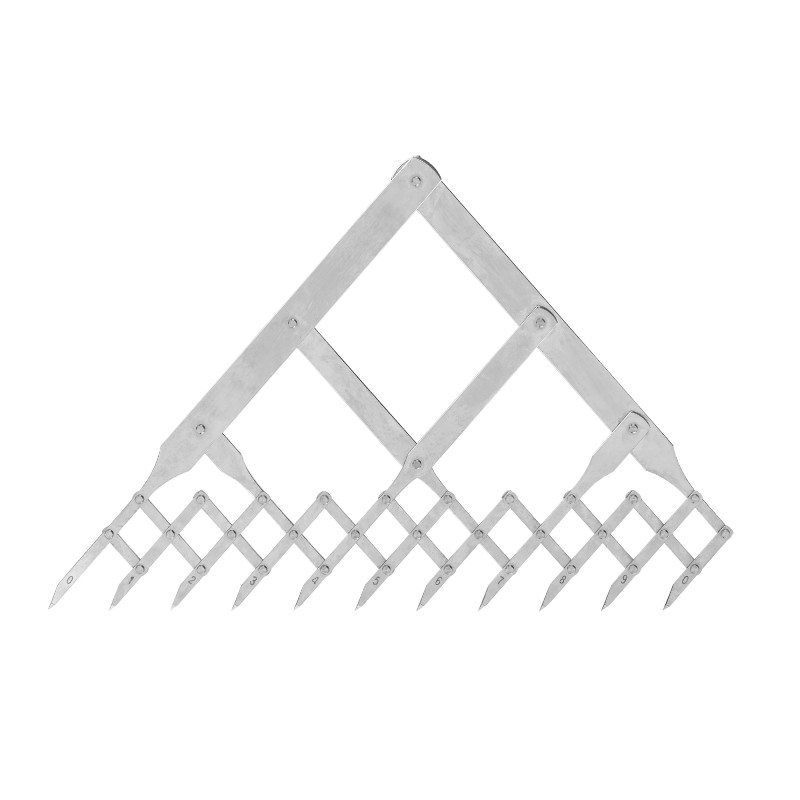
Equal Space Dividers – great for not only photo scaling but for designing in general. They run the gamut in price from these to these. $220 to $24.00
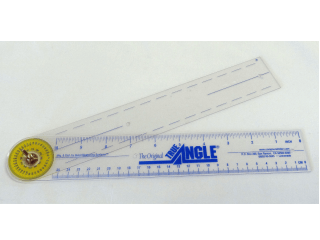
True Angle – Multi-use tool for measuring and transferring angles. lightweight. – 12″ -$16.00
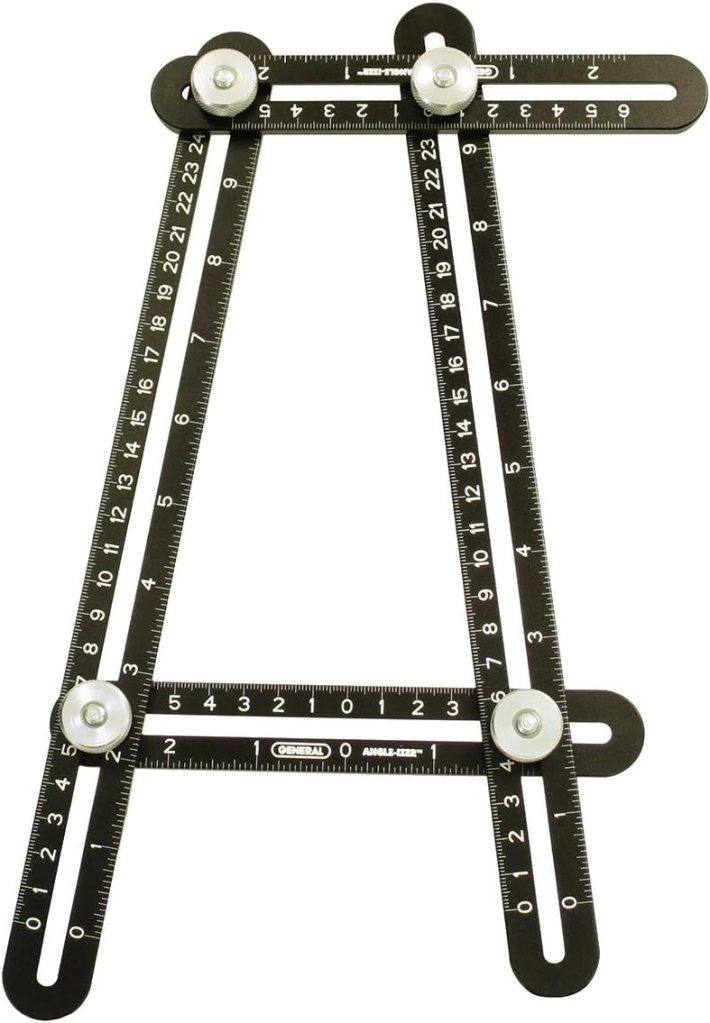
Angle Template Tool – Various manufacturers – around 18.00
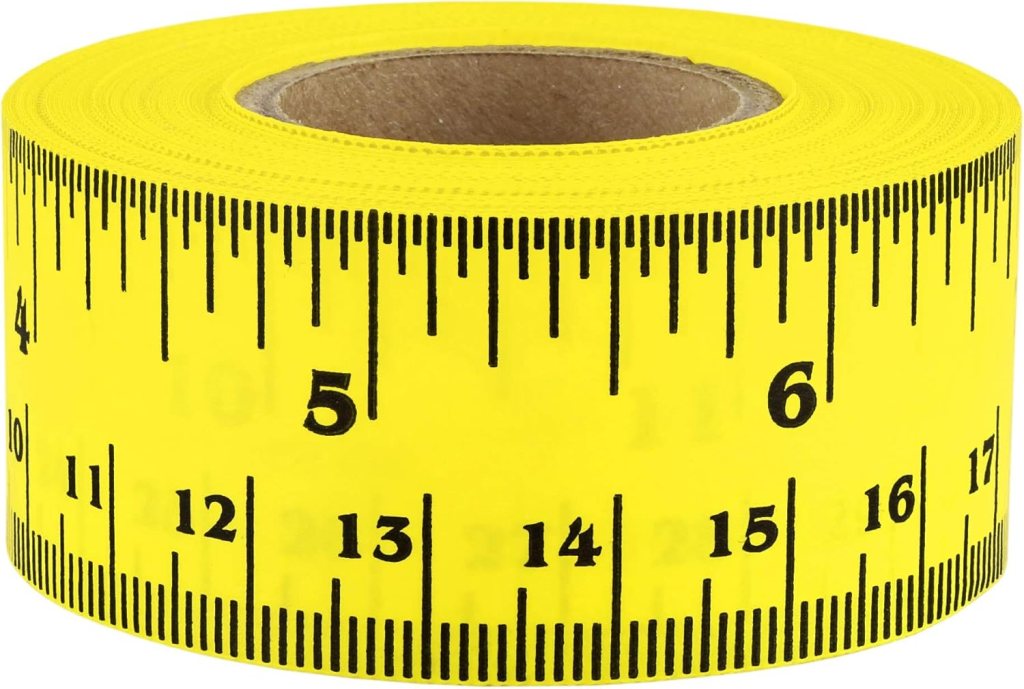
ChromaLabel Adhesive Measuring Tape – Great for when you don’t have time to measure everything and have to rely on photos of surveys – $16.00
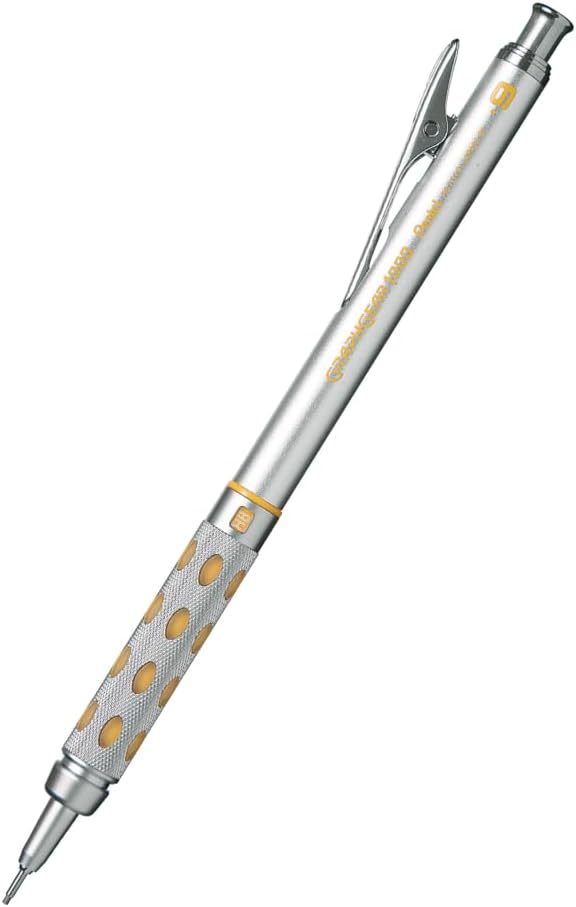
GraphGear 1000 – Mechanical pencils, my new favorite brand. These are great because the barrel sleeve retracts into the pencil to protect it. Comes in .3, .4, .5, .7, and .9mm leads. About $9.00
Compass – So many to choose from, (and a lot of crappy ones are in the mix). This one is a good all-around basic, practical compass that will last a while. $14.00

Design Books

Lost Art Press Books

Still my favorite design and furniture book publisher. Here are my recommendations:
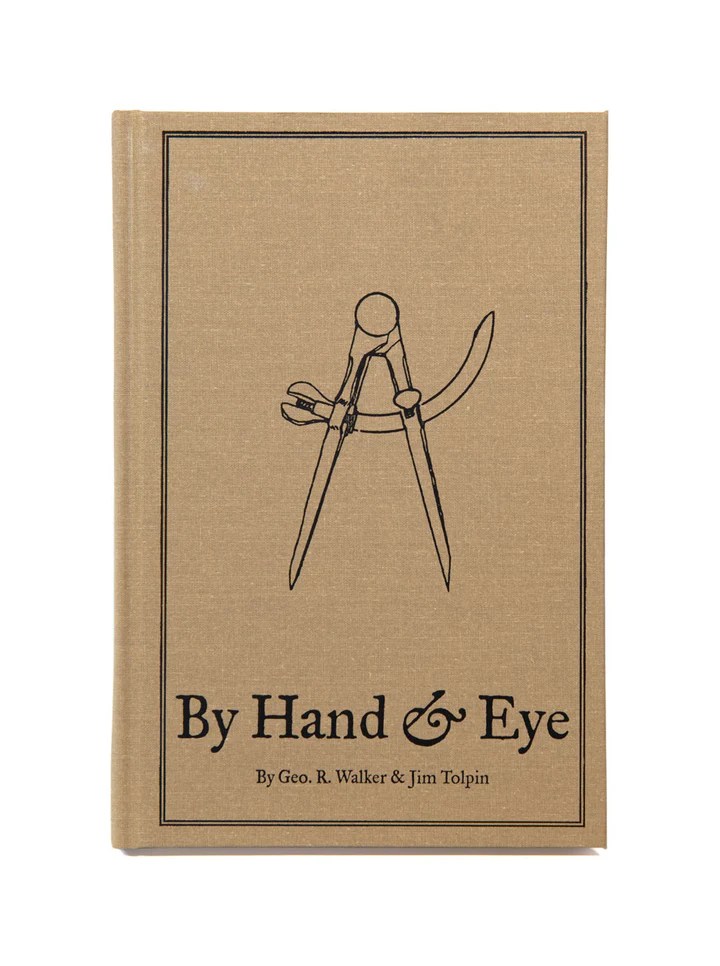
By Hand & Eye – $51.00. Another gem from Lost Art Press, this is probably one of the best design books written in the last 100 years. It outlines the world of design without a rule and using only dividers and proportional methods. I covered this in a previous post and always recommend it. Buy this and a good pair of second hand dividers from Ebay and you will completely change the way you think about design.
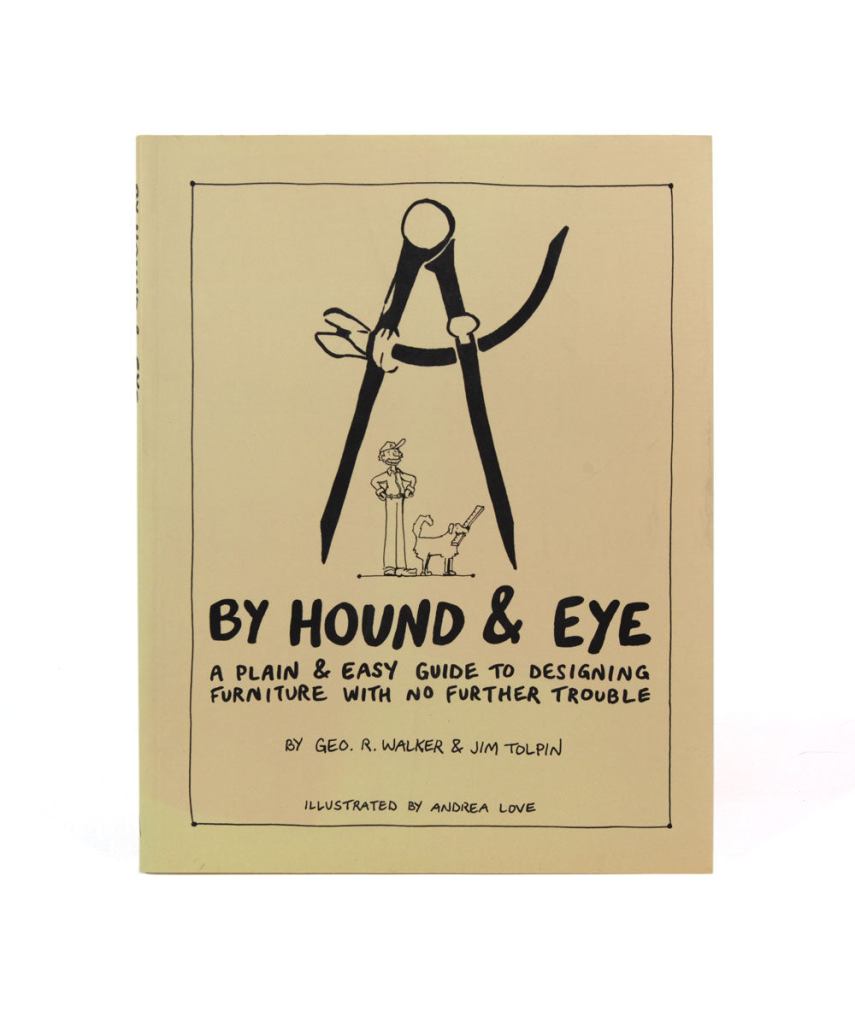
By Hound & Eye – $31.00. A companion workbook to By Hand & Eye.
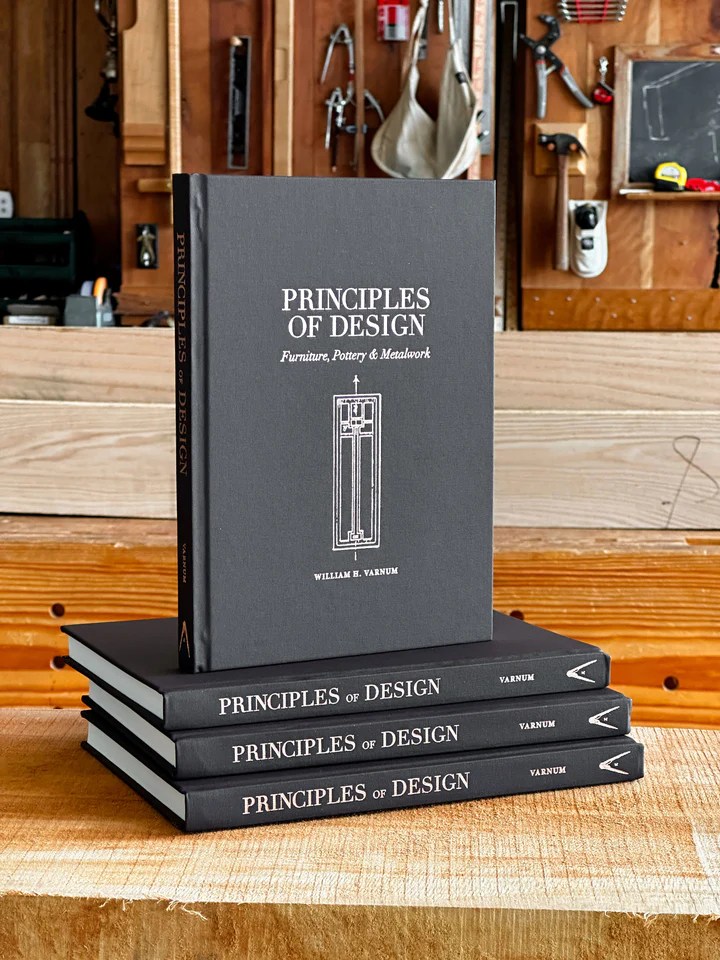
Principles Of Design – $41.00
The Anarchist Design Book – $54.00

Other Books

Historic Millwork – Brent Hull

A Field Guide To American Houses – Virginia Savage McAlester

Stair Builders Handbook – T.W. Love

Backstage Handbook – Paul Carter

American Cinematographers Manual – ASC Press

The VES Handbook of Visual Effects – VES Society

Designer Drafting For The Entertainment World – Patricia Woodbridge

The Classical Orders Of Architecture – Robert Chitham

Illustrated Cabinet Making – Bill Hylton

Styles Of Ornament – Alexander Speltz

McKay’s Building Construction – W.B. McKay

Neufert – Architects’ Data – Granada Publishing

Geometry Of Design – Kimberly Elam

Really, Really Last Minute Gifts

When you realize you’ve really screwed up and forgotten someone and have no time to run to the store, much less order anything, you can always gift a good app.

Log onto the Apple or Android store and gift your so-important-you-forgot-about-them friend one of these apps and your reputation will be saved:

I own and can recommend all these apps.

BuildCalc – construction calculator – $24.99

Photo Measures – saving and sharing measurements – $6.99

MagiScan – Turns your phone into a 3D scanner (pay per use) ( I have used this a lot)

CamToPlan Pro – Uses AR to turn scans into measured drawings – $39.95

Theodolite – Just like a real theodolite but for your phone (fantastic) – $8.99*

Pocket Laser Level – Laser level for smart phones – free

Artemis Pro – professional director’s finder (Most used digital directors finder) – $29.99

Helios Pro – Sun and Moon calculator (fantastic) – $17.99

pCAM – camera info calculator – $29.99 *

Lens Lab – Depth of field app, shows you a visual representation – $1.99*

Sun Surveyor – sun and moon calculator – $9.99

I.D. Wood – samples and data for 200 kinds of wood – $9.99

LensKit – lens technical data – in-app purchases – subscription *

* iOS versions only

Online Design Classes

I have to get a plug in for our own classes at Wrand.

All the classes are 30% off until December 25.

What Does A Set Designer Do?

Drawing by William Ladd Skinner

“So, what is it exactly that you do?”

That’s a typical question I get from people when I tell them my job title. People assume many different things, based on what they’ve heard from others, or read in a magazine. And most of the time they have an incorrect idea about my job description.

It’s not their fault, really. Our industry does a lousy job of explaining job titles in the entertainment world. They just leave it up to people outside the business to figure it out for themselves. It doesn’t help that the same jobs sometimes have different titles depending on what part of the U.S. you’re in, much less what part of the world you’re talking about. Many people who now work in the entertainment industry had never heard of the Art Department or knew that film design was a career option until after they had finished college.

I received an email from Bruno Anselmo, a Set Designer in Brazil. He was curious to know how our job descriptions might differ even though we have the same job title. His background is both in theater and film and video so I’m sure he experiences the same confusion with people he meets who aren’t familiar with the film industry. (Bruno, tell me if I’m wrong here.)

The job title ‘Set Designer’ means different things here depending on the end-product. In the professional theater field, the Set Designer is the lead artist for the creation and implementation of the visuals for a stage production. In the film and television industry, this role as head of the visual aesthetics of a project is given the title ‘Production Designer’.

To make matters even more confusing, the title ‘Production Designer’ is a department head title, not an actual job description. All Production Designers in the professional film and television entertainment industry are Art Directors. The Production Designer title is given to the head of the Art Department, and this title must be approved by the Art Directors Guild for shows which are produced under the union contract.

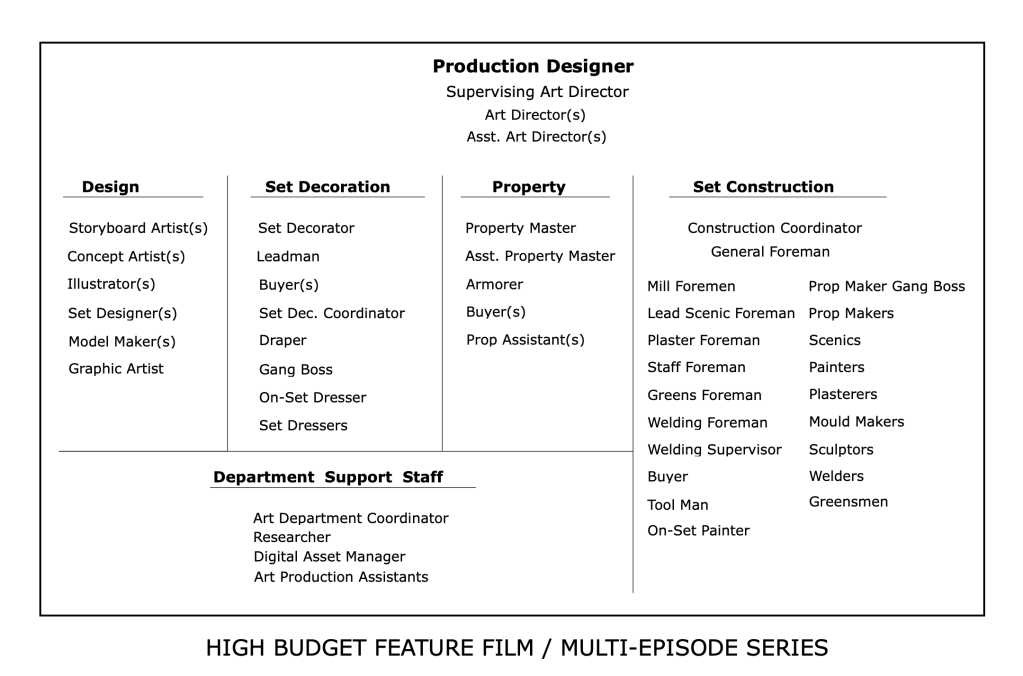
Let’s look at a typical Art Department:

Some will argue Set Decoration is a separate department as the Set Decorator works in tandem with the Production Designer rather than as a sub-department. In some cases and projects this may be true, the Set Decorator is absolutely a major contributor and an influence on the look of a film. But still, this department is under the Art Department umbrella and the winner of an Academy Award for Art Direction goes to the Set Decorator as well as the Production Designer.

You’ll see that the Set Designer designation is in the table above in the ‘Design’ category. I usually tell people that a Set Designer in the film industry is a close approximation to an architect in an architectural firm. They are in charge of creating the working drawings that are used by the Construction Department to construct the stage sets and scenery that is used at a location.

Traditionally the Set Designer position was a starting point for Art Directors but this is not always the case. Some Art Directors come from set decoration or a scenic artist position.

Here’s a general list of what a set designer in the entertainment industry, i.e. film and television, is responsible for creating:

  • Surveying locations and creating accurate as-built drawings.
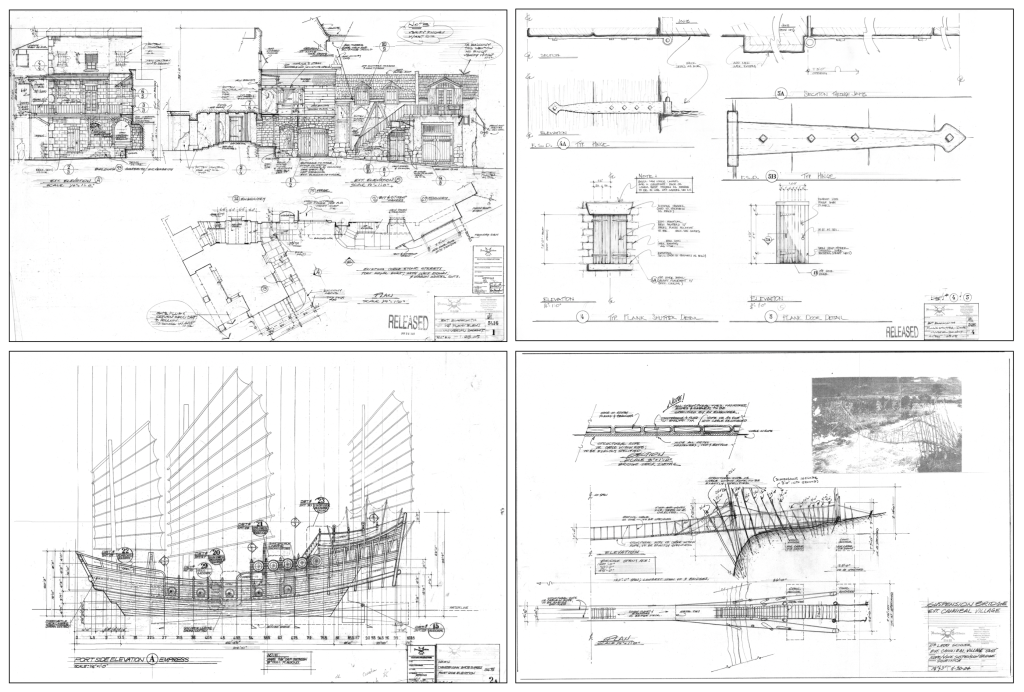
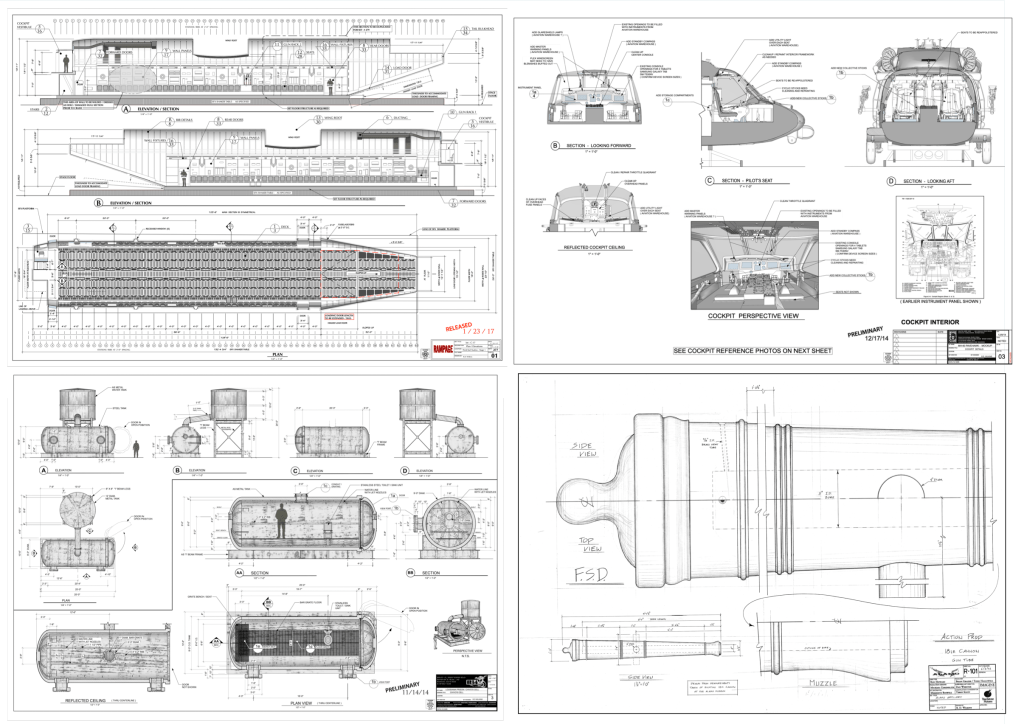
  • Construction drawings of stage sets; plans & elevations, scale detail drawings, FSD’s (full size details). These may be architectural or mechanical in nature.
  • Working drawings of any period of architecture as well as fantasy or futuristic/science fiction designs.
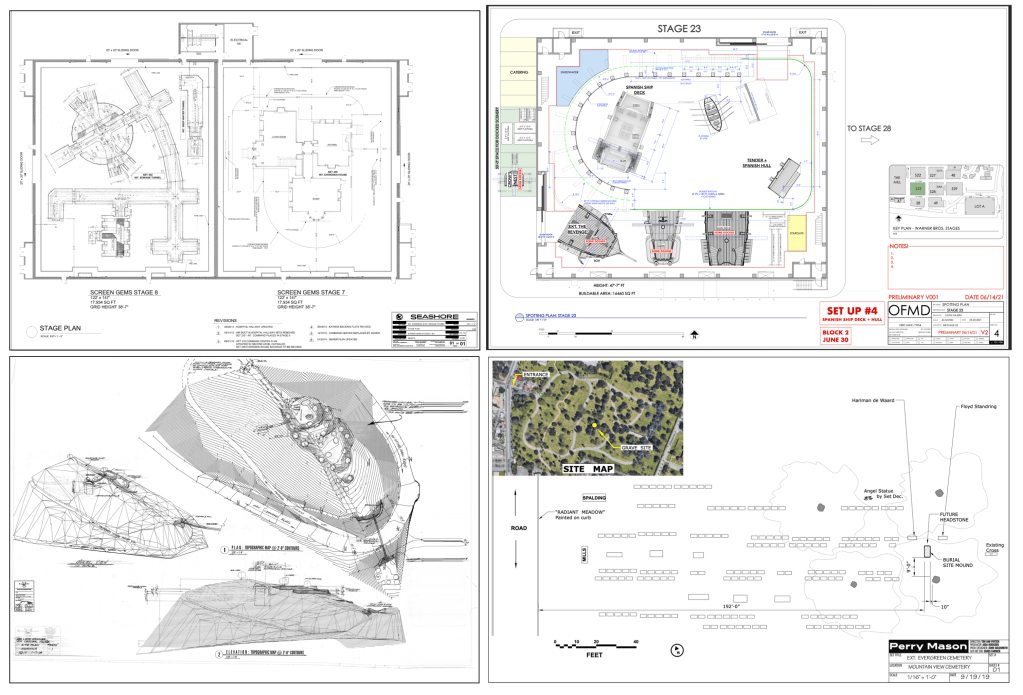
  • Working drawings of organic elements: topographic maps, terrain creation, volcanoes, mine shafts, caves or subterranean features, other planets.
  • Working drawings of vehicles: automobiles, aircraft, ships or marine craft of any period.
  • Working drawings for furniture and props.
  • Working drawings for special effects shots.
  • Director Plans, stage plans, and location layouts.
  • Dimensional study models of paper and wood as well as 3D digital models with photorealistic textures and other elements like furniture or vehicles.
Architectural Drawings. Images: HBO, Netflix
Futuristic & Science Fiction. Images: Paramount Pictures
Period & Fantasy subjects. Images: Walt Disney Pictures
Vehicles & Props. Images: Warner Bros., Touchstone Pictures
Location Builds. Images: Universal Pictures
Stage & Location Plans Images: HBO, Walt Disney Pictures

As you can see, probably the biggest difference between a set designer and an architect or an interior designer is that over the course of a career you’ll get to design and draw things that no one in either of the other two professions would if their career lasted 300 years. Instead of worrying about building code or structural concerns, your main focus is making sure the final result looks fantastic. The design is the main focus, not an afterthought.

So, what skills do you need as a set designer? Well, one of the big plusses for me and for most people that work in the industry is that you will never stop learning. You won’t be stuck drawing reflected ceiling plans the rest of your life. It will be a constant learning process.

If you want to design vehicles as well as architecture then you can. If you ONLY want to design vehicles, you can. Many people develop a specialty and primarily just do the type of design that they like best. It’s a never-ending smorgasbord of design possibilities. After having done over 80 films, there are still things I’d like to create that I haven’t yet done.

So, what are the primary skills you need? I’d start with this list:

  • The ability to draft – You have to know how to create proper working drawings and unlike fine art drawing, anyone can learn how to draft. It can be exacting because precision is important. But, as they say, it isn’t brain surgery. You can learn it.
  • Camera basics – We design scenery, not permanent buildings. We design for a camera. I tell people that basically, we create beautiful reflectors. A film is a record of light particles that have bounced off of people and scenery and passed through a glass lens. Making it look good is the main objective. Understanding lenses and how they work is a big part of successfully designing stage sets.
  • Architecture & proportion – You’ll never know everything, but knowing the basics of building history is a must. You’ll be drawing details of doors, windows, stairways, and furniture. You’ll specify hardware, mouldings, plaster details and finishes. There is very little that we order from a catalogue. Almost everything is custom made by studio craftspersons.
  • Set Construction – Understanding how sets are built and knowing correct nomenclature is a key part of being able to draw studio sets. A lot of our drawings are similar to architectural drawings but there are some big differences between them. The layout styles, nomenclature and notation have more in common with theatrical and 1920’s architectural drawings.

Also, you’ll need to understand basic physical special effects, how to create and lay out backings, both painted and photo backings, know how to create scale drawings from photographs and artwork, understand visual effects requirements, and do location surveying.

The list seems overwhelming but remember, you will learn a lot of these things on the job. You just need the basics and a good portfolio to get your foot in the door.

You’ll need to be proficient with computer software. There will probably be one program that you will do most of your work in and that will be a personal preference. Unlike architecture, there is not a standard program that we use, so you may work on a project with many people using a wide variety of programs.

Currently, in the U.S., the most-used software programs for set design are Vectorworks, Sketchup, Rhino, Blender, Modo, Autocad, Moment Of Inspiration, Z-brush, Solidworks, and a few others like Photoshop, V-Ray and Twin Motion for renders.

Don’t try to learn them all. Software diversity is great but it’s better to get really good a just one or two.

There are a lot of choices of film schools in the country, but if that is the route you choose you’ll have to check to be sure that they have a course in film design or a Production Design track. Many schools don’t.

If you are thinking about schools and looking for an alternative to a four year program, we offer specific classes in set design that focus on the basic skills you need to get started.

Our 10-Week Set Design Fundamentals series is available on-line and is self-paced so you can progress on your own schedule. It is now on sale for 40% off until May 30, 2023.

You can find out more information here.