Sometimes Unwanted Holes Aren’t So Bad

You’ve probably never thought about how sound can affect your stage set. Beyond trying to not create an environment that would drive the sound recordist mad, you usually don’t think about odd acoustic anomalies that might pop up that you never intended to happen. Like echoes.

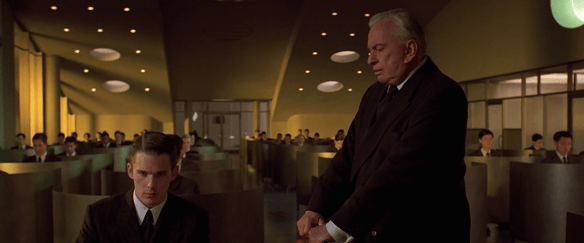
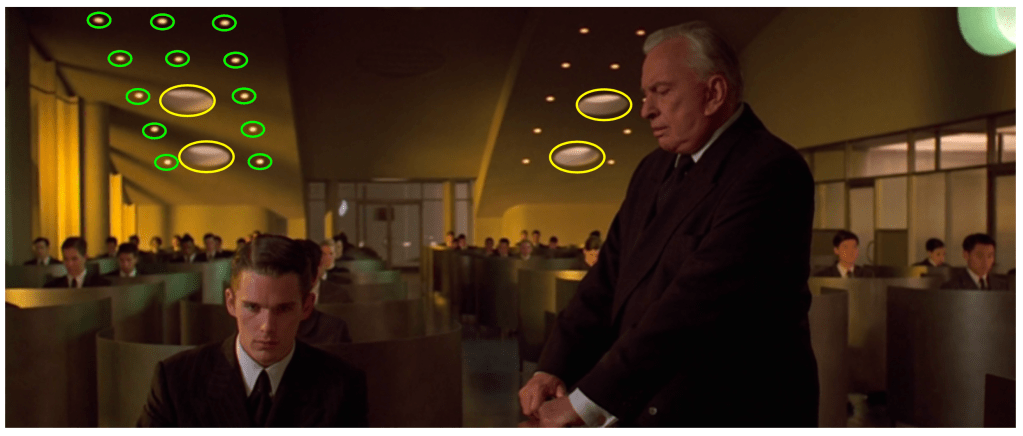
Computer Hall set – Gattaca – Columbia Pictures 1997

Yeah, echoes will bite you in the ass if you’re not careful.

On the main set for the 1997 film Gattaca, just such an anomaly occurred, and it was the cinematographer who ended up saving the day.

And what does the cinematographer have to do with sound problems? Keep reading.

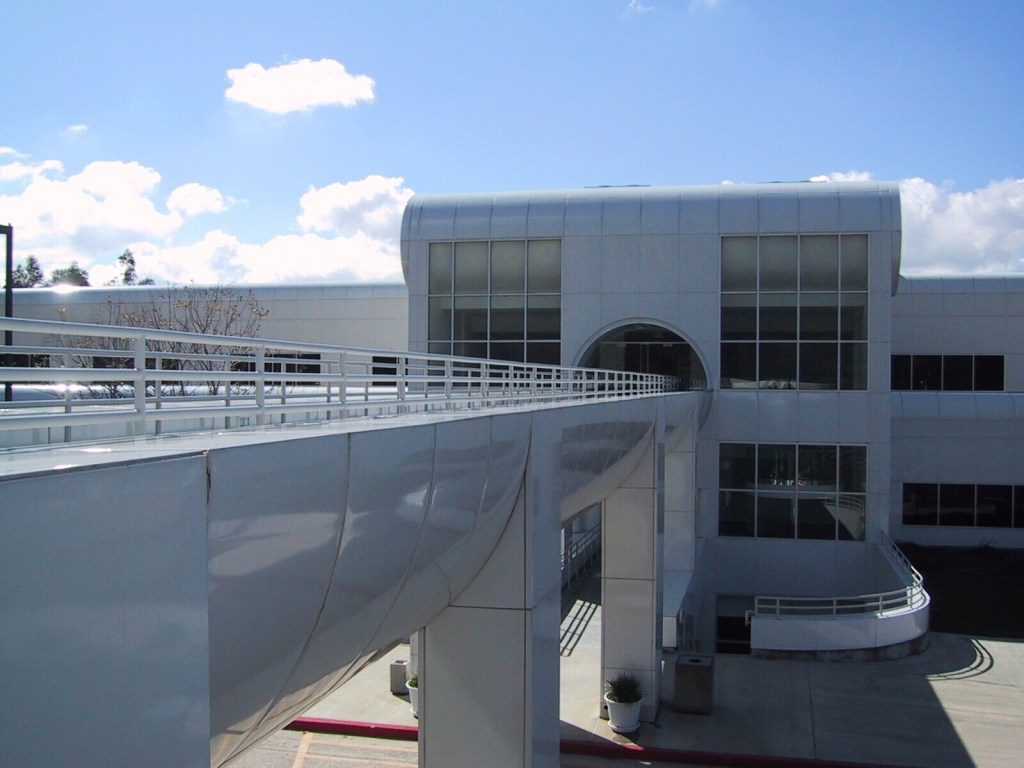
The Computer Hall set was designed by Production Designer Jan Roelfs and was inspired by the real-life location that he and Director Andrew Niccol chose for the film. The actual building chosen for the exterior of the Gattaca Aerospace Corporation was the Marin County Civic Center in California, designed by Frank Lloyd Wright. The art department flew to Marin and surveyed the interior details so that they could be matched for the set on stage, which was in a warehouse in Playa Vista.

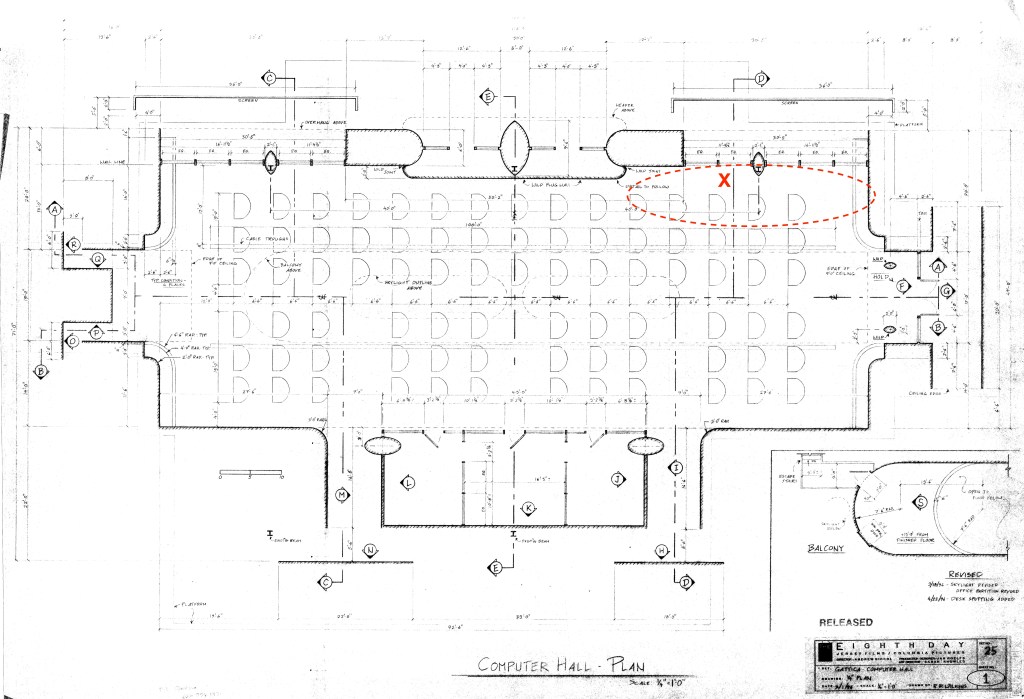
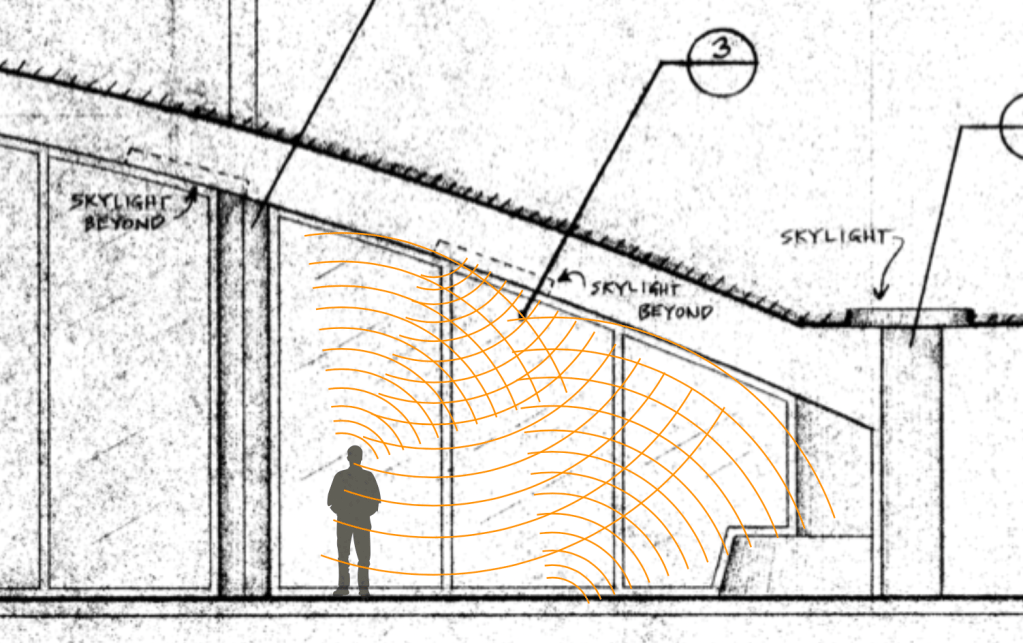
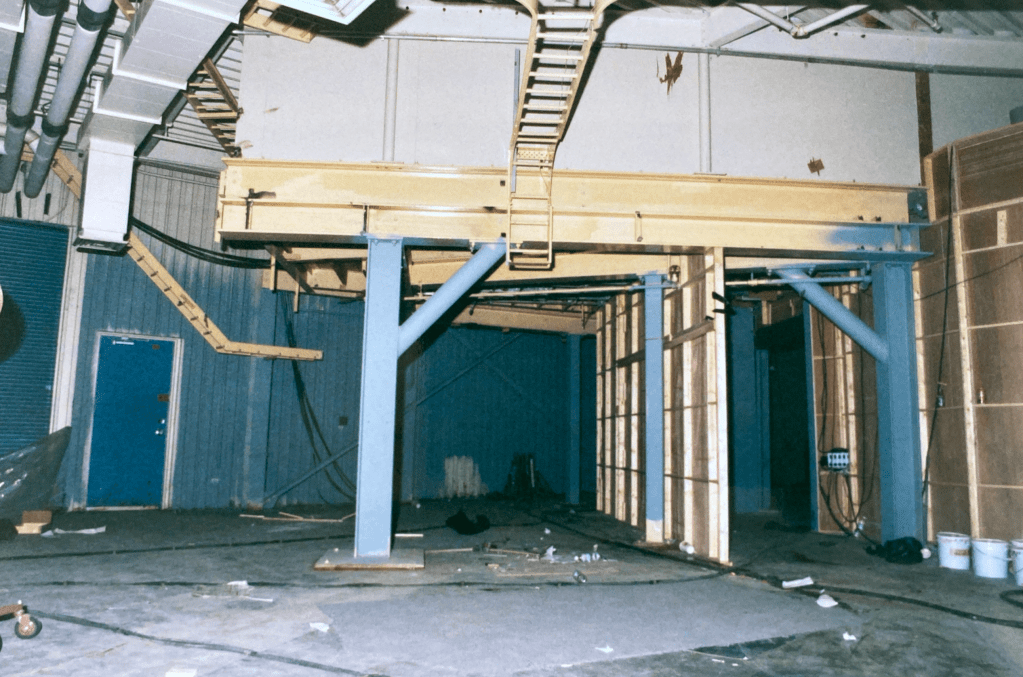
The building they had leased made for an odd sound stage, but its size made it large enough to build the sets for the film in. There were the normal problems you deal with in a structure that was never designed to be a sound stage: support posts at regular intervals, a ceiling that is not nearly as high as those in an actual sound stage. On the plan below, you can see where the oval columns were designed to hide two of the building’s I-beam columns.

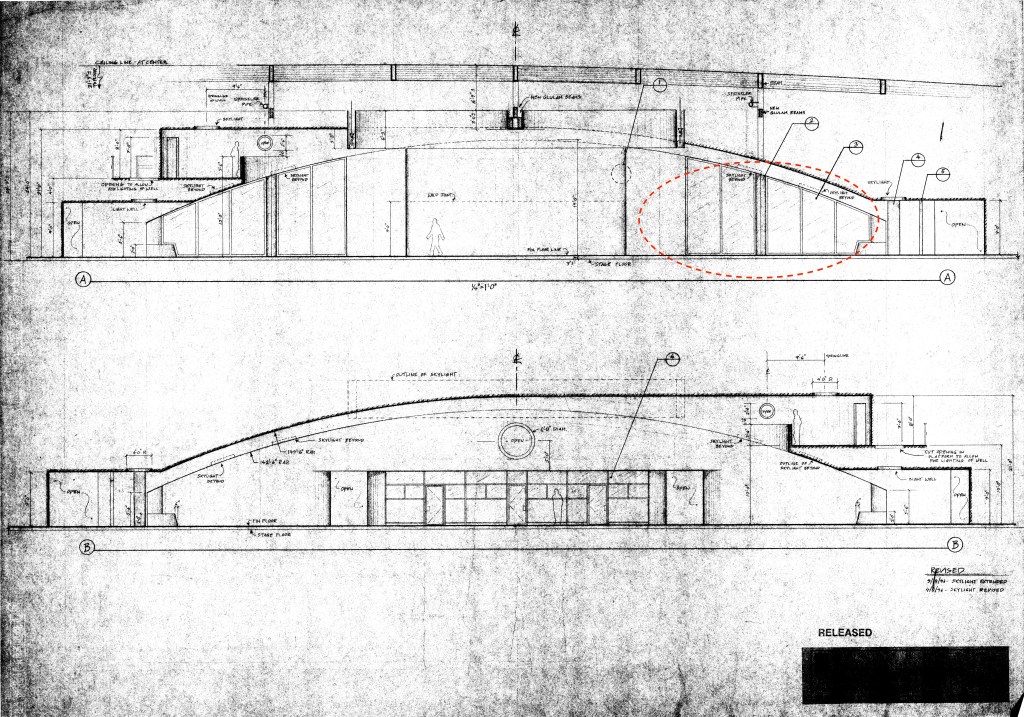
These are my drawings of the plan and elevations of the set with the areas of the sound problems circled.

(One note: on the title block, you’ll notice it reads “Eighth Day”. This was the original title of the film. In pre-production, the producers learned that there was a French movie of the same name that was going to be released, and a name change was required. The writer and director Andrew Niccol decided that he would create a new title using the four letters used to identify the nucleobases of DNA: GATC.)

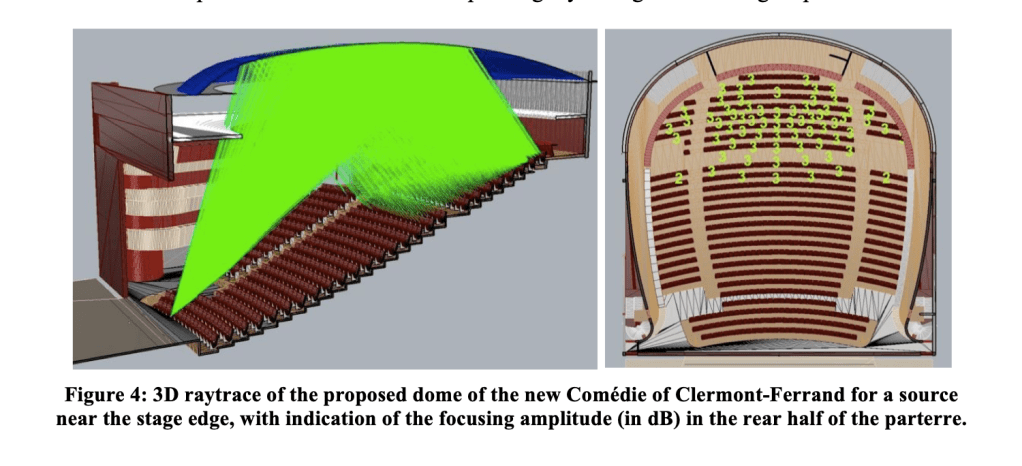
Turns out, theater designers had known about the sound reflective effects of elliptical and parabolic ceilings for years, as most of the western world designed theaters in the mode of the typical Italian horseshoe layout plan.

A presentation at the 2017 International Congress On Sound was focused on this phenomenon.

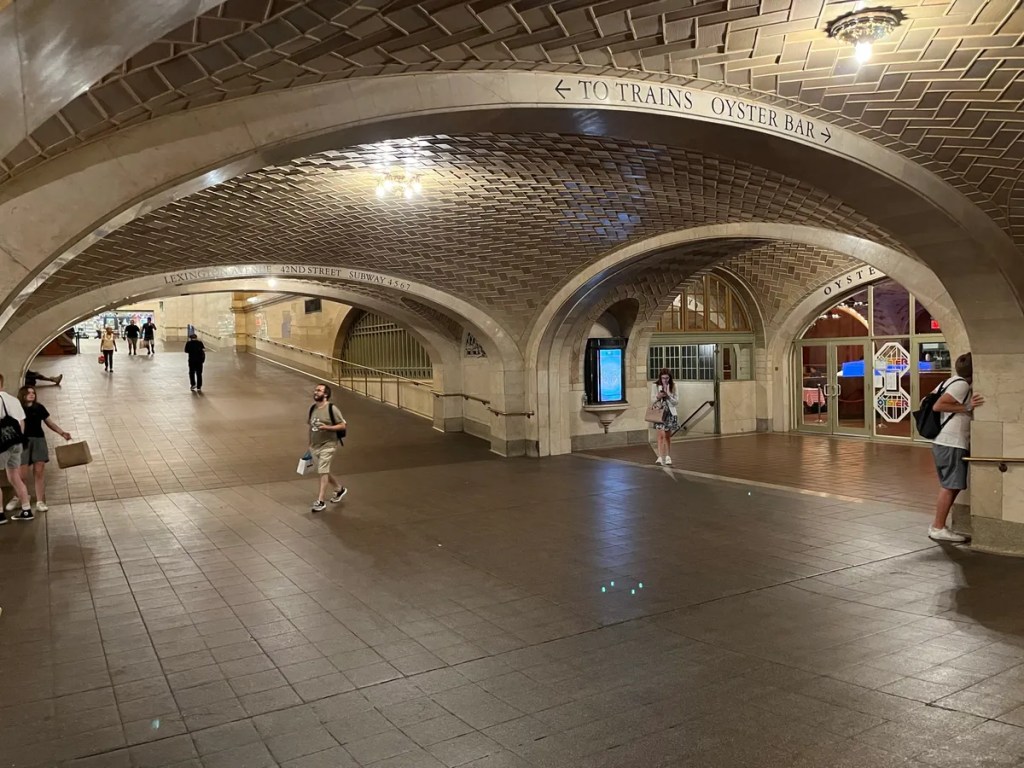
In New York City’s Grand Central Station, there is a ‘whispering gallery’ or acoustic vortex. This is an architectural phenomenon created by a number of configurations, in this case, a vaulted ceiling in the subway entrance under the terminal. A person standing in one corner of the hall intersection can whisper into the corner and the sound travels over the curved surface of the ceiling and can be heard by a person standing in the opposite corner.

New York Grand Central Station

I discovered the echo one day when I was walking the set and stopped at the point in question. I saw a gnat and clapped my hands together to kill it. That’s when I heard the strange echo. Horrified, I clapped again and there was the same echo. I clapped a third time, just as Jan was walking through the set. He stopped and frowned. “Don’t do that!’, he said.

I think what was happening was that the area beneath the lower section of the ceiling of the set created a flutter echo, which was enhanced by the smooth ceiling surface. The two large skylights didn’t seem to affect this echo.

There was no carpeting or fabric to dampen the sound which would have eliminated this effect.

The solution came for the most part when the cinematographer, Slawomir Idziak, told us that he needed more practical lights in the set. This required creating dozens of new openings in the lower sections of the ceiling. These holes interrupted the acoustic waves and the echo disappeared. With the addition of the desks and the background actors, the sound reflection was minimal.

The photo below shows the original skylights in yellow, with the new lights circled in green.

The Art Of Technical Drawings

The look of construction drawings for film and television has changed a lot over the years, particularly now that most drawings are done digitally with computers rather than by hand.

While many current drawing styles now incorporate photo-textures, shadows, and icons to add life to drawings beyond what is typical of architectural drawings, it’s hard for them to match the aesthetics of hand drawings.

CAD drawing from 3D model – photo textures applied

Having started as a pencil draftsman I guess I do have a bit of a personal bias, but the unique style of each person on a hand-drafted drawing was immediately recognizable to people who knew their work.

Before digital illustrations and renders of 3D models, hand-drafted drawings had to serve as a design sales tool as well as instructions for scenery construction.

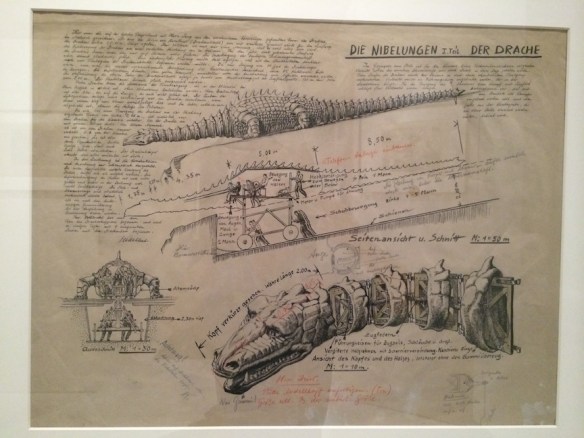
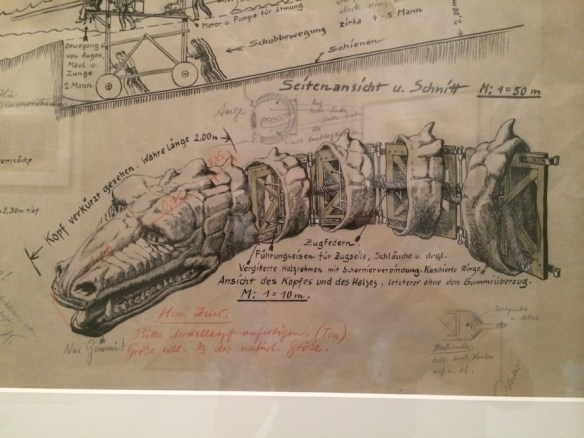
Here are some shots of a set design by Erich Kettlehut in 1923 for the UFA film, Die Nibelungen, for the scene where Siegfried kills the dragon.

The drawing was displayed as part of an exhibition of artwork from the UFA silent film period of the 1920s and 30s at the Los Angeles County Museum of Art in 2014. The drawing is from the collection of La Cinématiquè Française in Paris, France.

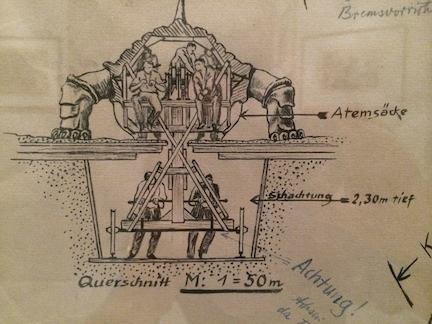
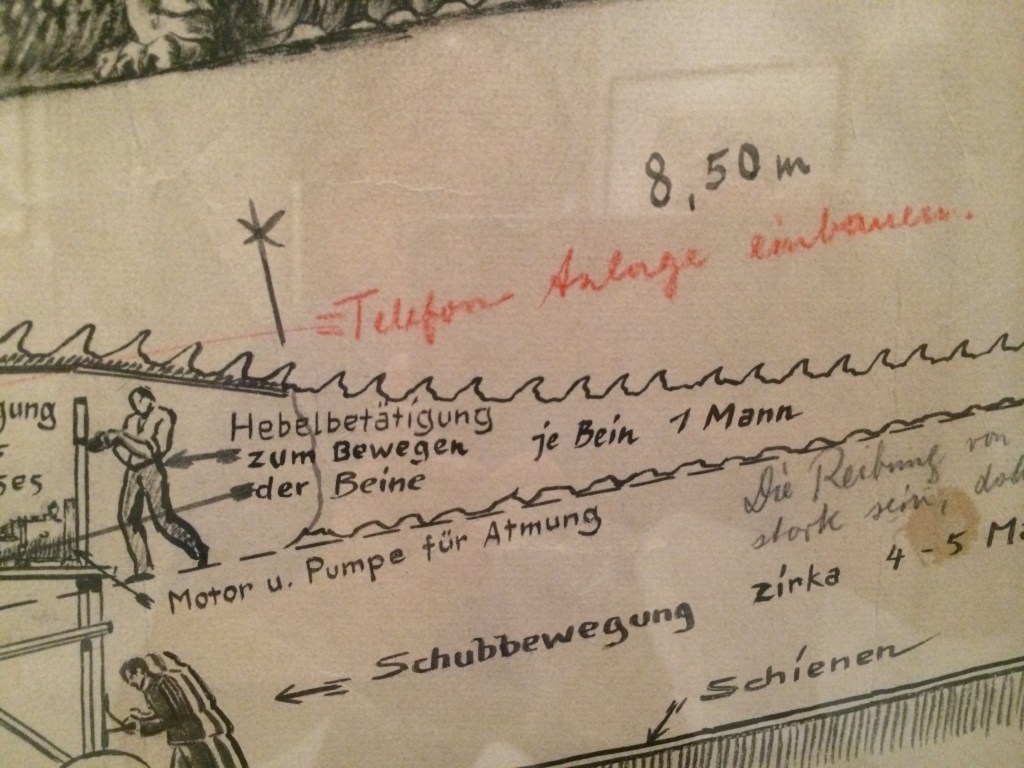
Note that the drawing not only provides a pictorial description of what the dragon should look like, but calls out dimensions, construction materials, how the action prop is to be operated, surrounding scenery requirements, and specific technical details of mechanical movements.

Technical drawing of the Dragon by Art Director Erich Kettelhut – ink and pencil on vellum
Kettelhut called out the length of the neck as well as the tension springs, framework, control cables and hoses required for the creatures fiery breath. He calls out “only rubber!” for the mouth area.
The size and depth of the recessed path required for the props operators.
drawing describing how each part of the dragon was to be operated by stagehands.
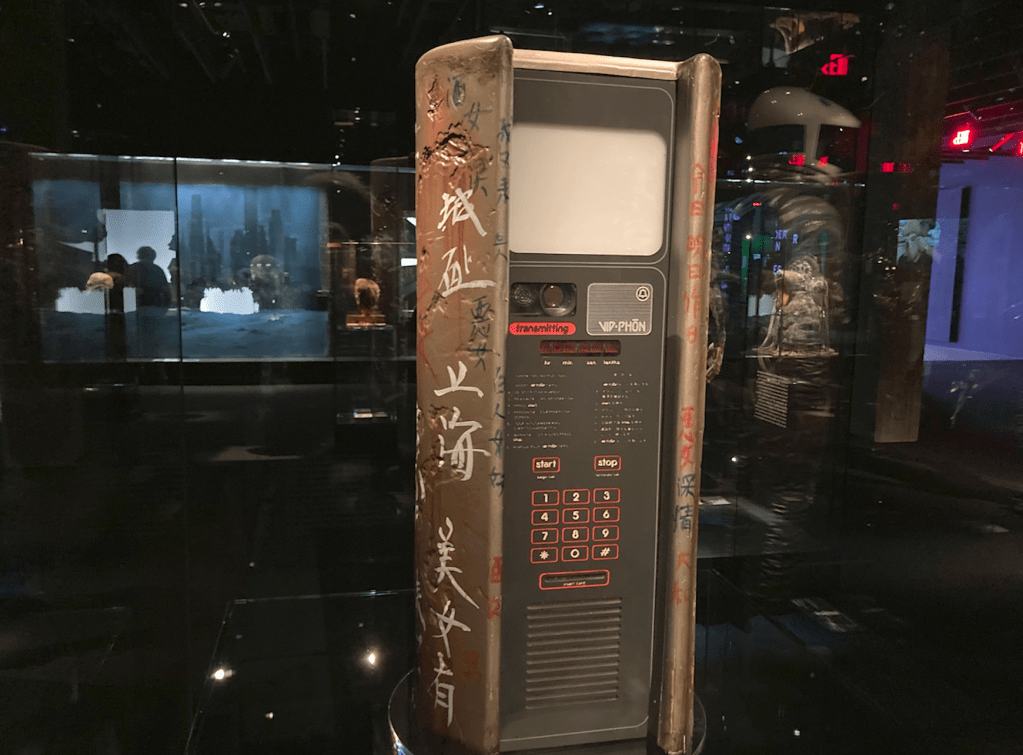
Note in red indicates that a telephone/communication system needs to be added to the prop for the crew.

The scene where Siegfried slays the dragon in Die Niebelungen from 1923

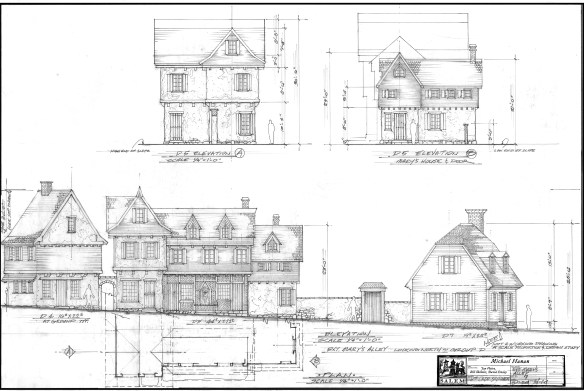
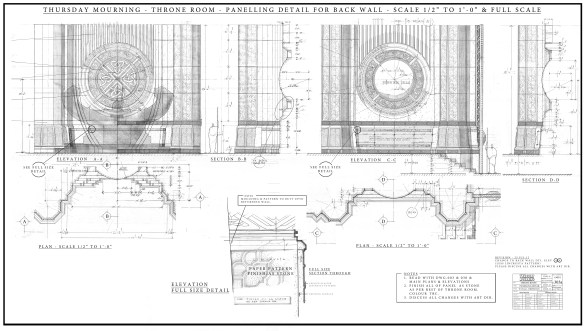
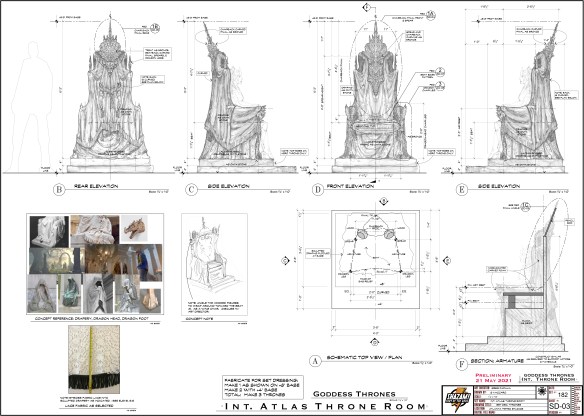
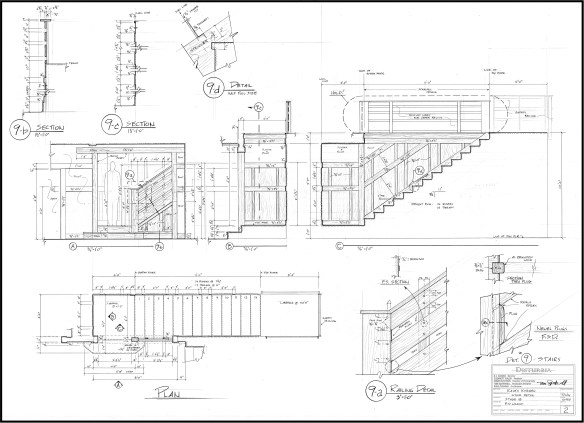
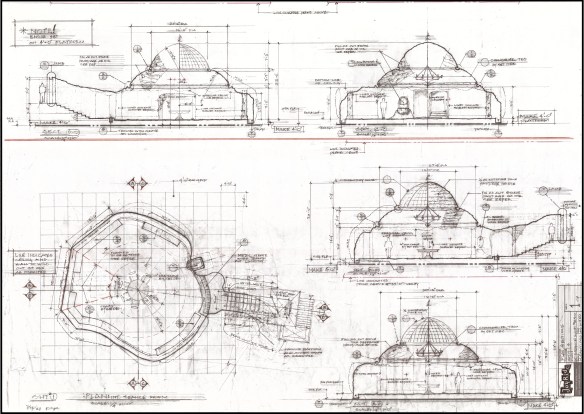
Here are a few more hand-drafted pencil drawings from more recent films:

Salem – drawing by William Ladd Skinner
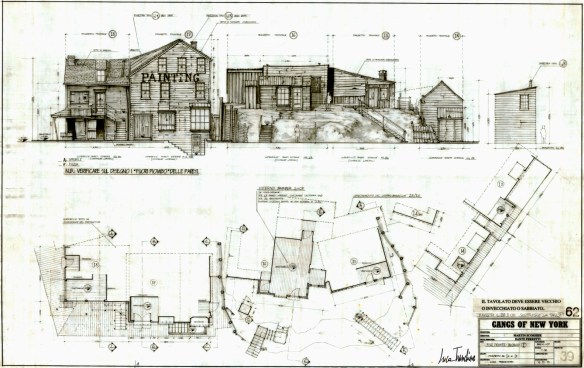
Gangs Of New York – drawing by Luca Tranchino
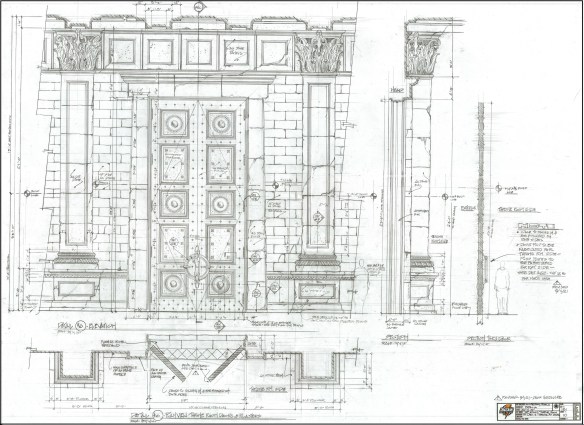
Shazam – drawing by Greg Papalia
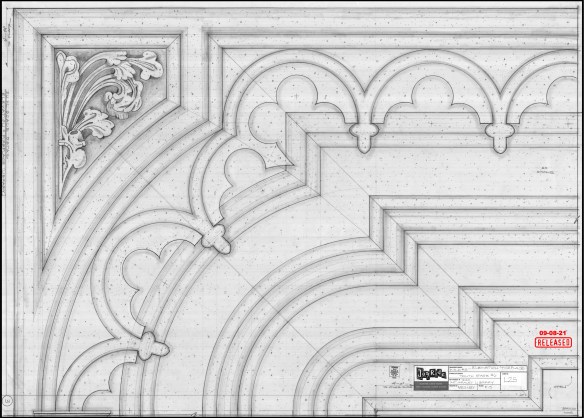
Haunted Mansion – drawing by Barbara Mesney
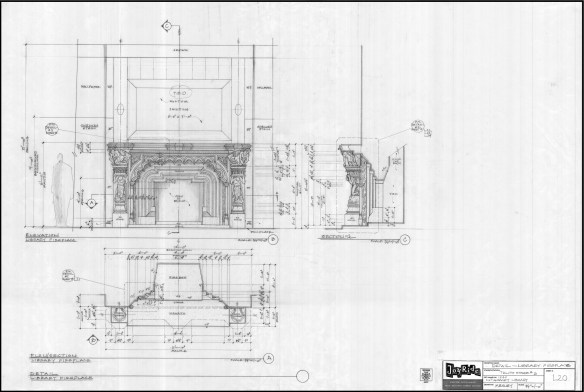
Haunted Mansion – full size detail of fireplace for the plasterers
Thor – drawing by Oli Goodier
Shazam – drawing by Stella Vaccaro
Disturbia – drawing by RD Wilkins
Haunted Mansion – drawing by Hugo Santiago
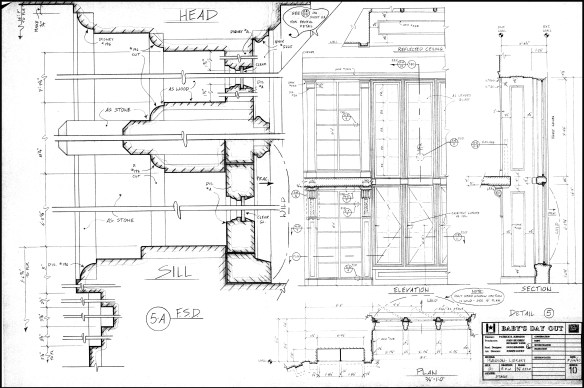
Baby’s Day Out – window detail

R.D. Wilkins

David Lynch – “Sorry, Closed Set.”

I was listening to the radio, looking out at the clouds and remembering the weather reports that David Lynch used to do each morning on NPR from his house on Mulholland Drive here in Los Angeles. It was at about that moment that I heard the announcement that he had passed away.

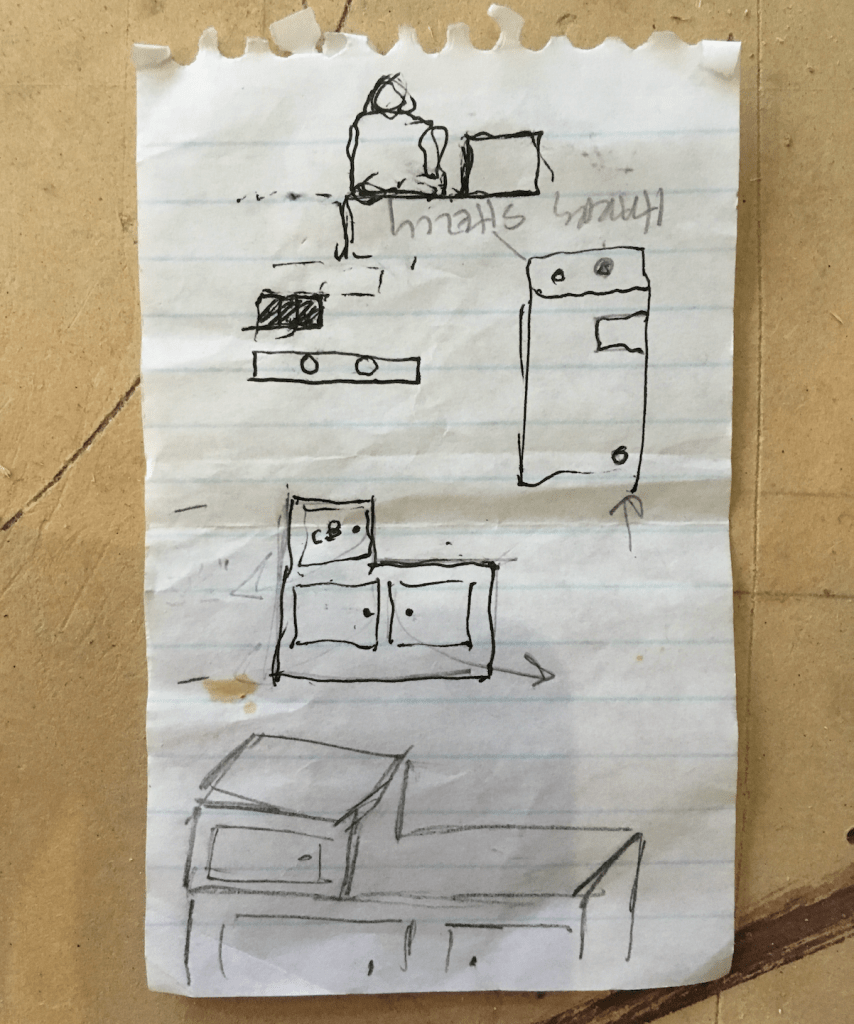
I’d been flipping through photos on my phone the day before when I found a shot of a crumpled piece of notepad paper. On it was a small sketch in black ink and pencil with some cryptic notes.

Years ago when I was working on a show on the Paramount Studios lot, I was walking through the mill when I saw a friend who waved me over to his work bench. He pulled a piece of paper from his tool bag and smoothed it out on the table.

I looked at it and squinted. “What is it?”, I asked him.

Sketch for set dressing by David Lynch

“It’s a sketch from David Lynch, he wants me to build it for a scene.” He described the conversation that had happened just a few minutes before. Lynch had come down from his office and searched him out, and conspiratorially explained to him what he needed for the scene the next day.

The sketch was of a small wooden storage unit that would fit between the front bucket seats of a van. He had explained to him in careful detail exactly what the unit had to do and the practical parts that were required to work in the scene.

“Where’s the construction drawing?”, I asked him, looking around at the plan bench. “This is it”, he said. When the Transportation Department delivered the van to the lot, he would measure the interior to see what size the box needed to be. Lynch trusted that he understood what it was he wanted and would follow through.

Suddenly everything I had heard about David from his early days at The American Film Institute was making sense. A common frustration for directors, particularly ones who are artists, is to have a last-minute idea and know that the normal steps you have to take through a film company hierarchy don’t always produce results as quickly as you want them to.

Instead of going to the Production Designer with his request, which would then get passed to an Art Director, who would then get a Set Designer to measure the vehicle, model the box for approval and then create a construction drawing, Lynch made a quick sketch and went directly to the guy who he knew would end up building it. Voila. Complex process streamlined.

In 1970, Lynch applied to The American Film Institute Conservatory by submitting a short film he had made and was offered the opportunity to attend as well as the money to make a short film he had planned for some time whose cost to produce was beyond his means.

He received a call from Tony Vellani, the director of the school, who offered him a place at the Conservatory and $7,200 to make the film.

At AFI, Lynch started work on a film called Gardenback, but was so frustrated in the process by what he felt were constant interference’s that he left at the beginning of his second year.

Vellani and others of the school administration felt that he was one of their best students and convinced him to come back by promising that he could finish his film without any more interference. He abandoned Gardenback and started on another film that would become the feature-length film, Eraserhead.

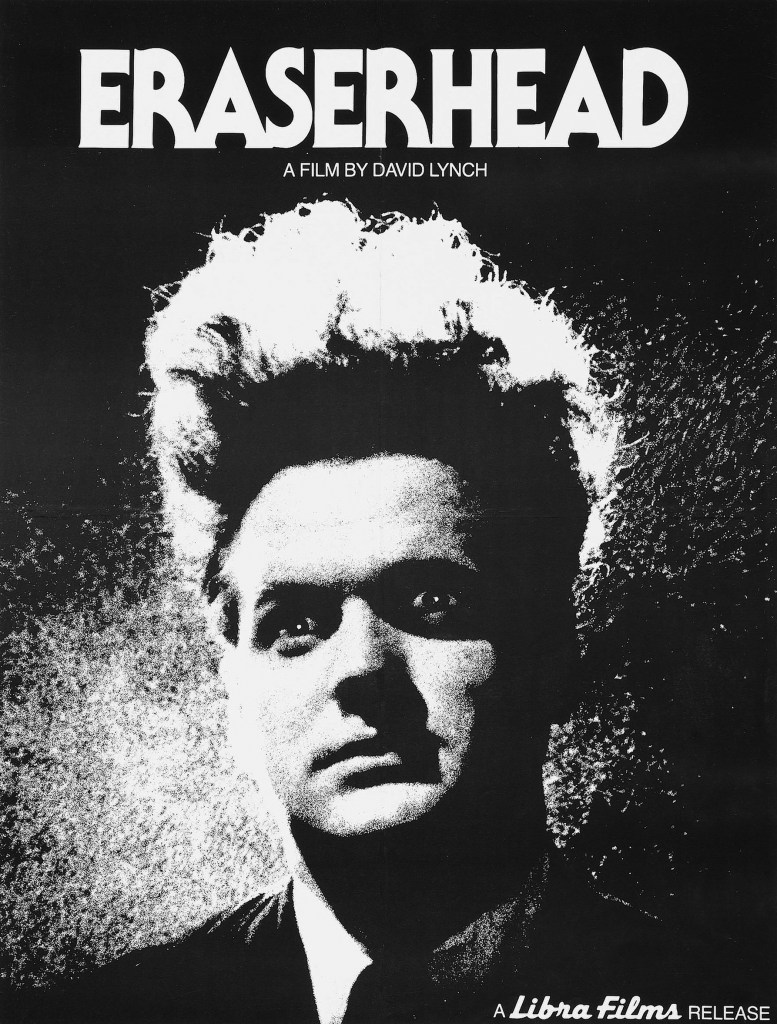
The poster for Eraserhead – Libra Films International 1977

Initially the concept for the film was opposed by several of the AFI administrators who felt that it veered too far from the typical Hollywood narrative film, but they finally relented when the dean, Frank Daniel, threatened to resign if they vetoed it. The story is said to be inspired by Lynches own fear of fatherhood and his experiences living in a crime-ridden neighborhood in Philadelphia while going to college. Shot over a period of nearly four years, the surreal horror film was initially panned by most critics but became a midnight movie cult favorite along with films like The Rocky Horror Picture Show.

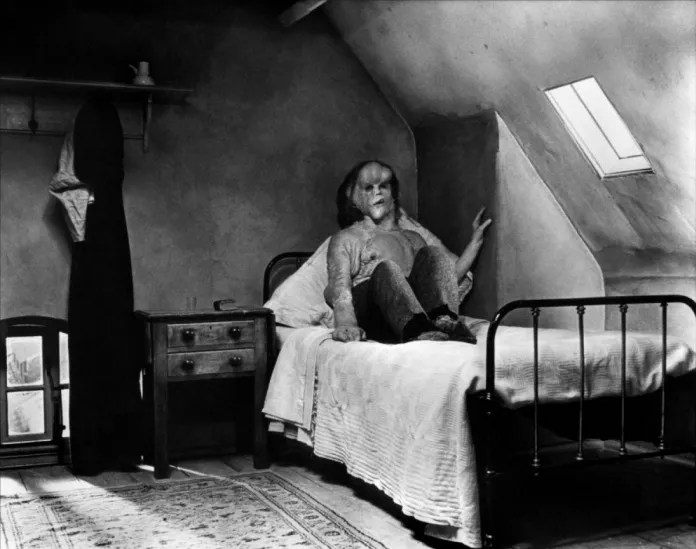
I knew the film led to his being tapped by Mel Brooks to direct The Elephant Man which was one of my favorites but I didn’t see it until years after Elephant Man had been released. At first I was shocked by how different they were in tone from each other but later I started to appreciate the mind that had imagined it and began to see threads of commonality.

Still from The Elephant Man – Paramount Pictures 1980

Vellani would often talk about Lynch when I was a Directing Fellow at AFI in the mid 1980s. He once told me that he considered David to be the most naturally gifted filmmaker he had ever met.

I had always heard that David didn’t like to talk about his films too much and brushed aside questions that required him to explain endings or motivations, which made me wonder how he had dealt with the AFI critique sessions.

The typical sequence of film projects at The American Institute Conservatory was that Directing Fellows made three films the first year. On the completion date the film is screened before the entire school for critique.

At the end of the screening, The director, writer and producer were seated at the front of the room with Tony Vellani who gave the director an intense look and asked, “What is the premise?” Your response was supposed to be a three or four word answer in the pattern of, “Blank leads to blank“, as in “Betrayal leads to tragedy”, condensing the dramatic structure of the story into as few words as possible. The film was judged primarily on how successfully you had fulfilled the goal of matching the final film to its premise.

Knowing of Lynch’s reported distaste for being pinned down on story points, I wondered how he maneuvered through this process when his film was critiqued at the school.

Vellani said that he had gone to Mexico and Davids invitation to visit him at the Churubusco Studios in Mexico City while he was shooting Dune. He described how he was trailed by an army of people. Producers, Art Directors, and ADs. He said he looked uncomfortable and distracted by this entourage and it reminded him of the early 70s at AFI when David was there shooting Eraserhead. They had taken over some stables near the Doheny Mansion in Beverly Hills where the conservatory was originally located and turned them into their stage space.

Tony had brought a group of AFI dignitaries and financial supporters to view the students in the process of making their films and he arrived with these guests, unannounced, to watch David shoot a scene. After a few knocks on the ‘stage’ door, it opened slightly and Lynch stuck his head out, surprised to see the group.

Vellani explained the reason for their visit and introduced the visitors. He said David listened politely and then said simply, “Sorry, it’s a closed set”, and shut the door.

Dangerous Designs

In 1998, I was working for Production Designer Bill Malley on a television show called Seven Days. The premise of the show was that the government had designed a time machine that could go back in time exactly seven days from the present and decided they could use it to “undo” or “back-step” major global political disasters.

The fictional location of the Time Machine was in a site in the Nevada desert called “Never Never Land”, a play on Area 51.

The irony of the shooting location, which no one has ever mentioned, is that we were the first production to shoot on the site of what was once the top secret weapons testing site of Lockheed Skunkworks in Burbank, California. But this site, the former Rye Canyon Weapons Testing site, was far from Burbank. Situated out in Santa Clarita, it was just across the road from the Six Flags Magic Mountain Amusement Park.

Before the park was there, and before Santa Clarita began to expand, the area was a remote location nestled in the hills where the Lockheed employees could work in relative obscurity. The site was, according to the remaining employees, so heavily populated with deer that one was bagged each 4th of July for the company barbecue.

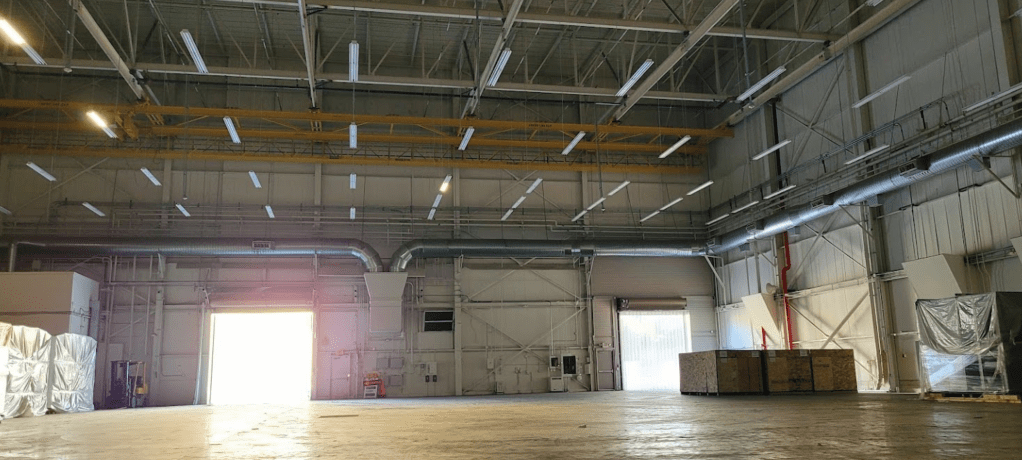
There were still remnants of the original facility, including a building with an anechoic chamber where sound tests were done. One day they wheeled an old refrigerator into the room and with the flick of a switch, emitted a sound wave that blew the enamel completely off the metal of the appliance.

Rye Canyon Facility – Google Maps

At the south end of the lot was a strange circular concrete pad that I would only later learn the purpose for.

The Art Department and production office were set up in a modern building to the north end of the facility. It was a “quiet building”, especially built for Lockheed. The only windows were on the exterior walls. The inner chamber was accessed through a single electronic keypad-locked door. There were no windows and the walls were so thick that electronic signals couldn’t penetrate them to eliminate the possibility of outside surveillance.

The “Quiet building” – 4 CC Commons License

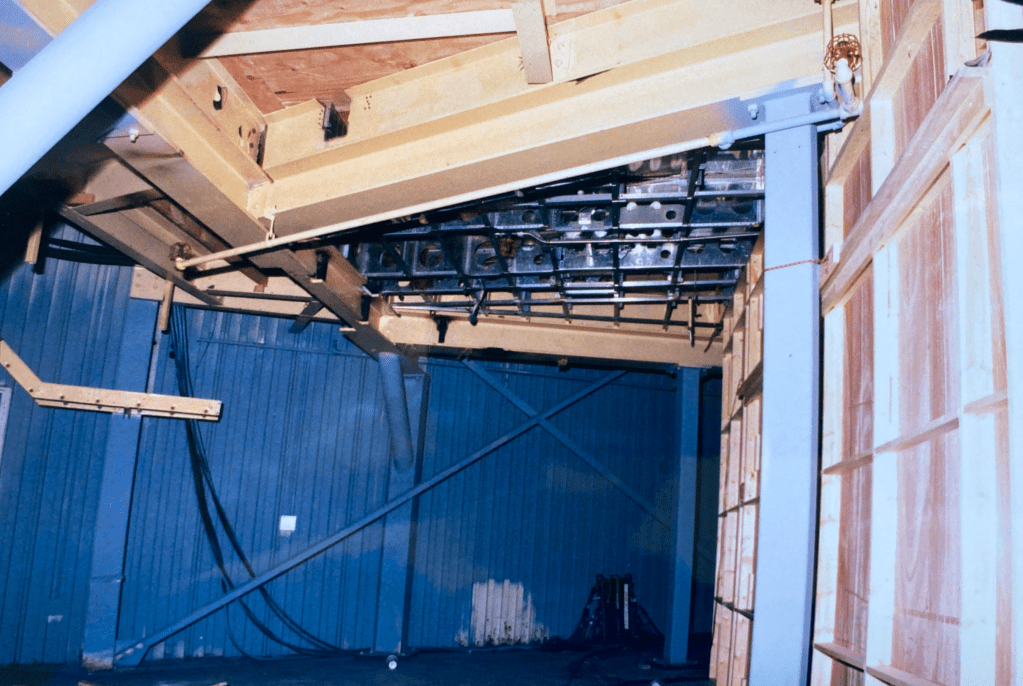
The stage was just south of the production offices. It was huge warehouse structure with high perms that were perfect for a soundstage. At the west end was a lower platform with a strange understructure that I looked at for a long time, trying to figure out the purpose of.

Stage 9 – Rye Canyon Studios

One of the facilities guards finally told me its purpose. I was staring at the underside of the remnants of the simulator for the F-117 fighter plane, the first stealth fighter. He told me that this was where the selected test pilots were brought for their initial trial period.

If they passed the tests in the simulator, they were shipped out to Groom Lake (Area 51) to test fly the actual plane.

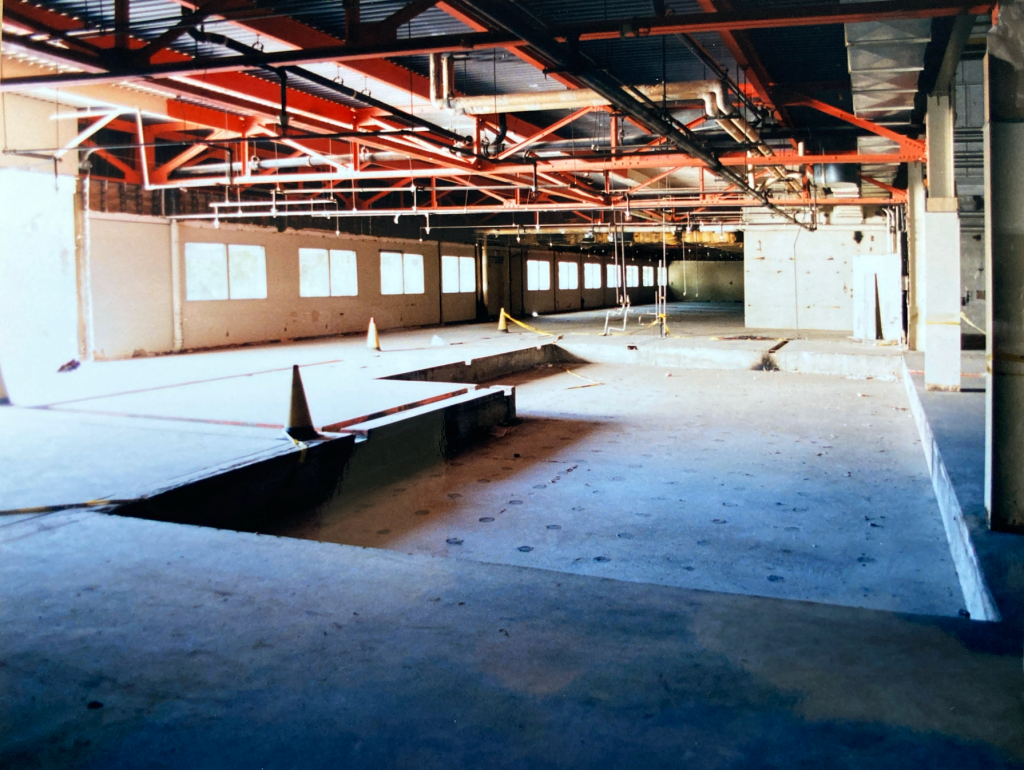
There was a large empty room to the west which once held a huge number of computer cabinets that were the ‘brains’ of the simulator.

Site of the simulator computer

It was then that I realized that our drawing boards were probably set up in the same area that the Lockheed engineers had been when they designed the first stealth fighters.

Bill told me that shooting a television show there was ironic for him. Years ago he had been suspected of revealing government secrets when he was designing a comedy for William Friedkin. Bill had designed a number of other features for Friedkin including The Exorcist for which he was nominated for an Oscar.

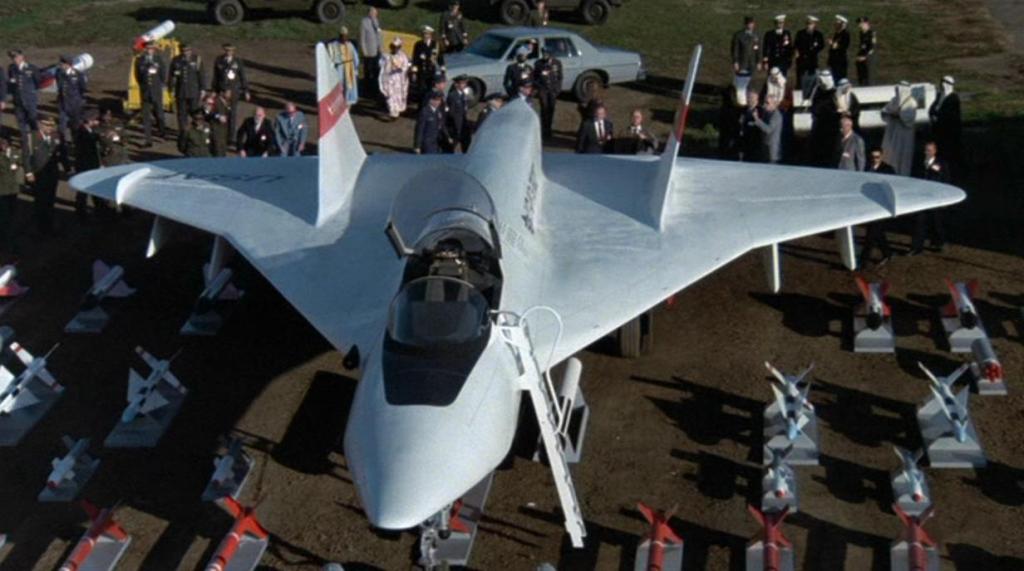
The picture, The Deal Of The Century, was a comedy starring Chevy Chase, about an arms dealer who steals a state-of-the-art fighter plane, the F-19X, from an international air show.

Someone with the government saw the production models of the mockup that they created for the film and told Bill they wanted to talk to him. An Air Force colonel showed up and began to grill him about the planes design. Where did he get the idea for it?

Bill explained that despite the famous cast of characters in the film, the budget largess didn’t extent to the film’s design. As is usual with large productions that feature a lot of well-known actors, the above-the-line talent eats up most of the budget. And what you are left with is the below-the-line limits of a medium budget film.

The colonel insinuated that Bill must have gotten the idea from somewhere, not believing that he had just made it up himself. Bill explained that the budget didn’t allow him do design a completely new kind of plane, so they had taken the basic design from the Russian plane used in the Clint Eastwood film Firefox, and just simplified it. Bill had told the crew to just make it boxier and use flat surfaces rather than the curved surfaces and dihedral of a typical jet.

Full size mockup of the F-19X – Warner Bros Studios

This would make it easier to create the full-size version that they would most likely have to create for some of the live scenes with actors, as they’d be able to use wood sheet goods rather than other materials to create curved wing surfaces.

The colonel eventually left, convince that what Bill was telling him was the truth.

Bill was baffled until about 1988, when the military introduced the F-177 stealth fighter. The similarities didn’t seem that close to him, but someone who saw his fake plane was concerned that someone had leaked the F-117 design.

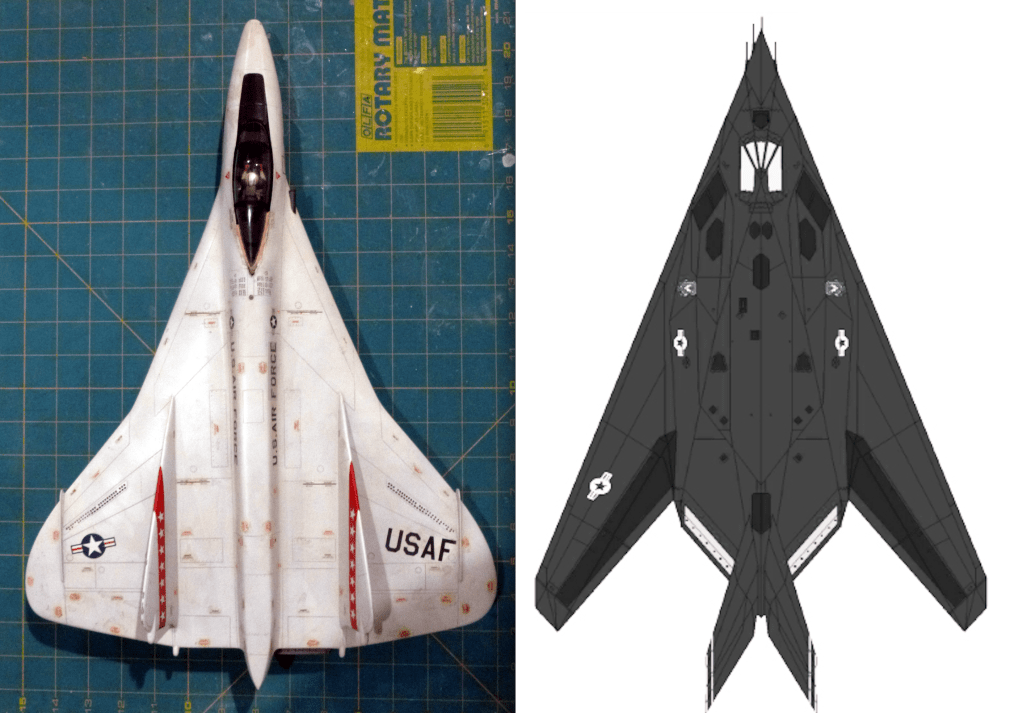
Side by side comparison of the plan views of the fictional F19X (left) and the F-117 stealth fighter (right) – F19X model photo by Joseph C. Brown

Bill didn’t know that those flat surfaces and the twin tails were what had set off warning bells in some government officials mind. The F-117 had been in design since the 1970’s. In the 1960’s a Russian scientist released a paper stating that an objects radar signature was more a matter of its surface structure than its size.

The government started a program called Have Blue, which was a proof-of-concept program to develop a stealth fighter. They discovered that flat surfaces were key to fooling radar waves into producing a small signature. The cement platform at the south side of the property was a test area for measuring the radar signature of different models until a final design was reached that was tested with a full-size mock-up at Groom Lake.

The program would result in the development of the F-117 stealth fighter.

Did anyone know about the fighter program, or the location of the Rye Canyon test site outside of the employees? It seems hard to imagined that someone didn’t at least have an idea that something unusual was going on there. The entire area was patrolled by armed guards 24 hours a day. Even a kid would have known that something must be happening there that was important.

Several months before our company moved in, a fleet of trucks reportedly arrived in the middle of the night. Apparently they were there to recover the remaining files that were stored in the vaults at the main building.

During the production, I found a site where declassified government satellite photos were posted. Among them was a large file of Soviet satellite pictures that the government had recovered from who knows where.

I checked them on the chance I’d find something. And yes, there they were, Soviet satellite photos of the Rye Canyon site. They may not have known exactly what was going on there, but they were sure enough that something important was happening there to allocate satellite attention to the area.

For more photos of the F19X model which was build by legendary model maker Greg Jein see: https://www.therpf.com/forums/threads/f-19x-from-deal-of-the-century-greg-jein-auction-lot.354634

The Original Pre-Viz Tool – A DIY Lens Angle Calculator


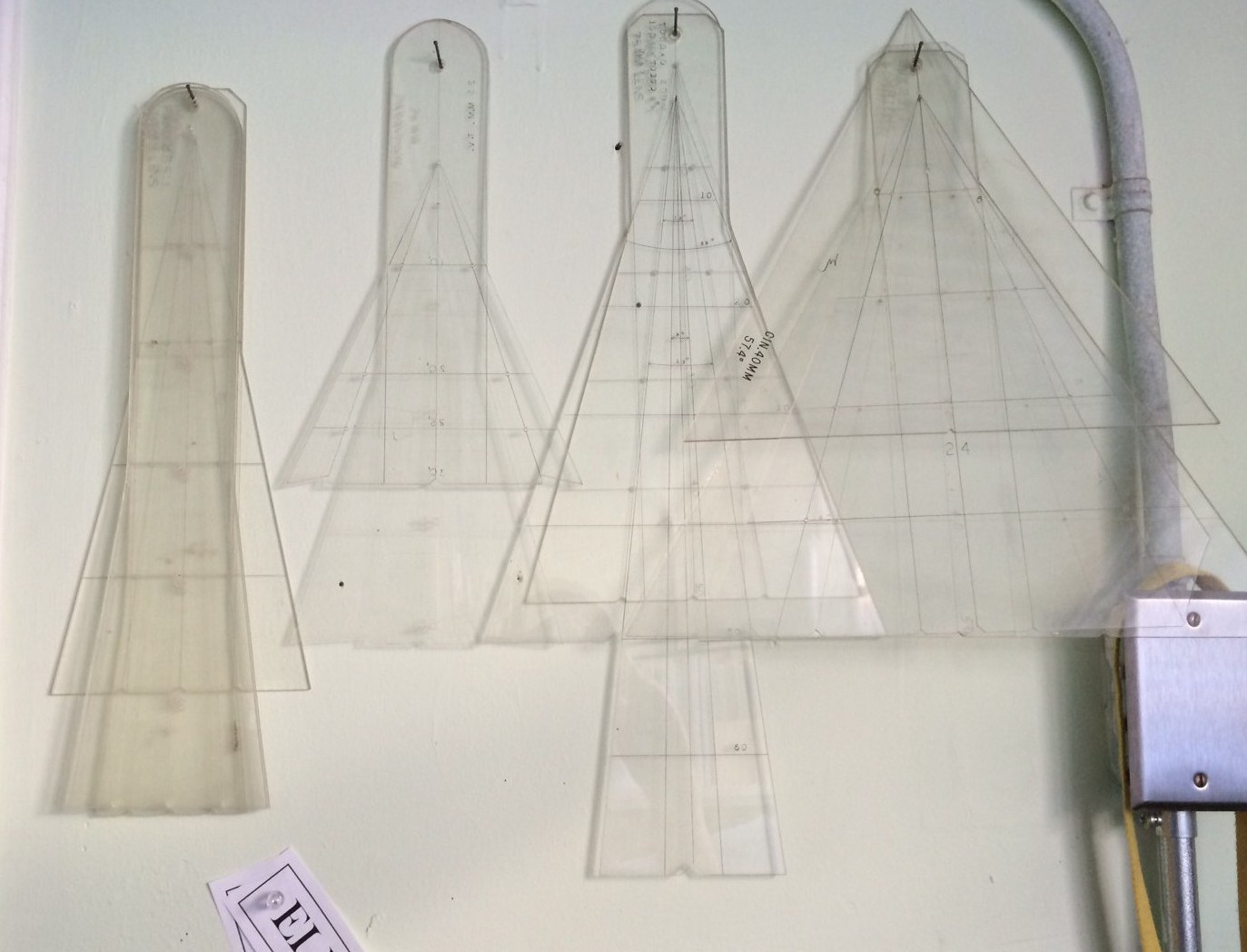
Some of my collection of traditional studio lens angle templates. The ones on the left are for long lenses while the ones on the right are wide-angle lens. The third from the left is a zoom lens template.

Some of my collection of traditional studio lens angle templates. The ones on the left are for long lenses while the ones on the right are wide-angle lens. The third from the left is a zoom lens template.


Pre-vis Before Previs

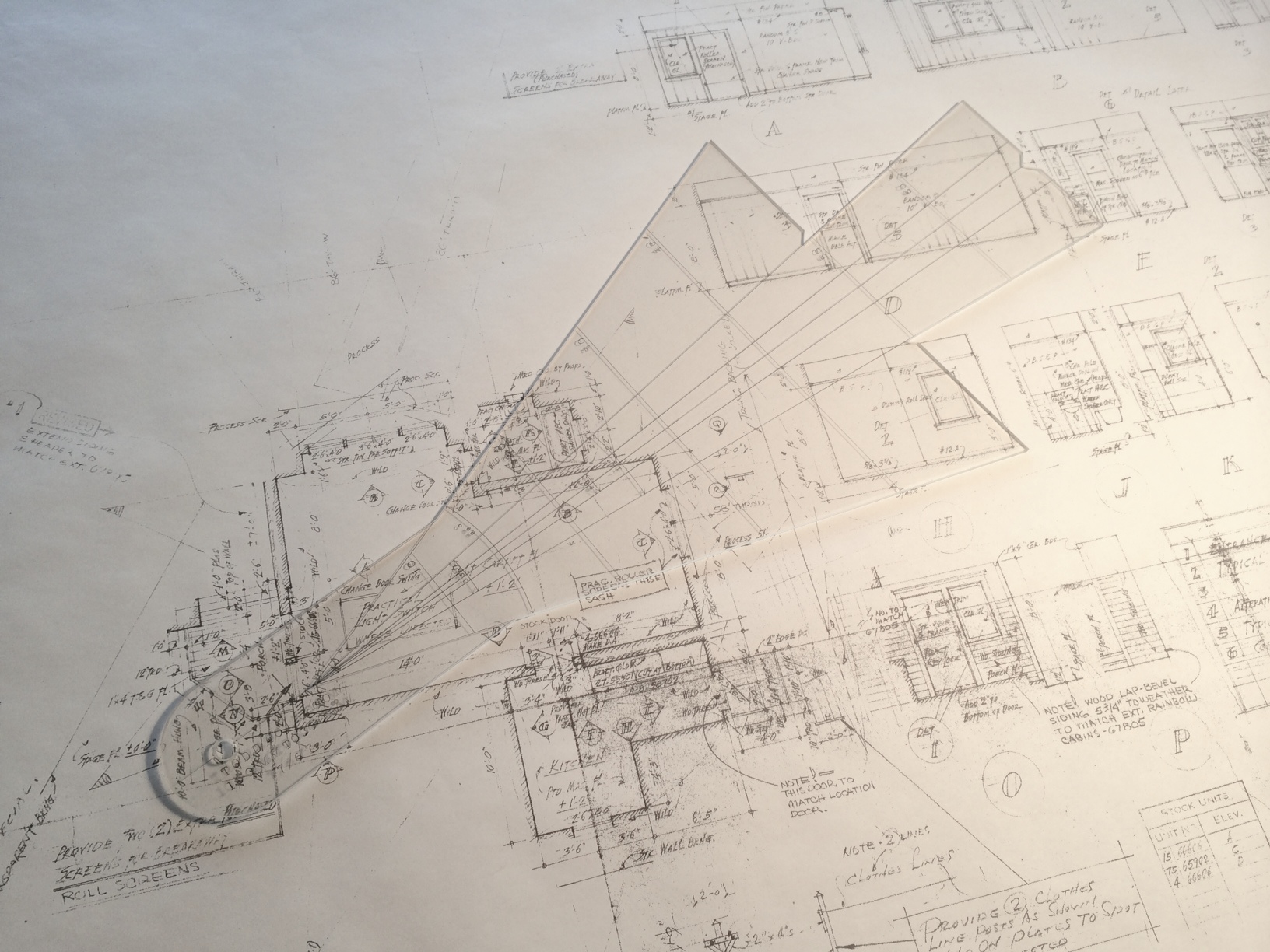
Before the term “Pre-visualization” ever existed, there was the lens angle template. These were a staple of any Hollywood studio Art Department and were used when laying out a set to determine camera angles, backing sizes needed, rear projection screens and planning back-projected set illustrations for the producer and director to approve sets long before there were 3D computer programs.

There was a time when a basic knowledge of optics and lenses was considered mandatory and was necessary not only because the Art Director would design the sets to be shot in a specific way but this information was needed when designing effects shots such as forced perspective sets, glass shots and the like.

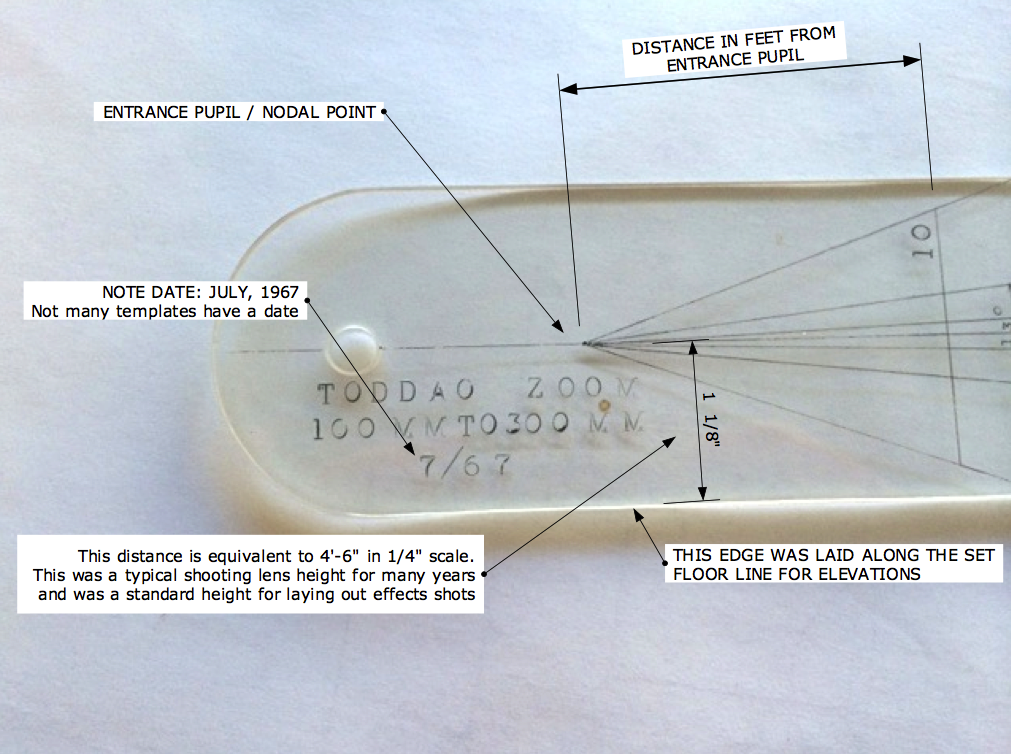
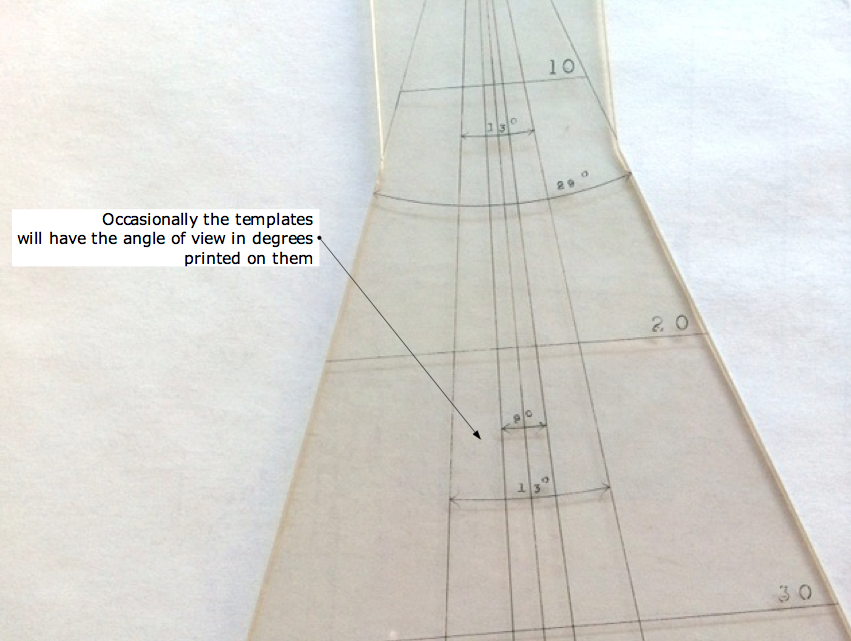
Todd AO template

A template for a 100mm to 300mm zoom lens in the Todd AO format. Todd AO was an early 70mm film format with an aspect ratio of 2.20.

The templates were for a single lens, usually a prime lens, and were made using 1/8″ or 1/4″ thick plexiglas. The projection lines were scratched or engraved into the acrylic, sometimes by a Set Designer but other times they were made by the studio sign shop. Some of my examples are obviously done with a hand held engraving tool while others have been done with a lettering template and have inked letters.

Todd AO lens template

Each template had two sets of projection lines, one set for the horizontal plane (for use with a plan view) and another for the vertical plane, for use with scale room elevations. Most are made for use with 1/4″ scale drawings but they are accurate for any orthographic drawing because the angle is unaffected by the scale. Most will have markings to note the distances from the lens entrance pupil in 1/4″ scale.

angle of view

The “Quick View”

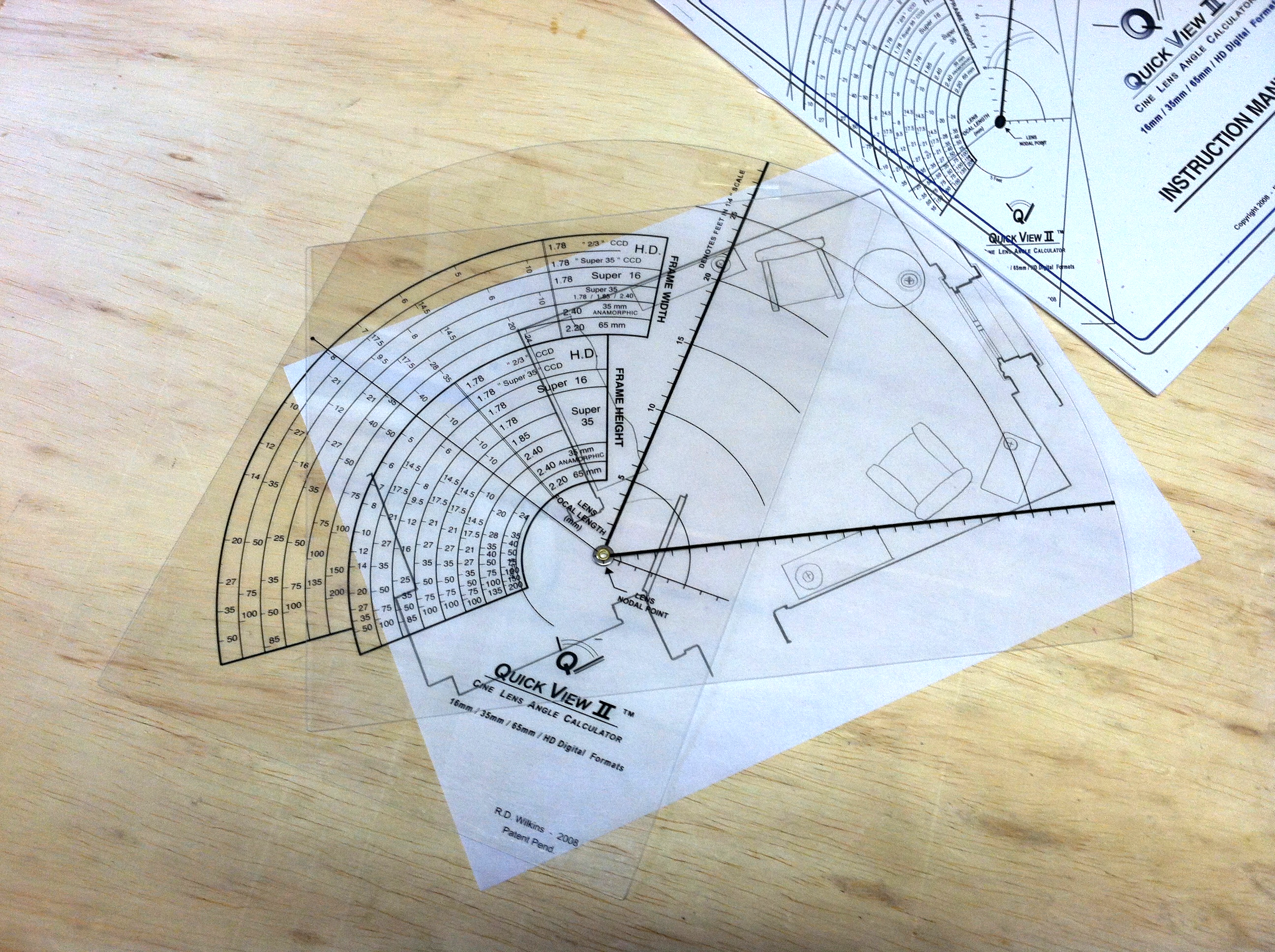
By the 1990’s, there were so many different formats and lens combinations most of us in the Art Department in Hollywood carried thick manila envelopes of acetates of the various focal lengths, but I always seemed to be missing one that I needed and I found some were inaccurate from being cloned so many times. In 1998 I designed a device that had all the available formats and prime lenses  so you could just dial up the one you needed. I redesigned it in 2008 to include the digital formats but sold out of them a year ago.

I stopped having them made since they were expensive but hated to see them become obsolete since they are still so useful. For a director, they are the perfect way to see if a shot is possible at a location or see the limitations of a particular lens on a set when you can’t rely on wild walls.

Making A Quick View

Yours won’t be on Lexan like the originals were but will be sturdy enough plus cheap enough to replace if it’s damaged or lost. Download the files below and take them to your nearest copy center and have both the dial and the nomen printed on clear acetate. They don’t have to be printed at exactly 100% but they should be at the same scale to each other. Then you just line up the center marks and use a compass point or push pin to pierce the centers, creating a pivot point in place of the brass rivet as in the photo above.

The diagrams from the original instruction manual will explain how to use them. You’ll note that I’ve added a feature that wasn’t on the originals, a protractor which will tell you the angle of a selected lens.

Quick View II User Manual_2

Quick View II User Manual_3

QuickViewII_nomen

QuickViewII_dial

The World’s Oldest Film Scenery?

The title ends in a question mark because I’m not sure I have a definitive answer yet on my search for the the oldest existing scenery from a film. So, I’m asking everyone out there to help me with this quest.

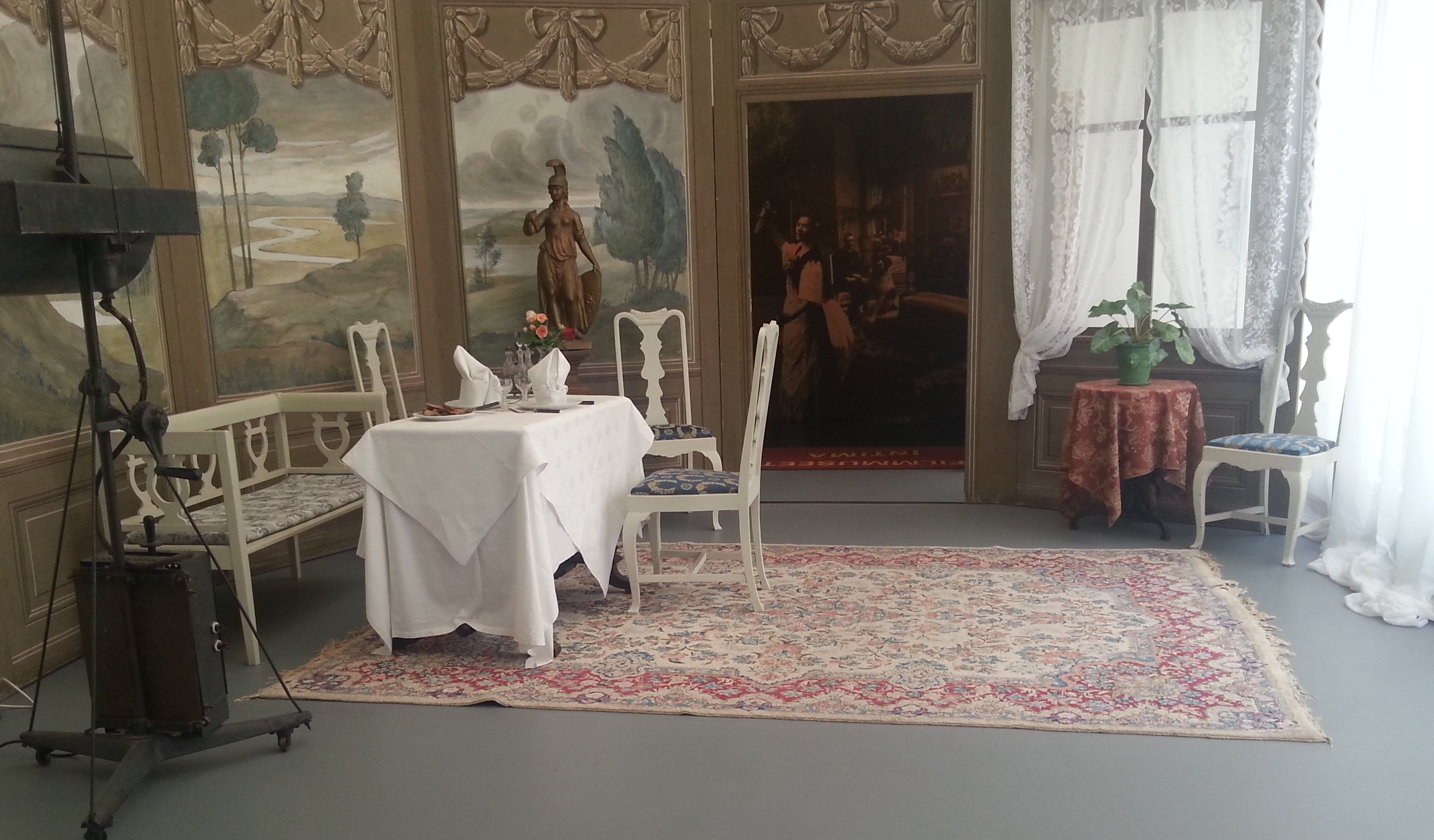
The stage of the oldest intact film studio in Sweden, and maybe the world. photo by Reinhold Fryksmo

The stage of the oldest intact film studio in Sweden,  and maybe the world. photo by Reinhold Fryksmo


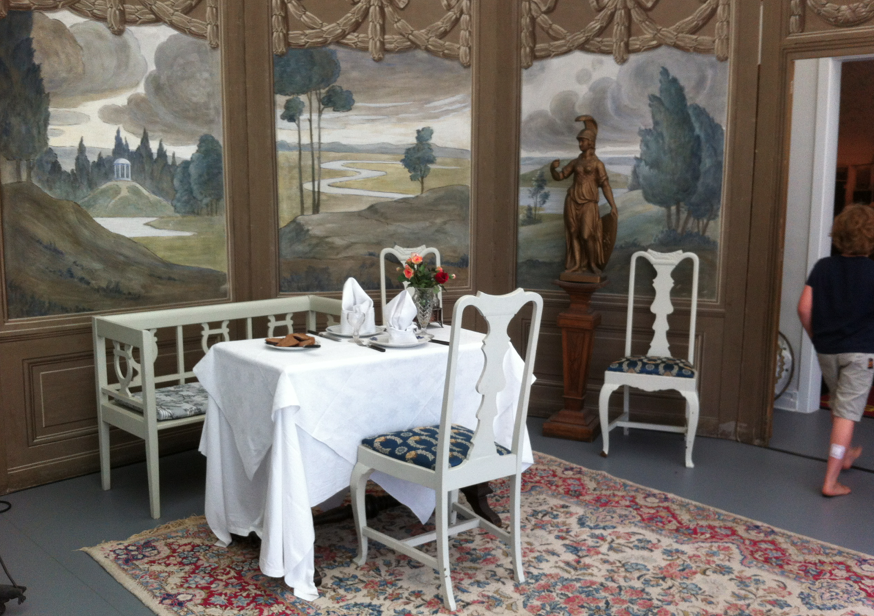
Let’s use this as a starting point: in Kristianstad, Sweden there is what is reported to be the oldest intact film studio from the silent period. Inside the studio museum (Kristianstad Filmmuseet) is a display in what was the original glass-walled studio space. It is dressed as a set from the 1909 film, Fänrik Ståls Sägner, one of three films made at the Kristianstad Biograf-Teater that year. The scenery appeared throughout the film apparently as the same space was used for a number of different scenes. The main element is a multi-panel theatrical style flat painted with a Trompe-l’œil design. If this is truly the original set piece then this is in excellent condition for a 105 year-old flat.

A closer look at the flats. photo by Lotten Bergman

A closer look at the flats. photo by Lotten Bergman

So is this the oldest film scenery in existence? I’d love to hear from other Art Department people out there from around the world with older examples.

Atmospheric Theaters – When The Theater Was Part Of The Show

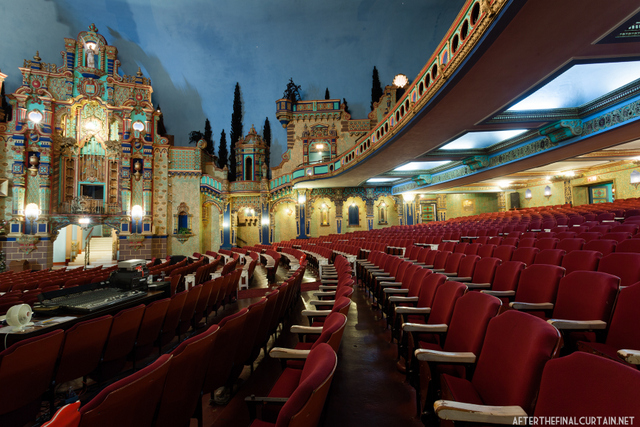
Loews-Valencia-Jamaica-Queens-Movie-Theater-Untapped-Cities-After-the-Final-Curtain-005

In the United States the period of the ornate Movie Palaces lasted from around 1915 to the 1940’s. In that short period thousands of ornate theaters were built all over the country. Of the several genres of architecture that were created during that period, the Atmospheric theaters came the closest to blending the new media of film with theaters’ stage drama roots.

Architect and Designer John Eberson

Architect and Designer John Eberson

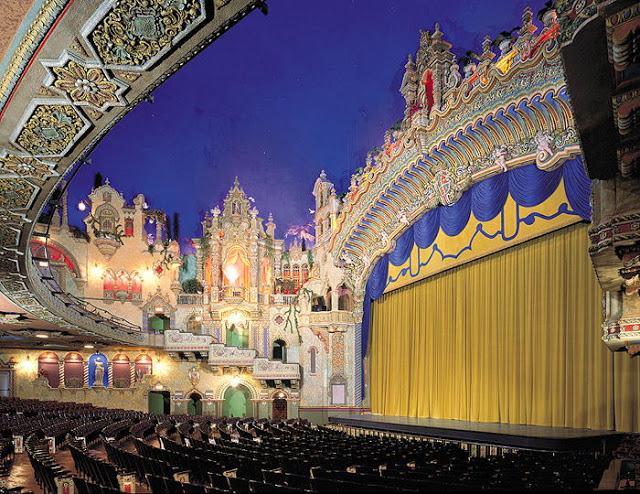
The Atmospheric movement was created by John Eberson, a stage designer and architect who immigrated from Europe. Having studied electrical engineering in Dresden, he took an apprenticeship with a theatrical designer in St. Louis and worked as a set designer and scenic painter. His first theater design was for a ‘picture house’ in Hamilton, Ohio. By 1926 he had perfected his ‘atmospheric’ concept with the creation of the Majestic Theater in Houston, Texas. Earning the nickname “Opera House John”, he would design over 500 atmospheric movie palaces by the end of his career.


Majestic Theater- Houston, Texas, built 1926

Majestic Theater- Houston, Texas, built 1926

For the average American, spending an evening in one of these theaters was as close to a trip to Europe as they could ever hope to have. Usually designed with European themes, Eberson’s designs featured large coved ceilings that gave the illusion of sitting outside in a courtyard with facades on either side. The ceilings were painted sky blue and a projector called a Brenograph was used to project moving clouds and stars on the deeply coved ceilings.

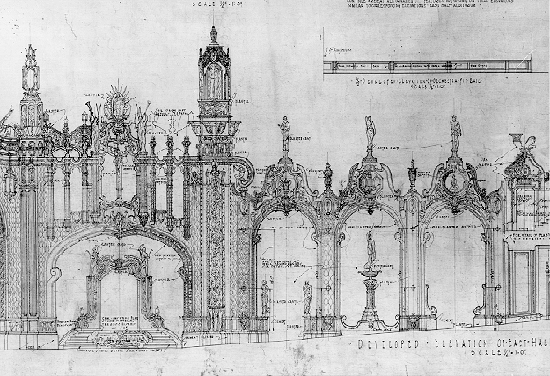
Eberson's drawing for a facade for the Paradise Theater in Chicago

Eberson’s drawing for a facade for the Paradise Theater in Chicago

Most of the facades detail and ornament were executed in traditional staff of plaster and hemp fiber, painted and gilded.

Saenger Theater, New Orleans

Saenger Theater, New Orleans

As with most popular trends, the atmospheric theme was quickly picked up by others and expanded throughout the country where the palaces were built even in small rural towns. One such theater is the Holland Theater in Bellefontaine, Ohio, built in 1931. The theater is the only known theater with a 17th century Dutch motif and features a twinkling star ceiling and turning windmills. Turned into a 5 screen multiplex in the 1980’s the theater was hut down in 1998. In 2009 the theater was reopened as a live theater venue and the interior is slowly being restored back to it’s original look.

Recent photo of the interior of the Holland Theater with it's painted sky, starlight and turning windmill blades

Recent photo of the interior of the Holland Theater with it’s painted sky, starlight and turning windmill blades


Wayne Manor Was A Remodel – Delineating Set Walls on Drawings

Often when sets are designed there is either an advantage or a mandate to using existing flats for a set’s construction. Sometimes a standing set is revamped or stock set walls are pulled from storage to either save money or time or both, particularly in Television where there is never enough of either.

Universal Studios was famous for revamping sets to the point that some sets were merely repainted and dressed for a TV series when a show required numerous sets. I spent my first years in television at Universal and the Production Designers there were experts at reusing stock units from the large stock sheds on the lot. In recent times some designers resist the idea of reusing scenery but audiences rarely ever notice when they are seeing a stock set. The practice was much more widespread in the early days of TV when there were actual studios in existence who saw the value in having large amounts of stock scenery and made efforts to catalogue and maintain it.

The problem from a Set Designer’s perspective is how to delineate the different walls on the drawings to communicate what is what. Each studio had a slightly different nomenclature, as I learned on my first show at Universal on Murder She Wrote. One day the foreman called from the stage. “Where the hell are all these stock walls you’ve got on this drawing?” he asked. I was confused until I realized they used a different delineator symbol than what I’d always used.

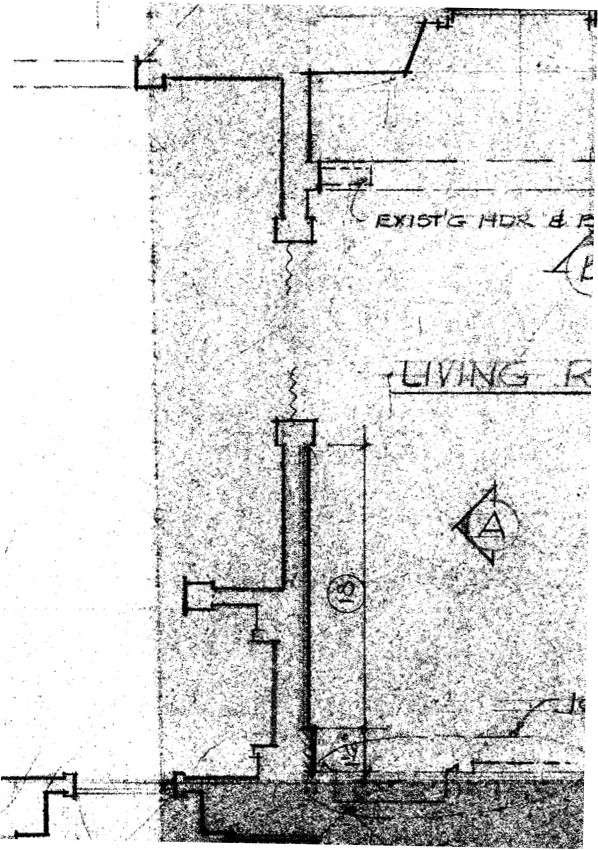
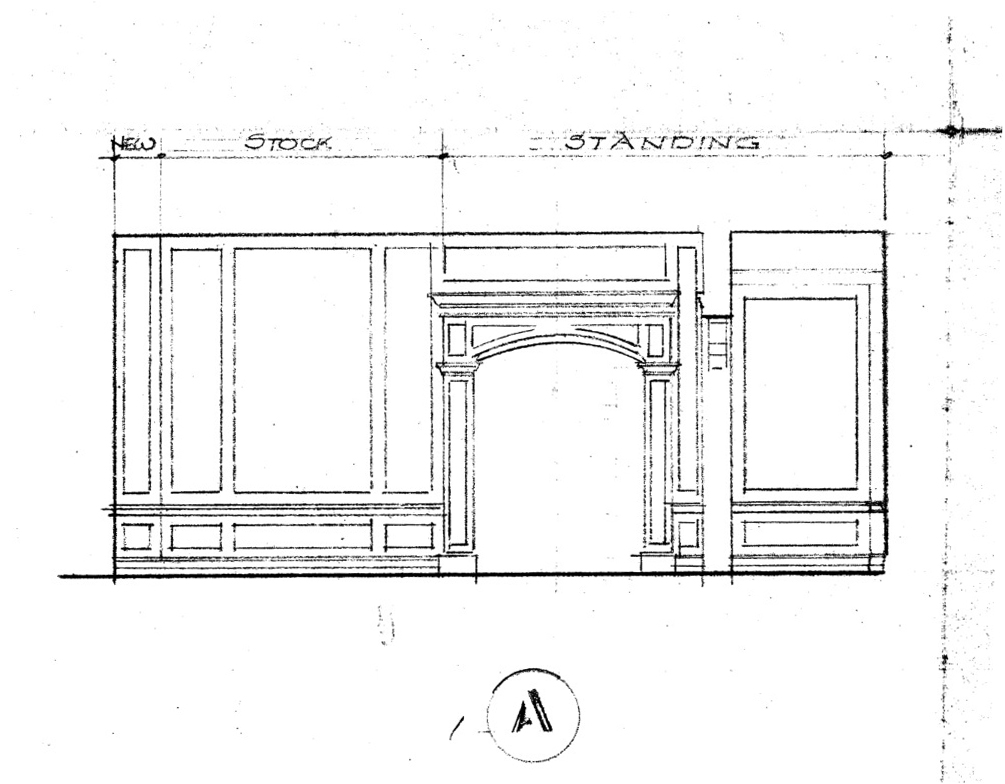
Some of the nomenclature was universal (no pun intended). A thin line on the plan meant the wall was existing and standing in place. it was rarely dimensioned on the drawing. A thick line at most studios meant it was a stock wall and was accompanied by it’s stock number. At 20th Century Fox, this line was also pochéd (shaded). A hatched line denoted new construction except for drawings done at MGM and Universal Studios where it meant the wall was stock. A thick line to these art departments denoted a new wall.

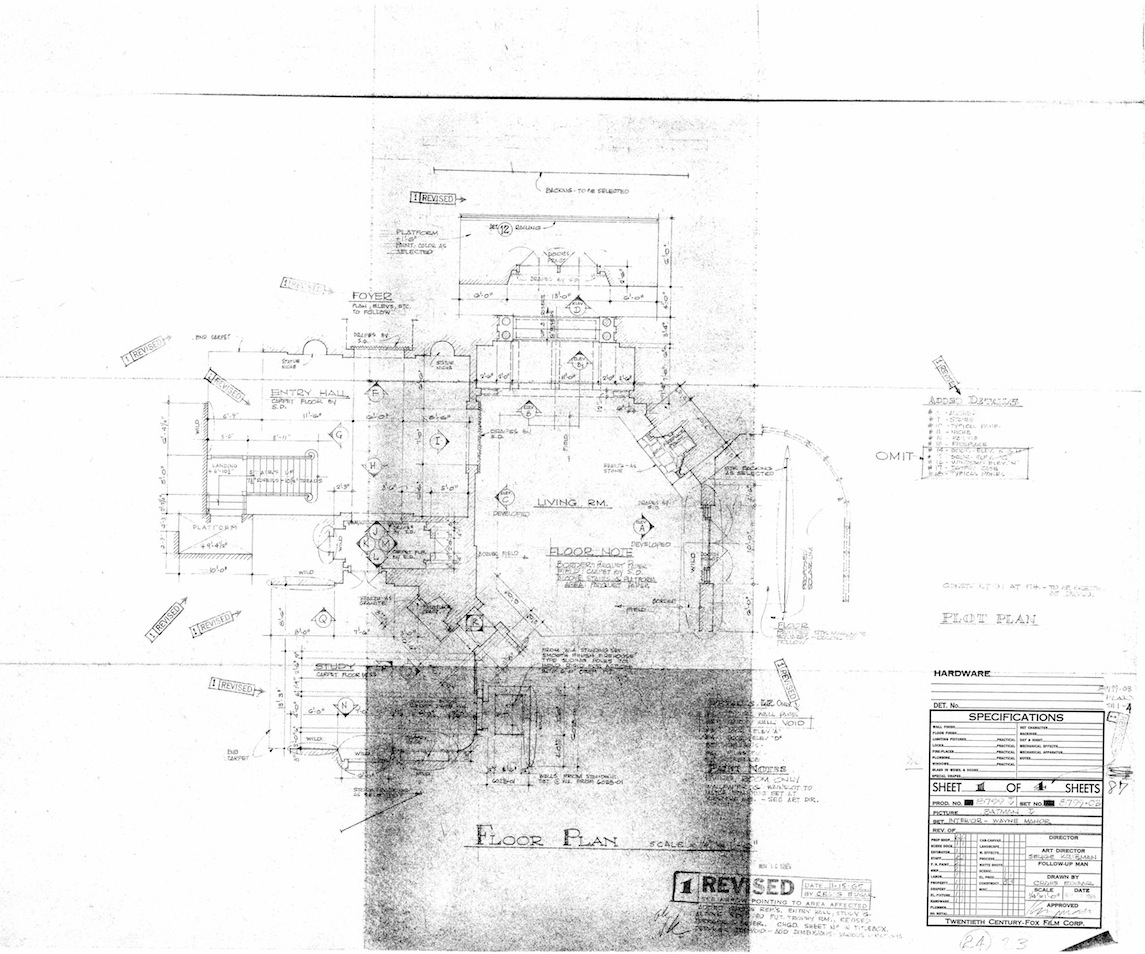
At 20th Century Fox Studios when they were planning a television version of Batman in 1965, the producers were on a limited budget to make the pilot. As the show required numerous sets and the Batcave interior was going to take a big chunk of the construction budget, they cruised the stages on the lot to see what sets might be standing that they could reuse, particularly something that would stand in for Wayne Manor as the script called for a well-appointed mansion.

According to Ed Hudson, long-time manager of the Art Department, the producers heard that the TV series 12 O’clock High was going to be using one of their main sets less, a reproduction of an English Tutor mansion that stood on Stage 18 and was used as the headquarters of the squadron. The network had decided the show didn’t have enough action scenes to keep the young crowd engaged and planned to shoot more of the show ‘in the air’ with scenes in the planes and less talkie scenes on the ground.

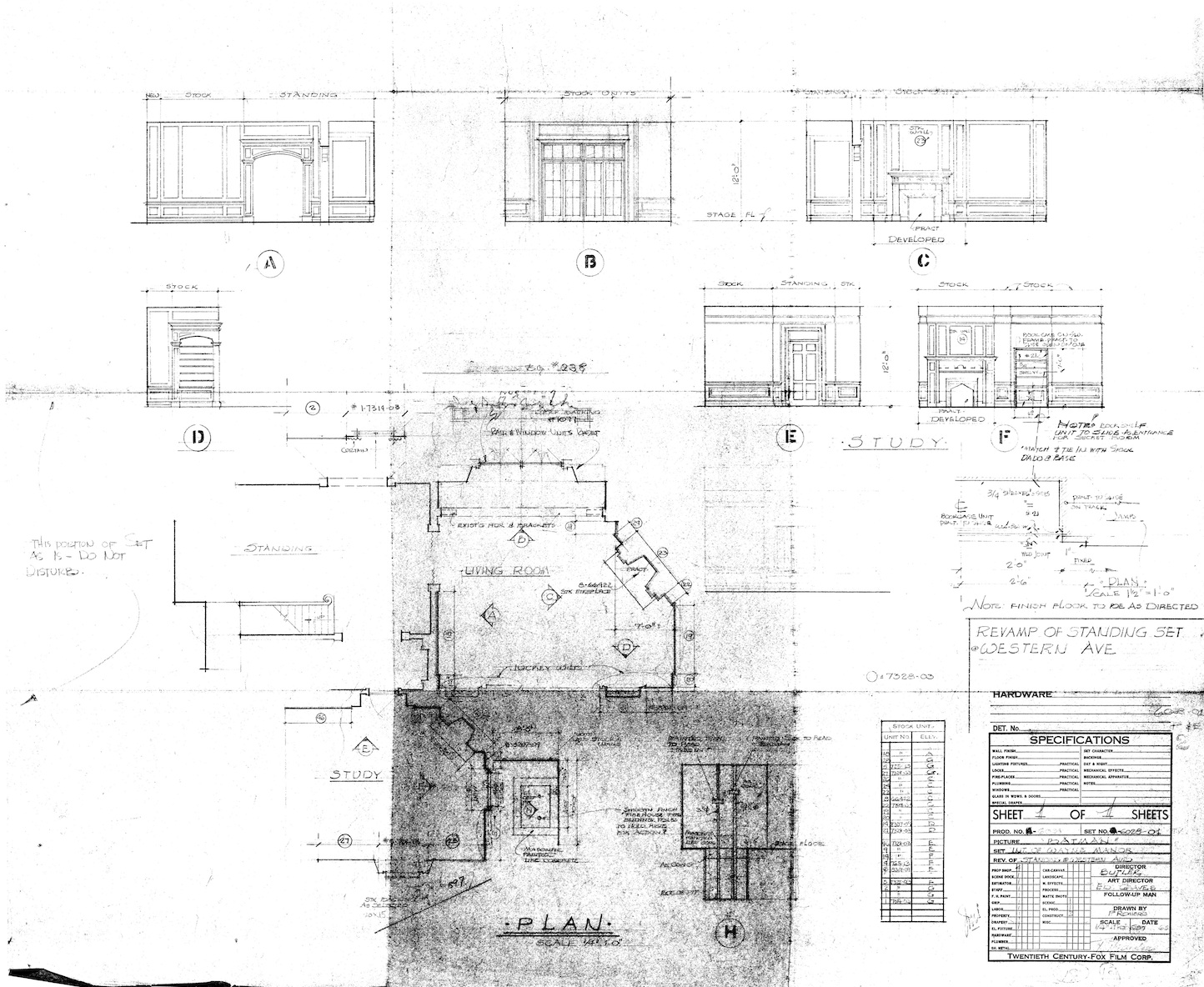
Shown below is a copy of the original plan and elevations showing the various wall types, dated September 1965. For those of you wondering, the Bat poles are at Elevation H.

The set drawing for the Wayne Manor interior for the pilot episode.

The set drawing for the Wayne Manor interior for the pilot episode.

Plan detail showing walls at Elevation A. Note shaded and hatched walls.

Plan detail showing walls at Elevation A. Note shaded and hatched walls.

Elevation A showing the three types of walls clearly marked.

Elevation A showing the three types of walls clearly marked.

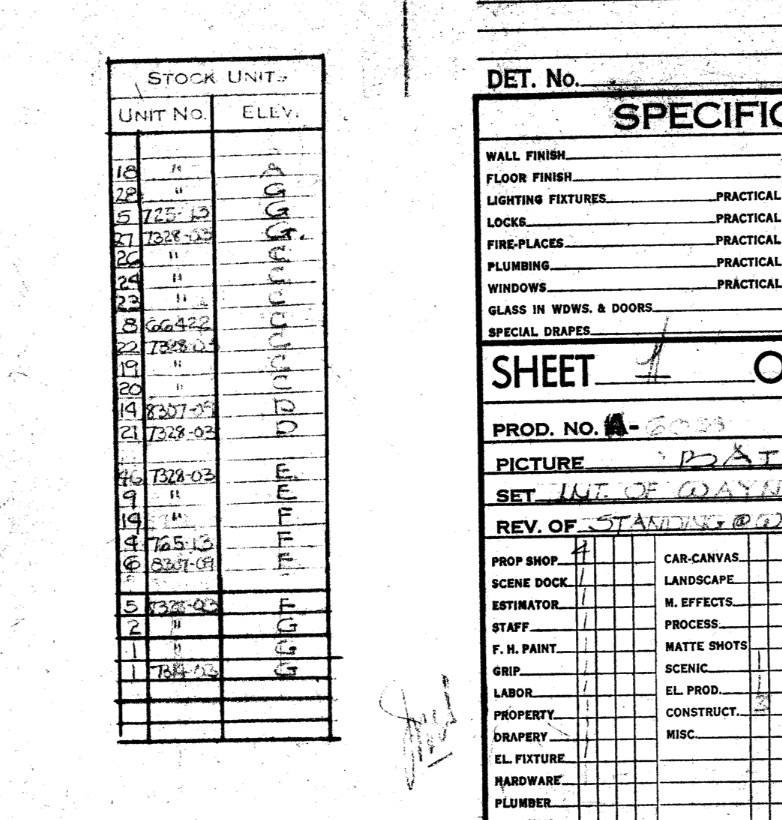
The table beside the title block clearly lists all the stock walls, their position on the plan and their stock number.

The table beside the title block clearly lists all the stock walls, their position on the plan and their stock number.

Once the network accepted the pilot, a permanent set matching it was built on Stage 24. With minor alterations, the original set was duplicated as seen in this November 1965 drawing below. Note that the walls drawn as ‘standing’ on the other plan are hatched for new construction.

Batman_Wayne Manor2_copy

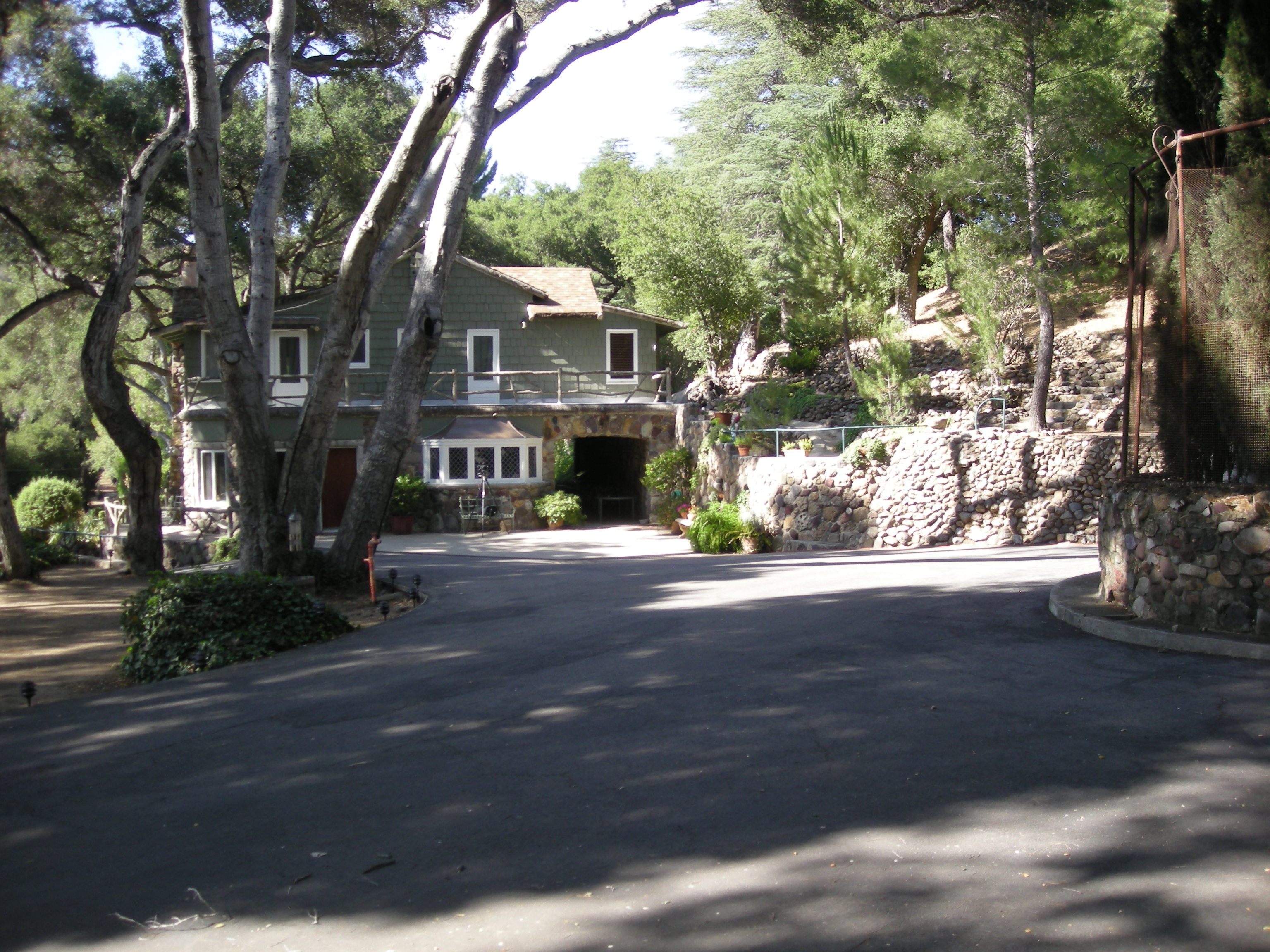
The exterior of the house was an actual location, a house at 380 South San Rafael Avenue in Pasadena. It’s my guess that the location was chosen after the interior set was built.

Having a standing set influence the look of another permanent set is more common than you would think. The set for the 1993 comedy The Nanny, was a reused and slightly revamped stock set from a show called Sibs, which had been shot on the same stage and never made it past the pilot stage.

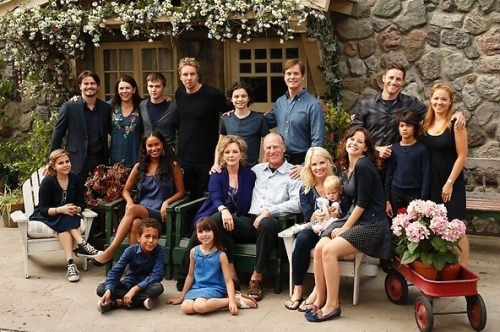
When the 2010 NBC series Parenthood started, the main characters house was based on a home in Malibu canyon where the exterior shooting was planned. The site was surveyed and had been reproduced on stage by the time the deal between the homeowner and the studio fell through. With no time to redesign, the producers were stuck with the houses look. When the exterior of the house was duplicated on the backlot at Universal the next year, it was a close copy of a house that was never shot for the series.

Original location of the house for the main characters of the series Parenthood.

Original location of the house for the main characters of the series Parenthood.

Parenthood cast in front of the exterior facade built on the Universal Studios lot which was influenced by the location house which was chosen but never shot.   photo by NBC Television.

Parenthood cast in front of the exterior facade built on the Universal Studios lot which was influenced by the location house which was chosen but never shot. photo by NBC Television.

One thing that producers aren’t is psychic, much to their dismay, and you never know if you have a hit or a flop on your hands until the public sees it, and even then you can’t be sure. When the pilot for the original Batman series was tested it tested worse than any other show the network had done. Considering shelving the series, luckily they decided to air it since so much money and already been spent on the show, not knowing it would become a cultural phenomenon.

The HMS Bounty And The Blockbuster That Was Never Made

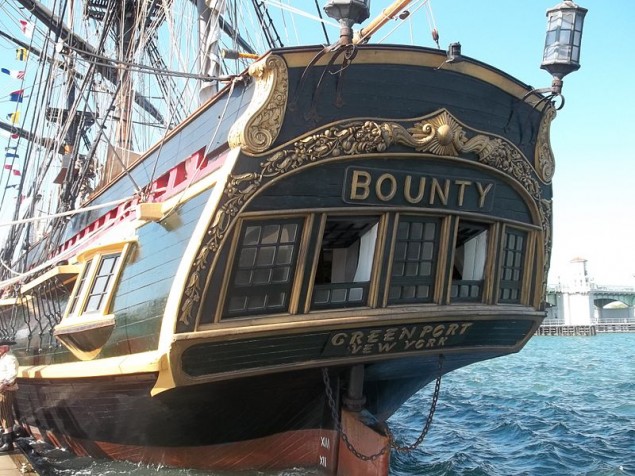
The Bounty in 2010. photo by Ebyabe

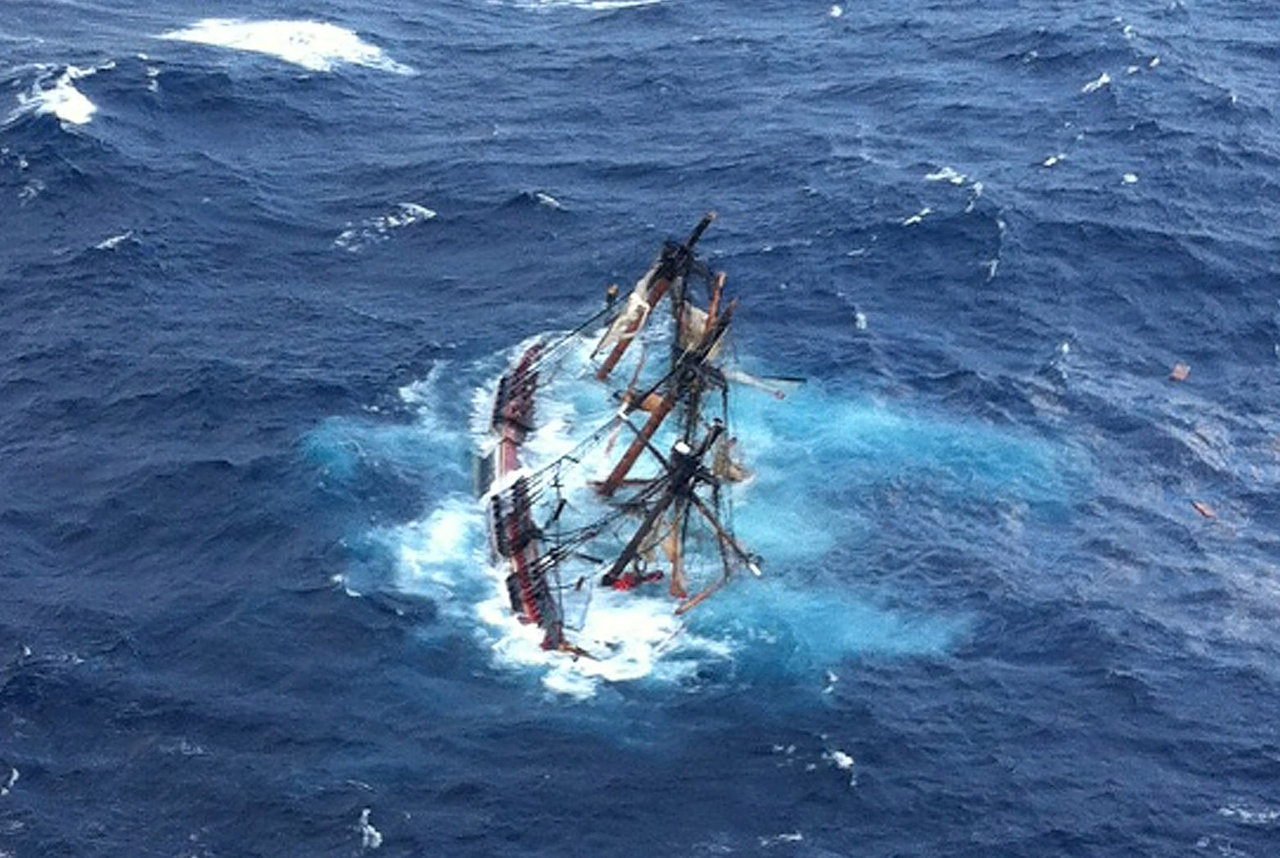
On October 29, as Hurricane Sandy bore down on the U.S. east coast, a distress call went out to the Coast Guard from the crew of the HMS Bounty. The ship was four days into a bid to avoid the ship being destroyed in harbor by the storm. The captain had decided that the best way to save the ship was to go to sea and sail around the hurricane. Now being swamped by 30 foot waves, the crew was forced to abandon ship. The captain and one of the crew were lost at sea before the remainder of the crew were rescued by Coastguard helicopters. Hours later I saw a photo of the ravaged ship as it went down, its’ mast tops shredded and its’ yards torn away.

The HMS Bounty goes down off the coast of North Carolina. Photo by Petty Officer 2nd Class Tim Kuklewski/ /U.S. Coast Guard via Getty Images

I looked at it and remembered climbing the shroud lines up to the main mast top and looking out to sea almost exactly 18 years before while surveying the ship for a film. It was to be a remake of the classic Errol Flynn pirate film, Captain Blood, and it would have been the most expensive film made to date. But the films fortunes were as bad as those of the Bounty turned out to be.

The HMS Bounty’s Rebirth

The ship was commissioned by MGM in 1960 for the 1962 film Mutiny On The Bounty starring Marlon Brando. Built in Nova Scotia, it was the first large vessel built using original ship’s plans. To make allowances for shooting and to hold a larger crew, the ship’s deck length was increased from nearly 91 feet to 120 feet with the beam, masting and rigging increased in proportion to the new hull length. Once the film was completed, the studio had planned on burning the ship but Brando protested and the Bounty ended up in Florida. It went through several owners before Ted Turner bought the ship and in 1993 donated it to an educational foundation where it was sent to a new home port in Falls River, Massachusetts.
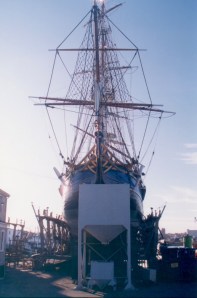
dock in 1994

Bounty in dry dock in 1994

When we went to survey her in 1994, she was on the rails in dry dock, a number of her futtocks were in need of replacement but we were assured the work would be completed in time for filming. Three of us crawled all over the ship the entire day, taking measurements, hundreds of photographs and video to document the existing structure for as-built drawings. Since the story of Captain Blood takes place in the 1680’s, over 100 years before the original Bounty, the ship was to be converted to an earlier vessel which meant applying a different stern, rigging and bow.

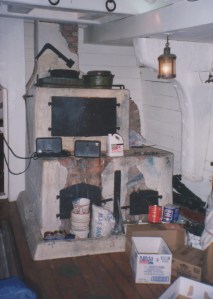
The ship still had most of it’s original fittings including the brick oven and the hand grained paneling below deck. Other than the repairs on the futtocks, she seemed still intact after over 30 years of sailing.
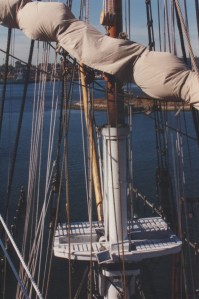
View from the main mast top. Photo- R.D. Wilkins
View from the main mast top. Photo- R.D. Wilkins

The Bounty's brick oven. photo - R.D. Wilkins

The Bounty’s brick oven. photo – R.D. Wilkins
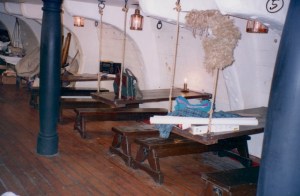
The crew mess area. photo - R.D. Wilkins

The crew mess area. photo – R.D. Wilkins
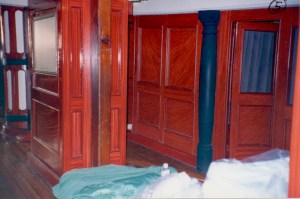
hand-grained partitions below deck. photo-R.D. Wilkins
hand-grained partitions below deck. photo-R.D. Wilkins

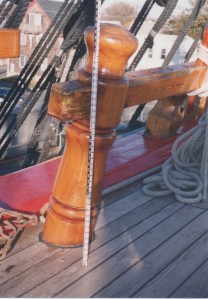
Survey photo of the fore bits. photo - R.D. Wilkins

Survey photo of the fore bits. photo – R.D. Wilkins
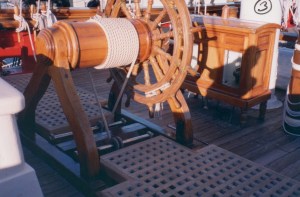
The great wheel and binnacle. photo - R.D. Wilkins

The great wheel and binnacle. photo – R.D. Wilkins
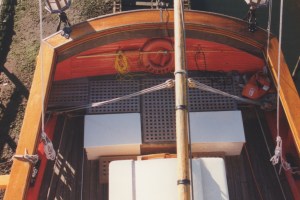
View of the stern from the main top. photo - R.D. Wilkins

View of the stern from the mizzen top. photo – R.D. Wilkins
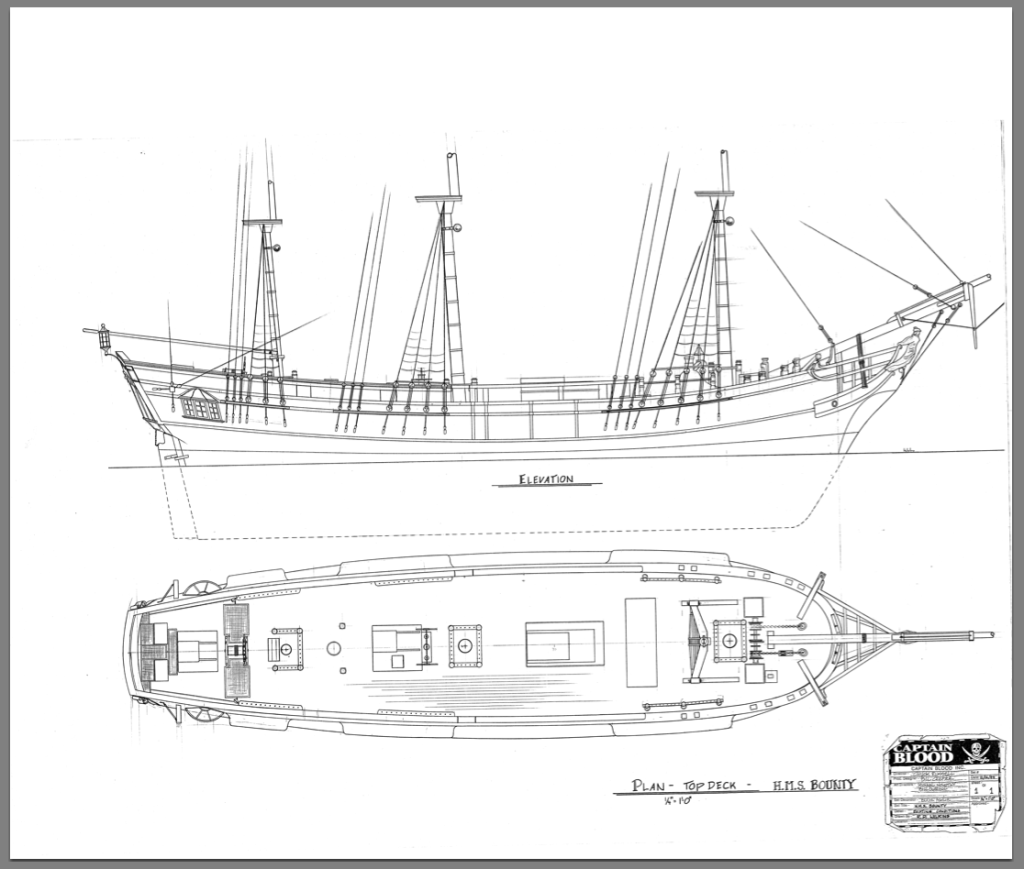
Drawing done from survey measurements in 1994. R.D. Wilkins
Drawing done from survey measurements in 1994. R.D. Wilkins

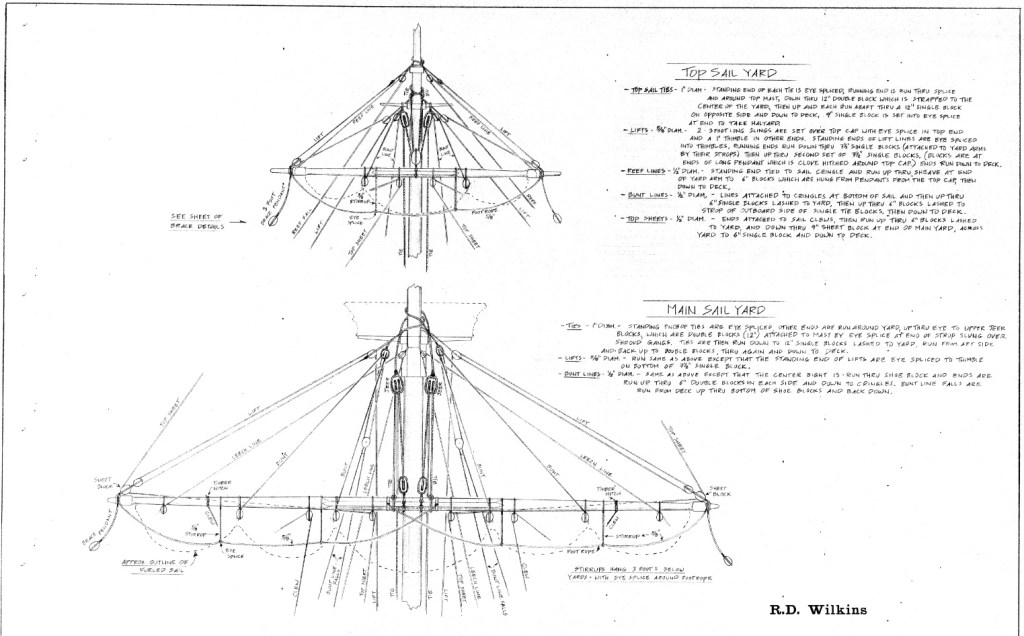
Period rigging details

Period rigging details for Bounty conversion.

Captain Blood Sails Again

Back in Los Angeles, design work proceeded under the leadership of Production Designer William Creber, who had been nominated for Oscars three times before. The Set Decorator was Eddie Fowlie, David Lean’s right-hand man who had done props and sometimes effects as well for the classic films, Lawrence of Arabia, and fulfilled five different roles on Doctor Zhivago as well as other films. When asked by the studio which credit he wanted for Zhivago, he first replied he didn’t care but decided on a special effects credit since it had involved the most work. He later wished he had picked another title since the effects were so good they were virtually ignored. It appeared to all that the film was made in snow in winter when it was actually shot in Spain, with thousands of tons of cheap marble dust used as snow. The beautiful winter ice palace interior was actually carefully applied paraffin. He had come out of retirement to do the picture, leaving his home in Spain. We were all a bit in awe of both of them, particularly Eddie given his pedigree with Lean. The director had just had his last film explode at the box-office and was the hot ticket in town. The scripts scribes were equally hot commodities and had recent successes of their own.

The plan was to do a remake of the popular Errol Flynn film from 1935, even though the common thought at the time was that pirate movies didn’t make money, (Jerry Bruckheimer would prove this wrong a few years later.) Popular yes, profitable no, This was mainly because of the cost involved in making them. Besides being a period film, it would involve creating a huge 17th century battle, creating at least four different period sailing ships and recreating a large section of the town of Port Royal. The initial projected budget suggested that it would be possibly the most expensive film made to date. That being the case, there were only a few stars that the studio was willing to gamble their money on, and the first choice was Arnold Schwarzenegger.
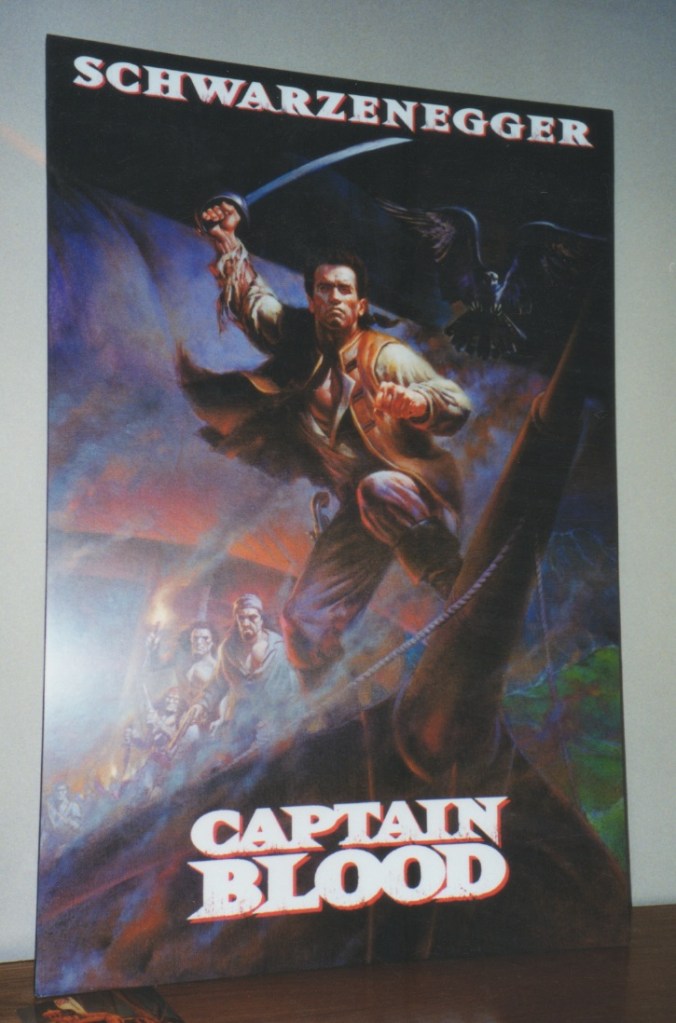
Proposed artwork for a promotional poster for the film.

Proposed artwork for a promotional poster for the film.

I was eager to quiz Eddie about his time with David Lean but he seemed a bit aloof and obviously did not suffer fools gladly. So, I thought I would offer something he would find useful. I brought in a rare out-of-print set of books from my library of which part was an inventory of ships of the period. One section listed every piece of equipment you could find aboard with illustrations and measured drawings, a Set Decorators dream. He looked up at me over the top of his glasses when I entered his office. “Eddie, I thought these might be a good reference for you”, I said as I laid the books open in front of him.

His jaw dropped slightly as he silently thumbed through them for several minutes. Without looking up he said, “Where did you get these wonderful books?” Then he said it reminded him of how he had done the props for Lawrence Of Arabia. He had an illustrator do a drawing of each piece he needed. The he posted them on his wall and would bring the various local artisans to his office, point to the drawings and indicate how many he needed.

I realized why you could never make a film like Lawrence today the same way and why the Art Departments of the period were so small. Today something like a camel’s saddle would be drawn in multiple versions by several illustrators, modeled in Rhino or Modo by as many as three different set designers, rendered, redesigned, remodeled, re-rendered, finally approved by the director, and only then would a set of working drawings be made. Eddie just found a person who understood what it was he wanted, gave him a sketch and told him how many he needed. But this was a time when directors hired people they trusted and let them do their job. They understood that THEIR job was defining the story and script and concentrated on camera placement and performance and didn’t involve selecting drawer hardware.

After that Eddie would chat about he times with Lean in the afternoons at tea time, which didn’t involve tea for Eddie, who preferred beer. He’d found a local shop in Santa Monica that carried imported beer, so each day when we’d walk to lunch, ( those were the days when we actually stopped for a proper lunch and didn’t eat hunched over our desks ) we would buy him two cans of his favorite beer.
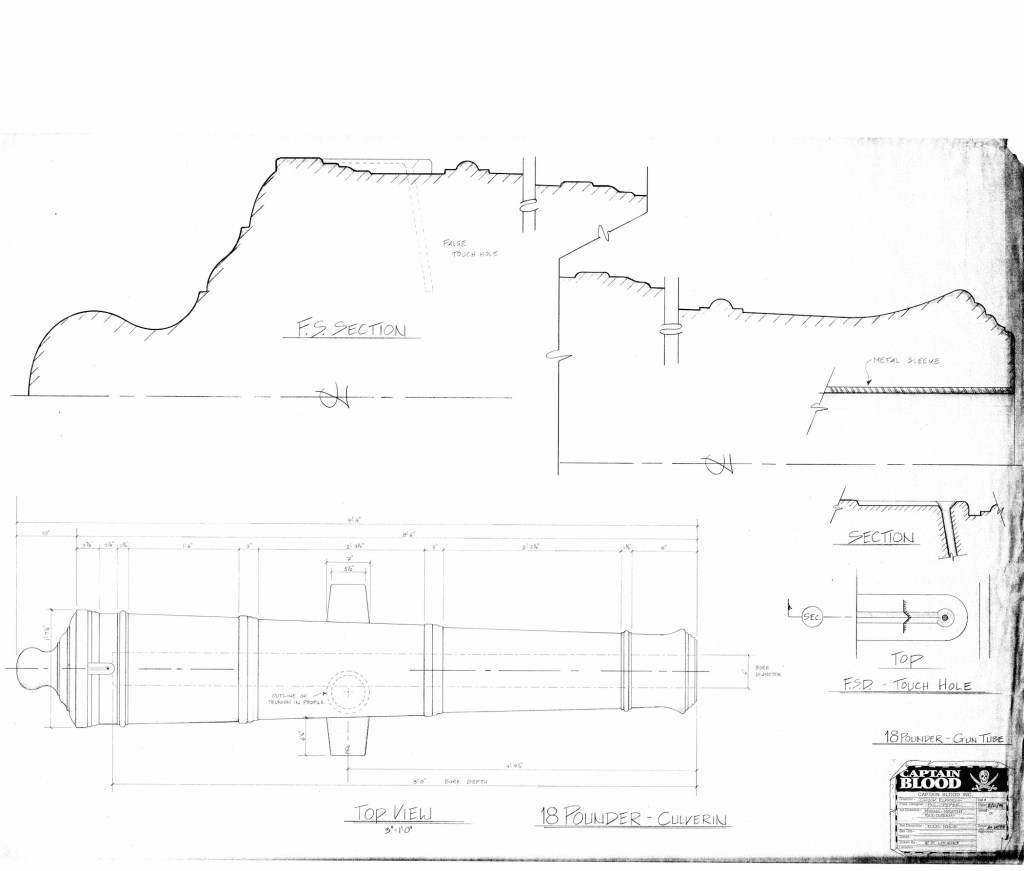
drawing for 18 pounder cannon tubes. At over 9 feet long, these were even shorter than the largest guns.

Drawing for 18 pounder cannon tubes. At over 9 feet long, these were even shorter than the largest guns to be made.
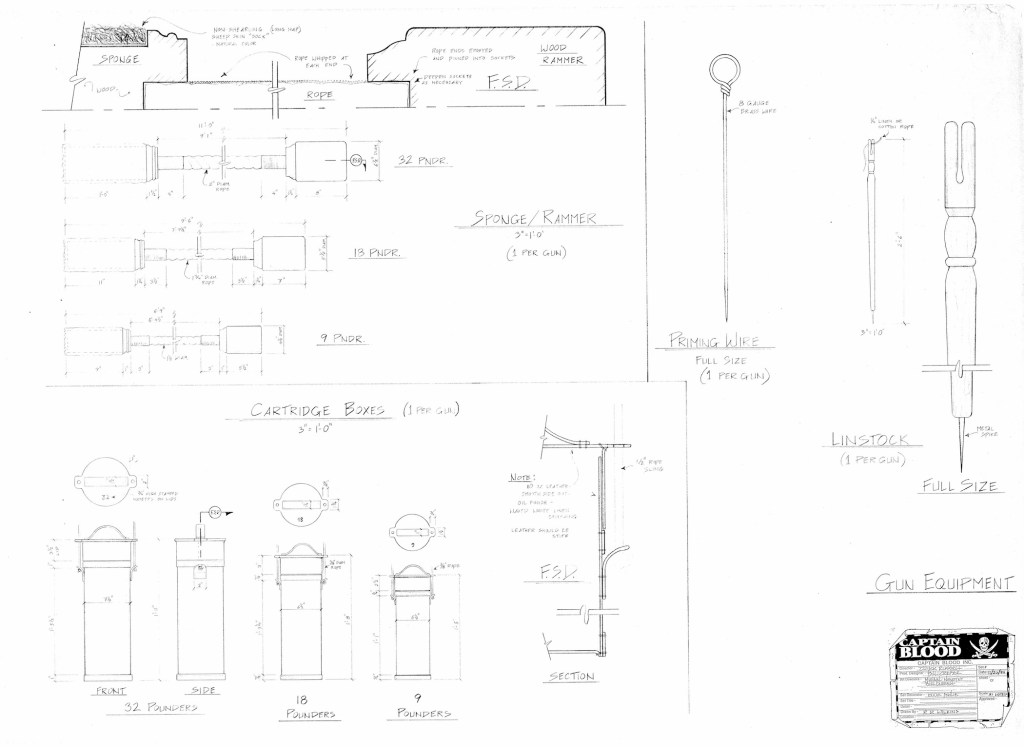
drawing of gun equipment

drawing of gun equipment

One day one of the producers was talking about the ship cannons and I showed him a mock-up of the cannon shot for the large 32 pounder cannon. He frowned as he took the 6 1/2 inch diameter ball and said it seemed puny. I walked him around the corner to where I had taped a full size silhouette of the gun that fired it, which was over 10 feet long and more than 4 feet high. He was shocked. It was then that I made the mistake of mentioning that the opening battle scene was based on a real battle, the Battle of Sedgemore in 1685. He looked surprised and said, “you’re kidding?” I said that not only was that based on history but the main character was also based on a real man named Henry Pitman. “That’s fantastic!” he said. I’m sure in his head he could see that sought-after card ‘based on a true story’ in the title sequence at the front of the film.

This revelation caused a lot of excitement and they asked me to do a little presentation for the director and producers about the real events behind the film. A few days later when I began the presentation, the enthusiasm quickly died. As I told them the real story it became readily apparent that serious liberties had been taken in Sabatini’s original book and worse, the events portrayed in the script didn’t match the real story either. The carefully crafted battle scene that took place at night in the swirling snow had actually happened in the middle of July where heatstroke would have been more a likelihood than frostbite.

It was then that I realized two important truths about the film industry;

1. – Working on a film about a subject you know a lot about is usually a very frustrating and ultimately disappointing experience.

2. – If someone, other than the Production Designer, says they want to know what it really was or looked like, it doesn’t necessarily mean they’ll change what they already have in their mind.

Most people just want research that is going to confirm or validate what they already have in the script or the image they have in their head. Maybe that’s human nature but it’s the same reason composers hate the temp music used during editing. After months of hearing a tune connected to a picture the director will end up wanting something “just like that tune”. It’s almost routine for a director to question a designer’s design choice by demanding to see research. And then when the image which validates the design is produced, the director will insist, “well, I still want my version instead.” Research that doesn’t validate their own ideas is worse than useless to them because it just points out their own ideas are many times based more on Hollywood clichés than reality.

Everything was proceeding nicely when we be can to hear rumblings that Schwarzenegger was thinking about pulling out of the movie. It was rumored that he had an extended ski trip planned that conflicted with the schedule. Someone else suggested that he was worried he would look ridiculous in 17th century knee breeches. For whatever the reason, a week later it was confirmed that he had pulled out of the picture. The momentum slowed to a crawl. With a picture this large, particularly a picture partly shot at sea, the weather plays a large role. If the schedule was pushed we would be into hurricane season in the tropics and that was something the studio didn’t want to contemplate. Another actor would have to be found and fast.

Because of the estimated budget, the studio sent a list of just five other actors that they considered to be enough of a box office draw to make the film feasible. I leave it to you to guess who those five were. As the week went by, each actor on the list passed until there was just one who had yet to decide.

In my naiveté, I had regularly been collating and forwarding research from my library that I though would be useful but never got a response about it. As each script revision happened it became apparent that it was being tailored to Arnold’s action hero persona with ever greater feats of daring and super-human agility. That last Friday, I got a call from the director’s assistant. She asked if I could send her additional copies of the all the research I’d been sending over to the director saying that the originals had been ‘lost’. The director was scheduled to leave on a plane for Paris that evening and wanted to take the research with him. It turns out the actor who was the film’s last hope was interested, but only if it was going to be a historically motivated picture. I wasn’t sure how they were going to explain why the script was so different from the research.

I don’t think I need to tell you what the actor’s decision was.
The Motion Picture Art Director – Yesterday And Today

Back in the 1940’s the Art Director’s Guild, known then as the Society Of Motion Picture Art Directors, created a chart outlining the exciting responsibilities of an Art Director, which is posted below.  In 1994 I created a revised version which, I thought, seemed like a more accurate representation of the job. Looking it over today I think a newer version is in order. Your suggestions are most welcome.

The responsibilities of the motion picture Art Director of the 1940’s.
The Art Director of “Today”