BREAKING NEWS: German Government Offers Huge Tax Incentives To Hollywood Studios

FÜRNHEIM, Germany (ADAC) – On Monday the German government’s federal film commission, the DDFLM, announced that they were now going to offer a 90% tax rebate to American film production companies who shoot 100% of their films within the country. In a packed room at the Forstquell-Brauerei the commission’s president, Max Furzmann, said the move was  to compete for the American studio projects with states such as Louisiana, New York and Georgia, and countries such as Canada who offer large tax rebate incentives to lure film productions there.

This deal has apparently been in the works for some time as a source at Universal Pictures in Los Angeles reported that there are plans to dismantle all of the sound stages at Universal Studios and rebuild them in Europe. Universal representative Michael Dorftrottel, who spoke on the condition of anonymity, said “What do we need stages for anyway? Everything’s done in a computer now, isn’t it?”

Removing the stages will allow Universal’s new upcoming Harry Potter attraction to encompass the area now taken up by the only part of the studio actually used for making films. It will also allow the studio space to provide much larger climate-controlled covered parking areas for upper-management.

Late Monday, the Louisiana Film Commission held a press conference where they announced that the state, known among industry insiders as ‘Hollywood South’, was considering increasing the current film tax incentive rate to 95% in response to the German rebate program. This suggested rate increase is still apparently being hotly debated among the state’s legislators. Petroleum oil companies, who currently purchase most of the tax credits from the studios to apply to their own tax debt, are encouraging the state to increase the incentive rate to 125% claiming the increase would be very beneficial to the state as well as to the corporation shareholder’s stock portfolios.

Furzmann did not explain the German tax incentive in detail during his remarks but instead presented a short animated video by Jan Vetter, Dirk Felsenheimer and Rodrigo Gonzáles of the FKK group which outlines the various aspects of the program.


UPDATE: The Georgia state legislature held an all-night session which resulted in plans to raise that state’s tax rebate incentive to 300% of labor and sales tax. Also, 20th Century Fox Studio announced they would follow a similar course of action as that of Universal Studios and have completed tearing down Stages 14, 15 and 16 with plans of replacing them with much needed office buildings along Pico Blvd.


‘Hand-Hewn’ vs. Machine Made: Comparing Historic Tool Finishes To Modern Methods – Part 1

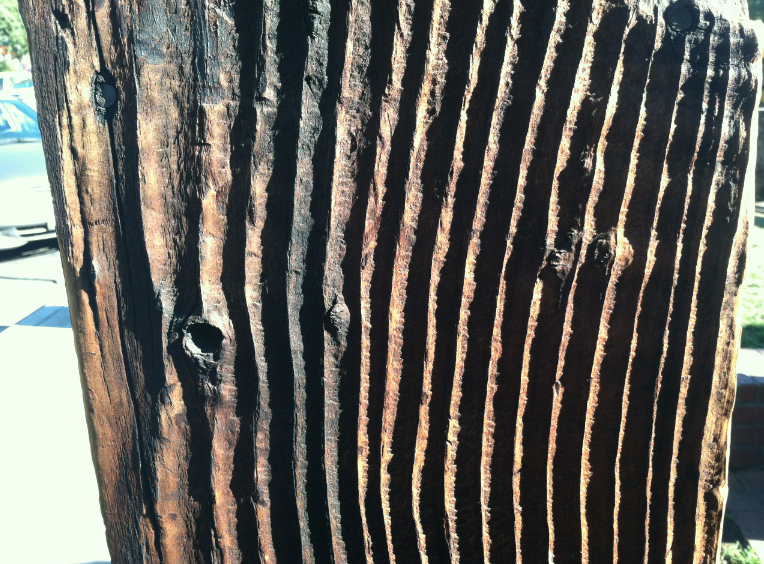
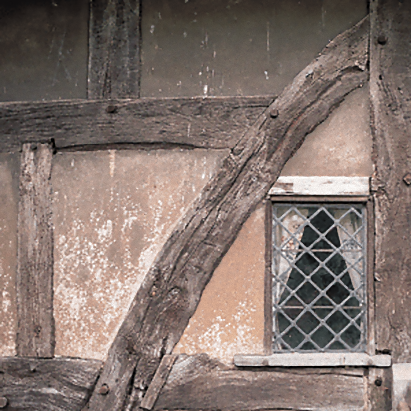
Creating period wood finishes for film and television scenery always involves a certain amount of subjective and creative interpretation. Usually the wood surfaces are finished to a level having more to do with the time period’s distance from modern times more than how old the set would look in relation to the time of the story. So usually anything set in ancient Roman times looks like it’s been through several hundred sandstorms, attacked with a grinder and sand blasted until the early growth rings are worn away from the late growth rings. There were certainly buildings that were very old at that time but there were plenty that looked much newer than the photo below.

weathered wood showing sunken early growth rings

weathered wood showing sunken early growth rings

I was working on a period film several years ago and I noticed that one of the other designers had called out the wood surfaces of their set to be finished as ‘hand-hewn’. I knew the surfaces would have actually been surfaced to a finer finish than a rough hewn beam and I asked why it needed to be so rough. They answered that being pre-machine age, other than furniture which would have required lots of sandpaper, they wouldn’t have had the ability to give the wood a smooth finish. I said that not only was that not true,  in many ways hand tools gave a superior finish to the tools of the machine age, and they had something better than sandpaper.  They laughed until they realized I wasn’t kidding.

Let’s take timber framing. When most people think of a timber frame building they tend to think of the wood looking like this:

fachwerk3

16th century German timber frame or Fachwerk house.

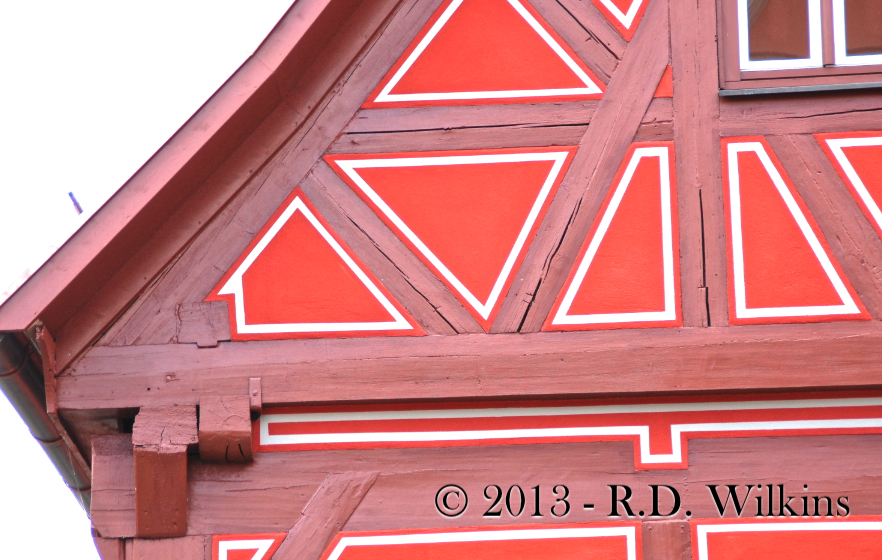
The wood didn’t look anything like this when it was built. The faces of the wood probably looked more like this (minus the checking or cracks):

restored German Fachwerk building from the mid 1600's.

restored German Fachwerk building from the mid 1600’s.


Partly because of this trend toward artistic license, and not understanding period construction which leads to misinterpreting the photographic research available (such as the photo below), wood buildings get designed and built with anachronistic finishes.


fachwerk2

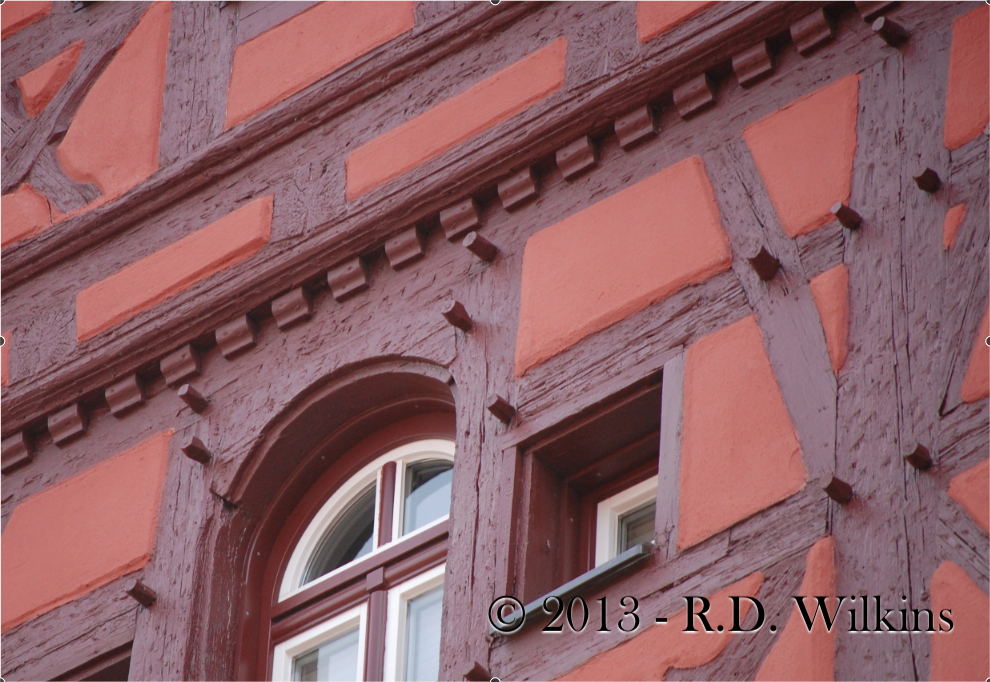
The timbers of this fachwerk building were originally as smooth as those in the previous example. Many years later the faces were scored to act as a grip for the
plaster stucco-like finish that was applied at one time to ‘modernize’ it, much like some old interior brick walls were scored to accept plaster.


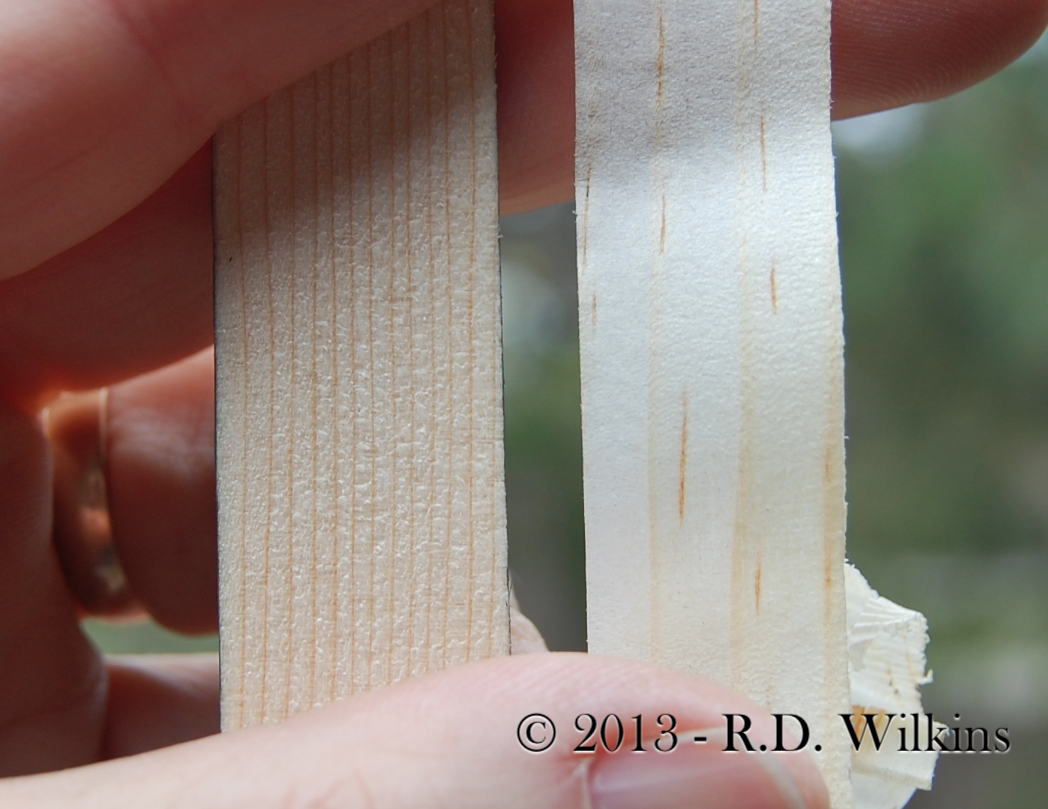
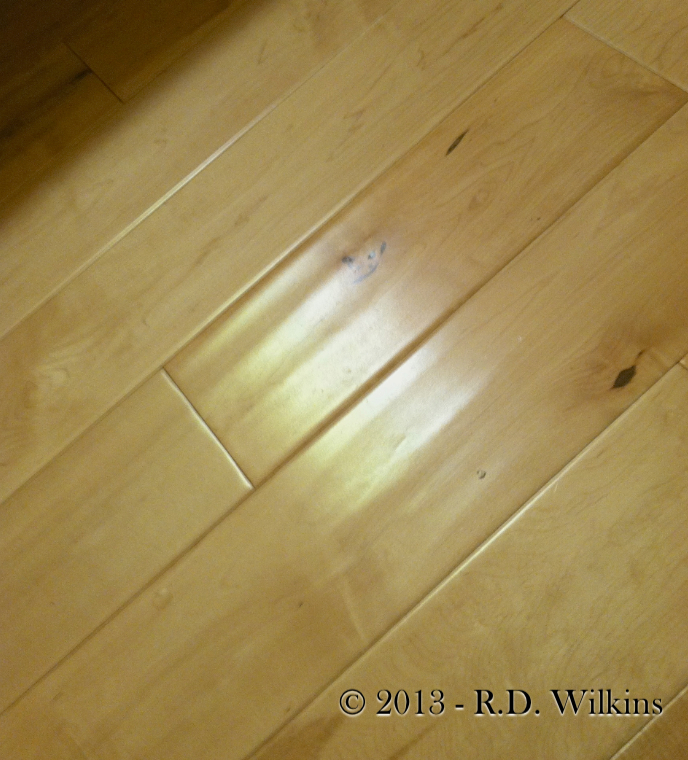
Even the building industry can take some of the blame. Here’s a photo of a popular flooring with a simulated jack plane finish. The plane had a curved blade that was used to quickly take a plank down before being planed smooth to its final thickness. A board with tool marks like this would not likely have been used in a decent dwelling.

fake jack plane tool marks


Today it’s hard to imagine doing all the work involved in processing wood from logs to a finished form without power machinery. How could a hand tool created a finish smoother than a modern tool, much less sandpaper? first of all, the way the tools work today is much different than the way period tools work. And, because it was  a much more labor-intensive process, they didn’t finish surfaces that wouldn’t be seen.

Let’s start with the big stuff. The process of taking logs from a tree to a piece of framing timber in the European tradition in the 16th and 17th centuries involved a number of types of hatchets.

Here’s a video by Christopher Schwarz on the use of hewing axes by Plimoth Plantation’s master joiner, Peter Follansbee:


By the 18th century the process involved not only the hewing axes and saws but an adze to square the sides followed by a broadax to smooth the sides, and possibly a drawknife to remove the axe and adze marks.

Here is a great little video by Ken Koons explaining the process:


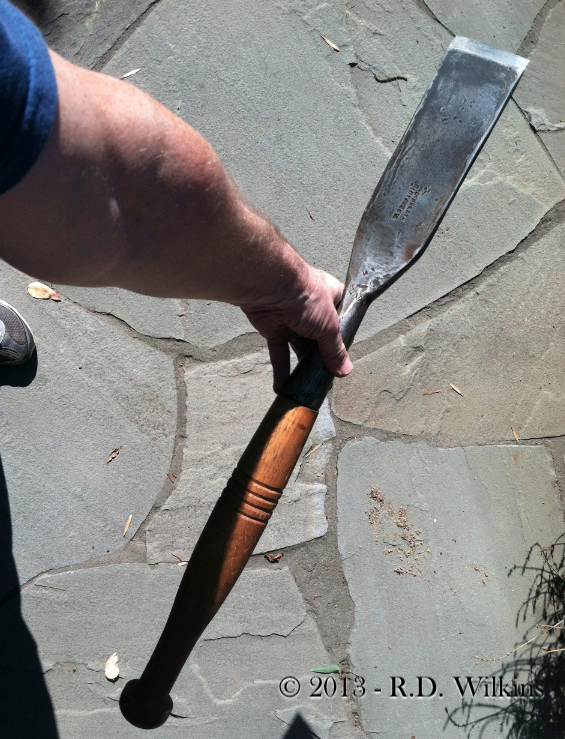
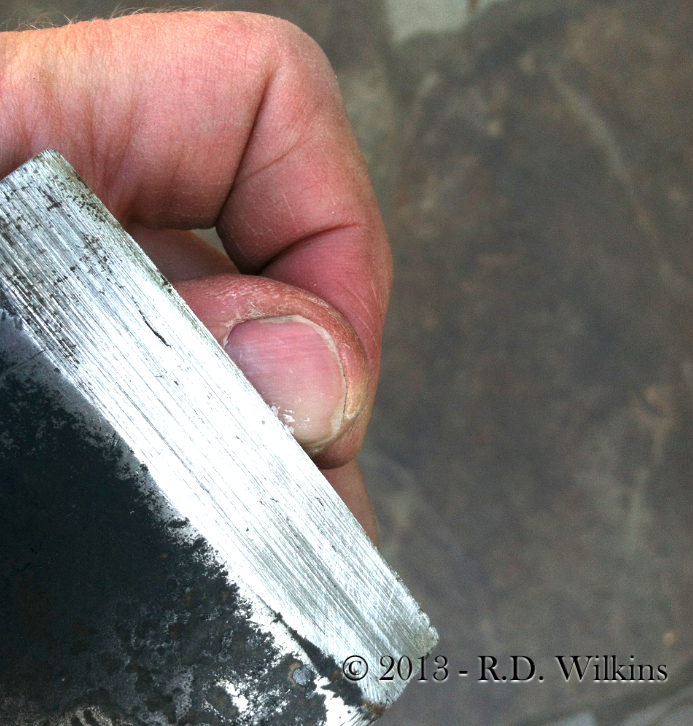
Once the mortises and tenons were cut they were cleaned up and smoothed using chisels and slicks, which were basically large chisels meant to be pushed by hand rather than hit with a mallet. The photo below is of the largest slick in my collection. Made in the late 1860’s in Ohio, it has a 3 inch wide blade. This big blade is certainly closer to a chisel than an axe as you can see from the closeup of the blade as it shaves off a sliver of my thumbnail. The blade will leave a very smooth surface.


A three inch wide framing slick from the mid 1800's

A three inch wide framing slick from the mid 1800’s

framing slick2


Here is a short video by John Neeman of a framing slick in use, you can see how quickly and cleanly it cuts a tenon.


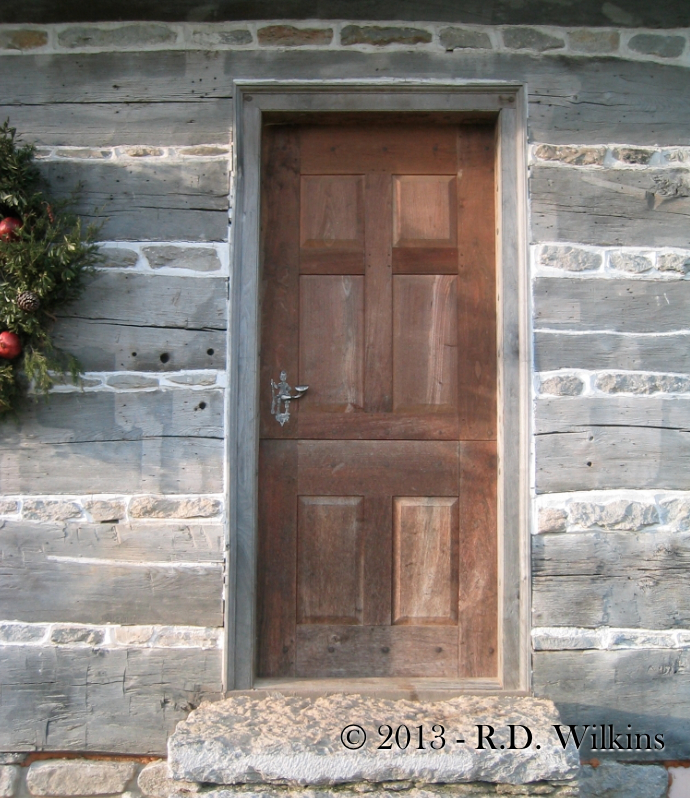
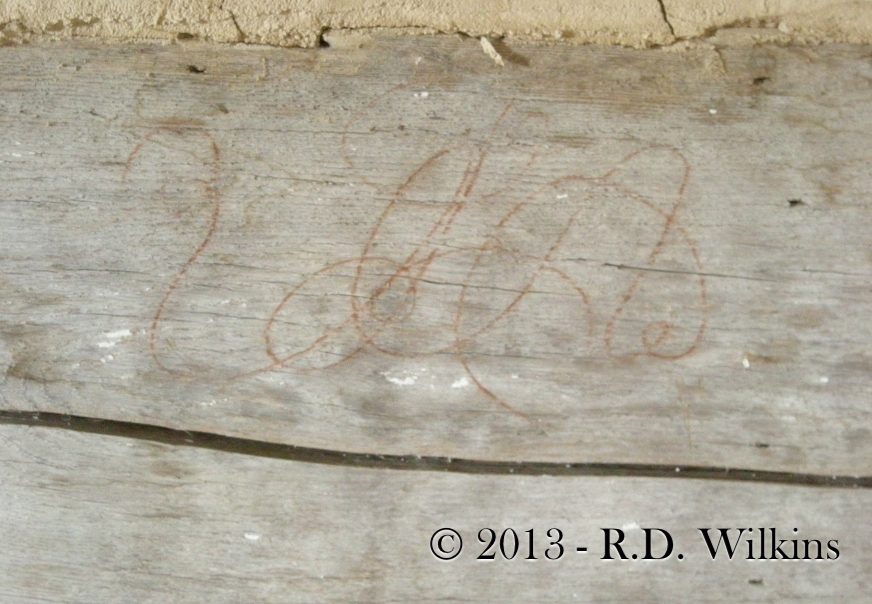
Cut timber surfaces were as smooth as their maker wanted, or needed them to be. Here are two photos of the Daniel Trabue cabin near Lexington, KY. The cabin was restored some years ago and returned to it’s 1797 appearance. The clapboard which had been applied later had protected most of the logs from decay. Notice the tool marks on the exterior logs. Now look at the second picture of an interior wall on the second floor. Here the German maker has signed his name with an 18th century cipher. Notice how clear the signature is. It was made with a traditional crayon made of beeswax and powdered vermillion used for marking out work while building. The crayon was found during the restoration, tucked above the front door lintel. The clarity is only possible because the wood surface is so smooth.

front door of the Daniel Trabue cabin

front door of the Daniel Trabue cabin

18th century cipher of the cabin's builder

18th century cipher of the cabin’s builder


Next week, in Part 2 of this post I’ll talk about and show you how traditional hand tools can actually create a finish that’s superior to their modern day counterparts and why our ancestors didn’t use, or need sandpaper to surface wood. Also, you’ll learn why every recreation of Noah’s Ark you’ve ever seen is dead wrong.
Obsessed With Film

Quote

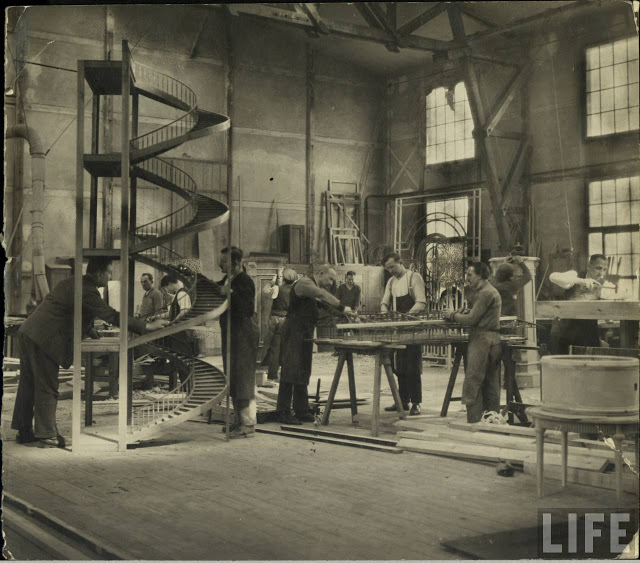
Carpenters building scenery at the UFA Studios in Berlin, 1928. (Photo by E. O. Hoppe

Carpenters building scenery at the UFA Studios in Berlin, 1928. (Photo by E. O. Hoppe

“I have to admit in all modesty that it would never have been possible to make these films if superb set designers, film directors, cameramen, and architects had not been available. I am realizing more than ever that Ufa’s success came about because it was possible to create teams. Film is an art species, or an art-related species that cannot be accomplished by a single man but only by artists in close daily cooperation. It can only be accomplished by people who are obsessed by film.”

Erich Pommer, Producer – Metropolis, The Cabinet Of Dr. Caligari, Dr. Mabuse, Die Niebelungen, Tartuffe, Faust, The Blue Angel, Liliom

A New Year’s Resolution – Check Your Insurance Coverage

This is a bit different than the other blog posts on this site, but I thought I’d pass along some information that you might want to consider as you head into the New Year.

Most of us now do quite a bit of traveling on pictures or shows away from where we live and most people spend more and more each year on the personal equipment that makes up the ‘tool kits’ that our jobs depend on. If you’re smart you’ve invested in a business insurance policy to cover that equipment since a normal homeowner or renters’ policy does not normally cover items used for business outside the home. What you may not know is that a typical business policy will not cover your equipment while you are out of town or in transit to a distant location.

Inland Marine Policies

There is a type of policy called an Inland Marine policy which you should look into getting if you do spend a great deal of time working out of town. These policies were originally created during the Industrial Revolution when there was an increase in transport by ship as a type of “all risk” insurance. Most insurance companies describe it as ‘insurance which generally covers property that is movable or transportable in nature’.

Check with your insurance company to see if your current business policy includes a ‘inland marine’ clause, you may have to add this to your policy or purchase this as a new type of insurance. It may save you from getting a very nasty surprise when your equipment is damaged and you find out you’re underinsured.

Have a happy and productive 2014.

Mozart Wasn’t A Hummer

Quote

Sketch for Rosemary's Baby by Richard Sylbert

Sketch for Rosemary’s Baby by Richard Sylbert

“When I began working in the industry, you made all the illustrations, you drew up the plans, you decorated the sets, you picked all the locations. Today most designers on a big production will have dozens of people working for them. The most I ever had is six. Imagine Mozart saying to somebody, ‘I have a great idea for a piece of music, but I don’t know how to play the piano. Let me hum it for you.’ The fact is Mozart was the finest pianist of his day.  Most production designers today are hummers.  They have ideas but can’t draw a 1/4 inch plan. They have no idea how to commit to details.”

Richard Sylbert, Production Designer – Chinatown, Reds, The Manchurian Candidate, The Graduate, Who’s Afraid Of Virginia Woolf?

Just Shoot It

Quote

Scene from Days Of Heaven - Production Designer Jack Fisk

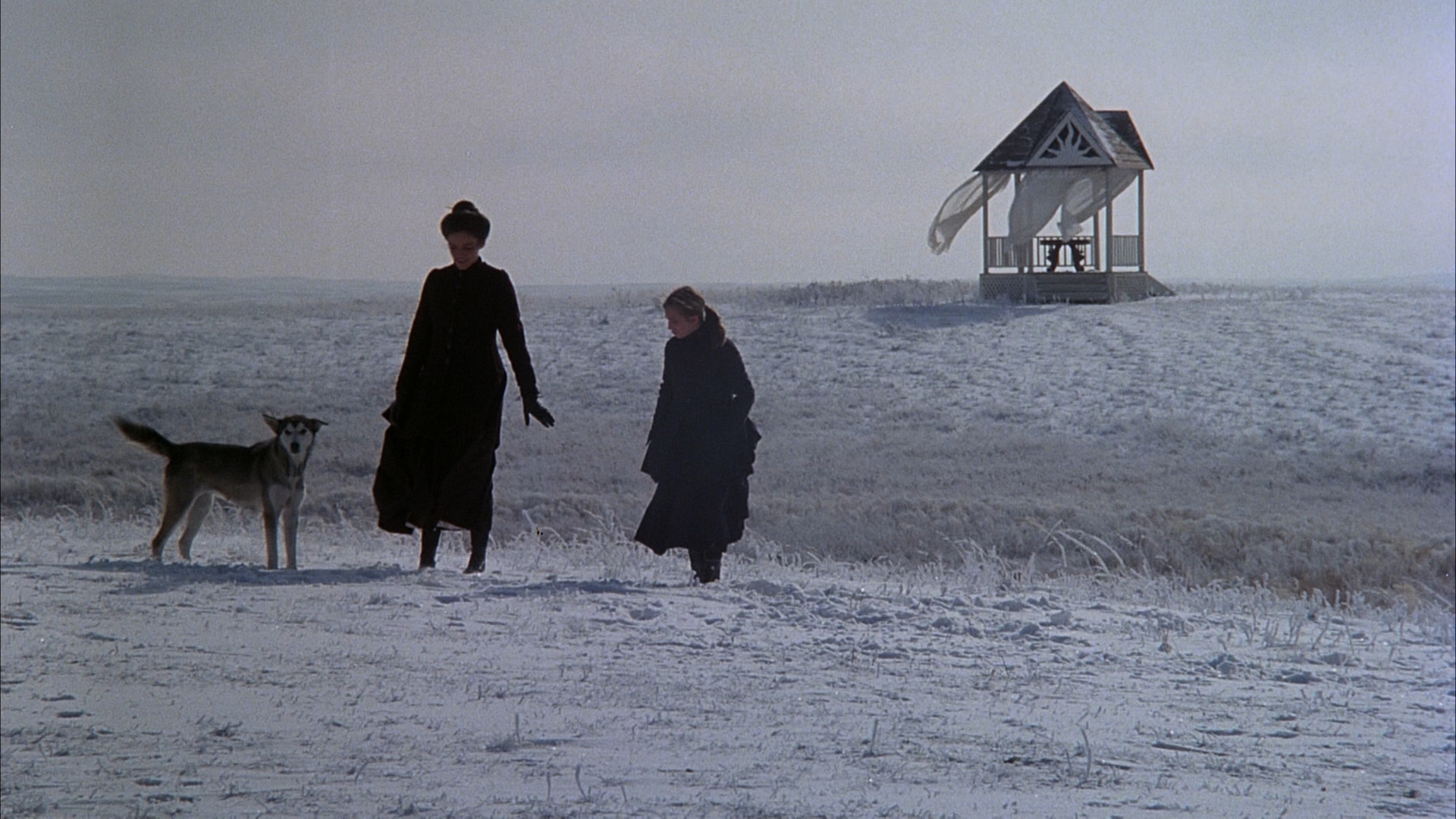
Scene from Days Of Heaven – directed by Terrence Malick – Production Designer Jack Fisk – cinematography by Nestor Almendros

“It’s one of those foolish truisms that a lot of what is perceived as great cinematography actually is really good production design or really good location choice. Often it’s that easy – it’s so damn good, just photograph it.”

Stuart Dryburgh , Cinematographer

3D Scanners For Your Pocket – Coming Soon, Very Soon.

There must be something in the water in Boulder. A lot of technology is coming out of that little town including two new devices which could continue to revolutionize the way we work. Location survey work has never been much fun and always comes with unknown challenges that often leave you stymied, ike that billboard you suddenly learn you have to measure, or the block-long row of buildings that you have to survey with two hours of sunlight left in the day.

Using 3D scanners for location surveying and object duplication in the past has been something people have wanted, but the price of most of these devices usually makes their use too cost prohibitive. The iPhone and the many apps that accompanied its popularity have been a real help in many Art Department workflows but their uses are currently limited as far as true 3D capture and augmented reality functions.

Two companies, Ike GPS and Occipital are trying to fill a need for low cost 3D scanners with two inventions which act as add-on devices for digital phones and tablets. By harnessing the power of these devices, their creations enhance products that most people are already using.
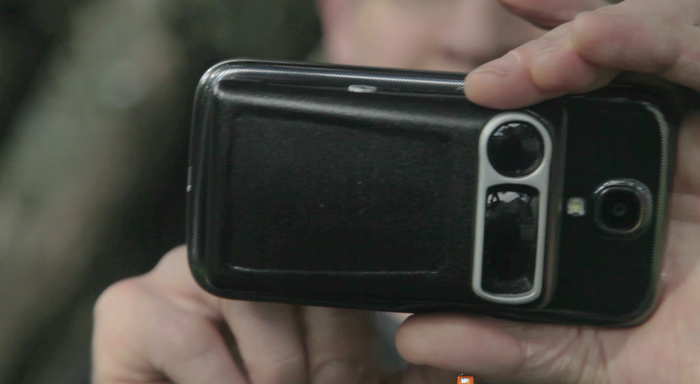
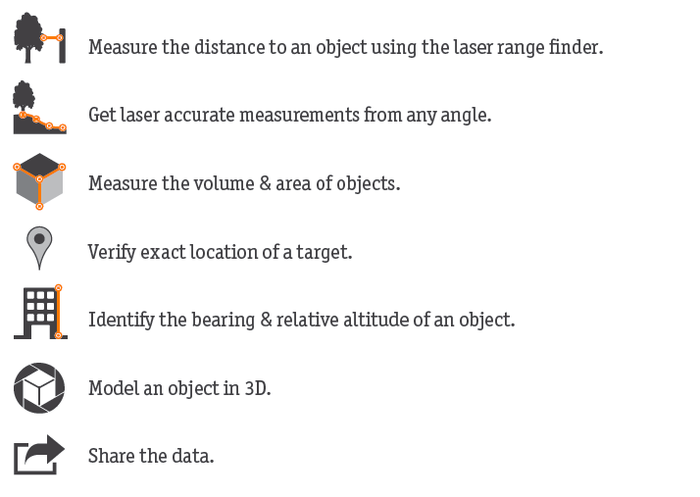
Ike is a company which has had previous success with hand-held scanners and was looking to create a device which could be small enough to fit on a smart phone. They’ve come up with a small device called Spike which attaches to an iPhone or other smart phone and uses the devices built-in accelerometer, compass and GPS functions to make it possible to measure the size, height or even the volume of buildings and even create a 3D model to export to a modeling program.

5543da38df27e38fafd40a7ac07248a7_large

The company is currently running a Kickstarter campaign to raise interest as well as funds to develop the device which they plan on having ready for the market by next May. The device will come in two versions; the Basic version and the Pro version which will generate 3D model files, geolocate buildings and allow for pulling measurements from the digital image.

f5b20da41992f026ed2e151a0ad21154_large

For a donation of $389, you’ll get a prerelease Spike Pro which the company says is around half of the final retail price, meaning the street price of the Pro unit is going to be somewhere in the $800 range. That may seem pricy but the next closest device I know of that can provide similar functions is about 5 times more,  both in size and price.

Here’s a video from the company website:


Occipital has developed a device they are calling the Structure Sensor which attaches to an iPad and can create 3D scans of objects or rooms up to about 550 square feet with a range of 3 1/2 meters. The file can be imported into a CAD package or output for 3D printing.
Structure Sensor

The Sensor Kickstarter program is fully funded but for a $330 pledge you can still get a Sensor at a significantly reduced price than it will retail for when it becomes available early next year.
Check out the video below:

Here are the links to the Kickstarter pages:

Structure Sensor

Spike Pro

Designing Without A Ruler – “By Hand & Eye” Explores Designing With Dividers.

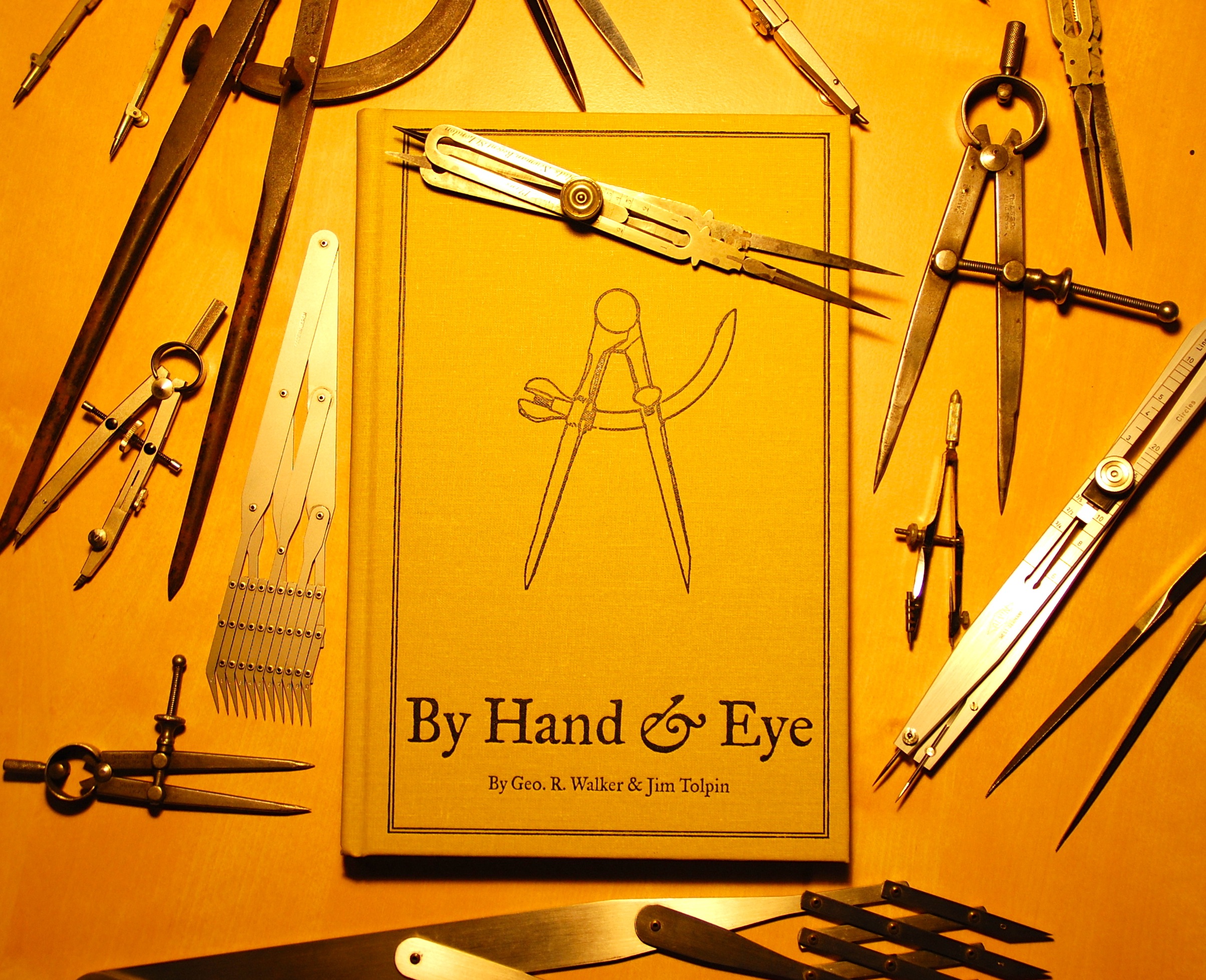
By Hand and Eye

There are a lot of design books published every year and occasionally a few get written that are actually worth buying. By Hand & Eye is one of those. It’s a book that delivers where a lot of others have gone and failed. Written in an easy, nonsense-free style, the book sets out to explain the “art” of designing with proportions rather than numbers. I’ve found that a lot of books on design tend to read more like a doctoral thesis than something that will actually explain the material in easily understandable language. By Hand & Eye succeeds because  authors Walker and Tolpin are actually practitioners of their craft rather than just writers. It’s like taking a film course from someone who’s actually made a film rather than just talk about it.

Lost Art Press is a relatively new publisher who’s books are primarily aimed at the traditional woodworking crowd but you’ll be missing out on some gems if you assume their books are only useful to furniture makers. Their books are quality products both in their content and their construction. These are not the cheap perfect-bound high-acid tomes that are the product of most publishers and will end up disintegrating on you shelves. (With that in mind, If you do happen to be a furniture and book lover, and the name Andre Roubo means anything to you, you need to must check this page out immediately.)

Jim Tolpin was the most familiar to me as I own a number of his other books, but George Walker is relatively new to the publishing world. George writes a blog called Design Matters which is a record of his journey in the search for understanding what makes for good design. He and Tolpin met several years ago and found they were both on the same path but had approached it from different directions; Walker from a preference for traditional furniture and Tolpin from a more modern bent. Both were determined to discover the “magic formula” that meant the difference between a chair or building being handsome or ugly.

What they discovered is that numbers don’t matter. In fact much of the time they just get in the way. Most of the treasured icons of furniture and architecture were made before the measured rule was in use. It was the divider that ruled rather than the inch or foot. And this system of working when far beyond architecture and furniture.

The exercises they outline are especially helpful if you have only worked on a computer as you’ll be forced to think purely about the design process without the intrusion of a ‘digital helper’. By learning to think proportionally you’ll approach design from a much less restricted footing. A lot of times computers just get in the way of good design instead of enhancing it. Once you stop using numbers and just concentrating on ratios you’ll realize you can make things much easier for yourself.

The book are also a great introduction to traditional geometry and proportion if you haven’t really studied it before or a great refresher if it’s been a while since you exchanged a mouse for a compass. They are developing a website for online access to exercises in the book and you can download some sample animations of the exercises from this web page. You can also read more about the book and download a sample chapter on this page.

While the book does concentrate on furniture design the information translates to everything else in the design world as most of the principals are found in classic architecture.

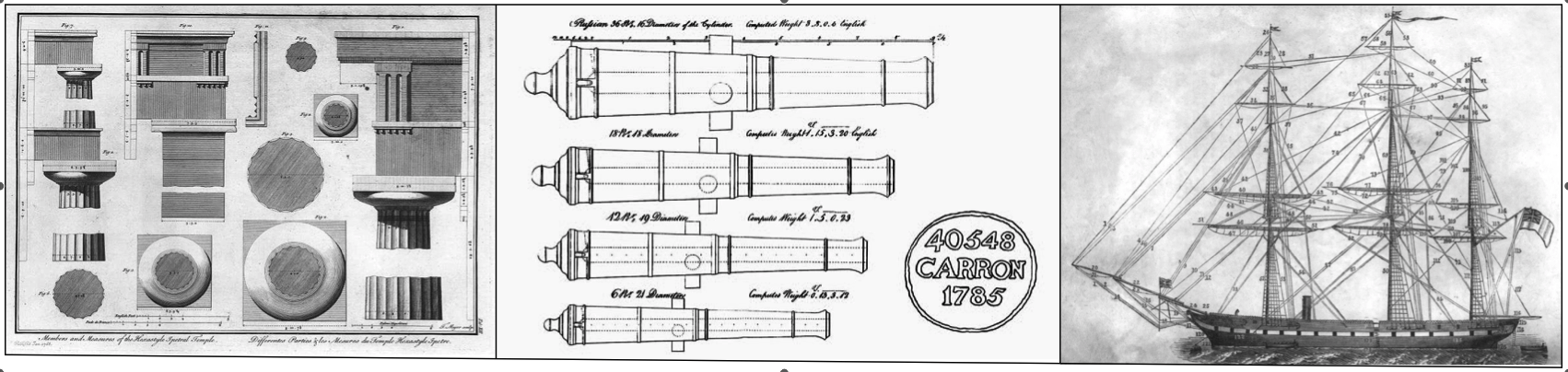
column cannon ship

For example, traditional sailing ships and cannon have a lot in common with the classical orders in that they were all based on a proportional system. This not only insured that all the moulds would be in proportion to the length of a cannon barrel but that the trunions would be sturdy enough to carry the barrels weight and that the wall thickness of the tube would handle the explosions of the powder charges. The ship’s rigging was based on a similar system. If you knew the mast length you could figure the thickness of the mast stays and the diameter of every piece of rigging on the ship, all without a calculator.

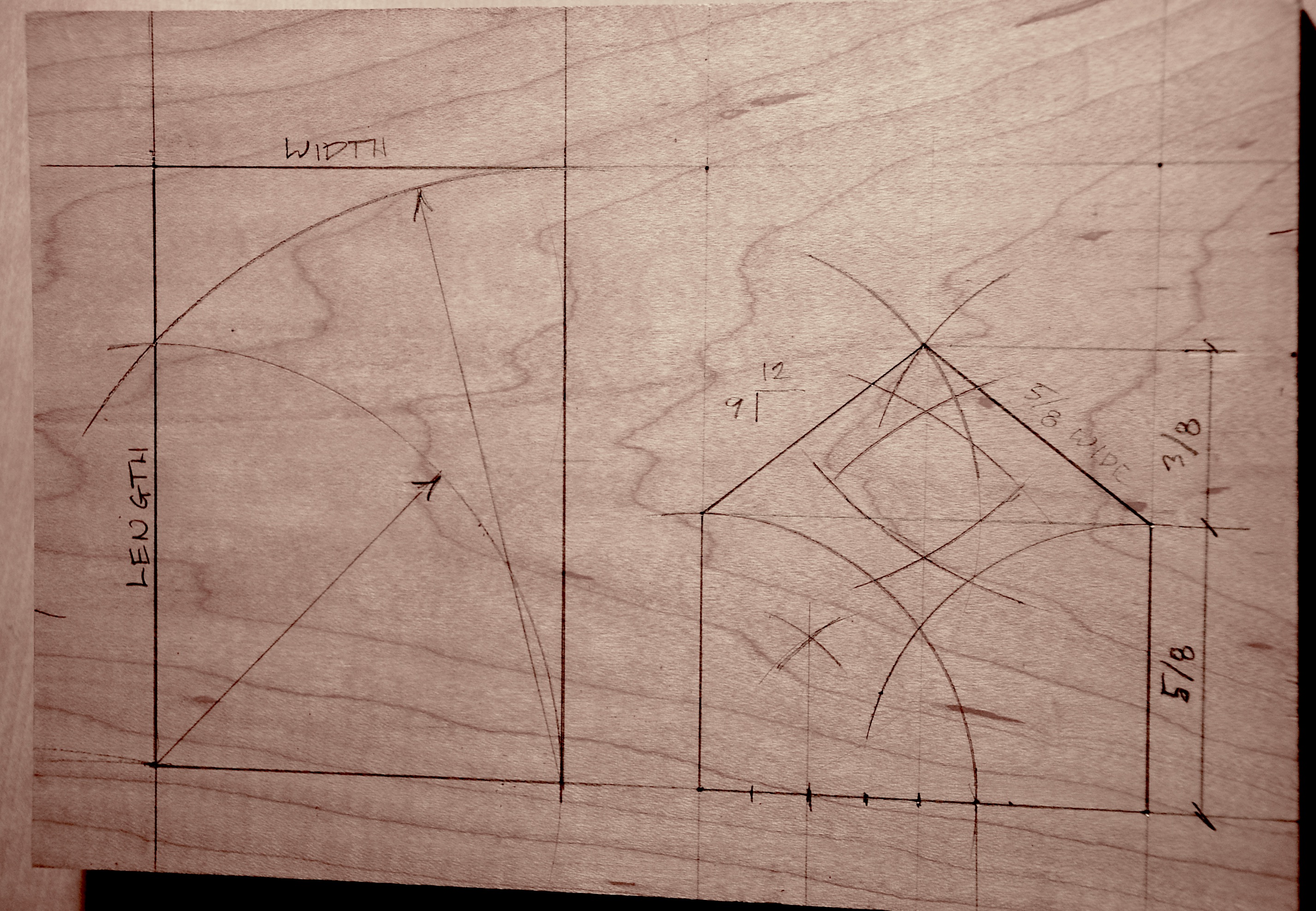
Even an entire structure could and can be built with just a stick and a piece of cordage. Take a hewn log cabin. The picture below illustrates the only drawing you need for a house. It would be scratched out in the dirt with the cord and stick using the cabin width as the main unit of measure.

cabin plan

The length is easily determined in relationship to the width, resulting in a 1.6 plan ratio. The wall height is determined as 5/8s of the width. The same length determines the diagonal roof line which results in a 3/8 rise or a 9/12 pitch. The intersections would be marked with stakes and used as a full size pattern for cutting the timbers and joints without having to use a bevel gauge or fuss with estimating angles.

By doubling the cord the lengths are easily halved into eighths. The metric system is good if you’re working with numbers, multiples of 2 are better if you are laying out a pattern with simple tools.

At one time or another you have probably struggled with a badly proportioned room without realizing it. If you have ever had to design a paneled room and find that it’s impossible to get the panel sizes to work out correctly from one wall to the next, it’s most likely because the room was designed to a bad proportion. Get the proportion of width to length wrong and period details become a nightmare.

By Hand & Eye is now available through the Lost Art Press website. You can order the book here for $34. Also, if you have a peculiar aversion to quality paper products there’s a digital edition available for $16.

Three Types Of Dividers You Should Own

Thinking that you don’t need dividers if you work on a computer is a real mistake. If you have a set of compasses, a set of proportional dividers and a set of equal-space dividers you can accomplish a lot of things in less time than it takes for you to start your computer.

Here are the three types of dividers you should have and where to find them.

Compasses / Dividers

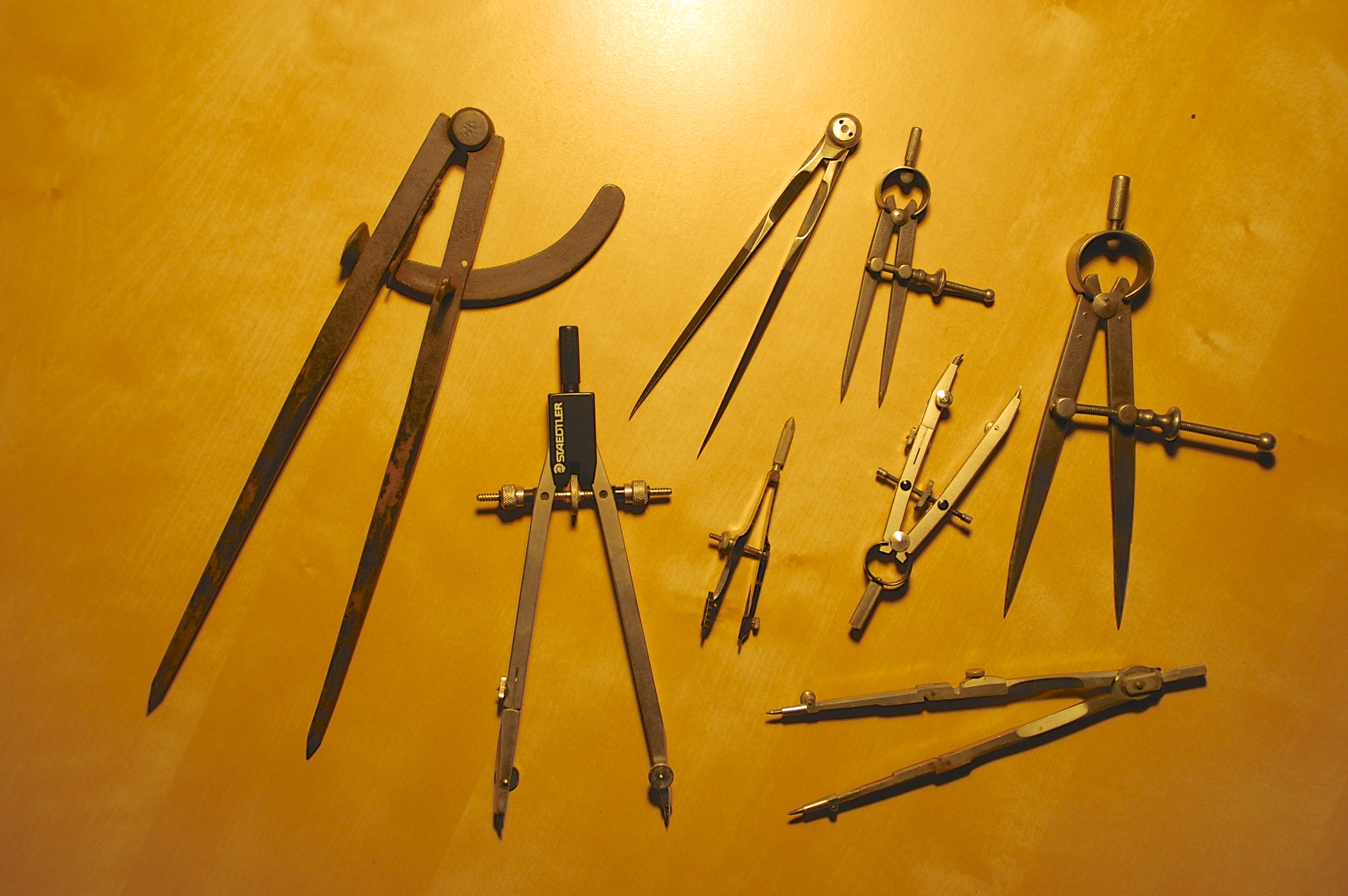
There are a large number of compass and divider styles available. You need to find the best type to fit your work methods

There are a large number of compass and divider styles available. You need to find the best type to fit your work methods.

Dividers and compasses are both the easiest and cheapest of all three types to find and have the greatest variety. If you are just doing the exercises from the book or doing small design drawings on vellum you only need a typical compass. You don’t need to settle for a cheap office store/elementary school type, there are plenty of quality compasses available on Ebay for as little as a few dollars. Usually they will come as part of complete drafting sets, which aren’t a bad thing to own, but often you can find them as one-offs. A compass around 6″ in length should be all you need. If you are feeling like drawing something larger, you’ll need a beam compass. I own one like this which is the best I have ever found. It’s called a Feranco Beam Compass and it was made by a small firm in Cincinnati. They’re out of business but you can find them second hand. Or, you can use a metal straight edge with a set of trammel points like these.

Proportional Dividers

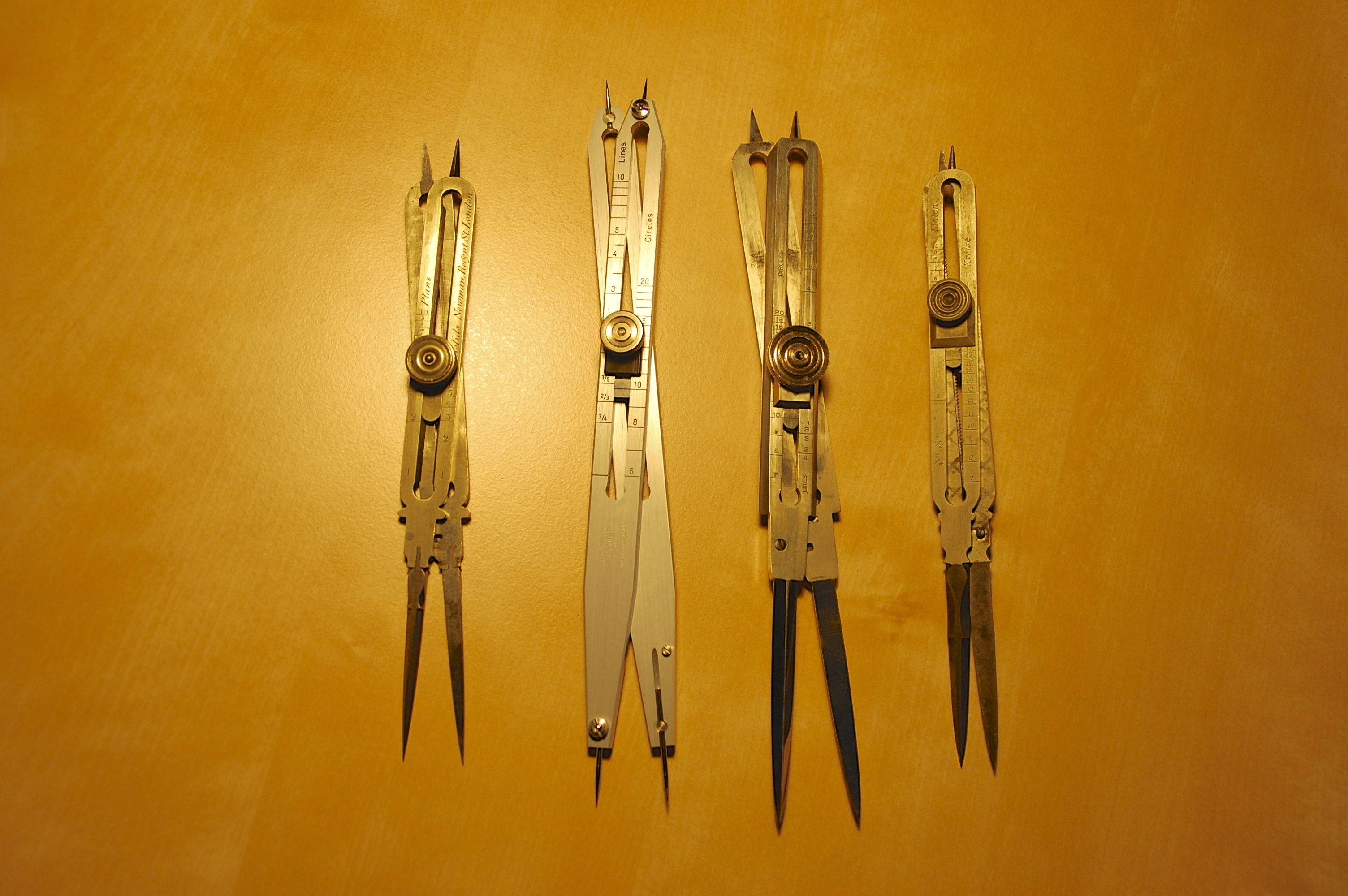
proportional dividers come in a number of styles, most will work for design except for the type manufactured for nautical calculations.

proportional dividers come in a number of styles, most will work for design except for the type manufactured for nautical calculations.

These are definitely more expensive than a set of dividers but are a huge time saver if you are trying to scale a drawing to a different size or want to design to a giver proportion. The cost for a set of these will run anywhere from $30 to $300 depending on the vintage and make. The pair on the left are a 1810 pair made in London. The legs are of iron which are dove-tailed into the German silver body. The tolerances are very tight on these dividers and they stay put when you set them which is often a problem with cheaper dividers. The vintage sets have points which are triangular in shape and come to a very sharp point, which they need to be. Dull points require tuning with a very fine file or emery cloth. This should be avoided if possible because the accuracy depends on the lengths of the legs being a definitive ratio to each other. The modern sets have round pins which come to a point. The advantage of this being that if the dividers are dropped the pins can be replaced, something impossible with traditional sets.

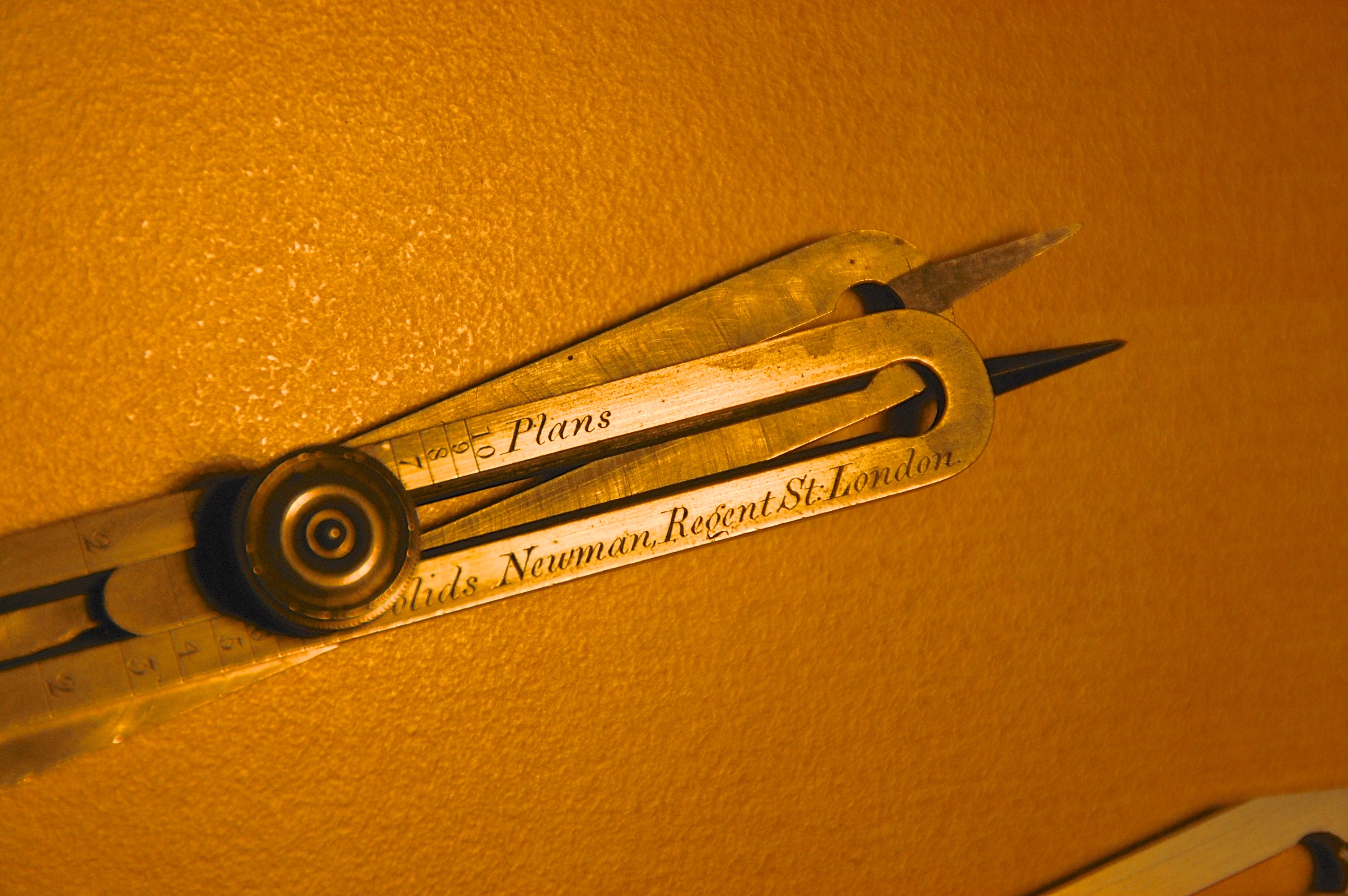
The vintage sets came in two types: standard or second quality in which the indicators ‘Lines’ and ‘Circles’ are engraved on the front, and first quality in which besides these the indicators ‘Plans’ and ‘Solids’ are engraved on the reverse side. For 2D line work you only need the first two indicators. Also, when you are looking for a used set, be sure that one of the indicators does not say ‘Speed”. These are a pair made for nautical use and won’t be very useful for our purposes.

The better quality sets had designations for solids and planes which are for volumetric calculations

The better quality sets had designations for solids and planes which are for volumetric calculations

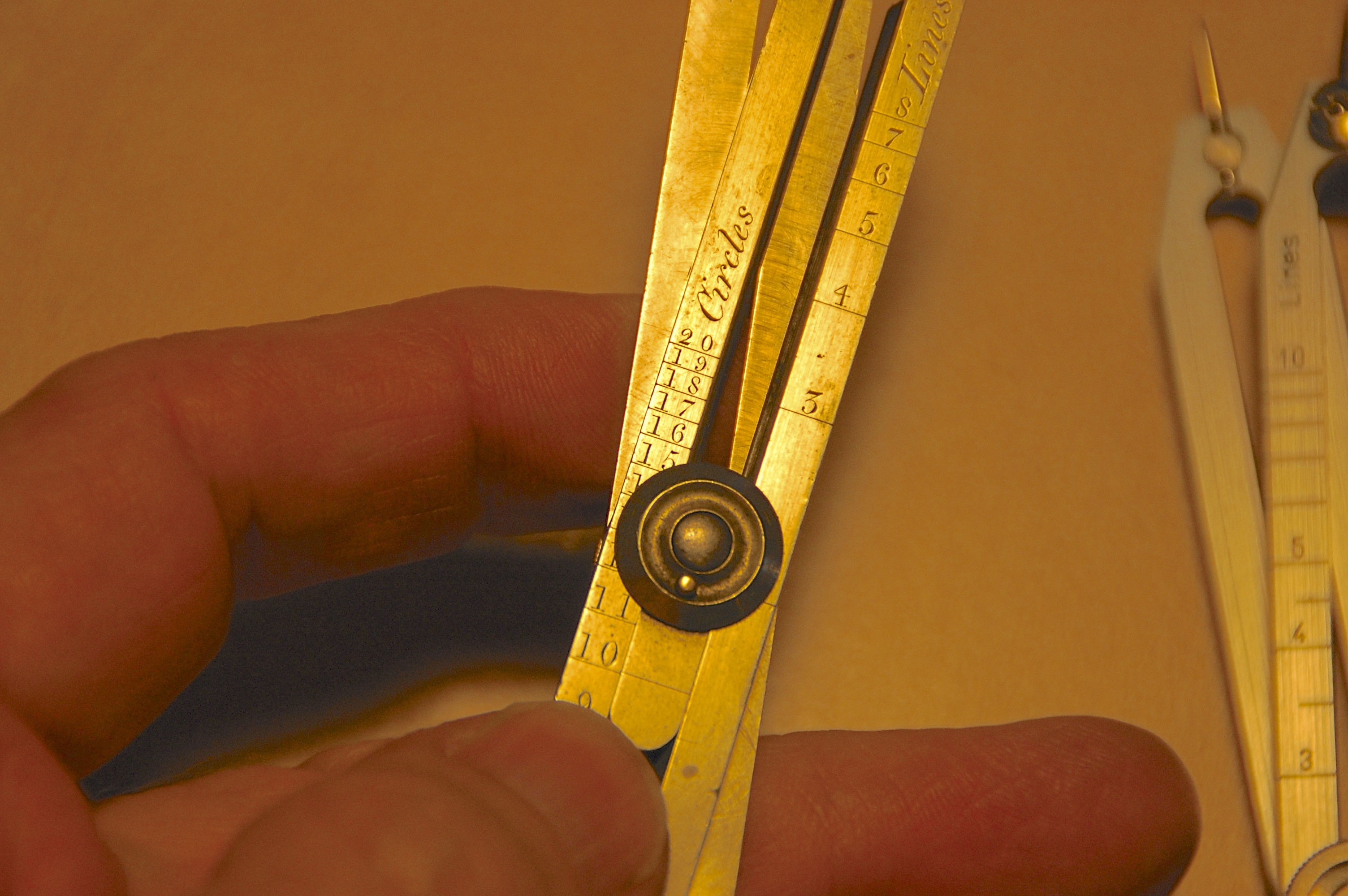
When you set the dividers to a ratio, the difference in distance between the longer and shorter legs will mirror this. Set the ‘Line’ scale to 8 and then spread the long set of legs along a straight line. The distance between the short legs will be 1/8th the distance. The same method works with circles. Set the scale to , say 5, and them spread the long legs across the diameter of a circle. You ‘walk’ the legs around the circumference of the circle to divide it into 5 equal segments.

The '10' setting under circles gives you the ratio for the Golden Proportion.

The ’10’ setting under circles gives you the ratio for the Golden Proportion.

If you like designing to the Golden Proportion, you can set the Circle scale to ’10’ and you will have a proportion of 1.618 between the two sets of legs.

Equal Space Dividers

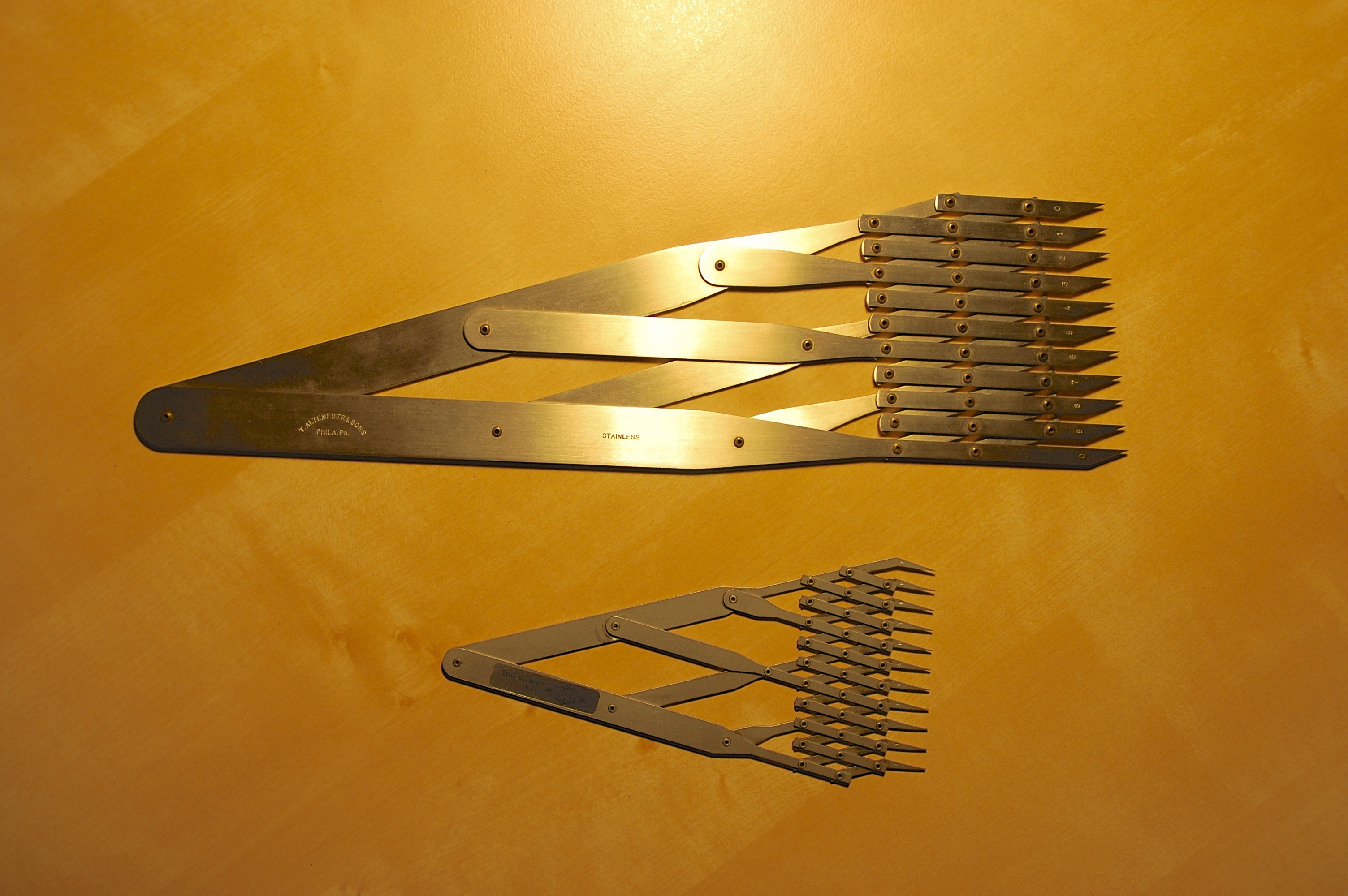
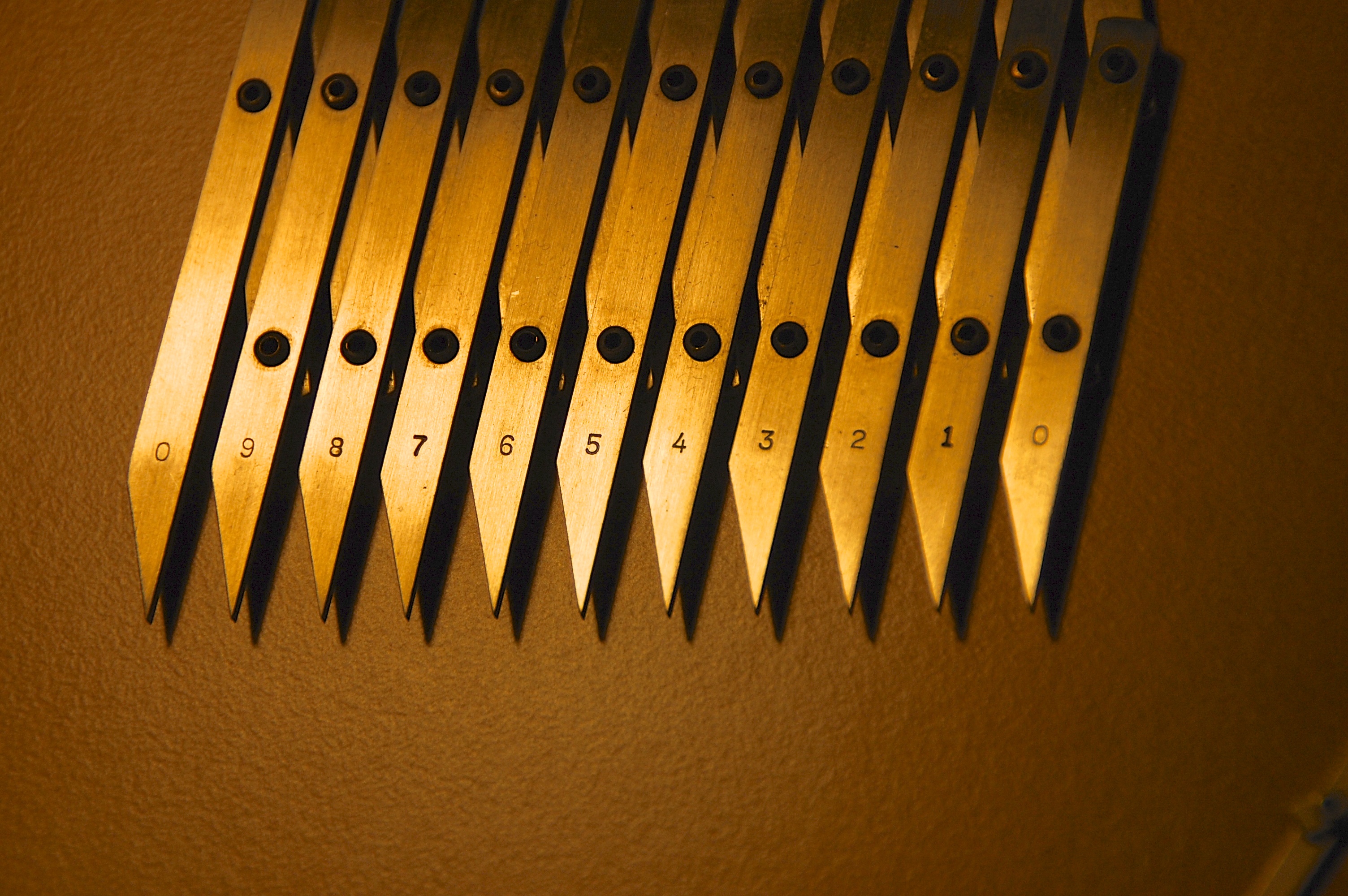
Equal space divider come in two sizes: 6" and 12"

Equal space divider come in two sizes: 6″ and 12″

This type of divider is the most expensive of the three, but for scaling or proportion work from drawings or photographs they are impossible to beat. These are the dividers I use the most of all I own and if I lost them I’d have to replace them immediately, despite the steep price. I bought my set decades ago for $130, new now they list for $350. Ouch. My 12″ set were handmade my Alteneder & Sons in Philadelphia and are collectors items. You may get lucky and find a pair on Ebay. New, a 12″ pair runs from $400 to $500. I’d recommend finding a second-hand pair but make sure the tips are not bent or the accuracy will be nil. These dividers are sometimes referred to as 10-space or 11-point dividers. Check the Ebay sites in Britain and Canada. I’ve seen them show up there as well.

DSC_0044

With these dividers you can very quickly divide a space into as many as 10 units. I used to use them mainly for laying out stairs or room paneling but now they are irreplaceable for scaling off a photograph or drawing while simultaneously drafting on the computer. Trying to scale the material from the computer screen while doing this would be much slower. For the times I do have an image in digital form and need to scale from the screen, I’ll flip a piece of acetate over the monitor to keep the sharp teeth from scratching the screen. It’s fun to watch people with expensive monitors see me do this and gasp in horror.

The Importance Of Locations

I’ve always thought the “A film by” credit was unwarranted. Take any film, imagine it being made with a different cinematographer, editor, composer, production designer, costumer, much less a different cast, and you’ll have a completely different film no matter who’s directing it.

There are a number of films you could say the same about if you had a different location scout. Sometimes a location affects the look of the entire film. It can dictate the look of the stage sets. It can set the psychological mood of the story. A good location scout can bring so much to a film that very few people will ever realize.

The Seaside Community in Seagrove Beach, Florida which served as the main setting for the film The Truman Show.

The Seaside Community in Seagrove Beach, Florida which served as the main setting for the film The Truman Show.

In 2000 I was working on one picture where the head of locations was trying to find a house that set up the story. He found three houses that he believed would all work for the setting. The director mulled them over but said he wanted to see more choices. Every week he and is team would scour the town looking for the perfect house, talking to the owners, doing a full photo survey of each which consisted of photographing the house in and out, processing the film with 4 copies of each frame ( this was pre-digital) and then taping the photos into manilla folders including the long taped-together panorama shots.

These folders soon filled file boxes. A lot of them. Someone from the studio called up wondering how we could have spent over $10,000 in film processing. We told them to come look for themselves.

Playing a hunch, the locations manager went back to the director with another folder. Exasperated, he said he had found one last house that he really felt was the right one. The director looked at the photos, nodded and said condescendingly, “Why did it take you so long to find it?” The locations manager flipped the folder over and pointed at some notes on the back with a date. “It didn’t”, he said. “This is one of the original three houses I showed you two months ago.”

Criterion has released a new edition of the 1997 film, The Ice Storm, (a film I didn’t work on). In this video from the Criterion site, Production Designer Mark Friedberg talks about the importance of finding just the right locations that would convey the psychological picture of each of the families.

Wayne Manor Was A Remodel – Delineating Set Walls on Drawings

Often when sets are designed there is either an advantage or a mandate to using existing flats for a set’s construction. Sometimes a standing set is revamped or stock set walls are pulled from storage to either save money or time or both, particularly in Television where there is never enough of either.

Universal Studios was famous for revamping sets to the point that some sets were merely repainted and dressed for a TV series when a show required numerous sets. I spent my first years in television at Universal and the Production Designers there were experts at reusing stock units from the large stock sheds on the lot. In recent times some designers resist the idea of reusing scenery but audiences rarely ever notice when they are seeing a stock set. The practice was much more widespread in the early days of TV when there were actual studios in existence who saw the value in having large amounts of stock scenery and made efforts to catalogue and maintain it.

The problem from a Set Designer’s perspective is how to delineate the different walls on the drawings to communicate what is what. Each studio had a slightly different nomenclature, as I learned on my first show at Universal on Murder She Wrote. One day the foreman called from the stage. “Where the hell are all these stock walls you’ve got on this drawing?” he asked. I was confused until I realized they used a different delineator symbol than what I’d always used.

Some of the nomenclature was universal (no pun intended). A thin line on the plan meant the wall was existing and standing in place. it was rarely dimensioned on the drawing. A thick line at most studios meant it was a stock wall and was accompanied by it’s stock number. At 20th Century Fox, this line was also pochéd (shaded). A hatched line denoted new construction except for drawings done at MGM and Universal Studios where it meant the wall was stock. A thick line to these art departments denoted a new wall.

At 20th Century Fox Studios when they were planning a television version of Batman in 1965, the producers were on a limited budget to make the pilot. As the show required numerous sets and the Batcave interior was going to take a big chunk of the construction budget, they cruised the stages on the lot to see what sets might be standing that they could reuse, particularly something that would stand in for Wayne Manor as the script called for a well-appointed mansion.

According to Ed Hudson, long-time manager of the Art Department, the producers heard that the TV series 12 O’clock High was going to be using one of their main sets less, a reproduction of an English Tutor mansion that stood on Stage 18 and was used as the headquarters of the squadron. The network had decided the show didn’t have enough action scenes to keep the young crowd engaged and planned to shoot more of the show ‘in the air’ with scenes in the planes and less talkie scenes on the ground.

Shown below is a copy of the original plan and elevations showing the various wall types, dated September 1965. For those of you wondering, the Bat poles are at Elevation H.

The set drawing for the Wayne Manor interior for the pilot episode.

The set drawing for the Wayne Manor interior for the pilot episode.

Plan detail showing walls at Elevation A. Note shaded and hatched walls.

Plan detail showing walls at Elevation A. Note shaded and hatched walls.

Elevation A showing the three types of walls clearly marked.

Elevation A showing the three types of walls clearly marked.

The table beside the title block clearly lists all the stock walls, their position on the plan and their stock number.

The table beside the title block clearly lists all the stock walls, their position on the plan and their stock number.

Once the network accepted the pilot, a permanent set matching it was built on Stage 24. With minor alterations, the original set was duplicated as seen in this November 1965 drawing below. Note that the walls drawn as ‘standing’ on the other plan are hatched for new construction.

Batman_Wayne Manor2_copy

The exterior of the house was an actual location, a house at 380 South San Rafael Avenue in Pasadena. It’s my guess that the location was chosen after the interior set was built.

Having a standing set influence the look of another permanent set is more common than you would think. The set for the 1993 comedy The Nanny, was a reused and slightly revamped stock set from a show called Sibs, which had been shot on the same stage and never made it past the pilot stage.

When the 2010 NBC series Parenthood started, the main characters house was based on a home in Malibu canyon where the exterior shooting was planned. The site was surveyed and had been reproduced on stage by the time the deal between the homeowner and the studio fell through. With no time to redesign, the producers were stuck with the houses look. When the exterior of the house was duplicated on the backlot at Universal the next year, it was a close copy of a house that was never shot for the series.

Original location of the house for the main characters of the series Parenthood.

Original location of the house for the main characters of the series Parenthood.

Parenthood cast in front of the exterior facade built on the Universal Studios lot which was influenced by the location house which was chosen but never shot.   photo by NBC Television.

Parenthood cast in front of the exterior facade built on the Universal Studios lot which was influenced by the location house which was chosen but never shot. photo by NBC Television.

One thing that producers aren’t is psychic, much to their dismay, and you never know if you have a hit or a flop on your hands until the public sees it, and even then you can’t be sure. When the pilot for the original Batman series was tested it tested worse than any other show the network had done. Considering shelving the series, luckily they decided to air it since so much money and already been spent on the show, not knowing it would become a cultural phenomenon.