What Is A “Double Dap” Hinge?

One of the reasons that I wrote the Wrand Film Glossary was to record many of the obscure film and entertainment industry terms that get passes down orally but are never recorded.

Art department and set construction lingo is usually not included in the typical film glossary, and “Double dap” is one of those odd terms that you will hear used by Prop Makers* but have probably never had it explained.

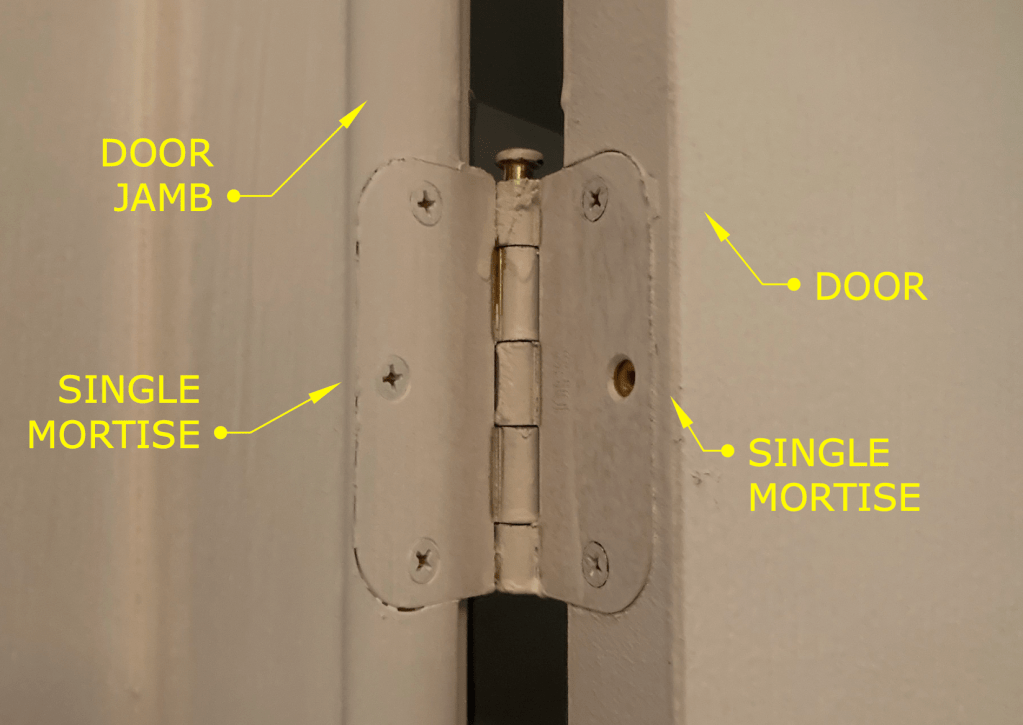
The term refers to how the hinges of a door on a stage set are to be installed. Normally the installation of hinges for a door involves creating mortises in the door stile and the jamb that match the thickness of the hinge leaves. That’s referred to as a “single dap” installation. (Note: this is specifically for doors in North America or the UK. Many Continental European doors are half-overlay and don’t use the type of leaf hinges that are standard here.)

Typical hinge installation – referred to as a Single Dap

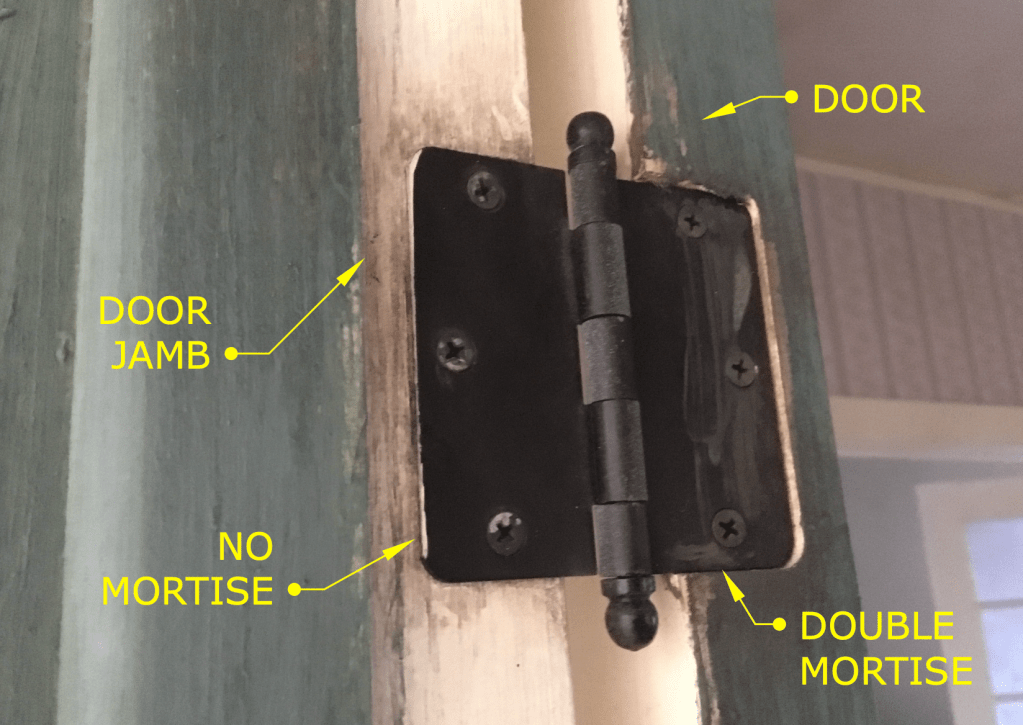
A “double dap” installation involves creating a mortise in the door which is twice as deep as usual and not making a mortise in the jamb, as shown below.

Example of a Double Dapped hinge

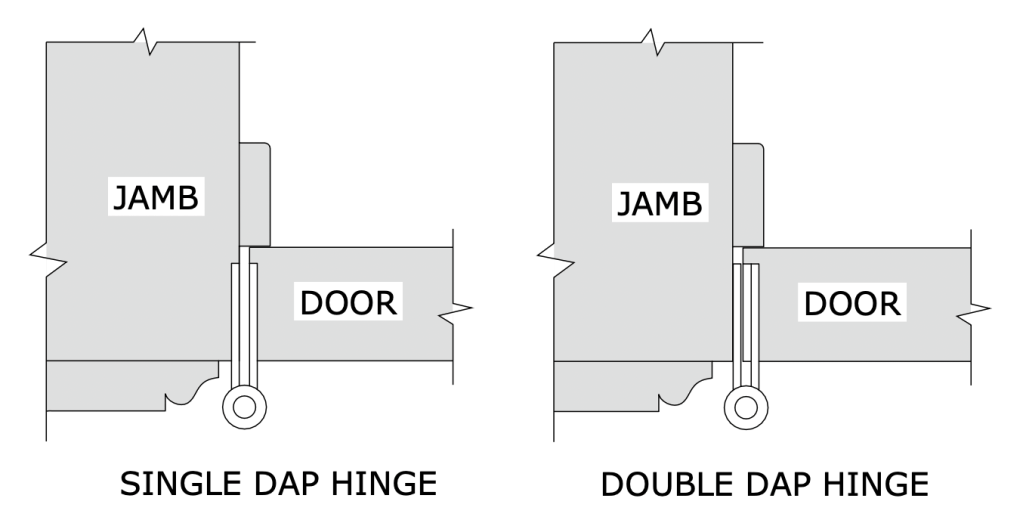
The diagram below is a side-by-side plan view showing both types of installation.

So what’s the purpose of this? Well, this is something that is more typical on sets for a broadcast show than on sets for a feature film.

One advantage is speed. We tend to build sets at a pretty brisk pace, sometimes building an entire set over a weekend. For example, if you have a set with six doors, that means you need to install 18 hinges, which means routing 32 mortises. With a double dap installation you cut that number in half.

Another advantage is if you are redressing a set and need to change out the door of an opening for a different door. With a standard installation, you will need to patch and fill and re-rout three mortises. Instead you just need to fill some screw holes.

This is also the case if you need to change the swing direction of a door at the last moment. (Good luck prying off and repositioning that door stop.)

Double dapping has fallen out of favor lately. Production Designers don’t like the look of it for one thing. (Along with Phillips head screws on a period hinge!) They tend to stick out particularly when the hinges are a contrasting color from the jamb or if the wood is painted a light color and the hinges have a dark laquer/black finish. In some instances this condition can either visually hide the extra mortise depth or accentuate it.

Also, notice the round corners on the hinges in the photos. Round corner hinges are a 20th century invention to speed up production. Once machinery, i.e. routers, was being used for mortising, it became a lot faster to create hinges with leaves that didn’t require squaring off the mortise corners as was necessary for period, square hinges. Round corner hinges come in 1/4″ and 5/8″ radius corners, so be aware of what radius size they are if you’re choosing hinges for a door that has already been mortised.

Note: Prop Maker is a designation for a union stage carpenter in Los Angeles to differentiate them from a ‘civilian’ carpenter. They are trained it building theatrical scenery of all types and historical periods and specialize in creating scenery for film productions. They are more similar to cabinet makers than a typical carpenter and are skilled in construction techniques and methods that would baffle most people outside the entertainment industry.

Sometimes Unwanted Holes Aren’t So Bad

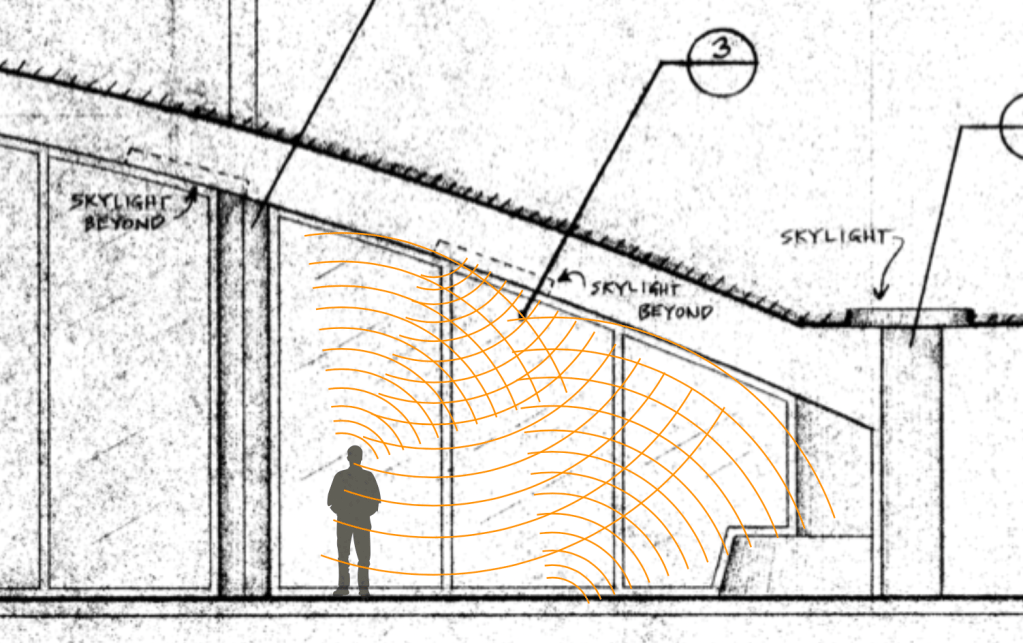
You’ve probably never thought about how sound can affect your stage set. Beyond trying to not create an environment that would drive the sound recordist mad, you usually don’t think about odd acoustic anomalies that might pop up that you never intended to happen. Like echoes.

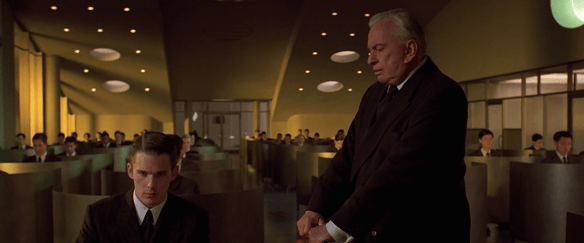
Computer Hall set – Gattaca – Columbia Pictures 1997

Yeah, echoes will bite you in the ass if you’re not careful.

On the main set for the 1997 film Gattaca, just such an anomaly occurred, and it was the cinematographer who ended up saving the day.

And what does the cinematographer have to do with sound problems? Keep reading.

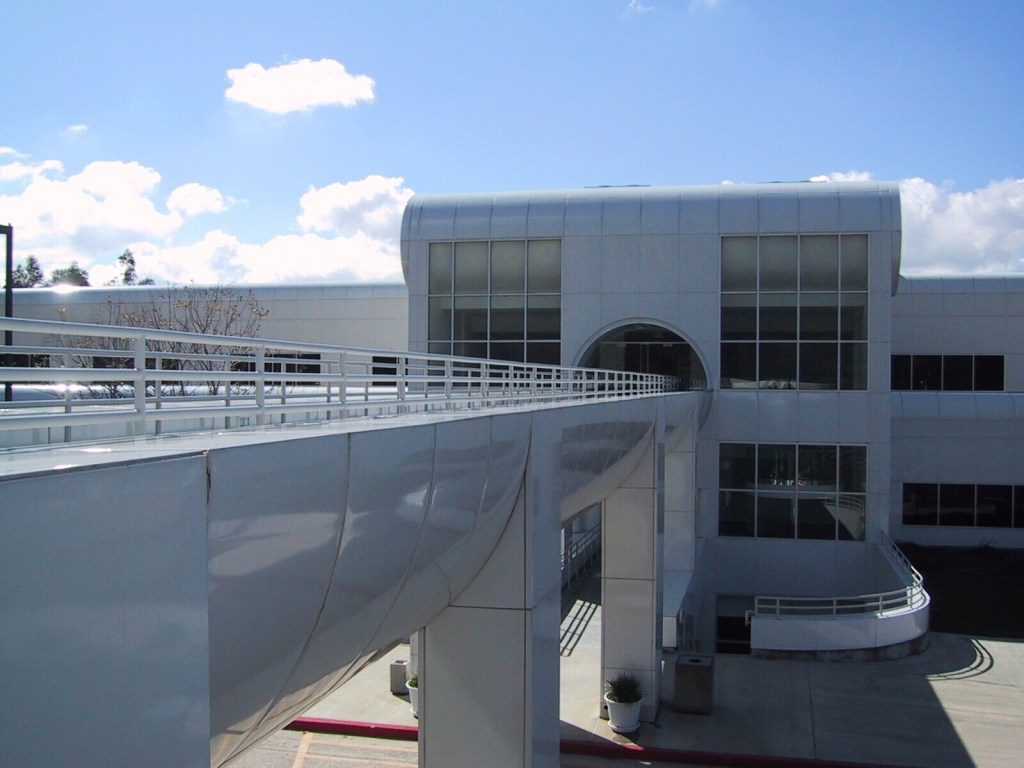
The Computer Hall set was designed by Production Designer Jan Roelfs and was inspired by the real-life location that he and Director Andrew Niccol chose for the film. The actual building chosen for the exterior of the Gattaca Aerospace Corporation was the Marin County Civic Center in California, designed by Frank Lloyd Wright. The art department flew to Marin and surveyed the interior details so that they could be matched for the set on stage, which was in a warehouse in Playa Vista.

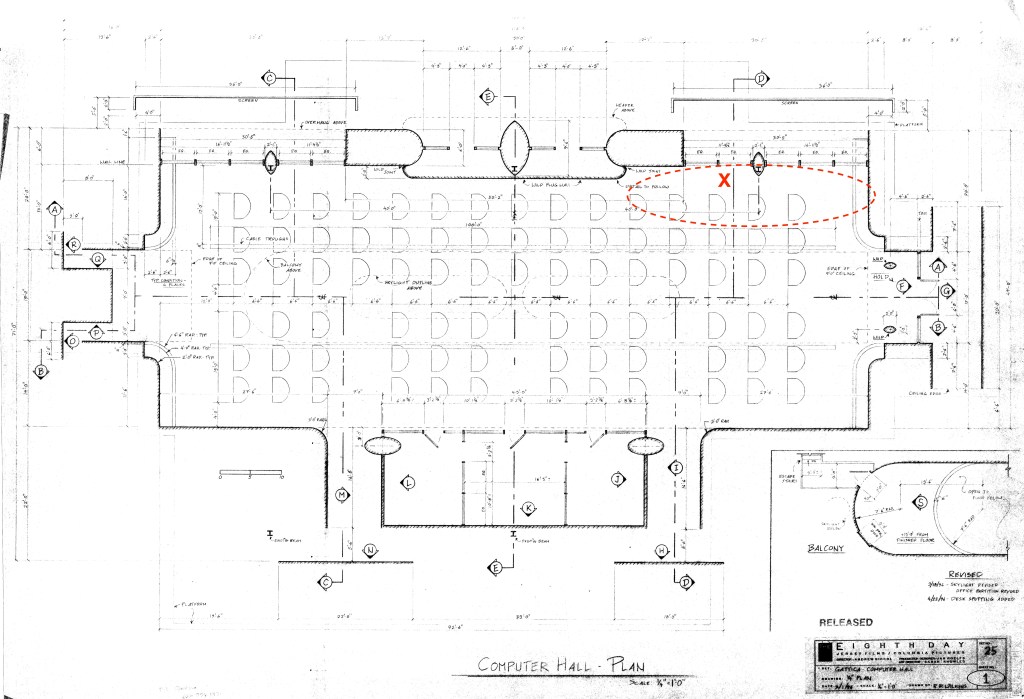
The building they had leased made for an odd sound stage, but its size made it large enough to build the sets for the film in. There were the normal problems you deal with in a structure that was never designed to be a sound stage: support posts at regular intervals, a ceiling that is not nearly as high as those in an actual sound stage. On the plan below, you can see where the oval columns were designed to hide two of the building’s I-beam columns.

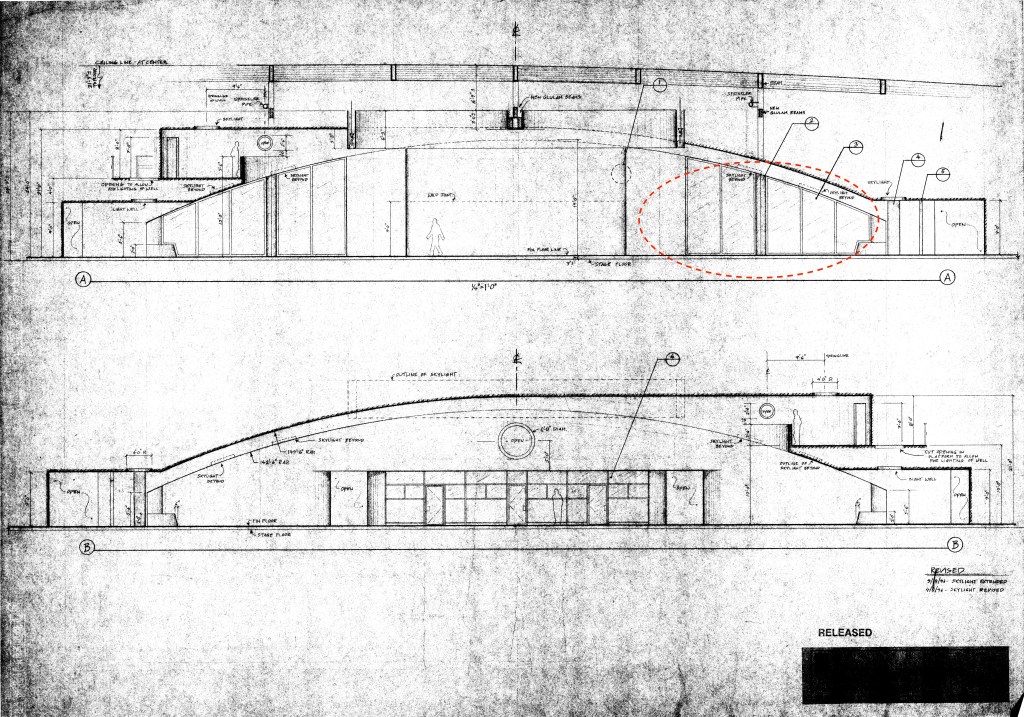
These are my drawings of the plan and elevations of the set with the areas of the sound problems circled.

(One note: on the title block, you’ll notice it reads “Eighth Day”. This was the original title of the film. In pre-production, the producers learned that there was a French movie of the same name that was going to be released, and a name change was required. The writer and director Andrew Niccol decided that he would create a new title using the four letters used to identify the nucleobases of DNA: GATC.)

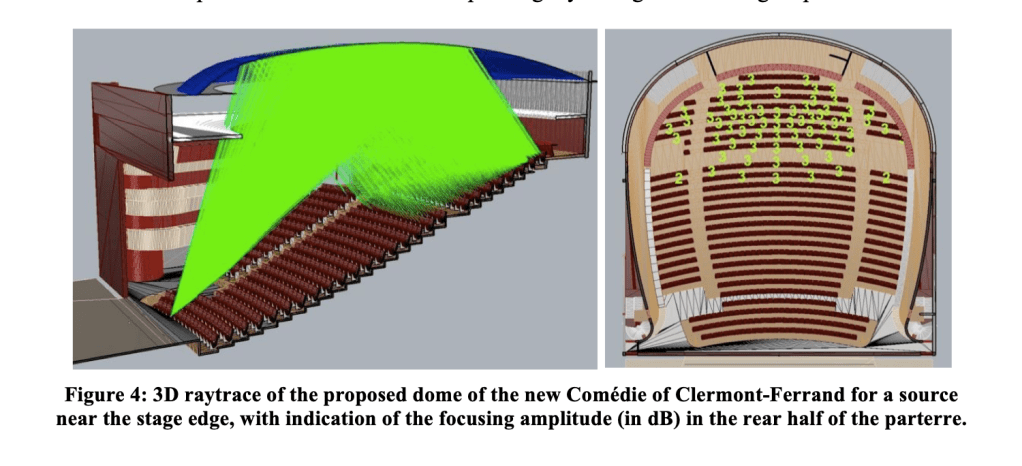
Turns out, theater designers had known about the sound reflective effects of elliptical and parabolic ceilings for years, as most of the western world designed theaters in the mode of the typical Italian horseshoe layout plan.

A presentation at the 2017 International Congress On Sound was focused on this phenomenon.

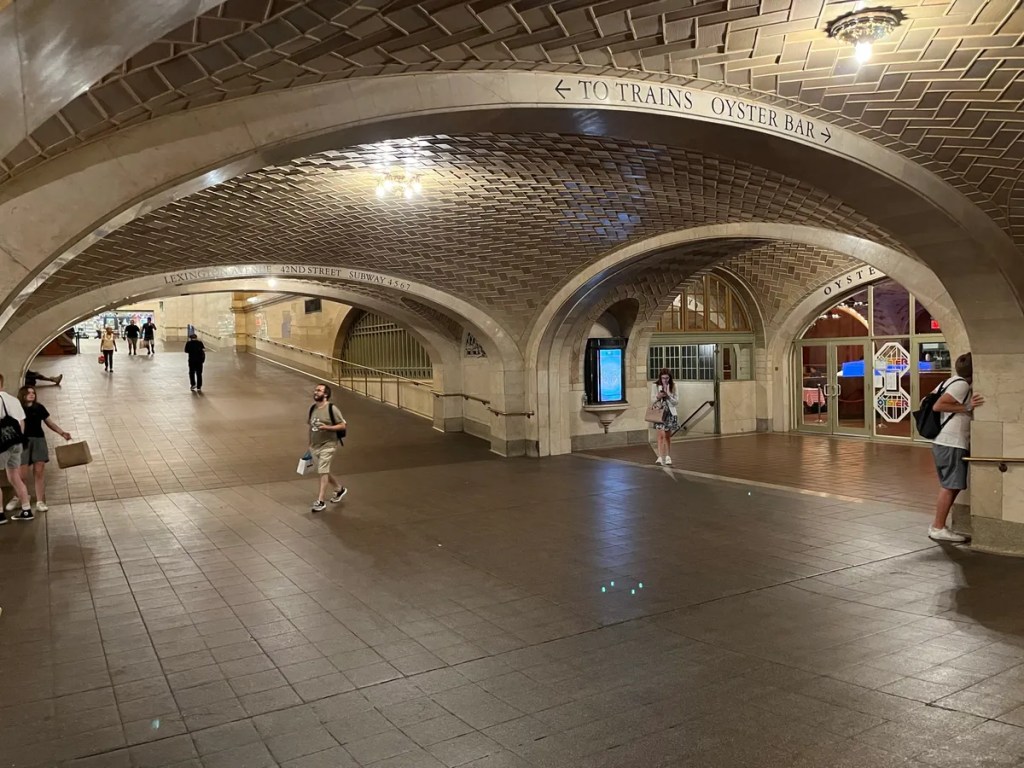
In New York City’s Grand Central Station, there is a ‘whispering gallery’ or acoustic vortex. This is an architectural phenomenon created by a number of configurations, in this case, a vaulted ceiling in the subway entrance under the terminal. A person standing in one corner of the hall intersection can whisper into the corner and the sound travels over the curved surface of the ceiling and can be heard by a person standing in the opposite corner.

New York Grand Central Station

I discovered the echo one day when I was walking the set and stopped at the point in question. I saw a gnat and clapped my hands together to kill it. That’s when I heard the strange echo. Horrified, I clapped again and there was the same echo. I clapped a third time, just as Jan was walking through the set. He stopped and frowned. “Don’t do that!’, he said.

I think what was happening was that the area beneath the lower section of the ceiling of the set created a flutter echo, which was enhanced by the smooth ceiling surface. The two large skylights didn’t seem to affect this echo.

There was no carpeting or fabric to dampen the sound which would have eliminated this effect.

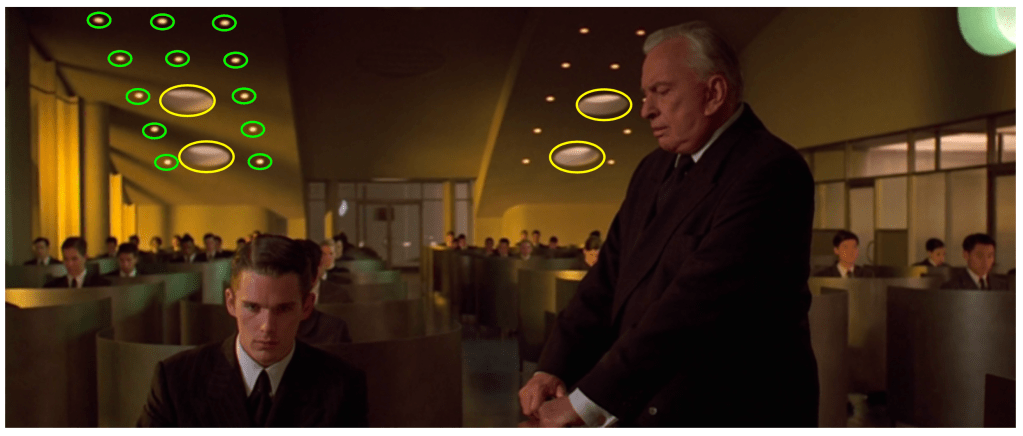
The solution came for the most part when the cinematographer, Slawomir Idziak, told us that he needed more practical lights in the set. This required creating dozens of new openings in the lower sections of the ceiling. These holes interrupted the acoustic waves and the echo disappeared. With the addition of the desks and the background actors, the sound reflection was minimal.

The photo below shows the original skylights in yellow, with the new lights circled in green.

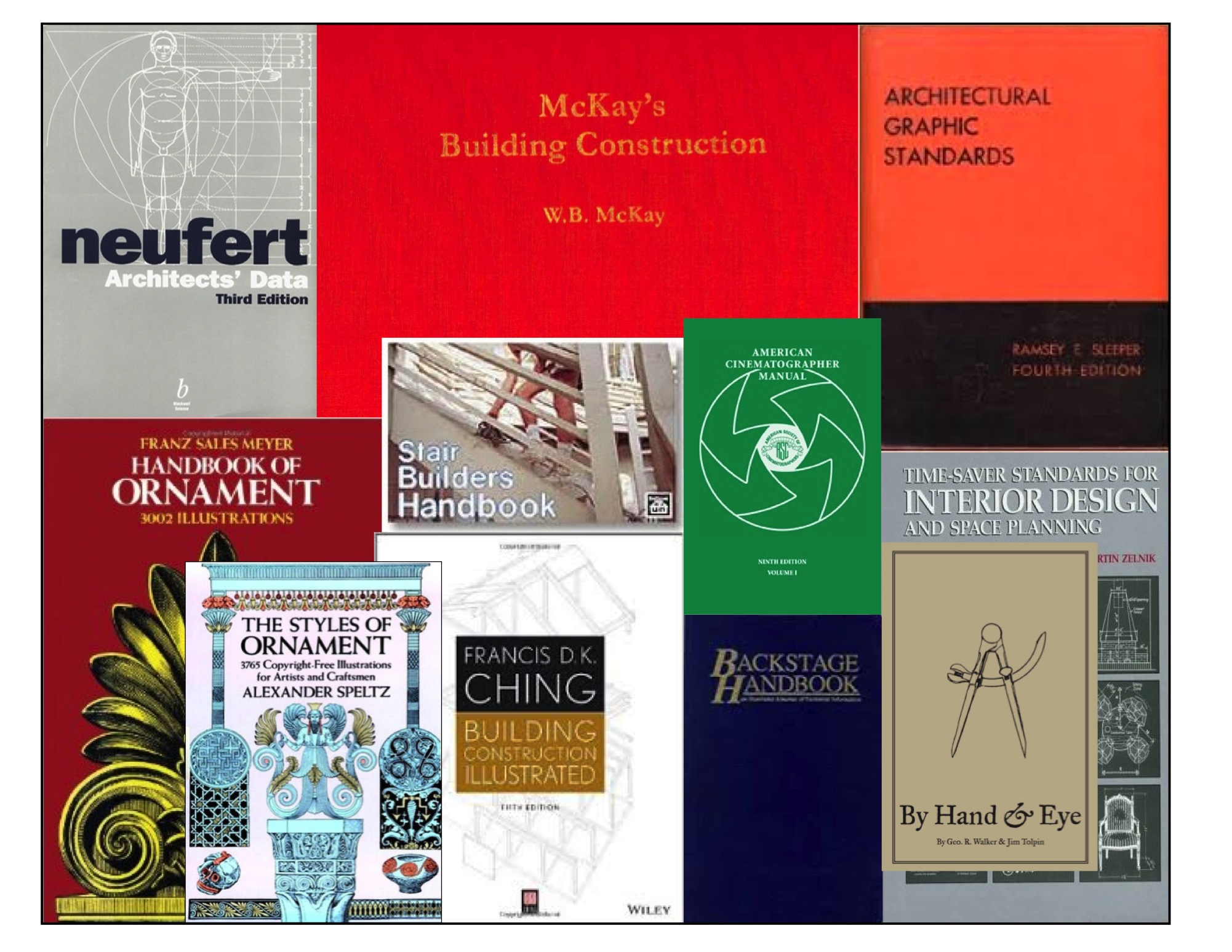
18 Design Reference Books You Should Have On Your Shelf (UPDATE)


design book montage_1

Ten years ago,  I wrote a post on 10 design books that I thought everyone should have. Looking at that list now, I think I need to expand on it by adding a few more to the list.

Here is my must-have list with sources:

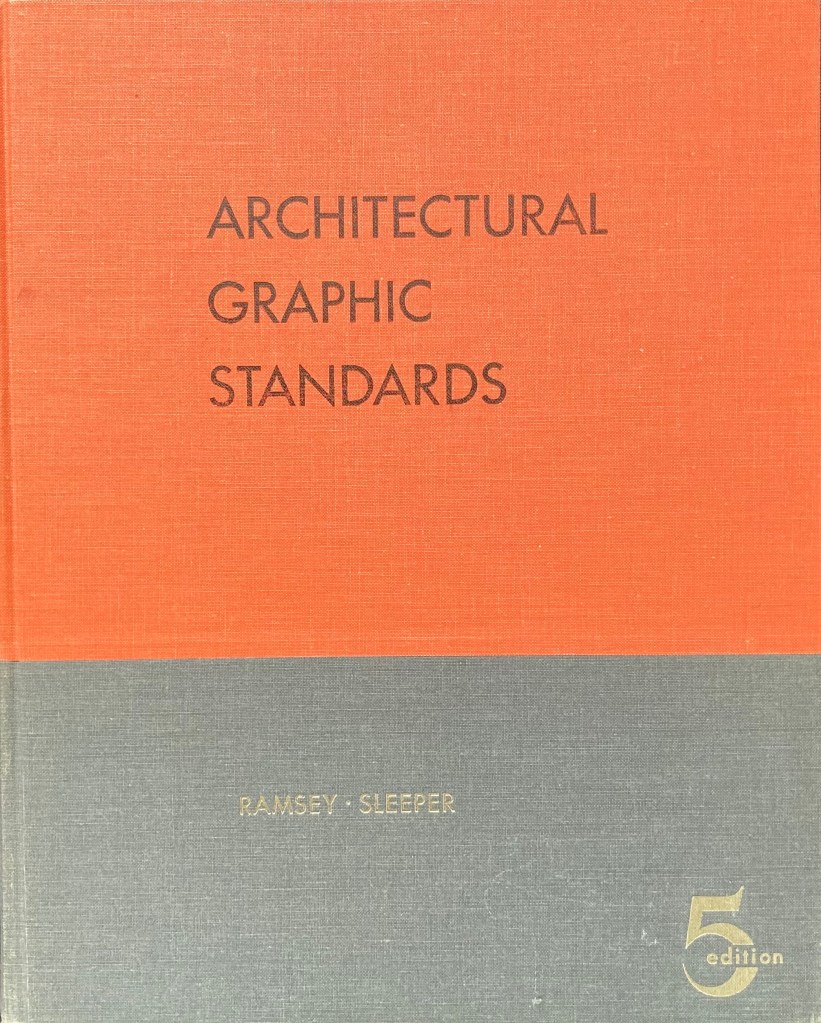
1. Architectural Graphic Standards – 5th Edition –

This was when the books were filled with great hand drawings and actually showed you in detail how things were built. There are lots of period details as well. Out of print for over 50 years, (at least in this edition) you can still find copies for anywhere from $20 to $200. The 3rd edition would be a suitable replacement. the first edition is also good to have and has been reprinted several times. Check Abebooks for copies. Not available digitally.

If you are in Great Britain, McKays is the closest equivalent, and is actually superior in a number of ways from our standpoint as set designers. On the Continent, an older copy of Neufert’s is a must. See this earlier post for details. Not available digitally.

___

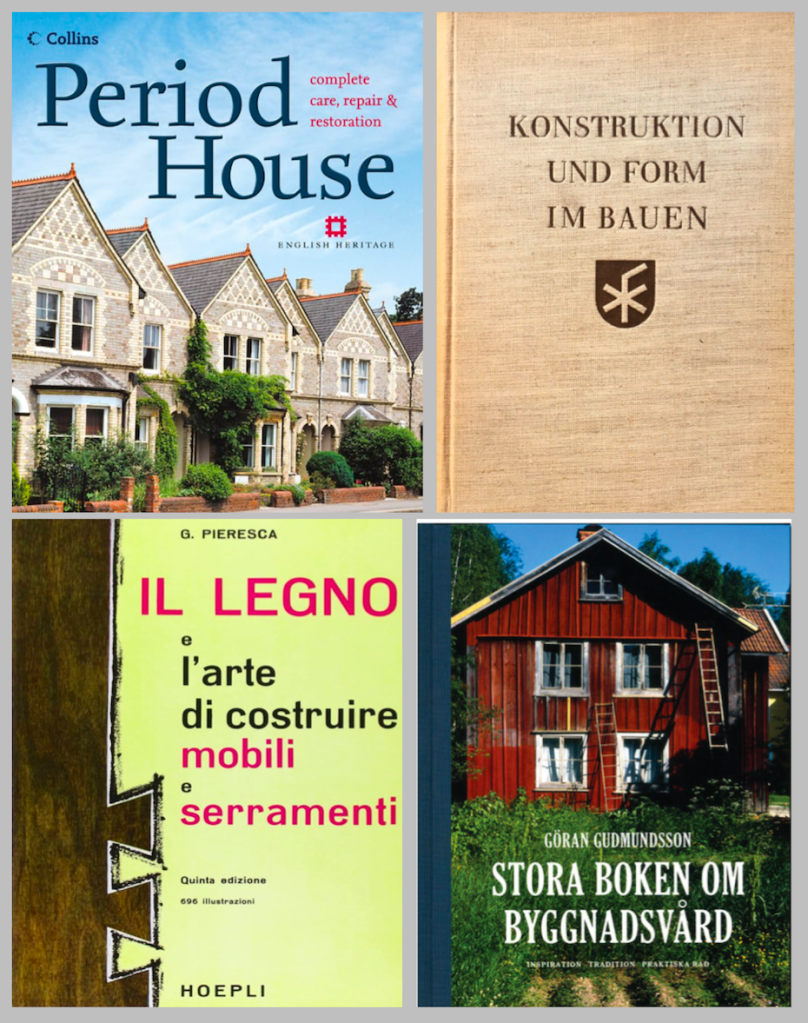
Another option in England is Period House, by Jackson & Day, which goes into extensive detail about common interior architectural elements for restorers. In Germany, the best book on period construction I’ve found is Konstruction Und Form Im Bauen, by Friedrich Hess. There are lots of very nice drawings and measured details. It’s long out of print but you can still find copies second-hand. In Sweden, an excellent book on traditional construction is Stora Boken Om Byggnadsvård, by Göran Gudmundsson. This is a current book and still in print. In Italy, a nice book on traditional construction techniques with detailed drawings is  Il Legno e L’arte Di Contruire Mobili e Serramenti. None are available digitally.

***********************************************************************

2. Time-Saver Standards for Interior Design and Space Planning, 2nd Edition.

This is the interior design complement to Architectural Graphic Standards and covers nearly every situation regarding building interiors. You can find used copies for around $50. There is a digital version available but it’s not only difficult to navigate because of the size of the book but at the price you’d be better off getting a hardback edition.

Another companion to this is a nice slim book that is for kitchen and bathroom standards in the U.S. The NKBA Kitchen & Bathroom Planning Guide was created to make common building codes and layouts available to designers in an easy to use format.

*********************************************************************

3. Styles Of Ornament – Alexander Speltz.  

Originally published in 1904, this book uses over 4000 drawings to illustrate 6000 years of historical design. As a general design reference I don’t think it has an equal. Architecture, furniture, text, carving, metalwork are all covered. A must-have. About $20 new.

The Handbook Of Ornament by Franz Meyer would be a close second. Available from a number of publishers for as little as $10. A digital version is available.

Low Budget Option- download the online PDF here.

******************************************************************

4. The Stair Builder’s Handbook – T.W. Love –

Not a design book, but a book of rise-and-run tables that make stair layout a breeze. Available from various sources for about $20.

Low Budget Option – download the PDF Common Sense Stairbuilding and Hand-railing. Skip the mind bending section on handrail layout and skip to page 99. Also, Stair building, which has a nice section on ornamental ironwork.

*******************************************************************

5. Backstage Handbook – Paul Carter.

Originally a technical manual for theatrical designers, the book is full of great information for film work as well. There are more details in this earlier post from several years ago. It is one of the most widely used books on stagecraft in the U.S. Available from Broadway Press for about $22. No digital version is available.

********************************************************************

6. Building Construction Illustrated – Francis Ching.

An excellent and thorough book about construction details including wood framing systems and masonry. About $46.

Low Budget Option – access the online PDF here of the 4th edition.

********************************************************************

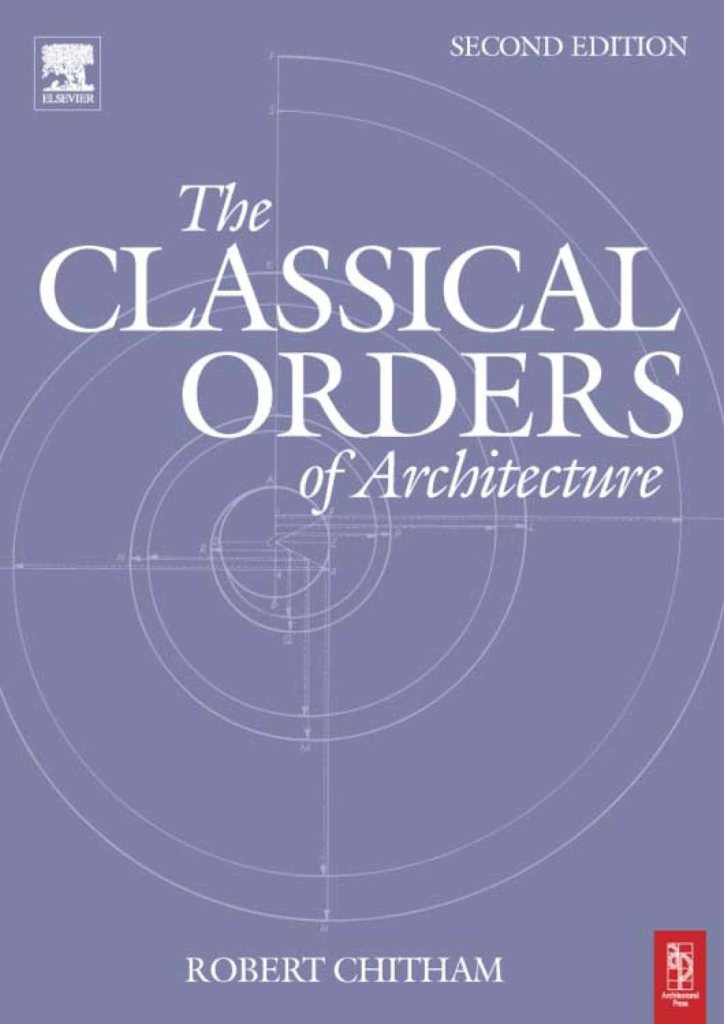
7. The Classical Orders of Architecture – Robert Chitham

I think this is the best modern book around that deals with the classical architecture proportional system. This book was out of print for quite a while and fortunately is back in print. The new edition deals with the proportions for both metric and Imperial systems. Copies can be found for about $55.

Low Budget Option – Get the PDF of American Vignola by William Ware and The Five Orders by Vignola.

*********************************************************

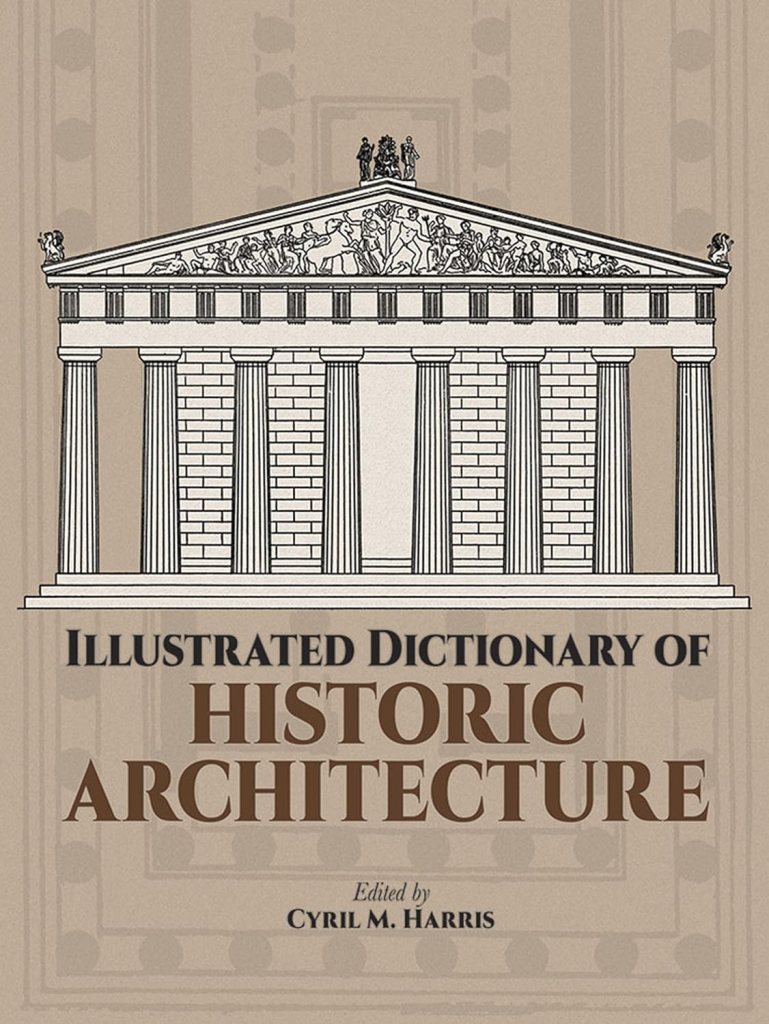
8. Illustrated Dictionary of Historical Architecture – Cyril Harris

With over 5000 terms and 2000 line drawings, this book covers architectural history from the ancient period to 20th century Modernism. Along with the European styles, it covers Japanese, Chinese, Indian, Islamic and Mesoamerican styles. About $35 from various sources.

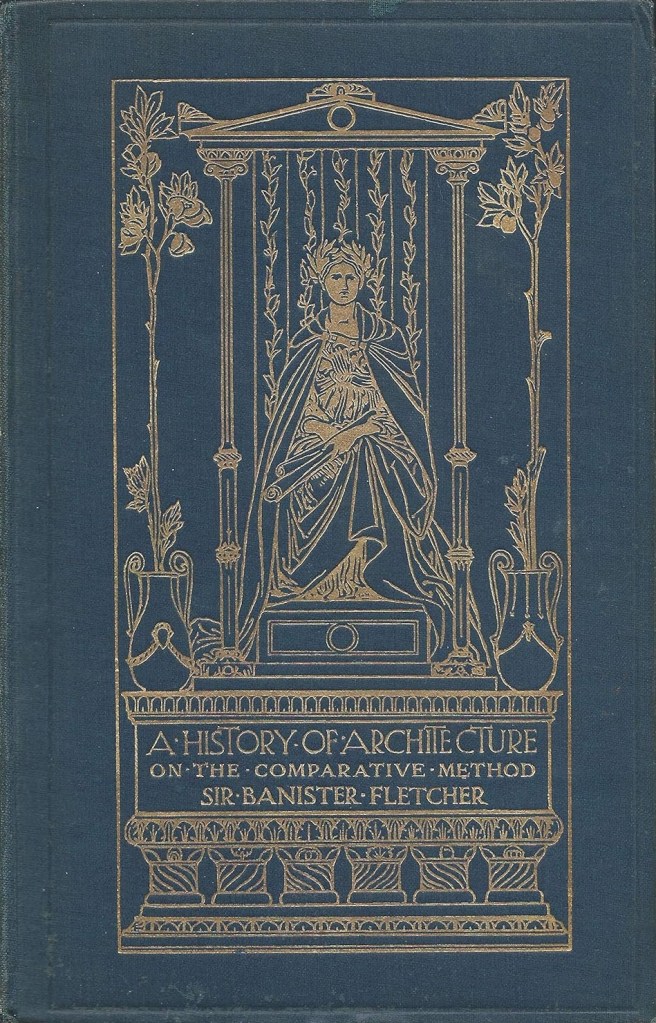
Another classic book in a similar vein is A History of Architecture On The Comparative Method, by Sir Banister Fletcher. This dense, fully-illustrated book covers the time periods from ancient times to the 20th century, focusing on Western culture. It was the most widely used general architecture reference book for decades.

Used copies are easy to find for around $20. A good scanned copy of the 1905 edition can be found in PDF form here for download. Avoid reprints. Most of them are badly scanned from originals and the fine details of the illustrations is lost. A 20th edition has been published in two volumes that comes in at over 1600 pages and includes new sections on cultural architecture from countries not fully represented in the original edition. This runs at around $250.

******************************************************************

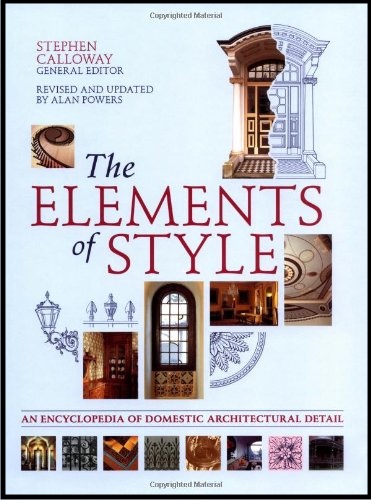
9. Elements Of Style – Edited by Stephen Calloway

This has been a standard Art Department reference manual for quite some time. Subtitles as “a practical encyclopedia of interior architectural details”, the book covers the periods from 1485 to modern day. Each chapter covers a different time period and is separated into thirteen sections which each feature an interior element, making it easy to cross reference similar elements from other time periods. The book includes over 3000 drawings and 1300 photographs to accompany the written analysis. In hardcover for around $75. Used editions can be found for as little as $20.

******************************************************************

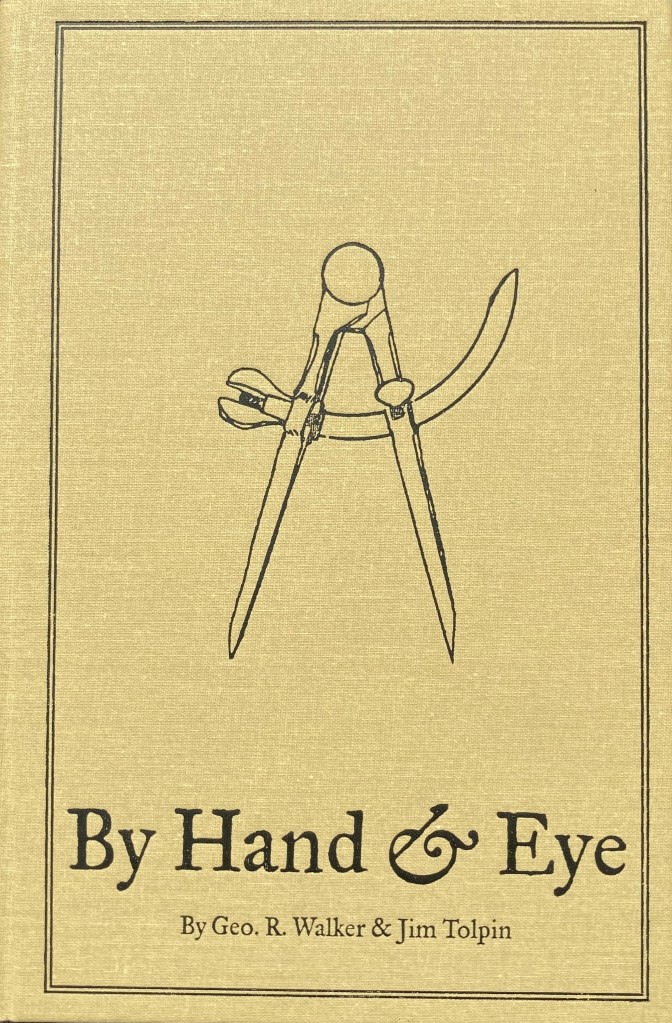
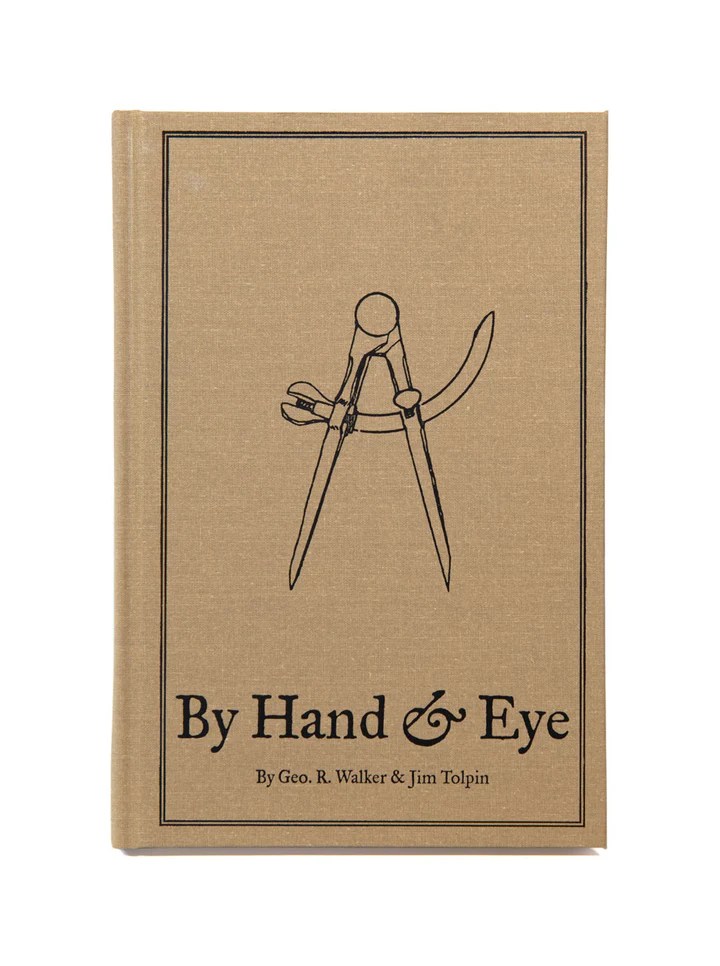
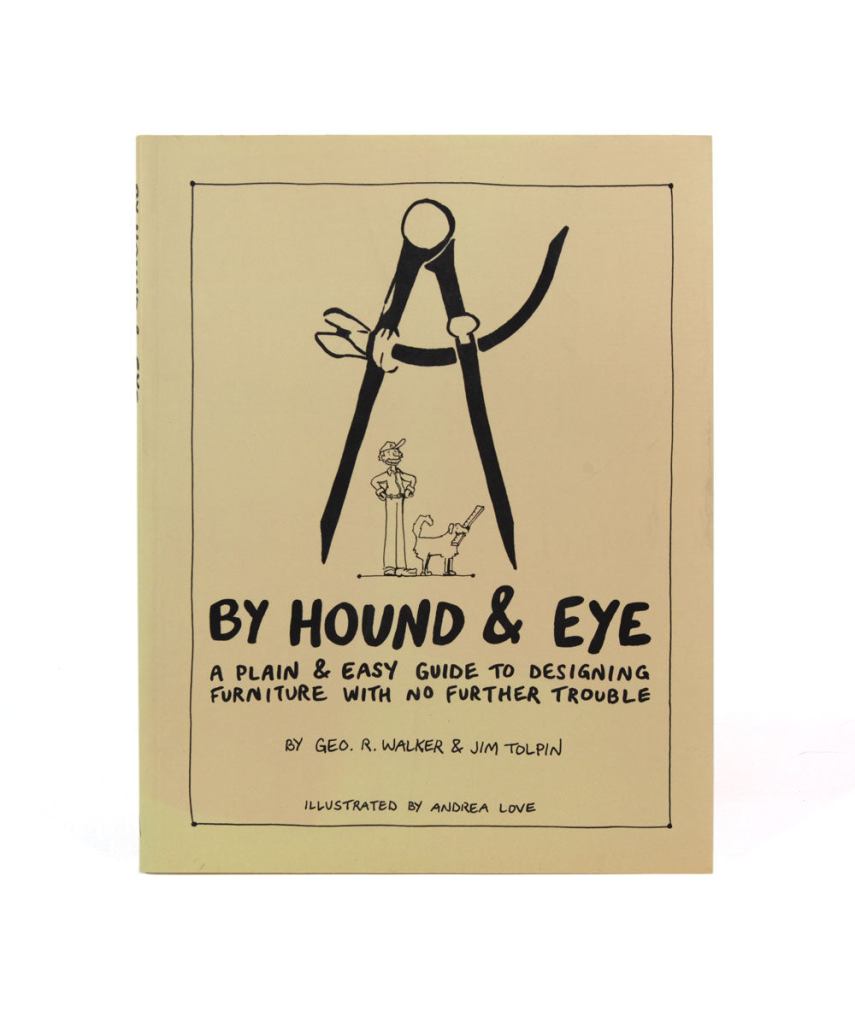
10. By Hand & Eye – George R. Walker & Jim Tolpin.

If you’re just starting out in set design this is one of the first books I’d tell you to buy. Bad proportions can ruin a design. This book will give you a solid understanding of proportion and keep you from making simple mistakes. You can download a sample chapter here. Also, I wrote a longer post on the book earlier. Walker and Tolpin are promising a workbook that will come out later this year based on the book’s concepts so look for that. Available from Lost Art Press for $51, hardbound. A PDF is available for $24.

*******************************************************************

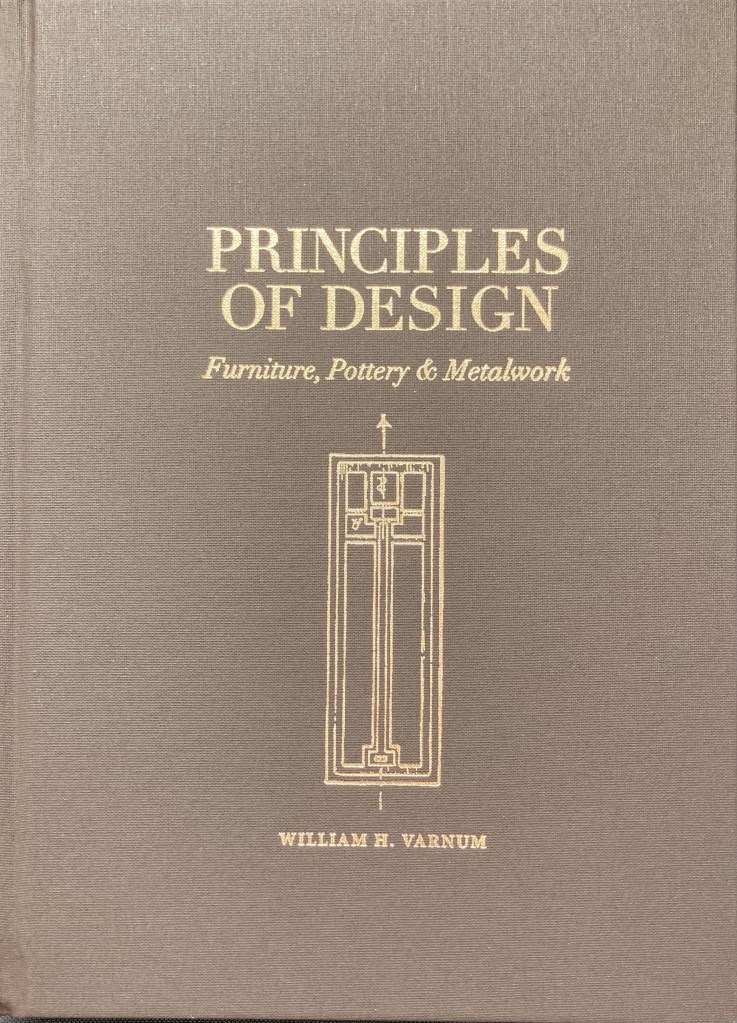
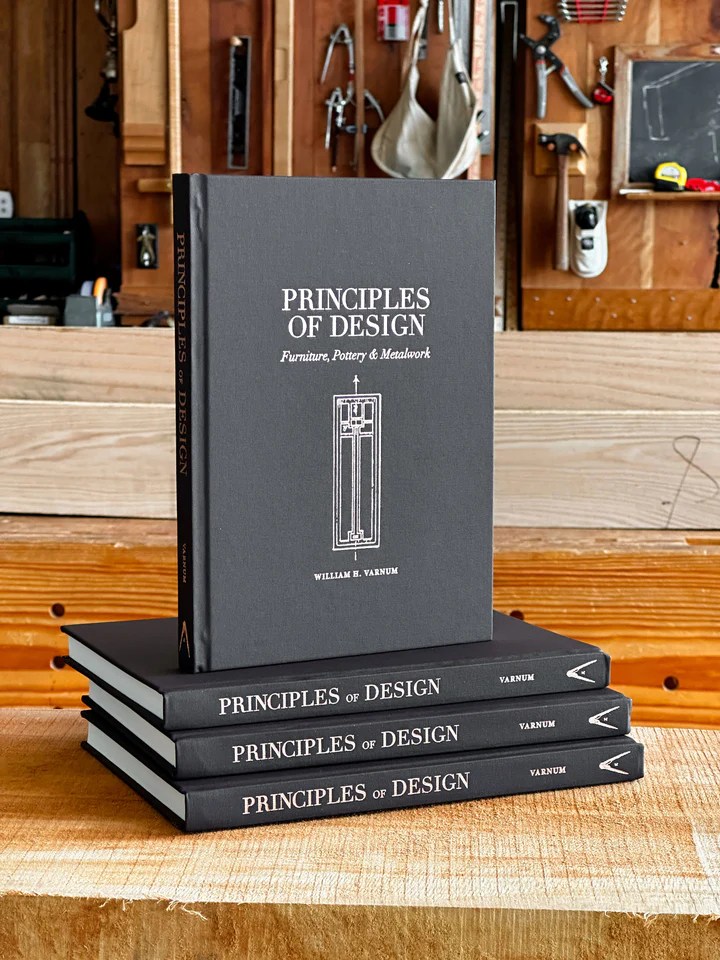
11. Principles Of Design – William Varnum

This is a recent reprint of a book published in 1916 under the title Industrial Arts Design. The book lays out the basics of design, with step-by-step rules for designing not just furniture but pottery and metalwork as well, with sections on enriching a surface with detail or hardware. The rules translate easily to architectural forms and will seem like obvious, common-sense choices once you are exposed to them. This hardback edition is the second run of a limited printing. By Lost Art Press at their website. Hard cover edition is $41.

*****************************************************************

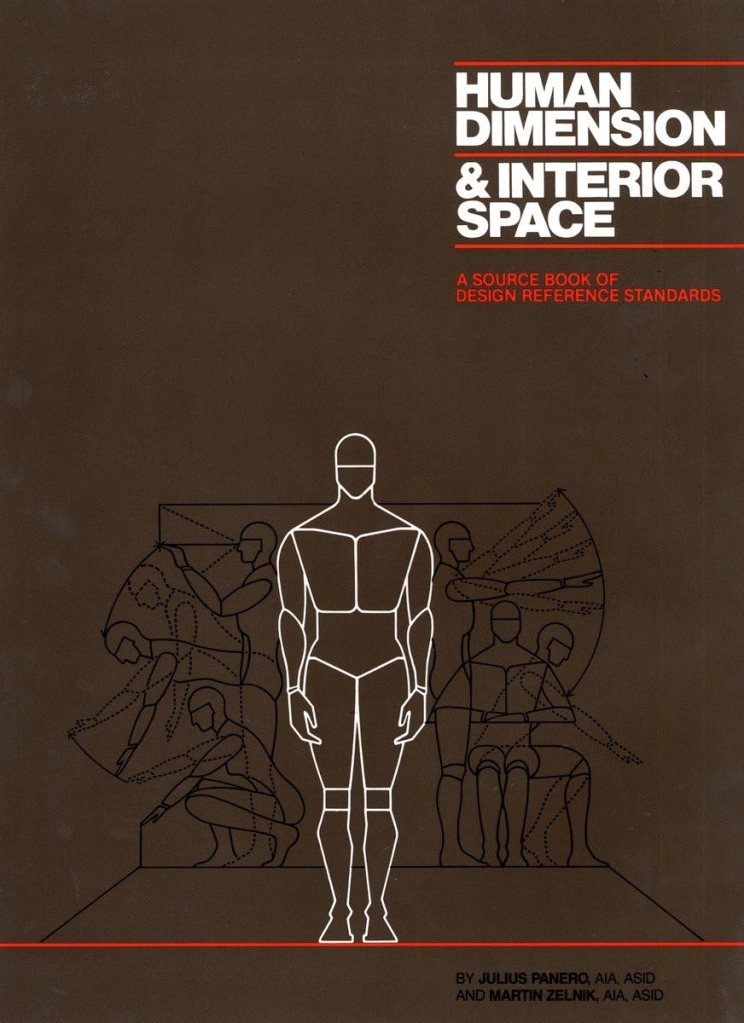
12. Human Dimension & Interior Space – Panero & Zelnik

This book explains the science of anthropometrics, which is the study of human body measurements on a comparative basis. Whether you are designing interior elements, furniture, or vehicles, this book will help you create those spaces with easy to read diagrams and charts that detail the huge disparity in shapes, sizes, and capabilities of the human form. The authors warn against designing for a ‘standard size’ human body which in fact, does not exist. New in hardcover at about $24. Digital versions are also available.

*****************************************************************

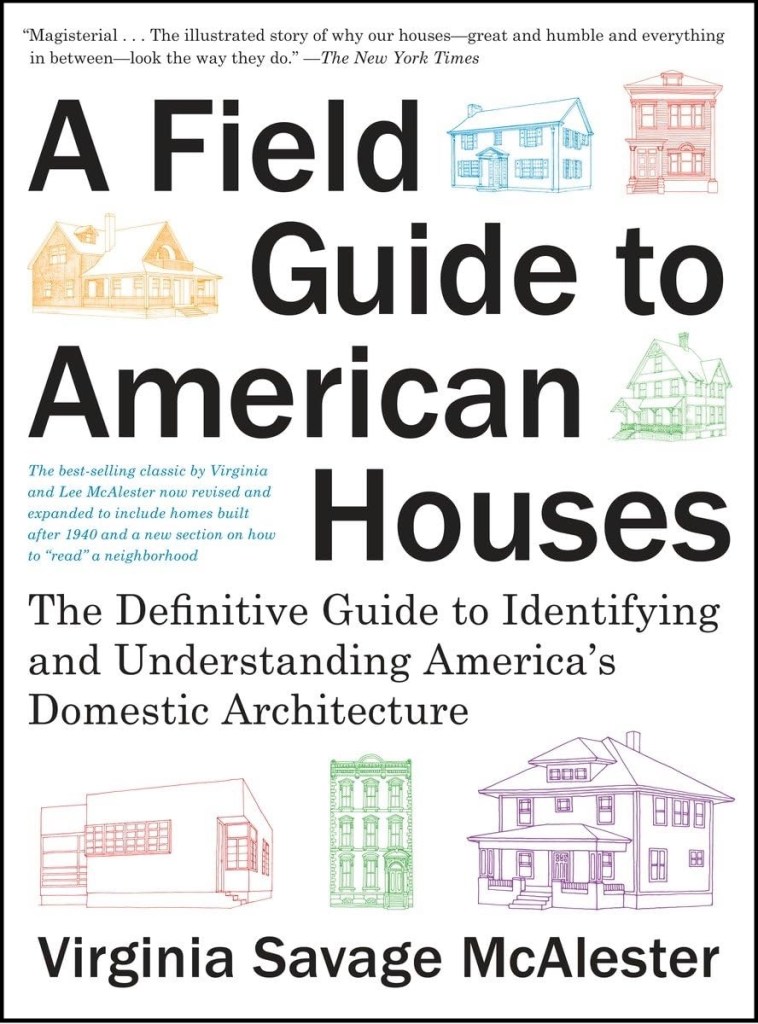
13. Field Guide To American Houses – Virginia Savage McAlester

Described as the “definitive guide to identifying and understanding American domestic architecture”, this book is considered an essential source for understanding the myriad of styles and elements that define American houses. With over 1000 drawings and photographs, the book separates the various styles into chronological categories and explains the details and accents that define each of them with clear, simple sketches. The second edition is about $24 in paperback.

****************************************************************

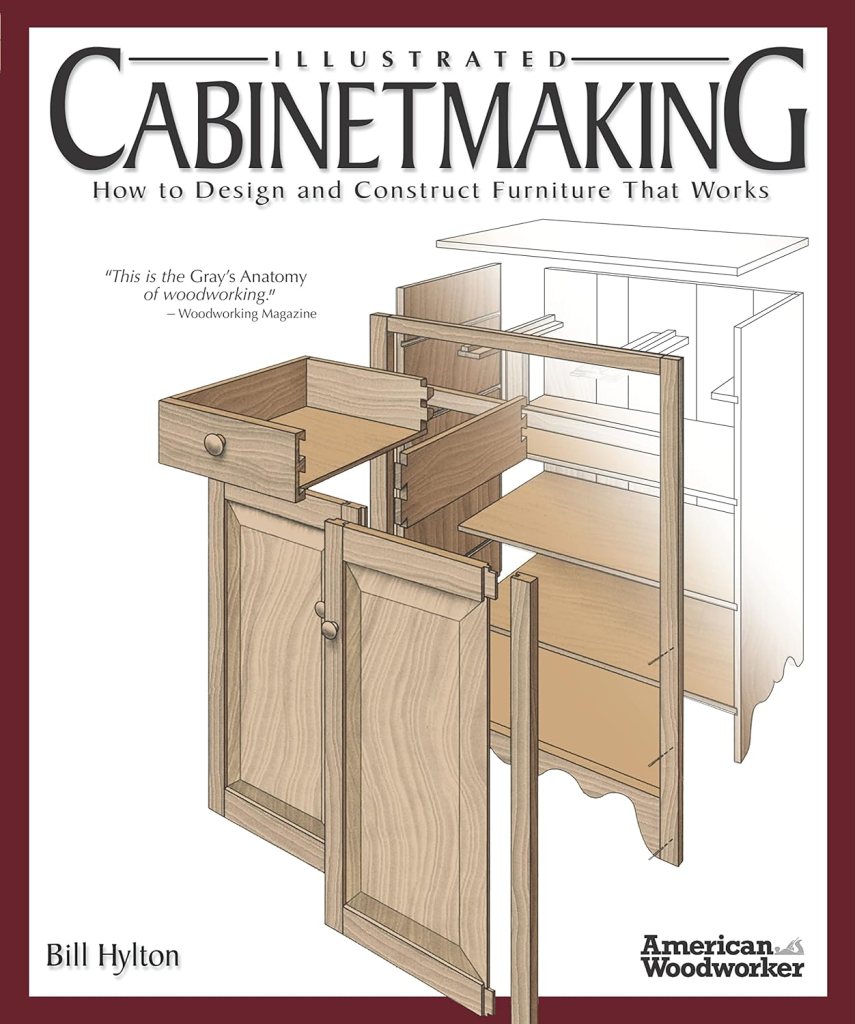
14. Illustrated Cabinetmaking – Bill Hylton

I covered this book in detail in an earlier post. One reviewer referred to this book as the Gray’s Anatomy of woodworking, and that’s a pretty accurate description. If you’re going to design furniture you need to understand how it’s built, and this book explains it with over 1300 color illustrations and exploded views of 90 different pieces of furniture from different time periods. There are sections on joinery, standard dimensions, and sources for construction drawings. Paperback editions are about $24. Digital editions are also available.

***************************************************************

15. The Encyclopedia Of Wood – Aidan Walker, Editor

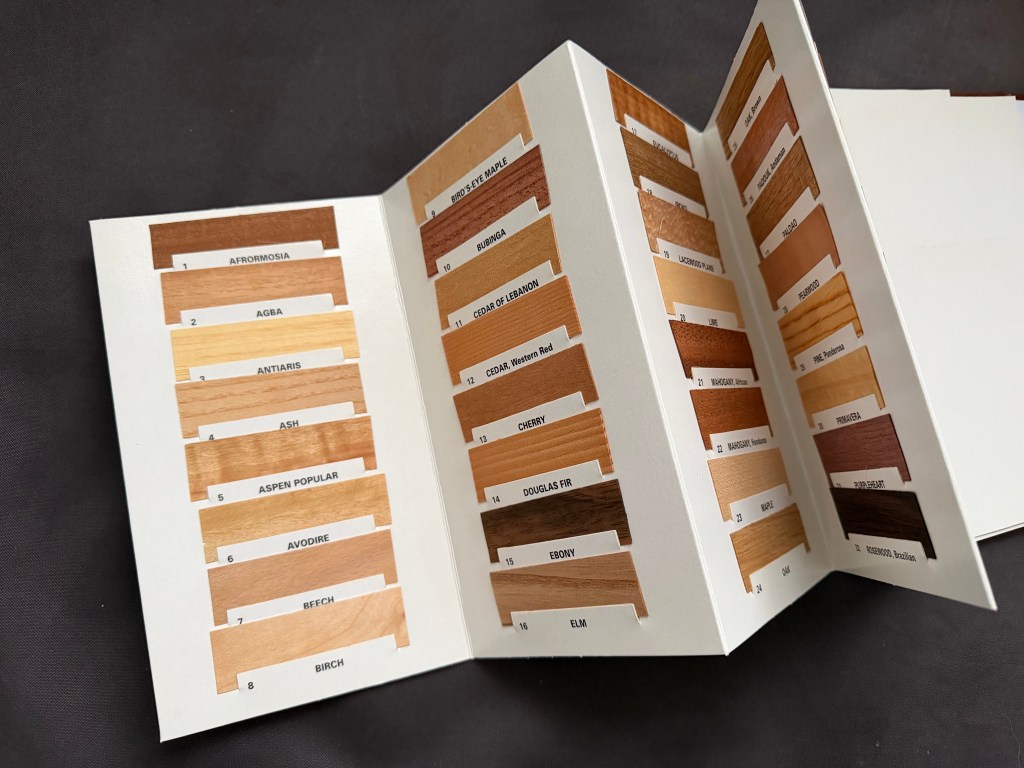
There are numerous books on tree identification but this one stands out to me because of the variety of wood that it covers and the large, clear color photographs of each of 150 species grain patterns and figure. There are also chapters on how wood is processed, what wood movement is, and how veneers and lumber are milled. In paperback for about $35.

***************************************************************

16. American Cinematographers Manual – American Society of Cinematographers

The new 11th edition will cost you about $120 in hardback and almost the same in it’s digital version through the iTunes and Android sites. Earlier used editions can be purchased for a third of the price of a new edition, but much of the latest technology isn’t in them. This is the go-to book for all things dealing with cameras and image capture. A lot of people will tell you you don’t need this. I’m sure you might also have a great career as a car designer without knowing anything about how cars work. Because when it comes down to it, all we’re really doing is designing big, pretty things to bounce light off of. Just remember, if the department names were based on physics we’d be the Light Reflector Design Department.

 *************************************************************

17. The VES Handbook Of Visual Effects – Okun & Zwerman, Editors

Published by the Visual Effects Society, this +1000 page book covers every type of visual effects shot you will encounter. From in-camera effects like miniatures and mechanical effects to green screen work, motion-tracking, LIDAR, tracking shots, LED wall stages, and everything in between. It’s the most complete book on visual effects that has been produced so far. Consider it to be a complementary reference to the American Cinematographers Manual. In paperback, the new third edition costs about $65.

***************************************************************

18. Chenier’s Practical Math Dictionary – Norman Chenier

This book is an odd duck in many ways but it has been a real time saver on a lot of occasions. There are sections on descriptive geometry, survey and layout techniques, solutions to common math problems, and other information that you’ll struggle to find anywhere else. In paperback, the latest edition is $26.
Design Gifts For The 2024 Holidays

Jeesh, it’s been ten years since my last gift guide and I’m getting it out a little late this year, but some of the same items are still here on the list, mainly the classic tools and books that never become obsolete, (like a lot of software programs do).
I don’t receive any money from these recommendations. These are books and tools that I own and use often.

My Must-Have Tools For Film Designers

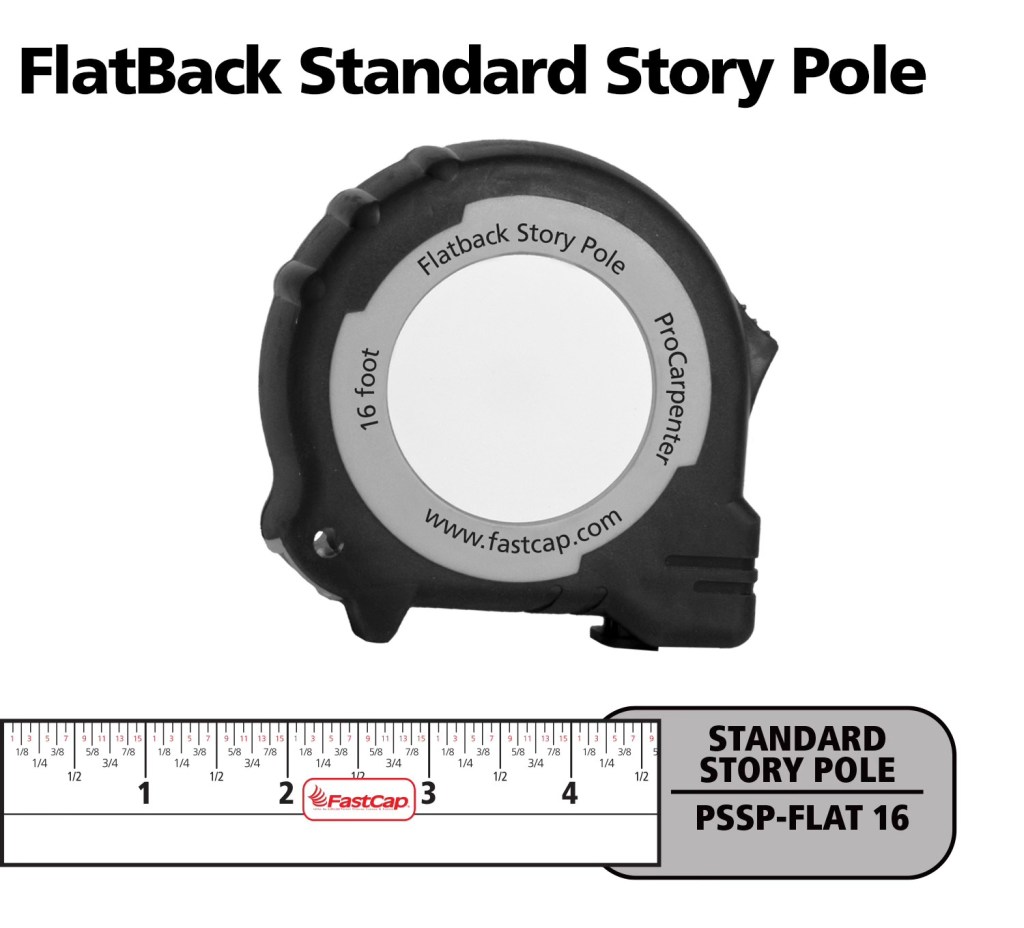
FastCap Flat Back Tape – You can not only measure round or curved surfaces but it has a blank area to write on for use as a story pole. – $10.00

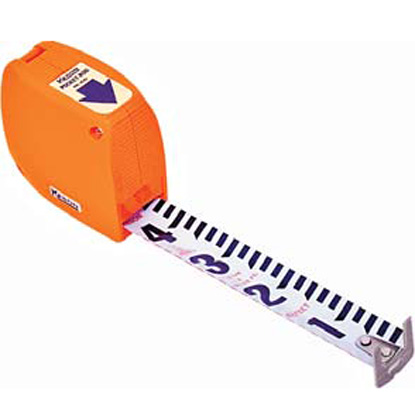
Keson Pocket Rod – These are so essential for site surveys that I have four of them. They come in Architect and Engineer models. – $20.00

6″ Digital CalipersLike these, there are many manufactures. (Avoid any priced under $20.00.) – Must-have tool for doing photo scaling (see article) – about $24.00

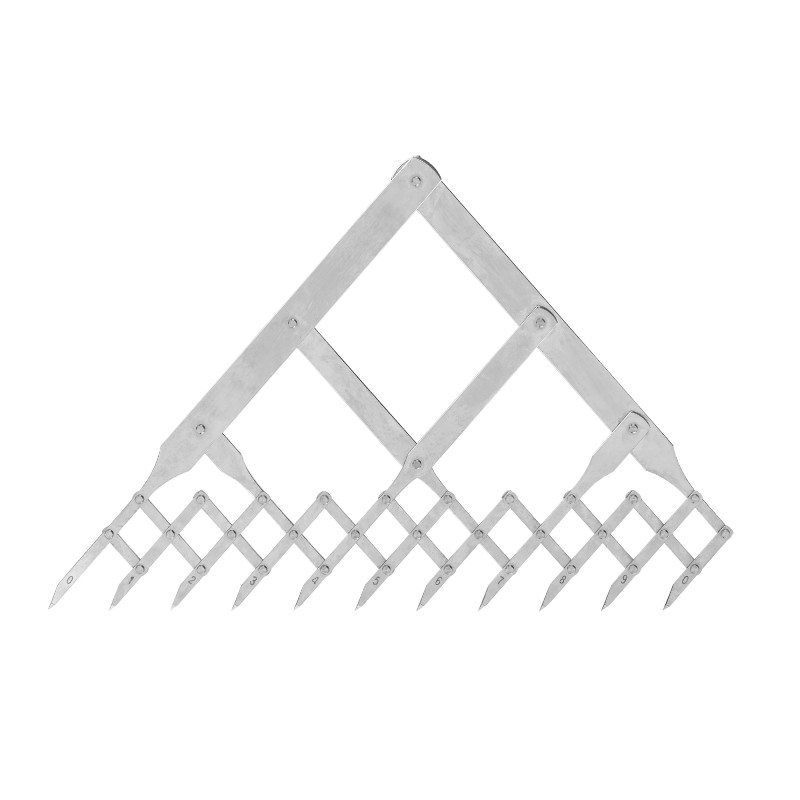
Equal Space Dividers – great for not only photo scaling but for designing in general. They run the gamut in price from these to these. $220 to $24.00

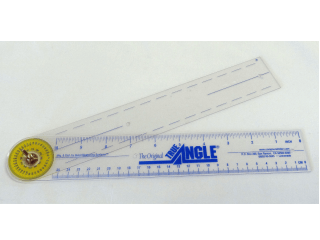
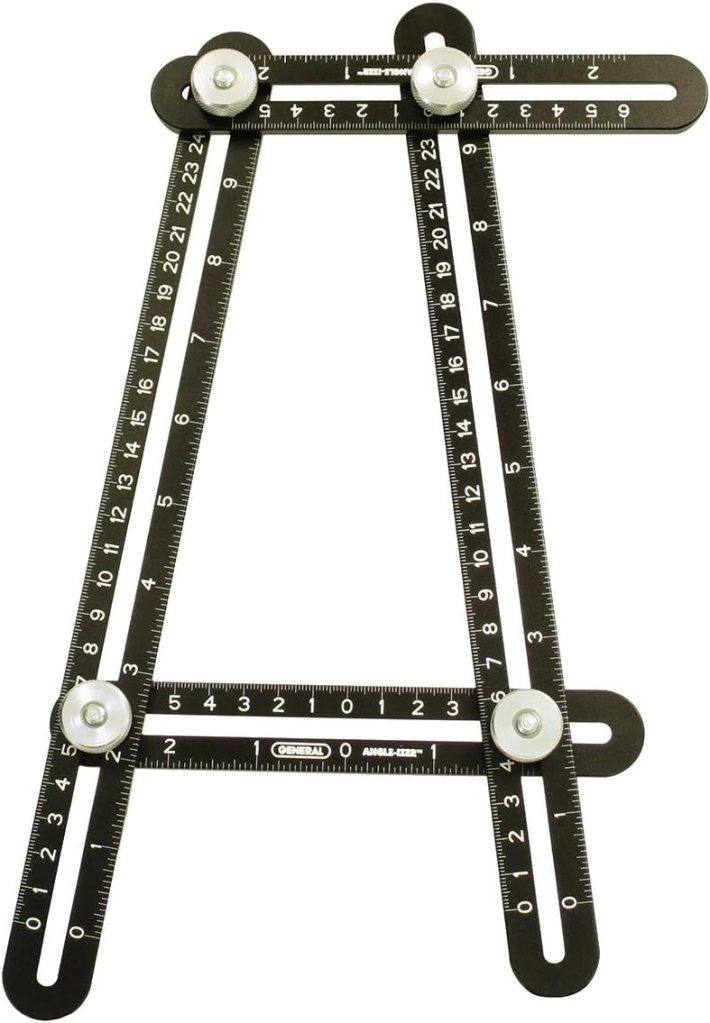
True Angle – Multi-use tool for measuring and transferring angles. lightweight. – 12″ -$16.00

Angle Template Tool – Various manufacturers – around 18.00

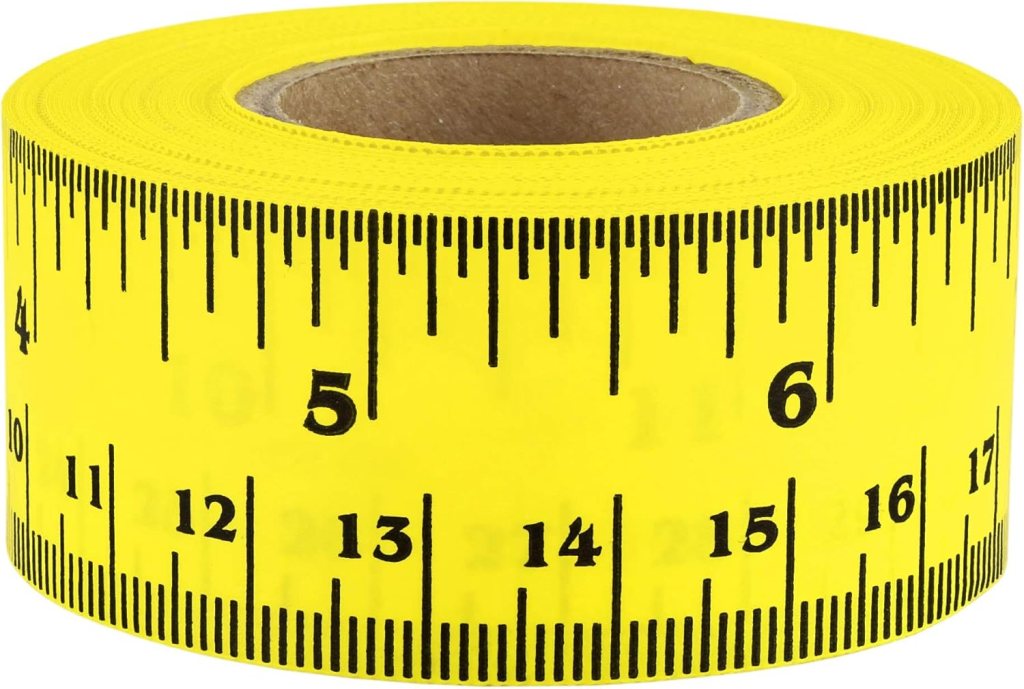
ChromaLabel Adhesive Measuring Tape – Great for when you don’t have time to measure everything and have to rely on photos of surveys – $16.00

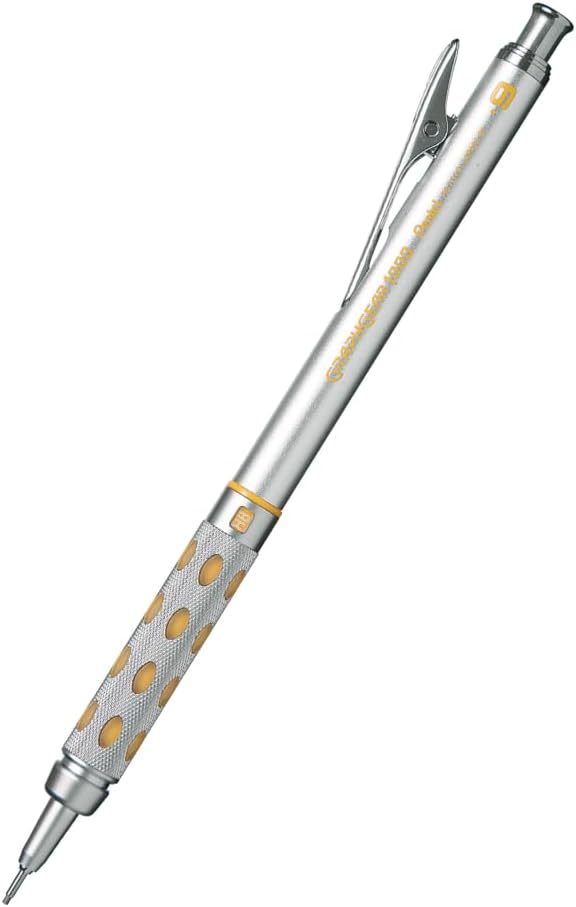
GraphGear 1000 – Mechanical pencils, my new favorite brand. These are great because the barrel sleeve retracts into the pencil to protect it. Comes in .3, .4, .5, .7, and .9mm leads. About $9.00

Compass – So many to choose from, (and a lot of crappy ones are in the mix). This one is a good all-around basic, practical compass that will last a while. $14.00

Design Books

Lost Art Press Books

Still my favorite design and furniture book publisher. Here are my recommendations:

By Hand & Eye – $51.00. Another gem from Lost Art Press, this is probably one of the best design books written in the last 100 years. It outlines the world of design without a rule and using only dividers and proportional methods. I covered this in a previous post and always recommend it. Buy this and a good pair of second hand dividers from Ebay and you will completely change the way you think about design.

By Hound & Eye – $31.00. A companion workbook to By Hand & Eye.

Principles Of Design – $41.00

The Anarchist Design Book – $54.00

Other Books

Historic Millwork – Brent Hull

A Field Guide To American Houses – Virginia Savage McAlester

Stair Builders Handbook – T.W. Love

Backstage Handbook – Paul Carter

American Cinematographers Manual – ASC Press

The VES Handbook of Visual Effects – VES Society

Designer Drafting For The Entertainment World – Patricia Woodbridge

The Classical Orders Of Architecture – Robert Chitham

Illustrated Cabinet Making – Bill Hylton

Styles Of Ornament – Alexander Speltz

McKay’s Building Construction – W.B. McKay

Neufert – Architects’ Data – Granada Publishing

Geometry Of Design – Kimberly Elam

Really, Really Last Minute Gifts

When you realize you’ve really screwed up and forgotten someone and have no time to run to the store, much less order anything, you can always gift a good app.

Log onto the Apple or Android store and gift your so-important-you-forgot-about-them friend one of these apps and your reputation will be saved:

I own and can recommend all these apps.

BuildCalc – construction calculator – $24.99

Photo Measures – saving and sharing measurements – $6.99

MagiScan – Turns your phone into a 3D scanner (pay per use) ( I have used this a lot)

CamToPlan Pro – Uses AR to turn scans into measured drawings – $39.95

Theodolite – Just like a real theodolite but for your phone (fantastic) – $8.99*

Pocket Laser Level – Laser level for smart phones – free

Artemis Pro – professional director’s finder (Most used digital directors finder) – $29.99

Helios Pro – Sun and Moon calculator (fantastic) – $17.99

pCAM – camera info calculator – $29.99 *

Lens Lab – Depth of field app, shows you a visual representation – $1.99*

Sun Surveyor – sun and moon calculator – $9.99

I.D. Wood – samples and data for 200 kinds of wood – $9.99

LensKit – lens technical data – in-app purchases – subscription *

* iOS versions only

Online Design Classes

I have to get a plug in for our own classes at Wrand.

All the classes are 30% off until December 25.

Dangerous Designs

In 1998, I was working for Production Designer Bill Malley on a television show called Seven Days. The premise of the show was that the government had designed a time machine that could go back in time exactly seven days from the present and decided they could use it to “undo” or “back-step” major global political disasters.

The fictional location of the Time Machine was in a site in the Nevada desert called “Never Never Land”, a play on Area 51.

The irony of the shooting location, which no one has ever mentioned, is that we were the first production to shoot on the site of what was once the top secret weapons testing site of Lockheed Skunkworks in Burbank, California. But this site, the former Rye Canyon Weapons Testing site, was far from Burbank. Situated out in Santa Clarita, it was just across the road from the Six Flags Magic Mountain Amusement Park.

Before the park was there, and before Santa Clarita began to expand, the area was a remote location nestled in the hills where the Lockheed employees could work in relative obscurity. The site was, according to the remaining employees, so heavily populated with deer that one was bagged each 4th of July for the company barbecue.

There were still remnants of the original facility, including a building with an anechoic chamber where sound tests were done. One day they wheeled an old refrigerator into the room and with the flick of a switch, emitted a sound wave that blew the enamel completely off the metal of the appliance.

Rye Canyon Facility – Google Maps

At the south end of the lot was a strange circular concrete pad that I would only later learn the purpose for.

The Art Department and production office were set up in a modern building to the north end of the facility. It was a “quiet building”, especially built for Lockheed. The only windows were on the exterior walls. The inner chamber was accessed through a single electronic keypad-locked door. There were no windows and the walls were so thick that electronic signals couldn’t penetrate them to eliminate the possibility of outside surveillance.

The “Quiet building” – 4 CC Commons License

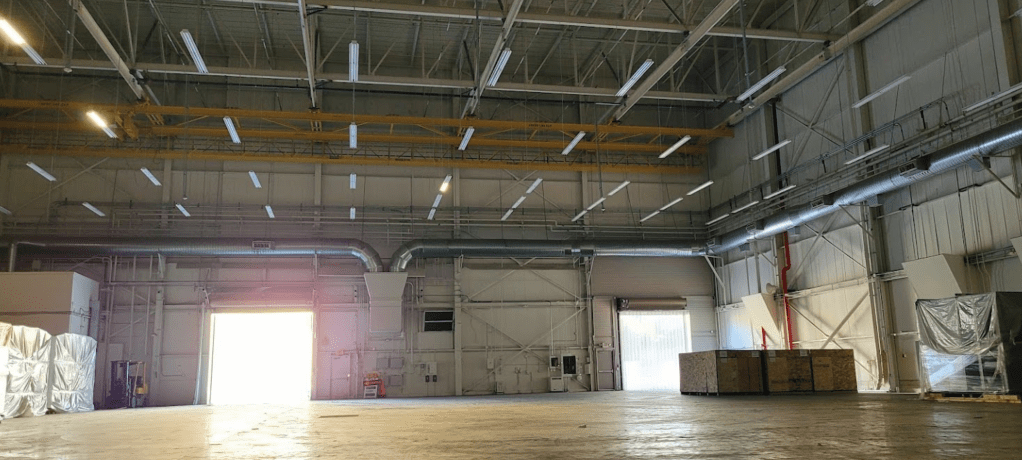
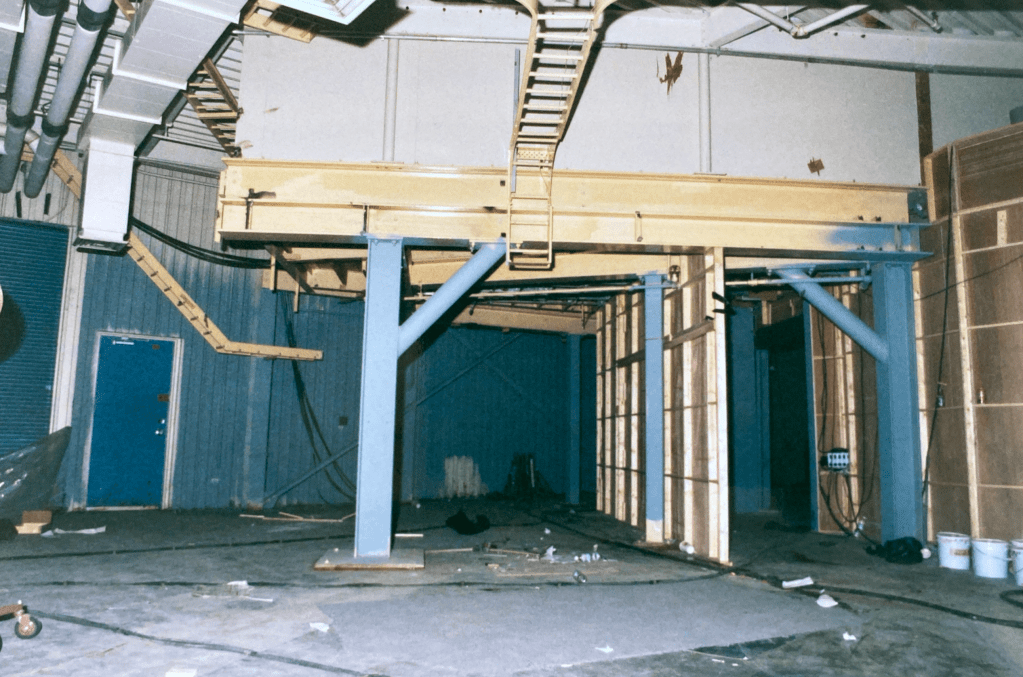
The stage was just south of the production offices. It was huge warehouse structure with high perms that were perfect for a soundstage. At the west end was a lower platform with a strange understructure that I looked at for a long time, trying to figure out the purpose of.

Stage 9 – Rye Canyon Studios

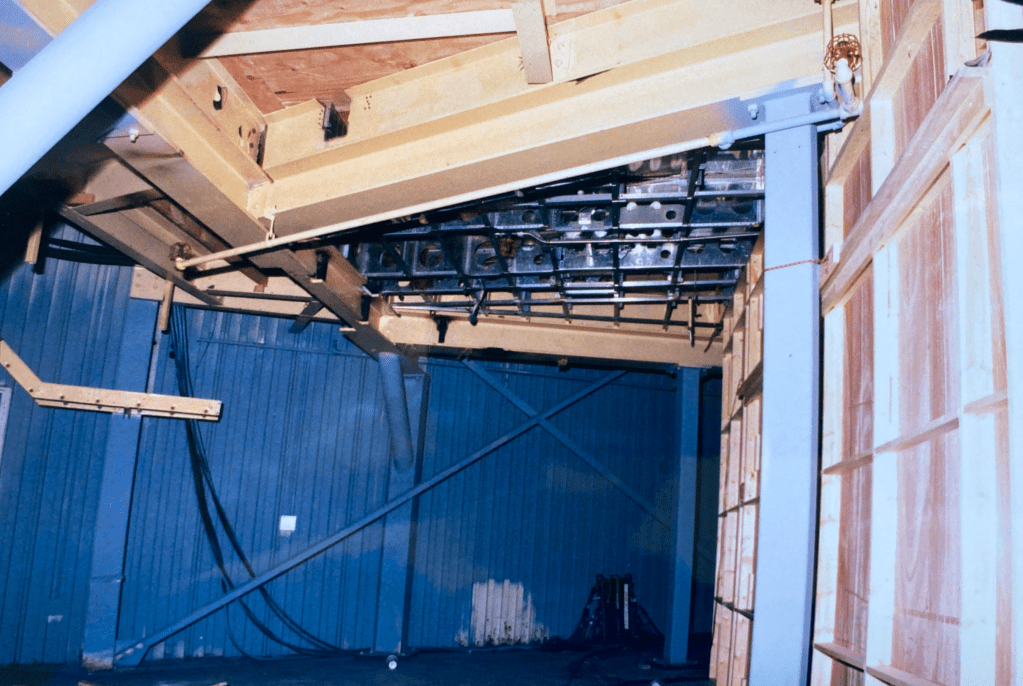
One of the facilities guards finally told me its purpose. I was staring at the underside of the remnants of the simulator for the F-117 fighter plane, the first stealth fighter. He told me that this was where the selected test pilots were brought for their initial trial period.

If they passed the tests in the simulator, they were shipped out to Groom Lake (Area 51) to test fly the actual plane.

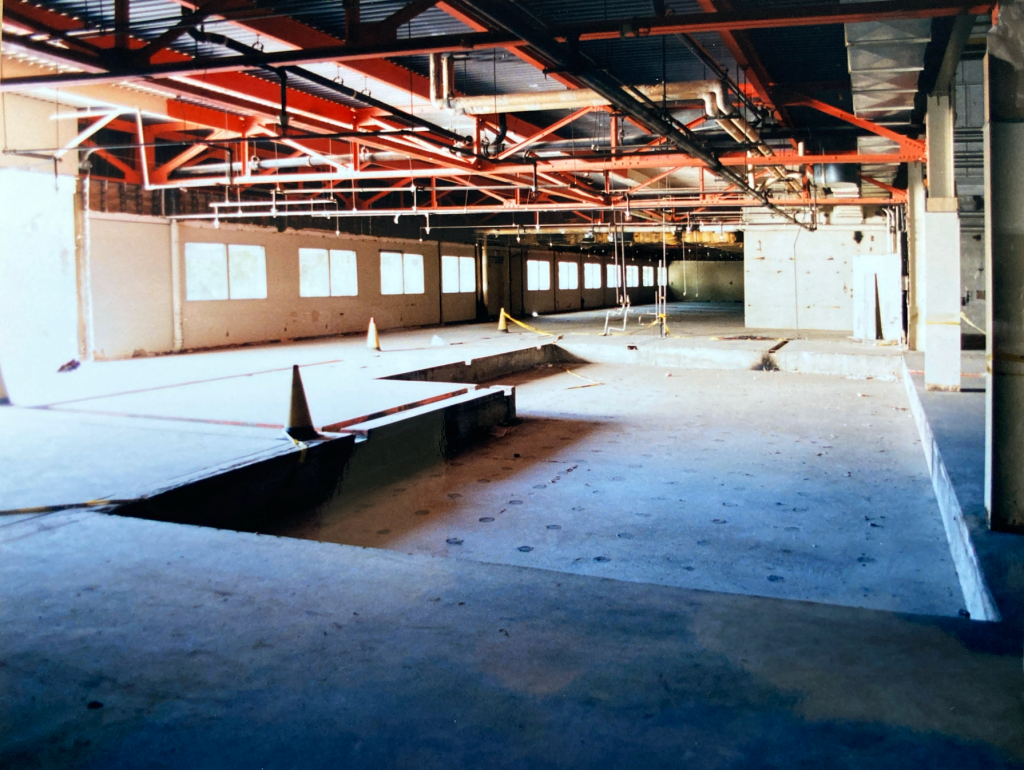
There was a large empty room to the west which once held a huge number of computer cabinets that were the ‘brains’ of the simulator.

Site of the simulator computer

It was then that I realized that our drawing boards were probably set up in the same area that the Lockheed engineers had been when they designed the first stealth fighters.

Bill told me that shooting a television show there was ironic for him. Years ago he had been suspected of revealing government secrets when he was designing a comedy for William Friedkin. Bill had designed a number of other features for Friedkin including The Exorcist for which he was nominated for an Oscar.

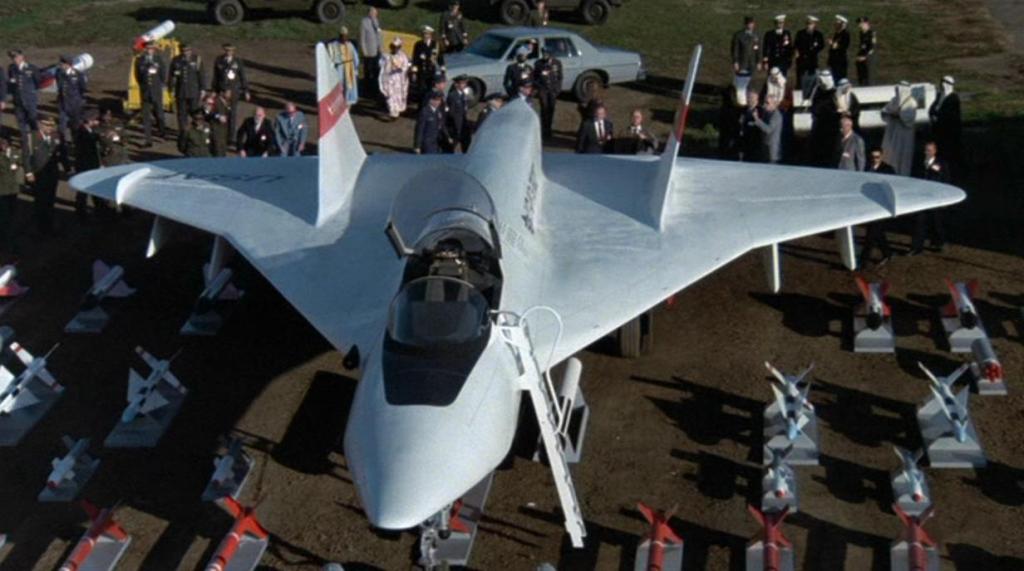
The picture, The Deal Of The Century, was a comedy starring Chevy Chase, about an arms dealer who steals a state-of-the-art fighter plane, the F-19X, from an international air show.

Someone with the government saw the production models of the mockup that they created for the film and told Bill they wanted to talk to him. An Air Force colonel showed up and began to grill him about the planes design. Where did he get the idea for it?

Bill explained that despite the famous cast of characters in the film, the budget largess didn’t extent to the film’s design. As is usual with large productions that feature a lot of well-known actors, the above-the-line talent eats up most of the budget. And what you are left with is the below-the-line limits of a medium budget film.

The colonel insinuated that Bill must have gotten the idea from somewhere, not believing that he had just made it up himself. Bill explained that the budget didn’t allow him do design a completely new kind of plane, so they had taken the basic design from the Russian plane used in the Clint Eastwood film Firefox, and just simplified it. Bill had told the crew to just make it boxier and use flat surfaces rather than the curved surfaces and dihedral of a typical jet.

Full size mockup of the F-19X – Warner Bros Studios

This would make it easier to create the full-size version that they would most likely have to create for some of the live scenes with actors, as they’d be able to use wood sheet goods rather than other materials to create curved wing surfaces.

The colonel eventually left, convince that what Bill was telling him was the truth.

Bill was baffled until about 1988, when the military introduced the F-177 stealth fighter. The similarities didn’t seem that close to him, but someone who saw his fake plane was concerned that someone had leaked the F-117 design.

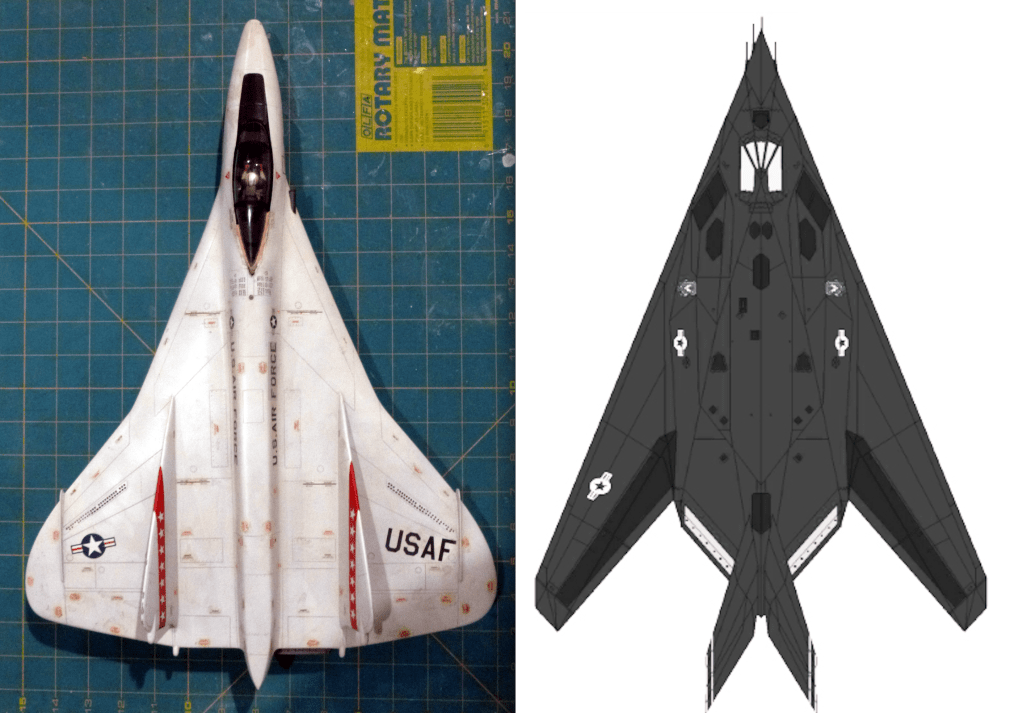
Side by side comparison of the plan views of the fictional F19X (left) and the F-117 stealth fighter (right) – F19X model photo by Joseph C. Brown

Bill didn’t know that those flat surfaces and the twin tails were what had set off warning bells in some government officials mind. The F-117 had been in design since the 1970’s. In the 1960’s a Russian scientist released a paper stating that an objects radar signature was more a matter of its surface structure than its size.

The government started a program called Have Blue, which was a proof-of-concept program to develop a stealth fighter. They discovered that flat surfaces were key to fooling radar waves into producing a small signature. The cement platform at the south side of the property was a test area for measuring the radar signature of different models until a final design was reached that was tested with a full-size mock-up at Groom Lake.

The program would result in the development of the F-117 stealth fighter.

Did anyone know about the fighter program, or the location of the Rye Canyon test site outside of the employees? It seems hard to imagined that someone didn’t at least have an idea that something unusual was going on there. The entire area was patrolled by armed guards 24 hours a day. Even a kid would have known that something must be happening there that was important.

Several months before our company moved in, a fleet of trucks reportedly arrived in the middle of the night. Apparently they were there to recover the remaining files that were stored in the vaults at the main building.

During the production, I found a site where declassified government satellite photos were posted. Among them was a large file of Soviet satellite pictures that the government had recovered from who knows where.

I checked them on the chance I’d find something. And yes, there they were, Soviet satellite photos of the Rye Canyon site. They may not have known exactly what was going on there, but they were sure enough that something important was happening there to allocate satellite attention to the area.

For more photos of the F19X model which was build by legendary model maker Greg Jein see: https://www.therpf.com/forums/threads/f-19x-from-deal-of-the-century-greg-jein-auction-lot.354634

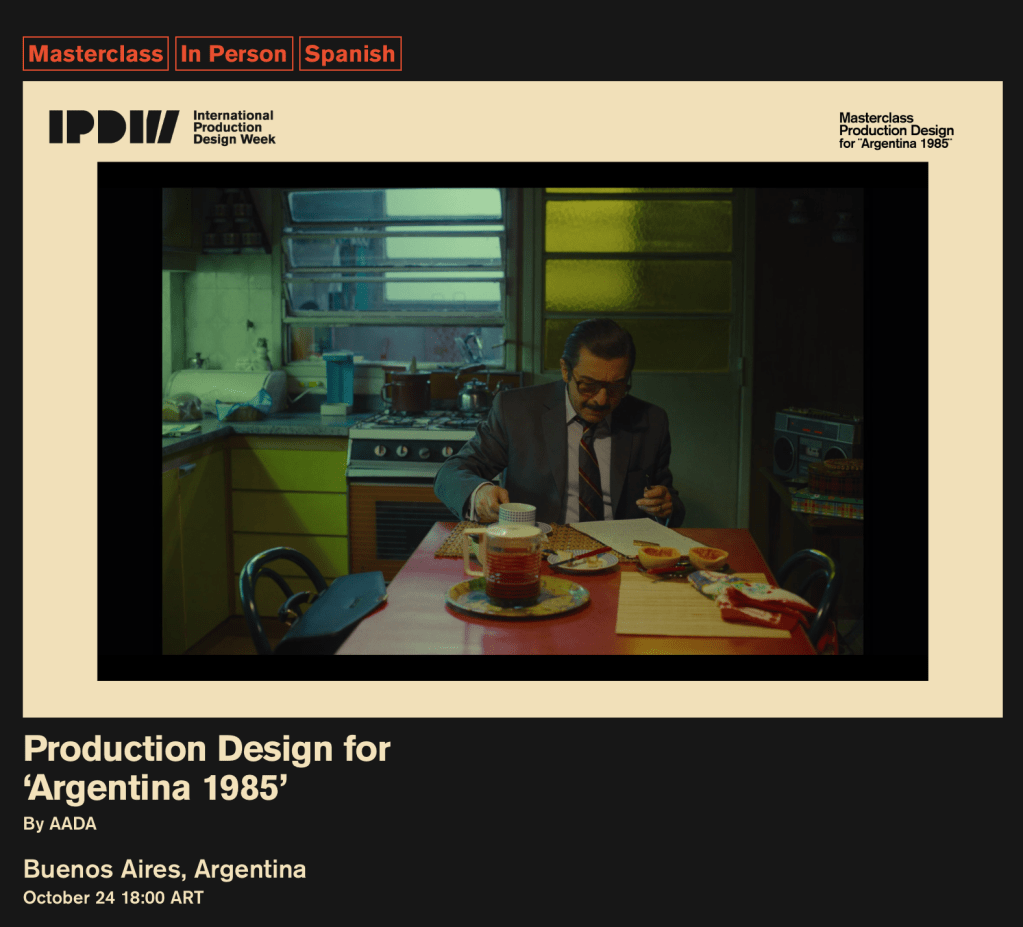
International Production Design Week – October 20 – 29

This is the first day of the International Production Design Week events that have been organized and curated by the Production Designers Collective, an international group of Production Designers whose mission is to be a hub for designers from around the world and to elevate the profession by bringing awareness and acknowledgment of the craft of art direction around the world to the public’s awareness.

The nine day series features nearly 200 seminars, exhibitions, meetups, tours, and lectures with acclaimed Production Designers from 27 countries. Some of the events are presented online for viewing from anywhere while others are held in specific sites for a live audience.

Here is the link to the schedule of events which is searchable by day, city, language, and event category.

https://productiondesignweek.org/program/

Here are some of the planned events. See the website for a full list of events.

AI: A New Angst For Designers

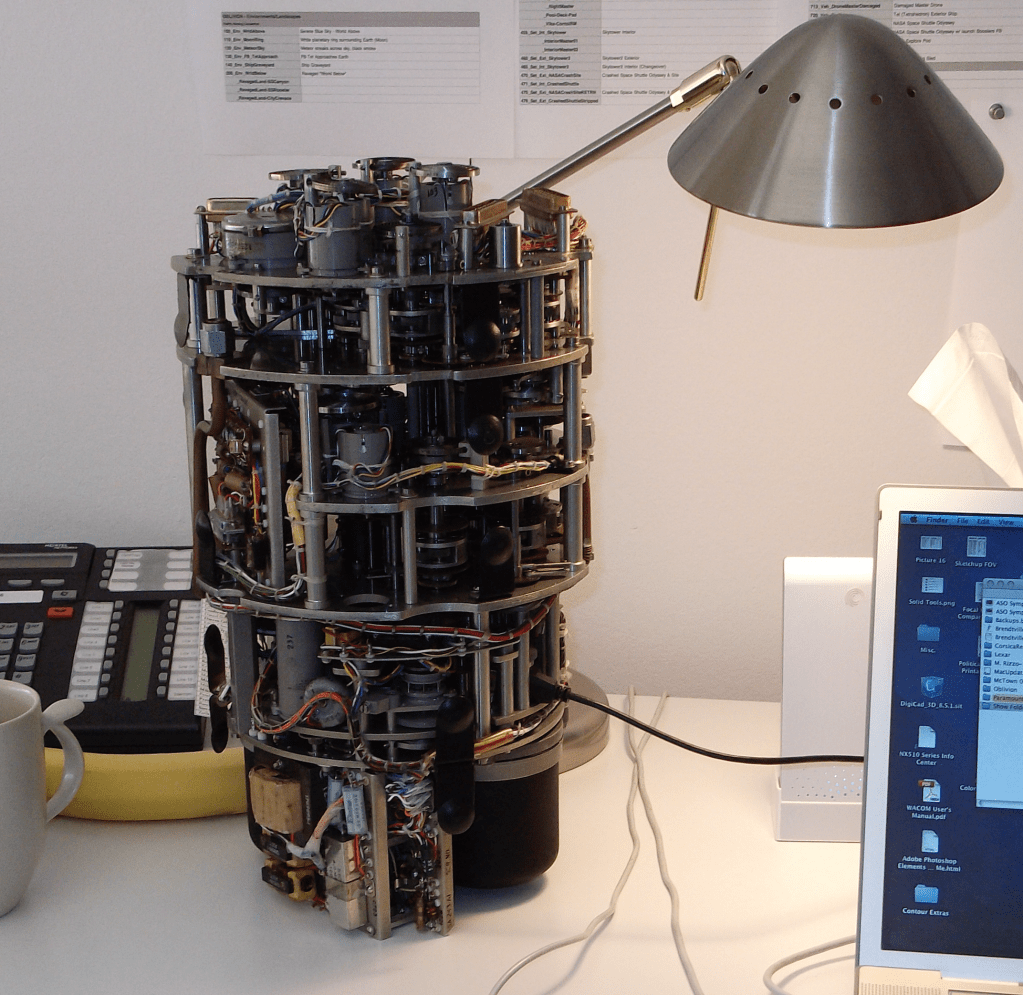
The Must-Have Desktop Device of The Future? Coming in 2028 – The all-in-one 100 Petabyte AI generator, espresso machine, and desk lamp.

The topic of AI-generated content has suddenly dominated the news, or at least as far as the entertainment business is concerned. The subject is certainly a factor in the recent Writer’s Guild strike that is now in progress as it’s one of the sticking points that caused negotiations with the studios and the producers to break down, and not without unrealistic concerns on the Guild’s part.

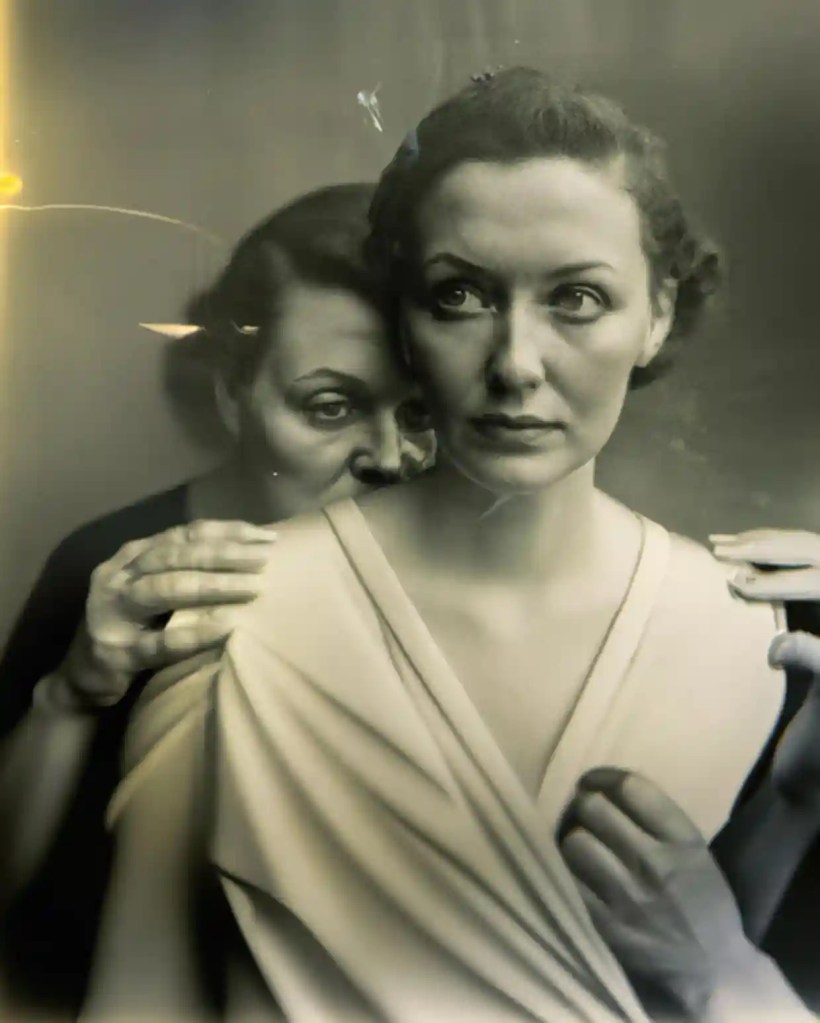
The discussions around AI-generated content have been percolating in the background for some time but only recently has it seemed that people are taking it seriously. At first, it was just educators who were worried about students using ChatGTP to generate papers or do tests for them. But now several fake Drake songs and a photographer winning a photo contest with an AI-generated picture have suddenly focused the public’s attention on the possibilities.

Photo: AI image by Boris Eldagsen

If the studios can eliminate or minimize writer’s contributions to story and script development, how long will it be before they eliminate actual designers from the process? Are Art Departments seeing their extinction on the horizon?

Twenty years ago the Film industry, at least from the Art Department’s perspective, looked askance at computers. They weren’t to be trusted. The secret fear was that once they became ensconced in the design part of the industry, a lot of work would evaporate. Once something ( a location, a set, a detail drawing) was committed to digital information, jobs would begin to evaporate. The exact opposite happened.

The idea that digital information is permanent, for one thing, is now hysterical. For another, the idea that they would reduce the need for individuals is also funny. The possibilities for design exploded. Now you could do many versions of versions in less time, create renders of drawings and models, create visual displays that would have been unthinkable before. The average size of Art Departments on most medium to larger films has doubled, sometimes even tripled. You need people to generate all that work and now that process is the norm. On one feature not long ago there were over twenty Set Designers and a dozen Illustrators where there would have been a third of that number before.

As for the permanence of digital information, that happens only with excellent human oversight. On one feature we were instructed to copy all of our files to two different external hard drives for safety and to ensure the files would be available for the film sequel. We assumed that by doing so we were pretty much insuring that we wouldn’t be working on said sequel.

A year later I got a call asking if I was available to work on the sequel. It seems that one of the hard drives had gone missing. The other one was located but wouldn’t be of any use. The person responsible for keeping it safe had decided that they needed to back up their music library, and rather than spend $50 on a new hard drive, had erased what I estimated to be over $1,000,000 worth of design work. We were all hired back to redraw what we had drawn once before.

Had the drawings been done on vellum, they could have just pulled the sheets out of the file and made new prints. Which medium is more ‘permanent’?

A recent article at the Center For Data Innovation website outlines the issues that people are commenting about when dealing with AI. The author, Daniel Castro, argues that people are worrying about the wrong issues when discussing AI.

He argues that while AI systems should certainly not be exempt from complying with intellectual property (IP) laws, they should also not be held to a higher standard than humans are when it comes to ‘artistic influence’, as it were. he argues that AL will create more opportunities for artistic creation and that training AL software with copywritten images is no different than what humans do when they are influenced by artwork and music when creating new work.

Ed Sheeran recently won a lawsuit brought against him for supposedly copying a Grammy-winning song by Marvin Gaye. Sheeran defended himself by noting that the same chord structure and melody he used in his song was common to hundreds of other songs which were similar but yet different.

The case was watched very carefully by the music industry as well as artists everywhere, as it would have had a huge stifling effect on music creation as well as future artistic work if Sheeran had lost.

Current laws do not make it illegal to create generative AI work that is similar to another piece of art or image, but they do prevent the creation of a work that is identical or nearly identical to another work. Of course that description of what constitutes as a copy has the danger of veering into a very subjective territory.

In his article Castro makes the point that rather than limit the pool of information that AI has access to in creating generative artwork, it is incumbent on policymakers to strengthen and enforce IP laws, which would protect artists in other ways as well.

There may be a time when a producer or director decides to “pre-design’ a show using AI technology. Architects and Interior Designers are using it now to create basic designs and floor plans. But I think its usefulness is limited. Without a deep knowledge of stage work, period design, an understanding of the story, technical knowledge and an artistic eye, much less personal aesthetics, drawing ability, and color sense, with generative AI you will basically have an interesting collage /scrapbook instead of a fully thought-out design.

Designing For The Camera – Understanding Cameras & lenses

New Master Class – Pre-Sale at 50% Off Until May 15

Until now, no one has created a class that explains cameras to designers.

You’ll not only learn the technical information that will help you understand the mechanic of cameras and optics, but you’ll learn how they capture your scenery and how they can affect your design decisions.

Image: Warner Bros Studios

As a film designer you must understand how cameras capture and record images, because that’s how the audience sees and experiences your work.

Few if any film design schools include optics as part of the curriculum leaving film designers with a huge disadvantage when working with the cinematographer on a new project.  The information in this course will help you create effective and believable sets that help the camera tell the film’s visual story as successfully as possible.

Image: Netflix

With this course, you will be able to discuss the camera requirements for your sets with the cinematographer and visual effects supervisor and not be excluded from important decisions that affect your designs. It will further your knowledge for a successful career in the Art Department as a set designer, art director, or production designer.

What you’ll learn in this course:

  • Cameras – Film vs. Digital
  • Lenses – spherical vs. anamorphic, prime vs. zoom
  • Specialty lenses – lenses and attachments that solve tricky shooting issues
  • Understanding focal lengths
  • Understanding depth-of-field
  • Aperture settings – F-stops vs. T-stops
  •  Dynamic range – over and under exposure comparisons
  • Lighting – color temperature, typical lighting styles
  • The Inverse square law of lighting
  • The basics of optics for in-camera effects such as foreground  miniatures and forced perspective sets.
  • Understanding color grading vs. color correction,  and digital intermediates or D.I.’s
  • Why is resolution important? Understanding the race for more pixel depth.
  • User Manual – you’ll get a manual with both text and diagrams that explains the concepts of the course for later reference

You will also get access to the weekly Community Lounge where you can get questions answered and meet other members of the film community.

In addition, I’ve included a special section that analyzes a number of the shots from the new German film, “All Quiet On The West Front” (Im Westen Nichts Neues). which won Oscars for both Best Cinematography and Best Art Direction in 2023.

With 3D model recreations of some of the sets and locations, I’ll discuss why certain shots were difficult to get and how they achieved them. I’ll also discuss how physical locations and built sets can sometimes make shooting problematic and how careful pre-planning can avoid frustrating situations during production.

Sign Up Now

What Does A Set Designer Do?

Drawing by William Ladd Skinner

“So, what is it exactly that you do?”

That’s a typical question I get from people when I tell them my job title. People assume many different things, based on what they’ve heard from others, or read in a magazine. And most of the time they have an incorrect idea about my job description.

It’s not their fault, really. Our industry does a lousy job of explaining job titles in the entertainment world. They just leave it up to people outside the business to figure it out for themselves. It doesn’t help that the same jobs sometimes have different titles depending on what part of the U.S. you’re in, much less what part of the world you’re talking about. Many people who now work in the entertainment industry had never heard of the Art Department or knew that film design was a career option until after they had finished college.

I received an email from Bruno Anselmo, a Set Designer in Brazil. He was curious to know how our job descriptions might differ even though we have the same job title. His background is both in theater and film and video so I’m sure he experiences the same confusion with people he meets who aren’t familiar with the film industry. (Bruno, tell me if I’m wrong here.)

The job title ‘Set Designer’ means different things here depending on the end-product. In the professional theater field, the Set Designer is the lead artist for the creation and implementation of the visuals for a stage production. In the film and television industry, this role as head of the visual aesthetics of a project is given the title ‘Production Designer’.

To make matters even more confusing, the title ‘Production Designer’ is a department head title, not an actual job description. All Production Designers in the professional film and television entertainment industry are Art Directors. The Production Designer title is given to the head of the Art Department, and this title must be approved by the Art Directors Guild for shows which are produced under the union contract.

Let’s look at a typical Art Department:

Some will argue Set Decoration is a separate department as the Set Decorator works in tandem with the Production Designer rather than as a sub-department. In some cases and projects this may be true, the Set Decorator is absolutely a major contributor and an influence on the look of a film. But still, this department is under the Art Department umbrella and the winner of an Academy Award for Art Direction goes to the Set Decorator as well as the Production Designer.

You’ll see that the Set Designer designation is in the table above in the ‘Design’ category. I usually tell people that a Set Designer in the film industry is a close approximation to an architect in an architectural firm. They are in charge of creating the working drawings that are used by the Construction Department to construct the stage sets and scenery that is used at a location.

Traditionally the Set Designer position was a starting point for Art Directors but this is not always the case. Some Art Directors come from set decoration or a scenic artist position.

Here’s a general list of what a set designer in the entertainment industry, i.e. film and television, is responsible for creating:

  • Surveying locations and creating accurate as-built drawings.
  • Construction drawings of stage sets; plans & elevations, scale detail drawings, FSD’s (full size details). These may be architectural or mechanical in nature.
  • Working drawings of any period of architecture as well as fantasy or futuristic/science fiction designs.
  • Working drawings of organic elements: topographic maps, terrain creation, volcanoes, mine shafts, caves or subterranean features, other planets.
  • Working drawings of vehicles: automobiles, aircraft, ships or marine craft of any period.
  • Working drawings for furniture and props.
  • Working drawings for special effects shots.
  • Director Plans, stage plans, and location layouts.
  • Dimensional study models of paper and wood as well as 3D digital models with photorealistic textures and other elements like furniture or vehicles.
Architectural Drawings. Images: HBO, Netflix
Futuristic & Science Fiction. Images: Paramount Pictures
Period & Fantasy subjects. Images: Walt Disney Pictures
Vehicles & Props. Images: Warner Bros., Touchstone Pictures
Location Builds. Images: Universal Pictures
Stage & Location Plans Images: HBO, Walt Disney Pictures

As you can see, probably the biggest difference between a set designer and an architect or an interior designer is that over the course of a career you’ll get to design and draw things that no one in either of the other two professions would if their career lasted 300 years. Instead of worrying about building code or structural concerns, your main focus is making sure the final result looks fantastic. The design is the main focus, not an afterthought.

So, what skills do you need as a set designer? Well, one of the big plusses for me and for most people that work in the industry is that you will never stop learning. You won’t be stuck drawing reflected ceiling plans the rest of your life. It will be a constant learning process.

If you want to design vehicles as well as architecture then you can. If you ONLY want to design vehicles, you can. Many people develop a specialty and primarily just do the type of design that they like best. It’s a never-ending smorgasbord of design possibilities. After having done over 80 films, there are still things I’d like to create that I haven’t yet done.

So, what are the primary skills you need? I’d start with this list:

  • The ability to draft – You have to know how to create proper working drawings and unlike fine art drawing, anyone can learn how to draft. It can be exacting because precision is important. But, as they say, it isn’t brain surgery. You can learn it.
  • Camera basics – We design scenery, not permanent buildings. We design for a camera. I tell people that basically, we create beautiful reflectors. A film is a record of light particles that have bounced off of people and scenery and passed through a glass lens. Making it look good is the main objective. Understanding lenses and how they work is a big part of successfully designing stage sets.
  • Architecture & proportion – You’ll never know everything, but knowing the basics of building history is a must. You’ll be drawing details of doors, windows, stairways, and furniture. You’ll specify hardware, mouldings, plaster details and finishes. There is very little that we order from a catalogue. Almost everything is custom made by studio craftspersons.
  • Set Construction – Understanding how sets are built and knowing correct nomenclature is a key part of being able to draw studio sets. A lot of our drawings are similar to architectural drawings but there are some big differences between them. The layout styles, nomenclature and notation have more in common with theatrical and 1920’s architectural drawings.

Also, you’ll need to understand basic physical special effects, how to create and lay out backings, both painted and photo backings, know how to create scale drawings from photographs and artwork, understand visual effects requirements, and do location surveying.

The list seems overwhelming but remember, you will learn a lot of these things on the job. You just need the basics and a good portfolio to get your foot in the door.

You’ll need to be proficient with computer software. There will probably be one program that you will do most of your work in and that will be a personal preference. Unlike architecture, there is not a standard program that we use, so you may work on a project with many people using a wide variety of programs.

Currently, in the U.S., the most-used software programs for set design are Vectorworks, Sketchup, Rhino, Blender, Modo, Autocad, Moment Of Inspiration, Z-brush, Solidworks, and a few others like Photoshop, V-Ray and Twin Motion for renders.

Don’t try to learn them all. Software diversity is great but it’s better to get really good a just one or two.

There are a lot of choices of film schools in the country, but if that is the route you choose you’ll have to check to be sure that they have a course in film design or a Production Design track. Many schools don’t.

If you are thinking about schools and looking for an alternative to a four year program, we offer specific classes in set design that focus on the basic skills you need to get started.

Our 10-Week Set Design Fundamentals series is available on-line and is self-paced so you can progress on your own schedule. It is now on sale for 40% off until May 30, 2023.

You can find out more information here.

The $150 Forced Perspective Miniature – Part 2

A diagram showing the set shot at the widest angle with a 25mm lens.

( This is the second part of a previous blog entry -Read Part 1 here. )

When the work print arrived from the lab, I couldn’t get it up on the flatbed editing machine fast enough. These were the days when you didn’t know for at least 24 hours whether or not you had captured anything on the film stock, much less something that looked any good.

A miscalculation in an exposure setting wasn’t something you could see beforehand on a monitor. If you had flubbed up, it could mean jettisoning the whole scene altogether. Sometimes reshoots, like this one, were just impossible. It wasn’t for nothing that I was nervous. The first scene of the film would end up having to be reshot twice. Once because of a mislabeled neutral density filter and another because of a sloppy meter reading.

This was when you kept Pepto Bismol handy for the times when you finally saw your footage and realized you had just spend a lot of time and money on film and processing for nothing.

The print ran through the viewer and the scene appeared on the screen. It was just a single-light print but I was relieved. We got a good shot. The next scene looked good too, exposure wise. Still, there was something that bugged me.

Never Work With Children Or Animals, Or . . . .

Miniatures of static or physical objects is one thing, but shooting miniatures with natural elements is another thing altogether. Replicating rain, bodies of water, smoke, and fire are tricky.

It’s the reason most model ships for films are built at a large scale. The model for James Cameron’s Titanic is over 25 feet long. It was a true milestone when VFX artists were able to create believable water effects.

Making a fire look like a really big fire or making water behave naturally in a smaller scale usually requires over-cranking, shooting at a faster frame rate so when you slow it back down to 24 frames a second, it smooths out the movements to a speed that looks more believable to the eye.

Unfortunately combining over-cranked footage with in-frame live actors was beyond my capabilities. Today this whole problem could have been solved by a high school student with a green screen and Premier Pro editing software. Not a big deal. I was stuck with in-camera effects.

So, the fire effects weren’t quite up to my expectations but the fact I had gone for a bigger size (as in extensive) backing helped minimize the effect. The focal length of the lens helped too, along with the shallow depth of field.

Analyzing Different Set-ups

Diagram of camera set-up

How could I have improved the flame effect? Well, I could have built the facade at a larger scale. Below is a diagram showing the scale of the backing compared to a full size person.

On top of the backing is an icon of a person at the scale of the facade.

Below is an image of what the facade would have looked like at twice the scale size.

Angle of view on a 25mm lens
Angle of view on a 75mm lens

Yes, the flame effects would have been even more frightened real. The fire would have also been at the scale of an actual small house fire and without a lot of fire suppression in place, it would have been incredibly unsafe. The detail of the backing would have also needed to be much more realistic. I also was trying to capture a feeling of isolation, and the scale I used allowed me to portray the actress as being farther away from the fire than I would have been able to achieve given the size of the pond.

The fire burned itself out quickly. We went in and put out any remaining embers with a fire extinguisher and Hudson sprayers. I’m sure the firemen were even happier than I was that they got a good show and hadn’t had to drag their firehose through the mud, which would mean spending the rest of the evening cleaning firehose. And that, I can tell you, is really not a fun job.