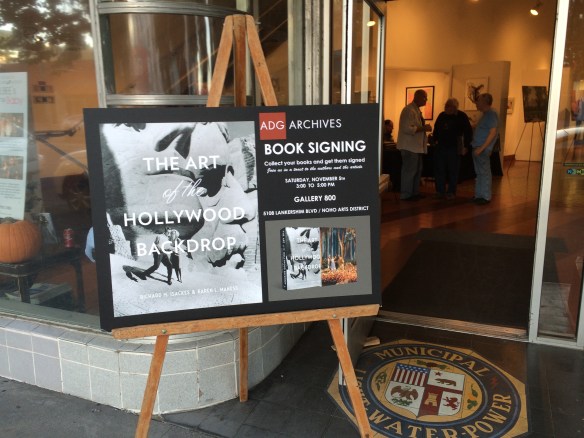
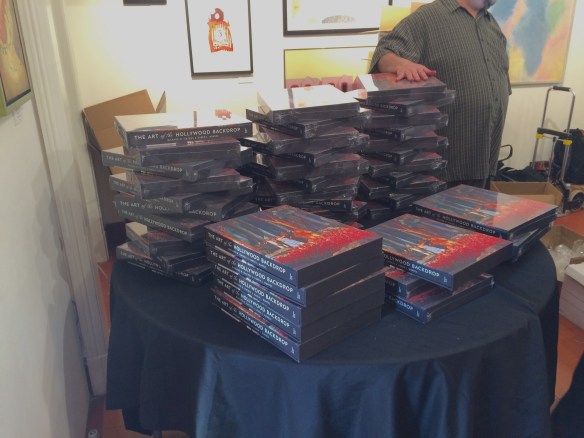
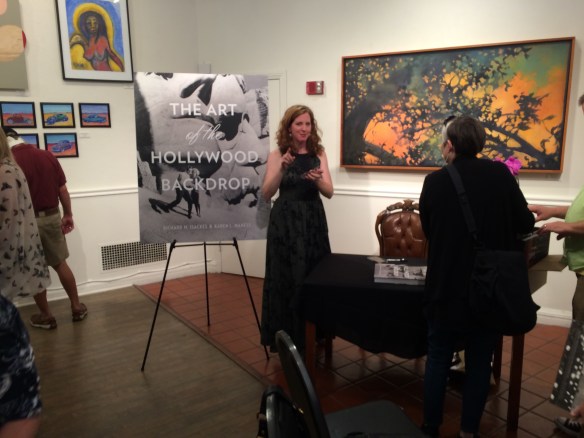
The Art Director’s Guild sponsored a book signing event at their gallery space in North Hollywood yesterday, with co-author Karen Maness on-hand to sign copies of the new book, The Art Of The Hollywood Backdrop.
The book is a cooperative project between the authors, Karen Maness and Richard Isackes and the Art Director’s Guild. With a focus on hand-painted rather than photographic backings, the book traces not only the history and development of backdrops through Hollywood films but the artists who have developed the techniques used and who have passed along that knowledge to successive generations of scenic artists.
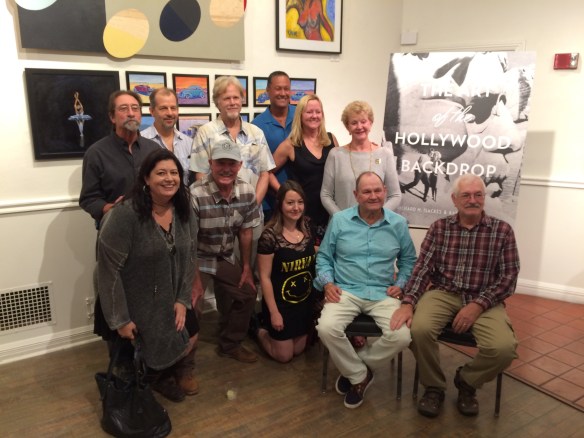
The event was well attended by not only Guild members but by members of the Strang family and the Coakley family of J.C. Backings, the two families which have not only dominated the field in Hollywood but have been the biggest promoters and curators of the art form.
The Coakley family and fellow artists of J.C.Backings
Co-author Karen Maness graciously signed books all afternoon.
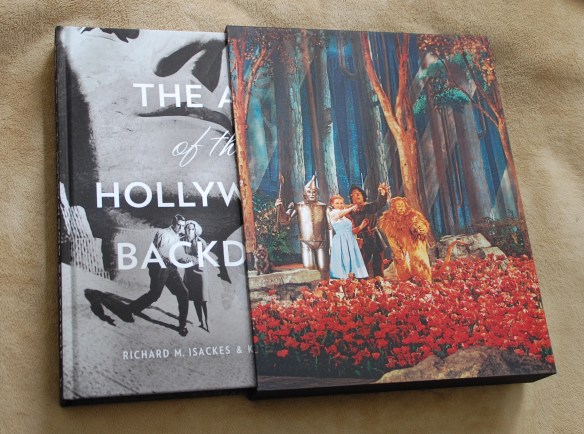
This is a big book, and I say that in every sense of the word. Larger than a quarto format at 11 x 14 inches, the hard-cover and cased edition is 352 pages long and weighs in at 13 pounds. Filled with crisp images of both black and white and full-color backings, the photos show the backings not only in a straight-on form but in the environment that they were meant for. It’s filled with stills from the original films as well as set stills showing them in relationship to the sound stages and the companion scenery.
This book will definitely appeal to film lovers who have very little understanding of film scenery and stagecraft as well as film professionals who have many films to their credit.
It is available for order through the publisher’s website and will soon make it’s way into bookstores. If you are still making that holiday gift list, this is definitely a book that will have huge appeal to anyone who loves movies. Read an excerpt here, and you can order the book here from Regan Arts.
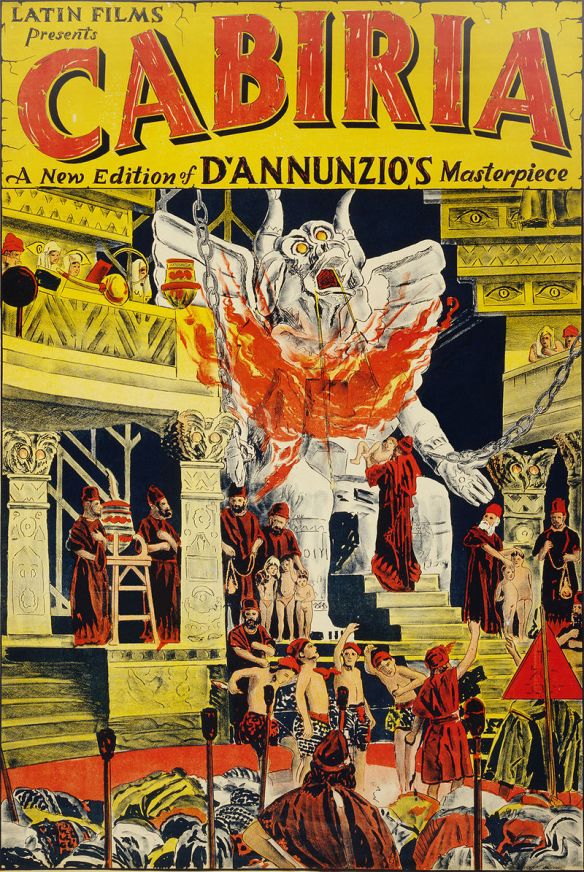
Locandina originale del film. Original Poster for the film
The American director D.W. Griffith is often credited as being the creator of the feature-length film. It was actually the Australians who made the first feature film in 1906 which was called The Story Of The Kelly Gang.
La creazione del lungometraggio viene spesso attribuita al regista americano D.W. Griffith ma di fatto furono gli australiani a realizzare il primo lungometraggio nel 1906 dal titolo The Story Of The Kelly Gang.
But in 1911 with the release of L’Inferno, the Italian industry created not only the first epic film but the first international blockbuster as well.
Nel 1911, con l’uscita de L’inferno, l’industria italiana creò non solo il primo film epico ma anche il primo film di successo internazionale.
Taking over three years to make, the film took in over 2 million dollars in the United States alone. As its extended length meant there could be less screenings per day, it gave the theater owners an excuse to raise the normal prices of admission. It remains the oldest feature film to still exist.
Esso richiese più di tre anni per la sua realizzazione ed incassò, solo negli Stati Uniti, più di due milioni di dollari. La lunghezza del film implicava meno proiezioni al giorno e i proprietari dei cinema ne approfittarono per aumentare il prezzo del normale biglietto. L’inferno resta il più vecchio lungometraggio esistente.
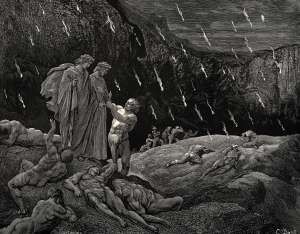
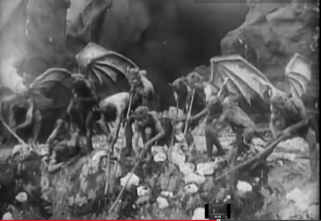
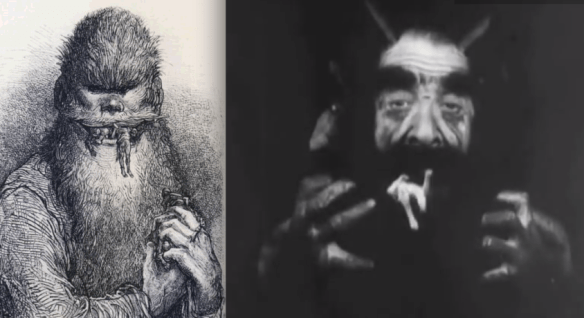
Credited to three different directors, the film is a live action adaptation of Dante’s Divine Comedy. The sets and visuals were closely based on Gustave Dorè’s engravings from his 1857 edition of the poets work which was, and still is, the most iconic representation of the title. Using fantastical, extravagant sets and special effects, the film must have been as terrifying to audiences in 1911 as any horror film of present day. Winged devils, brimstone hail, choking fires, it’s likely there were at least a few trips to the hospital by cast members who spent much time on the production. L’Inferno remains the oldest feature film to still exist.
Attribuito a tre registi, il film è un adattamento animato della Divina Commedia di Dante. Gli elementi scenici furono basati principalmente sulle incisioni di Gustave Doré dell’edizione del 1857, le quali ancora oggi sono la rappresentazione più iconica della Commedia. Considerati i fantastici e stravaganti set ed effetti speciali impiegati, il film dev’essere stato per il pubblico del 1911 tanto terrificante quanto lo è per noi oggi un qualunque film dell’orrore. Con diavoli alati, grandine di zolfo e fuochi soffocanti sul set, è probabile che i membri del cast impegnati nella produzione siano finiti all’ospedale almeno un paio di volte. L’Inferno resta il più vecchio lungometraggio esistente.
A sinistra, una illustrazione di Doré. A destra, il ritratto di Lucifero nel film. Left, one of Dorè’s illustrations, on the right, Lucifer’s depiction in the film.
Cabiria (1916)
It would be the feature Cabiria five years later that would be the most influential silent Italian film of the period. Directed by Giovanne Pastrone, the film was shot in Torino (Turin) and featured massive period sets as well as elaborate and imaginative miniatures which recreated the eruptions of Mt Etna in Sicily. It follows the story of a young girl, Cabiria, who is saved from the disaster caused by the eruption only to be captured by Phoenicians and sold into slavery in Carthage.
Cinque anni dopo, il film Cabiria fu il più influente film muto del periodo. Diretto da Giovanni Pastrone, il film fu girato a Torino con imponenti scenografie d’epoca ed elaborate e immaginifiche miniature che ricreavano l’eruzione dell’Etna in Sicilia. Ne derivò la storia di una ragazza, Cabiria, che viene salvata dal disastro dell’eruzione solo dopo essere stata catturata dai Fenici e venduta come schiava a Cartagine.
Primo piano della miniatura dell’eruzione dell’Etna. Foreground miniature of the eruption of Mt. Etna
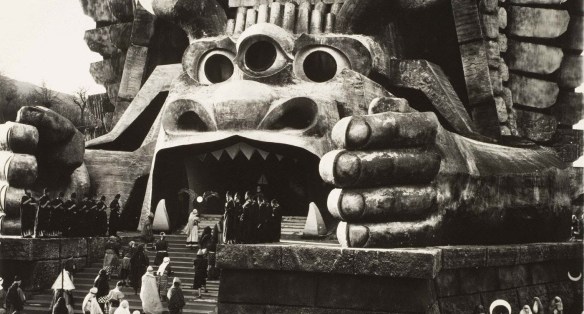
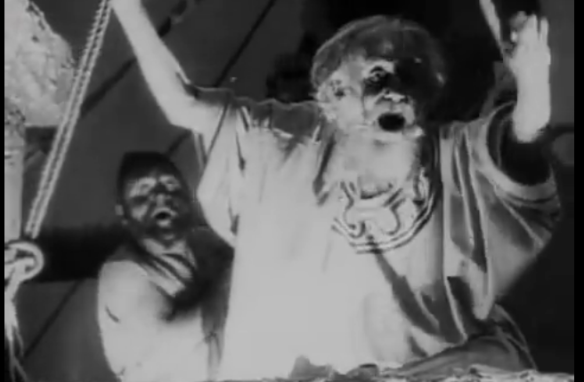
The sets include a massive exterior and interior of the Temple of Moloch which includes a huge bronze statue of the god. During the sacrifice scene, the chest of the statue opens and dozens of children are thrown into its fiery belly one at a time, it’s mouth belching fire as the door swings shut on each sacrifice.
Il set includeva una riproduzione esterna ed interna del Tempio di Moloch con una enorme statua di bronzo raffigurante la divinità. Durante la scena del sacrificio, il petto della statua si apre, dozzine di bambini vengono gettati nella sua pancia infuocata tutti in una volta e un fuoco scoppia al richiudersi della porta dopo ogni sacrificio.
Set esterno del Tempio di Moloch. The exterior set of the Temple of Moloch
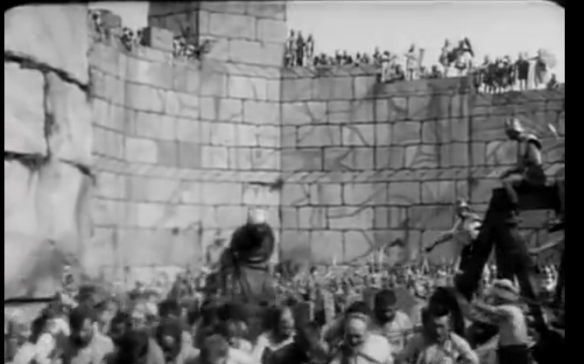
In one scene, the Roman navy assaults the city of Syracuse, a massive set and staged battle that would presage the scenes of the siege of Babylon years later in D.W. Griffiths’ Intolerance. While Pastrone’s film doesn’t have the same intercutting as Griffith’s, many of the lighting effects are much more dramatic than Grifffith’s.
In una scena, la flotta romana assalta la città di Siracusa, un imponente set con una battaglia di scenache presagisce le scene dell’assedio di Babilonia anni dopo in Intolerance di D.W. Griffith. Il film di Pastrone non ha lo stesso montaggio incrociato del film di Griffith, ma parecchi dei suoi effetti di luce sono molto più drammatici rispetto a quest’ultimo.
Pastrone would be the first to put a camera on a dolly and execute the long, slow tracking shots throughout the film that would be so influential to every feature afterwards. In fact for many years any dolly shot or one involving movement was known as a ‘Cabiria shot’. The film was also the first to incorporate flashbacks as a story device.
Pastrone fu il primo a mettere una videocamera su un dolly ed eseguire nel film quelle lunghe e lente carrellate che sarebbero poi state così rilevanti per ogni film successivo ed è per questo che per molti anni qualunque ripresa con un dolly o in movimento veniva chiamata ‘ripresa Cabiria’ (‘Cabiria shot’). Cabiria fu anche il primo film ad incorporare il flashback come espediente narrativo.
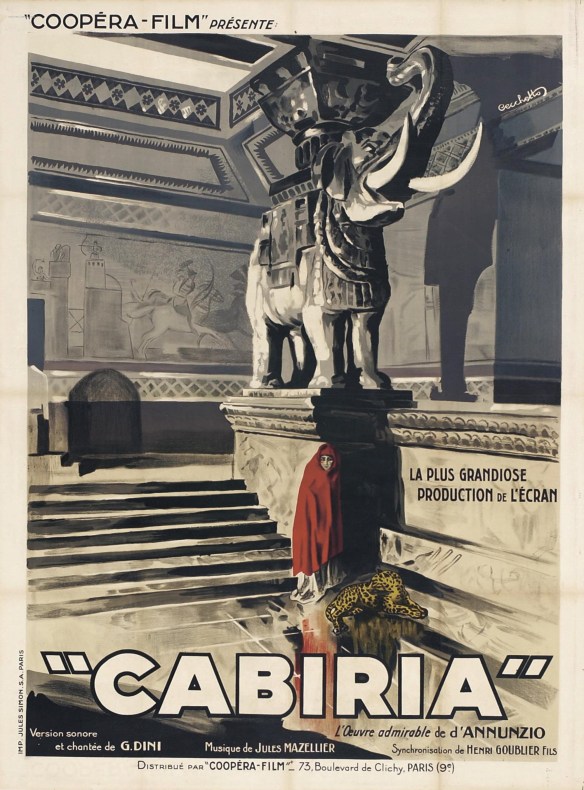
The film’s elephants made a huge visual impact on Griffith, and he would insist there be plaster elephant sculptures in the Babylon sets for Intolerance, despite the art department’s insistence that elephants did not exist in ancient Babylonia.
Gli elefanti nel film furono di così grande impatto visivo su Griffith che egli volle avere a tutti i costi degli elefanti di gesso sul set di Babilonia per Intolerance, nonostante l’insistenza del dipartimento artistico sul fatto che non esistessero elefanti nell’antica Babilonia.
Locandina francese per il film. French poster for the film
Cabiria would be the first film to be screened at the White House by then President Woodrow Wilson in 1914.
Cabiria fu il primo film ad essere proiettato alla Casa Bianca dall’allora presidente Wilson Woodrow nel 1914.
While the films may be be very dated to our 21st century eyes, you can’t help but be impressed with the scale of the sets of these pre-computer age features.
Il film potrà essere datato ai nostri occhi del XXI secolo ma è ancora impossibile non restare impressionati dalla portata dei set di questo film precedente all’era dei computer.
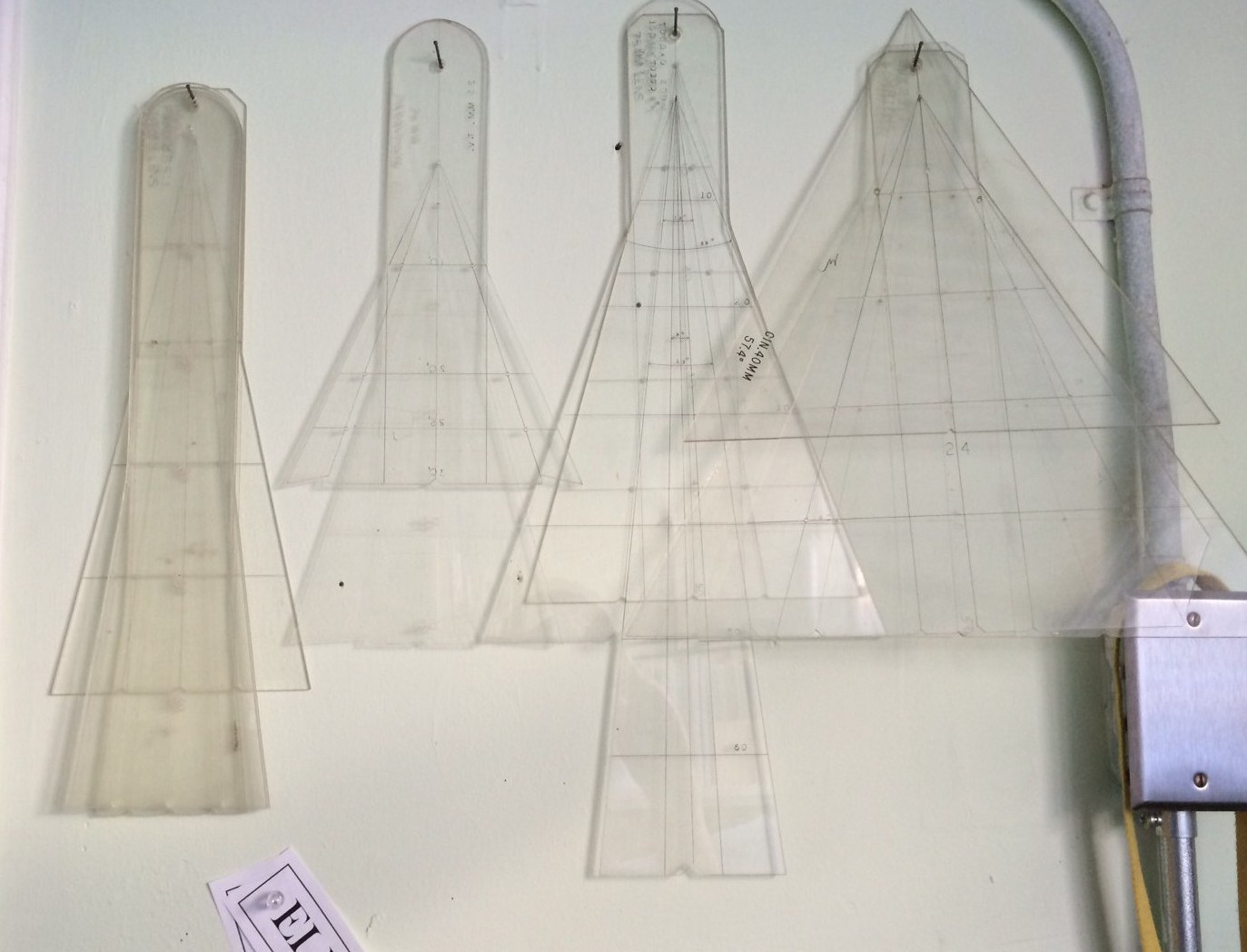
Some of my collection of traditional studio lens angle templates. The ones on the left are for long lenses while the ones on the right are wide-angle lens. The third from the left is a zoom lens template.
Pre-vis Before Previs
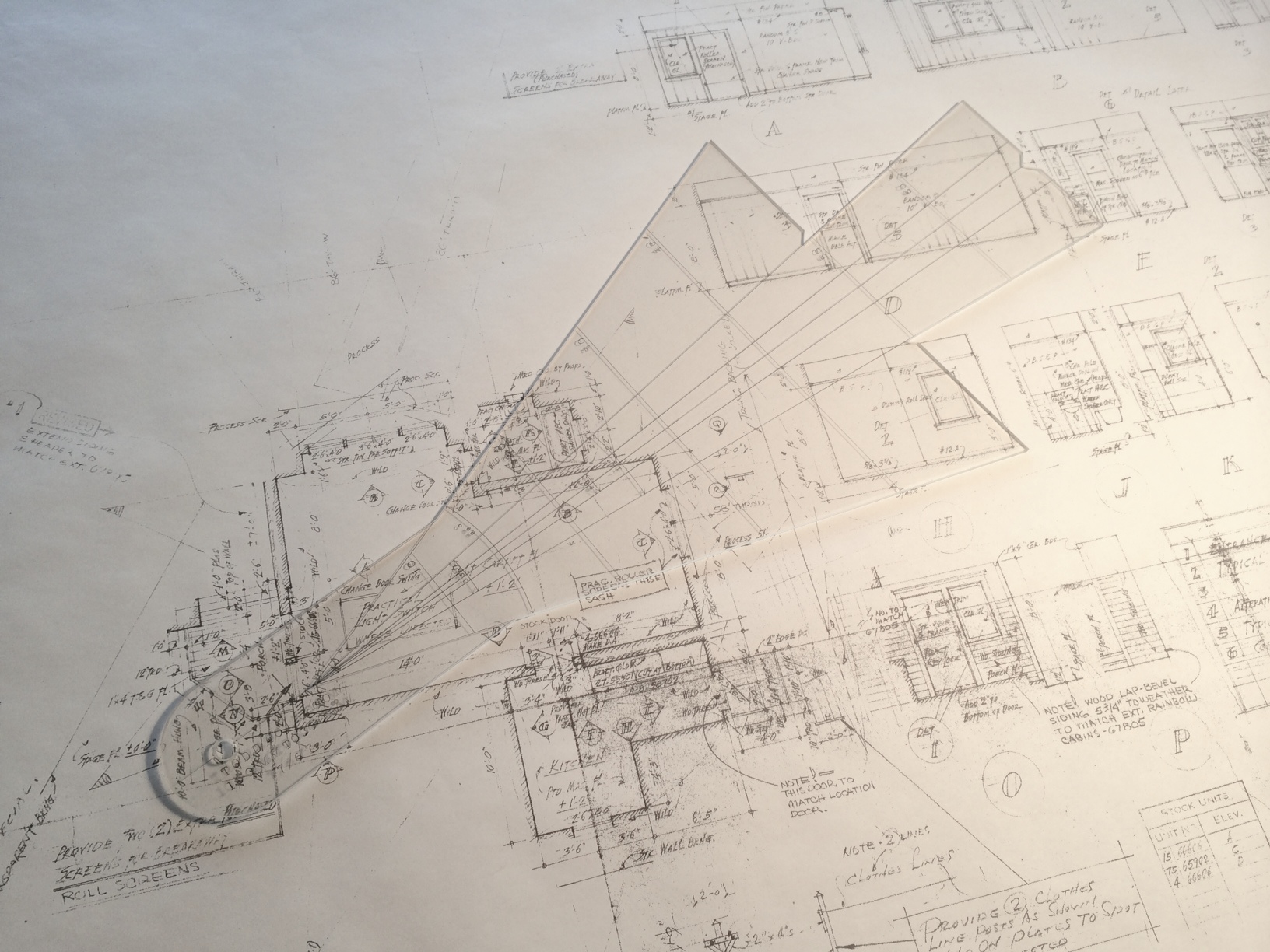
Before the term “Pre-visualization” ever existed, there was the lens angle template. These were a staple of any Hollywood studio Art Department and were used when laying out a set to determine camera angles, backing sizes needed, rear projection screens and planning back-projected set illustrations for the producer and director to approve sets long before there were 3D computer programs.
There was a time when a basic knowledge of optics and lenses was considered mandatory and was necessary not only because the Art Director would design the sets to be shot in a specific way but this information was needed when designing effects shots such as forced perspective sets, glass shots and the like.
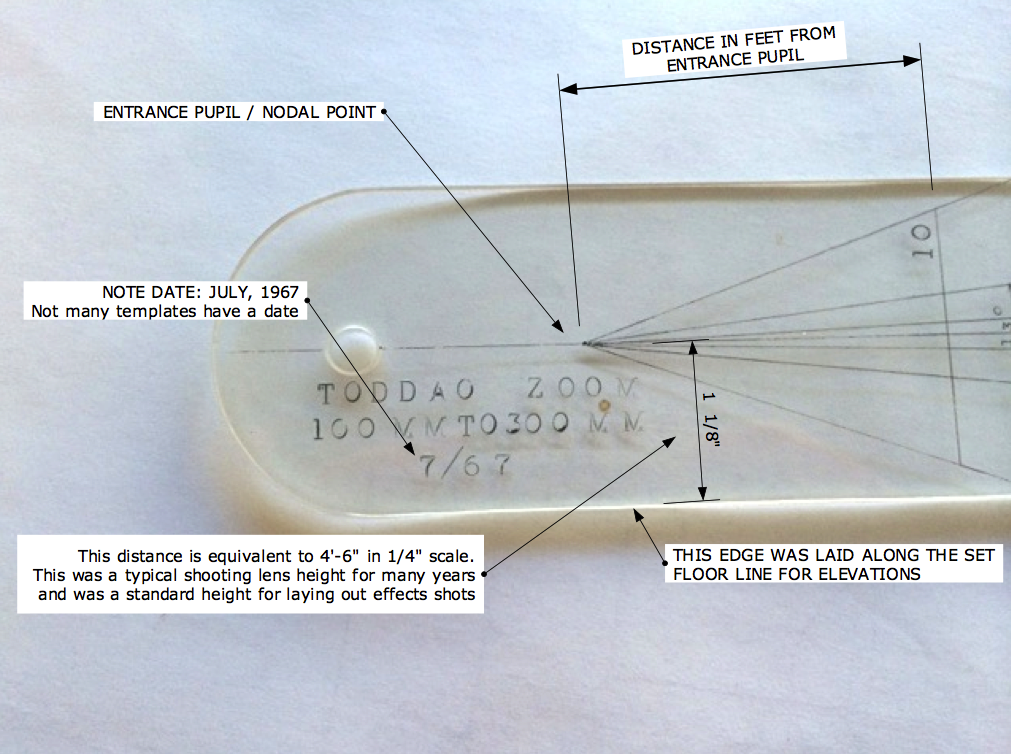
A template for a 100mm to 300mm zoom lens in the Todd AO format. Todd AO was an early 70mm film format with an aspect ratio of 2.20.
The templates were for a single lens, usually a prime lens, and were made using 1/8″ or 1/4″ thick plexiglas. The projection lines were scratched or engraved into the acrylic, sometimes by a Set Designer but other times they were made by the studio sign shop. Some of my examples are obviously done with a hand held engraving tool while others have been done with a lettering template and have inked letters.
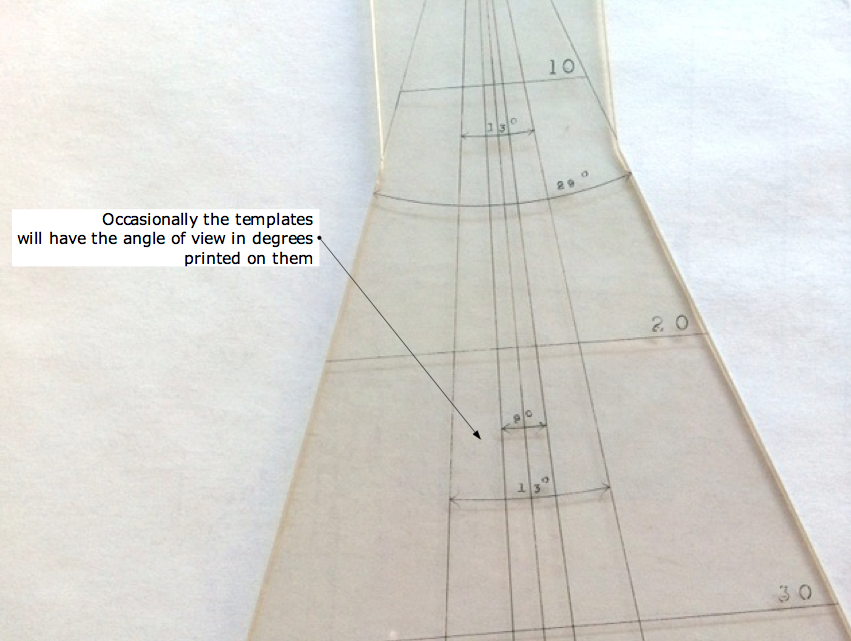
Each template had two sets of projection lines, one set for the horizontal plane (for use with a plan view) and another for the vertical plane, for use with scale room elevations. Most are made for use with 1/4″ scale drawings but they are accurate for any orthographic drawing because the angle is unaffected by the scale. Most will have markings to note the distances from the lens entrance pupil in 1/4″ scale.
The “Quick View”
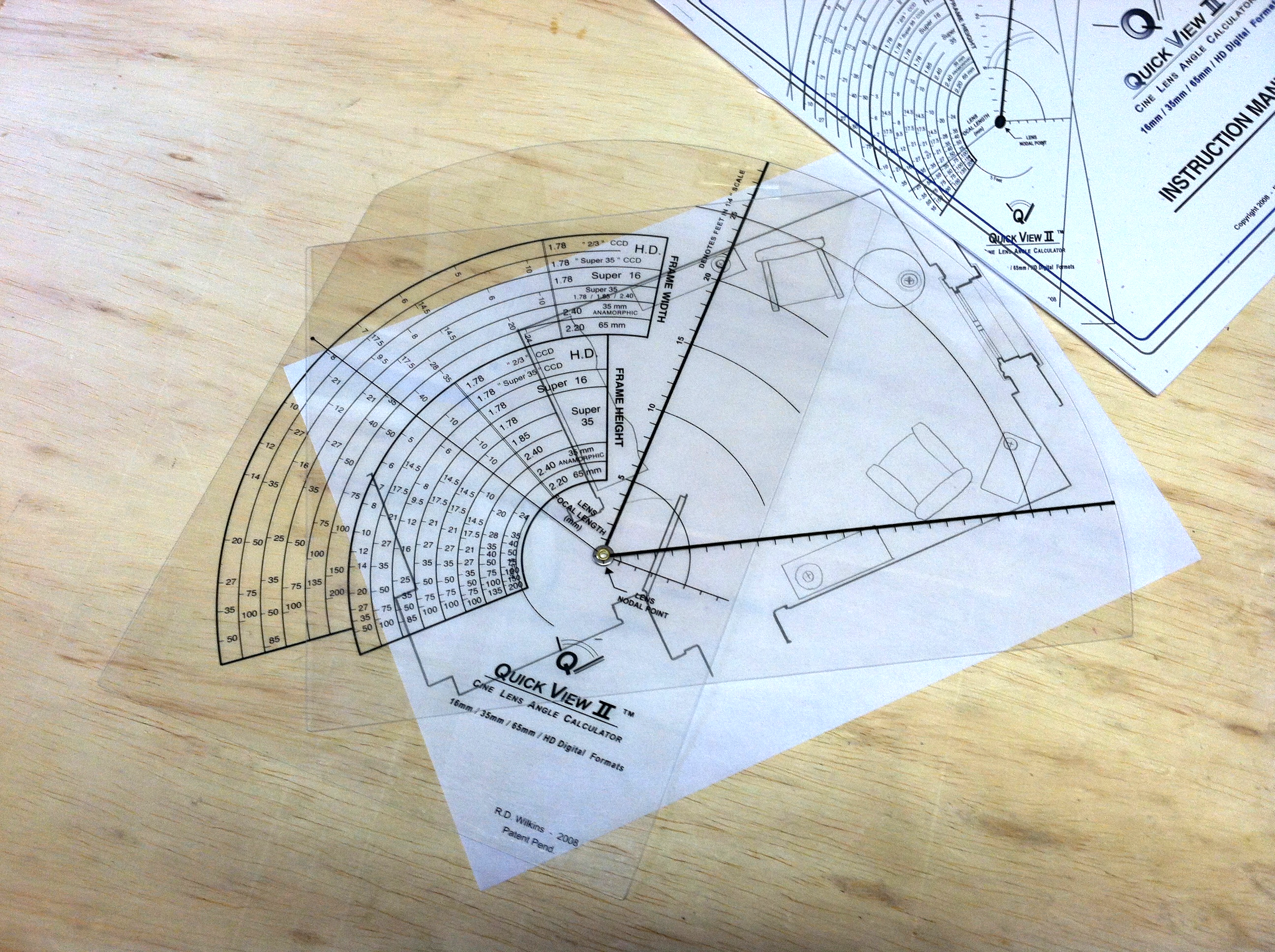
By the 1990’s, there were so many different formats and lens combinations most of us in the Art Department in Hollywood carried thick manila envelopes of acetates of the various focal lengths, but I always seemed to be missing one that I needed and I found some were inaccurate from being cloned so many times. In 1998 I designed a device that had all the available formats and prime lenses so you could just dial up the one you needed. I redesigned it in 2008 to include the digital formats but sold out of them a year ago.
I stopped having them made since they were expensive but hated to see them become obsolete since they are still so useful. For a director, they are the perfect way to see if a shot is possible at a location or see the limitations of a particular lens on a set when you can’t rely on wild walls.
Making A Quick View
Yours won’t be on Lexan like the originals were but will be sturdy enough plus cheap enough to replace if it’s damaged or lost. Download the files below and take them to your nearest copy center and have both the dial and the nomen printed on clear acetate. They don’t have to be printed at exactly 100% but they should be at the same scale to each other. Then you just line up the center marks and use a compass point or push pin to pierce the centers, creating a pivot point in place of the brass rivet as in the photo above.
The diagrams from the original instruction manual will explain how to use them. You’ll note that I’ve added a feature that wasn’t on the originals, a protractor which will tell you the angle of a selected lens.
It’s been 100 years since the start of World War I. On this Armistice Day (Veteran’s Day in the U.S.) it’s a good time to reflect, or learn about the first ‘modern’ war and it’s horrible legacy which still has a hold on us today, as seen in this article in the Telegraph about excavations at the Flander’s battlefield.
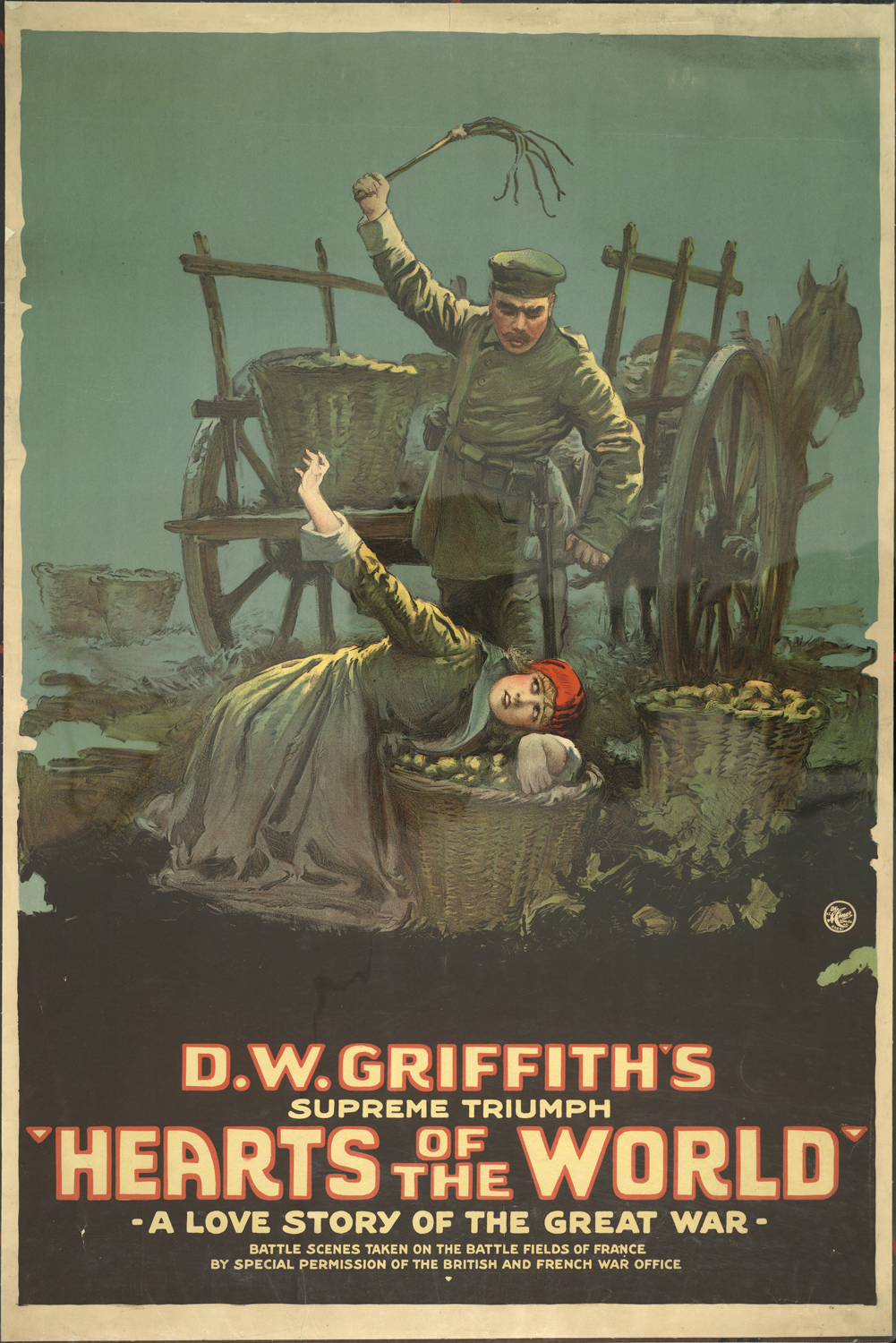
The world’s film industry was quick to turn stories from the war into movies, starting in 1917 when the British government invited D.W. Griffith to come to Europe and gave him access to the from lines where he shot footage for Hearts Of The World, a Paramount picture designed to change American attitudes about the war and encourage the public to push the country to become involved in the war.
Here are a list of my 20 favorite films about the conflict, in the order they were released. They are from different countries and reflect different parts of the war but they all have in common a goal of trying to look at the war from a human level, stripping away the glorified attitudes that started and perpetuated the conflict for 4 years.
J’accuse – France 1919 (director Abel Gance shot footage during the war resulting in realistic and haunting scenes)
The Big Parade – USA 1925
Wings – USA 1927 ( the first film to win an Oscar for Best Picture )
Four Sons – USA 1928
All Quiet On The Western Front – USA 1930
Westfront – Weimar Republic 1930
Niemandsland – Weimar Republic 1930
The Dawn Patrol – USA, 1930
Berge In Flammen – France, Weimar Republic, 1931
Grand Illusion – France 1937
What Price Glory? – USA 1952
Paths Of Glory – USA, 1957
Lawrence Of Arabia – USA, UK 1962
King Of Hearts – France 1962
Oh! What A Lovely War – UK , 1969 ( has an amazing cast)
Johnny Got His Gun – USA, 1971 ( inspired the song “One” by Metallica )
Gallipoli – Australia, 1981
Capitaine Conan – France, 1991
Joyeaux Nöel – USA, France, UK, Germany, Romania, 2005
At the Los Angeles County Museum Of Art now until April is a special exhibition of artwork and posters from the German Expressionist period of the silent film era, 1919 to the mid 1930’s. Produced in association with La Cinémathèque Française and the Academy Of Motion Picture Arts And Sciences, the show features over 150 pieces of artwork from classic films of the German UFA studio.
Along with many posters are a large number of original set and costume design drawings which are seen together for the first time here. Most of which have not been on display here before and others only seen as small images in publications.
Of course artwork from the most well-known films are there; The Cabinet Of Dr. Caligari, Metropolis, The Nibelungen, but there are many others from more obscure films as well including Robert Hearlth’s original schematic of the forced perspective backings from Der Letzte Mann which were such a sensation.
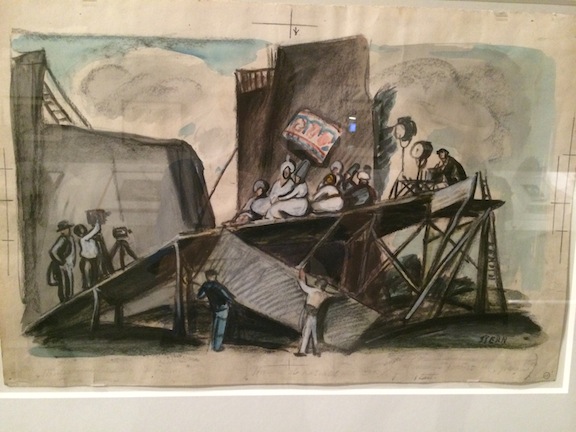
One of Ernst Stern’s drawings for Waxworks, which indicates the set design, platforming, camera position and lighting.
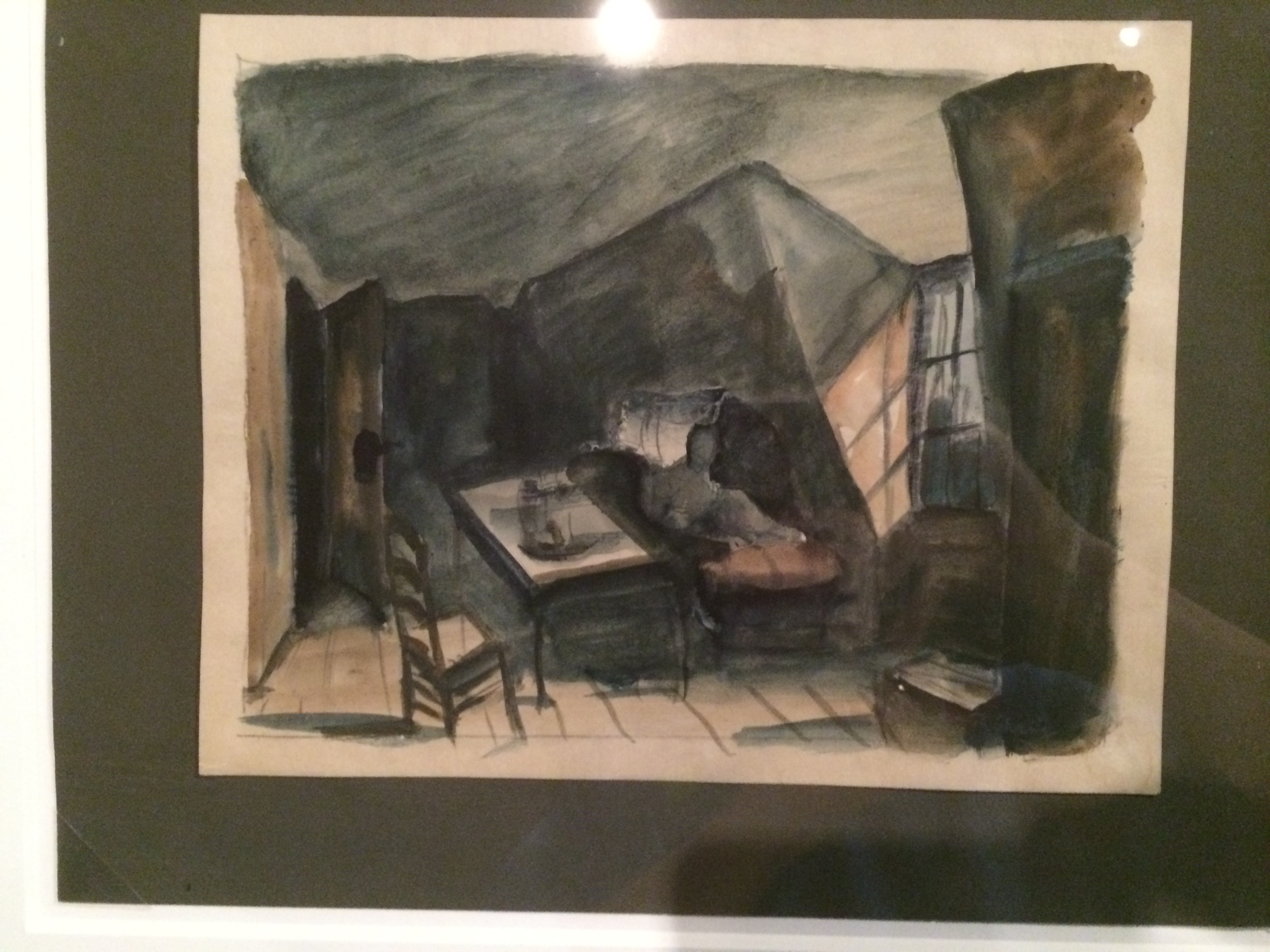
A watercolor and charcoal drawing for one of the sets for Dr. Caligari by Walter Röhrig
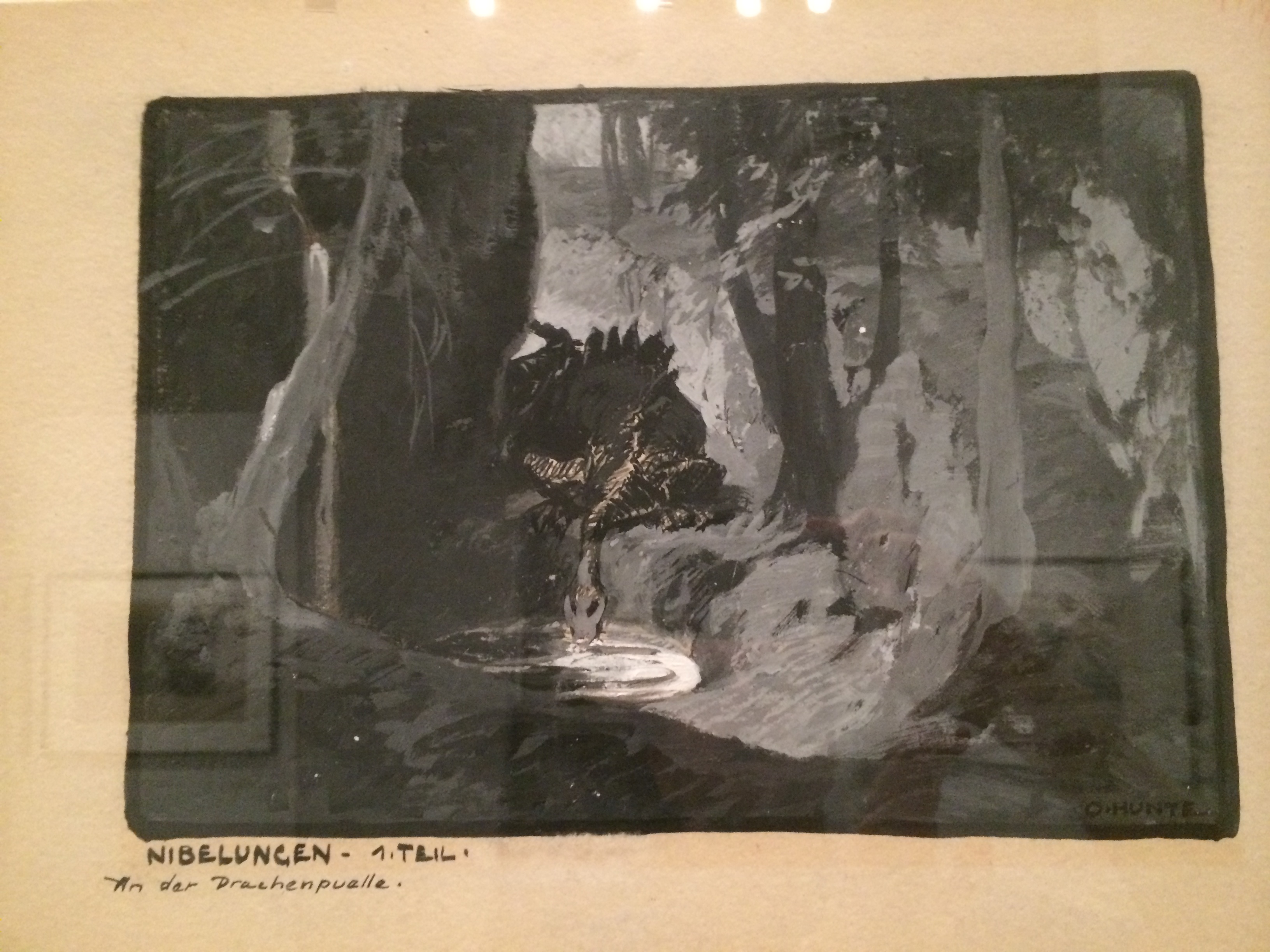
It was common during this period of German cinema for Art Directors to work in teams of two or three people, dividing the design duties among themselves as matched their individual abilities. A perfect example of this is the work of Otto Hunte and Erich Kettelhut on Fritz Lang’s The Nibelungen. Here is a drawing by Hunte of the dragon by the waterfall.
Gouache painting of the dragon for Die Nibelungen by Otto Hunte.
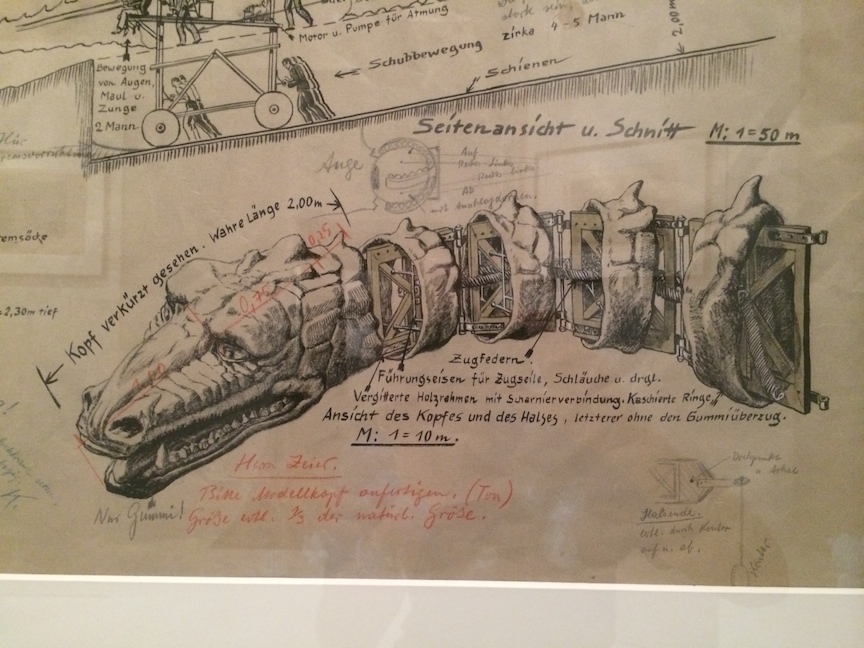
Being the more technically trained, Kettelhut elaborated on the design by drawing the technical requirements of the dragon to carry out the action called out in the script.
Technical drawing of the Dragon by Erich Kettelhut
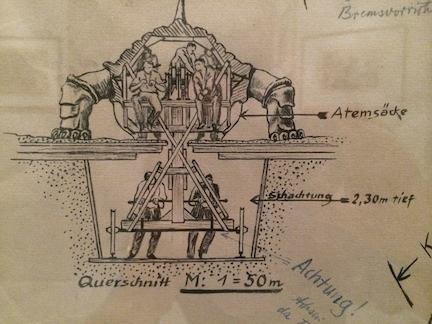
Kettelhut carefully described how the giant action prop was to be built and operated both with stage requirements as well as the on-board personnel’s responsibilities.
Enlargement of Kettelhut’s drawing describing how each part of the dragon was to be operated by stagehands.
The size and depth of the recessed path required for the props operators.
Kettelhut called out the length of the neck as well as the eye detail, tension springs, framework, control cables and hoses required for the creatures fiery breath. He calls out “only rubber!” for the mouth area.
Here is the scene from the film where Siegfried finds and kills the dragon. The effect is quite crude by our modern film standards but must have been thrilling for a public new to such spectacles. Imagine the lot of the half dozen stagehands stuck inside the big, airless prop as it bellows smoke from inside it. Notice the large forest and mountain sets created for the film, truly epic efforts for the time.
The title ends in a question mark because I’m not sure I have a definitive answer yet on my search for the the oldest existing scenery from a film. So, I’m asking everyone out there to help me with this quest.
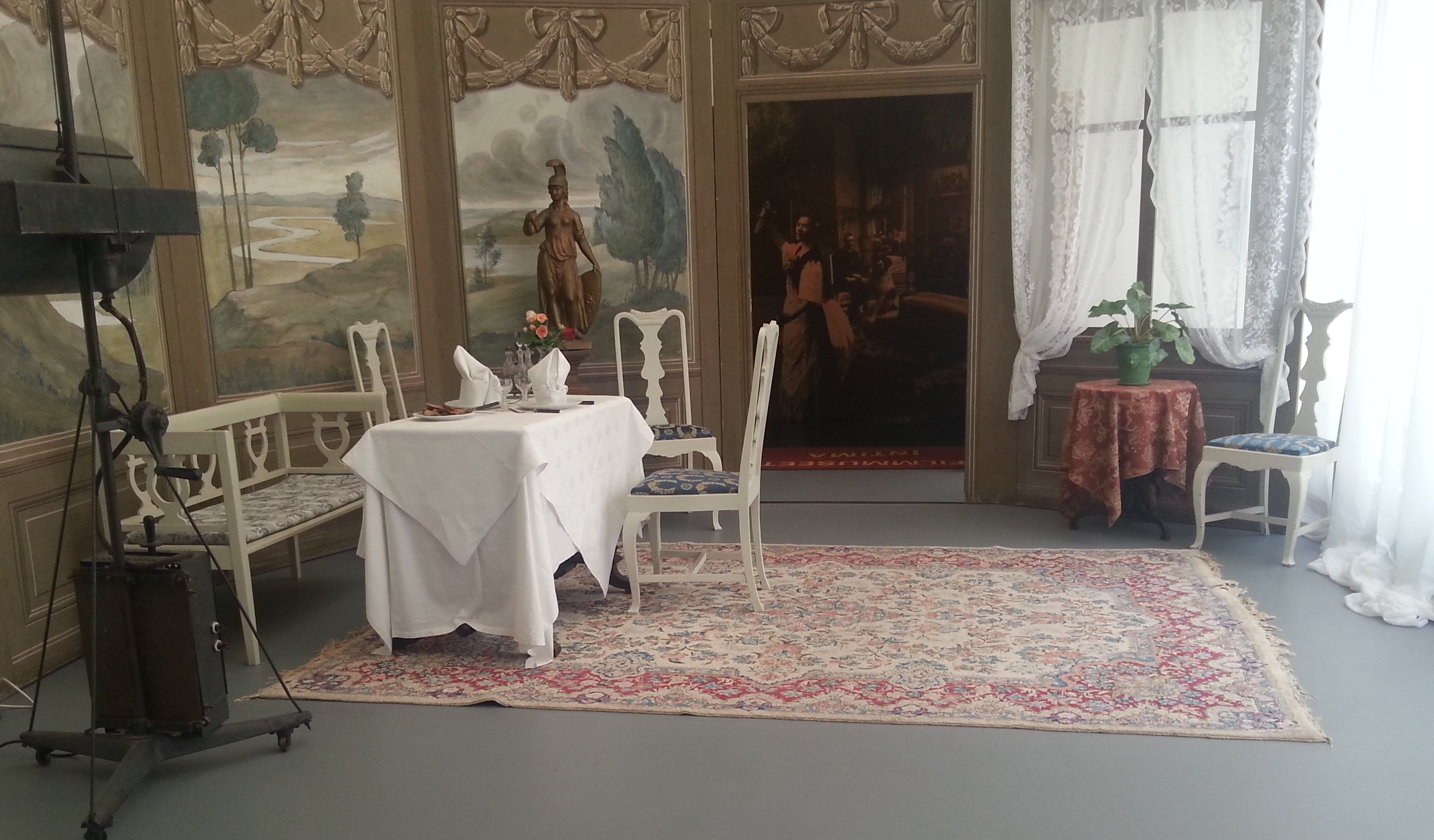
The stage of the oldest intact film studio in Sweden, and maybe the world. photo by Reinhold Fryksmo
Let’s use this as a starting point: in Kristianstad, Sweden there is what is reported to be the oldest intact film studio from the silent period. Inside the studio museum (Kristianstad Filmmuseet) is a display in what was the original glass-walled studio space. It is dressed as a set from the 1909 film, Fänrik Ståls Sägner, one of three films made at the Kristianstad Biograf-Teater that year. The scenery appeared throughout the film apparently as the same space was used for a number of different scenes. The main element is a multi-panel theatrical style flat painted with a Trompe-l’œil design. If this is truly the original set piece then this is in excellent condition for a 105 year-old flat.
So is this the oldest film scenery in existence? I’d love to hear from other Art Department people out there from around the world with older examples.
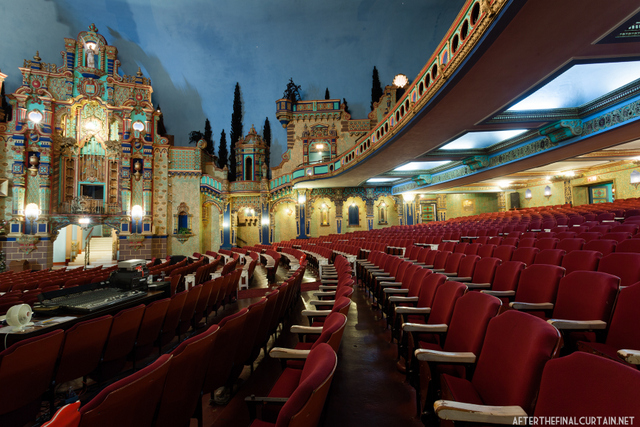
In the United States the period of the ornate Movie Palaces lasted from around 1915 to the 1940’s. In that short period thousands of ornate theaters were built all over the country. Of the several genres of architecture that were created during that period, the Atmospheric theaters came the closest to blending the new media of film with theaters’ stage drama roots.
Architect and Designer John Eberson
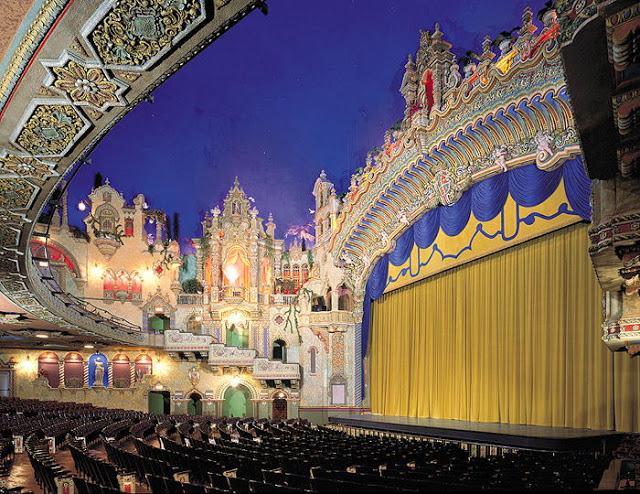
The Atmospheric movement was created by John Eberson, a stage designer and architect who immigrated from Europe. Having studied electrical engineering in Dresden, he took an apprenticeship with a theatrical designer in St. Louis and worked as a set designer and scenic painter. His first theater design was for a ‘picture house’ in Hamilton, Ohio. By 1926 he had perfected his ‘atmospheric’ concept with the creation of the Majestic Theater in Houston, Texas. Earning the nickname “Opera House John”, he would design over 500 atmospheric movie palaces by the end of his career.
Majestic Theater- Houston, Texas, built 1926
For the average American, spending an evening in one of these theaters was as close to a trip to Europe as they could ever hope to have. Usually designed with European themes, Eberson’s designs featured large coved ceilings that gave the illusion of sitting outside in a courtyard with facades on either side. The ceilings were painted sky blue and a projector called a Brenograph was used to project moving clouds and stars on the deeply coved ceilings.
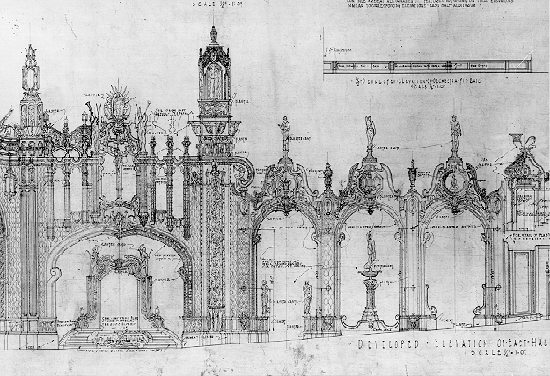
Eberson’s drawing for a facade for the Paradise Theater in Chicago
Most of the facades detail and ornament were executed in traditional staff of plaster and hemp fiber, painted and gilded.
Saenger Theater, New Orleans
As with most popular trends, the atmospheric theme was quickly picked up by others and expanded throughout the country where the palaces were built even in small rural towns. One such theater is the Holland Theater in Bellefontaine, Ohio, built in 1931. The theater is the only known theater with a 17th century Dutch motif and features a twinkling star ceiling and turning windmills. Turned into a 5 screen multiplex in the 1980’s the theater was hut down in 1998. In 2009 the theater was reopened as a live theater venue and the interior is slowly being restored back to it’s original look.
Recent photo of the interior of the Holland Theater with it’s painted sky, starlight and turning windmill blades
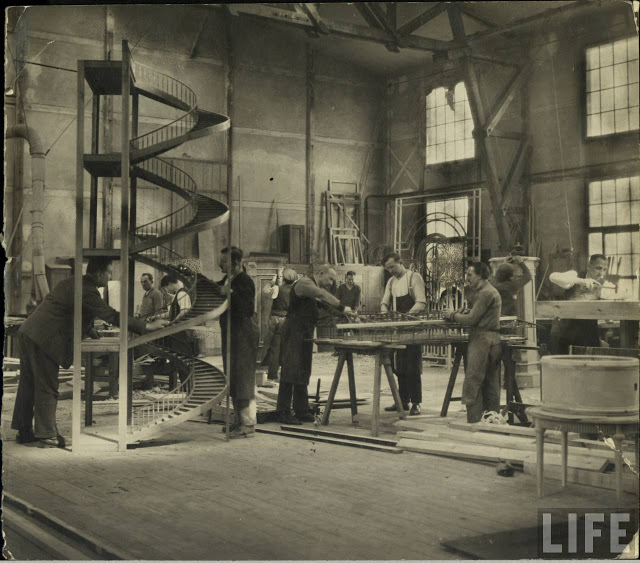
Carpenters building scenery at the UFA Studios in Berlin, 1928. (Photo by E. O. Hoppe
“I have to admit in all modesty that it would never have been possible to make these films if superb set designers, film directors, cameramen, and architects had not been available. I am realizing more than ever that Ufa’s success came about because it was possible to create teams. Film is an art species, or an art-related species that cannot be accomplished by a single man but only by artists in close daily cooperation. It can only be accomplished by people who are obsessed by film.”
Erich Pommer, Producer – Metropolis, The Cabinet Of Dr. Caligari, Dr. Mabuse, Die Niebelungen, Tartuffe, Faust, The Blue Angel, Liliom
 This book will definitely appeal to film lovers who have very little understanding of film scenery and stagecraft as well as film professionals who have many films to their credit.










 The Designer's Assistant