What’s Wrong With The Film Industry?

Photo by Mike Finklestein via Flickr

Following the ouster of Rich Ross as chairman of Disney Studios, UCLA Professor Emeritus Howard Suber posted a recent article about an influential investor who wrote a report to the Paramount Studios board entitled, “What’s Wrong With The Film Industry?”

Here are some of his main points:

-The constant turnover of the production head of the studio is disastrous.

-The conflict and turnover caused by the buying and selling of companies causes          confusion, uncertainty, and weakens morale in the production areas.

-Authority is not clearly defined.

-Overhead is indefensibly high.

-Budget estimates are not complete or accurate when shooting begins.

-Budgets are a joke, since they are exceeded with impunity.

-Shooting schedules are disregarded; scripts are not ready when shooting begins.

-The write-off on stories and contracts is enormous. Screenplay costs are excessive.

-Producers hold exorbitant contracts, and there is no relationship between a producer’s salary and the box-office success of his pictures.

The analyst concluded that it would probably be a smart move to put someone in charge as Head of Production who actually had extensive film-making experience.

The analyst was Joseph P. Kennedy, father of J.F.K., who was involved in both Pathe and RKO. The report was written in 1936.

It’s hard to know whether to be surprised, disheartened or amused that so much hasn’t changed over the last 76 years. It will be interesting  ( or gut-wrenching, depending on your mental vantage point ) to see where it all leads us.

Will the continuing tide of runaway production be Hollywood’s final undoing, or are we all on a big merry-go-round that brings us back to the same spot with a calculable regularity?

Suber writes an excellent blog entitled The Power of Film where he posts some very insightful articles. Check them out.

Would you like your metrics hard or soft?

Our team is getting smaller and smaller. The Imperial scale team, that is. Right now only the U.S. and Burma still use the Imperial system of measure. Even the British and Canadians have abandoned the system for metric units of measure.  Most countries use a system known as “S.I.” or, System International. Dimensions on drawings are expressed as millimeters, usually without a suffix ( mm ) after them.

With more and more films being made abroad it’s becoming more common for set designers and art directors to have to create construction documents that will be built out of the country. The easiest method is simply to draw in metric from the start and avoid some inevitably strange conversion numbers. Two other methods are the “soft” and “hard” conversions.

In soft metric, you draw and dimension in Imperial and then also give the equivalent metric measurement rounded to the nearest millimeter. In hard metric you dimension in Imperial and then covert to “hard” or non-rounded numbers, meaning you’re going to end up with numbers in tenths of millimeters, which is fine if you’re drawing machined parts. Since a millimeter is less than 1/32″ in length, you won’t be very popular among the people building from your drawings.

Drawing in metric straight from the start is the better way to go once you have some basic metric visualization skills. Here’s a quick list of common sizes converted to soft metric:

1″ = 25 mm

1′-0″ = 305 mm

6′ = 1829 mm

10′ = 3048 mm

Typical door height –  2033 mm  ( 6′-8″ )

Table height – 762 mm  ( 30″ )

Counter height – 915 mm  ( 36″ )

Common Drawing Scales

Here’s a list of metric scales and their closest Imperial scale equivalent:

1:1 (Full Size)

1:2 (Half Size)

1:5  (3″= 1′-0″)

1:10  (1 1/2″=1′-0″)

1:20  (3/4″=1′-0″)

1:25  (1/2″=1′-0″)

1:50  (1/4″=1′-0″)  actual equivalent – 1″= 4.17′

1:100  (1/8″=1′-0″)  actual equivalent – 1″= 8.33′

1:200  (1/16″=1′-0″)  actual equivalent – 1″ = 16.66′

1:250  (1″=20′-0″)

1:500  (1″=40′-0″)

1:1000  (1″=80′-0″)

Conversion Scales

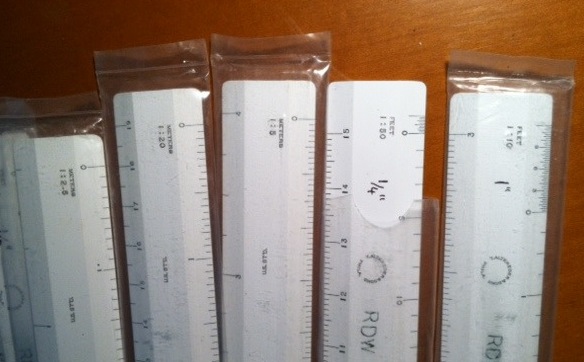
There used to be a company in Philadelphia called T. Alteneder & Sons which made custom drawing scales. I ordered a metric / imperial set nearly 14 years ago and they’re very handy. If you can get your hands on a set, buy them.

Since there doesn’t seem to a source to buy them anymore, I made up a paper scale set for 1/4″ / 1:50 that you can print out and make yourself. You’ll need a 1 1/2″ wide by 17″ long piece of matt board or thin basswood. Download and print out the PDF from the link below on 11 x 17 paper. Be sure to print it at 100% and make sure the “zoom to fit” box is unchecked. Check for print accuracy using the “Imperial” scale. It should measure a true  1/4″ to the foot. You’ll notice that the foot increments on the blue “Metric” scale measure slightly less that 1/4″ so don’t be thrown off by them. Carefully cut out the scales and mount on either side of the board.

When working with a 1/4″ drawing, use the side with the yellow box marked “Imperial”. The opposite edge of the scale will read out equivalent metric lengths. Use the other side when working with 1:50 metric drawings and the ‘feet’ scale will give you the equivalent distance in imperial units.

Metric_Imperial_ConversionScales


Graphic Standards From Across The Pond

Here in the US, the book we primarily turn to for all questions of an architectural nature is the AIA Architectural Graphic Standards. For our work, the third and fifth editions are the most informative because they were printed at a time when architects had to draw everything rather than order most elements pre-made. If you happen to be drawing up European architecture, though, it won’t do you much good.

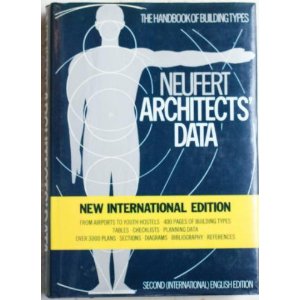
In the rest of the world, the architectural book most people turn to for similar answers is Neufert’s Architectural Data. Soon to be released in it’s 40th edition, the book is printed in 18 languages and is the architectural Bible in the metric world.

Ernst Neufert

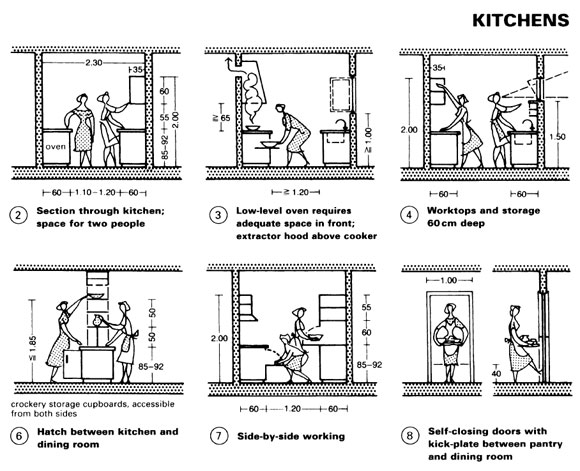
Ernst Neufert worked at the Bauhaus as chief architect under Walter Gropius and later taught at the Bauhochschule until the Nazis closed it down in the early 1930’s. Seeing the need for a book that graphically laid out the architectural standards of the time, the book was first printed in 1936 and soon became a big success. Like Graphic Standards, the book is mainly a visual reference of architectural design and space standards for the European continent.

The book has had a number of English language editions, but the 1998 International is the most useful and easiest to use for the metrically-challenged. A large number of each edition are printed so it should be fairly easy to find used copies. You may have better luck throught British booksellers than second-hand businesses here.

kitchen standards from an earlier edition

In Britain, The book many people refer to is McKay’s Building Construction. Originally published in three volumes over an eight year period, the recent re-publication has combined them into one book. The books are so popular in England that when they briefly went out of print, students were encourage to beg, borrow or steal to get a set.

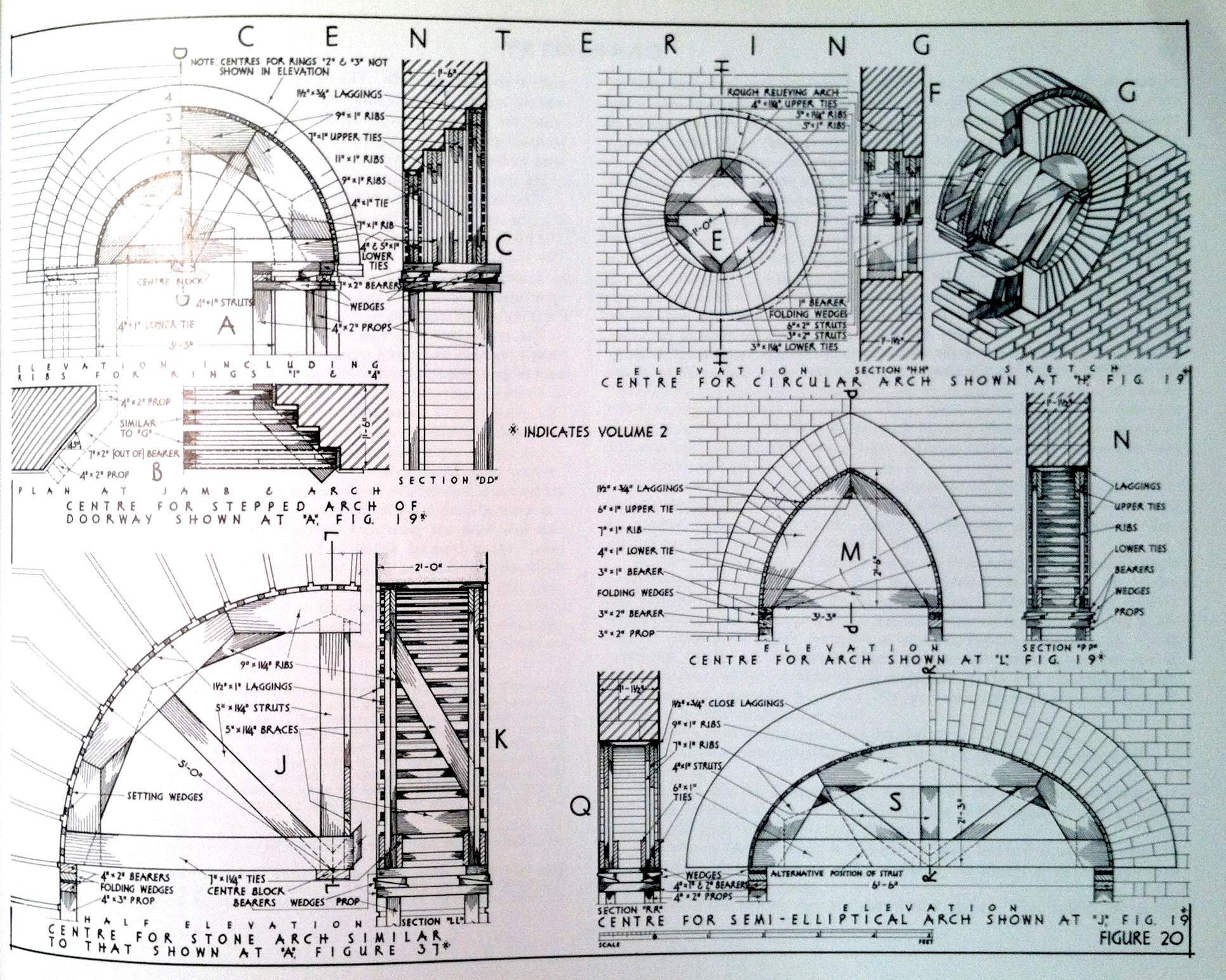
page on hand-cut stonework

Written by W.B. McKay, who was Head of the Building Department at both Leeds and Manchester colleges, the book is particularly useful for our business as it shows and describes exactly how the various methods of construction (wood and masonry ) are carried out. Filled with hundreds of beautiful perspective drawings by McKay, the book takes up where Graphic Standards ends.

Like Neufert’s, this can be had in used editions, the most recent from 2004. I found my copy in a bookstore in New Delhi, India, so you may have to search around. This is definitely a book that is worth the search.

If you’re in a hurry, you can order it here.

methods of forming masonry openings

Plus ça change – Part II

In 1933, the novelist Christopher Isherwood went to work as a screenwriter on the British film Little Friend. He used his experiences on the film to create the story for the satirical novel Prater Violet.

Set in 1939 at the beginning of World War II, the story follows the making of a movie about a park in Vienna. The story describes the dysfunctional,  detached and often dystopic world of the film industry ( in Britain ) as it follows a young screenwriter’s first experience on a film set.  First published in 1945, many aspects of it’s 128 pages are surprisingly contemporary for a book written over 70 years ago. In many ways, it seems, not a lot has changed.

Here are some excerpts:

It will interest you as a phenomenon.You see, the film industry of today is really the palace of the 16th century. There, one sees what Shakespeare saw. The absolute power of the tyrant, the courtiers, the flatterers, the jesters, the cunningly ambitious intriguers. The are fantastically beautiful women. There are incompetent favorites. There are great men who are suddenly disgraced. There is the most insane extravagance. And unexpected parsimony over a few pence. There is enormous spendour, which is a sham: and also horrible squalour hidden behind the scenery. There are vast schemes abandoned because of some caprice. There are secrets that everybody knows and no one speaks of.”

Lawrence took great pleasure in pointing out to me the many inefficiencies of the studio. For instance, there was no proper storage room for scenery. Sets had to be broken up as soon as they were used: the waste of materials was appalling.”

The Academy and the 50% Pay Cut

The performance seen that morning may not have been the best one of the year, but it certainly was the most profitable for a select group of people.

It was Bank Day, March 8, 1933. In the wake of the bank failures at the onset of the Great Depression, Roosevelt had closed the banks in order to give the government some breathing space to restructure the financial system. For Louis B. Mayer, the head of MGM Studios, it was a prime opportunity to once again lower the wage bar in the film industry.

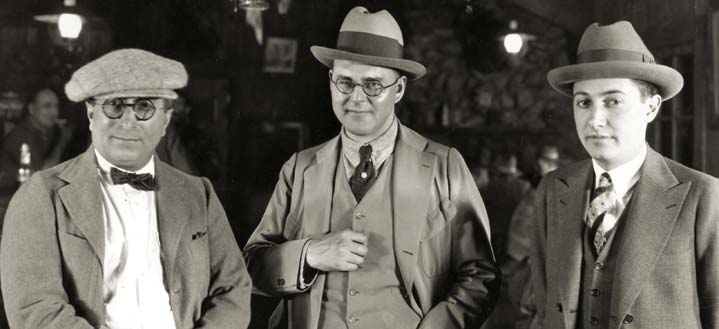
Left, Louis B. Mayer, on the right is Irving Thalberg (Academy archives)

The talent contracted to the studio had been asked to assemble in the largest screening room on the lot (now the Cary Grant Theater). Mayer entered, red-eyed, unshaven and looking morose. He proceeded to lay out the current status of the film industry as he saw it. He told the assembly that every studio in town was on the verge of shutting down and that the industry as a whole could come to an end. Mayer said that they needed to institute a 50% pay cut for two months for those making more than $50 a week. Those making less would take a 25% cut. He said he wouldn’t be able to institute the cuts unless the assembled group would agree to it. Mayer said, “I, Louis B. Mayer, will work to see that you get back every penny when this terrible emergency is over.”

One writer stood and said he was confused at how it had come to this considering the number of successful movies the studio had recently released. The actor Lionel Barrymore chastised the man for not being a team player and lead the entire group in eagerly agreeing to the wage cuts.

All over town at the other studios, coincidently, the same scene was taking place as assembled studio employees were told the industry was on the verge of complete collapse if they, too, didn’t take a 50% pay cut. And, as at MGM, the employees were told that the pay-cuts had been recommended and approved by the Academy which gave it, they hoped, the imprimatur of the group that supposedly had the best interests of both the employees and owners.

A young story editor named Samuel Marx followed Mayer and another exec as they walked back to their offices after the meeting. Mayer seemed to not know the story editor could hear him as he turned to the other exec and asked, smiling, “How did I do?” It had been a carefully crafted performance.
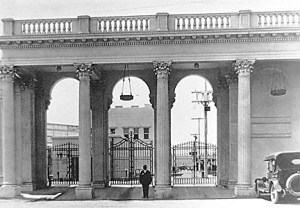
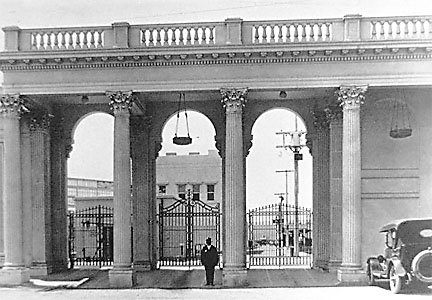
The original entrance gates at MGM - Lugo Cerra collection

It had also been no coincidence that all the studios had decided on insisting on a 50% pay cut. Jack Warner would later admit that the studio execs had gotten together and decided among themselves on the pay cuts and only later claimed that it had been voted on by the entire Academy. MGM’s head of production, Irving Thalberg, argued that the cuts would hurt moral. He couldn’t have been more correct. Mayer had pointed out that the executives themselves had taken a 35% pay cut for one year. But this did not include the huge bonuses paid out to a small handful of people. 20 to 25 percent of the net profit on the studio’s pictures was divided annually among them.

The Academy of Motion Picture Arts and Sciences had its’ beginnings on January 1927, when Mayer invited 36 of the most influential players in Hollywood to a dinner at the Ambassador Hotel where he proposed the organization.  The non-profit organization would both create standards for the industry as well as be an advocate for those in the industry, arbitrating contracts between the studios and talent.  And, it would be a good public-relations move for the studios and be a way of increasing public interest in Hollywood.

It was the role of labor-arbitrator which was the most questionable. As an organization which had been started by and heavily influenced by the studio heads, it was ridiculous to think that it could be an impartial body in labor negotiations. In actuality, the organization’s role of supposedly advocating for film industry employees, would help prevent unionization of the studios by the talent for a number of years. Mayer and the other studio heads weren’t as concerned with having to pay the talent more as much as they were concerned with losing complete creative control over their films.
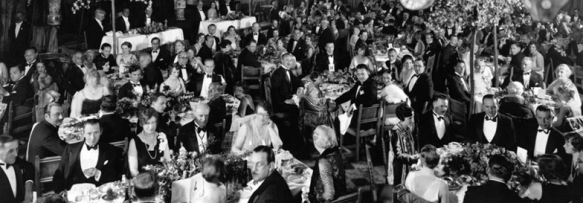
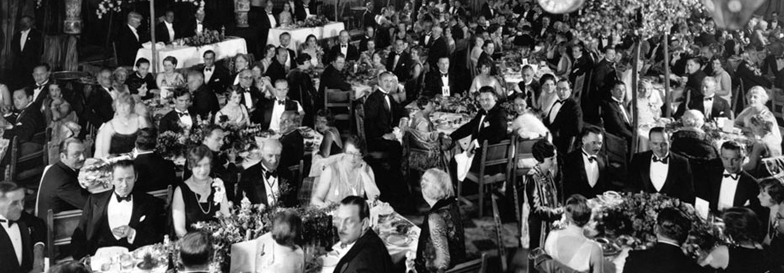
The first Academy Awards banquet in 1929 - Academy archives

The Academy Awards themselves were an afterthought. Mayer himself conceived of the awards as being a way to curry favor with the talent. He later said, “I found the best way to handle [filmmakers] was to hang medals all over them. If I got them cups and awards they’d kill themselves to produce what I wanted. That’s why the Academy Award was created.”

For the studio talent, the 50% cuts the studios now asked for were galling and weren’t made easier by the Academy’s ‘approval’ of them, particularly because this was not the first time it had happened. The Academy had also ‘approved’ cuts in 1927 and 1931, and just the year before, Mayer had asked his employees to take a cut again, which the actors patently refused to do. In the economic crisis of the bank collapse, Mayer saw the opportunity to again roll back wages.

Thalberg’s warnings had been prophetic, and the grumblings about the Academy’s worthlessness as a labor arbitrator were evident to all. The screenwriter Brian Marlow turned to a friend and said, “Okay, then, the obvious conclusion to this crap is our need to have a union.” While many of the studio workers were organized under I.A.T.S.E., the creative talent had no representation. The writers, in particular worked under particularly egregious conditions. With no protections, writers could end up having to either share their credits with another person who had contributed very little to the script, or could end up getting no credit at all and finding that the script was credited to the producer’s relative.

Within a month, many screenwriters and actors decided that the Academy was not truly looking out for their interests and formed what would become the Screen Writer’s Guild, (a precursor of the Writer’s Guild of America), the Screen Actor’s Guild, and in 1937, The Society of Motion Picture Art Directors would be formed. Mayer promptly forgot his promise to return “every penny” of forfeited wages and would see record personal profits in the next few years.

It was later estimated that the cuts saved the studio nearly $800,000, much of which went to executive bonuses. The impact on Mayers’ personal finances was soon evident and he became the first man in America to make one million dollars a year. For nearly a decade he would be the highest paid man in the country.

For further reading:

  • “Lion Of Hollywood –  The life and Legend of Louis B. Mayer” by Scott Eyman
  • “The Inquisition in Hollywood -Politics in the Film Community”  by Larry Ceplair &   Steven Englund
  • “Mayer and Thalberg: The Make-Believe Saints” by Samuel Marx
Understanding RED Camera Formats & Camera Angles

In the Sketchup™ Camera Tools seminar this past weekend I talked about the current trend in digital cameras and how they relate in using camera lens angles to view 3D models and illustrations.

The RED Epic™

A camera that is creating a great deal of excitement in the camera world, and a lot of confusion in Art Departments, is the RED camera. Just over three years ago the Red Digital Cinema Camera Company  entered the market with what they called a DSMC system, or Digital Still and Motion camera system. The camera was basically a component system with the body, or brain, containing the sensor and the other various components needed to record an image. The system was designed to be configured and upgraded as the user saw best to fit their work needs. The design of a camera with dual capabilities would fuel the current trend of high-end still cameras which also record HD video, but that’s getting ahead of ourselves.

Designed with a 35mm sized chip, the camera is able to record video with the same depth of field as 35mm as well as having similar focal lengths, allowing for the use of existing lenses from other camera and 35mm systems.

The system allows the user to record in four different formats: 4.5k, 4k, 3k, and 2k and each of these can be framed or extracted in different aspect ratios. With the new Epic, whose sensor is 5k (5000 pixels across), the choices are 5k, 4.5k, 4k, 3k, 2k, 1080p, and 720p.

At this point your eyes are probably crossing and you’re saying, “so what?” Basically, what you need to know is that each successive format is a smaller cropped version of the previous one.

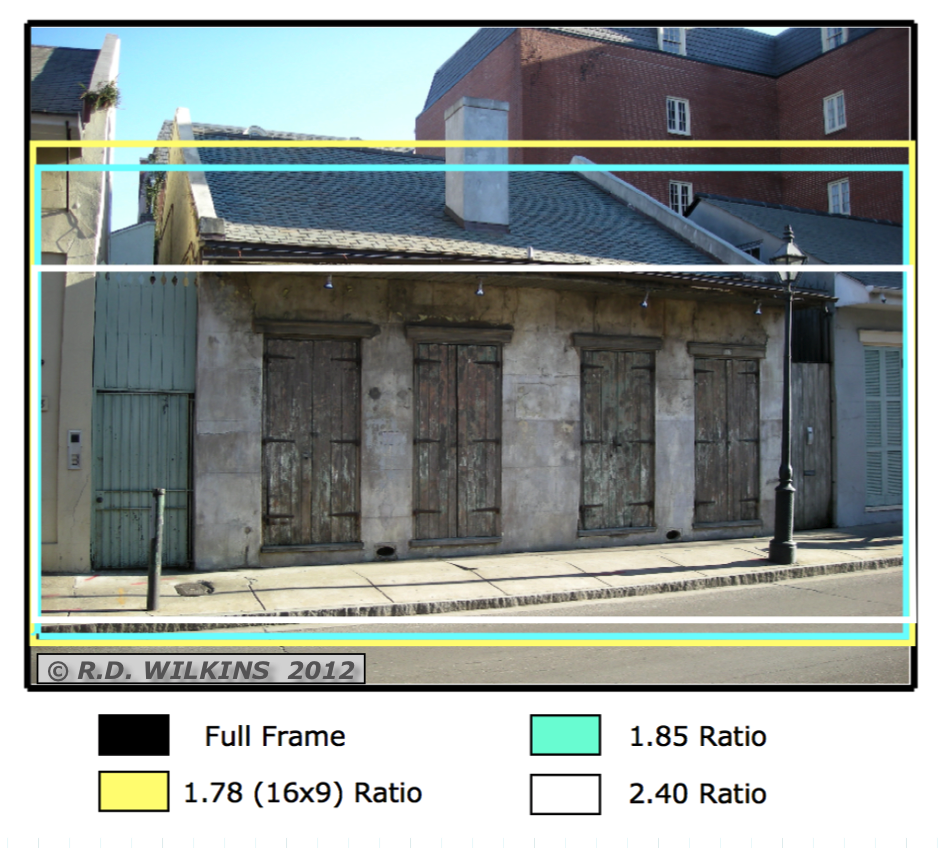
diagram showing a Super 35mm frame and the three extracted ratios

In Super 35mm, the frame, or negative is cropped according to the aspect ratio for the release. The difference is,  the cropping only occurs vertically. The width of all the formats is (nearly) the same, so that a lens focal length will be similar in each of them. Here is a diagram explaining the Super 35mm format from an article comparing digital and film formats that I wrote for theAug-Sept. 2010 issue of Perspective Magazine.

With RED, each format will have a narrower horizontal field of view than the previous one. Meaning that a 50mm lens in in 3k will have a much narrower field of view than it does shooting in full sensor 5k.

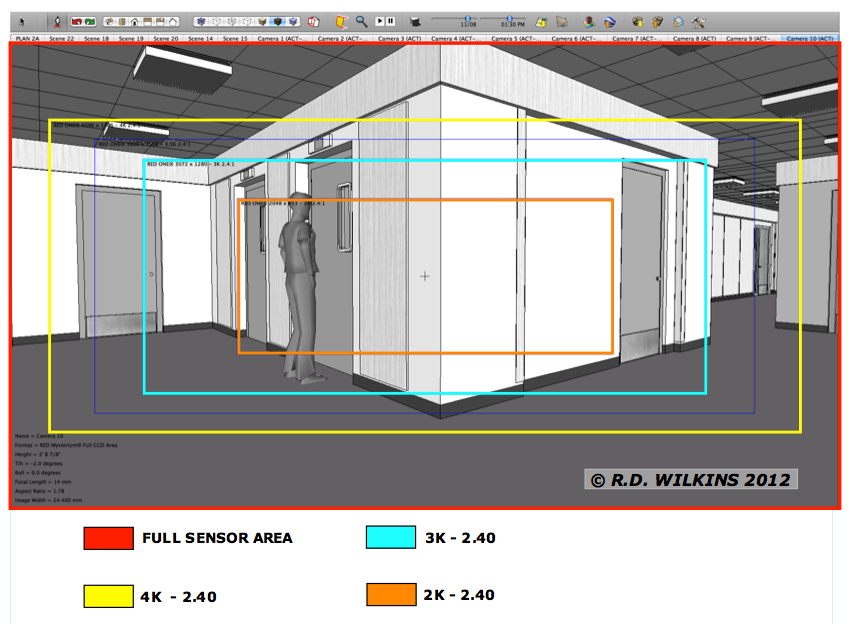
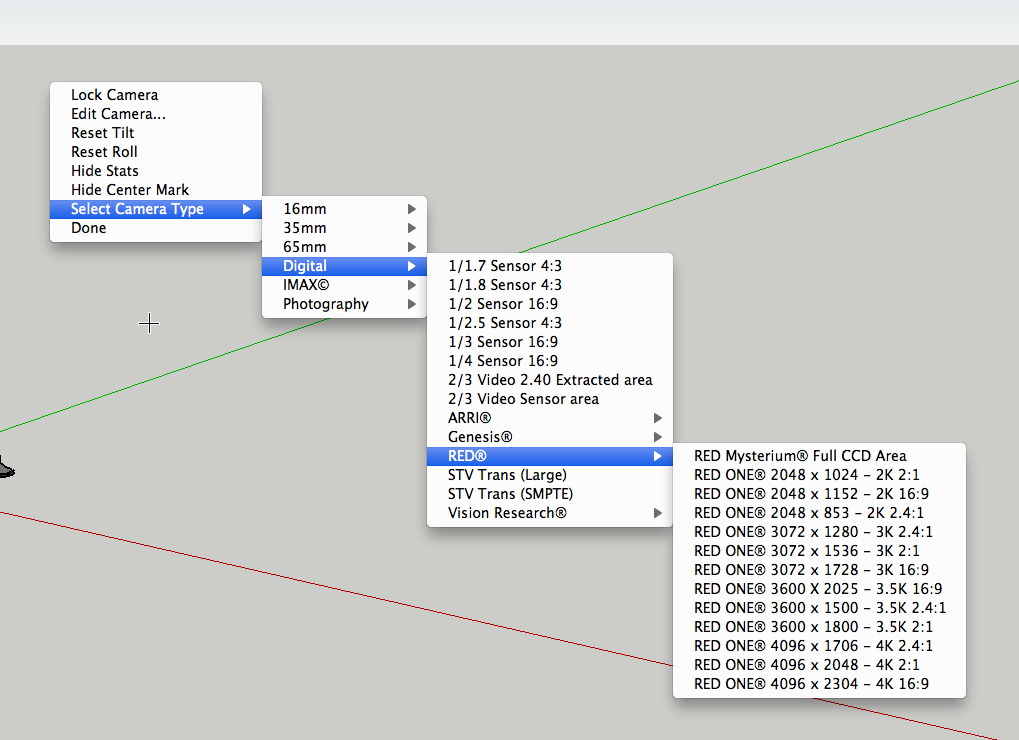
Below is a viewport in Sketchup™ set up using the Advanced Camera Tool pluging. The “camera” is set up for the full sensor option with the safe areas turned on for the other formats.

screen capture showing RED Camera full sensor area and 2K, 3K and 4K crop areas

In this screen shot of a model viewed with a 14mm lens, you can see how each progressively smaller ‘k’ format crops the sensor and has a narrower angle of view with the same lens. So, when you are setting up a model to view from a specific position with a particular lens, it’s important to know at what ‘k’ is the set going to be shot. Click on the image to enlarge it on your screen.

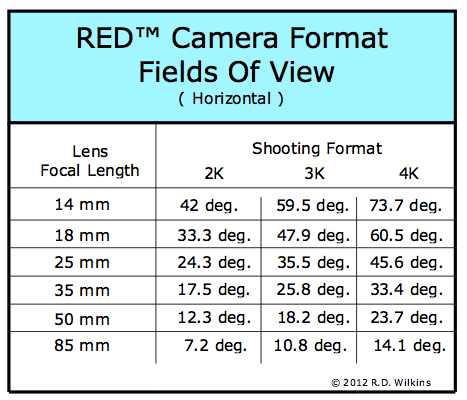
Chart of horizontal fields of view for various focal length lenses in the three different shooting formats

Here is a chart that breaks down the horizontal angle of views depending on which format the film is going to be shot in. The lenses listed are generic focal lengths and do not cover the entire range of lenses available. But, this should give you an idea of the proportional change in the horizontal angle of the captured frame based on the different shooting formats.

Sketchup Pro Camera Tools Seminar

I recently did a post on the new Advanced Camera Tool plugin for Sketchup. I’ll be teaching a seminar on Sunday, January 15, from 10 am to 2 pm that will cover the use of the plugin.


I’ll also be covering a number of other topics such as; basic camera information you need to know, how the new camera systems are changing the business, how the new method of ‘re-framing’ in post-production effects the final product and how to allow for it, and I’ll explain why they have so many RED camera settings in the plugin pre-sets!

The seminar is half-price ( $25 ) to ADG members and will be held at 13907 Ventura Boulevard, Suite 101 ( on the second floor ) in Sherman Oaks.

The facility limit is 30 attendees so you won’t be guaranteed a seat unless you reserve one in advance. To find out more and reserve a seat, go to this webpage.


The Leadholder Museum

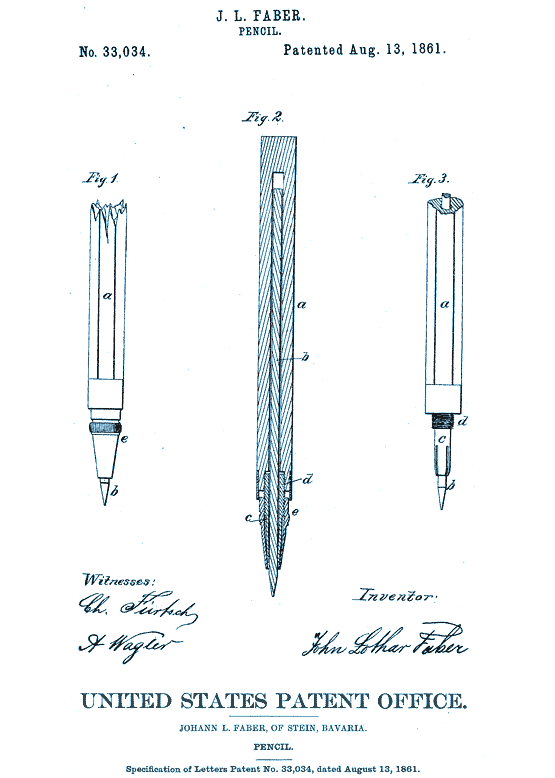
A. W. Faber patent drawing for leadholder

The humble leadholder has been around a lot longer than you would think. Actually since the American Civil War, when the first perfected-for-manufacture holder was patented by John Faber of Germany in 1860. If you hung out with Art Director Harry Otto, you would know these things. Harry forwarded me a link to a website called Leadholder- The Drafting Pencil Museum, which is another example of how you truly can find anything on the internet.

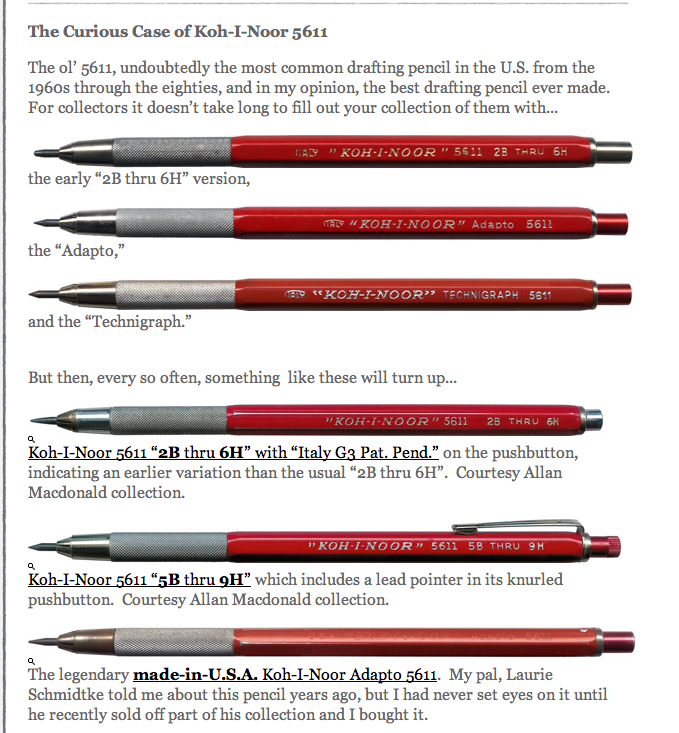
It features documentation on just about every lead holder ever made, all the way back to the 1560’s. It might not sound that fascinating but once you see the site you’ll end up spending quite a bit of time there, ever if you’ve never used them.

The site is nicely designed and has some great history of their use including vintage catalogues, ads and blueprints of various makes and models. You never know, these could be the Hummels of the 21st century. (Considering what some of these things go for on Ebay, you may have your kid’s college fund sitting in your desk drawer.) So, ditch that gold and buy some vintage leadholders. Get started here: Audrey’s Pencils.

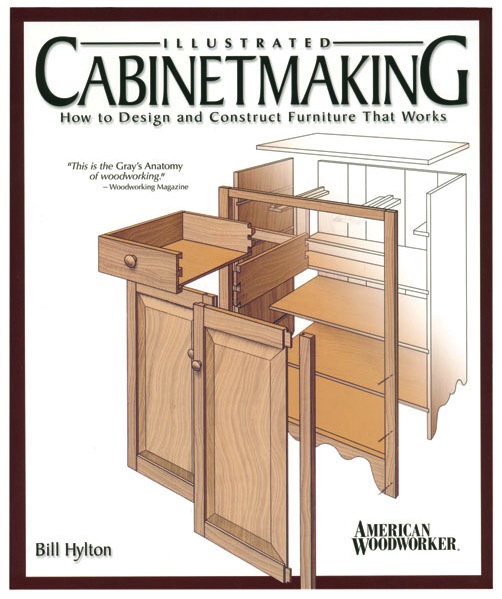
Suggested Reading – “Illustrated Cabinetmaking”

Face it, having to design furniture or create construction drawings for it is not on most set designer’s list of favorite-things-to-draw. Sometimes you can get away with doing what’s basically a giant napkin drawing but most of the time you’ve got to get into some real details: like joinery, hardware and material specs. And there are the standards: what’s the widest bookshelf you can have before you’ve got a serious sagging problem?

If you have only one book on furniture and cabinetry, Illustrated Cabinetmaking by Bill Hylton, is a good choice. Written for woodworkers, this book is an excellent reference for anyone who needs to draw or understand furniture design and construction. The book details over 90 different pieces and contains over 1300 beautiful pencil drawings. Each spread describes the piece in detail with exploded views and details, and gives design variations as well as sources for measured drawings.


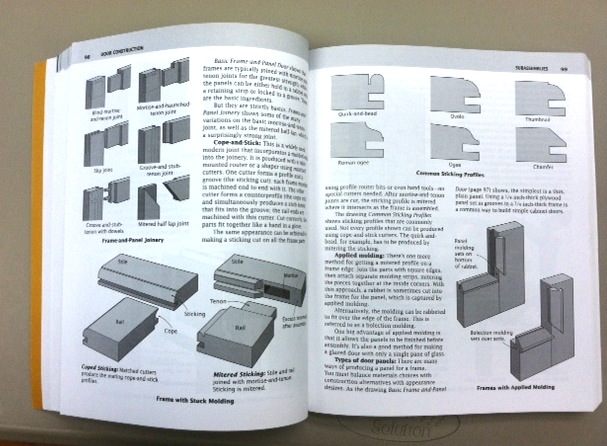
There are also chapters on joinery, door and case construction, styles and the basic design standards for each type of furnishing.

Typical layout showing exploded views and details

Examples of joinery details

Each chapter is begun with a design standards chart

The book is published by Fox Chapel Publishing and retails for $24.95.

Required Reading – “Backstage Handbook”

You can never have enough good reference books. Even with the seemingly endless information that’s available on the internet, having a good reference book close at hand can save you hours of searching internet sites for a critical bit of knowledge.

There are certain books that are part of my kit that I make sure to always have with me because the information they contain is so useful and job-specific that I’m sure I’ll refer to them numerous times during a show.

One of these is the Backstage Handbook. It’s subtitle, “An Illustrated Almanac of Technical Information”,  is a perfect description of it’s contents. Profusely illustrated with crisp black and white drawings, the book is a visual reference of hardware, materials and architectural elements. Written by  Paul Carter, the book was originally written for those in live theater. Now in it’s third edition, the book includes chapters that pertain more to film work as well.

I’m now on my third copy of the book as they often fall apart from heavy use. The book becomes my repository for notes, tables and other bits of technical info that I want to keep in one place.

It’s a nice compact volume that provides a quick way to look up typical fasteners, steel sizes, material weights and sizes and a lot of other information you’ll often need without resorting to sifting through a McMaster-Carr catalogue or various other books.

It’s published by Broadway Press and retails for $18, although you can sometimes find it cheaper through Amazon. This is definitely a book you should own.