When recreating a period set from the 1800’s in particular, it’s difficult to really replicate the designs of the period because current wood moulding and millwork don’t allow for what was a common practice by designers and architects; true proportional design.
A moulding catalogue of today looks very different from the original moulding catalogues of the 1800’s. Not only because they contained a larger variety of profiles, but there was a large selection of different sizes for almost every profile that they offered.
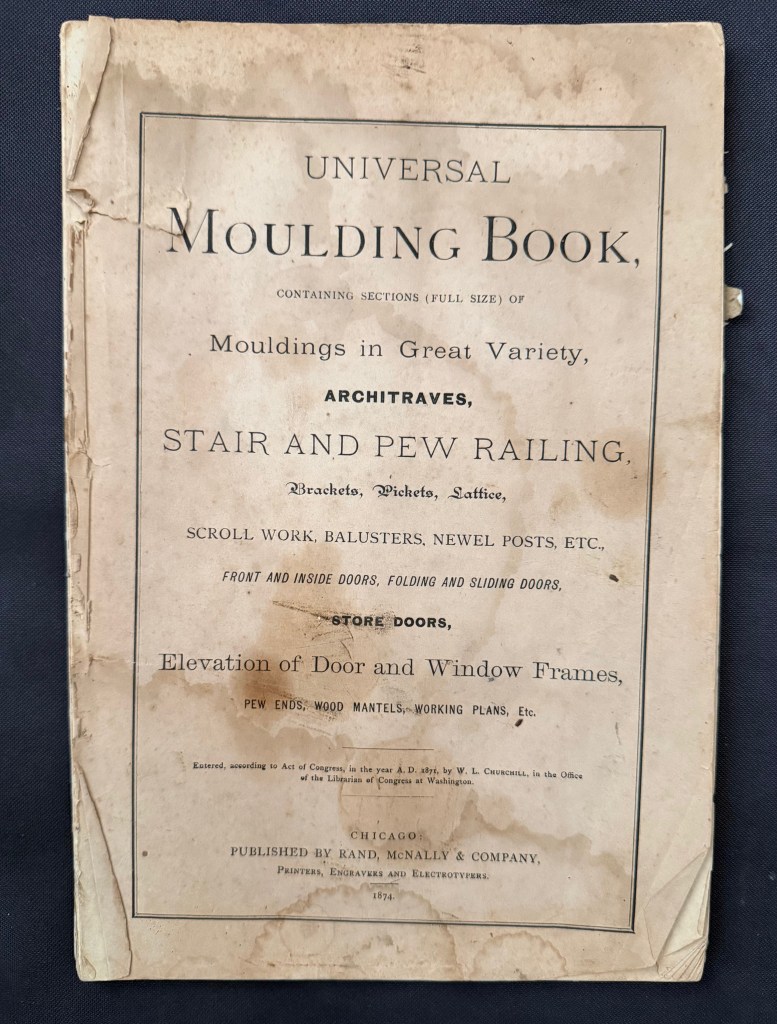
The cover of the 1874 Universal Moulding Book. One of the first millwork catalogues for wood moulding.
The oldest moulding catalogue that I own is the Universal Moulding Book from 1874. This catalogue shows over 650 moulding profiles in full size. It isn’t the first version. I know this because the catalogue states that 46 profiles have been phased out from a previous catalogue.
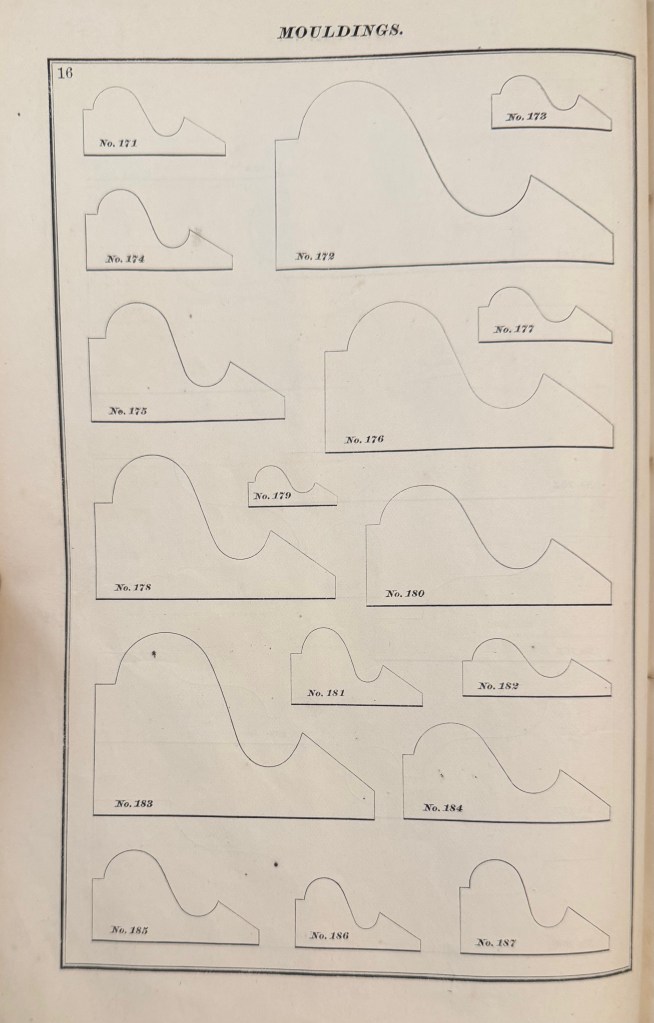
Here is a page of a profile known as a Quirked Greek Ogee and Bevel, a popular profile in the mid 19th century. Notice that there are 17 different sizes.
Why so many sizes?
Originally moulding or architectural enrichment wasn’t an afterthought. The mouldings were designed to be used in proportion to the openings that they surrounded.
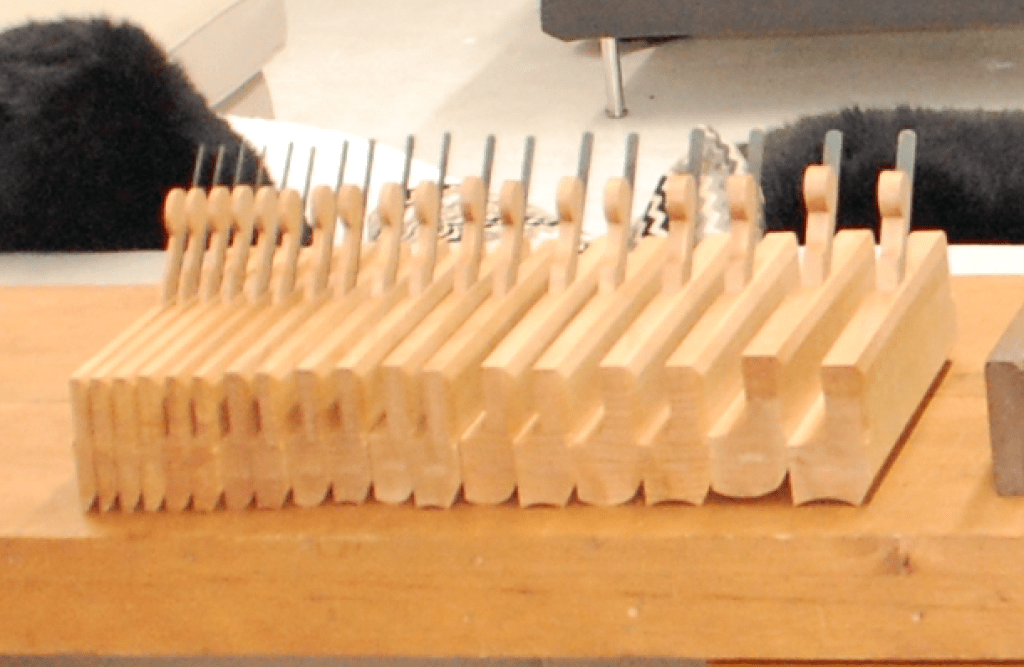
In America, and England, before the Industrial Revolution, wood mouldings were made by hand. (plaster ornament was as well). With a set of planes called Hollows and Rounds, an infinite variety of moulding profiles could be created. A set of planes were designed to created 1/6th diameter arcs in increments of 1/16th inch.
My working set of hollows and rounds
Various pattern books of the period laid out the formulas for creating the mouldings according to the width of the openings. In his 1827 version of Builder’s Companion, Asher Benjamin wrote that for a door or window, the proper proportion would be found by dividing the opening into eight parts and giving one to the width of the moulding, He noted that this formula would provide a different width for different widths of doors and windows, but said that it wasn’t good to have different widths of architraves in the same room.
Obviously he wasn’t around to comment on this house interior……….
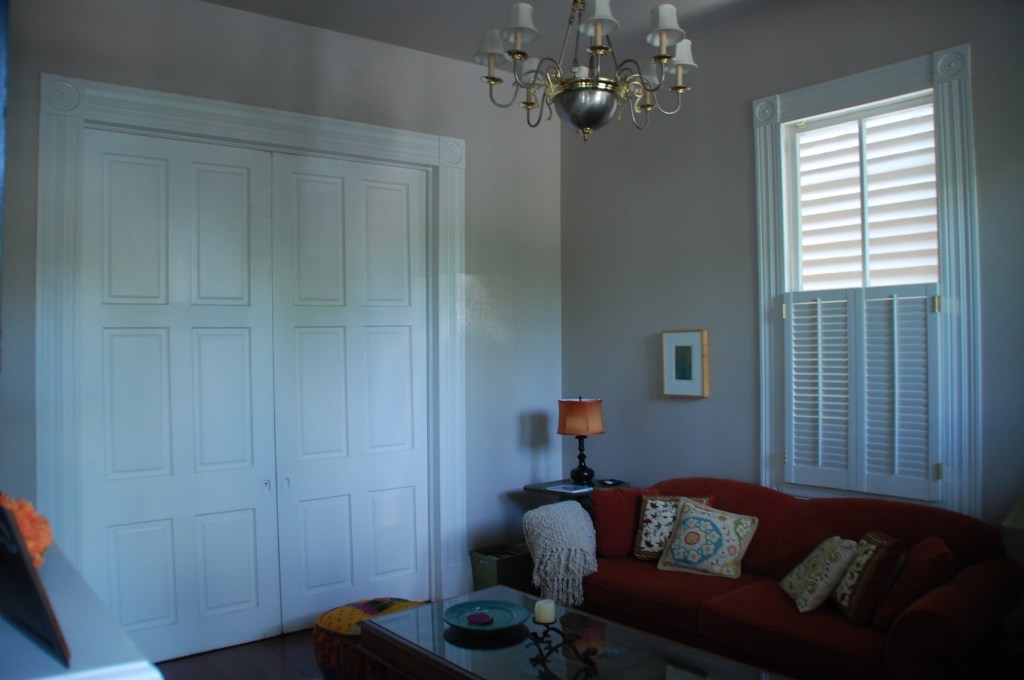
1839 New Orleans 4-bay townhouse
The pocket door opening in the photo is 6′ wide while the window width is about 3′ wide. You probably don’t notice that the architraves and the corner blocks are different sizes. The casing aound the doos is about 6″ in width while the window casing is less than 5″. The casing that frames the doors would look too large around the windows while the window casing width would be too diminished by the pocket door opening width.
Because the casing widths conform to the opening sizes, they look similar enough in size for their differences to be hard to recognize. The fact that they have proportional details within the overal common profile helps as well.
When the factory-made millworker begain to replace the on-site handmade moulding, they settled on a series of profile sizes that would fit most situations based on common door and window opening sizes.
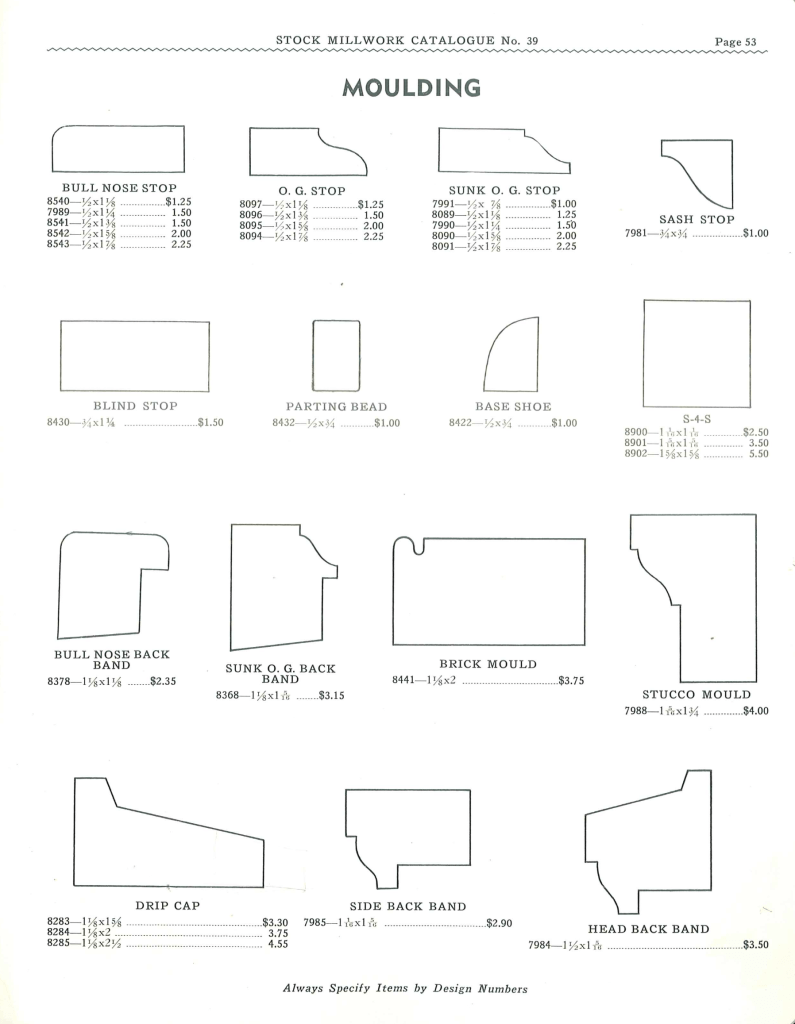
This variety of sizes began to diminish into the 20th century until around 1940, when most catalogues began to offer only a few or even just one size of each profile.
A page from the 1939 Stock Millwork Catalogue
When you have a design that requires moulding profiles that aren’t available, (which is a common problem with 19th century Victorian designs), and you aren’t able to create a built-up moulding from available profiles, you may have to have a set of custom knifes made.
If you order enough linear feet of the mould, some shops will waive the knife fee as it adds to their selection of profiles. Be sure you look into custom knifes before you discount it as being too expensive. The job is also done by CNC now rather than hand-grinding. so the actual operation is not a bid deal.
The latest story to excite below-the-line crew members in Los Angeles is the news that Ben Affleck and Matt Damon have made a deal with Netflix for their new film, The Rip. The contract includes a stipulation that provides for a bonus to the entire crew of the production if the show performs well on the streaming platform when it is released.
This one-time bonus would be in addition to the salaries which crew members were paid during the production.
Affleck told an interviewer at the Toronto Sun, “We wanted to codify a model that included 1,200 people on the crew, as well as the cast, because we firmly believe that when everyone is investing themselves, that makes it likelier that you’re going to have something that people connect to more.”
“How this business survives and thrives going forward, we believe, is going to be fundamentally related to the fact that (filmmaking) really is a collaborative art form, so (we are) seeking to incentivize all of those folks into making the best movie possible.”
Wether this idea can be a part of other contracts at other production companies and what it’s outcome for the crew will be remains to be seen.
The idea is a revolutionary first for large-scale Hollywood studio productions, but it’s an idea that isn’t a new one. The idea had been suggested to major studio executives 40 years ago by British producer Sir David Puttnam, and it didn’t go over well.
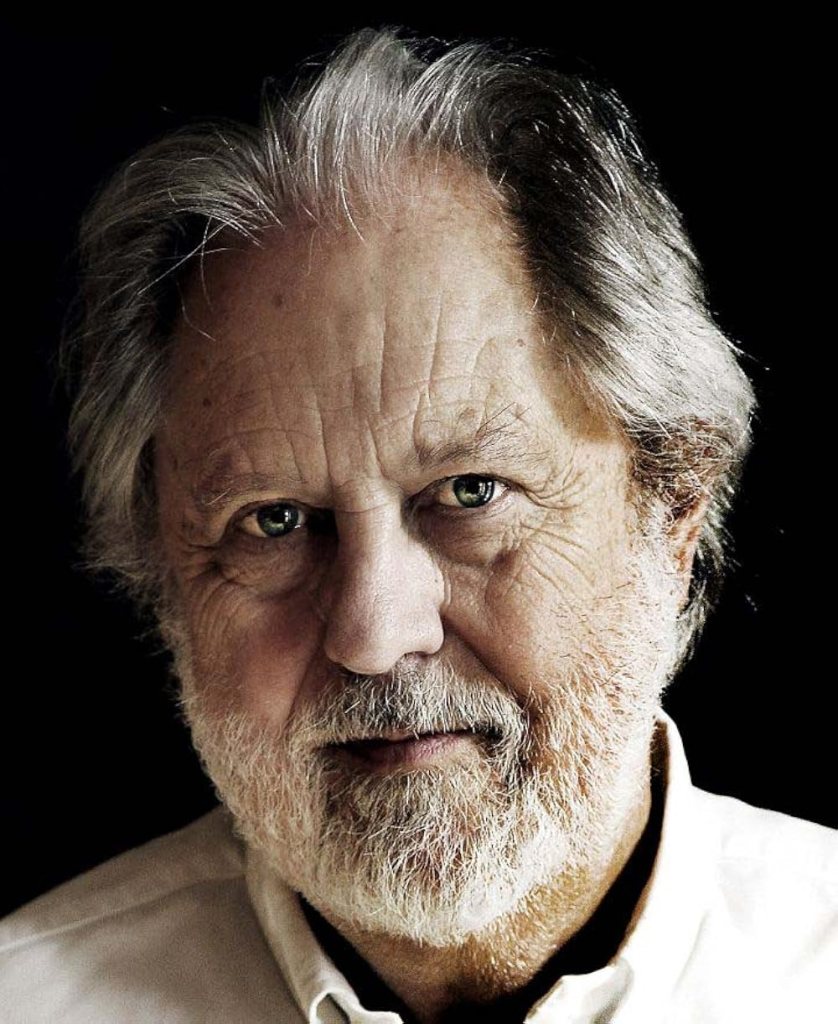
Sir David Puttnam – Photo by Alex Westcott/TODAY
In 1985, I was a Fellow in the Directing Program at the American Film Institute. AFI was a choice place to be and it was a heady experience, especially at that time. It was a time before the internet, or DVDs with director and producer commentaries, or an endless variety of interviews and how-tos by professional filmmakers.
It’s a place where major directors and producers will show up to screen and talk about their latest productions with the school’s community. We had visits from David Lean, Steven Spielberg, John Hughes, and others . Nearly every week there was another Hollywood luminary who none of us would have met in person if not for the AFI program.
One week it was announced that the guest artist would be Oscar winning Producer David Puttnam. And, he would be guest lecturing not just for the day but for the entire week. He would be screening his new film, The Killing Fields, which was nominated for five Oscars.
Also that week, he screened three of his other films; Midnight Express, Chariots Of Fire, and Local Hero. It was a whole week of master film classes by the man who had produced them. I wish they had been recorded.
Sir David was incredibly cordial, approachable, and even self-deprecating at times. He told us that when he was producing his first film, in an effort to prove he was on top of the goings-on of the production, he would go over the budget expenditures for each week. One week he caught a suspicious cost difference and called the line producer into his office.
The line producer looked confused when Puttnam pointed to the line item listed as Focus Puller. “How would this same equipment cost a different amount every week?” he asked. He said his moment of satifaction at having rooted out financial irresponsibility quickly turned to embarrasement when the man told him that the ‘Focus Puller’ was the title of a crew position, not a piece of equipment.
He was as generous with information as he was with his time. As we watched the films he would interject stories about the production challenges they had faced, both comical and daunting. He would examine a production from nuts to bolts and would barter with a director over, for instance, how many animals they actually needed in the background for a believable scene.
Very down to earth in his presentation style, he entertained us with stories of his current meetings with studio leadership. He was being courted at the time by a studio to take over as head of the operation. They were as surprised by his attitudes toward the current Hollywood system as he was by the studios’ expectations and business plans.
They showed him various options for homes in Los Angeles, all with huge properties and large pools and they told him about the options he could have as a company car. He said he didn’t want a house with a pool and that the cars they were suggesting were ridiculously large.
He had already ruffled feather among a number of studio heads and other producers with some of his comments about the Hollywood system, which he considered to be a “me-too” attitude, as he thought that the system seemed to be content with just copying other people’s successful films.
“You can’t do creative work in an environment like that”, he told an interviewer from TimeMagazine. In one communication to Columbia’s corporate owners, Coca Cola, he said, “The medium is too powerful […] to be left solely to the tyranny of the box office”.
He also pointed out his disgust at huge actor salaries. A New York Times article stated later, “What surprised and dismayed him most about Hollywood was the amateurishness.”
Once he was installed as the new studio head at Columbia, he made it clear that he wanted to make films he would be proud of. “I would be shattered if I could not look with pride at Columbia’s pictures. That would not be true of 75% of films made in Hollywood today”, he said. The New York Times also reported that he was “enough of a realist to want to make entertaining movies, and enough of an idealist to want his films to have social value.”
He wasn’t afraid to point out mistakes that he felt had been made in what were considered audience favorites. A writer for The Hollywood Reporter in 2016 wrote that “He had slammed the ending of the blockbuster E.T. The Extra Terrestrial because he thought the alien should have stayed dead.”
On some days he would express his ideas for revitalizing the entire studio production process including changing the pay structure that was in place in Hollywood. He wanted to move some of the profits down to the people who actually made the films. He had talked to a number of individuals about a possible system where a crew member could benefit from the film’s actual profits, choosing between taking a full salary or partial salary and points on the film’s box office.He said they looked at him as if he was mad.
Sir David would take over at Columbia Pictures in September of 1986. He would stay on as head of the studio for just 13 months. After his tenure, when asked about by a writer at The Hollywood Reporter, he said “Looking back, I was a good movie producer who made the mistake of being persuaded I could run a studio. I hated almost every day of it.”
On the last day of the week that he spent with us at AFI, he didn’t rush off as you would have expected of most people of his stature. When the lecture ended, he stuck around for small-talk. A group of us lined up to say goodbye and offer our thanks for the one-of-a-kind week of instruction and advice.
I hung out toward the back, not sure of what I’d say as a proper thank you. I approached him and he displayed a big smile and held out his hand. I thanked him and then, in a prescient, self-interested moment, I blurted out my unexpected question.
“Is it true?” I asked him. “Is the industry as hard on relationships as some say it is?”
His smile faded a little and he looked at me with a kind of empathy. “Yes”, he said. “It definitely can be.”
I was listening to the radio, looking out at the clouds and remembering the weather reports that David Lynch used to do each morning on NPR from his house on Mulholland Drive here in Los Angeles. It was at about that moment that I heard the announcement that he had passed away.
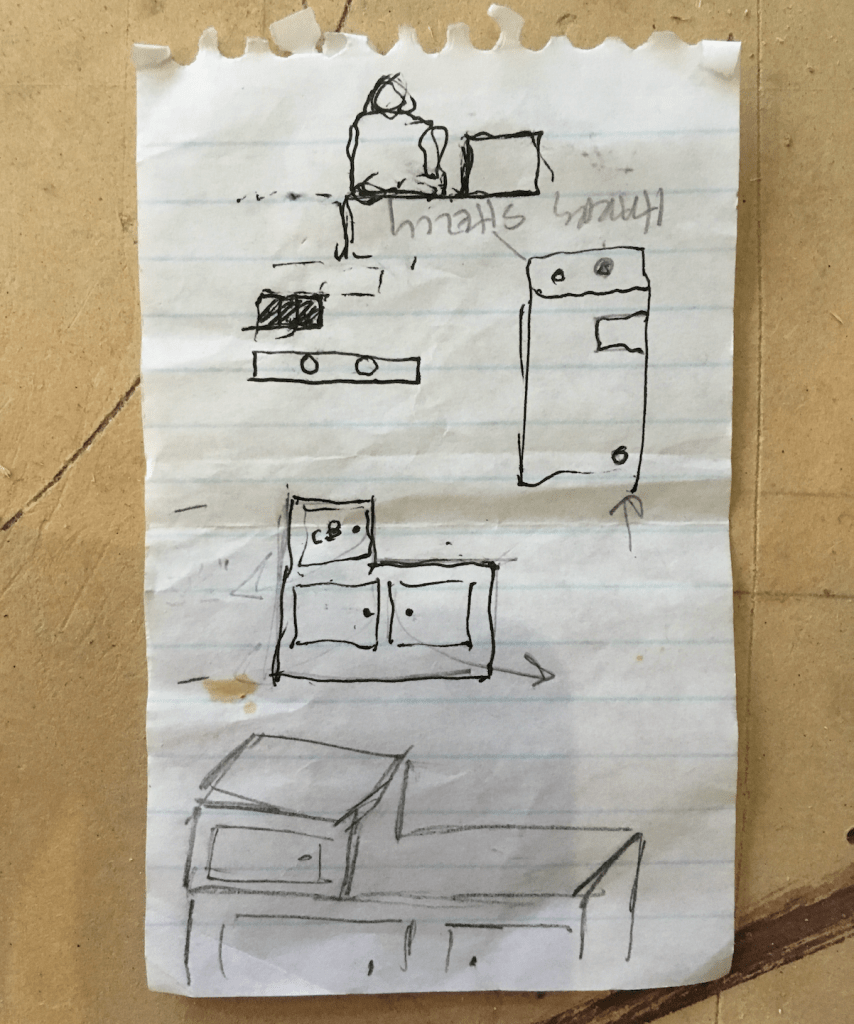
I’d been flipping through photos on my phone the day before when I found a shot of a crumpled piece of notepad paper. On it was a small sketch in black ink and pencil with some cryptic notes.
Years ago when I was working on a show on the Paramount Studios lot, I was walking through the mill when I saw a friend who waved me over to his work bench. He pulled a piece of paper from his tool bag and smoothed it out on the table.
I looked at it and squinted. “What is it?”, I asked him.
Sketch for set dressing by David Lynch
“It’s a sketch from David Lynch, he wants me to build it for a scene.” He described the conversation that had happened just a few minutes before. Lynch had come down from his office and searched him out, and conspiratorially explained to him what he needed for the scene the next day.
The sketch was of a small wooden storage unit that would fit between the front bucket seats of a van. He had explained to him in careful detail exactly what the unit had to do and the practical parts that were required to work in the scene.
“Where’s the construction drawing?”, I asked him, looking around at the plan bench. “This is it”, he said. When the Transportation Department delivered the van to the lot, he would measure the interior to see what size the box needed to be. Lynch trusted that he understood what it was he wanted and would follow through.
Suddenly everything I had heard about David from his early days at The American Film Institute was making sense. A common frustration for directors, particularly ones who are artists, is to have a last-minute idea and know that the normal steps you have to take through a film company hierarchy don’t always produce results as quickly as you want them to.
Instead of going to the Production Designer with his request, which would then get passed to an Art Director, who would then get a Set Designer to measure the vehicle, model the box for approval and then create a construction drawing, Lynch made a quick sketch and went directly to the guy who he knew would end up building it. Voila. Complex process streamlined.
In 1970, Lynch applied to The American Film Institute Conservatory by submitting a short film he had made and was offered the opportunity to attend as well as the money to make a short film he had planned for some time whose cost to produce was beyond his means.
He received a call from Tony Vellani, the director of the school, who offered him a place at the Conservatory and $7,200 to make the film.
At AFI, Lynch started work on a film called Gardenback, but was so frustrated in the process by what he felt were constant interference’s that he left at the beginning of his second year.
Vellani and others of the school administration felt that he was one of their best students and convinced him to come back by promising that he could finish his film without any more interference. He abandoned Gardenback and started on another film that would become the feature-length film, Eraserhead.
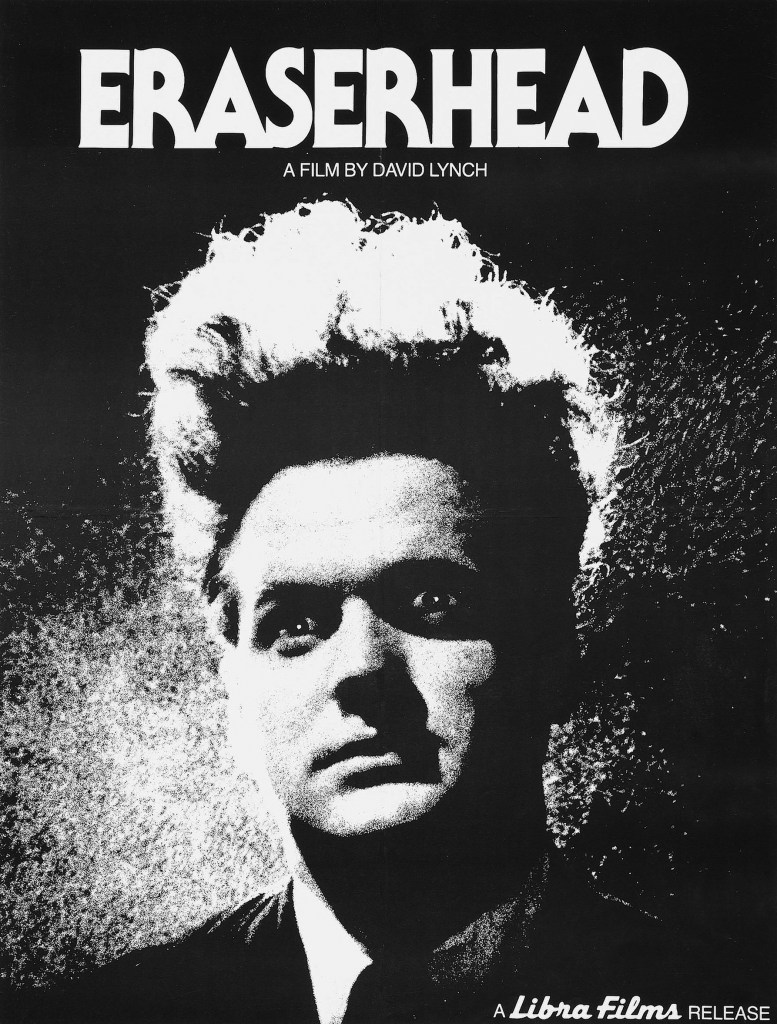
The poster for Eraserhead – Libra Films International 1977
Initially the concept for the film was opposed by several of the AFI administrators who felt that it veered too far from the typical Hollywood narrative film, but they finally relented when the dean, Frank Daniel, threatened to resign if they vetoed it. The story is said to be inspired by Lynches own fear of fatherhood and his experiences living in a crime-ridden neighborhood in Philadelphia while going to college. Shot over a period of nearly four years, the surreal horror film was initially panned by most critics but became a midnight movie cult favorite along with films like The Rocky Horror Picture Show.
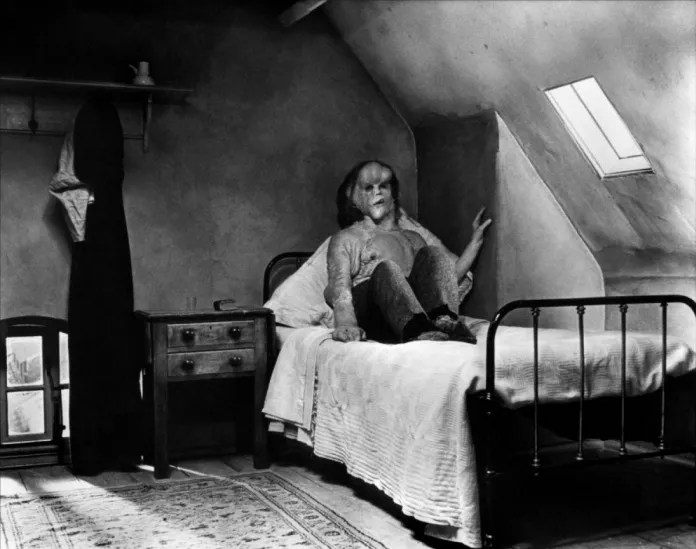
I knew the film led to his being tapped by Mel Brooks to direct The Elephant Man which was one of my favorites but I didn’t see it until years after Elephant Man had been released. At first I was shocked by how different they were in tone from each other but later I started to appreciate the mind that had imagined it and began to see threads of commonality.
Still from The Elephant Man – Paramount Pictures 1980
Vellani would often talk about Lynch when I was a Directing Fellow at AFI in the mid 1980s. He once told me that he considered David to be the most naturally gifted filmmaker he had ever met.
I had always heard that David didn’t like to talk about his films too much and brushed aside questions that required him to explain endings or motivations, which made me wonder how he had dealt with the AFI critique sessions.
The typical sequence of film projects at The American Institute Conservatory was that Directing Fellows made three films the first year. On the completion date the film is screened before the entire school for critique.
At the end of the screening, The director, writer and producer were seated at the front of the room with Tony Vellani who gave the director an intense look and asked, “What is the premise?” Your response was supposed to be a three or four word answer in the pattern of, “Blank leads to blank“, as in “Betrayal leads to tragedy”, condensing the dramatic structure of the story into as few words as possible. The film was judged primarily on how successfully you had fulfilled the goal of matching the final film to its premise.
Knowing of Lynch’s reported distaste for being pinned down on story points, I wondered how he maneuvered through this process when his film was critiqued at the school.
Vellani said that he had gone to Mexico and Davids invitation to visit him at the Churubusco Studios in Mexico City while he was shooting Dune. He described how he was trailed by an army of people. Producers, Art Directors, and ADs. He said he looked uncomfortable and distracted by this entourage and it reminded him of the early 70s at AFI when David was there shooting Eraserhead. They had taken over some stables near the Doheny Mansion in Beverly Hills where the conservatory was originally located and turned them into their stage space.
Tony had brought a group of AFI dignitaries and financial supporters to view the students in the process of making their films and he arrived with these guests, unannounced, to watch David shoot a scene. After a few knocks on the ‘stage’ door, it opened slightly and Lynch stuck his head out, surprised to see the group.
Vellani explained the reason for their visit and introduced the visitors. He said David listened politely and then said simply, “Sorry, it’s a closed set”, and shut the door.
The German expression ‘dorftrottel’ roughly translates as ‘village idiot’ or ‘small-minded villager’, but the expression can have a much more nuanced meaning than it’s English equivalent. The term can also refer to a state of intellectual isolation and mental obduracy rather than just a matter of geography.
It’s easy for those of us here in Los Angeles to drink the media Cool-Aid and believe our own press. For many here, Hollywood is still the big engine pulling the train, still the driving force and font of inspiration for all the other entertainment industries. To a great extent that’s still true, but if you peek into the next room, you’ll see that other entertainment communities are laying their own track, and we need to know where they’re headed.
I was invited to speak at a 3D and Virtual World conference at the Macromedia Hochschule Für Medien Und Kommunication in Stuttgart which was given a few weeks ago. While the primary focus of the conference was on the world of gaming, the theme also touched on the designing of virtual worlds and all the possiblilities that encompasses. For me, the conference was a glimpse into the other entertainment industries which are helping to expand the meaning and directions in which the 3D digital world is taking us and how it will affect our future as designers of those environments.
Creating Games With Drama
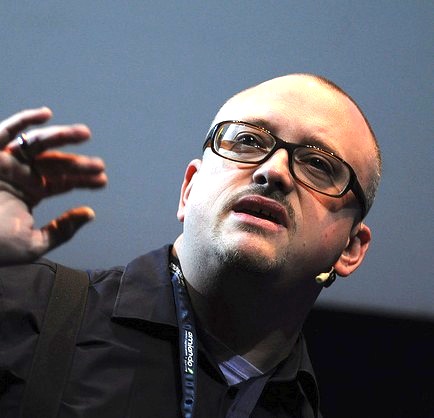
Dr. Michael Bhatty
The keynote address was by Dr. Michael Bhatty, professor of media and game design at MHMK campus in Munich, who spoke about the new breed of game designers. He believes games are a media and art form all their own and that the potential of them as story-telling devices is yet to be truly tapped. His courses are geared toward creating designers who are ‘directors’ as well as authors of these virtual worlds, and he means ‘worlds’ in the real sense. As the lead designer of the popular game SACRED, Bhatty believes most games fall short of creating a fully fleshed out environment. “You need to know everything [about the games world] from history, religions, deities, cultures, geography etc. The list goes on and on so let’s just say – a good game director is interested in everything when envisioning a new world as her or his playground,” Bhatty said. “I develop backgrounds for research, because most developers make the mistake of not being thorough and rely only on trivia and clichés they know from movies, pulp magazines or other games.”
Coming from a film and art background, Bhatty is very concerned with the cinematic elements of a game, and believes games should have the same ability to move people in the dramaturgical way that films do. Bhatty is convinced that the ‘game’ concept can be extended much farther than the limited definition we have of it, and creating virtual worlds can enhance many other fields such as education.
The Benefits Of A Well-Planned Design Process
Producer Tom Kubischik
Tom Kubischik, game designer and Producer at Morgen Studios in Berlin, spoke about the process of game design and ways to avoid the pitfalls of not following a rigorous design and development process, something a lot of film production companies could benefit from. He also mentioned that many game development companies, rather than wait for interest from the Hollywood community, have struck out on their own into the world of feature films and television content.
The “Gamification” Of Society
Dr. Steffen Walz – photo by Ivo Näpflin
Dr. Steffen Walz of Karlsruhe, Director of the Games and Experimental Entertainment Lab at RMIT University in Melbourne, spoke about Gameful World Design in a humorous lecture on how the world around us is being “gamified”. You can watch his lecture here (in English) from an earlier conference at LIFT11. He talked about how nearly everything in life is becoming game related or is being influenced by gaming concepts. The end result of this being, I think, that people will expect future communication, learning and entertainment to be more visually based.
The Virtual Reality Re-revolution
While a lot of my lecture involved 3D modeling for feature films, the main topic I covered was virtual reality systems for viewing those models and how I think it will influence both game design and film set design. Virtual reality isn’t really new, it’s been around since the 1800’s when panoramic paintings became popular. Even crude vehicle simulators have been around since the 1920’s.
It’s only with the recent improvements of computer processors that VR systems have become a more viable option for designers. VR systems have been used for over 10 years in other industrys and are now standard for aircraft and automotive manufacturers who are dealing with critical space considerations and find that modeling and designing in full-size 3D cuts large amounts of time. The German company IC.IDO has developed a VR system that is in use by most major car companies and their VDP software allows the system to use a model from nearly any other modeling software program. Watch the videos below to see a simulation of how you soon may be designing.
Is The Home-Holodeck Around The Corner?
I mentioned that as the appetite for digital models grows so does the size of Art Departments at the studios. And as these models become bigger in size and quantity, and if the trend toward more detailed models with fully textured surfaces continues, how long will it be before some producer or someone in studio management realizes they are sitting on thousands of dollars of nearly video game-ready digital assets? Is it so far-fetched to think that someday as kids leave a theater they will be able to purchase an access code that will allow them to “play” the movies in their ‘virtual reality playroom’ when they get home?
I spoke in vague terms about a VR system I have experienced at a company (who’s name I can’t mention) which would make such a thing possible. Once you experience true full-immersion 3D, watching something on a flat screen, no matter how good the 3D is, is just not satisfying. This system could be adapted to various interior spaces and become a sort of present day Holodeck for commercial or home applications.
The upside of all of this is that no matter what the tools or media are, and they will continue to change at a dizzying pace, they only increase the need for designers. Whether the worlds are physical or virtual, they still need to be designed. It’s interesting to note that most of the speakers at the conference were either architects or had studied architecture at university.
The challenge will be in keeping from being seen as an ‘operator’ of these ever more complicated systems, and to continually convince the companys / studios / producers that the truly important factors are the designer and the design, not the high-tech tools themselves.


 The Designer's Assistant