Graphic Standards From Across The Pond

Here in the US, the book we primarily turn to for all questions of an architectural nature is the AIA Architectural Graphic Standards. For our work, the third and fifth editions are the most informative because they were printed at a time when architects had to draw everything rather than order most elements pre-made. If you happen to be drawing up European architecture, though, it won’t do you much good.

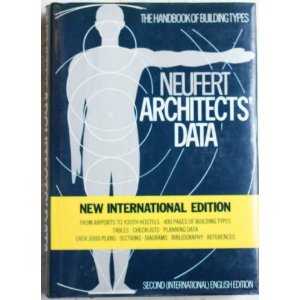
In the rest of the world, the architectural book most people turn to for similar answers is Neufert’s Architectural Data. Soon to be released in it’s 40th edition, the book is printed in 18 languages and is the architectural Bible in the metric world.
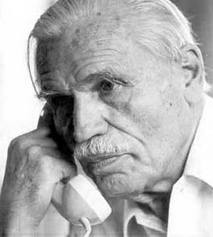
Ernst Neufert

Ernst Neufert worked at the Bauhaus as chief architect under Walter Gropius and later taught at the Bauhochschule until the Nazis closed it down in the early 1930’s. Seeing the need for a book that graphically laid out the architectural standards of the time, the book was first printed in 1936 and soon became a big success. Like Graphic Standards, the book is mainly a visual reference of architectural design and space standards for the European continent.

The book has had a number of English language editions, but the 1998 International is the most useful and easiest to use for the metrically-challenged. A large number of each edition are printed so it should be fairly easy to find used copies. You may have better luck throught British booksellers than second-hand businesses here.
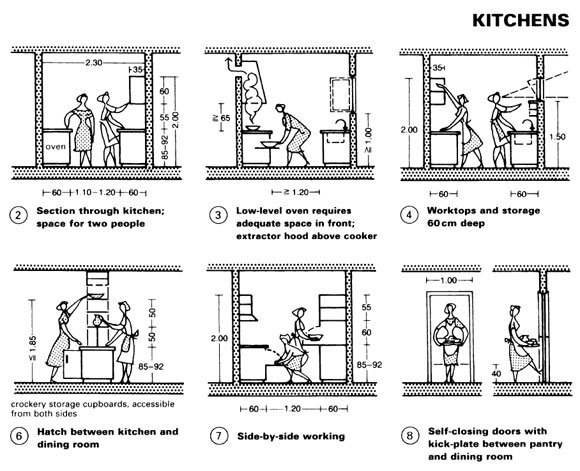
kitchen standards from an earlier edition

In Britain, The book many people refer to is McKay’s Building Construction. Originally published in three volumes over an eight year period, the recent re-publication has combined them into one book. The books are so popular in England that when they briefly went out of print, students were encourage to beg, borrow or steal to get a set.

page on hand-cut stonework

Written by W.B. McKay, who was Head of the Building Department at both Leeds and Manchester colleges, the book is particularly useful for our business as it shows and describes exactly how the various methods of construction (wood and masonry ) are carried out. Filled with hundreds of beautiful perspective drawings by McKay, the book takes up where Graphic Standards ends.

Like Neufert’s, this can be had in used editions, the most recent from 2004. I found my copy in a bookstore in New Delhi, India, so you may have to search around. This is definitely a book that is worth the search.

If you’re in a hurry, you can order it here.
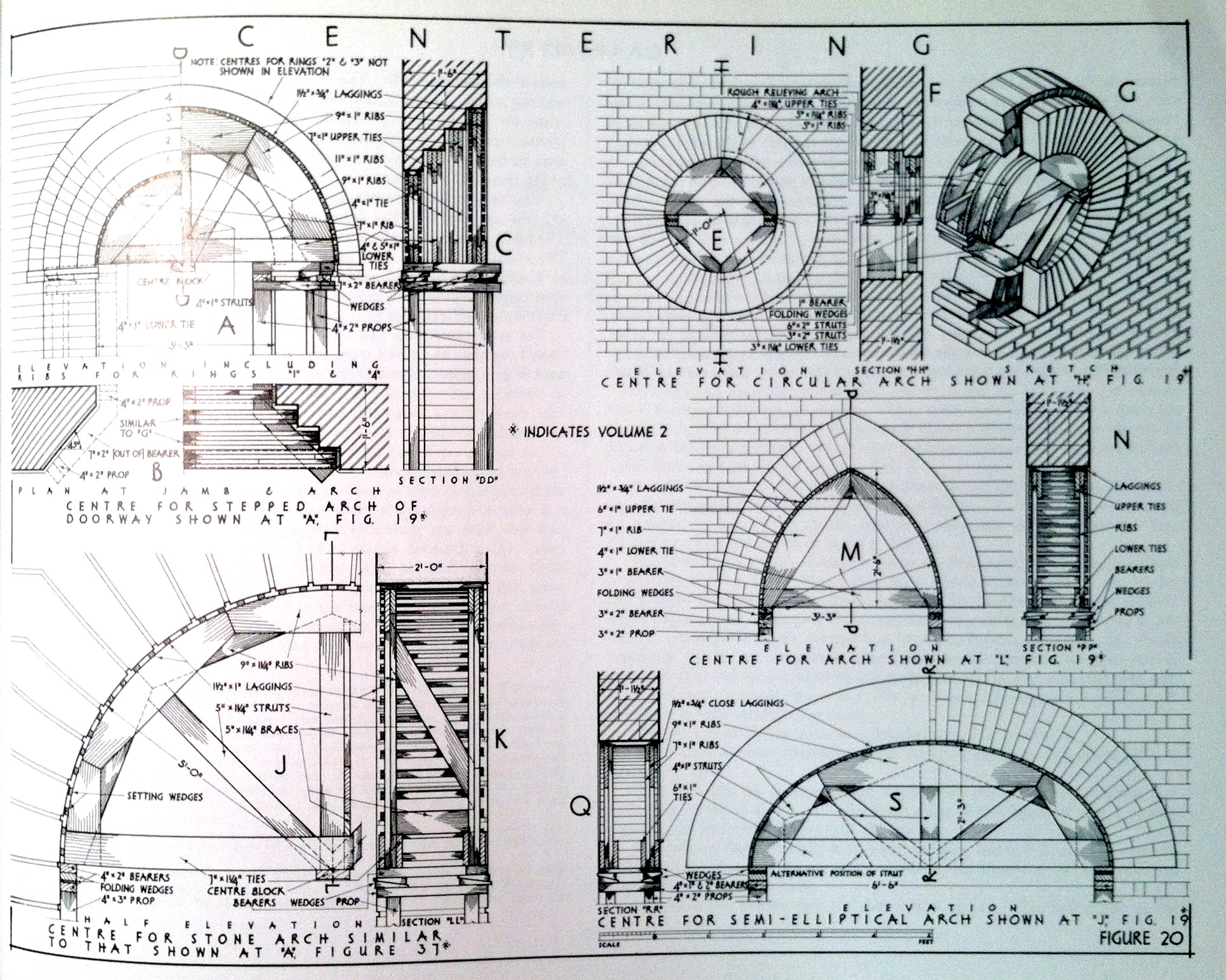
methods of forming masonry openings
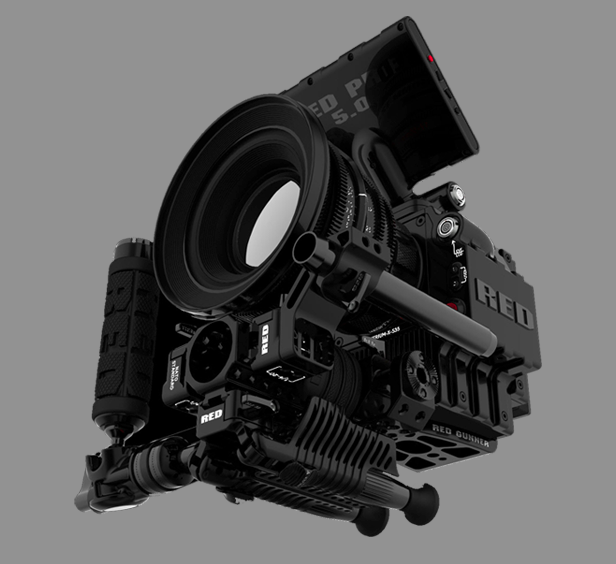
Understanding RED Camera Formats & Camera Angles

In the Sketchup™ Camera Tools seminar this past weekend I talked about the current trend in digital cameras and how they relate in using camera lens angles to view 3D models and illustrations.

The RED Epic™

A camera that is creating a great deal of excitement in the camera world, and a lot of confusion in Art Departments, is the RED camera. Just over three years ago the Red Digital Cinema Camera Company  entered the market with what they called a DSMC system, or Digital Still and Motion camera system. The camera was basically a component system with the body, or brain, containing the sensor and the other various components needed to record an image. The system was designed to be configured and upgraded as the user saw best to fit their work needs. The design of a camera with dual capabilities would fuel the current trend of high-end still cameras which also record HD video, but that’s getting ahead of ourselves.

Designed with a 35mm sized chip, the camera is able to record video with the same depth of field as 35mm as well as having similar focal lengths, allowing for the use of existing lenses from other camera and 35mm systems.

The system allows the user to record in four different formats: 4.5k, 4k, 3k, and 2k and each of these can be framed or extracted in different aspect ratios. With the new Epic, whose sensor is 5k (5000 pixels across), the choices are 5k, 4.5k, 4k, 3k, 2k, 1080p, and 720p.

At this point your eyes are probably crossing and you’re saying, “so what?” Basically, what you need to know is that each successive format is a smaller cropped version of the previous one.

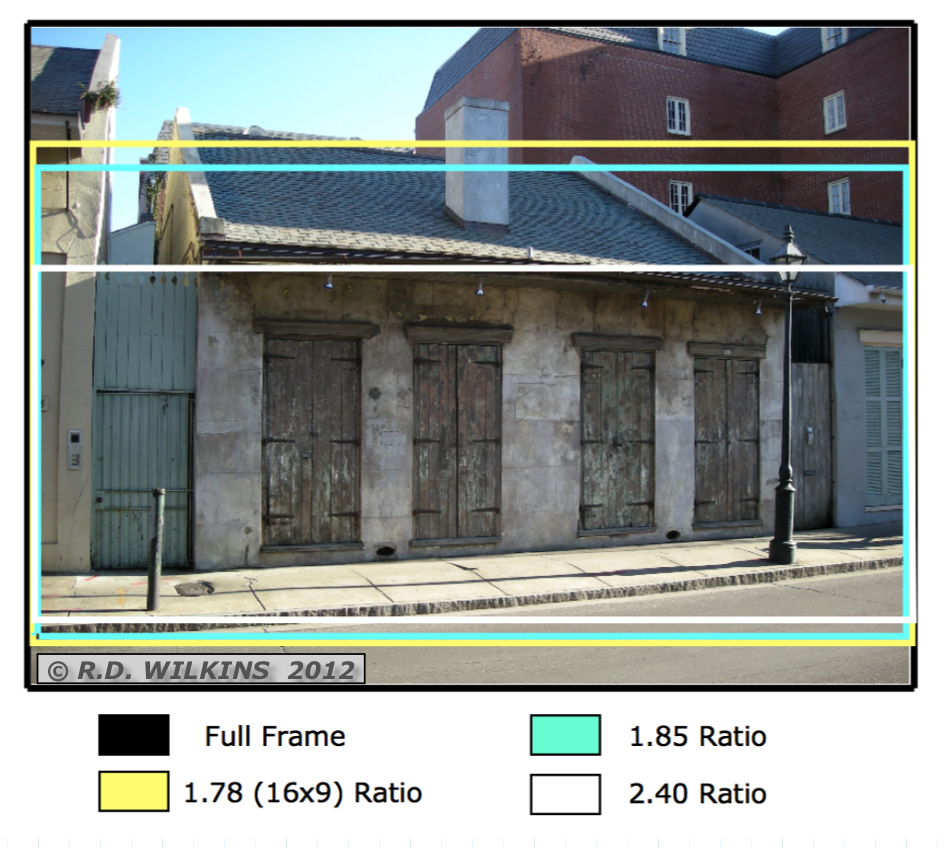
diagram showing a Super 35mm frame and the three extracted ratios

In Super 35mm, the frame, or negative is cropped according to the aspect ratio for the release. The difference is,  the cropping only occurs vertically. The width of all the formats is (nearly) the same, so that a lens focal length will be similar in each of them. Here is a diagram explaining the Super 35mm format from an article comparing digital and film formats that I wrote for theAug-Sept. 2010 issue of Perspective Magazine.

With RED, each format will have a narrower horizontal field of view than the previous one. Meaning that a 50mm lens in in 3k will have a much narrower field of view than it does shooting in full sensor 5k.

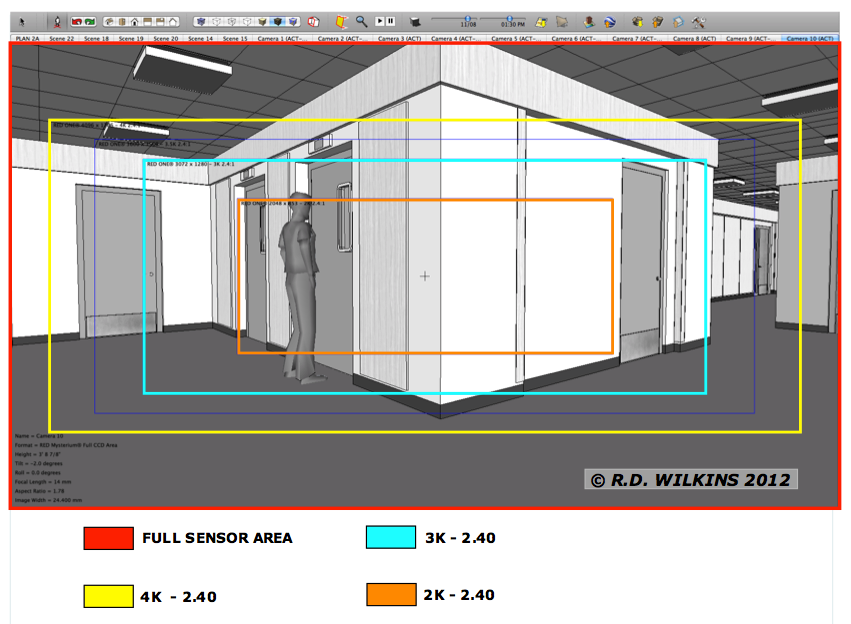
Below is a viewport in Sketchup™ set up using the Advanced Camera Tool pluging. The “camera” is set up for the full sensor option with the safe areas turned on for the other formats.

screen capture showing RED Camera full sensor area and 2K, 3K and 4K crop areas

In this screen shot of a model viewed with a 14mm lens, you can see how each progressively smaller ‘k’ format crops the sensor and has a narrower angle of view with the same lens. So, when you are setting up a model to view from a specific position with a particular lens, it’s important to know at what ‘k’ is the set going to be shot. Click on the image to enlarge it on your screen.

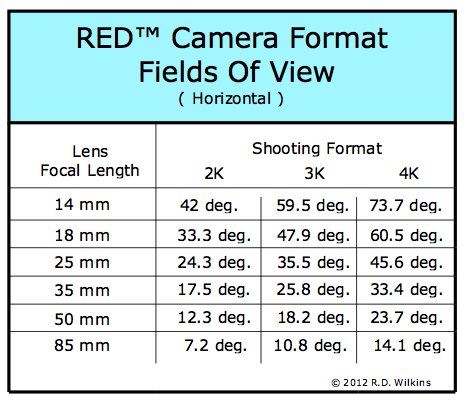
Chart of horizontal fields of view for various focal length lenses in the three different shooting formats

Here is a chart that breaks down the horizontal angle of views depending on which format the film is going to be shot in. The lenses listed are generic focal lengths and do not cover the entire range of lenses available. But, this should give you an idea of the proportional change in the horizontal angle of the captured frame based on the different shooting formats.