Rendering In Sketchup

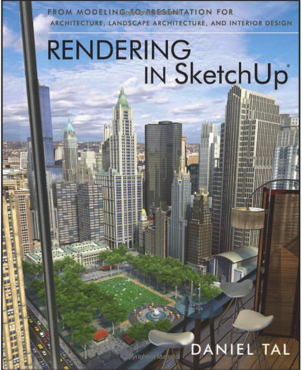
For those of you who work in Sketchup and are new to rendering, or are confused by all the different rendering software packages available, a new book is coming out March 25 that will help. Daniel Tal, landscape architect and author of Sketchup For Site Design, has written a new book, Rendering In Sketchup, which is now available for pre-order or as a digital download.
rendering in sketchup

There are now a number of rendering programs on the market for use with Sketchup, with a majority of them working from within Sketchup without having to exit the program. This can be a plus or a minus depending on how you work. Even though most of the programs offer free-use trial periods of their software, It can be pretty difficult and time-consuming to decide which is  the best one for your workflow and budget.

Daniel is an excellent teacher and has written a very thorough and detailed book on the process of rendering from Sketchup using a variety of software programs as well as explaining post-rendering work with Photoshop. While not every rendering engine is covered, he does go into a great amount of detail explaining not only the basics of rendering, but his own methods using Shaderlight, SU Podium and Twilight Render.

The book covers workflow, hardware requirements, how to model efficiently for renders, use and teaching of textures and a lot more. At over 600 pages, the book is both a reference and a guide and can be read for pertinent chapters rather than just cover to cover.

You can get more information on the book here, and you can view the videos on Daniel’s Youtube site here

Here is a really good tutorial by Daniel you should watch which is based on the material from his book:

Land8 Webinar: Rendering in SketchUp – Daniel Tal from Land8.com on Vimeo.

If you want to know all of your rendering engine options, here is a list of rendering programs that work with or within Sketchup;   ( Prices are as of March, 2013. )

From within Sketchup:

Shaderlight – $299 full license; timed access from $50

Twilight Render – $99

V-Ray – $800

ArielVision – $175

Bloom Unit – free software , cloud-based, priced per render

Caravaggio – $295

Indigo Renderer – $220

IRender nXt – $499

Light Up – $189

LumenRT – $295

Maxwell – $995

Raylectron – $99

Render[in] – $160

Renditioner –  $99,  Pro $199

SU Podium – $198

Thea Render – $420

Standalone Software

Artlantis

Kerkythea – free

A “Sweet” and Cheap Architectural Detail Resource

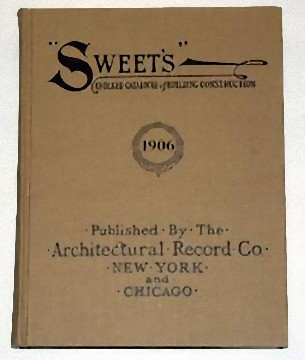
Yes, I thought it was time for a bad pun. The “sweet” resource I’m talking about is the Sweet’s Indexed Catalogue of Building Construction. Not the modern version, mind you, but the earlier volumes. In particular I’m talking about the first one ever printed, in 1906.

Reprint copy of the first edition of Sweet’s

I found my copy in a used bookstore about 25 years ago, back when 3rd Street in Santa Monica was still a sleepy street lined with great used bookstores instead of chain outlets. It was a 1970’s reprint of the original, in great condition. But the most striking thing about it was how different it was from it’s modern relatives. This book was printed for people who actually drew details, and both wanted and needed to know how things were built.

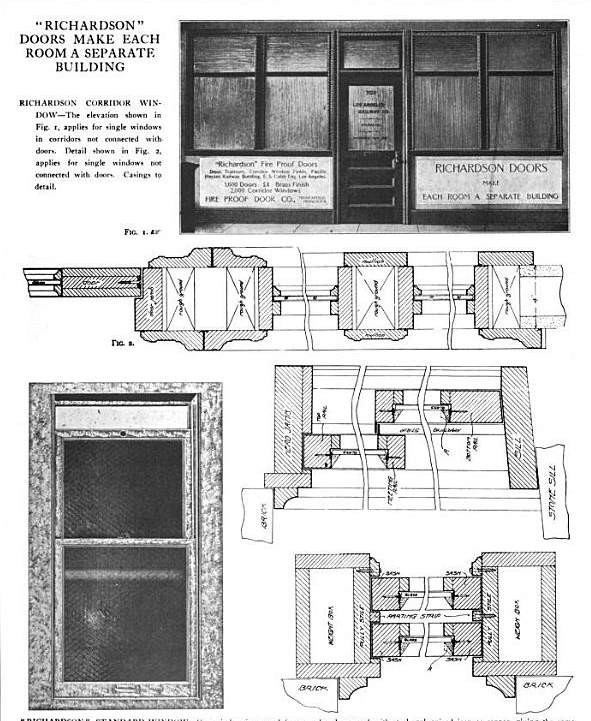
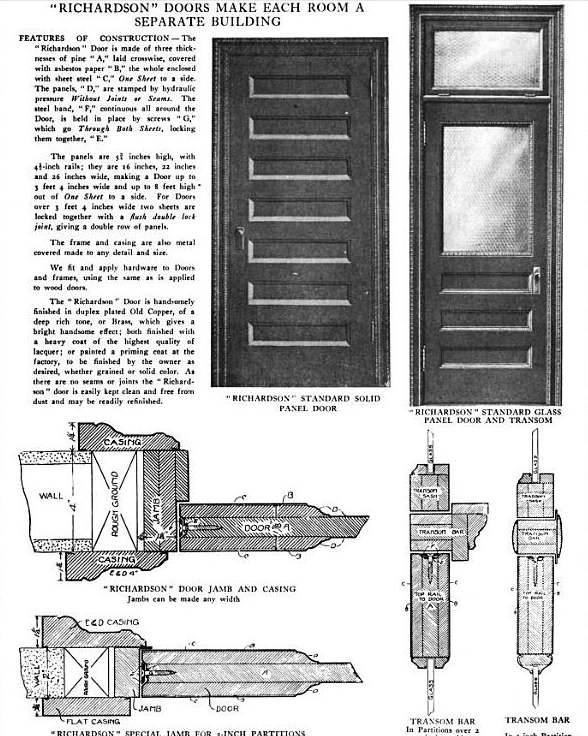
Most of the products pictured throughout the book had either detailed drawings or photographs of the items, with dimensions and cutaways showing how they operated and how they were integrated into the architecture of the building. This was a far cry from the ‘updated’ version, void of details, which was meant only to be a means of calling out the correct ‘part number’ on a drawing rather than giving the architect a full understanding of the specifics.

The original volume, if you can find a copy, has a green cover. The reprints will have a tan cover. The most useful ones for our work run from 1906 to the 1930’s. They aren’t easy to find but Google has solved that problem. Among the millions of books they have digitized for their ebook site are the 1906 and 1907 editions of Sweet’s. The digital editions aren’t as crisp as a printed copy, but the details you’ll glean from them are priceless. You can download it as a pdf and have it on your computer whenever you want to refer to it. Here is some of what you’ll find:

A sample of a typical advert featuring both photos and detailed sections

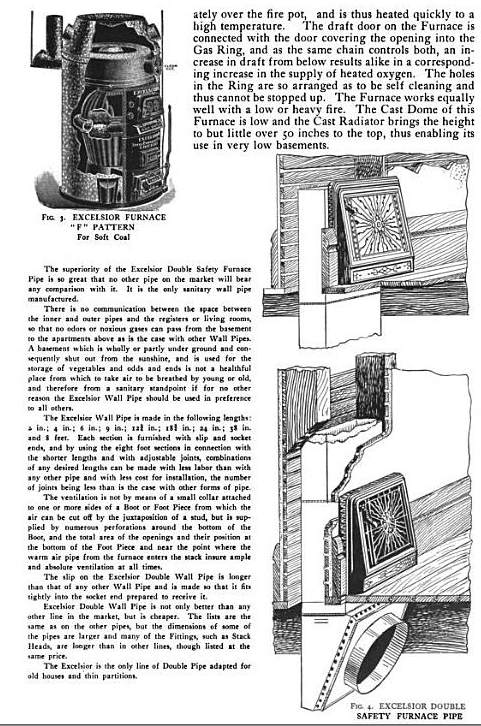
details of furnace and ducting showing how the duct and registers are attached to the wall framing

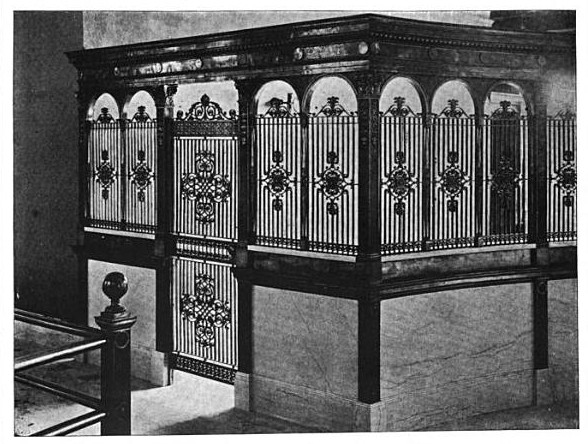
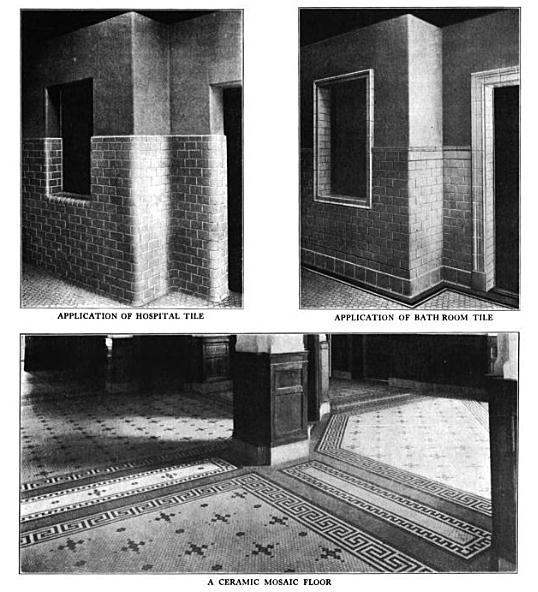
One of hundreds of photos showing details such as trim, ironwork and tile.

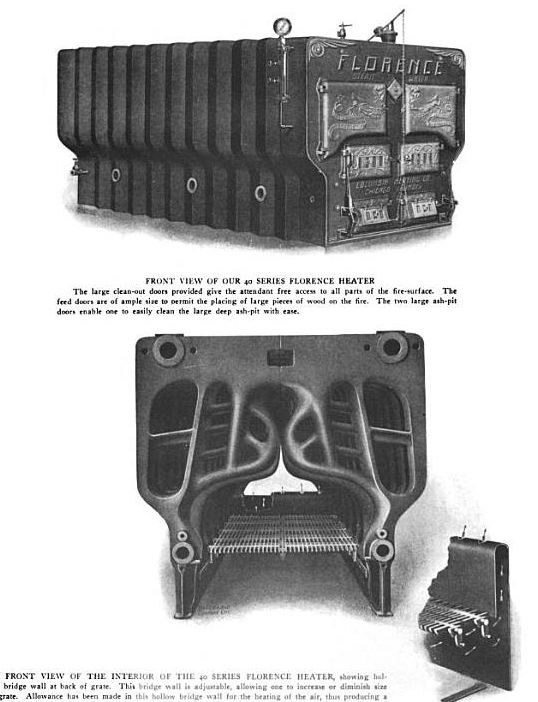
Detail of large furnace for an office or apartment building

An early central vacuum system

And here’s proof that people had MUCH bigger heads 100 years ago

Another good source in Google Books is a magazine from about the same time period called The American Builder which has some good articles with details. This ad for a drafting course is great. Considering an average draftsman would have made about 35 to 40 cents an hour at that time, $100 a week would have been top dollar.

Graphic Standards From Across The Pond

Here in the US, the book we primarily turn to for all questions of an architectural nature is the AIA Architectural Graphic Standards. For our work, the third and fifth editions are the most informative because they were printed at a time when architects had to draw everything rather than order most elements pre-made. If you happen to be drawing up European architecture, though, it won’t do you much good.

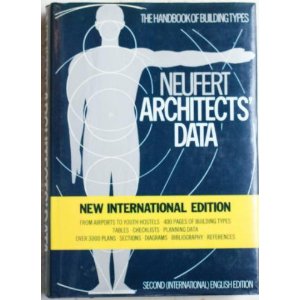
In the rest of the world, the architectural book most people turn to for similar answers is Neufert’s Architectural Data. Soon to be released in it’s 40th edition, the book is printed in 18 languages and is the architectural Bible in the metric world.

Ernst Neufert

Ernst Neufert worked at the Bauhaus as chief architect under Walter Gropius and later taught at the Bauhochschule until the Nazis closed it down in the early 1930’s. Seeing the need for a book that graphically laid out the architectural standards of the time, the book was first printed in 1936 and soon became a big success. Like Graphic Standards, the book is mainly a visual reference of architectural design and space standards for the European continent.

The book has had a number of English language editions, but the 1998 International is the most useful and easiest to use for the metrically-challenged. A large number of each edition are printed so it should be fairly easy to find used copies. You may have better luck throught British booksellers than second-hand businesses here.

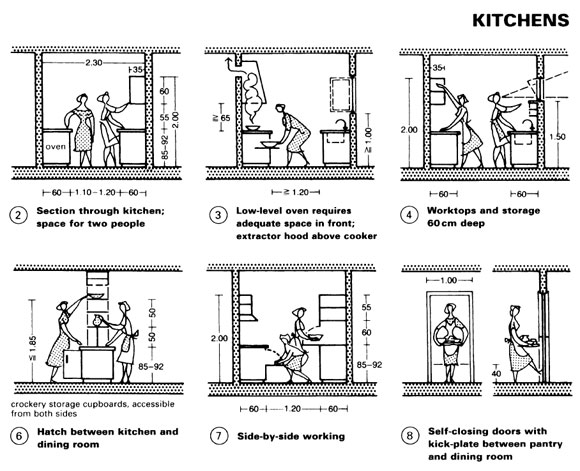
kitchen standards from an earlier edition

In Britain, The book many people refer to is McKay’s Building Construction. Originally published in three volumes over an eight year period, the recent re-publication has combined them into one book. The books are so popular in England that when they briefly went out of print, students were encourage to beg, borrow or steal to get a set.

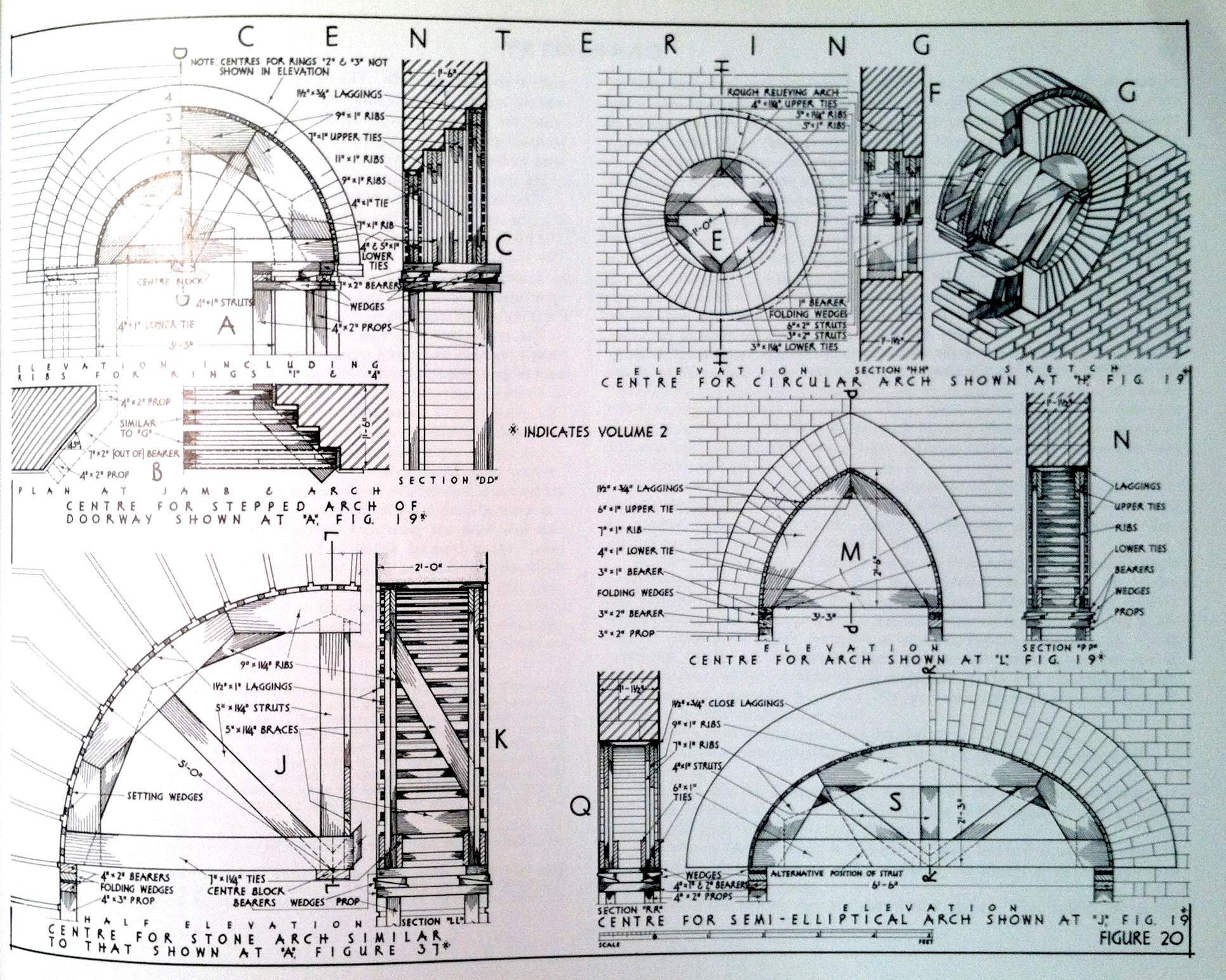
page on hand-cut stonework

Written by W.B. McKay, who was Head of the Building Department at both Leeds and Manchester colleges, the book is particularly useful for our business as it shows and describes exactly how the various methods of construction (wood and masonry ) are carried out. Filled with hundreds of beautiful perspective drawings by McKay, the book takes up where Graphic Standards ends.

Like Neufert’s, this can be had in used editions, the most recent from 2004. I found my copy in a bookstore in New Delhi, India, so you may have to search around. This is definitely a book that is worth the search.

If you’re in a hurry, you can order it here.

methods of forming masonry openings

Suggested Reading – “Illustrated Cabinetmaking”

Face it, having to design furniture or create construction drawings for it is not on most set designer’s list of favorite-things-to-draw. Sometimes you can get away with doing what’s basically a giant napkin drawing but most of the time you’ve got to get into some real details: like joinery, hardware and material specs. And there are the standards: what’s the widest bookshelf you can have before you’ve got a serious sagging problem?

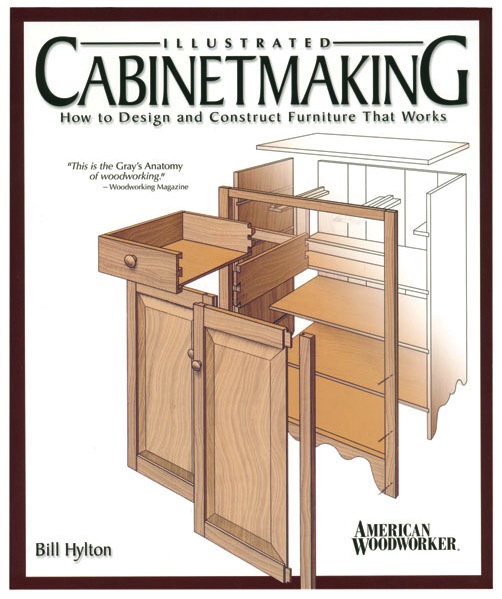
If you have only one book on furniture and cabinetry, Illustrated Cabinetmaking by Bill Hylton, is a good choice. Written for woodworkers, this book is an excellent reference for anyone who needs to draw or understand furniture design and construction. The book details over 90 different pieces and contains over 1300 beautiful pencil drawings. Each spread describes the piece in detail with exploded views and details, and gives design variations as well as sources for measured drawings.


There are also chapters on joinery, door and case construction, styles and the basic design standards for each type of furnishing.

Typical layout showing exploded views and details

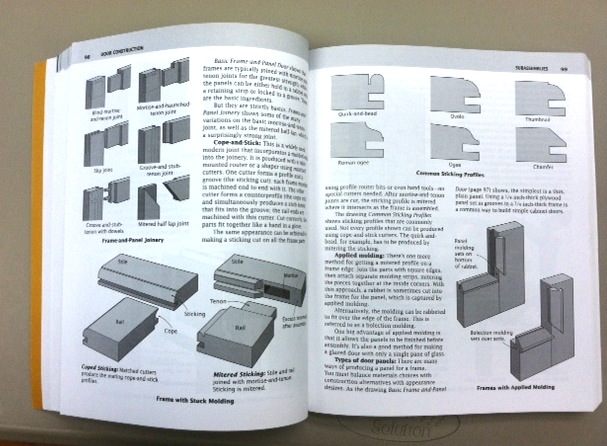
Examples of joinery details

Each chapter is begun with a design standards chart

The book is published by Fox Chapel Publishing and retails for $24.95.