The Historic American Buildings Survey, or HABS, was established in 1933 by Congress to create work for unemployed architects and photographers during the Great Depression. Their mission was to document as many representative examples of American architectural structures as possible.
The teams of ‘delineators’ and photographers were hired from all over the country and would document every kind of structure, both public and private. The subjects ranging from well-known structures such as Jefferson’s home, Monticello, to simple barns and gas stations. They didn’t know that much of what they recorded on vellum and in photos would be the only trace left of these structures as a great many of them were torn down over the preceding years.
In 1969, the Historical American Engineering Record was started as a ‘sister’ agency to record historic engineering and mechanical structures. The HABS / HAER collection, housed and maintained by the Library of Congress, now numbers over 500,000 drawings of 38,000 structures that range from Pre-Columbian ruins to the 20th century. Much of the collection is digitized and is available through the Library of Congress website.
Besides containing a wealth of architectural details, the collection is also a virtual museum of architectural drawing styles. As you look through the collection you can see how the drawing styles of the ‘delineators’ changes as the years pass. The very artistic ‘hand’ of the 1930’s and 40’s gives way to the more spare and graphic styles of the 60’s and 70’s. The collection continues to be added to each year and working on HABS surveys is a right-of-passage for many architectural students.

Below is a beautiful example of a drawing of hardware from 1940. The influence of that period’s drawing style in set design drawings will be obvious to those who have been in the industry since the pre-CAD days.
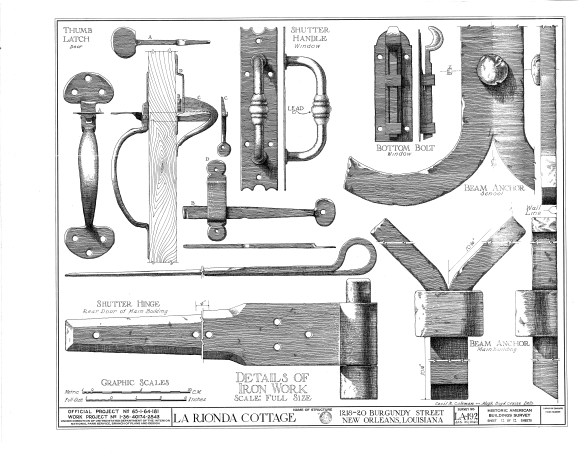
hardware from the La Rionda Cottage, New Orleans, 1940

Below, a drawing of details from an early Texas home, drawn in 1934.
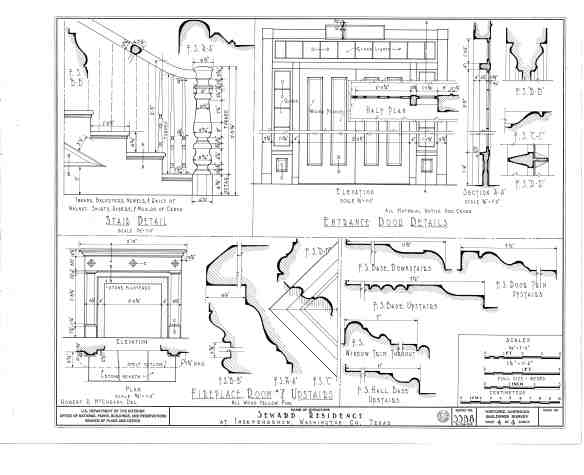
Texas residence moulding details, 1933
Many of the structures documented were only photographed, but quite a few were documented with drawings as well. A typical survey may include as few as 3 or 4 sheets of drawings. Some contain as many as 20 to 30 sheets of drawings which include moulding and hardware details.
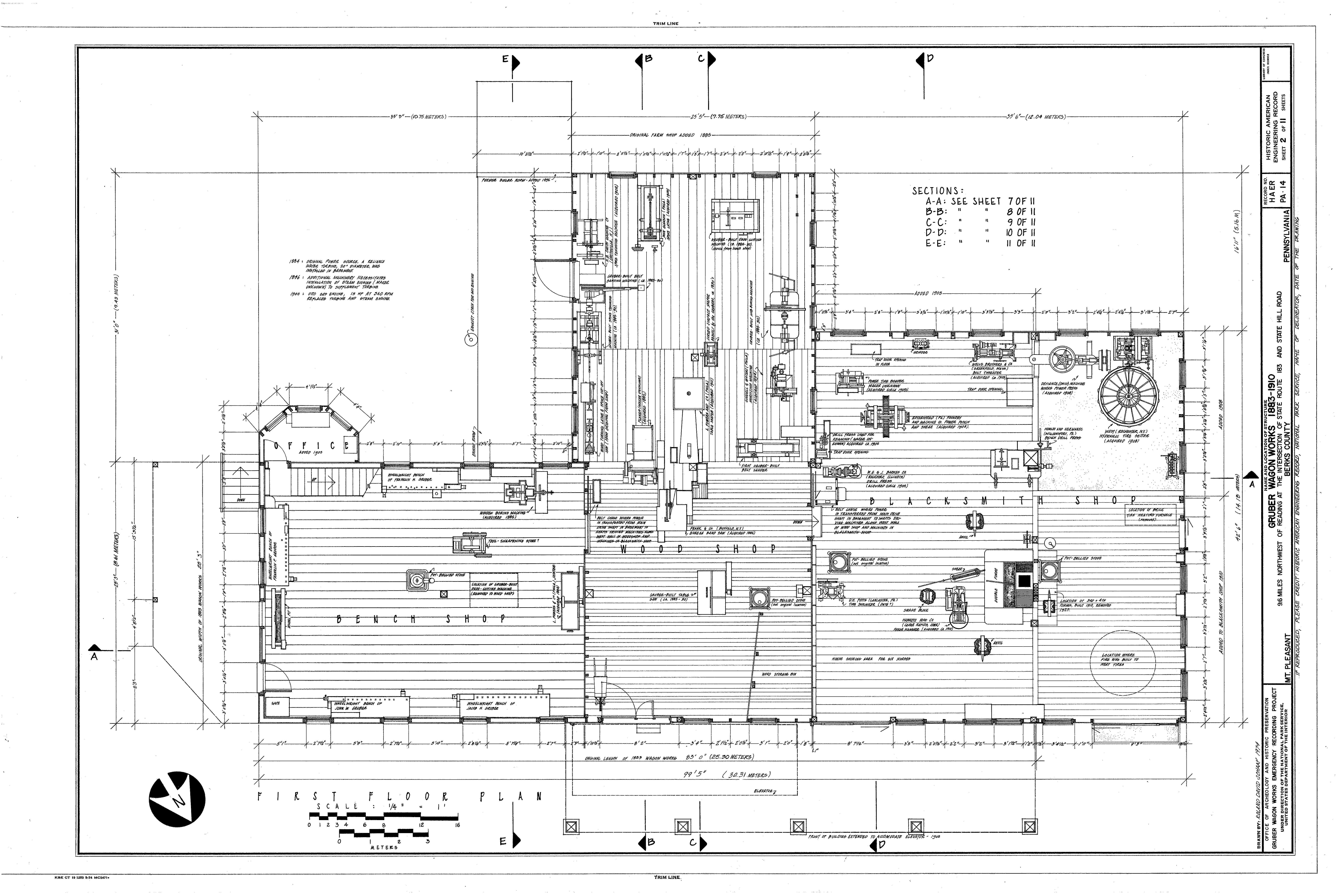
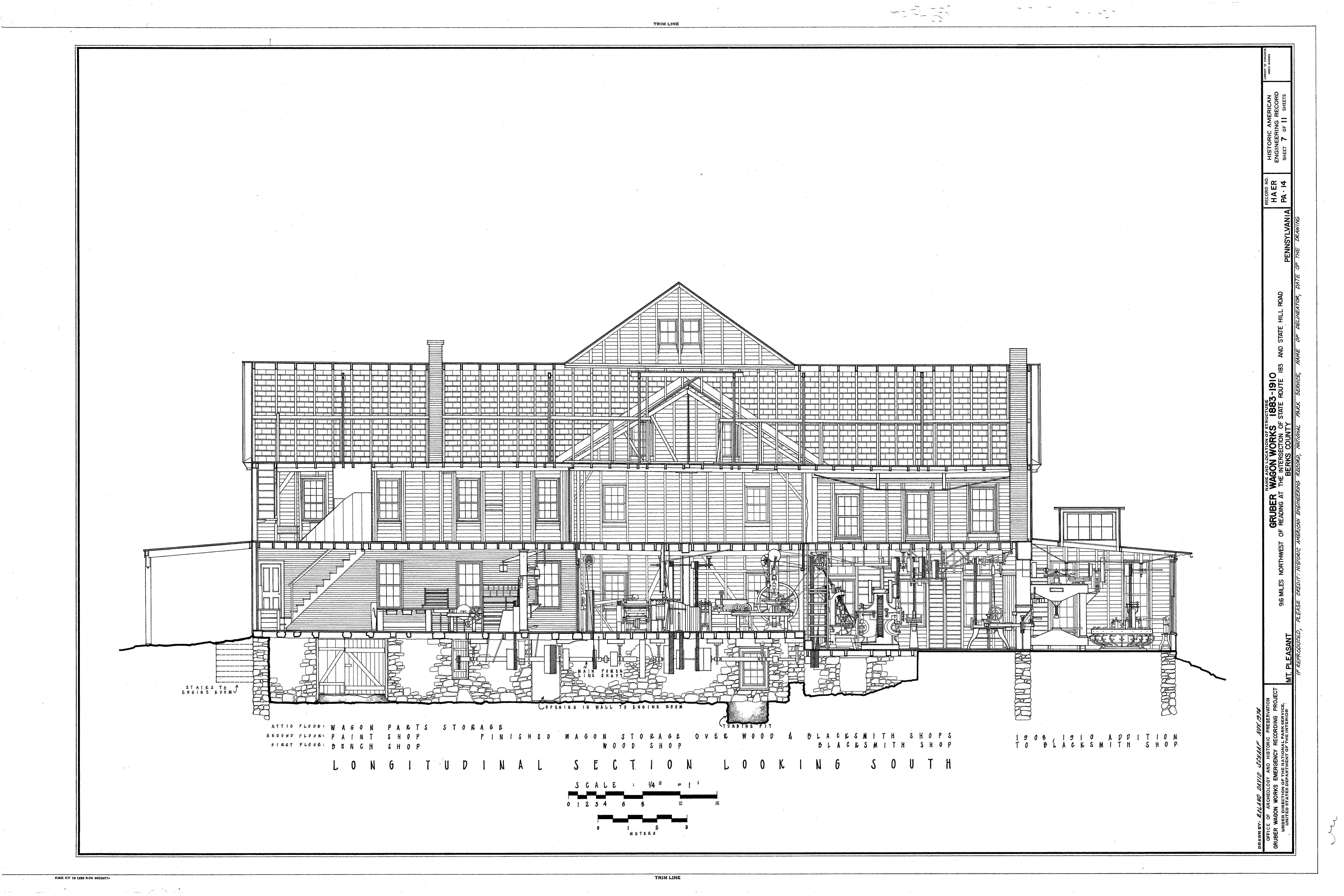
Some, like the 1883 Gruber Wagon Works in Pennsylvania were done as an ’emergency project’, executed when a structure was either in danger of being demolished, or in this case, on the verge of being dismantled and moved to another location. The Blue Marsh Lake Project in the area was the reason for this structure’s relocation.
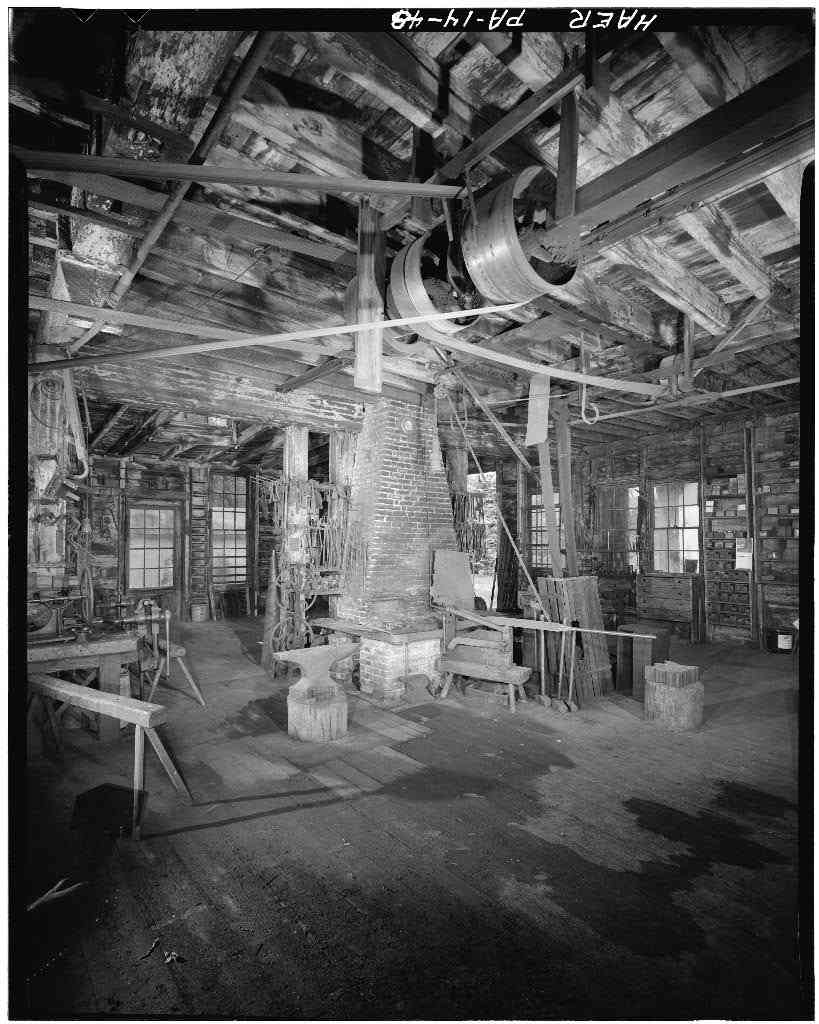
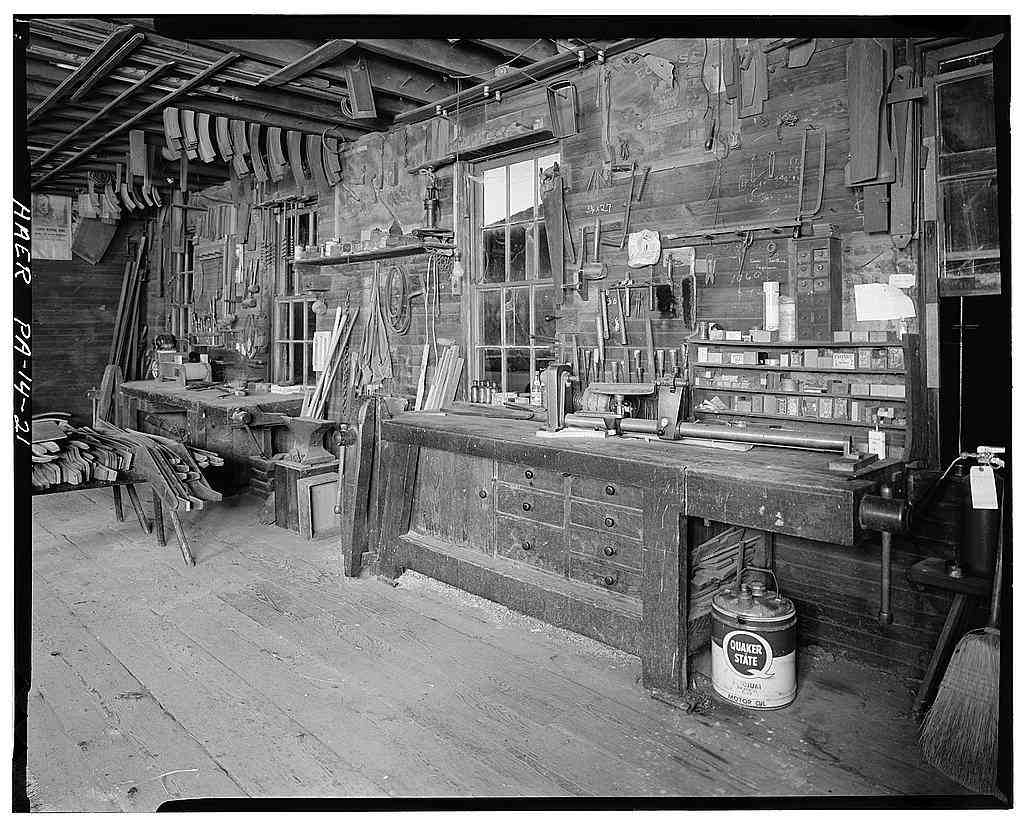
Documented in 1974 by the HAER in 11 sheets of drawings and 215 photographs, the wagon factory was a rare existing example of late 19th century American industrial age. It contained most of the original belt-driven machinery, still in their original locations.
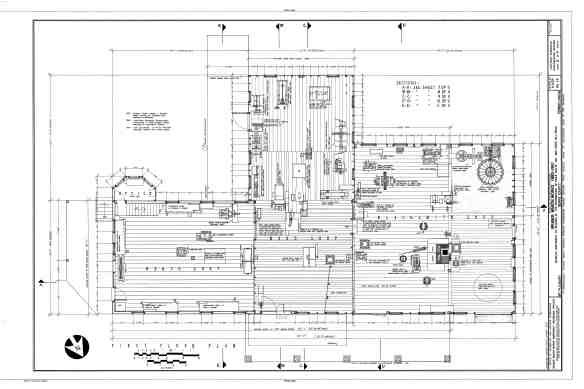
1974 HAER survey plan of the Gruber Wagon Works
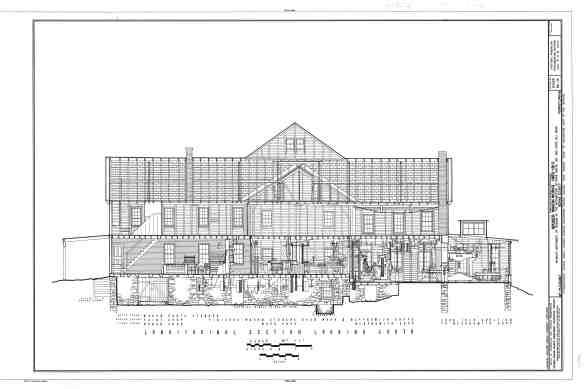
Longitudinal Section
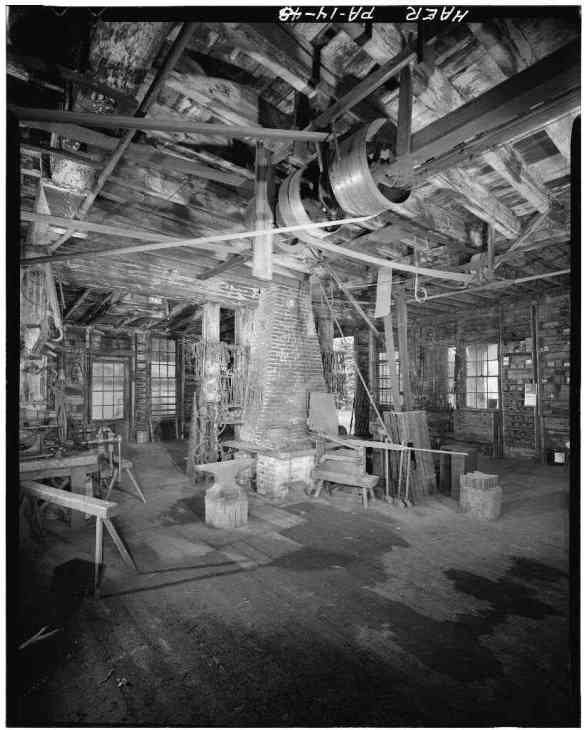
photograph of forge area
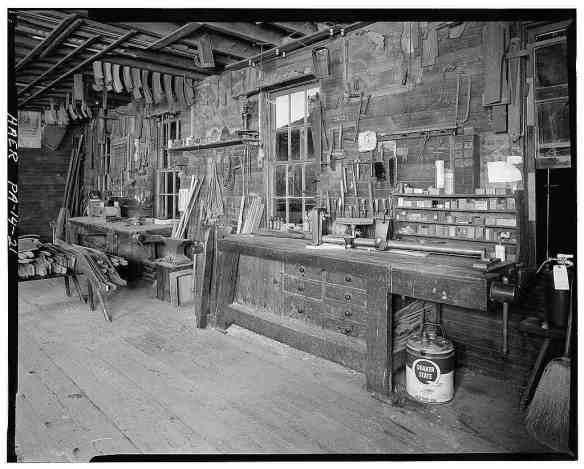
photograph of workbench
As a reference and research site for our line of work, it’s pretty hard to equal it. Drawings can be downloaded as a reference tool in either a smaller file size for letter-size copies, or at full resolution for larger prints.
You can search by site name, region, building type or one of a dozen other search terms. But, plan to set aside a fair amount of time when you do a search, as you will quickly find yourself distracted by the huge variety of the material in the collection.
You can find the site at:
http://memory.loc.gov/ammem/collections/habs_haer/index.html

 The Designer's Assistant