The Importance Of Locations

I’ve always thought the “A film by” credit was unwarranted. Take any film, imagine it being made with a different cinematographer, editor, composer, production designer, costumer, much less a different cast, and you’ll have a completely different film no matter who’s directing it.

There are a number of films you could say the same about if you had a different location scout. Sometimes a location affects the look of the entire film. It can dictate the look of the stage sets. It can set the psychological mood of the story. A good location scout can bring so much to a film that very few people will ever realize.

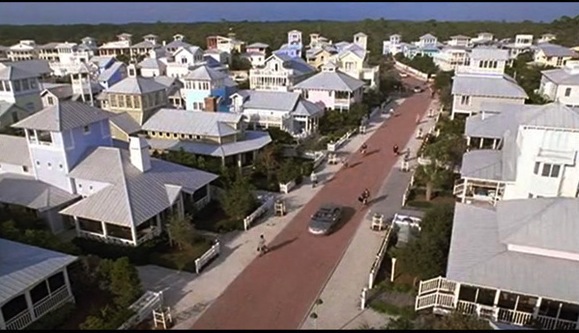
The Seaside Community in Seagrove Beach, Florida which served as the main setting for the film The Truman Show.

The Seaside Community in Seagrove Beach, Florida which served as the main setting for the film The Truman Show.

In 2000 I was working on one picture where the head of locations was trying to find a house that set up the story. He found three houses that he believed would all work for the setting. The director mulled them over but said he wanted to see more choices. Every week he and is team would scour the town looking for the perfect house, talking to the owners, doing a full photo survey of each which consisted of photographing the house in and out, processing the film with 4 copies of each frame ( this was pre-digital) and then taping the photos into manilla folders including the long taped-together panorama shots.

These folders soon filled file boxes. A lot of them. Someone from the studio called up wondering how we could have spent over $10,000 in film processing. We told them to come look for themselves.

Playing a hunch, the locations manager went back to the director with another folder. Exasperated, he said he had found one last house that he really felt was the right one. The director looked at the photos, nodded and said condescendingly, “Why did it take you so long to find it?” The locations manager flipped the folder over and pointed at some notes on the back with a date. “It didn’t”, he said. “This is one of the original three houses I showed you two months ago.”

Criterion has released a new edition of the 1997 film, The Ice Storm, (a film I didn’t work on). In this video from the Criterion site, Production Designer Mark Friedberg talks about the importance of finding just the right locations that would convey the psychological picture of each of the families.

Wayne Manor Was A Remodel – Delineating Set Walls on Drawings

Often when sets are designed there is either an advantage or a mandate to using existing flats for a set’s construction. Sometimes a standing set is revamped or stock set walls are pulled from storage to either save money or time or both, particularly in Television where there is never enough of either.

Universal Studios was famous for revamping sets to the point that some sets were merely repainted and dressed for a TV series when a show required numerous sets. I spent my first years in television at Universal and the Production Designers there were experts at reusing stock units from the large stock sheds on the lot. In recent times some designers resist the idea of reusing scenery but audiences rarely ever notice when they are seeing a stock set. The practice was much more widespread in the early days of TV when there were actual studios in existence who saw the value in having large amounts of stock scenery and made efforts to catalogue and maintain it.

The problem from a Set Designer’s perspective is how to delineate the different walls on the drawings to communicate what is what. Each studio had a slightly different nomenclature, as I learned on my first show at Universal on Murder She Wrote. One day the foreman called from the stage. “Where the hell are all these stock walls you’ve got on this drawing?” he asked. I was confused until I realized they used a different delineator symbol than what I’d always used.

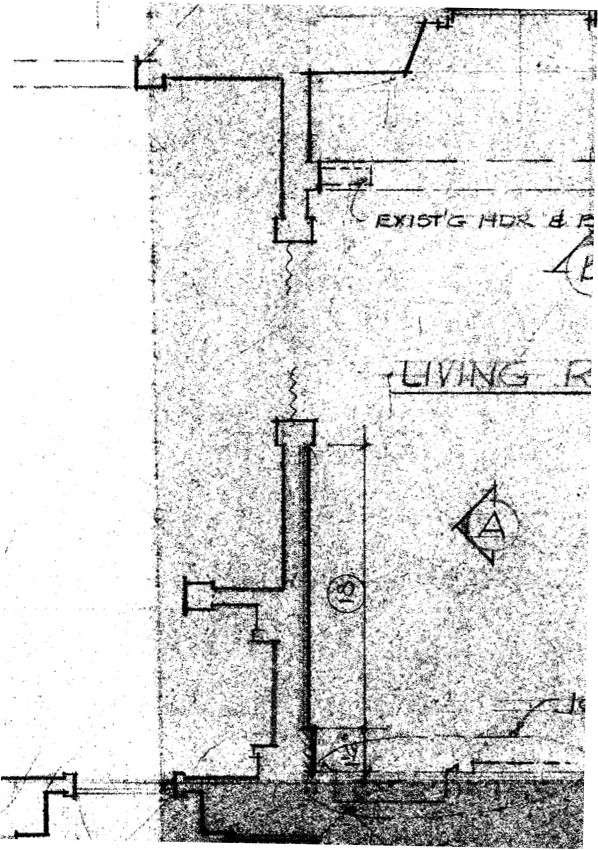
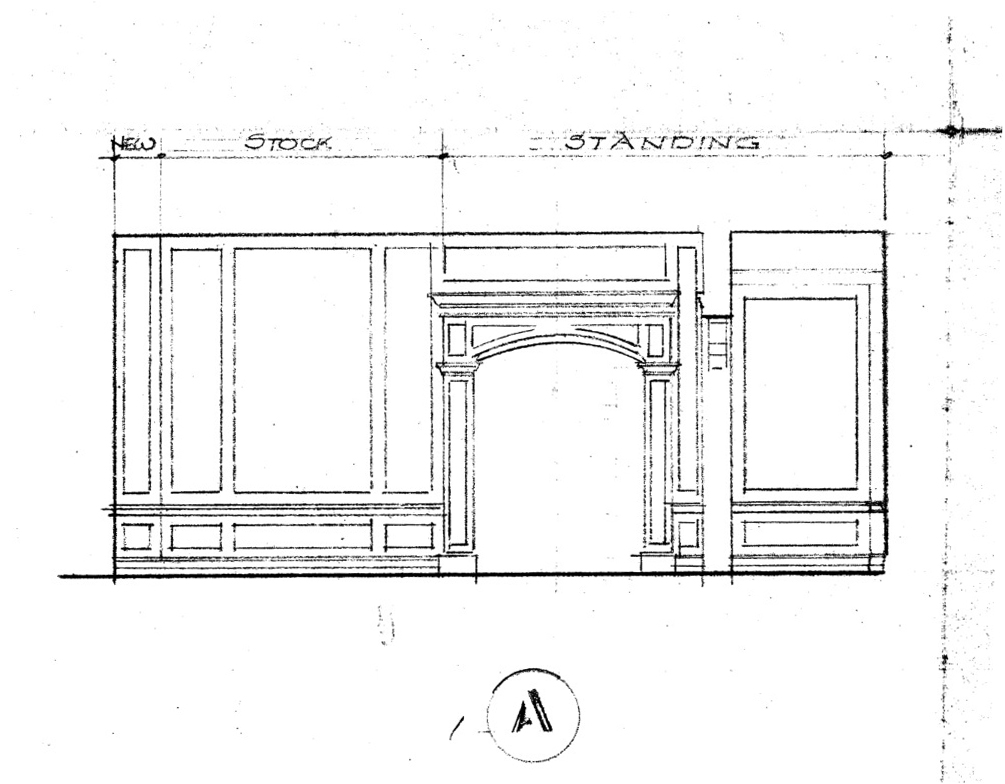
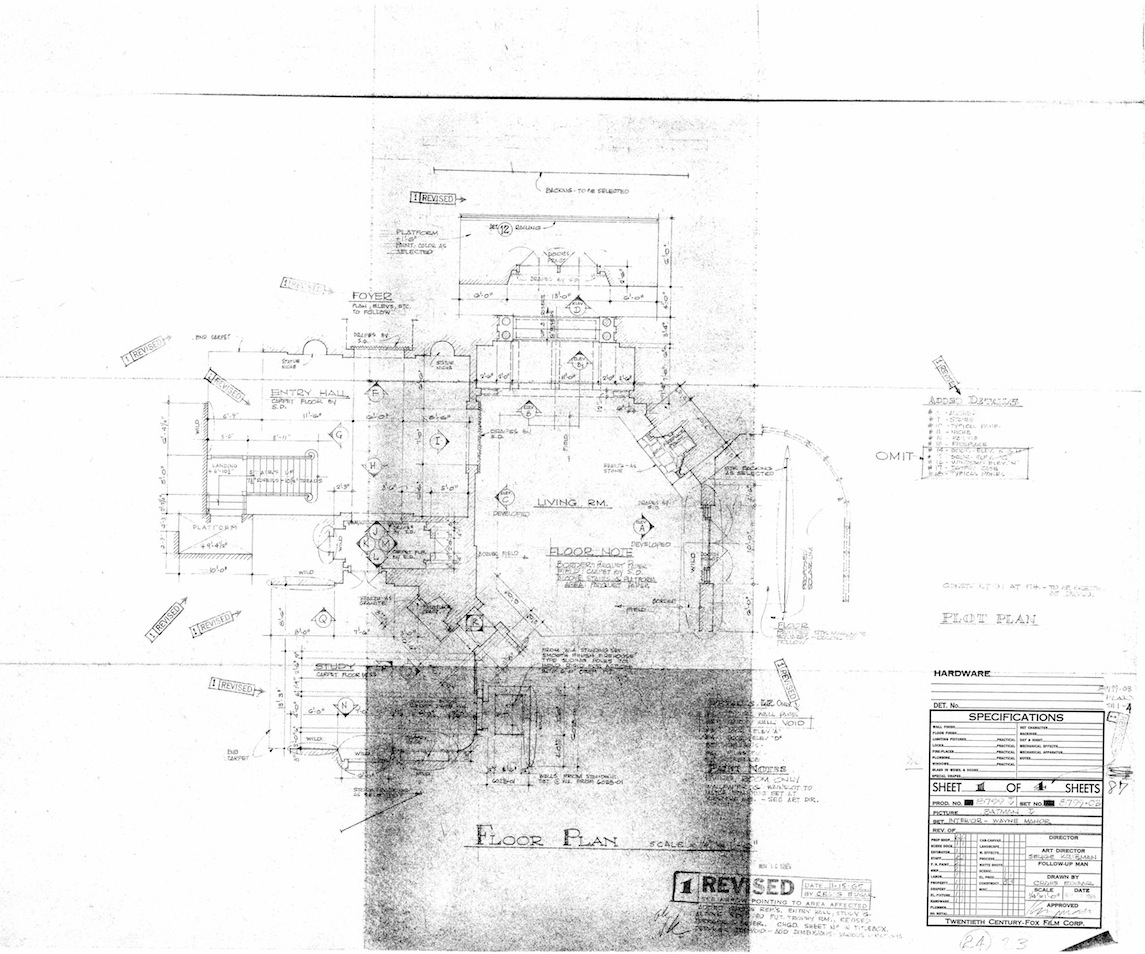
Some of the nomenclature was universal (no pun intended). A thin line on the plan meant the wall was existing and standing in place. it was rarely dimensioned on the drawing. A thick line at most studios meant it was a stock wall and was accompanied by it’s stock number. At 20th Century Fox, this line was also pochéd (shaded). A hatched line denoted new construction except for drawings done at MGM and Universal Studios where it meant the wall was stock. A thick line to these art departments denoted a new wall.

At 20th Century Fox Studios when they were planning a television version of Batman in 1965, the producers were on a limited budget to make the pilot. As the show required numerous sets and the Batcave interior was going to take a big chunk of the construction budget, they cruised the stages on the lot to see what sets might be standing that they could reuse, particularly something that would stand in for Wayne Manor as the script called for a well-appointed mansion.

According to Ed Hudson, long-time manager of the Art Department, the producers heard that the TV series 12 O’clock High was going to be using one of their main sets less, a reproduction of an English Tutor mansion that stood on Stage 18 and was used as the headquarters of the squadron. The network had decided the show didn’t have enough action scenes to keep the young crowd engaged and planned to shoot more of the show ‘in the air’ with scenes in the planes and less talkie scenes on the ground.

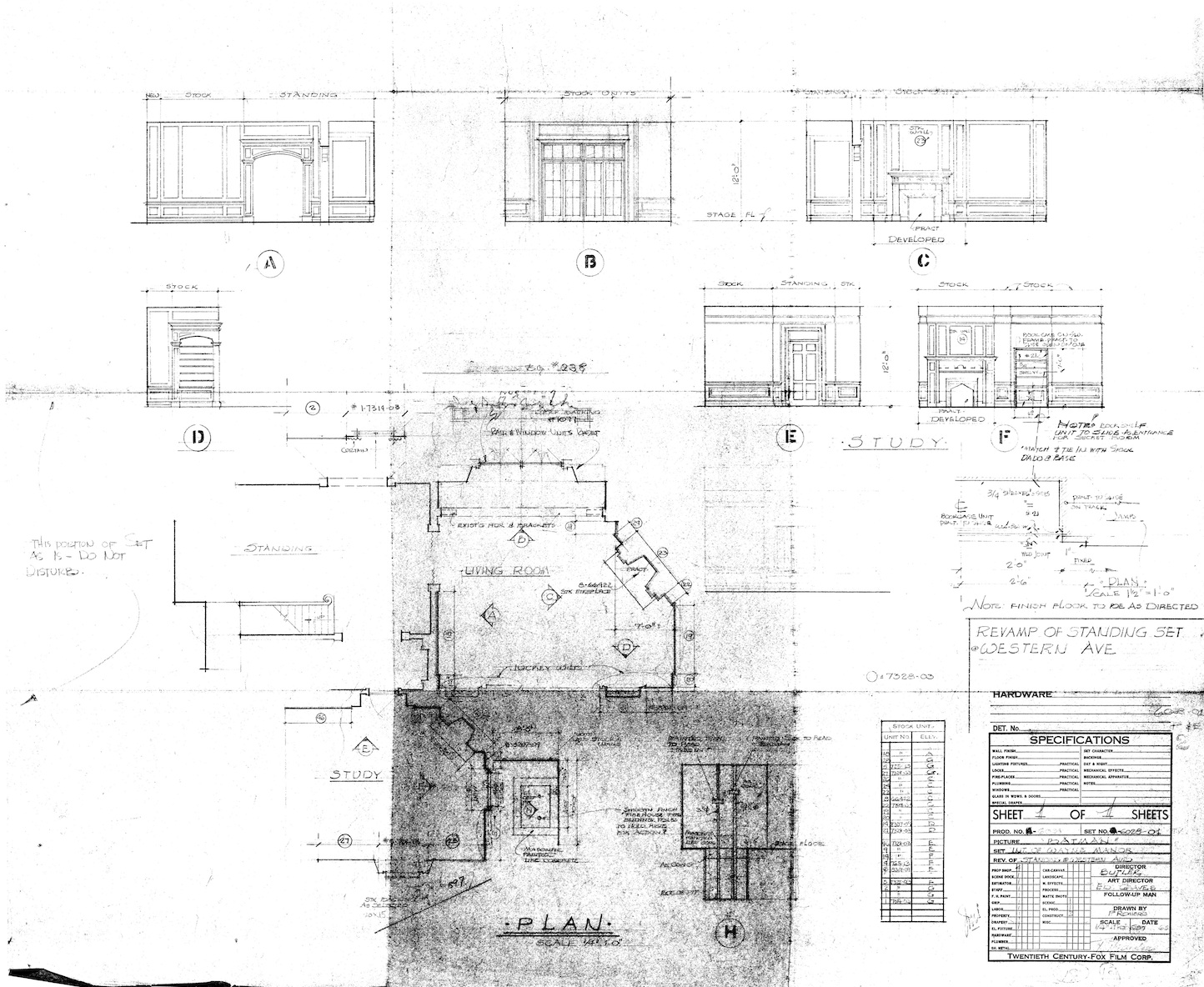
Shown below is a copy of the original plan and elevations showing the various wall types, dated September 1965. For those of you wondering, the Bat poles are at Elevation H.

The set drawing for the Wayne Manor interior for the pilot episode.

The set drawing for the Wayne Manor interior for the pilot episode.

Plan detail showing walls at Elevation A. Note shaded and hatched walls.

Plan detail showing walls at Elevation A. Note shaded and hatched walls.

Elevation A showing the three types of walls clearly marked.

Elevation A showing the three types of walls clearly marked.

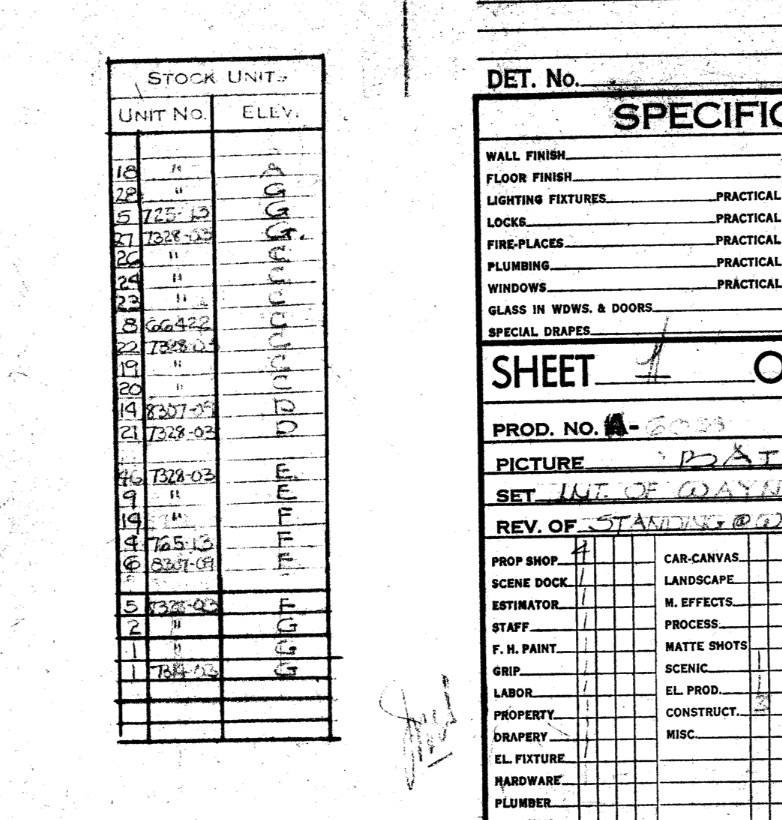
The table beside the title block clearly lists all the stock walls, their position on the plan and their stock number.

The table beside the title block clearly lists all the stock walls, their position on the plan and their stock number.

Once the network accepted the pilot, a permanent set matching it was built on Stage 24. With minor alterations, the original set was duplicated as seen in this November 1965 drawing below. Note that the walls drawn as ‘standing’ on the other plan are hatched for new construction.

Batman_Wayne Manor2_copy

The exterior of the house was an actual location, a house at 380 South San Rafael Avenue in Pasadena. It’s my guess that the location was chosen after the interior set was built.

Having a standing set influence the look of another permanent set is more common than you would think. The set for the 1993 comedy The Nanny, was a reused and slightly revamped stock set from a show called Sibs, which had been shot on the same stage and never made it past the pilot stage.

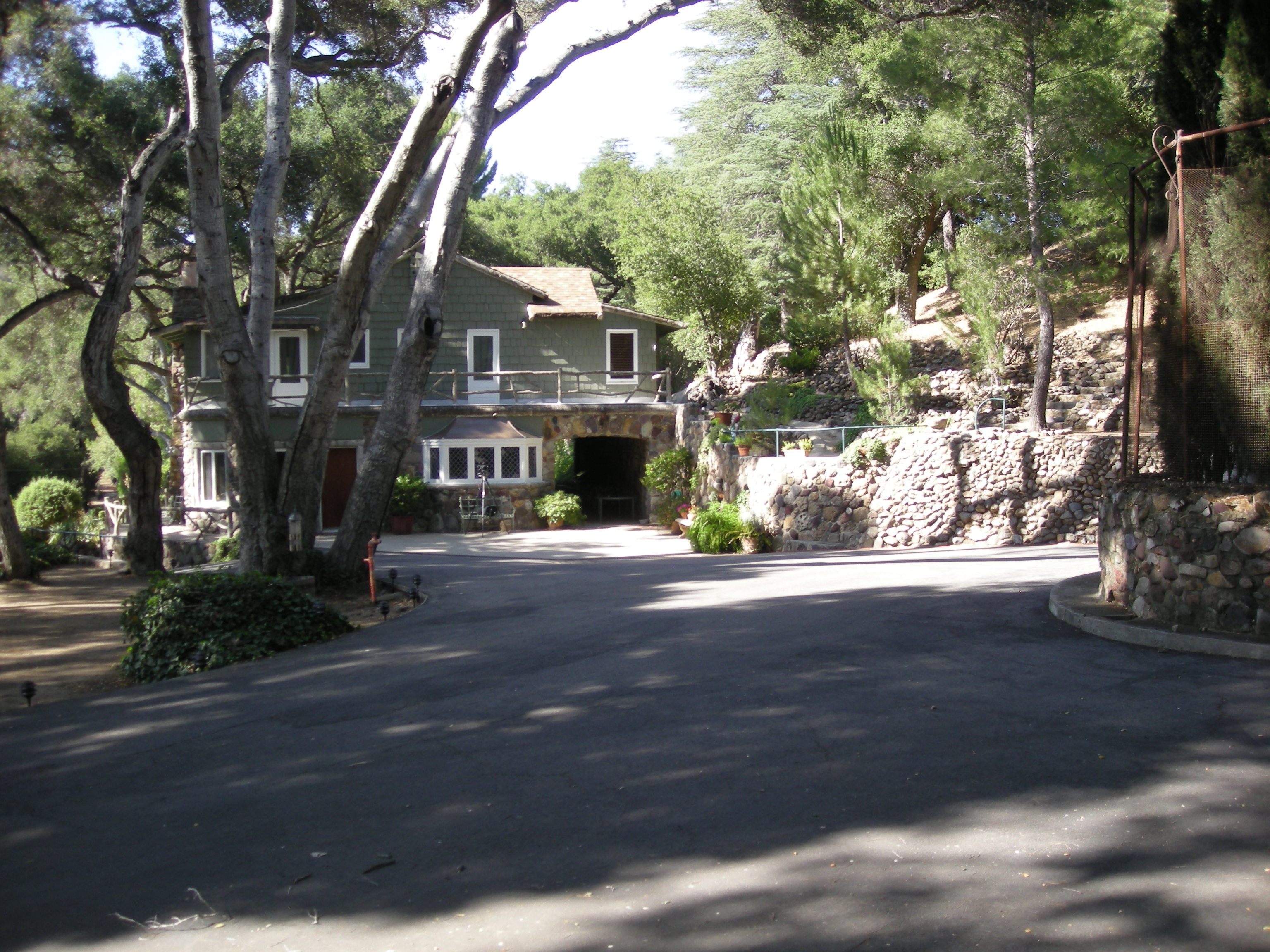
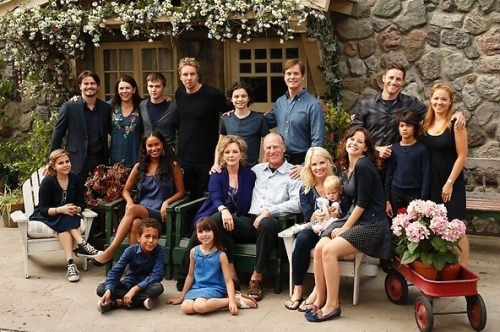
When the 2010 NBC series Parenthood started, the main characters house was based on a home in Malibu canyon where the exterior shooting was planned. The site was surveyed and had been reproduced on stage by the time the deal between the homeowner and the studio fell through. With no time to redesign, the producers were stuck with the houses look. When the exterior of the house was duplicated on the backlot at Universal the next year, it was a close copy of a house that was never shot for the series.

Original location of the house for the main characters of the series Parenthood.

Original location of the house for the main characters of the series Parenthood.

Parenthood cast in front of the exterior facade built on the Universal Studios lot which was influenced by the location house which was chosen but never shot.   photo by NBC Television.

Parenthood cast in front of the exterior facade built on the Universal Studios lot which was influenced by the location house which was chosen but never shot. photo by NBC Television.

One thing that producers aren’t is psychic, much to their dismay, and you never know if you have a hit or a flop on your hands until the public sees it, and even then you can’t be sure. When the pilot for the original Batman series was tested it tested worse than any other show the network had done. Considering shelving the series, luckily they decided to air it since so much money and already been spent on the show, not knowing it would become a cultural phenomenon.

Rendering In Sketchup

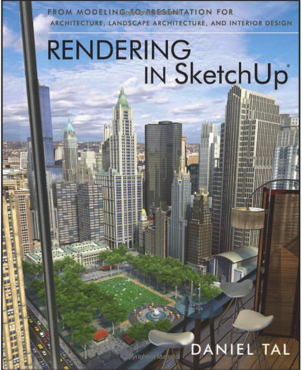
For those of you who work in Sketchup and are new to rendering, or are confused by all the different rendering software packages available, a new book is coming out March 25 that will help. Daniel Tal, landscape architect and author of Sketchup For Site Design, has written a new book, Rendering In Sketchup, which is now available for pre-order or as a digital download.

rendering in sketchup

There are now a number of rendering programs on the market for use with Sketchup, with a majority of them working from within Sketchup without having to exit the program. This can be a plus or a minus depending on how you work. Even though most of the programs offer free-use trial periods of their software, It can be pretty difficult and time-consuming to decide which is  the best one for your workflow and budget.

Daniel is an excellent teacher and has written a very thorough and detailed book on the process of rendering from Sketchup using a variety of software programs as well as explaining post-rendering work with Photoshop. While not every rendering engine is covered, he does go into a great amount of detail explaining not only the basics of rendering, but his own methods using Shaderlight, SU Podium and Twilight Render.

The book covers workflow, hardware requirements, how to model efficiently for renders, use and teaching of textures and a lot more. At over 600 pages, the book is both a reference and a guide and can be read for pertinent chapters rather than just cover to cover.

You can get more information on the book here, and you can view the videos on Daniel’s Youtube site here

Here is a really good tutorial by Daniel you should watch which is based on the material from his book:

Land8 Webinar: Rendering in SketchUp – Daniel Tal from Land8.com on Vimeo.

If you want to know all of your rendering engine options, here is a list of rendering programs that work with or within Sketchup;   ( Prices are as of March, 2013. )

From within Sketchup:

Shaderlight – $299 full license; timed access from $50

Twilight Render – $99

V-Ray – $800

ArielVision – $175

Bloom Unit – free software , cloud-based, priced per render

Caravaggio – $295

Indigo Renderer – $220

IRender nXt – $499

Light Up – $189

LumenRT – $295

Maxwell – $995

Raylectron – $99

Render[in] – $160

Renditioner –  $99,  Pro $199

SU Podium – $198

Thea Render – $420

Standalone Software

Artlantis

Kerkythea – free

The HMS Bounty And The Blockbuster That Was Never Made

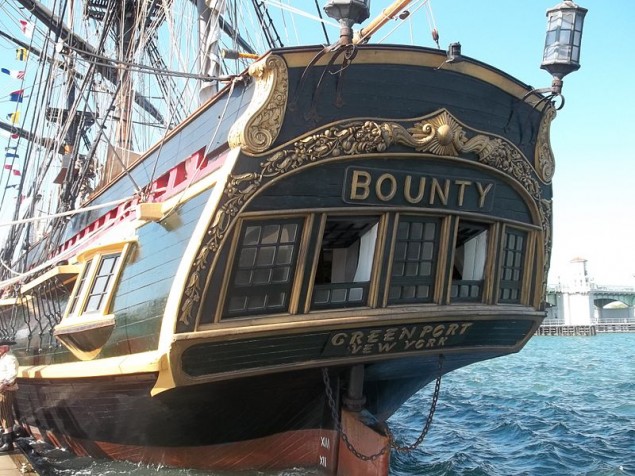
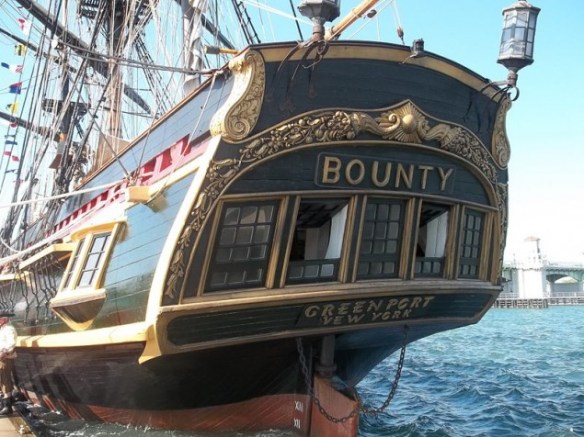
The Bounty in 2010. photo by Ebyabe

On October 29, as Hurricane Sandy bore down on the U.S. east coast, a distress call went out to the Coast Guard from the crew of the HMS Bounty. The ship was four days into a bid to avoid the ship being destroyed in harbor by the storm. The captain had decided that the best way to save the ship was to go to sea and sail around the hurricane. Now being swamped by 30 foot waves, the crew was forced to abandon ship. The captain and one of the crew were lost at sea before the remainder of the crew were rescued by Coastguard helicopters. Hours later I saw a photo of the ravaged ship as it went down, its’ mast tops shredded and its’ yards torn away.

The HMS Bounty goes down off the coast of North Carolina. Photo by Petty Officer 2nd Class Tim Kuklewski/ /U.S. Coast Guard via Getty Images

I looked at it and remembered climbing the shroud lines up to the main mast top and looking out to sea almost exactly 18 years before while surveying the ship for a film. It was to be a remake of the classic Errol Flynn pirate film, Captain Blood, and it would have been the most expensive film made to date. But the films fortunes were as bad as those of the Bounty turned out to be.

The HMS Bounty’s Rebirth

The ship was commissioned by MGM in 1960 for the 1962 film Mutiny On The Bounty starring Marlon Brando. Built in Nova Scotia, it was the first large vessel built using original ship’s plans. To make allowances for shooting and to hold a larger crew, the ship’s deck length was increased from nearly 91 feet to 120 feet with the beam, masting and rigging increased in proportion to the new hull length. Once the film was completed, the studio had planned on burning the ship but Brando protested and the Bounty ended up in Florida. It went through several owners before Ted Turner bought the ship and in 1993 donated it to an educational foundation where it was sent to a new home port in Falls River, Massachusetts.
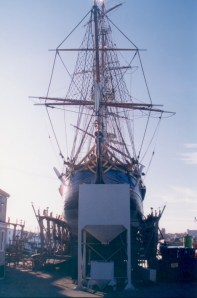
dock in 1994

Bounty in dry dock in 1994

When we went to survey her in 1994, she was on the rails in dry dock, a number of her futtocks were in need of replacement but we were assured the work would be completed in time for filming. Three of us crawled all over the ship the entire day, taking measurements, hundreds of photographs and video to document the existing structure for as-built drawings. Since the story of Captain Blood takes place in the 1680’s, over 100 years before the original Bounty, the ship was to be converted to an earlier vessel which meant applying a different stern, rigging and bow.

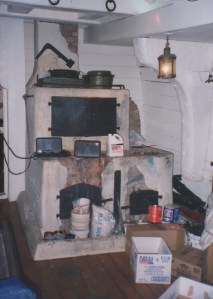
The ship still had most of it’s original fittings including the brick oven and the hand grained paneling below deck. Other than the repairs on the futtocks, she seemed still intact after over 30 years of sailing.
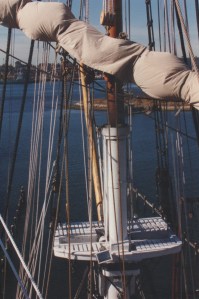
View from the main mast top. Photo- R.D. Wilkins
View from the main mast top. Photo- R.D. Wilkins

The Bounty's brick oven. photo - R.D. Wilkins

The Bounty’s brick oven. photo – R.D. Wilkins
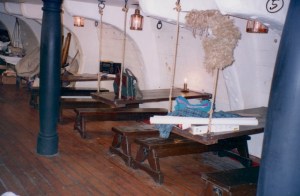
The crew mess area. photo - R.D. Wilkins

The crew mess area. photo – R.D. Wilkins
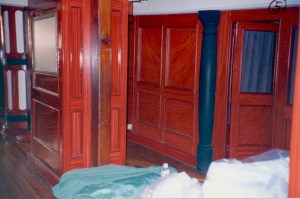
hand-grained partitions below deck. photo-R.D. Wilkins
hand-grained partitions below deck. photo-R.D. Wilkins

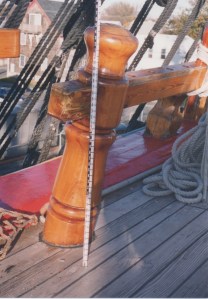
Survey photo of the fore bits. photo - R.D. Wilkins

Survey photo of the fore bits. photo – R.D. Wilkins

The great wheel and binnacle. photo - R.D. Wilkins

The great wheel and binnacle. photo – R.D. Wilkins
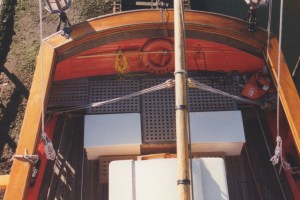
View of the stern from the main top. photo - R.D. Wilkins

View of the stern from the mizzen top. photo – R.D. Wilkins
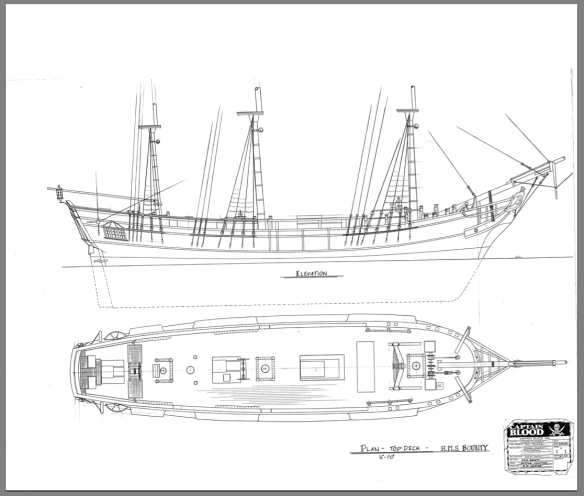
Drawing done from survey measurements in 1994. R.D. Wilkins
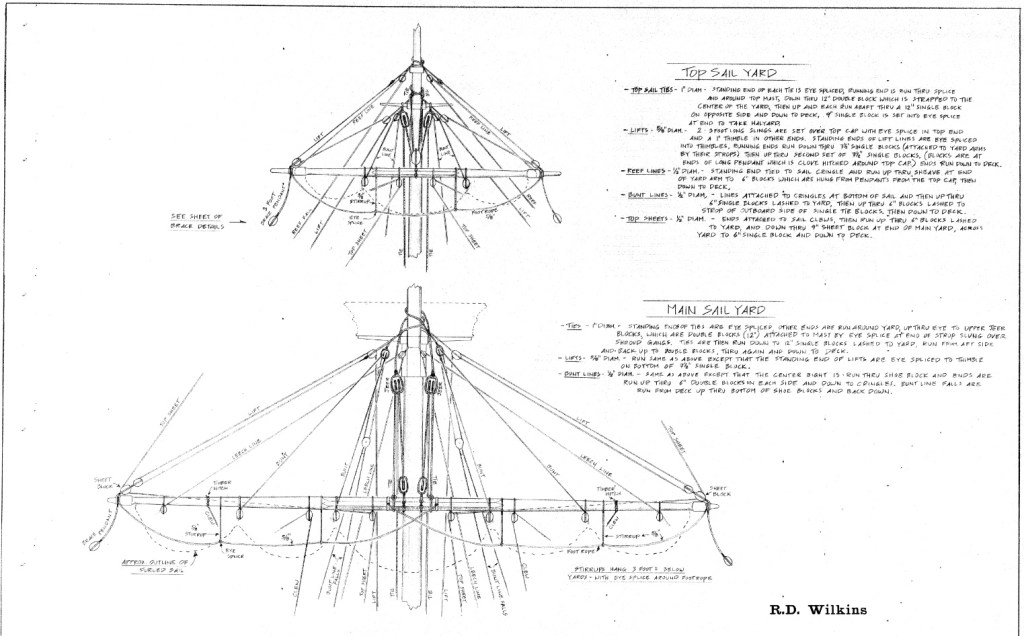
Drawing done from survey measurements in 1994. R.D. Wilkins

Period rigging details

Period rigging details for Bounty conversion.

Captain Blood Sails Again

Back in Los Angeles, design work proceeded under the leadership of Production Designer William Creber, who had been nominated for Oscars three times before. The Set Decorator was Eddie Fowlie, David Lean’s right-hand man who had done props and sometimes effects as well for the classic films, Lawrence of Arabia, and fulfilled five different roles on Doctor Zhivago as well as other films. When asked by the studio which credit he wanted for Zhivago, he first replied he didn’t care but decided on a special effects credit since it had involved the most work. He later wished he had picked another title since the effects were so good they were virtually ignored. It appeared to all that the film was made in snow in winter when it was actually shot in Spain, with thousands of tons of cheap marble dust used as snow. The beautiful winter ice palace interior was actually carefully applied paraffin. He had come out of retirement to do the picture, leaving his home in Spain. We were all a bit in awe of both of them, particularly Eddie given his pedigree with Lean. The director had just had his last film explode at the box-office and was the hot ticket in town. The scripts scribes were equally hot commodities and had recent successes of their own.

The plan was to do a remake of the popular Errol Flynn film from 1935, even though the common thought at the time was that pirate movies didn’t make money, (Jerry Bruckheimer would prove this wrong a few years later.) Popular yes, profitable no, This was mainly because of the cost involved in making them. Besides being a period film, it would involve creating a huge 17th century battle, creating at least four different period sailing ships and recreating a large section of the town of Port Royal. The initial projected budget suggested that it would be possibly the most expensive film made to date. That being the case, there were only a few stars that the studio was willing to gamble their money on, and the first choice was Arnold Schwarzenegger.
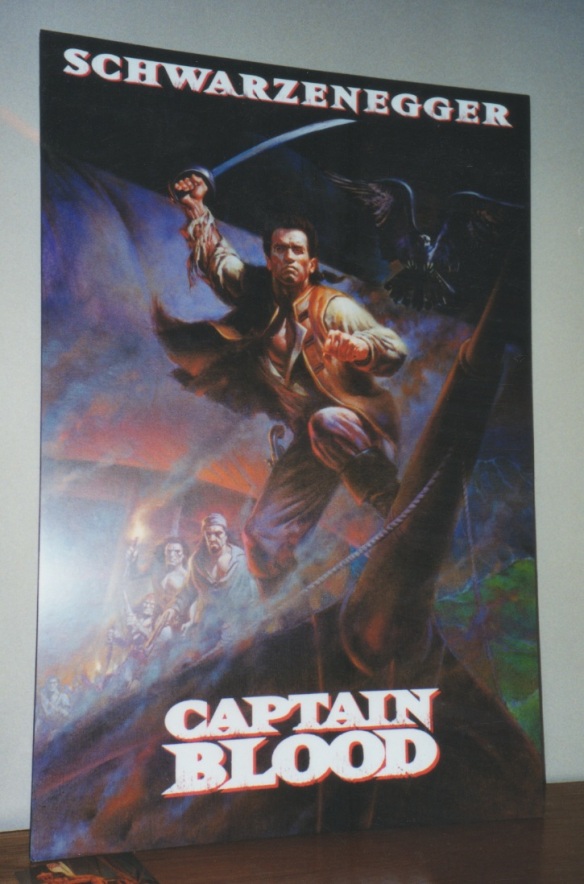
Proposed artwork for a promotional poster for the film.

Proposed artwork for a promotional poster for the film.

I was eager to quiz Eddie about his time with David Lean but he seemed a bit aloof and obviously did not suffer fools gladly. So, I thought I would offer something he would find useful. I brought in a rare out-of-print set of books from my library of which part was an inventory of ships of the period. One section listed every piece of equipment you could find aboard with illustrations and measured drawings, a Set Decorators dream. He looked up at me over the top of his glasses when I entered his office. “Eddie, I thought these might be a good reference for you”, I said as I laid the books open in front of him.

His jaw dropped slightly as he silently thumbed through them for several minutes. Without looking up he said, “Where did you get these wonderful books?” Then he said it reminded him of how he had done the props for Lawrence Of Arabia. He had an illustrator do a drawing of each piece he needed. The he posted them on his wall and would bring the various local artisans to his office, point to the drawings and indicate how many he needed.

I realized why you could never make a film like Lawrence today the same way and why the Art Departments of the period were so small. Today something like a camel’s saddle would be drawn in multiple versions by several illustrators, modeled in Rhino or Modo by as many as three different set designers, rendered, redesigned, remodeled, re-rendered, finally approved by the director, and only then would a set of working drawings be made. Eddie just found a person who understood what it was he wanted, gave him a sketch and told him how many he needed. But this was a time when directors hired people they trusted and let them do their job. They understood that THEIR job was defining the story and script and concentrated on camera placement and performance and didn’t involve selecting drawer hardware.

After that Eddie would chat about he times with Lean in the afternoons at tea time, which didn’t involve tea for Eddie, who preferred beer. He’d found a local shop in Santa Monica that carried imported beer, so each day when we’d walk to lunch, ( those were the days when we actually stopped for a proper lunch and didn’t eat hunched over our desks ) we would buy him two cans of his favorite beer.
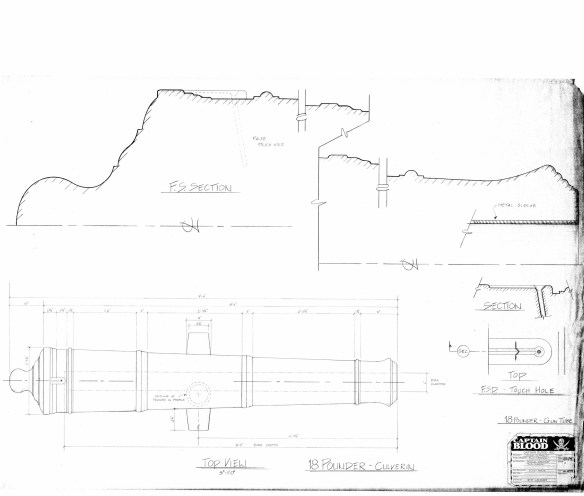
drawing for 18 pounder cannon tubes. At over 9 feet long, these were even shorter than the largest guns.

Drawing for 18 pounder cannon tubes. At over 9 feet long, these were even shorter than the largest guns to be made.
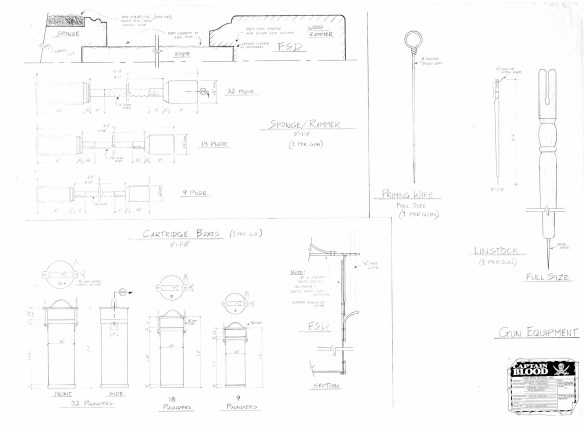
drawing of gun equipment

drawing of gun equipment

One day one of the producers was talking about the ship cannons and I showed him a mock-up of the cannon shot for the large 32 pounder cannon. He frowned as he took the 6 1/2 inch diameter ball and said it seemed puny. I walked him around the corner to where I had taped a full size silhouette of the gun that fired it, which was over 10 feet long and more than 4 feet high. He was shocked. It was then that I made the mistake of mentioning that the opening battle scene was based on a real battle, the Battle of Sedgemore in 1685. He looked surprised and said, “you’re kidding?” I said that not only was that based on history but the main character was also based on a real man named Henry Pitman. “That’s fantastic!” he said. I’m sure in his head he could see that sought-after card ‘based on a true story’ in the title sequence at the front of the film.

This revelation caused a lot of excitement and they asked me to do a little presentation for the director and producers about the real events behind the film. A few days later when I began the presentation, the enthusiasm quickly died. As I told them the real story it became readily apparent that serious liberties had been taken in Sabatini’s original book and worse, the events portrayed in the script didn’t match the real story either. The carefully crafted battle scene that took place at night in the swirling snow had actually happened in the middle of July where heatstroke would have been more a likelihood than frostbite.

It was then that I realized two important truths about the film industry;

1. – Working on a film about a subject you know a lot about is usually a very frustrating and ultimately disappointing experience.

2. – If someone, other than the Production Designer, says they want to know what it really was or looked like, it doesn’t necessarily mean they’ll change what they already have in their mind.

Most people just want research that is going to confirm or validate what they already have in the script or the image they have in their head. Maybe that’s human nature but it’s the same reason composers hate the temp music used during editing. After months of hearing a tune connected to a picture the director will end up wanting something “just like that tune”. It’s almost routine for a director to question a designer’s design choice by demanding to see research. And then when the image which validates the design is produced, the director will insist, “well, I still want my version instead.” Research that doesn’t validate their own ideas is worse than useless to them because it just points out their own ideas are many times based more on Hollywood clichés than reality.

Everything was proceeding nicely when we be can to hear rumblings that Schwarzenegger was thinking about pulling out of the movie. It was rumored that he had an extended ski trip planned that conflicted with the schedule. Someone else suggested that he was worried he would look ridiculous in 17th century knee breeches. For whatever the reason, a week later it was confirmed that he had pulled out of the picture. The momentum slowed to a crawl. With a picture this large, particularly a picture partly shot at sea, the weather plays a large role. If the schedule was pushed we would be into hurricane season in the tropics and that was something the studio didn’t want to contemplate. Another actor would have to be found and fast.

Because of the estimated budget, the studio sent a list of just five other actors that they considered to be enough of a box office draw to make the film feasible. I leave it to you to guess who those five were. As the week went by, each actor on the list passed until there was just one who had yet to decide.

In my naiveté, I had regularly been collating and forwarding research from my library that I though would be useful but never got a response about it. As each script revision happened it became apparent that it was being tailored to Arnold’s action hero persona with ever greater feats of daring and super-human agility. That last Friday, I got a call from the director’s assistant. She asked if I could send her additional copies of the all the research I’d been sending over to the director saying that the originals had been ‘lost’. The director was scheduled to leave on a plane for Paris that evening and wanted to take the research with him. It turns out the actor who was the film’s last hope was interested, but only if it was going to be a historically motivated picture. I wasn’t sure how they were going to explain why the script was so different from the research.

I don’t think I need to tell you what the actor’s decision was.
Using Models For Discussions

This short clip is a great example of how important models can be in pre-shoot meetings. In this short video a Production Designer meets with the Cinematographer to discuss a problematic lighting situation for a large scale built set.

It’s hard to imaging how these important decisions could have been reached without the help of the scale model as a visual talking aid.

Understanding Model Scales – A Comparison Study

Comparative Scale Figure Diagram – You can download a pdf copy of this diagram below.

Even with the large number of computer 3D modeling programs available to designers, there is  (and I think always will be)  a place for physical scale models. Although the modeling programs continue to produce more and more realistic looking images, they are still only a 2D image that utilizes correct perspective. And even the programs or systems that are ‘true 3D’ are really only offset 2D images meant to trick the mind into thinking it’s seeing a dimensional physical shape.

Some of the advantages of a physical scale model are:

-The physical size of a set are much easier to grasp than from a digital model where you can zoom in endlessly.  I once built a model of an area of geography that the producers couldn’t seen to understand exactly how big an area it was until I put in the final piece, a model of the 260 foot ship they planned to use for a crew base. The huge ship measured only 3/16″ in the model scale. They got it instantly.

-A number of people are able to simultaneously view the model and discuss it. A lot of revelations often come from being able to look at a model from many different angles at once.

-The brain isn’t spending effort trying to do the mental tricks required to process fake 3D images. The model is somehow “more real”, because it is.

The Diagrams

I created the chart above as well as the list below from many years worth of notes and scribbles. The calculations are mine so any mistakes are solely mine as well. The visual chart will give you an easy way of determining the size of figures in the various scales that will be most common to concept models.

The list describes what I think are the most useful model sizes  from 1:700 to 1:6 with inch equivalents for each scale as well as the length of a linear foot and meter for each as well. The last column gives the common uses for the scale to help you determine what products exists for purchase. The Size Chart also lists the most common Imperial and metric drawing scales so you can find the model sizes that most closely match.

Determining The Size Of Your Model

Your first calculation will probably be how large the overall model needs to be. You’ll want the model to be as detailed as possible but probably won’t want it to take up and entire room. Using the Size Chart, multiply the overall actual size of the area you need to cover by the foot or meter equivalents and then determine which scale is best for the space you have available. Also note that 1/32 and 1:32 refer to the same scale.

Next, determine what model items exist in that scale. For the most variety in objects and vehicles, stick with the train gauge scales. If you need a lot of detailed plastic trucks or cars, 1/24th scale is going to probably be best, which is also the same as 1/2″ to the foot and is close to the German “G” train gauge.

Download The Files Here

Comparative Scale Figure Diagram

When you print this diagram, be sure that you print it at 100%. Check the inch and metric scales to be sure it is at full size for an accurate representation.

Other Articles

For more information, you can refer to the following articles:

List Of Scale Model Sizes

Combining Figures With Models

Converting Scale Ratios

Finding The Right Scale For Your Model

The Future Of Sketchup

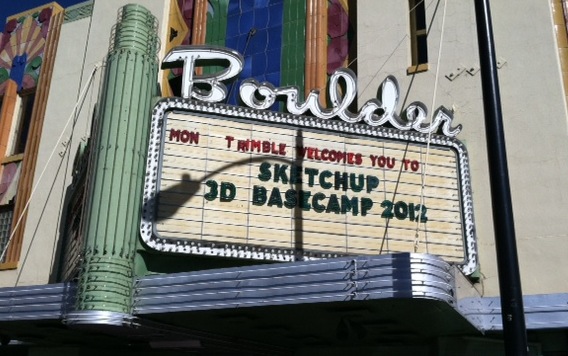
On Monday morning I, along with about 280 others, packed into the Boulder Theater in downtown Boulder, Colorado in the hope of finding answers. It was the first day of Sketchup Basecamp, a semi-annual event that attracts Sketchup users from around the world for a three-day conference that’s more like a cross between a family reunion and a college party than a traditional industry conference.

When it was announced on April 26 of this year that Google was planning to sell Sketchup, a lot of people ( myself included ) got more than a little nervous. Sketchup is the sole piece of software I use for modeling sets and creating working drawings. Since purchasing the program in 2006, Sketchup has become the most-used modeler in the world with it’s user base growing to over 30 million people. The program was obviously very successful, so why was Google selling it off when it normally doesn’t divest itself of products. The last time they had sold a product investment was in 2009. A Sketchup blog article by Product Manager John Baucus on the same day helped to allay fears but there were still a lot of unanswered questions and concerns.

Google had purchased Sketchup’s parent company, @Last Software in 2006 to provide content for Google Earth. The idea was to provide a free 3D modeling package that would allow people to create buildings for use in Google Earth. Even with a paid version of Google Earth it seems that Earth was never a profit generator for them and with the introduction of a new system which allows Google to now create models from auto-generated 3D mesh buildings from photo-grammatical data gathered from satellites and unmanned aircraft, it seems that they no longer saw a need for a 3D modeling program. There was speculation in the engineering industry that the company would be sold to Dassault Systemes, but when the announcement was made it was revealed that Sketchup would be purchased by Trimble Navigation.

Trimble Who?

So, who is Trimble Navigation and why did they buy Sketchup? It turns out Trimble is a billion dollar company located in Sunnyvale, California and is a leader in developing systems which use GPS technology for the surveying and construction industries. They have offices in over 30 countries and have over 1,800 patents relating to GPS systems. Sketchup is just just one of a number of acquisitions Trimble has made this year, including Tekla, a BIM modeling program from Europe. On Trimble’s website they describe the company as having integrated  “a wide range of positioning technologies including GPS, laser, optical and inertial technologies with application software, wireless communications, and services to provide complete commercial solutions. Its integrated solutions allow customers to collect, manage and analyze complex information faster and easier, making them more productive, efficient and profitable.”

Far from dumping the software in a fire-sale, Google wanted to make sure Sketchup went to a good home. Google had a previous relationship with Trimble having used their GPS systems in developing Google Earth.

Trimble Vice President Bryn Fosburgh was there in Boulder at the opening session to explain how they saw Sketchup’s position in the company’s structure. Having established itself in the engineering and construction side of the industry, the acquisition of Sketchup is seen as a way of extending the firm’s footprint into the design phase of the industries as well. He said they saw the modeling company as becoming seamlessly integrated with the other companies’ software and hardware products and said his only surprise after the purchase was getting used to the unusual dog-rich environment of the Sketchup offices.

Users of their products like the Robotic Total Station will be able to bring the file from a Sketchup model of a house into the device and have it’s laser lay out the corners of the building with 1 centimeter accuracy.

More Tasty Sketchup Biscuits To Come

A problem most companies have is learning when to leave acquisitions alone. Much like biscuits, where over-handling the mix leads to leaden,  inedible lumps. Trimble seems to have a record for buying quality companies, integrating them into the family, and then leaving the work to the people that know best how to implement it.

Joined on stage by Sketchup Product Manager John Baucus, Product Evangelist Aidan Chopra and a number of others from the company, the group quickly explained the plans Trimble has set for the 3D modeler: the program is going to stay simple to use, and it’s going to get a lot more complex as well. The company sees Sketchup as a platform as well as an application.

Here’s the abbreviated breakdown:

– There will always be a free version of Sketchup available and the basic program will     never be more complicated to learn.

-The Pro version will continue to be developed and you will see a continually greater difference between it’s abilities and those of the free version.

-They will continue to support 3rd party developers in creating compatible software and plugins to work within Sketchup. Over 45% of users have and use 3rd party plugins with Sketchup and they want to continue to support the creation of useful additions that they would never develop in-house, hoping that each industry will take the initiative in creating plugins for specific needs.

-They will continue to support “everyone else” as well. Since the program is used in so many varied industries and vocations, the company wants the software to be truly useful to anyone who uses it to create.

-They plan to continue to make the software run bigger and more complex models as fast as possible by any means they can.

-The company is ramping up their team size and is currently looking for new talent. Trimble is pumping a lot of money into the company, especially in Layout, their software for creating construction drawings from Sketchup models. They plan on continuing to improve the drawing program to equal any CAD package out there.

-Starting in 2013 with the release of the next version, the company will now go to annual updates instead of the random release dates we’ve become used to. Another sign that the software’s development is going to proceed at a much faster rate than it did at Google.

Also, there are plans to overhaul the 3D Warehouse. The Warehouse now contains over 2 million models with over 1000 new models added each week, many by major manufacturers. They plan to update it to make it easier to use and easier to find content.

And, it was announced that the company has developed an STL importer/exporter for creating model files for use in stereolithography and 3D printing. Now that companies like Makerbot have made desk-top 3D printers available in the $2000 range, 3D printing may soon become as common as paper printers.

They have licensed STL plugin code from three outside developers, streamlined it and offer it as a free plugin. You can download it here.

All in all, the switch to Trimble ownership looks like a much better fit than it did with Google. Although as John Baucus will say, plenty of good things came from the Google purchase. It was at Google that the free version of the software was launched and the 3D Warehouse came into being. And, kudos to Google for making sure the company went to a good new home and wasn’t just cut loose.

I don’t think I’m alone in saying that I left the conference relieved. It looks like Sketchup has a very long and productive future ahead. Aidan Chopra joked at the opening session, “Sketchup 17 is going to be awesome!”

Whipping The Inner Dorftrottel

The German expression ‘dorftrottel’ roughly translates as ‘village idiot’ or ‘small-minded villager’, but the expression can have a much more nuanced meaning than it’s English equivalent. The term can also refer to a state of intellectual isolation and mental obduracy rather than just a matter of geography.

It’s easy for those of us here in Los Angeles to drink the media Cool-Aid and believe our own press. For many here, Hollywood is still the big engine pulling the train, still the driving force and font of inspiration for all the other entertainment industries. To a great extent that’s still true, but if you peek into the next room,  you’ll see that other entertainment communities are laying their own track, and we need to know where they’re headed.

I was invited to speak at a 3D and Virtual World conference at the Macromedia Hochschule Für Medien Und Kommunication in Stuttgart which was given a few weeks ago. While the primary focus of the conference was on the world of gaming, the theme also touched on the designing of virtual worlds and all the possiblilities that encompasses. For me, the conference was a glimpse into the other entertainment industries which are helping to expand the meaning and directions in which the 3D digital world is taking us and how it will affect our future as designers of those environments.

Creating Games With Drama

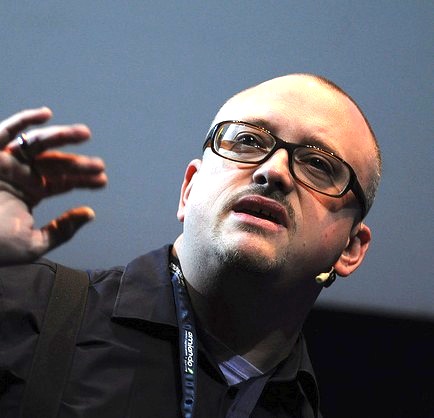
Dr. Michael Bhatty

The keynote address was by Dr. Michael Bhatty, professor of media and game design at MHMK campus in Munich, who spoke about the new breed of game designers. He believes games are a media and art form all their own and that the potential of them as story-telling devices is yet to be truly tapped. His courses are geared toward creating designers who are ‘directors’ as well as authors of these virtual worlds, and he means ‘worlds’ in the real sense. As the lead designer of the popular game SACRED, Bhatty believes most games fall short of creating a fully fleshed out environment. “You need to know everything [about the games world] from history, religions, deities, cultures, geography etc. The list goes on and on so let’s just say – a good game director is interested in everything when envisioning a new world as her or his playground,” Bhatty said. “I develop backgrounds for research, because most developers make the mistake of not being thorough and rely only on trivia and clichés they know from movies, pulp magazines or other games.”

Coming from a film and art background, Bhatty is very concerned with the cinematic elements of a game, and believes games should have the same ability to move people in the dramaturgical way that films do. Bhatty is convinced that the ‘game’ concept can be extended much farther than the limited definition we have of it, and creating virtual worlds can enhance many other fields such as education.

The Benefits Of A Well-Planned Design Process

Producer Tom Kubischik

Tom Kubischik, game designer and Producer at Morgen Studios in Berlin, spoke about the process of game design and ways to avoid the pitfalls of not following a rigorous design and development process, something a lot of film production companies could benefit from. He also mentioned that many game development companies, rather than wait for interest from the Hollywood community,  have struck out on their own into the world of feature films and television content.

The “Gamification” Of Society

Dr. Steffen Walz – photo by Ivo Näpflin

Dr. Steffen Walz of Karlsruhe, Director of the Games and Experimental Entertainment Lab at RMIT University in Melbourne, spoke about Gameful World Design in a humorous lecture on how the world around us is being “gamified”. You can watch his lecture here (in  English) from an earlier conference at LIFT11. He talked about how nearly everything in life is becoming game related or is being influenced by gaming concepts. The end result of this being, I think, that people will expect future communication, learning and entertainment to be more visually based.

The Virtual Reality Re-revolution

While a lot of my lecture involved 3D modeling for feature films, the main topic I covered was virtual reality systems for viewing those models and how I think it will influence both game design and film set design. Virtual reality isn’t really new, it’s been around since the 1800’s when panoramic paintings became popular. Even crude vehicle simulators have been around since the 1920’s.

It’s only with the recent improvements of computer processors that VR systems have become a more viable option for designers. VR systems have been used for over 10 years in other industrys and are now standard for aircraft and automotive manufacturers who are dealing with critical space considerations and find that modeling and designing in full-size 3D cuts large amounts of time. The German company IC.IDO has developed a VR system that is in use by most major car companies and their VDP software allows the system to use a model from nearly any other modeling software program. Watch the videos below to see a simulation of how you soon may be designing.

Is The Home-Holodeck Around The Corner?

I mentioned that as the appetite for digital models grows so does the size of Art Departments at the studios. And as these models become bigger in size and quantity, and if the trend toward more detailed models with fully textured surfaces continues, how long will it be before some producer or someone in studio management realizes they are sitting on thousands of dollars of nearly video game-ready digital assets? Is it so far-fetched to think that someday as kids leave a theater they will be able to purchase an access code that will allow them to “play” the movies in their ‘virtual reality playroom’ when they get home?

I spoke in vague terms about a VR system I have experienced at a company (who’s name I can’t mention) which would make such a thing possible. Once you experience true full-immersion 3D, watching something on a flat screen, no matter how good the 3D is, is just not satisfying. This system could be adapted to various interior spaces and become a sort of present day Holodeck for commercial or home applications.

The upside of all of this is that no matter what the tools or media are, and they will continue to change at a dizzying pace, they only increase the need for designers. Whether the worlds are physical or virtual, they still need to be designed. It’s interesting to note that most of the speakers at the conference were either architects or had studied architecture at university.

The challenge will be in keeping from being seen as an ‘operator’ of these ever more complicated systems, and to continually convince the companys / studios / producers that the truly important factors are the designer and the design, not the high-tech tools themselves.

Sculpting Tools For Sketchup

Most people think of Sketchup as a program that just draws boxes. As a poly-modeler it was always handicapped when it came to modeling compound curved surfaces and even with the built-in Sandbox tools, drawing terrain was never truly easy.

Now there are two different plugins that make not only terrain construction but organic and vehicle construction possible without having the urge to jump out the nearest window. I use both regularly and because they each have different attributes, I think their capabilities really complement each other when you are constructing complex shapes.

Artisan

The first is a plugin called Artisan which is a great solution for creating organic shapes. Created by Dale Martens, who has produced numerous other free plugins including Subdivide & Smooth, has created a set of sculpting tools that work very much like the sculpting tools in Maya and are incredibly easy to learn and use. The site has nice tutorial videos as well as a nice gallery of others work using the plugin. You have a series of settings which allows to to adjust the pressure of the brush, either positive or negative, and after setting the width of the ‘brush’, you drag it over the area to create the sculpted surface. The demo video below will give you an idea of the process.

One of the tools that alone is worth the $39 cost, is a poly-reducer which is a huge help when you import models from a NERB software package like Rhino or Maya. The tool allows you to select how much you want to reduce the poly count of a model to get it down to the size you need. You can also reverse the process and take a low-poly model and increase the detail.

I consider this plugin to be an absolute must for people who want to be able to build anything besides flat walls in Sketchup. Here are some examples of Sketchup models created using Artisan:

scooter by Pete Stoppel using Artisan

Motorbikes by Pete Stoppel

creature by Erik Lay

terrain by Pete Stoppel

Vertex Tools

The other plugin is called Vertex ToolsThis program has tools which work differently than Artisan but has some advantages over it in the way the selection tools work. Designed by Thom Thomassen, a modelmaker from Norway who has also designed an incredible number of other useful free plugins, has designed a set of tools that are what the Sandbox Tools aspire to be.  At $20 it, like Artisan, is a real bargain. The video below will give you a quick overview.

The selection tools allow you to set how the tool affects the surrounding polys with either a linear or cosine fall-off. This one is really a must when you are creating terrain.

At a total cost of $59 dollars, these plugins will give you a huge boost in your modeling capabilities. If you use Sketchup, they should be your next purchase. You won’t be sorry.

A “Sweet” and Cheap Architectural Detail Resource

Yes, I thought it was time for a bad pun. The “sweet” resource I’m talking about is the Sweet’s Indexed Catalogue of Building Construction. Not the modern version, mind you, but the earlier volumes. In particular I’m talking about the first one ever printed, in 1906.

Reprint copy of the first edition of Sweet’s

I found my copy in a used bookstore about 25 years ago, back when 3rd Street in Santa Monica was still a sleepy street lined with great used bookstores instead of chain outlets. It was a 1970’s reprint of the original, in great condition. But the most striking thing about it was how different it was from it’s modern relatives. This book was printed for people who actually drew details, and both wanted and needed to know how things were built.

Most of the products pictured throughout the book had either detailed drawings or photographs of the items, with dimensions and cutaways showing how they operated and how they were integrated into the architecture of the building. This was a far cry from the ‘updated’ version, void of details, which was meant only to be a means of calling out the correct ‘part number’ on a drawing rather than giving the architect a full understanding of the specifics.

The original volume, if you can find a copy, has a green cover. The reprints will have a tan cover. The most useful ones for our work run from 1906 to the 1930’s. They aren’t easy to find but Google has solved that problem. Among the millions of books they have digitized for their ebook site are the 1906 and 1907 editions of Sweet’s. The digital editions aren’t as crisp as a printed copy, but the details you’ll glean from them are priceless. You can download it as a pdf and have it on your computer whenever you want to refer to it. Here is some of what you’ll find:

A sample of a typical advert featuring both photos and detailed sections

details of furnace and ducting showing how the duct and registers are attached to the wall framing

One of hundreds of photos showing details such as trim, ironwork and tile.

Detail of large furnace for an office or apartment building

An early central vacuum system

And here’s proof that people had MUCH bigger heads 100 years ago

Another good source in Google Books is a magazine from about the same time period called The American Builder which has some good articles with details. This ad for a drafting course is great. Considering an average draftsman would have made about 35 to 40 cents an hour at that time, $100 a week would have been top dollar.